





Human Rights Activist News Agency (HRANA)- After ten days of interrogation at a detention center of the Islamic Revolutionary Guard Corps (IRGC), Kamal Hassan Ramezan, 33, who is from the Syrian Kurdish town of Serikani, was transferred back to Ward 12 of Urmia Central Prison on Thursday, August 23, 2018, where he awaits execution.
The IRGC was interrogating Ramezan about his prison “activism,” a source familiar with the case told HRANA. “Mr Ramezan was taken to an unknown location on August 13th. When he was finally returned to [Ward 12 of Urmia Central Prison], we learnt that he had spent these 10 days in an IRGC detention center.”
First arrested near Urmia in July 2014 by IRGC forces, Ramezan underwent interrogation for four months on the charge of Moharebeh (“enmity against God”). Urmia court authorities then officially charged Ramezan, who is of Kurdish descent, with Moharebeh for his alleged affiliation with a Kurdish opposition group, and transferred him to Urmia Central Prison.
While awaiting trial for the above charges, he was coerced and tortured into providing a televised confession. On August 14, 2015, Branch 2 of the Urmia Revolutionary Court, presided by Judge Sheikhlou, sentenced Ramezan to ten years and one day in prison.
In 2016 Ramezan was targeted again, interrogated as a suspect in the 2006 murder of an IRGC member in Urmia. Despite an alibi of not having been in the country at the time of the murder, he was tried and sentenced to death in absentia by Branch 3 of the Urmia Revolutionary Court on May 20th, 2017, and has remained in prison since.
Category: Prisoners
Letter: Political Prisoner Calls UN Envoy’s Attention to “Hostage” Prisoners

Human Rights Activists News Agency (HRANA)- From the walls of a prison in Ardabil, Mohammad Saber Malek Raisi recounts the agony of becoming a pawn of the Iranian authorities, in a testimony that sheds light on the authorities’ use of political activists’ family members as coercion.
Malek Raisi is being held hostage himself by the Iranian Intelligence Ministry in a pressure tactic against his brother, a political activist operating outside of Iran. Currently serving an indefinite sentence in Ardabil, northwestern Iran, he has penned a letter to Javaid Rehman, UN Special Rapporteur on the Situation of Human Rights in Iran, imploring Rehman to help raise public awareness of hostage prisoners.
His letter is especially emphatic in its request to spare Abdollah Bozorgzadeh, a fellow prisoner, from the same fate. Bozorgzadeh is one of seven individuals arrested for demonstrating outrage over news of the rape of 41 women in the southeastern province of Sistan & Baluchestan, home to Iran’s Baluchi ethnic minority. Molaana Molazehi, the Friday prayer Imam of Iranshahr, had spread news of the rape after delivering the Eid-e Fitr prayer sermon at the conclusion of Ramadan on June 15, 2018, adding that the culprits were “individual(s) who had access to “power & money.”
Moved by this announcement, community members rallied on June 17, 2018 in front of the governor’s office. The Islamic Revolutionary Guard Corps (IRGC) fired back with an accusation that the protest was the work of foreign agents and arrested several activists on those grounds, seven of whom were later seen confessing in recordings broadcast by the IRGC. Adollah Bozorgzadeh, who had joined in support of the rape victims, was one of the seven.
Below is the translated text of Mr. Raisi’s letter:
Dear Mr. Javaid Rehman,
My name is Mohammad Saber Malek Raisi, and I am from Sarbaz in the Sistan & Baluchestan province. On October 14, 2009, when I was only 18 years old, I was abducted by agents of the Ministry of Intelligence. I have been their hostage for nearly nine years now. The Ministry has contrived charges against me while I’ve been in custody, accusing me of belonging to Jundallah [a militant Sunni organization known as the Peoples’ Resistance Movement of Iran, or PRMI]. My case was tried in Zahedan, the Revolutionary Court of the capital of Sistan & Baluchestan. This court accepted the “investigation” conducted by the Zahedan Intelligence Bureau, to the exclusion of all other evidence. The court ignored my protestations of innocence and was unfazed by the torture and duress I experienced at the hands of Intelligence Ministry agents who sought to extract false confessions from me. They were unfazed by the Ministry’s use of threats to intimidate my family, saying they would execute me if my brother, who is a political activist outside Iran, did not turn himself in. The court found me guilty under section 185 of the Islamic Penal Code for my alleged membership in Jundallah, sentencing me to 15 years in prison, to be served in exile in the city of Ardebil. I was given an additional two-year prison sentence under Passport Law section 34 on a charge of crossing the border illegally.
My conviction does even not correspond to the case facts invented by the Ministry of Intelligence. Even if were guilty, [based on my conviction date] I would be subject to Section 186 of the old penal code which defines the crime of Moharebeh (“enmity against God”) as an armed rebellion against the Islamic state, rather than section 185 which now defines it as banditry and plundering. I was sent to the ward of prisoners convicted of armed robberies, an out-of-proportion punishment that doesn’t even reflect the case built against me.
For 21 months, from my arrest in October 2009 until June 4, 2011, I was held in the Zahedan Intelligence Bureau detention center. During this period as well as the period between April 9th and July 11, 2017, while I was in Section 29 of Zahedan Prison (controlled by the Ministry of Intelligence), agents used my captivity to pressure my brother, Abdolraham, to abandon his anti-regime political activities.
When I was first arrested, my family was threatened with my imminent execution if my brother wouldn’t turn himself in.
I was transferred to Evin Prison for three months under the pretext of requiring medical treatment. But I received no treatment while I was there and am still suffering from a disease. During the same period, agents threatened to double my sentence unless my brother abandoned his cause.
It’s now been nine years since I’ve been imprisoned in the worst possible conditions, deprived of civil rights, including:
§ Public medical services
§ Access to religious books
§ The ability to write (unsupervised use of pen and paper are forbidden)
§ The ability to make phone calls
§ The right to learn and take classes
§ Access to other parts of the prison such as the library and store
§ The right to visits, furlough, conditional release, or serving my sentence in my birth city
§ Clemency
On the contrary– I am subject to deplorable and inhumane conditions that are the design of the Intelligence Ministry, including insults, mocking, beatings, extended isolation, being tied up outside in the cold snowy weather, and being handcuffed and shackled for forty days.
Mr. Rahman, with this evidence of my ordeal in hand, and in the name of all prisoners taken hostage by the Ministry of Intelligence, I ask you to launch an investigation and put an end to this unjust tactic, which in the last four decades has become a norm. I urge you to follow up the cases of those who are suffering the same fate as I am and to demand their release.
These individuals are many, and some have even been executed. Prisoners like Mehrollah Reigi Mahernia, who is only 18, Mohammad Saleh Torkamaan Rahi, Ayoub Gahramzayi, and Salman Jadgal, are all being held because of their siblings’ activism. Some like Alyas Ghalandarzehi, aged 18, is on death row for the politics of two of his uncles. There are more whose identities I cannot reveal, who regained freedom only because their activist family member turned themselves in.
The most recent case of brutal hostage tactics unfolded on June 17, 2018. The victim is a 30-year-old Baluchi, a young man named Abdollah Bozorgzadeh. Bozorgzadeh is only beginning the stages of a process which slowly depraves and spoils one’s life. He is being used as a tool to pressure his brother Habibollah.
Perhaps the word “pressure” does not do justice to the true nature of what these victims and their families experience. In reality, the stress permeates the family’s entire existence, brutally destroys the life of the hostage, and paralyzes the family in a state of suspense. The uncertainty is a major psychological blow to every single family member who is awaiting the fate of a loved one held hostage. The families cannot comprehend how such a cruel injustice could exist in our world.
Mr. Javaid Rehman, knowing my family’s and my own dark experience, I do not wish this suffering upon anyone else. That is why my parents, my brother Abdolrahman, and I ask you to persist in elucidating the case of Abdollah Bozorgzadeh, so that he and his family do not have to suffer as we have.
Abdollah’s father has staged sit-ins twice to demand the release of his son, but no organization has been responsive to him.
Abdollah Bozorgzadeh is a student who attended a rally like many other young people in Iranshahr who were demanding justice for victims of a local sexual assault case. No law was broken, no act of desecration took place. He is detained arbitrarily, for the political activities of his brother against the regime. Please act to secure his release!
Mohammad Saber Malek Rayisi
Ward 7 of Ardebil Prison
Civil Rights Activist Denied Medical Care in Yasouj Prison
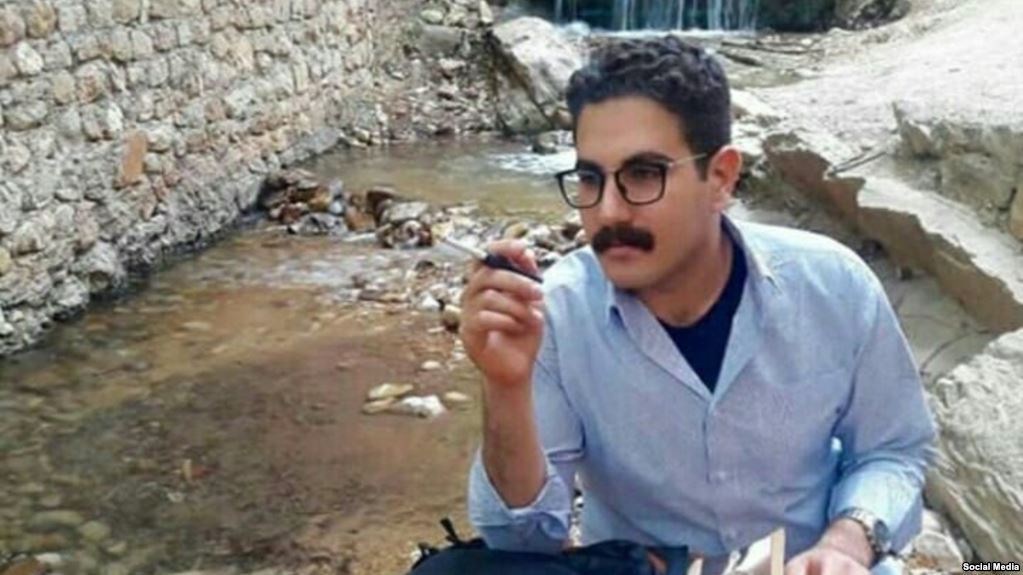
Human Rights Activists News Agency (HRANA) – Despite vomiting blood and severe difficulty breathing, detained civil rights activist Mohammad Davari has yet to see a doctor.
Detained since August 10, 2018, in Yasouj Central Prison where interrogators dealt heavy blows to his chest and abdomen, he has twice requested medical attention for his subsequent injuries, a source close to his family said. Prison officials have denied his requests.
Multiple visits and inquiries to the Intelligence Office and the Judiciary of Yasouj have done little to assuage Davari’s family’s concern for his wellbeing, as authorities thus far have refused to comment on his case or the reason for his detention. At the time of Davari’s arrest at his parents’ home in Yasouj, agents confiscated some of his personal belongings such as his mobile phone, laptop, and written notes.
Mohammad Davari has previously been on the authorities’ radar. The Islamic Revolutionary Guard Corps (IRGC) apprehended him on March 5, 2018, in connection to his engagement in protests that filled the streets of different Iranian cities in spring of 2018. After eight days in detention, he was released on a bail of 500,000,000 Rials (approximately $12,000 USD). Relative to that arrest, authorities reportedly told Davari’s family that he was being charged with “acting against national security through disturbing the public peace.” He was arrested and released on bail in another incident following the death of Hashemi Rafsanjani, for pulling down a banner bearing Rafsanjani’s photo.
Mohammad Davari, 26, is pursuing a master’s degree in Political Science.
Letter from Nasrin Sotoudeh Regarding her Refusal to Appear in Court
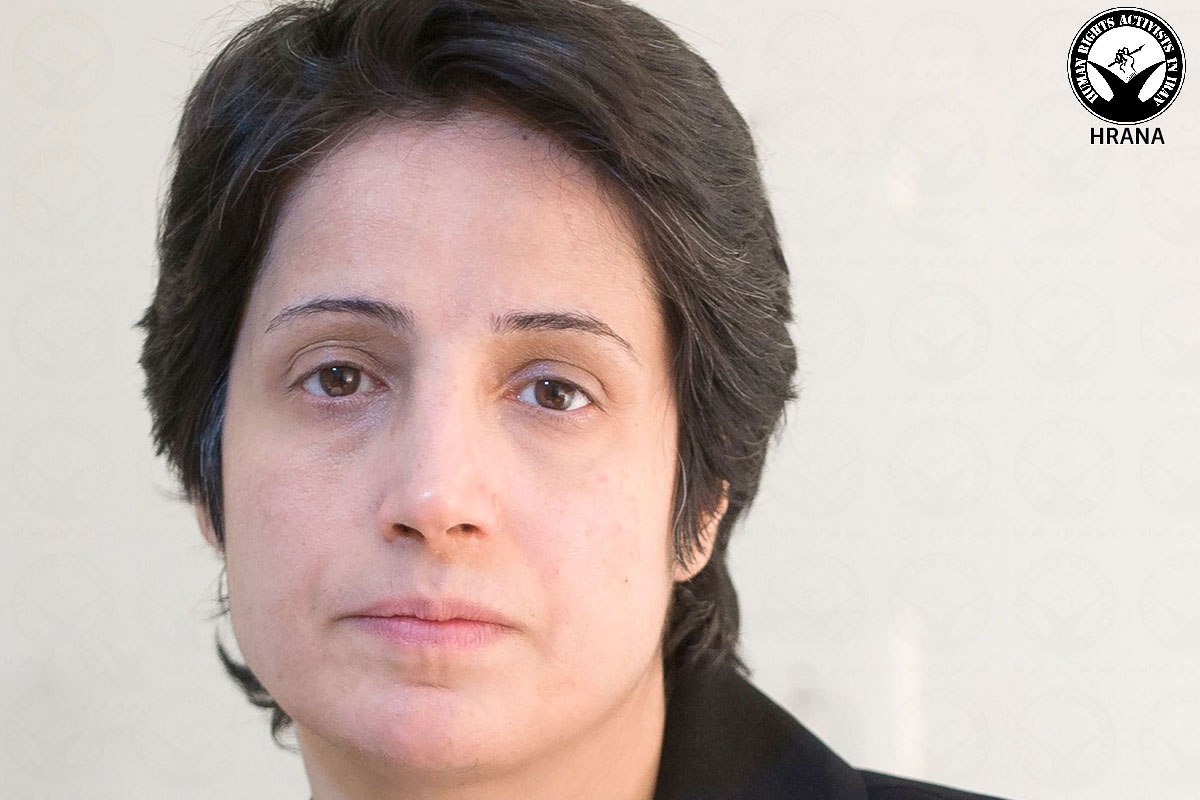
Human Rights Activists News Agency (HRANA) – In an open letter, lawyer and human rights activist Nasrin Sotoudeh explained her recent refusal to appear in court. She was arrested on charges of collusion and propaganda against the regime on June 13, 2018, and has since been held at Evin Prison.
On June 23rd, her husband Reza Khandan announced that a bail of 650 million Tomans (approximately $155,000 USD) was set for Sotoudeh. She declined to post bail, however, and has since remained in detention at Evin’s General Ward.
In October 2014, Sotoudeh staged a sit-in before the Iranian Bar Association for several days to protest her three-year suspension from practicing law. Assisted by a number of bar members who rallied behind her cause, the protest eventually resulted in the lifting of the suspension and renewal of her law license.
On Saturday, August 14, 2018, Nasrin Sotoudeh’s attorney Payam Dorafshan reported on two open cases against her. He said, “Nasrin Sotoudeh is presently serving a sentence of five years’ imprisonment for charges of espionage not even contained in her indictment, as well as a detention order issued by the second branch, and is again being brought to conviction in the court of Kashan.”
In September of 2010, Sotoudeh was sentenced to eleven years’ imprisonment, twenty years’ suspension from practicing law, and a twenty-two year exit restriction. This sentence was reduced in an appeals court to six years of imprisonment and ten years of licence suspension, and she was eventually released after spending three years in prison.
Nasrin Sotoudeh has refused to respond to her recent court summons and will not be appearing in court. She shares her rationale in the open letter cited below.
My Fellow Citizens,
As you know, two months ago, per the verdict of a trial in absentia in Branch 28 of the Revolutionary Court, I was unlawfully detained and brought to Evin Prison for arraignment.
From the moment I was arraigned, in protest, I have refused the defense chosen for me per the recent amendment to Article 48 of the Criminal Procedure Code. My reasons for refusal are listed below:
1- Precinct 33 Court, which relocated to Evin Prison in the summer of 2009, exclusively handles the cases of political prisoners. Legal practitioners have contested the very existence of this court from the outset, due to its location within a prison, where practitioners work under heavy security surveillance, thus exposing the court to the meddling of national security organs. This violates the independence of the judiciary enshrined in the constitution. Illegally and in violation of article 35 of the constitution, this court prevents defendants from choosing their own attorney.
2- Exercising my right to the attorney of my own choosing, from the moment of my summons to the Evin Court, I provided the names of three colleagues to whom I would entrust my case. However, the prosecutor in charge of my case has to date refused to appoint any of them as my attorney.
As I do not intend to be represented by an attorney approved by the Intelligence Office of the Judiciary, I hereby face my predetermined sentence and refuse to present myself or any defense to the court and inspector.
In hopes that the law and justice be served in our beloved country, Iran,
Nasrin Sotoudeh
August 2018
Labor Activist Behnam Ebrahimzadeh Detained

Human Rights Activists News Agency (HRANA) – Former political prisoner and labor activist Behnam Ebrahimzadeh was arrested by security forces around Kermanshah (western Iran) and taken to an unknown location on Friday, August 17, 2018.
According to a source close to Mr Ebrahimzadeh’s family, he was detained while en route to assist survivors of the Kermanshah earthquake that claimed thousands of casualties in November 2017.
After several days of persistent inquiry, his family learned of his detention, but remain in suspense as to the reason for his arrest.
Behnam Ebrahimzadeh, born in 1977 in Oshnavieh (West Azerbaijan province), has been detained several times since 2008. On June 12, 2010, he was arrested and interrogated in solitary confinement for four months, and later transferred to Ward 350 of Evin prison. At the conclusion of a brief trial without a defense lawyer, Judge Salavati of Branch 15 of the Revolutionary Court in Tehran sentenced Mr Ebrahimzadeh to twenty years in prison. The sentence was later reduced to 5 years in an appeals court.
Over the course of his five-year sentence in Evin Prison, Ebrahimzadeh endured multiple beatings and transfers to solitary confinement. His detention at Evin coincided with the 2014 incident known as “Black Thursday” in which plainclothes agents and Evin Prison staff coordinated a group assault on Ward 350 inmates. Later, he was illegally exiled to Rajai Shahr Prison in Karaj, where he was repeatedly harassed and shifted among wards.
Near the end of his five-year sentence, Ebrahimzadeh faced new charges of anti-regime collusion and propaganda, allegedly committed while he was in prison. He contested the charges in the Tehran Appeals Court. On July 31, 2016, the new sentence of nine and a half years imprisonment was first reduced to seven years and ten months, and then to 15 days with a fine of approximately $100 USD (4,500,000 Rials).
Authorities had also accused Mr Ebrahimzadeh of “violating a detention order” and “using satellite equipment and game cards” during his time in Evin.
More recently, on September 24, 2017, Ebrahimzadeh was released from a ten-day detainment after being arrested along with several others in front of Rajai Shahr Prison, where they were rallying in a demonstration of solidarity with prisoners on hunger strike.

Imprisoned Civil Rights Activist Farhad Meysami on Hunger Strike
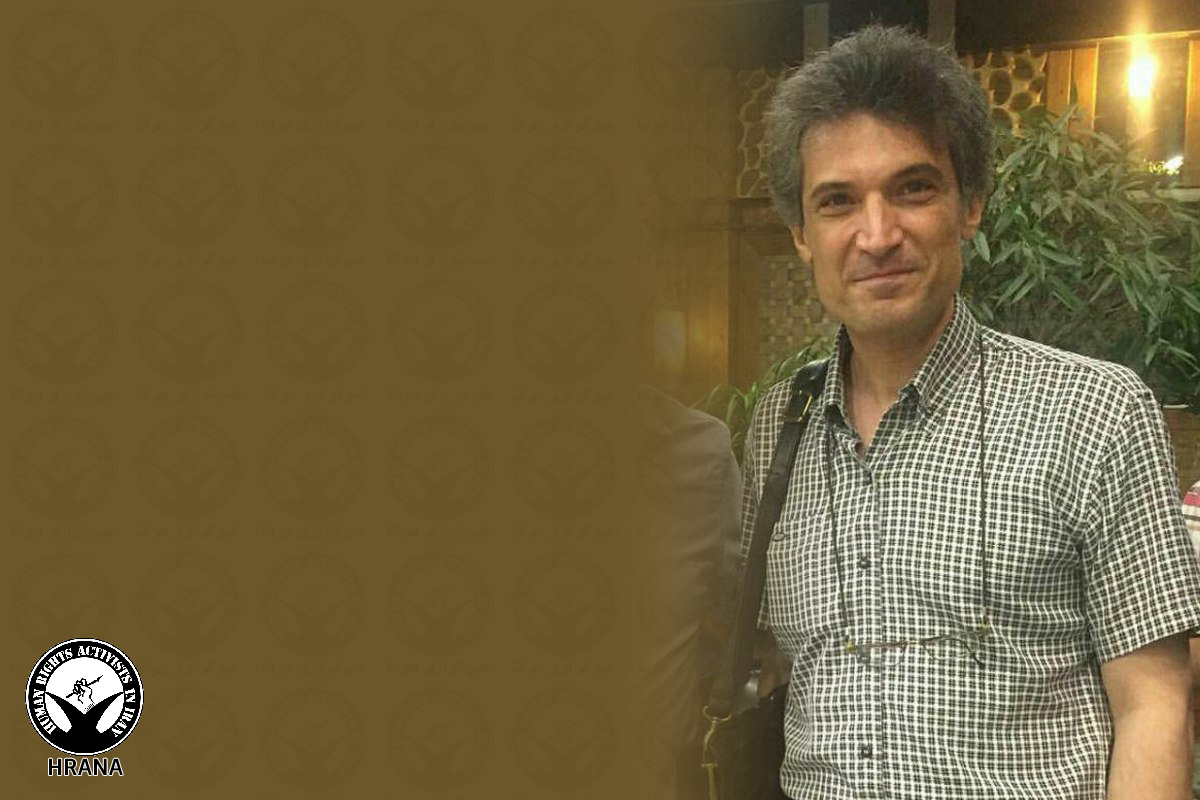
Human Rights Activist News Agency (HRANA)- Farhad Meysami, who was arrested and transferred to Ward 209 of Evin Prison on July 31, 2018, has been on hunger strike since August 1st. He faces charges of “Collusion and conspiracy to threaten national security”, “Disseminating propaganda against the regime,” and “Insulting the hijab, an essential sacrament of Islam” from Branch 7 of Evin Court.
Reza Khandan, husband of Nasrin Sotoudeh, the human rights lawyer who was previously imprisoned on similar charges, related Mr Mesyami’s case updates to HRANA.
“Farhad Meysami [declared his strike] when he contacted his mother, which was 20 days into his detention,” Mr Khandan said, explaining that news hadn’t spread earlier because Mr Meysami was being held in solitary confinement. In the same phone conversation, according to Mr Khandan, Mr Meysami said he was anticipating a transfer to the prison’s general ward in three days.
Reading from the interrogation sheet intended to elucidate his charges, Mr Meysami cited accusations of “provoking women to appear without hijab in the street”. Mr Khandan conjectures that Mr Meysami’s charges actually stem from his possession of pin-back buttons reading “I protest mandatory Hijab”.
“Farhad Meysami’s mother was extremely worried following the news of his hunger strike and intimated that she wanted to start a hunger strike as well,” Mr Khandan added. “But some friends and I dissuaded her, given her age and her need to take medications on a daily basis.”
Earlier, Arash Keikhosravi — who has been detained in the Great Tehran Penitentiary for the past four days — told HRANA that “on Sunday, August 12th, Mr Meysami’s mother and I went to Branch 7 of Evin court to follow up on his case and to see how he was doing. I planned to register as his lawyer, but the officials at the branch told me that section 48 of the Criminal Procedure Code bars me from doing so.”
Section 48 of the recently-amended Criminal Procedure Code states that those accused of national-security crimes must choose their lawyer from a list approved by the Iranian judiciary. Human Rights Organizations have argued that this new policy gives further license to infringe on the rights of defendants.
Mr Keikhosravi also said that “Mr Meysami’s mother went to see the case investigator after receiving a phone call in which she could hear the sounds of her son’s interrogation and torture.”
The investigator reportedly denied that the call had come from Evin authorities, promising her a phone call from her son to alleviate some of her worries and assure her of his wellbeing.
Latest Report on Baha’is Detained in Shiraz
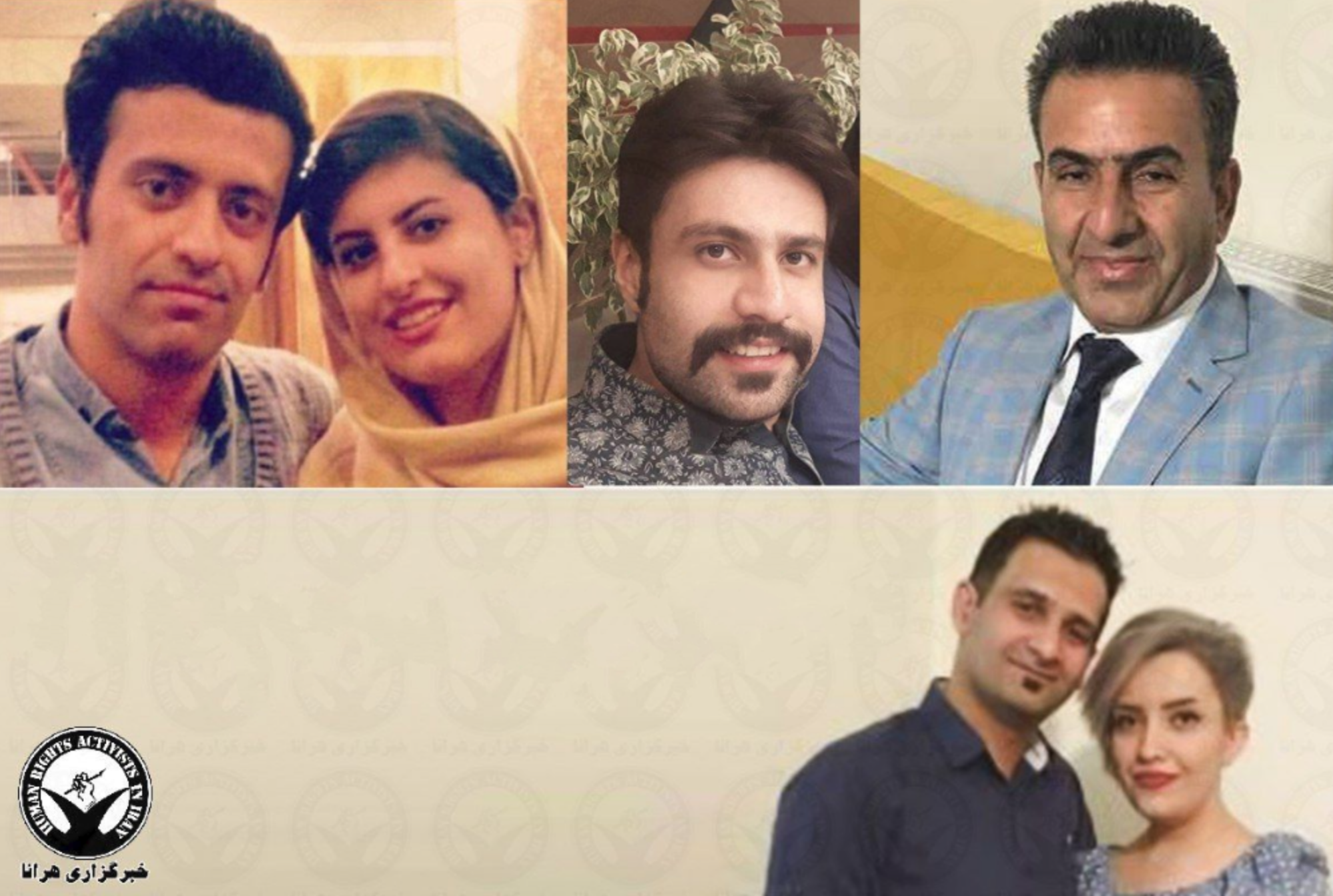
Human Rights Activists News Agency (HRANA) – On Friday, August 17, 2018, security forces detained a number of Baha’i residents of Shiraz and transferred them to the Detention Center of the Intelligence Office of Shiraz (No. 100). Dorna Isma’ili, Negar Mithaghiyan, and Hooman Isma’ili were released later that day. Pezhman Shahriyari, Mahboob Habibi, and Koroush Rowhani remain in custody.
On Friday, HRANA issued two reports about the seizure and detention of Baha’is via Intelligence Office No. 100. In the hours following HRANA’s report, news networks affiliated with Iranian security agencies buzzed with accounts of unexplained and coordinated arrests of at least 40 Baha’i residents of Shiraz. As of the date of this publication, HRANA has not been able to confirm their reports and continues to investigate.
Baha’is in Iran do not have freedom of religion. This systematic repression is in violation of Article 18 of the Universal Declaration of Human Rights as well as Article 18 of the International Covenant on Civil and Political Rights. These documents assert the rights of every individual to freedom of religion, religious conversion, and expression of their religious belief as individuals or groups, publicly or privately.
Unofficial reports indicate that there are over three hundred thousand Baha’is living in Iran. Meanwhile, the Iranian constitution only recognizes Islam, Christianity, Judaism, and Zoroastrianism as permissible religions, effectively rendering the Baha’i faith illegal. This loophole allows the Iranian government to systematically violate the rights of Baha’is with impunity.
Appeals Court Issues Verdict of Fines and Lashing for Three Azerbaijani Activists
Human Rights Activists News Agency (HRANA) – On August 5, 2018, Branch 11 of the Appeals Court of Ardabil reached a verdict on the cases of three Azerbaijani activists, calling for fines of 21 million rials each (approximately $500 USD each), 70 lashes, and a four-month suspended imprisonment sentence.
On charges of “disturbing the public peace,” activists Baytullah Barzegar, Sina Ghorbani Irshadi, and Siyamak Ghardashi were issued their original verdict on January 30, 2018, from Branch 101 of the No. 2 Criminal Court of Meshginshahr. Branch 11 of the Appeals Court of Ardabil rejected the activists’ initial three requests for appeal, remaining firm on their sentence of three million rials (with the threat of 70 lashes for recidivism) and 18 million rials (with the threat of 4 months’ imprisonment for recidivism). Per the original verdict, their sentence was to be suspended for a probationary period of 3 years.
Last July, HRANA covered Baytullah Barzegar’s defense proceedings, as well as those of other activists arrested in conjunction with a demonstration held on International Mother Language Day. Barzegar has been taken into police custody on multiple occasions, including a 2015 Meshginshahr imprisonment for his participation in public protests against the state-sponsored television series Fitileh, which was widely believed to portray Azerbaijani peoples in a derogatory light.
Three Sunni Prisoners Transferred to Rajai Shahr Prison
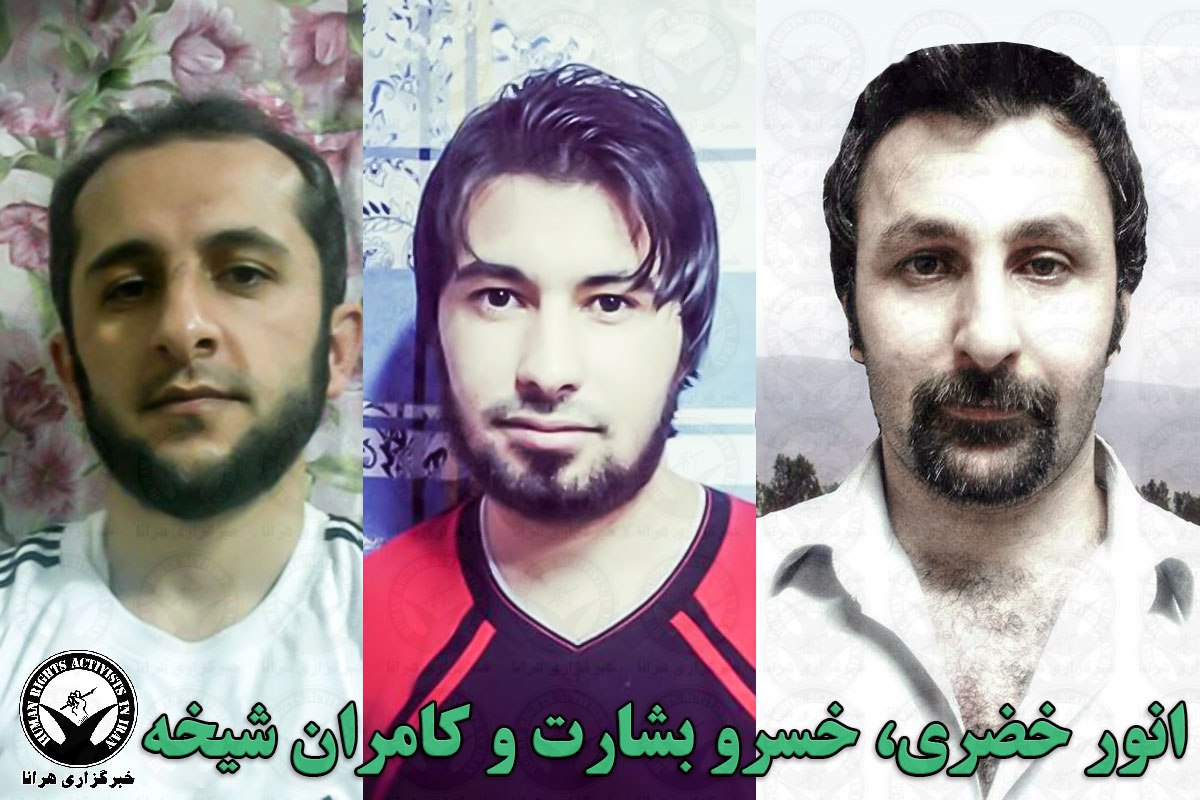
Human Rights Activists News Agency (HRANA) – Three Sunni prisoners in Urmia Central Prison were transferred to Rajai Shahr Prison in Karaj in the evening hours of Sunday, August 19, 2018.
Prisoners Anvar Khezri, Khosro Besharat, and Kamran Sheikheh, according to an inside source, faced transfer in connection to charges of “Moharebeh” (enmity against God) brought by the Tehran Revolutionary Court. Khezri, Sheikheh, and Besharat were originally transferred to Urmia for trial in September of last year and had been held in Urmia Central Prison since then.
Last month, HRANA reporters testified to the state of uncertainty surrounding the verdict on the mens’ charges of aiding and abetting murder. Khezri, Besharat, and Sheikheh have been sentenced to 10 years in prison. Sheikheh has been sentenced to death.
These three men, along with inmates Davood Abdollahi, Farhad Salimi, Ghasem Abesteh, and Ayub Karimi, spent 6 years in prison before being sentenced to death in March 2016 by Judge Moghiseh of Tehran’s Revolutionary Court, branch 28. Judge Razini of Iran’s Supreme Court later reversed the sentence.
Following the reversal of their sentence, security forces charged the three Sunni men with “acting against national security”, “propaganda against the regime”, “membership in Salafist groups”, “spreading corruption on earth” and the aforementioned Moharebeh. Authorities have yet to elaborate on these allegations.
Inside sources related to HRANA that the defendants deny any history of violence, and believe the charges are a pretext for persecuting them for their religious beliefs and practices, including attending meetings and distributing Sunni literature. Khezri, Besharat, and Sheikheh have reportedly endured mental and physical torture over the course of their interrogations.
HRANA previously reported on Khezri’s poor bill of health, including respiratory problems caused by torture. In the same report, doctors who examined Khezri stated his symptoms were caused by “a heavy blow” to his chest.
The three men have thus far been denied the right to appoint lawyers of their choice or defend themselves in the court.
Despite the efforts of their state-appointed lawyer Mahmoud Alizadeh-Tabataba’i, these seven prisoners will soon have spent nine years in a state of legal suspension, one that has caused severe mental and psychological strain for both them and their families.
The prisoners have attempted in various ways to push their case forward, including staging a hunger strike and requesting clarification of their charges and verdict.
Iranian Authorities Detain Lawyers and Civil Rights Activists
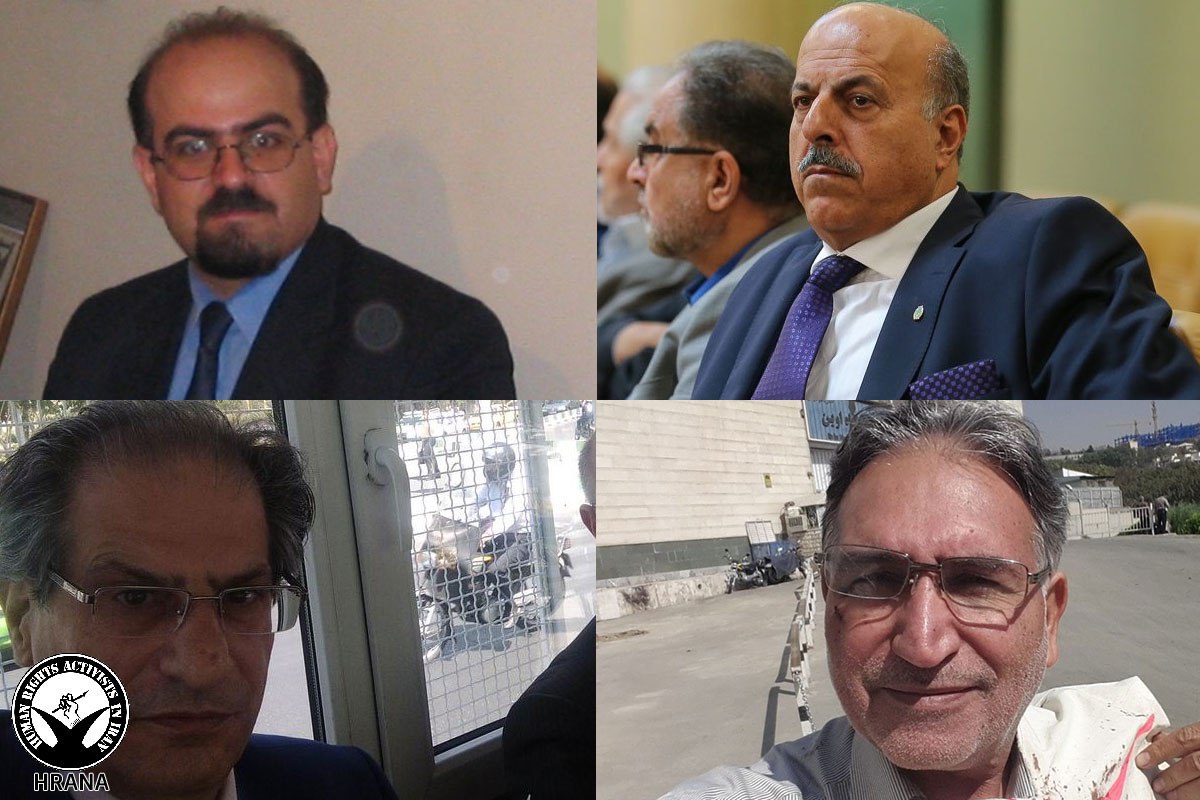
Human Rights Activists News Agency (HRANA) – A number of lawyers and civil rights activists who had gathered in front of the Iranian Parliament building to protest both the Caspian Sea Agreement and the Guardian Council’s vetting process were arrested last Saturday, August 18th.
Mohammad Nourizad was among a group of detainees that were released a few hours later. Among three lawyers taken into custody, one — Masoud Javadieh — posted bail and was released the following day. Lawyers Ghasem Shole-Saadi and Arash Keykhosravi were transferred to the Great Tehran Penitentiary after being charged at Branch 5 of the Evin prosecutor’s office.
Mr Nourizad, a 66-year-old Iranian director, screenwriter, and journalist, had been taken into custody earlier this year in connection to his visits with the family of political prisoner Ramin Hossein Panahi, who is currently serving a prison sentence in Sanandaj Central Prison. Previously considered a religious radical, Nourizad joined with critics of the Islamic regime in the early 2000s and has continued in recent years to meet with the families of political detainees.
Upon his release on Saturday, Nourizad noted to reporters that Shole-Saadi had been interrogated for sharing a video, and conjectured that officials were building a case against him for that reason. In the video in question, Shole-Saadi can be heard voicing support of the late Iranian prime minister Mohammad Mossadegh, whose efforts to nationalize Iran’s oil industry were thwarted more than 70 years ago. In the recording, Shole-Saadi vows to appear before the Iranian Parliament building in protest of the Guardian Council’s vetting process.
Notably, Ghasem Shole-Saadi previously served two terms in the Islamic Consultative Assembly and was convicted of “insulting the leadership of the Islamic Republic” via a letter he notoriously published in 2002. He has been imprisoned several times on charges from the Revolutionary Court for “propaganda against the regime”.