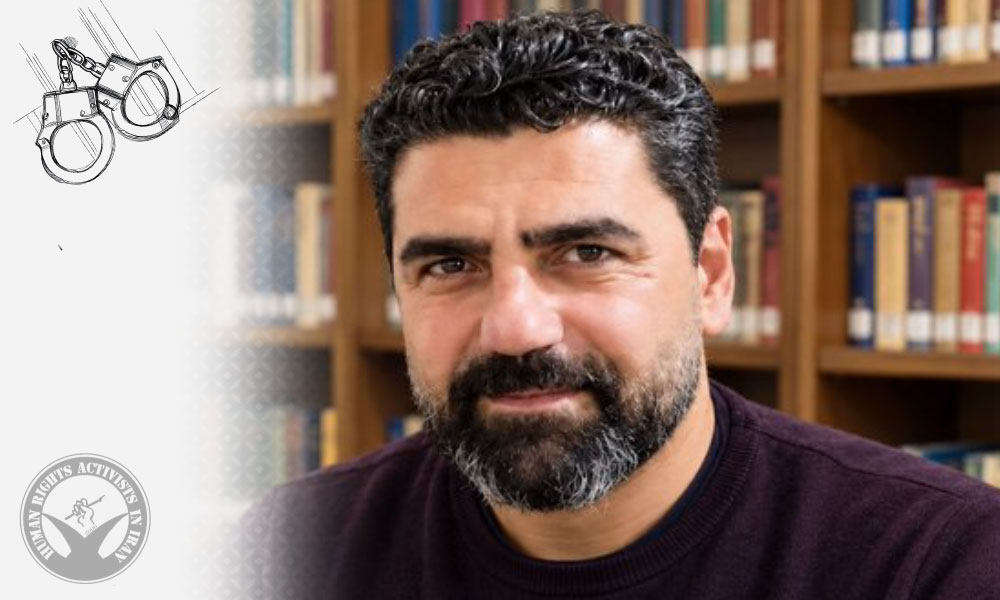
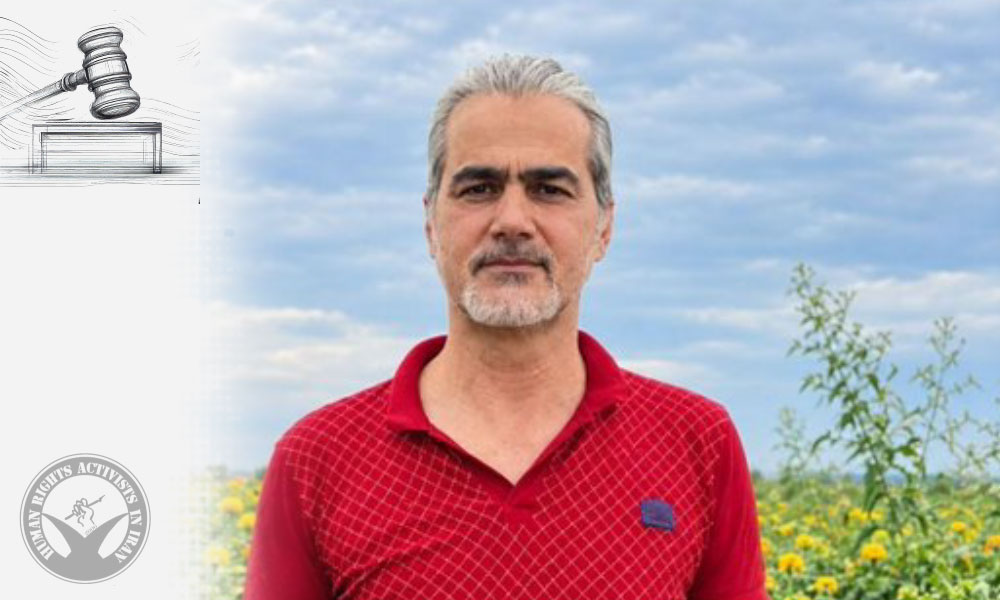
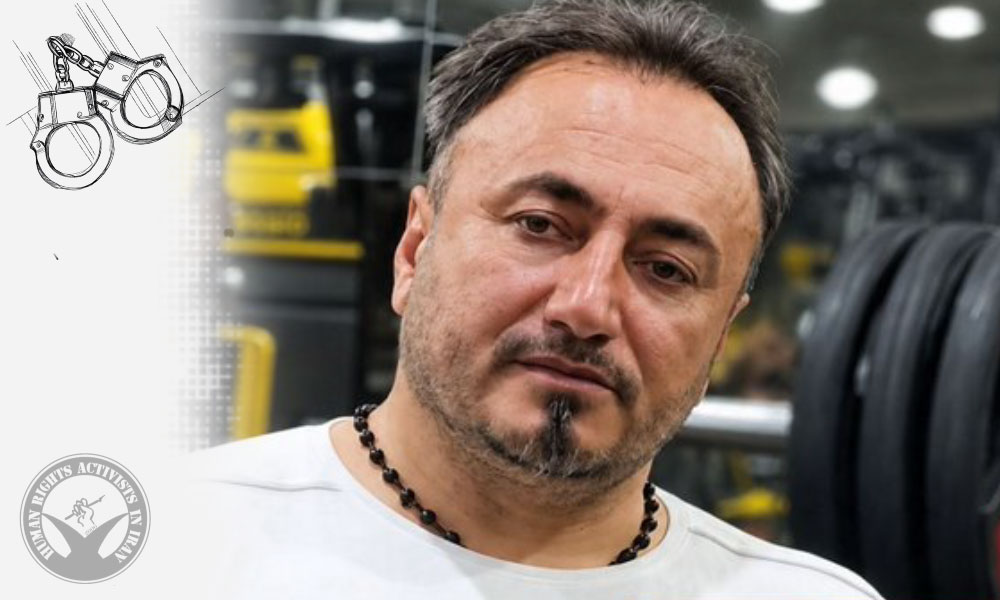
Manouchehr Bakhtiari Sentenced to 10 Years in Prison

HRANA – Manouchehr Bakhtiari, the father of Pouya Bakhtiari, who was killed during the November 2019 protests, and a prisoner currently held in Bandar Abbas Prison, has been sentenced to an additional 10 years in prison by Branch 1 of the Bandar Abbas Revolutionary Court.

According to HRANA, Manouchehr Bakhtiari, who is currently held in Bandar Abbas Prison, has been sentenced to prison.

According to information obtained by HRANA, Bakhtiari was sentenced to one year in prison on the charge of “propaganda activity against the regime through media alignment with opponents of the regime,” four years in prison on the charge of “inciting people to war and killing with the intent of disrupting national security and creating social unrest,” and five years in prison for “sending videos to foreign-based online networks in a manner contrary to national security.”

The sentence was verbally communicated to Bakhtiari today, Tuesday, September 1, at Bandar Abbas Prison.

Previously, hearings in Bakhtiari’s case were held on June 3 and June 15 of this year at Branch 1 of the Bandar Abbas Revolutionary Court. During the hearings, he presented his defense against the charges brought against him. The case was initiated following a complaint filed against him by the Bandar Abbas prosecutor.

Manouchehr Bakhtiari was arrested on January 19, 2026, while serving his sentence of exile in Bandar Abbas and was subsequently transferred to the city’s prison.

Bakhtiari had previously been arrested by security forces at his home in Tehran on April 29, 2021, and was ultimately sentenced to three years and six months in prison, two years and six months of exile, and a two-year travel ban. After serving more than four years in prison, he was released from Choobindar Prison in Qazvin in October 2025 and transferred to Bandar Abbas to serve his exile sentence.

During his imprisonment, additional cases were also opened against Bakhtiari. In one case, he was sentenced to six months in prison. In another, he was sentenced to 18 years in prison and 74 lashes. The latter sentence was overturned on appeal, and the case was sent back to the Revolutionary Court for retrial.

Manouchehr Bakhtiari, the father of Pouya Bakhtiari, has stated that his 27-year-old son was shot and killed in Phase 4 of Mehrshahr, Karaj, during the November 2019 protests. According to Bakhtiari, Pouya, along with his mother and sister, joined protesters on the second day of demonstrations against the increase in gasoline prices. He was shot in the head and died before reaching the hospital.

Pouya Bakhtiari (born September 10, 1992; died November 16, 2019, in Mehrshahr, Karaj) was among those killed during Iran’s nationwide protests of 2019.

2022 Nationwide Protests: Four Citizens Sentenced to Prison

HRANA – Hamidreza Koohkan, Ahmadali Koohkan, Mohammad Kharout Din-Mohammadi (Hares Kharout), and Khaled Kashani, residents of Zahedan who were arrested in connection with the 2022 nationwide protests, were sentenced to prison by Branch 103 of the Zahedan Criminal Court II.

According to HRANA, citing the Balochistan Human Rights Documentation Network, the four citizens were sentenced to a total of 17 years in prison.

The individuals have been identified as Hamidreza Koohkan, son of Shirjan, aged 49, a married driver; Mohammad Kharout Din-Mohammadi (Hares Kharout), aged approximately 19; Ahmadali Koohkan, aged 27; and Khaled Kashani, aged approximately 33. All are residents of Zahedan.

According to the report, Hamidreza Koohkan, Ahmadali Koohkan, and Mohammad Kharout Din-Mohammadi (Hares Kharout) were each sentenced by Branch 103 of the Zahedan Criminal Court II to five years in prison, with time served in detention credited toward their sentences, on the charge of “participation in the intentional destruction of public and government property.” Khaled Kashani was also sentenced by the same judicial authority to two years and one day in prison on charges of “participation in the intentional destruction of public and government property” and “aiding and abetting the intentional destruction of a banner bearing the image of the Supreme Leader and the setting fire to public and government premises.”

The report states that Khaled Kashani’s sentence has been suspended for three years.

On February 6, 2024, Hamidreza Koohkan and Mohammad Kharout Din-Mohammadi (Hares Kharout) were arrested in Zahedan. Koohkan was subsequently transferred to the Ministry of Intelligence’s detention facility in Zahedan, where he remained until April 4, 2024, when he was transferred to Zahedan Prison following the completion of his interrogation.

Din-Mohammadi, who was 16 years old at the time of his arrest, was transferred to the Juvenile Correction and Rehabilitation Center in Zahedan. He was released on May 30, 2024, after posting bail of 1.5 billion tomans.

Ahmadali Koohkan was arrested on April 6, 2024, after being summoned to and appearing at the Ministry of Intelligence office in Zahedan. He was released from Zahedan Prison on bail on May 14, 2024. During the 2022 nationwide protests, on September 30, 2022, he was wounded at Zahedan’s Makki Mosalla after being struck by live ammunition in the pelvis and lower back, near his spinal cord.

Khaled Kashani was also arrested during the 2022 nationwide protests in connection with a case known as “Zahedan’s Bloody Friday.”

It should be noted that, against the backdrop of the 2022 nationwide protests, the city of Zahedan witnessed the killing of approximately 100 Baloch citizens, including at least 15 children, by law enforcement and security forces. The incident has since become known as “Zahedan’s Bloody Friday.”

January 2026 Protests: 13 Citizens Sentenced to Prison, Flogging, and Exile

HRANA – Mohammad Mohammadi, Mostafa Gholami, Zahed Khaledian, Vahed Khaledian, Shahrokh Mostafaei, Fereydoun Almasi, Rasoul Ghorbanpour, Saman Ganji, Davoud Rezaei, Reza Dehghani, Abuzar Moradhaseli, Anvar Alipanah, and Amir Khaledian, residents of Qorveh County, have been sentenced by Branch 102 of the Qorveh Criminal Court to a combined 24 years, three months, and one day in prison. In addition, Reza Dehghani, Abuzar Moradhaseli, Anvar Alipanah, and Amir Khaledian were sentenced to a combined 196 lashes. Amir Khaledian was also sentenced to two years of exile in Minab.

According to HRANA, citing Kolbar News, 13 citizens in Qorveh County have been sentenced to a combined 24 years, three months, and one day in prison, 196 lashes, and exile.

According to the report, the sentences were issued by Branch 102 of the Qorveh Criminal Court on charges including “disrupting public order” and “assembly and collusion.” Under the ruling, Mohammad Mohammadi was sentenced to four years, nine months, and one day in prison; Mostafa Gholami, Zahed Khaledian, and Vahed Khaledian were each sentenced to three years in prison; and Shahrokh Mostafaei and Fereydoun Almasi were each sentenced to one year and nine months in prison.

The ruling also sentenced Rasoul Ghorbanpour, Saman Ganji, and Davoud Rezaei to one year of discretionary imprisonment each.

Under the ruling issued by the same judicial branch, Reza Dehghani was sentenced to one year in prison and 41 lashes; Abuzar Moradhaseli to one year in prison and 31 lashes; Anvar Alipanah to one year in prison and 50 lashes; and Amir Khaledian to one year in prison and 74 lashes. Khaledian was also sentenced to two years of exile in the city of Minab, Hormozgan Province.

The report did not provide further details about the case or specify the charges brought against each of the individuals.

The individuals were arrested during the nationwide January protests and were eventually released after a period of detention.

Background on the January 2026 Protests

It should be noted that protests and strikes by shopkeepers and bazaar merchants began in Tehran on Sunday, December 28, 2025, and within two days spread beyond markets and commercial centers. With the participation of students, citizens, and various social groups, these protests became one of the largest protest movements of recent years. Following the crackdown by security and law enforcement forces, thousands were killed or injured, and tens of thousands were arrested or summoned by security agencies. For more information, readers may refer to HRANA’s comprehensive report titled “Crimson Winter,” documenting the first fifty days following the outbreak of Iran’s nationwide protests.

Isfahan Shohada Square Case: 10 Sentenced to Death, 16 Receive Combined 256 Years in Prison

HRANA – 10 defendants in the case known as the “Isfahan Shohada Square” case, have each been sentenced by Branch 1 of the Isfahan Revolutionary Court to death and 11 years in prison. These verdicts were issued at the initial stage of proceedings.

According to HRANA, Branch 1 of the Isfahan Revolutionary Court has issued sentences for 16 citizens arrested in connection with the January 2026 protests, in a case known as the “Isfahan Shohada Square” case.

According to information obtained by HRANA, Taraneh Rahimi, Navid Elyasi, Abolfazl Dadgostar, Mehdi Mansouri, Ahmadreza Saeedi, Mehrdad Boveyri, Mohammadmehdi Asadi, Armin Gholami, Parsa Jafari, and Mehdi Jafari (Khosravi) were each sentenced to death and 11 years in prison. Romina Rahimi and Milad Boveyri were each sentenced to 36 years in prison, Hamed Mehralian to 26 years, and Setayesh Saedi, Sajjad Abedi, and Ali Boveyri to 16 years each.

Accordingly, the prison sentences imposed on the 16 defendants in this case total 256 years. These verdicts were issued at the initial stage of proceedings.

The case known as the “Isfahan Shohada Square” case was opened in connection with the protests of the January 2026 and events that took place in and around the square. Two people lost their lives during these events, one of whom was identified as a member of the Islamic Revolutionary Guard Corps (IRGC) and the other as a homeless citizen. Following these events, 16 citizens were arrested and prosecuted on charges including “moharebeh (enmity against God) through carrying bladed weapons,” “destruction of public property,” “assembly and collusion,” and “propaganda against the regime.”

HRANA had previously reported on the trial proceedings involving these individuals. Before the hearing, the defendants’ lawyers did not have access to a substantial portion of the case file and objected that they had not been given sufficient time to review the documents and evidence.

The hearing on the charges against the defendants was held at Dastgerd Prison in Isfahan in the presence of Judges Morteza Barati and Mohammadreza Tavakoli. Although the case had been registered with Branch 5 of the Isfahan Revolutionary Court, it was heard by judges from Branch 1 of the city’s Revolutionary Court.

During the hearing, Ahmadreza Saeedi told the judges that he had been subjected to torture during interrogation. He alleged that the investigator assigned to the case personally used an electric shock device to injure his neck and genitals. As of the time of this report, it remains unclear whether a complaint has been filed regarding this allegation or whether a separate case has been opened to investigate it.

At the same time, the nature of the defendants’ alleged connection to the deaths of the two individuals has remained among the unresolved issues in the case. According to information obtained by HRANA, the indictment issued against the 16 defendants does not contain any specific charge related to the killing of the two individuals. Instead, the judicial proceedings have focused primarily on other charges, including “moharebeh,” “destruction of public property,” “assembly and collusion against national security,” and “propaganda against the regime.”

A source familiar with the proceedings previously told HRANA that no evidence was presented during the hearing that specifically established the defendants’ role or participation in the deaths of the two individuals. According to the source, the location where the IRGC member died was some distance from the area where several of the defendants had been active near the shoe stores in Shohada Square, and no clear connection between them and the incident that resulted in his death had been established.

Regarding the homeless citizen who also died during these events, according to information received by HRANA, a video found on the mobile phones of some of the defendants and included among the evidence in the case shows Taraneh Rahimi asking a group of people who were involved in a confrontation with the man not to beat him.

The women charged in this case are currently being held in Dowlatabad Prison, while the men are being held in Dastgerd Prison in Isfahan.

Background on the January 2026 Protests

It should be noted that protests and strikes by shopkeepers and bazaar merchants began in Tehran on Sunday, December 28, 2025, and within two days spread beyond markets and commercial centers. With the participation of students, citizens, and various social groups, these protests became one of the largest protest movements of recent years. Following the crackdown by security and law enforcement forces, thousands were killed or injured, and tens of thousands were arrested or summoned by security agencies. For more information, readers may refer to HRANA’s comprehensive report titled “Crimson Winter,” documenting the first fifty days following the outbreak of Iran’s nationwide protests.

Najmeh Sadat Bonyan Arrested and Transferred to Sepidar Prison in Ahvaz

HRANA – Najmeh Sadat Bonyan, a resident of Dezful who is active in the field of diving, was arrested today by security forces and transferred to Sepidar Prison in Ahvaz.

According to HRANA, on Saturday, August 29, 2026, Najmeh Sadat Bonyan, a resident of Dezful, was arrested and transferred to Sepidar Prison in Ahvaz.

An informed source confirmed the matter to HRANA, stating that Sadat Bonyan informed her relatives during a phone call that she had been transferred to Sepidar Prison in Ahvaz. She also stated that the charge brought against her is “insulting the sacred.”

Sadat Bonyan identified the judge handling her case as “Zadali.”

As of the time of this report, no precise information has been obtained regarding the judicial branch handling her case, the agency responsible for her arrest, the specific conduct underlying the charge, or the bail or other security measure ordered in her case.

Ms. Bonyan is active in the field of diving in Dezful.

Subscribe to Our Newsletter

Now is definitely not the time to stop reading!

January 2026 Protests: Omid Pourfathollah Sentenced to Prison

HRANA – Omid Pourfathollah, arrested during the January 2026 protests, was sentenced by the Mashhad Revolutionary Court to 12 years, six months, and one day in prison. Five years of the sentence have been suspended.

According to HRANA, Omid Pourfathollah has been sentenced to prison.

According to information received by HRANA, Mr. Pourfathollah was sentenced by the Mashhad Revolutionary Court to a total of 12 years, six months in prison on charges including forming a group with the aim of disrupting national security and propaganda against the regime. Five years of his prison sentence have been suspended.

An informed source, confirming the news to HRANA, said: “The sentence was issued pursuant to the Law on Intensifying Punishment for Espionage and Cooperation with the Zionist Regime and Hostile States.”

Omid Pourfathollah was arrested by security forces in Mashhad during the January 2026 protests and was released after some time on bail pending legal proceedings.

Background on the January 2026 Protests

The protests and strikes by shopkeepers and bazaar merchants began in Tehran on Sunday, December 28, 2025, and within two days spread beyond markets and commercial centers. With the participation of students, citizens, and various social groups, these protests became one of the largest protest movements of recent years. Following the crackdown by security and law enforcement forces, thousands were killed or injured, and tens of thousands were arrested or summoned by security agencies. For more information, readers may refer to HRANA’s comprehensive report titled “Crimson Winter,” documenting the first fifty days following the outbreak of Iran’s nationwide protests.

Mehdi Baghani and Ehsan Mohammadi Each Sentenced to 30 Months in Prison

HRANA –Branch 1 of the Semnan Revolutionary Court sentenced Mehdi Baghani and Ehsan Mohammadi, two citizens arrested during the January 2026 protests, to a total of five years in prison. Another part of the case against the two citizens is also under review by Criminal Court II of Semnan.

Under a ruling issued by Branch 1 of the Semnan Revolutionary Court, Baghani and Mohammadi were each sentenced to 30 months in prison. In addition, another part of the case against the two citizens is being reviewed by the criminal court, and no ruling has yet been issued in that matter.

A source familiar with the case told HRANA: “Mehdi Baghani and Ehsan Mohammadi were told that if they appeal the ruling, their prison sentences could be increased by up to one-third. A number of other individuals who have received judicial sentences in Semnan have also been told the same thing.”

HRANA’s investigation into the details of the charges brought against the two citizens, the evidence relied upon by the court, and the dates of their court hearings remains ongoing.

Mehdi Baghani, a resident of Sabzevar, was arrested by IRGC Intelligence forces in Semnan on January 8, 2026. Ehsan Mohammadi, a resident of Shahrud, was arrested by IRGC Intelligence forces in the city of Semnan in the early hours of January 9, 2026. Both citizens were released on bail after a period of detention.

Background on the January 2026 Protests

The protests and strikes by shopkeepers and bazaar merchants began in Tehran on Sunday, December 28, 2025, and within two days spread beyond markets and commercial centers. With the participation of students, citizens, and various social groups, these protests became one of the largest protest movements of recent years. Following the crackdown by security and law enforcement forces, thousands were killed or injured, and tens of thousands were arrested or summoned by security agencies. For more information, readers may refer to HRANA’s comprehensive report titled “Crimson Winter,” documenting the first fifty days following the outbreak of Iran’s nationwide protests.

Mehdi Saver-Olia Sentenced to Six Years in Prison and Additional Punishments

HRANA – Mehdi Saver-Olia, one of those arrested during the January 2026 protests and currently held at Karaj Central Penitentiary, was sentenced by Branch 2 of the Revolutionary Court of Karaj to six years in prison and additional punishments.

According to HRANA, the news agency of Human Rights Activists in Iran, Mehdi Saver-Olia has been sentenced to imprisonment and other punishments.

According to a verdict issued by Branch 2 of the Karaj Revolutionary Court and communicated to Mr. Saveralia, he was sentenced to one year in prison on the charge of “propaganda against the regime” and five years in prison on the charge of “assembly and collusion to commit a crime against national security.” In addition, as supplementary punishments, the court sentenced him to a two-year ban on leaving the country, a two-year ban on membership in social groups and organizations, and a two-year prohibition and dismissal from all government and public-sector jobs and services.

Under Article 134 of the Islamic Penal Code, of the prison sentences imposed, the most severe sentence, five years, will be enforceable.

In July of this year, a court hearing on the charges against Mr. Saveralia was held before the aforementioned judicial branch.

Mehdi Saveralia was arrested by IRGC Intelligence agents in Karaj on January 7, 2026, and transferred to Karaj Central Penitentiary.

Background on the January 2026 Protests

The protests and strikes by shopkeepers and bazaar merchants began in Tehran on Sunday, December 28, 2025, and within two days spread beyond markets and commercial centers. With the participation of students, citizens, and various social groups, these protests became one of the largest protest movements of recent years. Following the crackdown by security and law enforcement forces, thousands were killed or injured, and tens of thousands were arrested or summoned by security agencies. For more information, readers may refer to HRANA’s comprehensive report titled “Crimson Winter,” documenting the first fifty days following the outbreak of Iran’s nationwide protests.

Mehdi Saadvandi Arrested by Security Forces

HRANA – Yesterday, Mehdi Saadvandi, a faculty member at the Isfahan University of Art, was arrested by security forces and transferred to an undisclosed location.

According to HRANA, citing United Students, Mehdi Saadvandi was arrested in Isfahan.

According to the report, on Tuesday, August 25, Mehdi Saadvandi, a faculty member at the Isfahan University of Art, was arrested by security forces at his private residence and transferred to an undisclosed location.

As of the time of this report, no information is available regarding the reasons for his arrest, the charges brought against him, or his place of detention.

Saadvandi holds a PhD in architecture from Shahid Beheshti University and has been a faculty member at the Isfahan University of Art since 2009.

January 2026 Protests: Mohammad Ebrahimi Sentenced to 20 Years in Prison

HRANA – Mohammad Ebrahimi, arrested during the January 2026 protests who is currently incarcerated in Greater Tehran Prison, has been sentenced to 20 years in prison by Branch 26 of the Tehran Revolutionary Court.

According to HRANA, one of those arrested during the January 2026 protests, has been sentenced to prison.

According to information received by HRANA, Mr. Ebrahimi was sentenced to 20 years in prison by Branch 26 of the Tehran Revolutionary Court, presided over by Judge Iman Afshari, on the charge of “conducting operational activities for a hostile country against national security,” under Article 1 of the Law on Intensifying the Punishment for Espionage.

Mohammad Ebrahimi, a graduate in painting from the University of Science and Culture, was arrested in Tehran on January 27, 2026. Following his arrest, he was initially transferred to Evin Prison and was later transferred to Greater Tehran Prison.

He is currently serving his sentence in Greater Tehran Prison.

Background on the January 2026 Protests

The protests and strikes by shopkeepers and bazaar merchants began in Tehran on Sunday, December 28, 2025, and within two days spread beyond markets and commercial centers. With the participation of students, citizens, and various social groups, these protests became one of the largest protest movements of recent years. Following the crackdown by security and law enforcement forces, thousands were killed or injured, and tens of thousands were arrested or summoned by security agencies. For more information, readers may refer to HRANA’s comprehensive report titled “Crimson Winter,” documenting the first fifty days following the outbreak of Iran’s nationwide protests.