“In The Name of the Non-Existent Justice” A letter from alleged juvenile offender after 21 years in prison

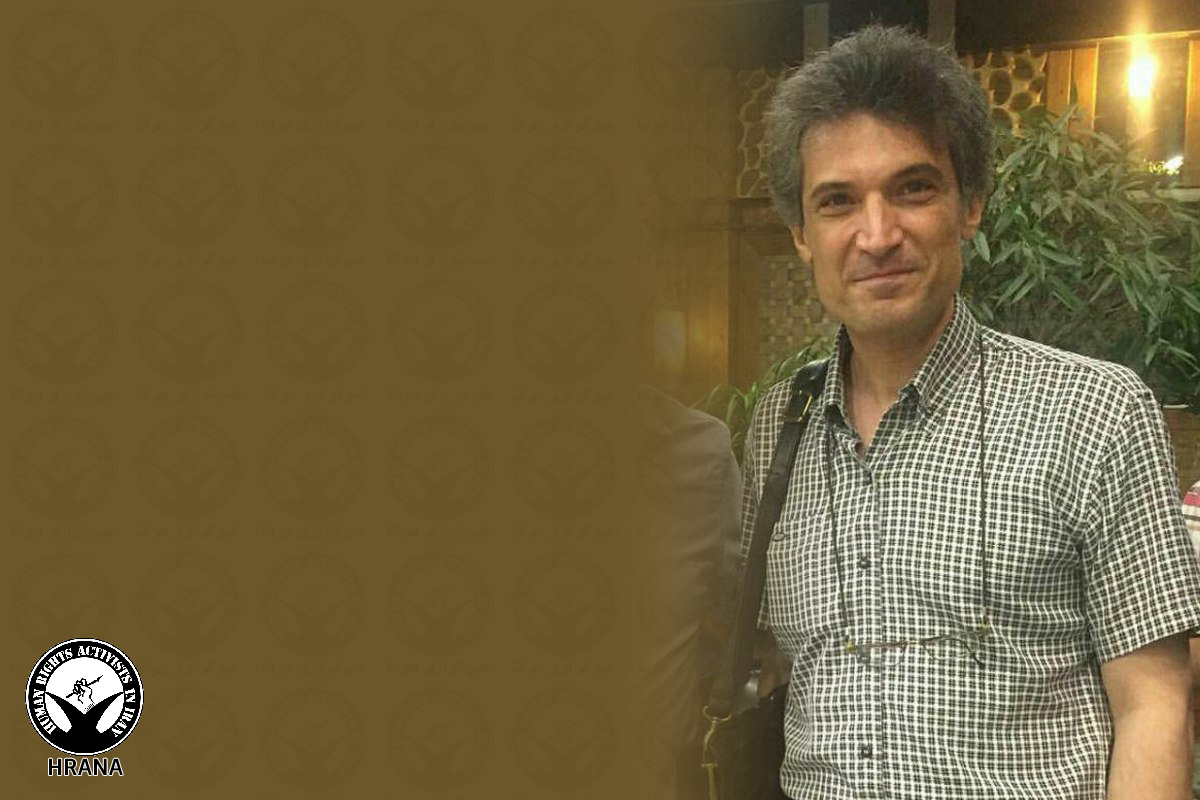
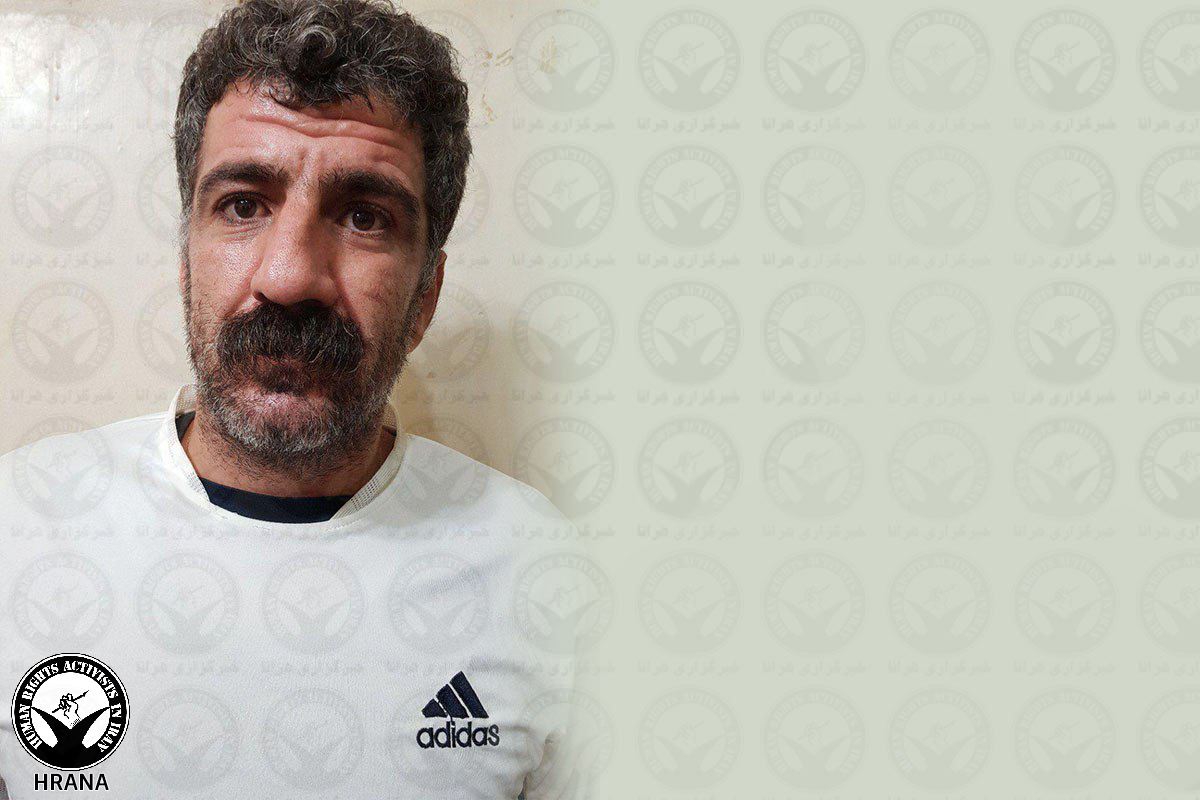
Human Rights Activists News Agency (HRANA) – Verya Saed Moochashmi has been detained in Karaj’s notorious Rajai Shahr Prison since he was 17. Convicted of aiding and abetting murder in 1998, he was sentenced to the death penalty and 80 lashes. This marks his 21st year behind bars.

In a letter obtained by HRANA, Mr Moochashmi remembers the incident that led to his conviction, stating that the murder was the unintended escalation of a clash initiated by an individual by the name of Shahram Jalali. Per an agreement with the victim’s family to pay damages (known as “blood money”) in exchange for a death row pardon, Mr Jalili had already paid half of the requested sum when he was executed in 2002. Esmaeil Hosseini, the other co-defendant, was released after serving three years and six months of his ten-year prison sentence.

The full text of Mr Moochashmi’s letter is below, translated into English:

In The Name of Non-Existent Justice

Behind prison bars from the age of 17 to now, the age of 40…Where is the justice?

I, Verya Saed Moochashmi, am a prisoner in Karaj’s Rajai Shahr Prison. When I was 14, to help my ageing father and my family, I left behind my city, my studies, and my home and came to Tehran. In 1998, I had been working as a laborer in Imam Khomeini International Airport for three years and I was about to turn 17 when I was convicted of aiding and abetting murder and sentenced to death and 80 lashes.

Yet in the skirmish that led to the murder of Mohammad Emami (the victim), the fighting and the killing were the work of Shahram Jalali — son of Jamal, born in Rabat Karim — and also another individual named Esmaeil Hosseini, who was convicted and sentenced to 10 years in prison but was freed after three years and six months. The principal defendant, Shahram Jalali, was executed in 2002 with the consent of the victim’s guardians, after having paid half of the blood money commensurate with the murder of a Muslim. I was innocent from the beginning, young and naive, illiterate, subject to the testimonies of my co-defendants which were totally baseless. The judge knows it, and yet I have been left in prison for 21 years.

Meanwhile not only have I lost my youth and my family, but I’ve also attempted suicide multiple times, documentation of which can be found in Imam Khomeini hospital.

All the while, the victim’s family has neglected the case and my situation in prison. Based on my requests and pursuant to Article 429, they’ve been repeatedly summoned but have refused to answer. Finally, in 2017, the assistant prosecutor, Mr Allahyari, summoned my family and me to post a bail of 2.2 billion rials [about $21,000 USD].

My family (of which only my brother remains) have done all they can to gather the money and post the bail. But a different assistant prosecutor has been named in the meantime, and the woman who now heads the department takes issue with Mr Allahyari’s terms and insulted my brother, calling him “backwards and worthless to society.” She said the process for the posting of bail and its payment now have to start anew.

A year has passed since then, and it’s now been 21 years since I’ve been in prison. Based on a law passed in 2013, minors can’t be sentenced to death, but I keep being punished and my case keeps getting ignored. As I approach 40, I am left with only one choice: declare a hunger strike to restore my rights and defend them until death. I want word to spread of the injustice that has been done to me; and for everyone to see their negligence of my case and the inconsiderate attitude of the new assistant prosecutor of the Branch 1, and how she has obstructed the process.

Is Article 429 not the law of the land? Have I not tried to have it followed four different times? How can a change of judge and assistant prosecutor (who get transferred among branches) mean a change in law? Where is the justice?

Who is going to be responsible for the waste of 21 years of my life? Is all this talk of justice a mere propaganda campaign, designed to deceive the media and public opinion?

Does the “principle of justice” serve merely to disparage and verbally abuse prisoners’ families, and for judges levelling insults at them, enforcing arbitrary sentences at their whim?

Verya Saed Moochashmi
Karaj’s Rajai Shahr Prison
August 17, 2018

Iranian Authorities Detain Writer Nader Faturehchi

Human Rights Activists News Agency (HRANA) – Writer, translator, and journalist Nader Faturehchi was arrested on the morning of Sunday, August 19, 2018, after he was unable to post the bail set for him during a preliminary hearing.

The hearing took place at Branch 3 of the Court of Precinct 31 of Tehran, where Faturehchi was summoned on defamation charges brought by Mohammad Imami, an investor for the celebrated Shahrzad television series, who himself has been accused of embezzling money from the Ministry of Culture.

Nader’s brother Shahrokh Faturehchi confirmed that the writer will be kept in custody as he did not have the means to post bail.

HRANA had previously reported on Mr Faturehchi’s court summons on April 4th, following a charge pursuant to Imami’s complaint. Branch 3 of Precinct 31 processes information technology and computer-related crimes.

Prior to his detention, Mr Faturehchi posted a note in response to his summons:

“A serious battle with corruption has begun. I’m going to court, coerced to ‘explain myself’ on accounts from someone charged with embezzling funds from the Employees’ Fund of the Ministry of Culture.”

Nader Faturehchi, born in 1977 in Tehran, explores political, artistic, social, and philosophical themes in his writing. He began his journalism career in the Sobh-e Emrooz newspaper and has previously worked with newspapers such as Sharq, Bahar, Aftab-e Emrooz, Dowran-e Emrooz, Bonyan, Towse’e and Sarmayeh. He also collaborates with the Porsesh Institute as a lecturer.

Sanandaj Central Prisoners Attempt Suicide

Human Rights Activists News Agency (HRANA) – Independently from one another, five prisoners held at Sanandaj Central Prison attempted suicide yesterday, resulting in one death and four hospitalizations.

The five prisoners attempted to take their own lives by ingesting pills and by hanging. One died, three were taken to the prison clinic, and one was admitted to an outside hospital. There is no evidence to suggest that their actions were coordinated or shared a common motive.

The deceased prisoner was identified as Iqbal Khusravi, 36, held at ward 6 of Sanandaj Central Prison. He was serving an eight-year sentence for drug-related crimes. The identities of the other prisoners have not been released.

A source at the prison stated, “At about 12:30 pm, Iqbal Khusravi consumed pills in an attempt to take his own life, which led to a cardiac arrest. In spite of the efforts of clinic officials, he passed away.”

He continued, “Some claims, so far unsubstantiated, have connected the suicide attempts to family problems and mistreatment of the prisoners by the presiding judge. These mistreatments included insults and verbal abuse and were extended to the family members of the prisoners.”

Last year, HRANA published a number of reports on the poor conditions of Sanandaj Prison and the mistreatment of the prisoners and their families by prison officials.

Imprisoned Kurdish Author Beaten at the End of his Hunger Strike

Human Rights Activists News Agency (HRANA) – On Friday, August 17th, political prisoner Ali Badrkhani’s transfer between the wards of Urmia Central Prison (OCP) quickly devolved into admission at the prison’s medical clinic.
Badrkhani had agreed to end a seven-day hunger strike in exchange for a transfer from solitary confinement back to OCP’s labor ward. A group of about ten violent offenders accosted Badrkhani during the transfer as prison officials stood by and goaded the attackers.
One week earlier, Badrkhani had declared the hunger strike in protest to his transfer to the labor ward, a measure he alleged was disproportionate to his criminal charges, and where he said he experienced harassment at the hands of prison officials. In immediate response to the hunger strike, OCP officials transferred Badrkhani to solitary confinement, where he remained for one week until reaching an agreement with the OCP warden and the judge presiding over his case.
Per the terms of their agreement, Badrkhani was being transferred back to the labor ward when a group of about ten violent offenders intercepted Badrkhani and beat him, bruising his face and injuring his shoulder with a sharp object. He was sent to OCP’s medical clinic for treatment.
The attackers were led by labor ward manager Merhali Farhang, who managed the OCP’s political prisoner ward from 2010 to 2016. During his tenure, Farhang reportedly secured the transfer of several violent prisoners to his ward, in order to intimidate and exert pressure on the inmates under his supervision. Several violent altercations between political prisoners and violent offenders have been attributed to Farhang’s management.
Ali Badrkhani was arrested in the winter of 2015 and released on bail within a few months. Upon his release, he was barred from completing the last semester of his Master’s Degree at the University of Tehran. On March 16, 2017, he was convicted of threatening national security and sentenced to a three-year prison term by Branch 1 of the Revolutionary Court of Urmia. He was taken to Ward 3-4 of the OCP to serve his three-year sentence the following spring.
Ali Badrkhani, a.k.a. Shwan, is a Kurdish author who holds dual citizenship of Iran and Iraq. His works include Turkey, Democracy, and the Kurds, Deliberate Discourse, Refugee of Love and Kurdish Folk Tales.

Increase in Arrests of Baha’i Citizens in Shiraz

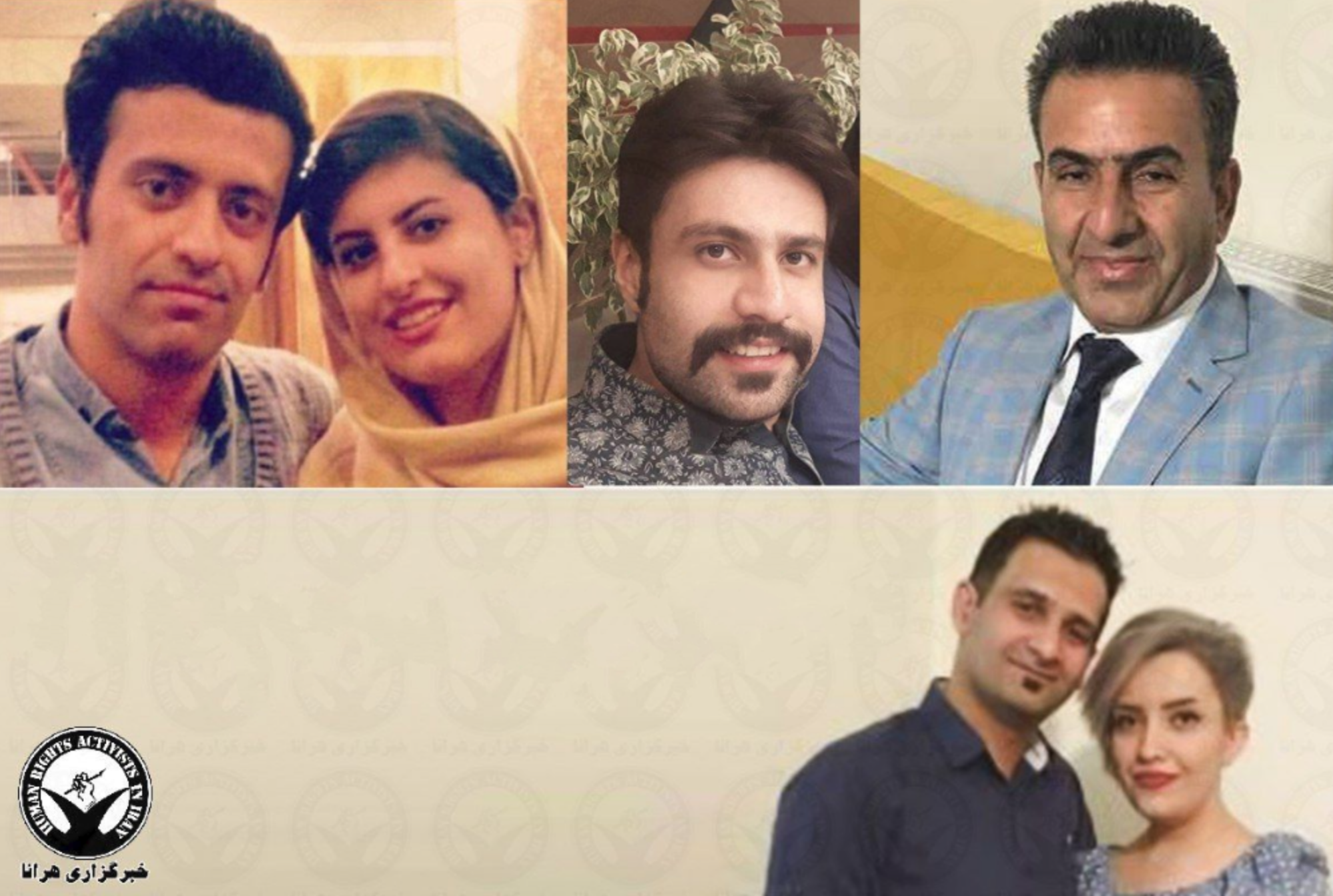
Human Rights Activists News Agency (HRANA) – On Friday, August 17, 2018, Baha’i citizens Pezhman Shahriari, Dorna Esmaili, Hooman Esmaili, Kourosh Rouhani, Negar Misaghian and Mahboob Habibi were arrested by security forces and transferred to the Intelligence Ministry’s detention center in the city of Shiraz.

An informed source told HRANA: “Negar Misaghian and Dorna Esmaili were released hours after [their arrest].”

Unconfirmed reports from sources close to the security apparatus say at least 40 Baha’i citizens in Shiraz were arrested today, during a planned operation. HRANA is in the process of investigating this claim.

Baha’i citizens of Iran are systematically deprived of religious freedoms, while according to Article 18 of the Universal Declaration of Human Rights and Article 18 of the International Covenant on Civil and Political Rights, all people are entitled to freedom of religion, belief, and changes thereof, as well as the right to express and practice those beliefs as individuals or collectives, in public or in private.

Though unofficial sources estimate the Baha’i population of Iran at more than 300,000, Iran’s Constitution officially recognizes only Islam, Christianity, Judaism, and Zoroastrianism, and does not acknowledge the Baha’i faith as an official religion. As a result, the rights of Baha’is in Iran are systematically violated.

Subscribe to Our Newsletter

Now is definitely not the time to stop reading!

Security Forces Storm the Residences of Civil Activists

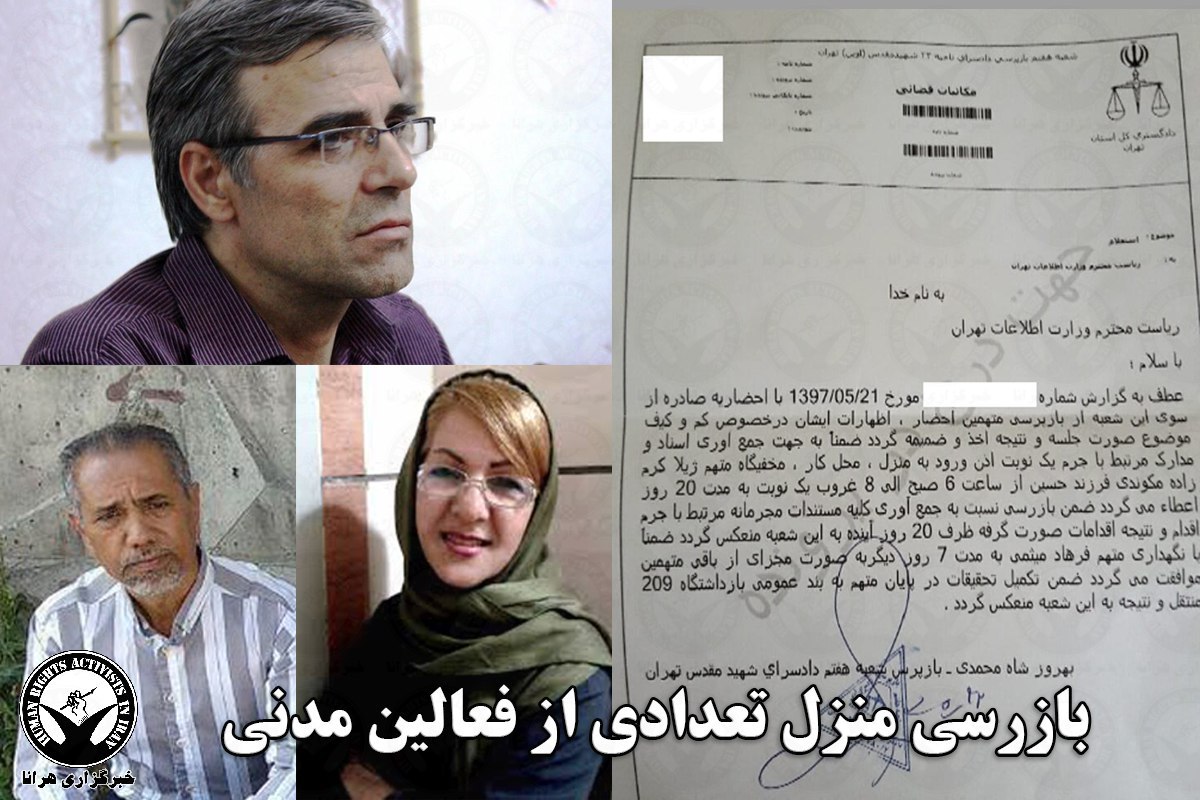
Human Rights Activists News Agency (HRANA) – This morning, Saturday, August 18, 2018, security forces of the Ministry of Intelligence stormed the private residences of Reza Khandan, Mr Khandan’s sister, Mohammadreza (Davoud) Farhadpour and Jila Makvandi. The security forces produced inspection orders issued by Branch 7 of Evin Court, searched the residences thoroughly and confiscated a number of items belonging to the aforementioned individuals.

Reza Khandan, the husband of Nasrin Sotoudeh, told HRANA, “This morning, Saturday, August 18, between 8 and 10 am, security forces of the Ministry of Intelligence entered our home and searched every inch of it. After that, they went to the home of Mr Mohammadreza (Davoud) Farhadpour and searched his home in its entirety as well. At the same time, in an unusual attempt, the security force went to my sister’s home and violently searched the entire place, going so far as individually inspecting every page of her child’s notebook. Two hours later, they arrived at our neighbor’s door and asked them a number of questions about us. It is likely that their invasion of my sister’s privacy is merely an attempt to further pressure my family; there simply is no other explanation for it. The security forces had in hand an order issued by the Branch 7 of Evin Court.”

Reza Khandan added, “The security forces were only looking for [pinback buttons] with [the words] ‘I oppose mandatory veiling’. They also took some of the letters that my wife, Nasrin Sotoudeh, had sent from prison.”

This morning, Jila Karamzadeh Makvandi reported of her home’s inspection in a post affixed with the inspection order. She wrote, “This morning at 10 am agents from the Ministry of Intelligence inspected our home using this order. The inspection was in regards to Dr Maysami’s books and the [lapel pins] with the engraving‘I oppose mandatory veiling.’”

Furthermore, in the order issued by Branch 7 of Evin Court and posted by Jila Karamzadeh Makvandi, in addition to the inspection of her residence, it is stated that Farhad Maysami is being held in solitary confinement.

Security Forces Arrest More Citizens in Ahvaz

Human Rights Activists News Agency (HRANA) – Several citizens in the southwestern Iranian city of Ahvaz were arrested by security forces in the aftermath of a football match between Esteghlal Ahvaz and Tehran’s Persepolis that took place on August 9th. After the match, fans chanted slogans against the Iranian authorities.
The arrestees, who are among the Arab citizens of Ahvaz, were reportedly arrested by security forces of the Intelligence Department of Ahvaz’s Islamic Revolutionary Guard Corps (IRGC).
HRANA was able to identify two of the arrestees as Imen Beit Sayah, 16, and Bashir Sorkhi. Mr Sorkhi was reportedly arrested on August 15th and taken to an unidentified location. Mr Sayah was arrested on August 9th and taken to an unidentified location.

Bashir Sorkhi (left) and 16-year-old Imen Beit Sayah (right)

After a week, the family of the arrestees still have no information about the whereabouts of their children.
On August 16th, HRANA had reported on the arrest of another Ahvazi citizen by security forces.

Baha’i Couple From Shiraz Arrested

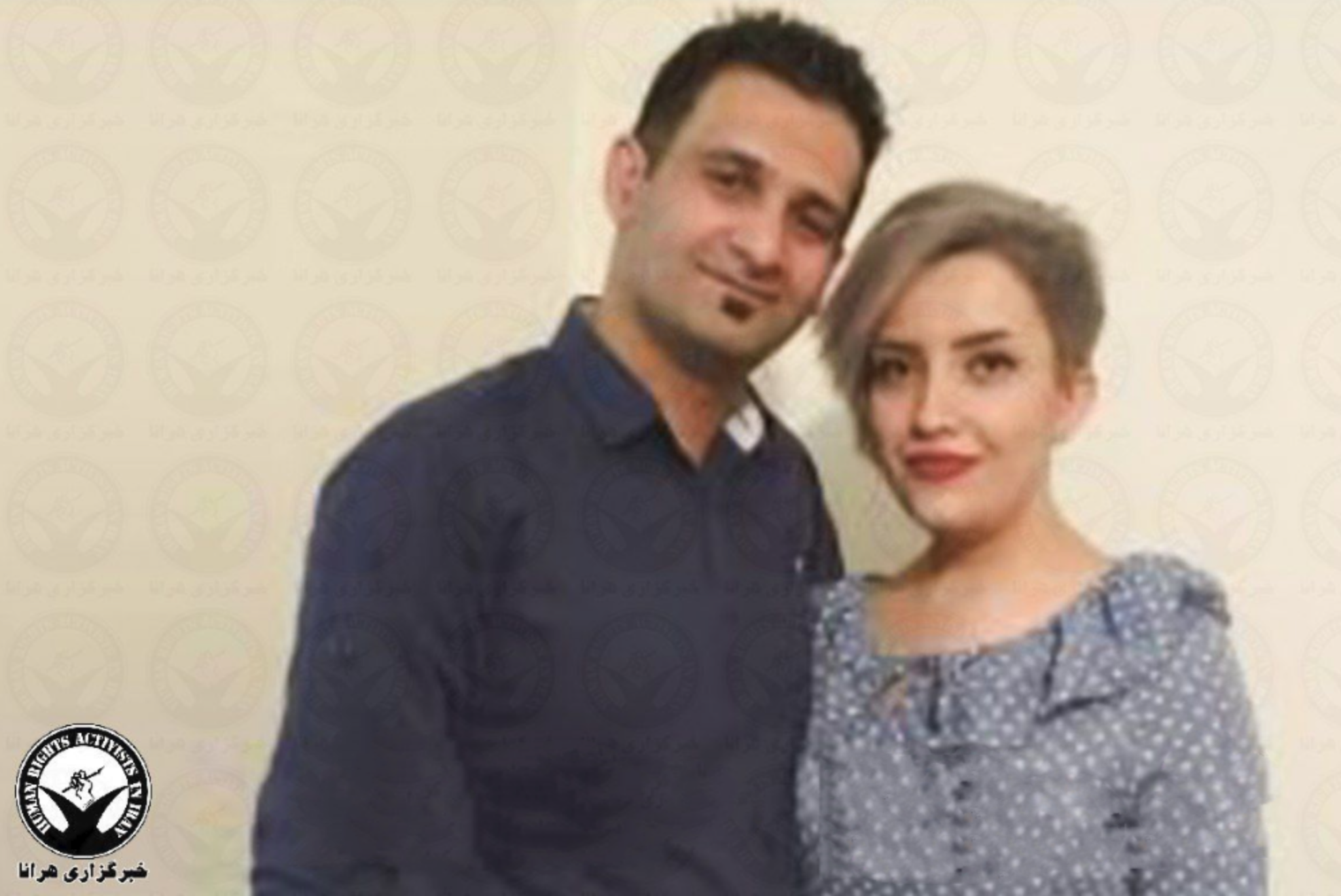
Human Rights Activists News Agency (HRANA) – On Friday, August 17, 2018, Negar Misaghian and Mahboob Habibi, a Baha’i couple from Shiraz, were arrested by security forces and transferred to the Intelligence Ministry’s detention center in the same city.

Earlier this month, HRANA also reported on the court verdict for Rouhieh Nariman and Farzad Delaram, another Baha’i couple in Shiraz. Rouhieh Nariman was sentenced to two-and-a-half years in prison, and her husband, Farzad Delaram, was sentenced to one year in prison by Branch 17 of the Shiraz Appeals Court.

Iranian Baha’i citizens are systematically deprived of religious freedoms, while according to Article 18 of the Universal Declaration of Human Rights and Article 18 of the International Covenant on Civil and Political Rights, everyone is entitled to the right to freedom of religion and belief, and the right to adopt and manifest the religion of their choice either individually, in public or in private.

Based on unofficial sources, more than 300,000 Baha’is live in Iran. However, Iran’s Constitution only recognizes Islam, Christianity, Judaism, and Zoroastrianism and denies recognizing the Baha’i faith as an official religion. Consequently, the rights of Baha’is are systematically violated in Iran.

Fifteen Days after Arrest, Farhad Meysami Still Held Incommunicado

Human Rights Activists News Agency (HRANA) – On August 12th, Farhad Meysami’s mother, along with lawyer Arash Keykhosravi, went to the Public Prosecutor’s Office of Evin Prison to inquire about his status and register Keykhosravi as Meysami’s attorney. Evin’s interrogation branch 7 denied the registration, referencing clause 48 of Iran’s Criminal Procedures Regulations.

HRANA reported on Meysami’s arrest by security forces in his home on the evening of July 31, 2018. He was transferred to Ward 209 of Evin Prison and has not been heard from since.

Keykhosravi confirmed that he was denied the right to represent Meysami on August 12th, adding that Meysami’s mother was frantically seeking answers after receiving a phone call in which sounds of her son’s torture, and supposed confession, could be heard. The interrogator at Branch 7 denied the call was made by prison authorities, and promised her a well-check phone call from her son.

Stating that there is no further information available about Meysami’s charges, Keykhosravi continued, “Many cases involving security charges have no security basis at all. When someone criticizes an issue or actively stands up against something, the government immediately treats it as a national-security case and deprives that person of their basic and fundamental rights. As it concerns Mr. Meysami, we suspect he was arrested for his criticism of the mandatory hijab, which affects neither domestic nor foreign security. Objections like these are the mere expression of differing ideas and perspectives. Elevating such cases into security accusations is a violation of people’s fundamental rights, including the right to choose a lawyer, which is revoked per clause 48 of the Criminal Procedures Regulations.”

According to clause 48 of the new Criminal Procedure, during the initial stages of investigation against those accused of political and national-security crimes, defendants must pick their attorney from a list of lawyers pre-approved by the judiciary. Citizens’ rights organizations claim that this law infringes on the rights of the accused.

Azerbaijani Turkic Activists Arrested After Ceremony in Mount Sabalan

Human Rights Activists News Agency (HRANA) – Security forces in Meshginshahr (northwestern Iran) reportedly arrested several Azerbaijani Turkic minority activists on Friday, August 10th after attacking their camp in Mount Sabalan.
The activists, who had reportedly planned to climb Mount Sabalan, were arrested while reading poetry in their camp. There is no information available at this time about their condition or the charges issued against them.
HRANA was able to confirm some of their names: Aidin Zakeri, Tohid Amir Amini, Saleh Pichganloo, Reza Ebrahimi, Rahim Nowrouzi, Mojtaba Parvin, Mostafa Parvin, Yousef Kari, Mehdi Houshmand, Babak Nikzad, Younes Shokri, Javad Shokri, Hossein Salavan, Mohammad Ghohoumzadeh, Rasoul Ghohoumzadeh, Ealman Mohammadpour, Aisouda Mohammadpour and Ahmad Mohammadpour.
According to eyewitnesses, some of the activists were beaten for resisting arrest. One of the detained activists informed his family in a phone call that they were all transferred to a detention center in Lahroud (near Meshginshahr).