Mahin-Taj Ahmadpour Ends Hunger Strike after 16 Days

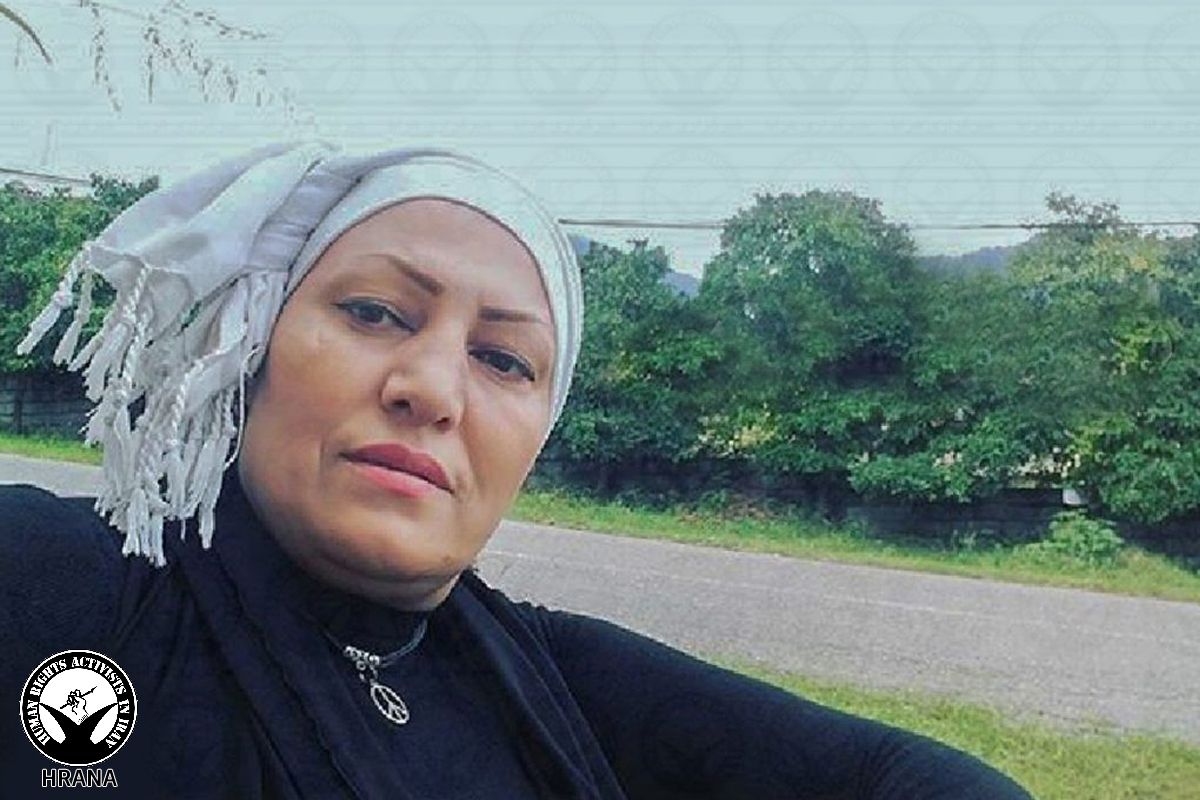
Human Rights Activists News Agency (HRANA) – On Tuesday, September 25, 2018, political prisoner Mahin-Taj Ahmadpour agreed to end her 16-day hunger strike in exchange for verbal commitments from prison authorities to meet her demands for medical treatment.

Authorities at Nashtaroud Prison of Tonekabon, where Ahmadpour is being held, had previously dismissed her requests for more adequate anemia treatment. A source close to Ahmadpour told HRANA that the authorities have now pivoted, making promises to approve a hospital transfer and medication deliveries from her family. “In addition, they asked her to put in a request for conditional release, and promised to facilitate the processing of the request.”

Ahmadpour had lost 8 pounds by the 10th day of her strike when HRANA reported on prison authorities’ failure to address her deteriorating physical health.

Sentenced to 10 months in prison for her participation in the January protests, Ahmadpour began starving herself September 10th to protest her restricted access to resources, such as medical care and the telephone, and to revolt against prison authorities who reportedly threatened to open new charges against her as a form of coercion or harassment.

Per her treatment plan for anemia, Ahmadpour should receive seven units of blood every month. An informed source told HRANA that monthly blood infusions were also recommended for her as a preventative measure against leukemia. In the face of her diagnosis and supporting medical documentation, however, prison authorities had until now denied Ahmadpour’s requests for outside medication and refused to clear her for a medical transfer.

Mahin-Taj Ahmadpour is a 46-year-old resident of Tonekabon. A peddler by trade, she was arrested along with 14 other residents during widespread rallies that took place in January 2018 across Iran, known as the January Protests. The Revolutionary Court of Tonekabon sentenced eight of these arrestees to 28 months’ imprisonment, divided among the defendants. Branch 101 of Criminal Court No. 2 of Tonekabon, presided over by Judge Ebrahimi, also sentenced six of the arrestees to 24 collective months of prison time.

Ahmadpour was first sentenced May 2, 2018, in Branch 101 of Tonekabon Criminal Court No. 2 to serve a six-month prison sentence on a charge of “disrupting the public peace through participation in an illegal gathering.” On August 11, 2018, Tonekabon’s Revolutionary Court compounded the sentence with four months’ imprisonment for “propaganda against the regime.” As evidence against her, the court cited a combination of law enforcement reports and images and video taken during the January protests in Tonekabon.
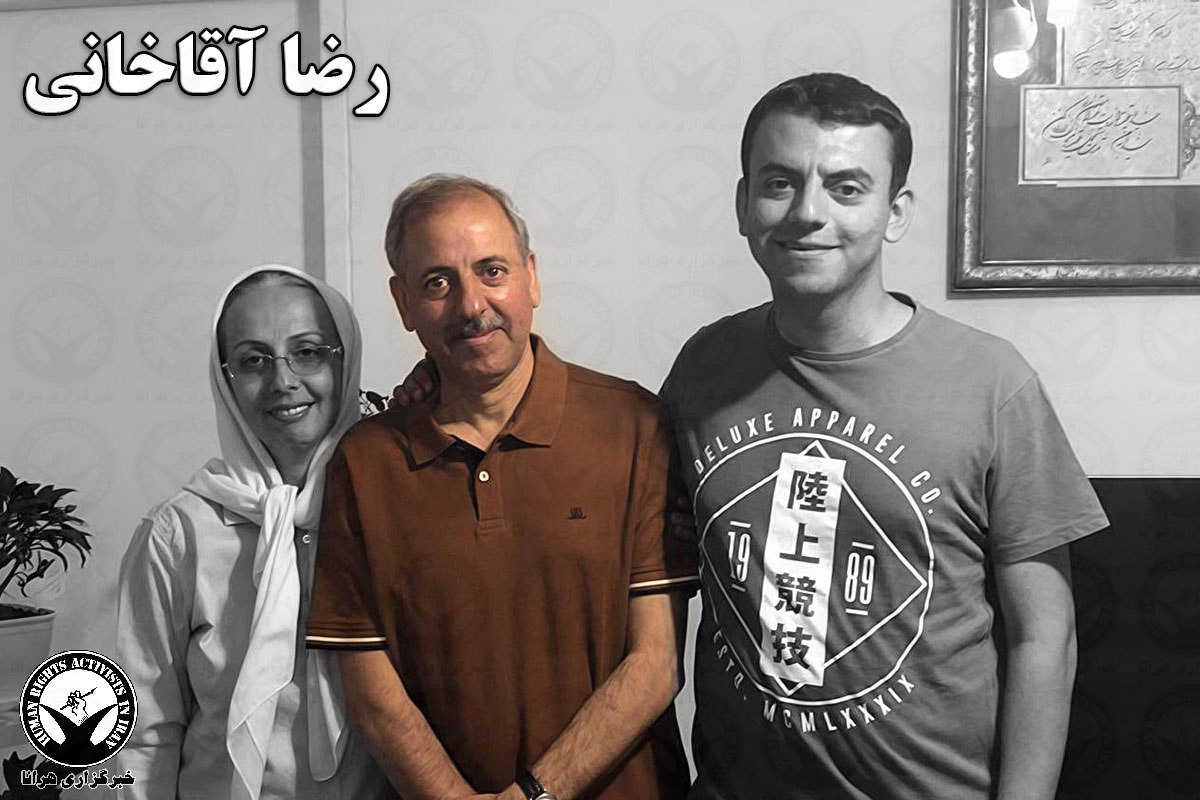
Nationalist-Religious Activist Reza Aghakhani Denied Conditional Release

Human Rights Activists News Agency (HRANA)- Despite his eligibility for conditional release for already having served a third of his sentence, authorities have said “no” to Evin Prisoner Reza Aghakhani, a nationalist-religious activist.

An informed source told HRANA, “The assistant prosecutor of the prison cited an objection from the interrogator as the reason for the negative response, despite the fact that his wife recently just had a kidney transplant and his child is dealing with a physical disability.”

Aghakhani was sentenced to three years in prison by Branch 15 of the Revolutionary Court on a charge of “acting against national security.” In its processing of the case, Branch 35 of the Supreme Court did not assent the charges. They were nonetheless confirmed later in Branch 54 of Appeals Court.

Aghakhani was previously detained for 45 days in May 2013 and served a few years in prison in the eighties for his political activities. Along with some of his fellow prisoners, Aghakhani previously went on hunger strike for three days in protest of human rights violations across the country.

Narges Mohammadi Released on 3-Day Furlough

Human Rights Activists News Agency (HRANA) – Deputy of the Defenders of Human Rights Center Narges Mohammadi was released on a three-day furlough on September 26, 2018. Reporting the news of her furlough to HRANA, Mohammadi’s spouse Taghi Rahmani shared that Mohammadi will need long-term medical furlough to get adequate care for her illness.

Prior to Mohammadi’s furlough release, her mother Ozra Bazargan wrote to the Prosecutor of Tehran with the request that her daughter is granted a furlough to visit her ailing father. From June 30th – July 5th of this year, Mohammadi was released from prison to get back surgery at an outside hospital. On August 6th, prison authorities prevented Mohammadi from being transferred out of Evin Prison to see a neurologist, only to approve her transfer to Imam Khomeini Hospital when she fell into critical condition one week later.

Mohammadi’s attorney Mohamoud Behzadirad previously commented on the status of his client’s case file, stating “it has been six years and four months since my client was detained, and around three years and eight months remain of her sentence. She is eligible for conditional release, but the request for that release has yet to be approved.”

In May 2016, Narges Mohammadi was sentenced by the Revolutionary Court of Tehran to sixteen years of imprisonment, ten years of which was for her role in the Step-by-Step Campaign to Abolish Death Penalty in Iran (LAGAM). The court considered her collaboration with this peaceful campaign to be an example of “gathering with intent to disrupt national security.”

According to Narges Mohammadi, her trial judge treated her with bias and hostility, openly defending the charges levied against her by officials from the Ministry of Intelligence and accusing her of trying to “warp divine law” for her demonstrations of dissent against capital punishment.

The additional six years of Narges Mohammadi’s imprisonment were issued in connection to her peaceful human rights activism, which translated in court to charges of “gathering and conspiring against national security” and “propaganda against the regime.” Her offenses included giving media interviews about human rights violations, her participation in peaceful gatherings to support the families of prisoners on death row, her contact with other human rights defenders (including Nobel Peace Prize laureate Shirin Ebadi), her participation in peaceful protests to condemn acid attacks against women, and her 2014* meeting with Catherine Ashton.

In Autumn of 2016, Branch 36 of the Tehran Appeals Court upheld Narges Mohammadi’s prison sentence. In May 2017, her request for a retrial was reportedly rejected by Iran’s Supreme Court.

Two Teachers Imprisoned at Evin Pen Statement of Support for Farhad Meysami

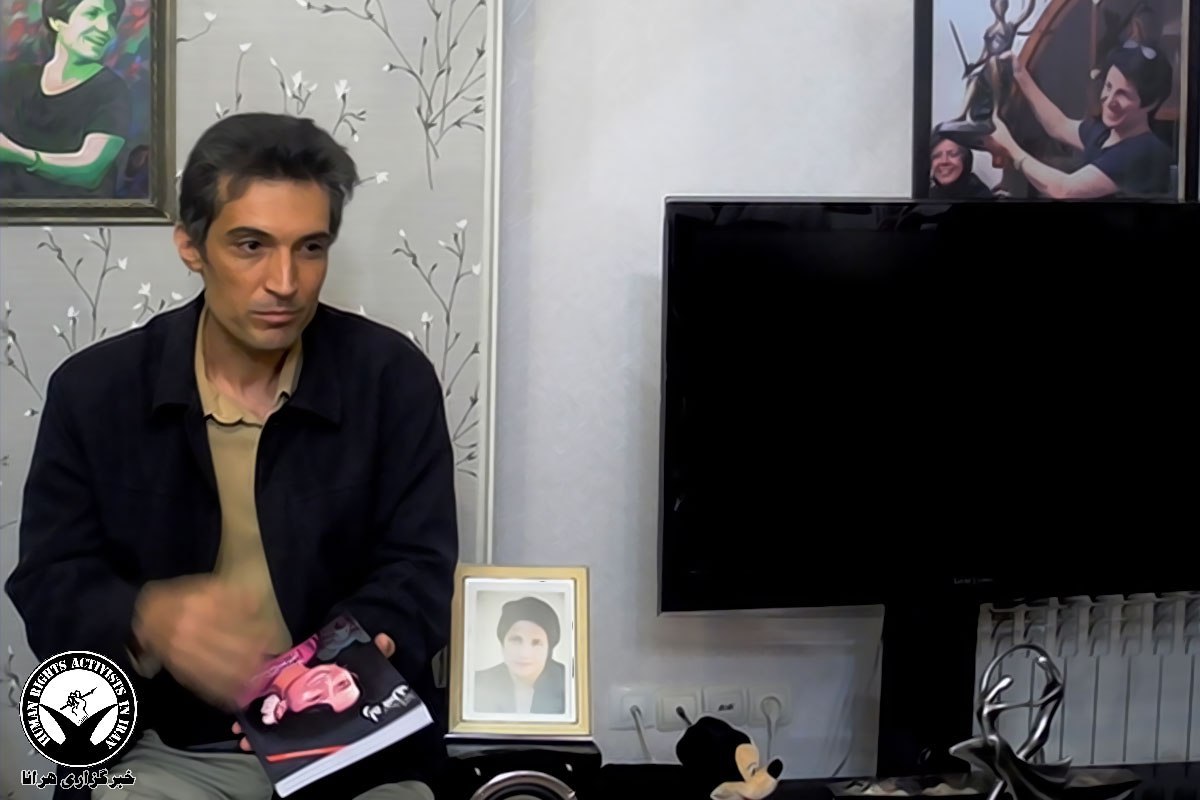
Human Rights Activists News Agency (HRANA) – Mahmoud Beheshti Langroudi and Esmail Abdi, two teachers imprisoned at Evin, have demanded in a letter to Judicial authorities that their ward mate Farhad Meysami–who is now in the 54th day of his hunger strike–be transferred to an outside treatment facility to avert an impending health crisis.

Meysami has dropped 30 pounds since he started starving himself on August 1st to protest both his detention and authorities’ refusal to appoint the lawyer of his choosing. In addition to his 18-year history of ulcerative colitis, Meysami experienced a steep drop in blood pressure on Saturday, September 8th, prompting the prison doctor to recommend more aggressive treatment. Notwithstanding the doctor’s orders, prison authorities refuse to clear his transfer to a different facility for treatment.

In a letter, Langroudi and Abdi, two imprisoned teachers held with Meysami in Ward 8 of Evin Prison, urge authorities to approve Meysami’s transfer to a medical treatment facility, to “prevent a possible calamity from occurring.”

The full text of their letter, translated into English by HRANA, is below:

“In the name of the God of wisdom and life,

Fifty days have passed since Dr. Farhad Meysami, civil activist and political prisoner, declared his hunger strike. His strike was a response to unjust legal proceedings, and authorities’ hindrance of his effective defense by refusing him the right to choose an attorney. He is now in a critically weakened condition. It is said that the doctors at Evin Prison insisted he be hospitalized, yet judicial authorities refuse to issue the order to have him transferred to a prison more materially equipped to treat him.

Because this civil activist suffers from ulcerative colitis and has lost 30 pounds over the course of his hunger strike, his blood pressure, pulse, and other vital signs have dipped into gravely abnormal ranges. As of last week he stopped accepting intravenous treatment, leaving us more concerned than ever that a calamitous outcome might be imminent.

We, the undersigned, thus put on guard the relevant judicial authorities, that they express their agreement to transfer Dr. Meysami to a proper hospital without delay, to prevent a possible calamity from occurring.

His ward-mates, Mahmoud Beheshti Langroudi and Esmail Abdi”

Prisoner executed in Tonekabon on Murder Charges

Human Rights Activists News Agency (HRANA) – A prisoner convicted of murder was executed in Iran’s northern city of Tonekabon on September 25th. On the eve of his execution, the Iranian authorities transferred him to solitary confinement per protocol for prisoners whose execution is imminent.

Majid Pili, 41, was from the northern city of Ramsar and had spent three years in Tonekabon Prison.

According to a credible source, Pili was convicted of murdering Majid Zabihi. Zabihi’s wife, Zahra Ghorbanpoor, was also arrested for the crime. The judge convicted Pili of murder and Ghorbanpoor of accessory to murder for which she was sentenced to 12 years in prison.

Iran’s Supreme Court confirmed Pili’s death sentence earlier this year.

According to registered data from 2,945 reports by the Statistics, Publications, and Achievements Division of HRAI, in the past year (from March 21, 2017, to March 18, 2018) at least 322 citizens were executed and 236 others were sentenced to death in Iran. Among these were the execution of four juvenile offenders and 23 public hangings.

Subscribe to Our Newsletter

Now is definitely not the time to stop reading!

Young Urmia Prisoner Suffers TBI in Beating from Prison Warden

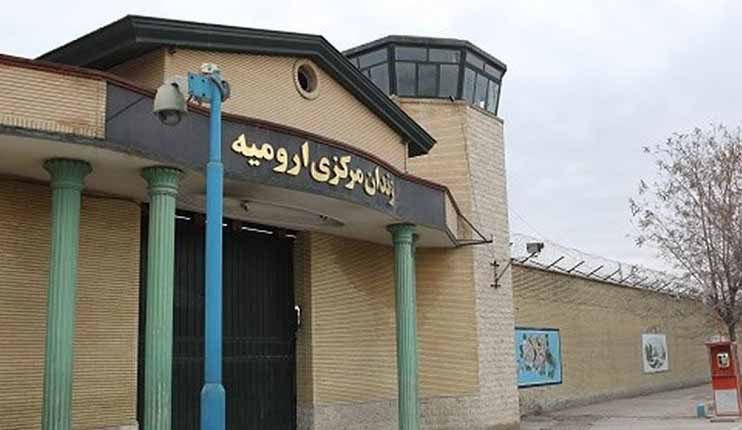
Human Rights Activists News Agency (HRANA)- After a beating from internal prison director Bayramzadeh left him with a concussion, Javad Shirzad (a.k.a Arash), a prisoner in Urmia Central Prison’s youth ward, was transferred to an outside hospital for treatment.

An informed source told HRANA that Shirzad, who is in the fifth year of his sentence, went to another prisoner’s cell to say hi when Bayramzadeh began assaulting him.

According to the source, Shirzad was transferred on September 11th to an outside care facility where a battery of tests including an electroencephalogram (EEG) led to a diagnosis of traumatic brain injury. “He is still under supervision per the doctor’s orders,” the source said.

Prison officials have a long history of mistreating and assaulting prisoners with impunity. This past May, former IRGC 3rd Lieutenant Saeed Nouri reportedly sustained a beating by two prison guards inside the office of the prison’s internal director; and in July, a warden assaulted Saeed Seyyed Abbasi for arriving late to the prison yard for recreation time. Despite Abbasi’s injuries, he was subsequently transferred to solitary confinement without receiving any medical attention.

53 Days into Solidarity Hunger Strike, Ailing Civil Rights Activist Farhad Meysami Stands His Ground

Human Rights Activists News Agency (HRANA)- In protest of the imprisonment of his comrade Reza Khandan, civil Rights Activist Farhad Meysami has now been starving himself for 53 consecutive days.

In a visit to the Evin Prison clinic September 22nd, according to a close source, doctors noted Meysami’s 42-pound weight loss and steep drop in blood pressure and urged him to be admitted to the clinic. Meysami refused, persistent in his requests to be transferred to an outside hospital.

Shortly thereafter, prison authorities, including the prison director, came to visit Meysami, who reiterated to them the sole condition in which he will end his hunger strike: the dropping of all charges against Reza Khandan.

Farhad Meysami was arrested in his personal study on July 31st. He was originally charged with “gathering and collusion aimed at disrupting national security,”; “propaganda against the regime”; and “insulting hijab, a necessary and sacred element of Islam.”

On September 3rd, however, Branch 7 of the Evin prosecutor’s interrogation department claimed that charges have since changed, with the last one replaced with “spreading corruption and prostitution.”

Human Rights Watch and Amnesty International have both asked for Meysami’s release.

Alcohol Charges Evolve into Death Sentence for Urmia Political Prisoner

Human Rights Activist News Agency (HRANA) – Forty-two-year-old political prisoner Mohyeddin Ebrahimi has been convicted of cooperating with a Kurdish opposition party and sentenced to death by Judge Ali Sheikhloo in Branch 2 of Urmia’s Revolutionary Court. He is currently being held in Section 12 of Urmia Prison in northwestern Iran.

A close source told HRANA that Ebrahimi has been recovering from three gunshot wounds for the better part of a year in the Urmia Prison clinic. He was shot during his arrest on October 23, 2017, at the Iran-Iraq border, where he was found to be carrying a walkie-talkie and accused of alcohol possession.

HRANA’s source indicated the court was flippant in its verdict on Ebrahimi’s case, verbally presenting the charge of “cooperating with a Kurdish opposition party” — punishable by death — while skipping over portions of the judicial process provisioned by law, e.g. formal questioning, providing him with a hard copy of his charge sheet, or the hearing of any statements in his defense.

Ebrahimi’s record shows a history of alcohol charges: a 2010 arrest for which he spent 11 months in Urmia prison before being acquitted, and a 2014 charge that was eventually dropped due to lack of evidence.

According to Amnesty International’s annual report, Iran ranks first in the world in executions per capita.

Mohyeddin Ebrahimi is from the village Alkaw, near the city of Oshnavieh, West Azerbaijan Province.

Political Prisoner’s Brother Fights to Save Him from a Legal Crisis, or Worse

Human Rights Activist News Agency (HRANA) – Iranian citizens continue to speak out on behalf of their imprisoned loved ones and compatriots, and Hejar Alipour’s voice is the most recent to join the throng of support. In an open letter, Alipour defends the rights to family visitation, family contact, and attorney consultation for Mohammad Ostadghader and his own brother Houshmand Alipour, both of whom are imprisoned on charges of “membership in Kurdish Anti-regime Parties” and–if the fears of human rights organizations prove true–may be on track to the death penalty.
Four days after the August 3rd arrest of Alipour and Ostadghader by the Ministry of Intelligence, Iranian National Television broadcasted a recording of the two men confessing involvement in an attack on a Saghez security base. Both have been barred from contacting their families since the day of their arrest, with the exception of a short phone call from Alipour to his family September 1st, in which he said he had been coerced to confess under threat of torture.
Amnesty International recently published a press release expressing grave concern about the imprisonment and forced confessions of the two men: “Mohammad Ostadghader was shot and injured during the arrest but has been denied medical care,” the press release stated, adding that the prisoners have been held in an unknown location, out of reach from their families or lawyers. “[We are] concerned that the nature of the accusations against them and their forced televised confessions may be a precursor to charges that incur the death penalty.”
In defense of the rights of prisoners like his brother Houshmand, Hejar Alipour pleads their case to the international human rights community in the letter below, translated into English by HRANA:
“It has been two months since my brother Houshmand Alipour and his friend Mohammad Ostadghader were trapped by intelligence officers of the Islamic Republic at the Keh Li Khan Mountain Pass near the city of Baneh. Since then, we have had no news of or contact from my brother Houshmand, other than a few-minute-long phone call from him during which he told us that he is detained at the Intelligence Office of Sananadaj. The Intelligence officers lied to him, promising that they will allow him contact and visits with his family. Yet he continues to be banned from having visitors and has not had permission to contact the family. We retained two attorneys for Houshmand who went to the prison, the Judicial Office, and the Intelligence Office of Kurdistan province in order to make arrangements to represent him. However, the intelligence and security officers of the regime refused the meeting and turned them away.
The lives of Houshmand and Mohammad are in serious danger. Under torture, they have been forced to falsely implicate themselves, thus validating national security charges being levied against them. The Islamic Republic is bound to Islamic Penal Code, Shari’a law, and its own provisions, i.e. criminals’ and accused citizens’ rights to a fair trial, an attorney, and official legal visitation, at least within a number of days of arrest. In the case of Houshmand and Mohammad, the Islamic republic is not only violating its own principles and Islamic judicial proceedings but also denying defendants’ most basic rights by treating them inhumanely and employing physical violence and torture. The extraction of confessions under violent torture, the broadcasting of those confessions on August 7, 2017, the refusal to allow contact with attorneys or families, and denying visitation, are all violations of the basic rights of any prisoner, be they political or criminal; of rights set forth by the Islamic Republic […]
By international human rights standards, and even by the standards of the Islamic Republic, any mistreatment, or forced confession under torture, is an inhumane and criminal act. The Islamic Republic is not holding itself accountable to any principle of morality or humanity[…]. Considering the circumstances, and as the family of political prisoner Houshmand Alipour, we are concerned about the physical conditions of Houshmand and Mohammad, and of their restricted access to medical care. We hold the intelligence and judicial officials of the Islamic Republic responsible for any physical outcomes of the dangers they currently face.
We have announced the Campaign to Save the Life of Houshmand Alipour and ask all freedom-loving, humanitarian people of the world to join our campaign so that we can prevent the slow death or execution of these two prisoners by the Islamic Republic. On September 11, 2018, Amnesty International announced an urgent and accelerated campaign to save the lives of Houshmand and Mohammad, expressing its concern and demanding that authorities address the appalling state of deprivation that these two prisoners are in. This campaign was circulated to all international human right organizations, the European Union, the United Nations, and other institutions defending Human rights. In Canada, we were able to spread the word about my brother Houshmand’s case with the help of Amnesty International and Center for Victims of Torture, as well as through contacts with Canadian parliament and ministers. We ask the Canadian Government to immediately condemn the Islamic Republic’s violation of the most basic rights of these two prisoners, i.e. to visitation with the attorney and the family. Please join the Campaign to Save the Life of Houshmand Alipour, to save Houshmand and Mohammad’s lives. Help us lift their voices to the level of governments and human rights institutions. We thank all those who have already expressed their support and concern for the life of my brother.”

State of Mental Health Critical for Zahedan Political Prisoner Held Six Years Without Trial

Human Rights Activists News Agency (HRANA) – A hostage of judicial bureaucracy for six years and counting, political prisoner Meysam Chandani, 28, has recently experienced a serious psychological downturn, a close source told HRANA.

“He is suffering from severe psychological illness due to the pressures of incarceration, the living conditions inside, and his legal limbo,” the source said. “He makes noises throughout the day and night, behaves strangely, and has caused problems for his ward mates.”

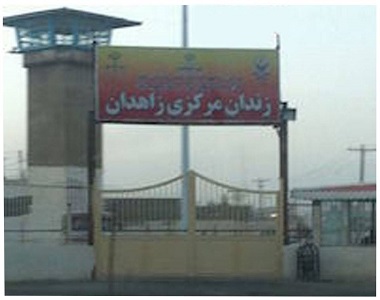
Currently held in section 4 of Zahedan Prison in the southeastern province of Sistan and Baluchestan, home to Iran’s Baloch minority, Chandani was arrested six years ago by the Ministry of Intelligence forces of Saravan county and charged with “acting against national security,” “Moharebeh (enmity against God) through armed activities,” and “membership in an opposition group.” Unable to post his 5 billion toman (approximately $1,250,000 USD) bail, he has been waiting on his sentencing–or any updates at all–ever since.

In the meantime, prison officials refuse to attend to his medical needs, which according to eyewitnesses reports are growing more serious by the day.

While prison management has no direct responsibility to nudge the judiciary about lagging case files, they have been slow to address the prison’s dearth of communication channels with the judiciary and its general lack of social aid workers, shortcomings which make the follow-up process too difficult for some prisoners to undertake themselves.

Overpopulation has become a prevailing issue at Zahedan prison, where officials routinely disregard or postpone consideration of prisoner requests for sentencing reduction via part-time sentence schedules, furlough, and conditional pardon.

HRANA has previously reported on general lack of medical treatment in Zahedan Central Prison, based on interviews with eyewitnesses. The prison also hosts many who suffer from legal limbo like Chandani. This is in direct contravention of Article 9 of the International Covenant on Civil and Political Rights–of which Iran is a signatory–which guarantees arrestees the right to a prompt trial and to be promptly informed of the extent and nature of any charges on which they are being detained.