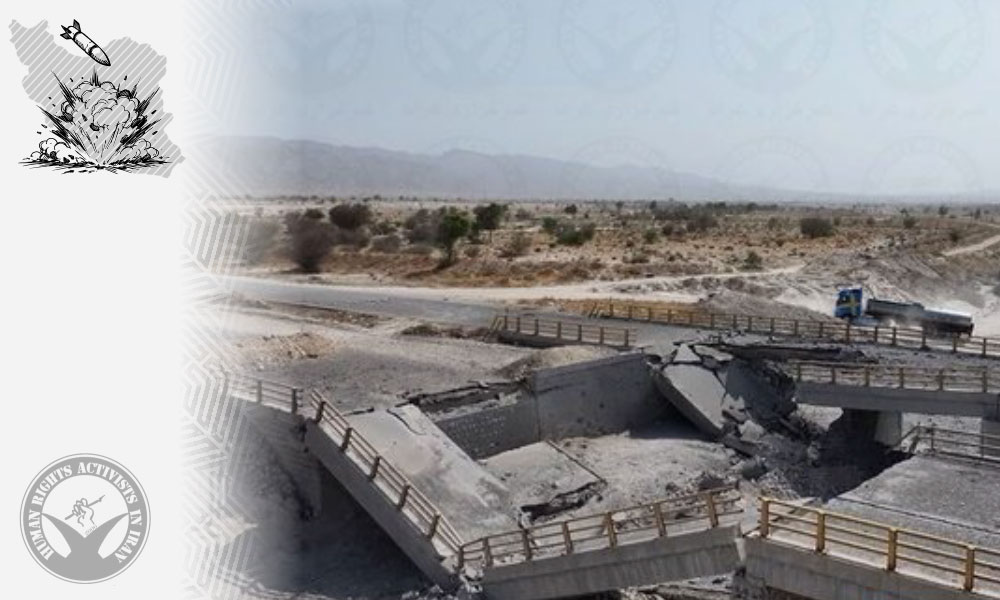
Ten-Day Report on the New Wave of Attacks on Iran: Human Casualties and Disruption of Critical Infrastructure

HRANA – From the beginning of the new wave of U.S. attacks on Iran on July 8 through July 17, HRANA documented at least 376 incidents related to these attacks across 54 locations in 15 provinces nationwide.

The collected data indicates that a significant portion of the attacks has been concentrated in southern Iran, particularly along the coasts of the Persian Gulf and the Gulf of Oman. Military bases and defense facilities have been among the announced or reported targets. However, ports, piers, fishing vessels, bridges, railway lines, airports, telecommunications towers, and a number of infrastructures related to water, food, communications, transportation, and local economies have also been targeted or damaged as a result of the attacks.

Based on the cases that HRANA has documented and verified as of the time of publication, at least 48 people have been reported killed and 68 injured. In one of the most severe reported incidents, a one-year-old child in Bandar Abbas lost one hand after being struck by shrapnel, and the child’s condition has been reported as critical.

The head of the Ministry of Health’s Public Relations and Information Center has also announced that the number of people injured in the attacks has exceeded 400, while 38 people have lost their lives. The official did not specify whether these figures include military personnel, civilians, or both groups, nor whether they represent all casualties or only those registered at medical facilities. The discrepancy between HRANA’s figures and the official statistics underscores the challenges of verification under the current circumstances. Given the ongoing attacks and restrictions on access to information, the actual number of casualties may be higher than the documented figures.

This report does not assess the competing claims made by the parties regarding the nature or use of the targeted sites, nor does it evaluate the legal legitimacy of the military operations. Instead, it focuses on the documented consequences of these attacks for the civilian population, including access to essential services, transportation, communications, livelihoods, and the economic security of local communities.

About the Data and Counting Methodology

All documented incidents, including attacks, projectile impacts, explosions, and other events related to aerial operations, have been included in the overall incident count. Therefore, the registration of 376 incidents does not necessarily mean that 376 separate attacks or military operations took place. Multiple incidents may correspond to different waves of a single attack, multiple impacts within the same area, or separate reports concerning the same operation.

Because the attacks are ongoing, access to some affected areas remains restricted, communications have been disrupted, and information continues to emerge gradually, the figures presented in this report represent minimum confirmed counts and remain subject to revision. In cases where there was a possibility of overlap, duplicate counting, or insufficient information, HRANA refrained from reporting definitive figures and included only those cases that could be verified to a reasonable degree.

Key Findings

Between July 8 and July 17 :

• At least 376 incidents related to the attacks were documented across 15 provinces.

• These incidents were reported in 54 geographic locations, including 45 cities and urban areas, four counties, one district, and four islands.

• At least 48 people have been reported killed and 68 injured.

• Among the victims documented by HRANA, 20 civilians have been reported killed and 46 civilians injured.

• At least 40 fishing vessels were damaged or completely destroyed.

• A number of bridges, railway lines, airports, telecommunications towers, piers, water facilities, and food storage centers sustained damage.

• The highest concentration of reported incidents was recorded in Bandar Abbas, Qeshm, Bushehr, Sirik, Chabahar, Choghadak, and Konarak.

Geographic Distribution and Concentration of Attacks in Southern Iran

An analysis of the collected data indicates that the provinces of Hormozgan, Bushehr, Khuzestan, and Sistan and Baluchestan have been among the principal geographic focal points of this new wave of attacks.

Bandar Abbas recorded the highest number of reported incidents. It was followed by Qeshm, Bushehr, Sirik, Chabahar, Choghadak, and Konarak among the most frequently affected locations. The concentration of incidents in cities, ports, islands, and coastal areas indicates that the coastlines of the Persian Gulf and the Gulf of Oman have been among the primary operational theaters of these attacks.

The high concentration of naval, air, and air defense bases in southern Iran may be one factor behind the focus of the attacks in these areas. At the same time, the presence of civilian populations, commercial ports, fishing piers, industrial facilities, transportation routes, and public service infrastructure has meant that the consequences of the attacks have extended well beyond military installations.

The attacks have not been confined to southern Iran. Incidents have also been documented in the provinces of Tehran, Isfahan, Semnan, Lorestan, Ilam, and several other provinces.

Casualties and Human Impact

According to data documented and verified by HRANA, at least 48 people have been reported killed in the course of the attacks. Of these, 20 were civilians and 28 were military personnel.

In addition, at least 68 people have been reported injured, including 46 civilians and 22 military personnel.

Among the documented cases, the injury of a one-year-old child in Bandar Abbas stands out as one of the most alarming humanitarian consequences reported. The child lost one hand after being struck by shrapnel, and the child’s condition has been reported as critical.

In several other cases, deaths or injuries have been confirmed, but insufficient information was available regarding the exact number of victims, their identities, or whether they were civilians or military personnel. These cases have not been included in HRANA’s final statistics pending further verification.

Meanwhile, the head of the Ministry of Health’s Public Relations and Information Center announced that, as of 6:30 a.m. on July 17 (Europe time), more than 400 people had been injured as a result of the attacks, while 38 people had lost their lives.

According to these official figures, the injured included 22 women and 9 individuals under the age of 18, while the fatalities included three women and one person under the age of 18. The official also stated that 37 of the injured remained hospitalized.

The Ministry of Health did not specify whether these figures refer solely to civilians or also include military casualties. It is also unclear whether the reported numbers represent all casualties or only those who were transported to medical facilities.

Accordingly, the official figures and HRANA’s findings should be regarded as two separate datasets, likely based on different methodologies and scopes, and should not be combined without additional corroborating information.

Major Targets and Damaged Infrastructure

The documented targets during this reporting period can be classified into four main categories:

1. Military and Defense Facilities

A significant portion of the documented incidents involved military bases and defense installations. Reported targets included Army naval and air force bases, Islamic Revolutionary Guard Corps (IRGC) headquarters and command centers, air defense systems, military garrisons, barracks, troop deployment sites, and coastal control centers.

Notable documented examples include:

• The First Naval District of the Army;

• Shahid Abdolkarimi Base;

• Bandar Abbas Air Base;

• The Konarak Naval Military Zone;

• An IRGC headquarters in Saravan;

• A number of IRGC command centers and facilities;

• Naein Military Base;

• Military and air defense facilities in the provinces of Bushehr, Hormozgan, Tehran, Isfahan, and Sistan and Baluchestan.

Independent and comprehensive information is not yet available regarding the extent of the damage, the operational status of these facilities following the attacks, or the number of personnel present at the time.

2. Ports, Piers, and the Maritime Economy

One of the most prominent patterns documented during this period is the damage inflicted on infrastructure associated with maritime activities and the coastal economy.

Reportedly affected infrastructure includes:

• Sirik Commercial Pier;

• Fishing piers in Sirik and Bandar Abbas;

• Bonood Pier in Asaluyeh;

• Shahid Beheshti Port in Chabahar;

• Shahid Kalantari Port in Chabahar;

• Sirik Commercial Port;

• A Maritime Traffic Control Center;

• Fishing boats and traditional fishing vessels operating along the southern coastline.

Based on the information collected, at least 40 fishing vessels were burned, severely damaged, or sunk.

The damage to piers and fishing vessels extends far beyond the destruction of property. It may disrupt the livelihoods of fishermen, port workers, truck drivers, local merchants, vessel repair workers, and families whose incomes depend on the maritime economy for an extended period.

A comprehensive assessment of the number of people who have lost their jobs or sources of income, the financial cost of the damage, and the duration of disruptions to port and pier operations is not yet available.

3. Transportation and Communications

A number of transportation and communications infrastructure sites were also damaged during the attacks. Documented cases include:

• Iranshahr Airport;

• Semnan Airport;

• The Aq-Tappeh Khan Railway Bridge on the Tehran–Mashhad railway line;

• The Bandar Abbas railway junction;

• Several bridges in Khamir County;

• Telecommunications towers in eastern Hormozgan Province;

• Several additional telecommunications towers in other parts of the country.

Damage to bridges, railways, and airports can disrupt the movement of civilians, the transport of patients, emergency response efforts, the delivery of food and medicine, and broader supply chains.

Even where a transportation route or facility also serves a military function, civilian populations and the distribution networks for essential goods may depend on the same infrastructure. The destruction or closure of these routes can restrict public access to food, medicine, healthcare services, hygiene supplies, and other basic necessities.

In the city of Veysian, in Lorestan Province, one of the attacks disrupted landline telephone, mobile phone, and internet services in the Veysian District and Mamulan County. In Bandar Abbas, damage to a telecommunications tower was also accompanied by a power outage in the Tappeh Allah Akbar area.

Disruptions to communications can affect more than daily life. They may also limit people’s ability to contact emergency services, receive security warnings, check on the safety of family members, and document conditions in affected areas.

4. Water, Food, and Industrial Facilities

Some infrastructure related to essential needs and economic activity was also among the documented sites damaged during the attacks, including:

• Hendijan Water Pumping Station;

• Hoveyzeh Wheat Storage Silo;

• Souza Fish Meal Factory on Qeshm Island;

• A bottled water factory in Dehloran.

Damage to water facilities may disrupt local residents’ access to drinking water and municipal water services. Damage to wheat storage silos may also affect the storage and distribution of food supplies, particularly if transportation routes and supply chains are disrupted at the same time.

Factories and processing facilities are also major sources of employment for local workers. The suspension of their operations may result in reduced production, temporary or prolonged unemployment, and loss of household income.

At present, there is insufficient information regarding the extent of the damage, the duration of operational disruptions, the number of affected workers, or the potential environmental consequences.

Impact of the Attacks on Civilians’ Daily Lives

The humanitarian consequences of the attacks extend beyond the number of people killed and injured. Damage to or the disruption of critical infrastructure can affect a broad range of people’s everyday needs.

Damage to roads, bridges, and railway lines may slow or halt the transportation of food, medicine, fuel, medical supplies, and other essential goods. The destruction of piers and fishing vessels may threaten the livelihoods and food security of coastal communities. Disruptions to telecommunications may make it more difficult to contact emergency services and access information. Damage to water facilities and food storage infrastructure may also have more direct consequences for public health and well-being.

Damage to homes, vehicles, vessels, businesses, and other private property may also impose significant financial burdens on families through the loss of assets and the reduction or loss of income.

These consequences may persist even after the attacks have ended, particularly in areas where rebuilding infrastructure, replacing equipment, and restoring economic activity will require substantial time and resources.

The Need to Distinguish Military Claims from Humanitarian Consequences

The United States has stated that some of the targeted sites served dual-use functions, were being used for military purposes, or played a role in Iran’s military logistics network. Iranian officials have likewise presented differing accounts and claims regarding the nature of the targets and the consequences of the attacks.

In this report, HRANA is not in a position to confirm or reject the operational or military claims made by either party. Nor does the report reach conclusions regarding the legality or illegality of any specific attack.

Nevertheless, regardless of the parties’ competing claims, it is essential to examine the actual impact of the attacks on civilian life. A road, bridge, airport, port, or telecommunications network may, irrespective of any alleged military use, also be indispensable for the movement of civilians, the distribution of food and medicine, access to healthcare facilities, and the continuation of economic activity.

For this reason, documenting damage to infrastructure should be accompanied by an assessment of its consequences for local populations, public services, and access to essential needs.

Conclusion

The data documented by HRANA between July 8 and July 17 indicates that the latest wave of U.S. attacks on Iran has affected a broad geographic area, with its primary concentration in the country’s south, particularly along the coasts of the Persian Gulf and the Gulf of Oman.

Bandar Abbas, Qeshm, Bushehr, Sirik, Chabahar, Choghadak, and Konarak were among the locations with the highest number of reported incidents. In these areas, in addition to military bases and facilities, damage was documented to piers, fishing vessels, port infrastructure, maritime traffic control facilities, and communications, transportation, and public service infrastructure.

According to HRANA’s current data, at least 48 people have been reported killed and 68 injured. Among them, 20 civilians have been reported killed and 46 civilians injured. The Ministry of Health has also reported more than 400 injuries and 38 fatalities, although insufficient detail has been released to allow a direct comparison between the official figures and HRANA’s data.

The available findings indicate that the consequences of the attacks have extended beyond direct casualties and damage to military facilities, affecting transportation, communications, water and food supply, the maritime economy, local industries, and the livelihoods of civilians.

Given the continuation of the attacks, restricted access to affected areas, and the lack of complete information regarding some incidents, the figures and findings presented in this report should be regarded as minimum documented counts as of July 17. A more comprehensive assessment of the humanitarian, economic, and infrastructural consequences will require continued verification, greater access to local information, and independent assessment of the condition of public services and affected communities.

The current wave of attacks forms part of the broader conflict that began on February 28, 2026, with the start of U.S. and Israeli military operations against Iran and Iran’s subsequent retaliatory attacks. Following mediation by Pakistan, Iran and the United States reached a temporary memorandum of understanding on June 17, providing for a cessation of military operations and the start of a 60-day process aimed at continuing negotiations and reaching a final agreement. However, the arrangement remained in effect for less than a month. Over the past ten days, with both sides accusing the other of violating the agreement, military attacks and tensions have resumed on a sustained basis.

This report focuses on the incidents and humanitarian consequences of this latest phase of the conflict following the temporary agreement. HRANA has previously published a comprehensive report examining the course of the war since February 28, the scope of the attacks, and their humanitarian and infrastructural consequences. Readers seeking a fuller background on the conflict may refer to HRANA’s comprehensive report on the war.

Day 40 of U.S. and Israeli Attacks on Iran: Announcement of a Two-Week Ceasefire

HRANA – In the early hours of Wednesday, an agreement for a two-week ceasefire between Iran and the United States was announced. This report is being prepared under circumstances in which, although the ceasefire has been officially declared, some attacks were reported before its implementation time and in limited cases even after it took effect. Nevertheless, the sharp decline in the number of incidents, targets, and casualties is clearly assessed as being linked to the implementation of the ceasefire.

According to information recorded and verified by HRANA, at least 20 attacks were documented in the past 24 hours, presented across 16 separate reports in 4 provinces of the country. No reports of human casualties (killed or injured) resulting from these incidents were recorded, which indicates a significant decrease compared with previous days.

1. Overview of Incidents in the Last 24 Hours

Today’s data indicates a noticeable reduction in the intensity and geographic scope of the conflict. During this period:

• Total number of attacks: 20

• Number of reports: 16

• Affected provinces: 4

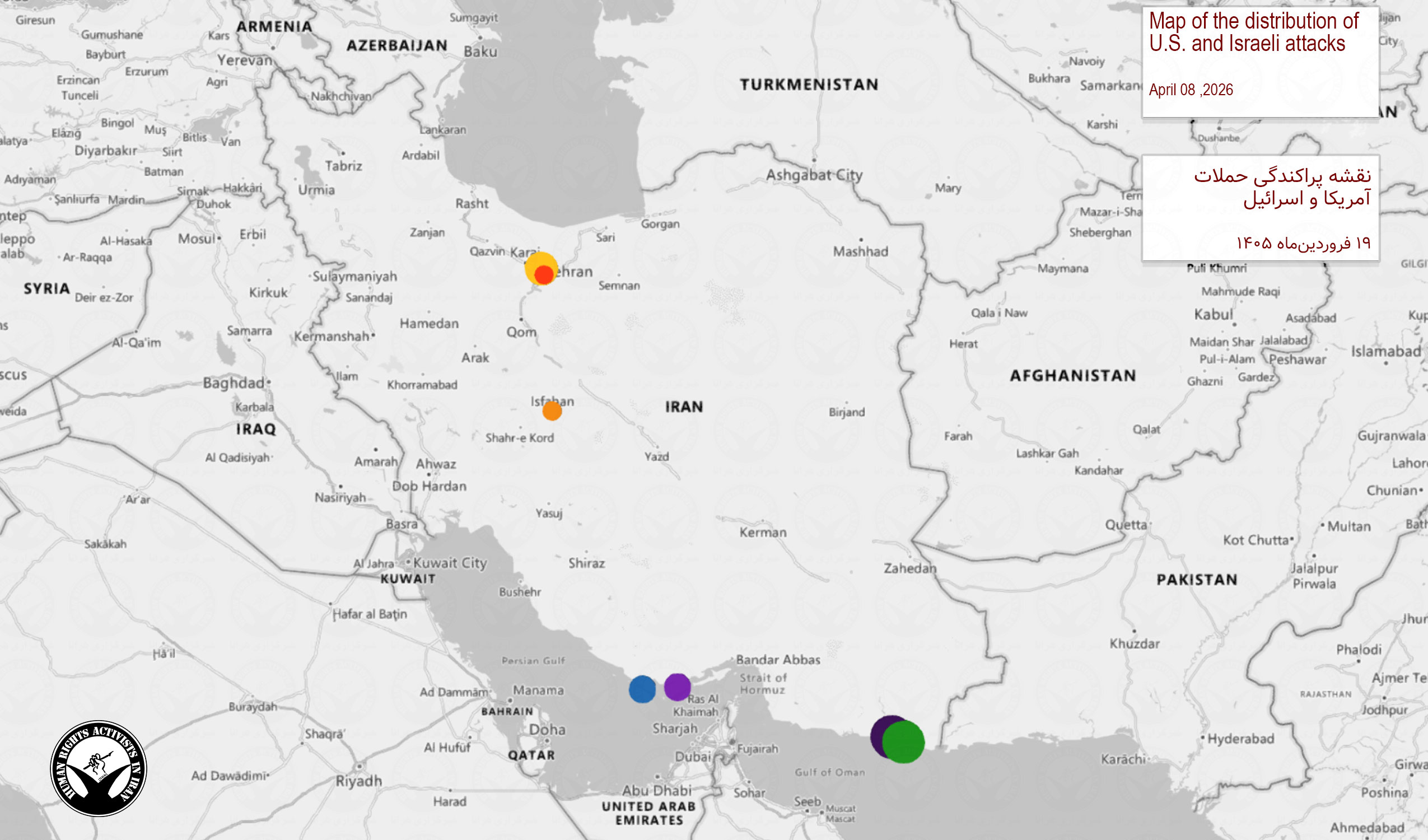
The geographic distribution of the recorded attacks shows:

• Sistan and Baluchestan: 50%

• Tehran: 25%

• Hormozgan: 20%

This decline in both the geographic spread and overall volume of attacks is assessed as consistent with the ceasefire conditions.

Map of Attacks Day 40

2. List of Objects Reported Hit

In the past 24 hours, at least 2 specific targets were struck or damaged:

• Multiple explosions at the refinery (Lavan Island)

• Air base (Konarak)

In total, 2 infrastructure targets were recorded during this period.

3. Casualties

No reports of military or civilian casualties were received during this period.

On this day, 4 burials were recorded, all of which were related to casualties from previous days.

Note on Official Statements:

Alongside the field data, some cumulative statistics from official sources were also published:

The Director General of the Martyrs and Veterans Affairs Foundation in Mazandaran reported 61 deaths from this province since the start of the conflict.

The Ministry of Education announced that the number of students and teachers killed has reached 312, with 207 injured.

The Ministry of Health also released broad figures on the state of the healthcare system, including:

• 518 current hospitalizations

• More than 30,000 treated and discharged cases

• 26 deaths among medical staff

• Damage to dozens of medical centers and emergency facilities

• Hundreds of children and women among the dead and injured

Due to their cumulative nature, these figures are not included in calculations based on daily incidents and are presented solely as a record of official statements.

Summary and Notice

The Day 40 report is being published under conditions in which the implementation of the two-week ceasefire has directly led to a sharp decline in field indicators, including the number of attacks, targets, and casualties.

Given the change in the situation on the ground and the uncertainty surrounding whether the ceasefire will hold or collapse, HRANA News Agency announces that the process of publishing daily reports will be suspended from this point forward. This suspension will continue until the final status of the ceasefire becomes clear.

Should hostilities resume or a meaningful change occur in field conditions, the publication of daily reports will begin again.

A Note on HRANA Methodology

The information in this report has been compiled based on HRANA’s same previously established methodological framework and includes a combination of field, local, medical, media, and public data sources. Given the fluid nature of the situation, the data may be subject to revision as new information becomes available.


At least 37 Citizens Arrested Across Multiple Provinces

HRANA – At least one citizen in Tehran, five in West Azerbaijan, 28 in Sistan and Baluchestan, and three others in Semirom were arrested by security forces in connection with the war.

According to Tasnim, the Greater Tehran Police Information Center stated that the citizen was arrested for “operating under the cover of a trading company to illegally procure and use satellite equipment, including Starlink, and to establish communication with foreign countries.” A Starlink satellite device was also confiscated from him at the same time.

According to Mehr News Agency, the IRGC Intelligence Organization in West Azerbaijan announced that in the past 48 hours, five individuals had been identified and arrested on charges of links to the Mossad intelligence service and the Iran International network.

According to IRIB, the Ministry of Intelligence reported the arrest of 28 individuals along the borders of Sistan and Baluchestan Province, claiming that they were connected to “takfiri groups.” According to the ministry, some of those arrested had intended to carry out sabotage operations, and five others were also arrested on charges of sending information about certain locations to a media outlet affiliated with Israel. The ministry added that weapons, hand grenades, and several pieces of Starlink satellite internet equipment were discovered and confiscated during the operation.

According to Shahr News Agency, the police commander of Semirom announced the identification and arrest of three individuals by officers of the command’s intelligence organization. According to him, these individuals were arrested for communicating with anti-government networks and sending information and images of certain locations abroad.

The reports did not mention the identities of those arrested or their place of detention.

It should be noted that the military attacks by the United States and Israel on Iran began on February 28, 2026. Since the beginning of these attacks, HRANA has been documenting and recording related incidents across different parts of the country on a daily basis. For more information, you can refer to HRANA’s detailed report on the thirty-fourth day of the conflict, which was published last night.

140 Individuals Arrested on Charges of Sending Images to Foreign Media and Espionage

HRANA – Official domestic media have reported the arrest of at least 127 citizens in the cities of Tehran, Kazerun, and Zahedan, as well as in Alborz and Khuzestan provinces. These individuals were arrested on charges described as “sending images to foreign media and espionage.” At the same time, a video containing the forced confession of one of these individuals has been released, although the conditions under which it was recorded remain unclear. Additionally, Iran’s Ministry of Intelligence announced in a statement the arrest of 13 citizens and the killing of another individual by agents of this institution in Sistan and Baluchestan Province.

According to Fars News Agency, one citizen was arrested in Tehran. In the video report, it is claimed that this individual filmed locations targeted in airstrikes and sent the images to foreign media outlets. The video also includes his forced confession, though the circumstances of its recording are unknown.

Meanwhile, Mehr News Agency reported the arrest of a citizen in Kazerun by law enforcement officers. The county’s police commander stated that the individual had been “communicating via text messages with foreign media to disclose the coordinates of military and security bases.” The official added that the individual was referred to the prosecutor’s office for legal proceedings.

According to Fars, the police commander of Alborz Province announced that 41 citizens were arrested in the province. He claimed that these individuals had sent images of U.S. and Israeli attacks to foreign media.

Tasnim News Agency reported that Iran’s Ministry of Intelligence announced the arrest of 97 citizens. In its statement, the ministry claimed that 69 of them had intended to create unrest during the final days of the year. It also alleged that some of these individuals had participated in the protests of the month of Dey (December–January).

The statement further claimed that 13 individuals affiliated with opposition groups and allegedly supported and directly guided by Israeli intelligence services were identified and arrested in a joint operation by the Quds Headquarters of the IRGC Ground Forces and Faraja (Law Enforcement Command) in Sistan and Baluchestan Province. Their locations were reported to be the counties of Chabahar, Iranshahr, and Zahedan. It was also reported that one citizen, identified as “Nematollah Shahbakhsh, known as Jamuk,” was killed during the operation.

Moreover, another four-member team affiliated with the same group was identified in hard-to-access mountainous areas around Zahedan and arrested in a joint operation by intelligence agents from Sistan and Baluchestan and Kerman provinces.

In addition, at least 11 citizens in Khuzestan Province, described as “armed and in contact with the enemy,” were identified and arrested.

The reports do not mention the identities or places of detention of these individuals.

Since February 28, Iranian territory has been targeted by military attacks carried out by Israel and the United States. For further details, see HRANA’s report on the twentieth day since the onset of these attacks, published last night.

Sistan and Baluchestan: At Least 550 Detained Amid Ongoing Protests

HRANA During the ongoing nationwide protests, at least 350 citizens, including women, children, and students, were arrested by security forces in Zahedan, Chabahar, and Iranshahr. With these arrests, the total number of detainees in Sistan and Baluchestan Province has risen to at least 550.

The identities of 16 of those arrested in Chabahar County have been reported by Haal Vsh as: Roya Sedighi, approximately 26 years old; Parisa Raeisi, approximately 26; Maral Shirani; Fatemeh Shirani; Ayoub Jadgal, approximately 27; Abdolkhaleel Baluchi; Sajad Raisi; Nader Narouei; Azim Jadgal; Aref Ahourani; Majid Kadkhodaie; Halim Soleimani; Navab Baluchi; Mahmoud Shahouzahi; Hafez Gholami, approximately 19; and Samer Dorzadeh, approximately 30.

This news outlet has also identified 12 citizens arrested in Iranshahr as: Hamed Kalaki, approximately 28; Javad Rigi; Golmohammad Arbab; Nasser Narouei, approximately 35; Javid Zeynoddini; Ali Salahzehi; Yousef Askani; E’jaz Bamari; Jamal Bamari, approximately 21; Mohammad Ali Bijarzahi; Farhad Shiehaki; and Akbar Lashkarzehi.

Previously, the arrest of 200 citizens, along with the identification of 11 of those detained, had been reported by Hal Vash.

According to the report, of the total number of detainees, 320 were arrested in Zahedan and 230 in the cities of Chabahar and Iranshahr. Informed sources stated that these arrests were carried out en masse and violently, and that many individuals sustained physical injuries as a result of beatings with batons, punches, and kicks.

It should be noted that gatherings and strikes by shopkeepers and bazaar merchants began on Sunday, December 28, in Tehran. After two days, they spread beyond bazaars and commercial centers. With the participation of students, citizens, and various social groups, these protests have become one of the most widespread demonstrations in recent years. For more information, readers can refer to HRANA’s detailed report on the sixteenth day of the protests, published last night.

Subscribe to Our Newsletter

Now is definitely not the time to stop reading!

Juvenile Offender Executed in Iranshahr Prison

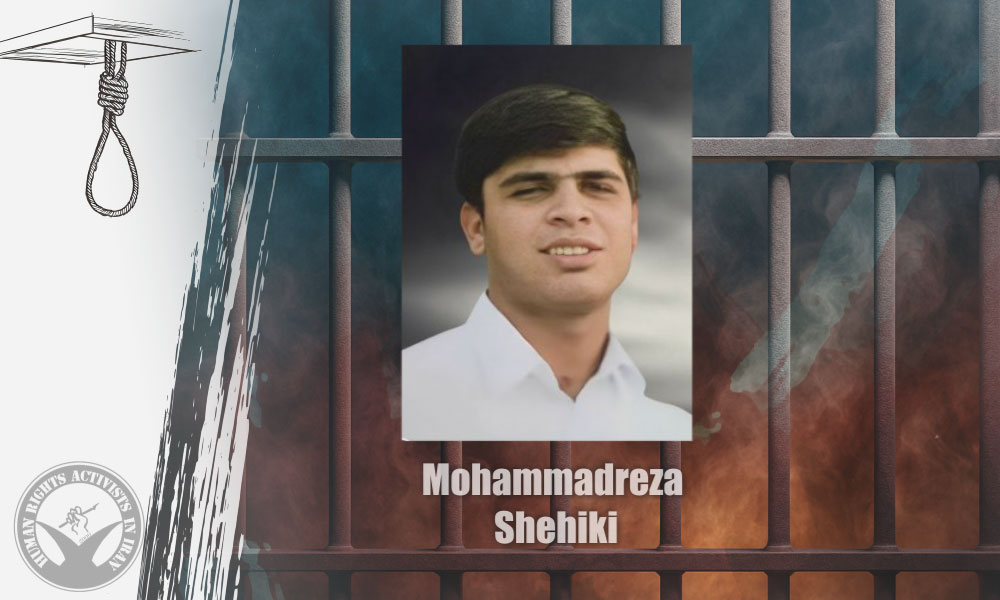
HRANA – At dawn yesterday, the death sentence of a juvenile offender previously convicted of murder was carried out in Iranshahr Prison.

According to Haal Vsh, the prisoner has been identified as Mohammadreza Shehiki, 25, a resident of Masjed Abolfazl village in Iranshahr County, Sistan and Baluchestan Province.

According to the report, nine years ago, at the age of 16, Shehiki was arrested following a fatal altercation and later sentenced to death by a criminal court.

As of the time of this report, prison authorities and responsible institutions have not announced this execution.

From the beginning of this year until the end of September, the Iranian regime has executed 1,028 people, marking an unprecedented increase compared to previous years.

Alam Azizi Held Incommunicado for 26 Days Following Arrest

HRANA News Agency – Alam Azizi, a resident of Qasr-e Qand, has been held in detention by security forces for 26 days, with no information available about his whereabouts.

A source close to Mr. Azizi’s family confirmed the news to HRANA, stating: “Despite 26 days having passed since his arrest, Azizi has not had any visits or contact with his family. The lack of information about his condition has deepened the concerns of his family and relatives.”

He was previously arrested by security forces on March 8, 2025, in Qasr-e Qand.

As of the time of this report, no information has been obtained regarding the location of his detention or the charges brought against him.

Alam Azizi is approximately 36 years old and a resident of Azizabad village in Qasr-e Qand County, Sistan and Baluchestan Province. He has previously been arrested due to his activities.

HRA’s Pasdaran Documentation Project (PDP) Looks at Bloody Friday Two Years On

On Friday, 30 September 2022, Zahedan, a city in Sistan and Baluchistan province, witnessed the deadliest incident of the Woman, Life, Freedom protests, which came to be known as “Bloody Friday.”

Amid the wider Woman, Life, Freedom movement and growing anger over the sexual assault of a local girl by police, protesters and bystanders were met with lethal force from security personnel, who used tear gas, live ammunition, and metal pellets.

The majority of victims were shot in the head, heart, neck, and torso.

The government claimed that many civilians were killed in the crossfire between attackers and security forces. However, several official reports indicate that footage analysis reveals security forces and plainclothes agents firing indiscriminately from rooftops at a gathering of protesters.

At least 100 people lost their lives on Bloody Friday, including at least 15 children.

Kurdish and Baloch citizens witnessed the bloodiest crackdowns during the Woman, Life, Freedom protests: over half of the total number of people killed came from the Baloch and Kurdish provinces, with children from these minority groups comprising 63% of the recorded child victims.

Now, two years after these violent events, no accountability or justice has been delivered for the victims.

With the anniversary upon us, Bloody Friday remains a symbol of broader repression. It not only underscores the Iranian regime’s willingness to use excessive force with impunity but also highlights the systemic marginalization of the Baloch minority, further compounded by economic deprivation, political exclusion, religious discrimination, and cultural repression.

HRA’s Pasdaran Documentation Project (PDP), launching in October, is an unprecedented database that offers the most comprehensive overview to date of Iran’s Islamic Revolutionary Guard Corps (IRGC), documenting its structure, chain of command, and human rights and international law violations perpetrated by the IRGC.

In the case of Bloody Friday, through PDP, several breaches have been identified, some of which trigger individual criminal accountability, extending beyond the state’s responsibility under international human rights law.

Types of Violations

  • Right to Life
  • Freedom of Assembly and Association
  • Freedom from Torture and Cruel, Inhuman, or Degrading Treatment or Punishment
  • Right to be Free from Discrimination


Possible International Crimes

  • Murder as a crime against humanity
  • Persecution as a crime against humanity, based on political, racial, national, ethnic, cultural, religious, or gender grounds
  • Crime against humanity of an inhumane act of a similar character, intentionally causing great suffering


IRGC Involvement 

The PDP database also identifies the specific IRGC units and personnel involved in events that led to severe human rights abuses, such as Bloody Friday. By tracing the individuals responsible for these incidents, the PDP provides a more detailed analysis of atrocities like torture, unlawful killings, and helps attribute direct accountability. During the Zahedan crackdown, where security forces used live ammunition, tear gas, and metal pellets against protesters, several IRGC units were involved, including the Kush County IRGC and the Quds Base Southeast, among others. These forces played a significant role in the violent suppression, firing indiscriminately at civilians and furthering the cycle of repression.

Continued Documentation 

In addition to the analysis conducted by PDP, HRA’s Spreading Justice platform continuously tracks individuals responsible for human rights violations in Iran. This platform has identified key figures involved in the Bloody Friday crackdown:

  • Hossein Modarres-Khiabani: Governor of Sistan and Baluchestan during the 2022 protests and head of the Provincial Security Council. He labeled the Bloody Friday protesters as terrorists and separatists and was directly involved in ordering and directing serious human rights abuses. He had direct oversight of the Iranian security forces.
  • Ahmad Taheri: Head of Iran’s Law Enforcement Forces (LEF) in Sistan and Baluchestan. Like Khiabani, he had direct authority over the security forces that violently responded to the protests.
  • Mahmoud Saadati: Police Commander of Zahedan, who commanded security forces to use lethal weapons against protesters. On October 27, 2022, he admitted to the negligence of certain officers.
  • Mohammad Karami: Commander of the IRGC’s Quds Base in the southeastern According to reports from HRA, units under the IRGC Ground Forces, including those under Karami’s command, played a significant role in the suppression of unarmed protesters. Karami labeled the detained protesters as “armed criminals” and promised to air their confessions. One such confession was released just a few hours later.
  • Ahmad Shafahi: Commander of Salman Revolutionary Guard Corps in Sistan and Baluchestan Province. He had direct control of the IRGC and the Basij during Bloody Friday. He is responsible for violent actions against peaceful protestors, including against children.
  • Abuzar Mehdi Nakhai: The Governor of Zahedan and the Head of the Security Council. As the governor he was directly responsible for directing security forces in committing brutal acts against protestors

Zahedan’s Bloody Friday has become a symbol of the broader struggle of the Iranian people against government oppression. The massacre is a stark reminder of the regime’s willingness to use excessive force against its citizens, particularly in marginalized regions like Sistan and Baluchistan.

Accurate documentation is essential to securing justice and accountability. HRA hopes that our resources and analyses will aid civil society, states, and other stakeholders to pursue and initiate accountability efforts.

Two Political Prisoners Face Execution in Zahedan Prison

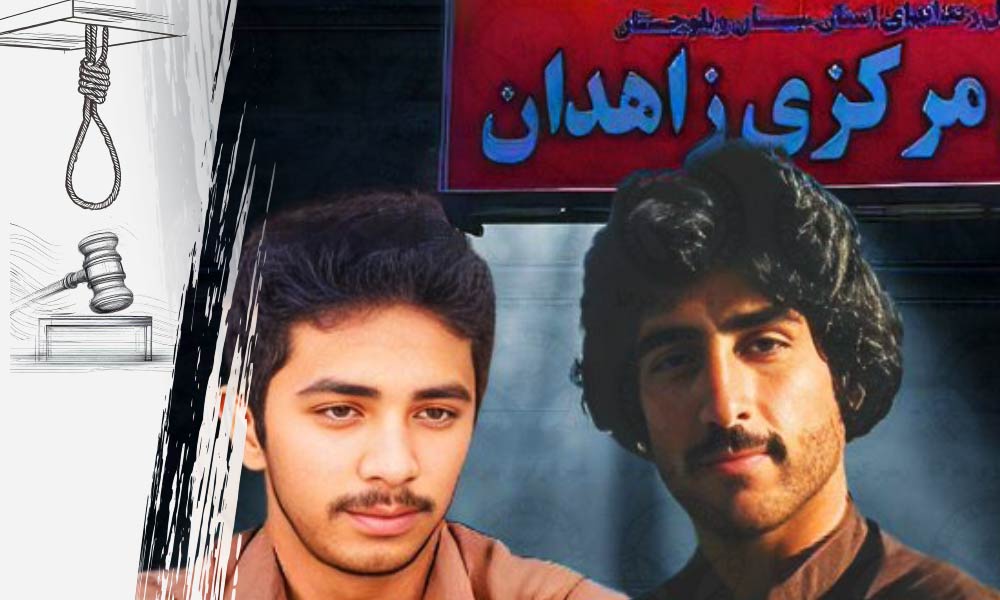
Mohammad Zeineddine and Adham Narui, currently incarcerated in Zahedan Prison, are under the threat of execution following the confirmation of their death sentences by Iran’s Supreme Court in November 2023.

In March 2023, the Criminal Court of Zahedan sentenced Zeineddine and Narui to the death penalty for “enmity against God (Moharebeh) through armed action.” On November 20, 2023, this verdict was upheld by the Supreme Court.

Security forces apprehended Zeineddine in September-October 2020 and Narui on May 25, 2021, in Lashar, Sistan and Baluchestan Province. After completing the interrogation process in a security detention facility, they were transferred to Zahedan Prison and are currently held in Ward 9.

Subsequently, they were accused of killing three security forces, an allegation they consistently denied throughout the trial.

A reliable source close to the family of one of the prisoners has confirmed to HRANA: “Mohammad and Adham are innocent, and the charges against them are unfounded. Earlier, during a confrontation with security forces in the Sirchah region, several relatives of Mohammad were killed, resulting in the death of three security personnel. In this confrontation, the individual who had shot at these three officers was also killed. However, these two individuals, who had no involvement in this incident, were arrested.”

The source further added that the families of these prisoners have been subjected to verbal insults by judicial officials during their inquiries about the well-being and condition of their sons.

At Least Ten Individuals Detained by Security Forces in Pishin

Pishin, Sistan and Baluchestan province—On December 18, 2023, security forces took into custody a minimum of ten individuals during a religious observance held in a mosque, as reported by Haal Vsh.

Following the morning prayer, a group of plainclothes personnel reportedly conducted a raid on a mosque in Pishin, apprehending at least ten citizens. These individuals were in the midst of their second week of I’tekaf, a period of Islamic practice involving a stay in a mosque.

As of now, the rationale behind their detentions, the identities of those arrested, and the location where they are being held remain undisclosed. Authorities have yet to provide information on these critical aspects of the incident.