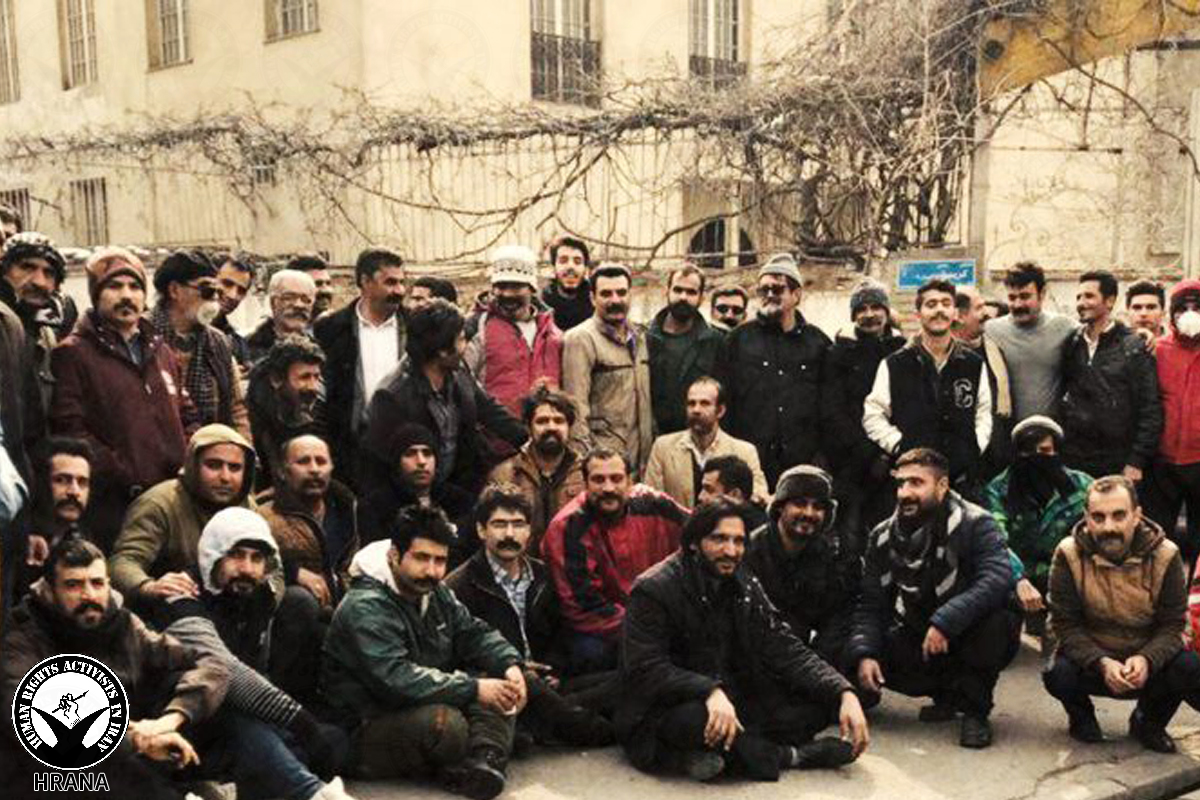
18 Dervishes starving to death; prison warden says “So what?”

Human Rights Activists News Agency (HRANA) – In the past month alone, eighteen hunger striking Gonabadi Dervish prisoners in Iran have been beaten with batons, tased, and electrically shocked – and now, the prison’s warden has outwardly stated that it is not his concern if they die.

The prisoners were first beaten by prison guards at Great Tehran Penitentiary on August 29th, after they held a sit-in to protest the beating of female members of their religious minority in Gharchak Prison in Tehran’s east. After guards violently broke up the sit-in, 18 Dervishes were transferred to solitary confinement, and all 18 went on hunger strike in protest. To date, they have not had a single meal, or any food at all, in more than 30 days.

When some of their fellow cellmates expressed concerns about the physical conditions of some of the hunger strikers, the prison’s warden, known only as Farzadi, responded thusly: “So what if they die?”

According to Majzooban Noor, a news website that focuses on Dervish issues, the hunger strikers are suffering from vertigo and reduced blood pressure. Specifically, the physical condition of Mojtaba Biranvand has been described as critical. He had previously been sent to a clinic due to severe physical weakness. Refusing to break his hunger strike, he has rejected supplemental injections.

Abbas Dehghan, another hunger striker held in the same penitentiary, has only one kidney and is greatly suffering from the toll the strike has taken on him.

The August 29th attack targeted Dervishes in ward 3 of the prison. Eighteen Dervishes from Section 4 who protested the treatment of their fellow prisoners were also sent to solitary.

Previously, on September 1st, HRANA reported that three Dervishes had gone on hunger strike: Ali Bolboli, Salehodin Moradi and Mohammad Reza Darvishi. On September 2nd, Majzooban Noor added six more hunger strikers to the list: Abbas Dehghan, Ali Mohammad Shahi, Mojtaba Biranvand, Ali Karimi, Jafar Ahmadi, and Ebrahim Allahbakhshi, On Monday, three more people joined them: Heydar Teymoori, Majid Yarahmadi, and Saeed Soltanoor. On Tuesday, five more dervishes joined the hunger strike: Babak Taghian, Ehsan Malekmohammadi, Sekhavat Salimi, Reza Bavi and Akbar Dadashi. The last Dervish to join was Majid Rashidi.

The Dervishes demand the end to the house arrest of their spiritual leader, Noor Ali Tabandeh. Their other demands include releasing female dervish prisoners from Gharchak Prison and reuniting all imprisoned dervishes in one single section of the GTP.

All of the Dervishes were arrested in relation to what has become known as the Golestan Haftom incident, named after the street on which it occurred. The incident occurred when a gathering of several hundred Gonabadi Dervishes was violently confronted by Iranian police and plainclothes members of the Revolutionary Guard’s Basij faction outside the residence of their spiritual leader, Noor Ali Tabandeh. The Dervishes had gathered to prevent his possible arrest.

In the violence that followed, hundreds were injured and many arrested. Though Iranian judicial authorities estimate that around 300 people have been arrested in connection with Golestan Haftom, HRANA has thus far published the names of 324 arrestees and estimates that the actual number is considerably higher.qqqgonabado


Against doctor’s orders, authorities take Arash Sadeghi back to prison after surgery

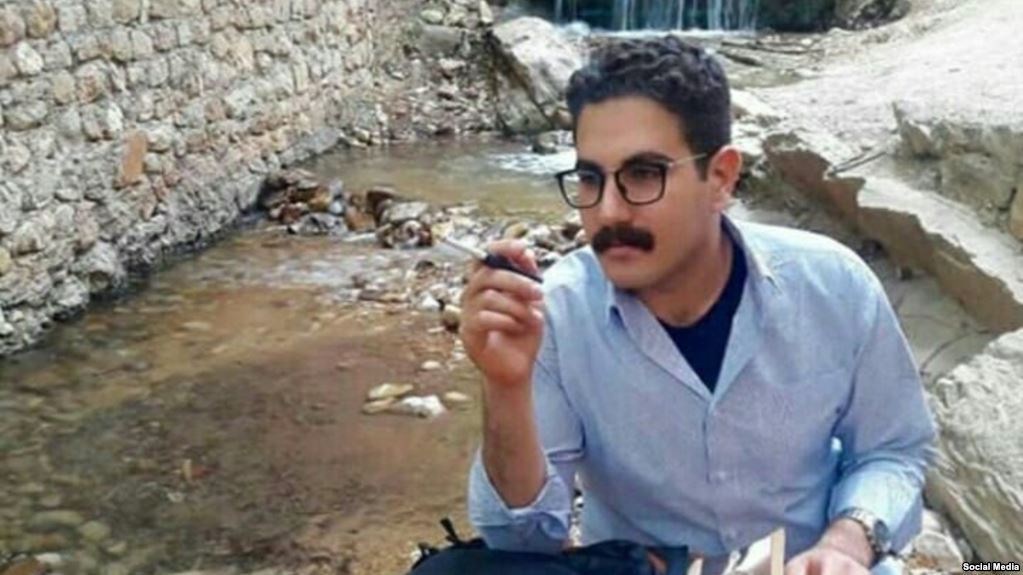
Human Rights Activists News Agency (HRANA) – Arash Sadeghi, a human rights activist imprisoned in Rajai Shahr Prison in Karaj, underwent a critical operation on September 12th for malignant bone cancer at Imam Khomeini hospital and was returned to prison just three days later, against the orders of his doctor.

According to an informed source, an individual introducing himself a judicial official insisted on the early transfer against the clear orders of doctors.

Sadeghi’s doctor had instructed that he be hospitalized under close medical supervision for at least 25 days following a very difficult surgery, said the source. According to the source, the doctor explained that Arash needs to stay in the hospital as he requires a medical team in case of stroke, infection, or severe fever. Furthermore, the medical team needs the 25 days to determine whether a patient will require chemotherapy, radiation therapy, or additional surgery.”

A source with information about Sadeghi’s condition told HRANA that specialists had determined Sadeghi needed to be hospitalized three days prior to his surgery, due to an irregular heartbeat and severe weakness, so Sadeghi could be prepared for the intensive surgery through proper nutrition and vitamin injections.

The surgical department had contacted the prison several times on September 8th, asking for Sadeghi’s transfer. Prison officials claimed, however, that the prosecution office had not issued the necessary permits for his early hospitalization. Just one day remaining until his surgery, the authorities finally transferred Sadeghi to the hospital on September 11th.

The source added that there was a heavy presence of plainclothes agents, whose organizational affiliation was unclear, in the cancer department of the hospital since early Tuesday, before Arash arrived.

Sadeghi’s surgery time had been given to another patient due to his late transfer, however, the doctor responsible for Sadeghi reportedly managed to secure an operating table. Sadeghi underwent a 7.5-hour operation, beginning on the morning of Wednesday, September 12th. Doctors removed a bone tumor from his right arm and collarbone, and samples were collected from areas suspected of metastasis, such as his rib cage and underarm. Bone taken from his pelvis was mixed with platelets and special [injectable] cement to replace the removed sections of his arm bone.

The source said that agents imposed restrictions on Sadeghi from the moment the surgery ended, thus complicating his recovery process. They prevented his stay in the recovery room as required by post-surgery procedure.

“While he was still unconscious, they handcuffed and shackled his left hand and leg, and blockaded the area around his bed, a move that prevented his doctor’s required constant checkups, and which was protested by his doctor,” the source said.

According to the source, Sadeghi suffered from wounds similar to bedsores from having to lie on his back due to handcuffs on one hand and operation bandages on the other.

Sadeghi was allowed to use the bathroom only three times a day, accompanied by three agents each time. The inhumane conditions and the restrictions imposed on Sadeghi provoked negative reactions from the hospital staff, and in several cases led to verbal altercations between them and the security agents.

Arash Sadeghi was not allowed any visitors during his stay at the hospital. His wife, Golrokh Iraee, remains imprisoned at Evin Prison serving a six year sentence.

Baha’i Crackdown Intensifies with Three More Arrests in Karaj

Human Rights Activist News Agency (HRANA) – Crackdowns on Iran’s Baha’i community continued this week with the arrest of three residents of the northwestern Tehran suburb of Karaj, who were transferred to Evin Prison on Sunday, September 16th and are now being held on approximately $23,000 USD (3 billion IRR) bail.

Maryam Ghaffarmanesh, Jamileh Pakrou, and Kianoush Salmanzadeh–participants in an environmental education session led by Ghaffarmanesh and hosted in the private residence of Ramin Sedighi–were arrested when intelligence agents showed up demanding their cell phones and pressing them to fill out personal information forms.

After confiscating Sedighi’s hard drive, pamphlets, and religious materials, the agents moved on to search Pakrou’s residence, a close source told HRANA.

Ghaffarmanesh, Pakrou, and Salmanzadeh were transferred to Evin Prison. Ghaffarmanesh’s family learned of her bail some 20 hours later, on a call with her from ward 209 of the prison.

The same day, HRANA reported that intelligence ministry agents had arrested and searched the homes of six Baha’i residents of the central Iranian city of Shiraz: Soudabeh Haghighat, Noora Pourmoradian, Elaheh Samizadeh, Ehsan Mahboob Rahvafa, and a married couple, Navid Bazmandegan and Bahareh Ghaderi.

Shiraz had already seen a string of Baha’i arrests one month earlier that landed a number of its residents in an intelligence ministry detention center.

On the morning of September 19th, Baha’i Yazd resident Mehran Bandi Amirabadi was released after being held in custody for 43 days without a warrant. After being tried with six other Baha’i citizens in Branch 3 of Yazd Appeals Court, located in central Iran, Amirabadi was sentenced to one and a half years in prison and one year in exile to be served in Divandareh, a remote city in Iranian Kurdistan.

Mehran Bandi Amirabadi

Iranian Baha’i citizens are systematically deprived of religious freedoms, in contravention of international treaties including the Universal Declaration of Human Rights and the International Covenant on Civil and Political Rights.

Based on unofficial sources, more than 300,000 Baha’is live in Iran. Iran’s Constitution, however, only recognizes Islam, Christianity, Judaism, and Zoroastrianism, and does not acknowledge the Baha’i faith as an official religion. Consequently, the rights of Baha’is are systematically violated in Iran.

Author and Humorist Kiyumars Marzban Detained

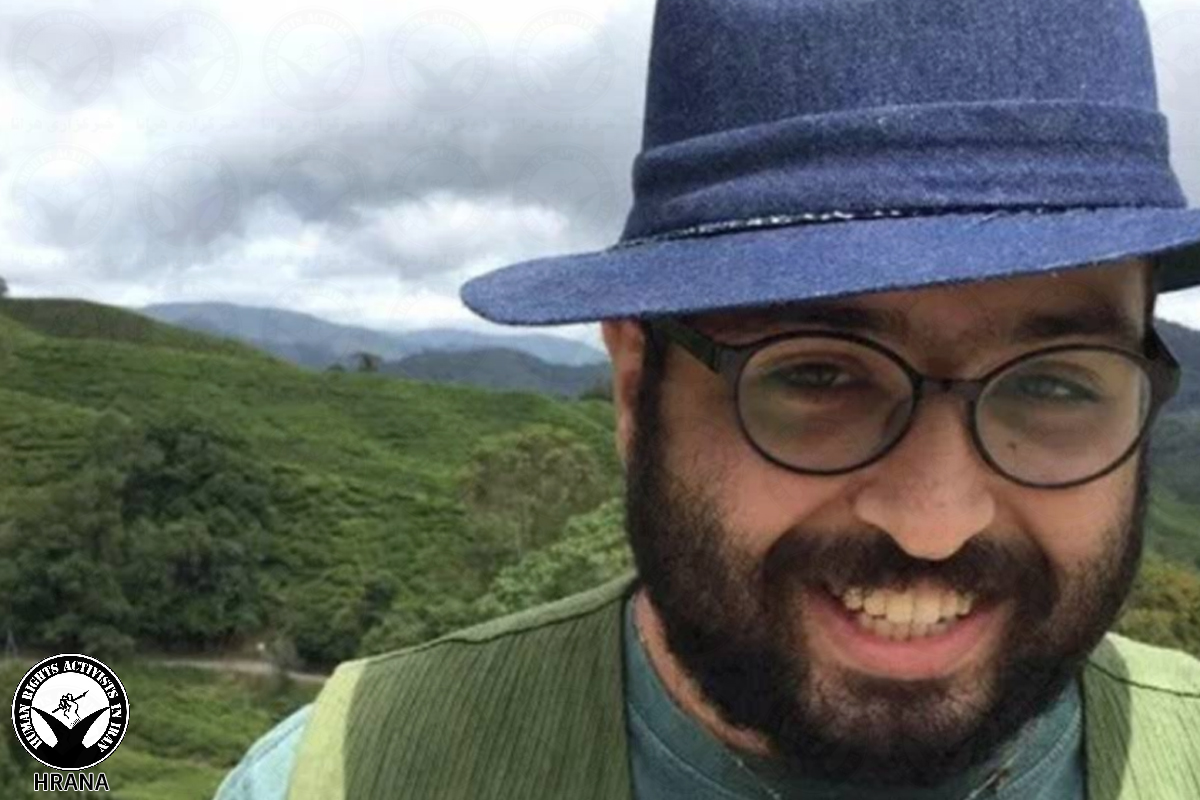
Human Rights Activists News Agency (HRANA) – On August 26, 2018, Islamic Revolutionary Guard Corps (IRGC) Intelligence forces arrested author and satirist Kiyumars Marzban in his home, confiscating several personal items including his mobile phone and laptop.

Last year, Marzban, 26, came back to Iran after eight years abroad to visit his ailing grandmother. While he entered the country without event, Branch 1 of the Evin Prosecutor’s Interrogation office opened up a case file and arranged for his arrest within his first year back home.

While Marzban alleges he never traveled to the U.S., a state-affiliated news site has accused him of “Networking in Iran” on contract with American partners. The same news site accuses Marzban, who also teaches art, of entering Iran with the intent to sensationalize and divide the community with his classes. As of the date of this report, no further information was available about the reasons for Marzban’s arrest.

Human Rights Watch revealed in a press release that he has not been allowed to visit his family yet.

Kiyumars Marzban began his career with filmmaking in 2005. By 2009 he had produced eight short films and left Iran to develop his portfolio in Malaysia. Shortly afterward, via Facebook, he launched the world’s premier Persian-language comedy podcast, called “Radio Sangetab” (Sangtab, the name of a village in northern Iran, is also a cooking method using hot stones). His works include “Kham Bodam Pokhte Shodam Balke Pasandideh Shodam” (I was raw, I became ripe and rather pleasant) and “Aziz Jan” (Dear darling).

Afrin Battles Detainees Condemned to 11 Years in Prison

Human Rights Activists News Agency (HRANA)- The verdict of Mostafa Ghader Zeinab and Rahim Mahmoudi Azar–two Urmia residents who were sent back to Iran from Syrian Kurdistan after being wounded in the Turkish offensives on Afrin–was upheld by Branch 1 of the Appeals Court of Urmia.

Per their original sentencing by Branch 3 of the Revolutionary Court of Urmia on July 6, 2018, Zeinab and Azar face five years in prison on charges of “Membership in anti-regime groups,” five years in prison for “collusion and conspiracy,” and one year in prison for “propaganda against the regime.”

Zeinab has been released on bail, and Azar remains in detention at Urmia.

A source close to both men previously told HRANA that Zeinab and Azar were members of a Kurdish military group fighting in Syria. After sustaining injuries during a Turkish attack on Afrin, they were transferred to a hospital in Aleppo. “Upon realizing their nationalities, Syrian authorities handed them over to Iran’s Islamic Revolutionary Guard Corps (IRGC),” the source said.

According to the source, they were interrogated at Evin Detention Center for a week in March 2018 before being transferred to Urmia’s Intelligence Office, where they were interrogated for a month.

Both men have been denied the right to appoint lawyers of their choice and attended their court session with a public defender.

Subscribe to Our Newsletter

Now is definitely not the time to stop reading!

Civil Rights Activist Mohammad Davari Arraigned

Human Rights Activists News Agency (HRANA)- Mohammad Davari, a civil rights activist from Yasouj in the province of Kohgiluyeh and Boyerahmad, was read his charges in Branch 4 of the Investigation and Prosecution office on September 19th, after presenting himself in response to a summons he received last week.

After a round of questioning, judicial authorities issued a charge of “disseminating propaganda against the regime” and released him on bail pending completion of the investigation.

A source close to Davari’s family confirmed the news to HRANA, adding that the plaintiff in the case is the Islamic Revolutionary Guard Corps Intelligence Unit and that the judge admitted into evidence Davari’s “notes on cyberspace” and his promotion of books “against the regime and the Islamic Revolution.”

Contrary to the judge’s implication, Davari contests that his notes only touched on such subjects as the Tehran-Yasouj plane crash, labor conditions, and the environmental conditions in his home province. The books in question, published by Davari with the permission of the Ministry of Culture and Guidance, were about women’s rights, culture, and art.

Davari was arrested by Ministry of Intelligence forces on August 10, 2018. During his custody and until his August 27th release on a 200 million toman (approximately $20,000 USD) bond, he was denied medical care.

He was previously detained on March 5, 2018, for taking part in widespread popular protests in Iran. He was released ten days later on a 50 million toman (approximately $10,000 USD) bail.

Born in Dehdasht, about 90 miles west of Yasouj, Davari is a master’s student of political science who faced temporary detention on a prior occasion for pulling down a banner bearing the photo of late politician Hashemi Rafsanjani.

Imprisoned Civil Rights Activist Farhad Meysami Reaches 50th day on Hunger Strike

Human Rights Activists News Agency (HRANA) – Farhad Meysami has not had a single meal, or any food at all, for 50 days and counting, as his health condition continues to deteriorate.

A civil rights activist imprisoned in Tehran’s Evin Prison, Meysami announced his hunger strike August 1st, one day after his arrest by Iranian authorities, in protest of their refusal of the attorney of his choosing. Despite the decline of his health during the hunger strike, authorities have yet to send him to a hospital.

HRANA reported on Meysami’s weight loss and poor physical state on September 8th.

Mohammad Moghimi–lawyer of fellow Evin prisoner Reza Khandan, and incidentally, the attorney Meysami would have appointed if given the choice–said his client called him from Evin to report that Meysami’s strike had put him in mortal danger, and that he needed a transfer to the hospital right away.

Moghimi said that authorities’ denial of Meysami’s attorney of choice puts them in conflict with Iranian law. Once initial interrogations are over, each prisoner has a right to a lawyer of his or her choosing, according to Moghimi’s reading of Article 48 of Iranian penal code.

Meysami was arrested in his personal study on July 31st. He was originally charged with “gathering and collusion aimed at disrupting national security,”; “propaganda against the regime”; and “insulting hijab, a necessary and sacred element of Islam.”

On September 3rd, however, Branch 7 of the Evin prosecutor’s interrogation department claimed that charges have since changed, with the last one replaced with “spreading corruption and prostitution.”

Meysami, who suffers from ulcerative colitis, has said that during his hunger strike he will take only the medication that treats this condition, as he has taken for the past 18 years. Meysami has previously said that he would break his hunger strike only if his friend and fellow inmate Reza Khandan, who was arrested after Meysami’s hunger strike began, is released unconditionally.

Human Rights Watch and Amnesty International have both asked for Meysami’s release.

Anemic Political Prisoner Denied Medical Treatment on 10th Day of Hunger Strike

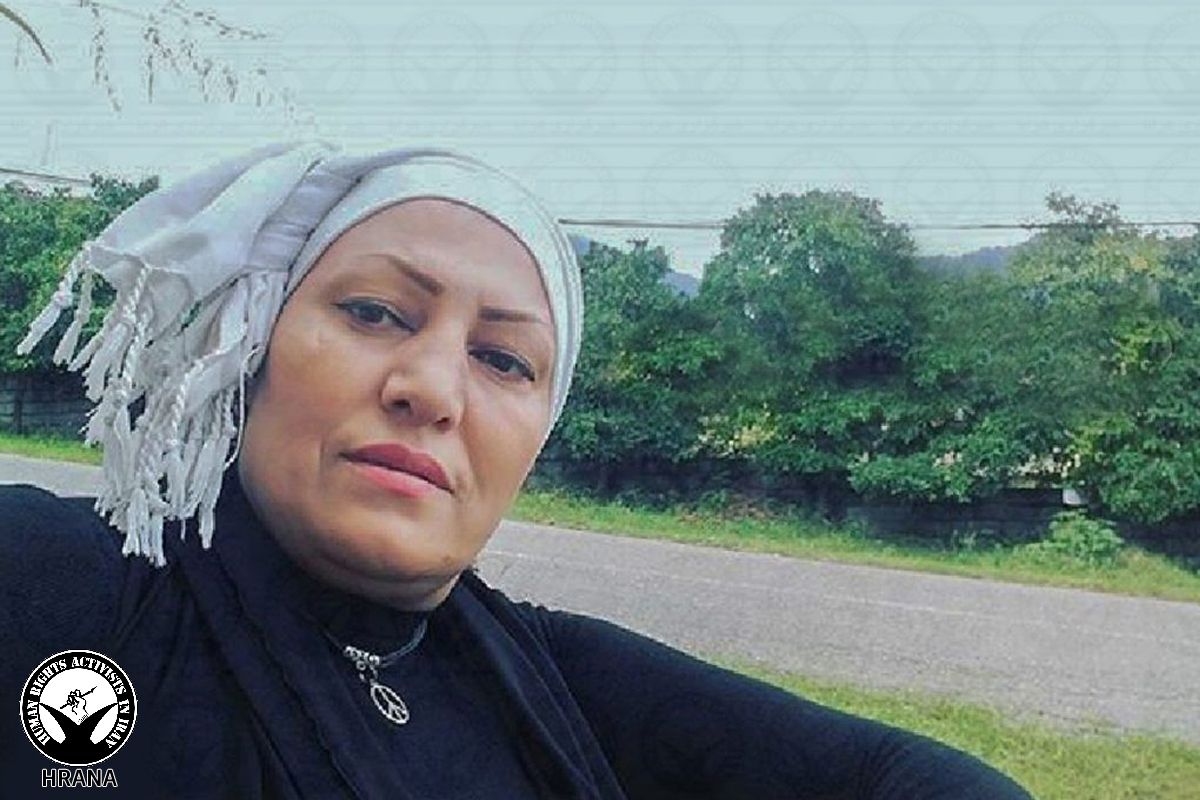
Human Rights Activists News Agency (HRANA) – On the shore of the Caspian Sea in the city of Tonekabon, authorities at Nashtaroud Prison are still withholding medical care from political prisoner Mahin-Taj Ahmadpour, who has now been on hunger strike for ten days.

Sentenced to 10 months in prison for her participation in the January protests, Ahmadpour has been on hunger strike since September 10th, in protest of her restricted access to both medical care and the prison telephone.
Her strike is also a revolt against prison authorities who, as a form of coercion or harassment, reportedly threatened to open new charges against her.

An informed source told HRANA that prison officials have displayed apathy toward Ahmadpour’s anxiety about her condition. “On Thursday, September 13th, Ms. Ahmadpour felt sick and asked prison authorities for a transfer to an outside hospital, or to allow her family to bring medications to her, but the authorities ignored her pleas,” the source said.

Concerned at her frail state and steep drop in blood pressure, Ahmadpour’s ward mates brought her to authorities again in hopes of obtaining her treatment. A few hours later, the ward mates learned she had instead been transferred to solitary confinement.

“They said that she would be held there until she broke her hunger strike,”  the source said. “She was sent back to the ward last night, without having been treated, and still on strike.”

Per her treatment plan for anemia, Ahmadpour should receive seven units of blood every month. An informed told HRANA that monthly blood infusions were also recommended for her as a preventative measure against leukemia. Despite her diagnosis and supporting medical documentation, however, prison authorities are adamant about denying her requests for a medical transfer.

Mahin-Taj Ahmadpour is a 46-year-old resident of Tonekabon. A peddler by trade, she was arrested along with 14 other residents during widespread rallies that took place in January 2018 across Iran, known as the January Protests. The Revolutionary Court of Tonekabon sentenced eight of these arrestees to 28 months’ imprisonment, divided among the defendants. Branch 101 of Criminal Court No. 2 of Tonekabon, presided over by Judge Ebrahimi, also sentenced six of the arrestees to 24 collective months of prison time.

Ahmadpour was first sentenced May 2, 2018, in Branch 101 of Tonekabon Criminal Court No. 2 to serve a six-month prison sentence on a charge of “disrupting the public peace through participation in an illegal gathering.” On August 11, 2018, Tunekabon’s Revolutionary Court compounded the sentence with four months’ imprisonment for “propaganda against the regime.” As evidence against her, the court cited a combination of law enforcement reports and images and video taken during the January protests in Tonekabon.

HRANA previously reported on Ms. Mahin-Taj Ahmadpour’s third day of hunger strike in Nashtaroud Prison.

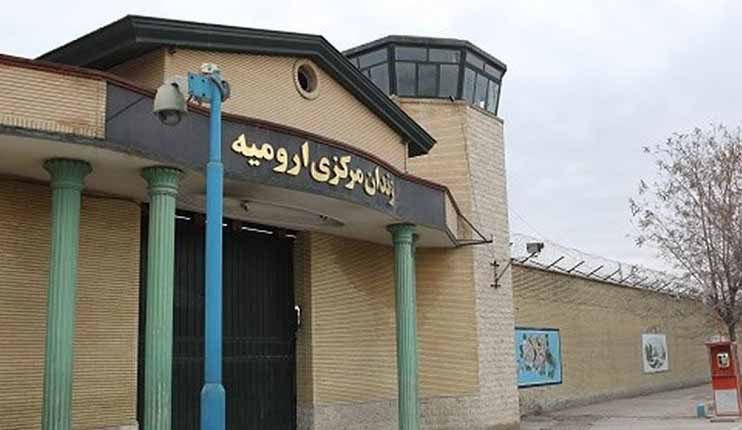
Guards Pilfer Food and Property from Political Prisoners at Urmia

Human Rights Activists News Agency (HRANA) – In an unannounced and atypical search of the political ward of Urmia Central Prison on Tuesday, September 18th, prison guards confiscated prisoners’ food and destroyed some of their property.

An informed source told HRANA that the search, which took place in section 12 of the prison, was presided by two prison officials known only as Khanzadeh and Bayramzadeh.

“Prison guards sifted through their belongings and food, eventually breaking some of the items and confiscating food that the prisoners had purchased, such as cookies, yogurt, cans of tuna, milk, cake, and the like,” the source said. “The prisoners protested, but officials ignored them.”

The source added that prisoners wanting to replenish their pilfered stores will face much higher prices at the prison shop due to rising inflation in the suffering economy.

“Many basic items such as cleaning supplies are no longer in stock at the prison shop due to inflation,” the source said, adding, “and because of the rising prices, the prison kitchen does put meat in its meals, and serves only potato, eggplant, and crushed tomatoes that are barely edible, if at all.”

The frisking of prisoners and search of their cells is permissible under Iran National Prison Bureau regulations. Such regulations, however, are subject to conditions intended to protect prisoner rights.

While inspections aim to uncover prohibited items such as weapons and narcotics, several reports indicate that these procedures, particularly in political wards, often result in harassment, insults, and the destruction or confiscation of prisoners’ belongings.

Political Prisoner Maryam Akbari Monfared Joins Chorus of Eulogies for Executed Kurds

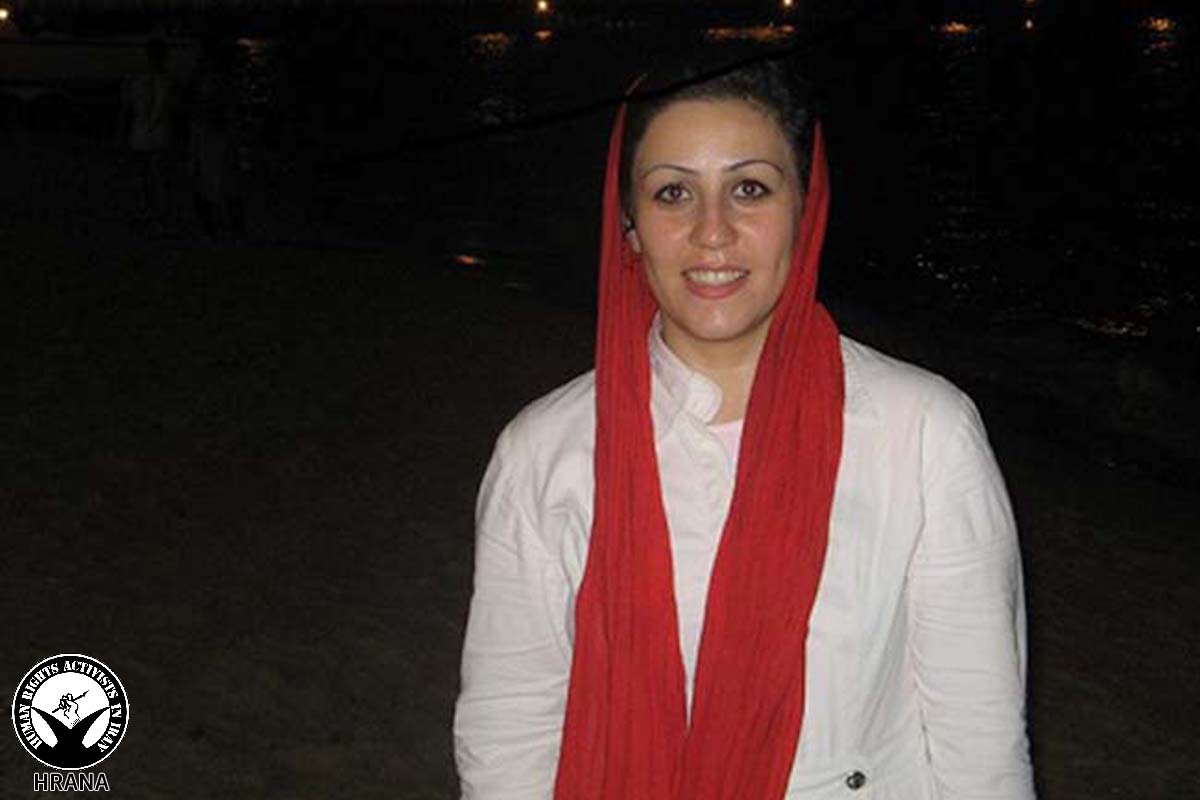
Human Rights Activists News Agency (HRANA) – Maryam Akbari Monfared, a political prisoner held in the women ward’s of Evin Prison, has penned an open letter in response to the highly controversial September 8th executions of Kurdish political prisoners Ramin Hossein Panahi, Loghman Moradi, and Zanyar Moradi.
Monfared, whose own siblings have been executed, expressed her sympathy for the mothers and sisters of the executed prisoners and chastised the broken promises of both current president Hassan Rouhani and the past 40 years of Iran’s Islamic governance.
The full text of her letter, translated into English by HRANA, is below:

Maryam Akbari Monfared

It has been a week since that day, September 8th, 2018.
September is the month of blood in Iran: September 8th, 1978*, and September of 1981**.
September 8th: Everyone is worried. My ward mates and I have heart palpitations. We are in a swarm of contradictory news flashes. Some say the families were told the executions have stayed; someone else says that their families visited them yesterday for the last time.
And then comes the 8 p.m. news, broadcasting a speech from a figurehead of a government touting “prudence and hope.”*** I think to myself, “Hope is such a beautiful word!”. Rouhani promises to break the chains of injustice with a golden key and to sow new hopes in the souls of the nation. He campaigned as his predecessors did before him, riding the wave of the country’s emotional elan. The ink on the ballots was still wet when he changed his stripes. How despicable of him to preside over the nation’s highest rate of executions and civilian crackdowns in 30 years.
All eyes in the ward are transfixed on the TV screen and the news ticker running at the bottom. Ears in the ward are attuned to the speaker’s’ every word.
Finally, the 10:30 p.m. broadcast: “Three terrorists…”
That’s right. For 40 years, they sent this land’s youth to the gallows, lined them up before firing squads, sent them off wholesale to torture chambers and prisons. Then, brazenly, they speak of their actions under the guise of eliminating “terrorism” and other excuses of this ilk. The chariots of oppression, torture, and captivity have been riding unbridled for 40 years.
I don’t intend to re-narrate the crimes of the regime, for the vileness and cruelty of the establishment are readily apparent. The news is abuzz with sympathy and condolences. Perhaps now it is too late to add my own….but for a while, I was unable to muster the presence of mind to pen even a few lines to the mothers and sisters of these beloved men.
To my mothers and sisters: I know your pain very well. I can almost sense the unbearable, scalding pain in your hearts. I know the whispers of the warm lullabies you used to sing, even those lost in the wrinkled lines of your bodies or drowned out by screams in a faraway land. I know the bitter taste of those tears shed by poppy flowers.
I know that you are adding a page to what will be the proud and bright history of Iran’s fight for freedom. I wish to honor your motherhood, this exalted, humane quality, and to thank you for your endless, unabating kindness. Your name is a comforting breeze in the sky. Your familiar faces and your kind gaze bear the promise of life, love, and resistance. When the flames of injustice burn your cheeks, I will put out the flames by touching your cheek to my own, which is frozen in the grimace of injustice.
I am brimming with unspoken words. My tears and the lumps in my throat are bursting with the pain of oppression. But now is not the time to cry. We have to spread our screams all over like ashes. I will lean against your warm chest from behind these stony and cold prison walls. My heart is ablaze with pain, and the tip of the flames reach my throat. This is not only the fire of pain–it is also the fire of life. I wish to carry your tears and your anguish on my shoulder, to feel the burden of this responsibility for the rest of my life. My mothers! My sisters! We must harness the power of our collective pain to soothe the wounds of the Iranian freedom movement.
The vampire will not leave its throne of darkness unless we shake that throne and force it to flee. Let me hold your warm hands with my cold hands, and together, we will join the ranks of the justice movement for our loved ones. To bring to justice the ones responsible for these horrific crimes, we must join forces.
Maryam Akbari Monfared
Evin Prison
September 2018
************************
Maryam Akbari Monfared was arrested amid the 2009 Green Movement protests, and in June 2010 was sentenced to 15 years in prison by Judge Salavati in Branch 15 of Revolutionary Court for “enmity against God and the Islamic government through membership in the Iranian Mojahedin-e Khalq (MEK).” Monfared has denied these accusations.
Two of her brothers were executed in 1981 and 1984 by revolutionary courts for membership in the MEK. In the summer of 1988, two more of her siblings — a brother and a sister — were executed as part of a widespread massacre of political prisoners. In a letter to former UN Special Rapporteur Ahmad Shaheed, Monfared quoted her sentencing Judge: “You [Monfared] are bearing the burden of your siblings’ [political activities].”
Monfared served the first two years of her sentence in Karaj’s Rajai Shahr Prison on the western outskirts of Tehran. She was then transferred in May 2011 along with eight other female prisoners to Gharchak Prison in Varamin, southeast Tehran. Shaheed protested the transfer and shed light on the deplorable conditions at Gharchak. As a result, Monfared was then transferred to the Evin Prison women’s ward, where she is serving the remainder of her sentence.
* In the last months of the Shah’s reign preceding the revolution, September 8th, 1978 came to be known as “Black Friday” when soldiers opened fire on protesters assembled in Jaleh Square, killing many.
** Iran’s then-new Islamic government intensified its crackdown on the opposition in the summer of 1981, arresting and executing a countless number of people.
*** “Prudence and Hope” was Rouhani’s slogan during both of his presidential campaigns.