Iran: UK-Based Art Philosophy Student Detained on Charges of Threatening National Security

Human Rights Activists News Agency (HRANA) – Aras Amiri, an Iranian citizen and 10-year resident of the UK who was released on bail for national-security-related charges in March, was summoned to Evin Prison, read her charges, and transferred to the women’s ward on September 7, 2018.

Iranian intelligence officers apprehended the Kingston University graduate student on March 14, 2018, just prior to the Iranian New Year. She had been out of custody since posting a bond of $120,000 USD (500 million IRR) bail on May 21.

A source close to Amiri confirmed the news of her recent summons, and told HRANA that she is being pursued on charges of “action against national security.” “However,” the source added, “we are still in the dark about how she responded to that charge since the case file has yet to be sent to court.”

Prior to her arrest, Amiri–who studies the philosophy of art–was working to launch joint exhibition projects between Iranian and British artists, collaborating with bodies like the British Council and a UK-based charity with satellite offices worldwide. The British Council had its own office in Tehran until February of 2009, when security agents prompted the Council to cease its in-country operations by excessively questioning the employees there.

One of Amiri’s family members previously told the media that her cultural activities have been in concert and alignment with the various branches of the Iranian Ministry of Culture. During the ten years of her residence in the UK, she had repeatedly traveled to Iran without issue.

In recent years, a number of Iranian nationals residing outside of the country have been detained and imprisoned upon returning to Iran. Abbas Edalat, an Iranian-British dual citizen and professor of Mathematics and Computer Science at Imperial College in London, was traveling to Iran for an educational workshop when he was detained and sent to Evin Prison in April 2018.

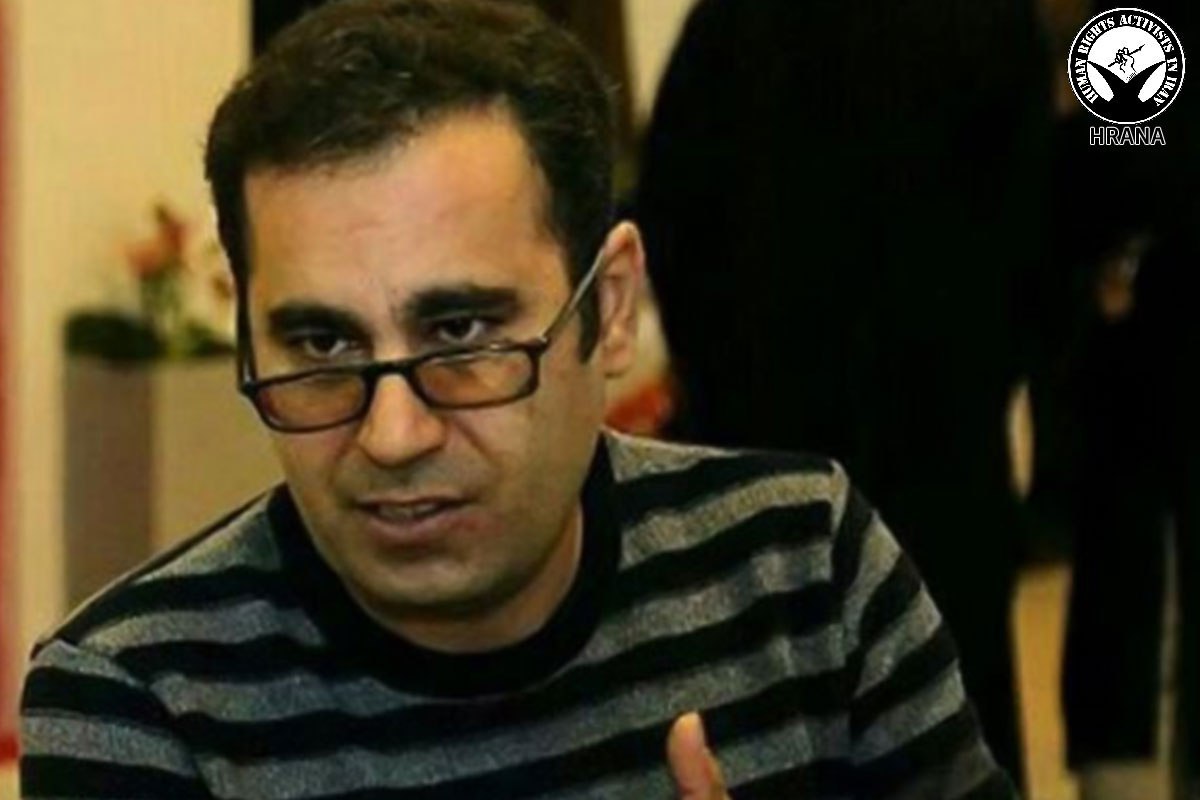
Mohammad Habibi’s Case Enters Appellate Stage: a Review of the Stakes

Human Rights Activists News Agency (HRANA)- The case of imprisoned teacher Mohammad Habibi—which recently inspired more than 1400 civil and union activists to write to Iran’s Supreme leader demanding that he receive medical treatment—will be reviewed in Branch 36 of the Tehran Appeals Court, presided by Judge Seyed Ahmad Zargar. Habibi’s attorney Hossein Taj told a correspondent from the state-run news agency IRNA on Monday, September 17th that a date for the hearing has yet to be set.

If all goes according to Taj’s hopes, Branch 36 will at best exonerate him, and at worst put him behind bars for seven and a half years. The precarity lies with Article 134 of the Islamic Penal Code, which in theory protects defendants from serving the sum of multiple sentences, but is not applied consistently in practice.

Cumulatively, Habibi’s charges would carry a sentence of ten years: seven and a half years for “National-Security Related Crimes”, 18 months for “Propaganda Against the Regime”, and another 18 months for “Disrupting Public Order.” In addition to prison terms, he was dealt a two-year ban from political and civic activities, a two-year travel ban, and 74 lashings.

Under Article 134, Habibi’s sentence, if upheld, would put him behind bars for a maximum of seven and a half years, i.e. the heaviest one of his three sentences. But Taj, his attorney, remains on guard: the Article 134 rights of imprisoned teacher Esmaeil Abdi, who is also on Taj’s client list, have not been honored: “…Abdi was sentenced to six years’ imprisonment, which by Article 134 should have been five,” Taj explained.

Taj elaborated that Abdi has also been denied both medical care and conditional release from prison, a privilege for which he became eligible after serving half of his sentence. “We have re-submitted my client’s conditional release request, and it is under review,” the lawyer said.

A former teacher of mathematics and Teachers’ Union General Secretary, Abdi has been in prison since November 2016 on charges of “Propaganda Against the Regime” and “Collusion Against National Security.” Habibi, a union activist and member of the Teachers’ Union Association Board of Directors in Tehran province, was arrested amid May 2018 rallies that were staged in observance of a national teachers’ holiday.

Habibi’s case–particularly his own compromised medical condition–recently drew the support of teacher organizations abroad. In a letter addressed to Ayatollah Ali Khamenei, the French trade unions SFDT, SGT, FSO, Solidaires, and UNSA held the Supreme Leader accountable for Habibi’s fate, and called his imprisonment a violation of both human rights and the fundamental freedoms of syndicates.

“Prison authorities continue to refuse him the medical treatment he sorely needs. Without proper care, his condition is at risk of rapid decline,” their letter reads. “We mean to impress upon you that as the Supreme Leader of the Islamic Republic of Iran, you are responsible for the life and health of Mohammad Habibi.”

On the one occasion Habibi’s medical leave was granted, according to HRANA reports, he was released from Great Tehran Penitentiary to a hospital that dismissed him without treatment. He was then transferred to Evin Prison on Monday, September 3, 2018, and has remained there since.

According to a letter from his HR office, Mohammad Habibi is no longer receiving his salary.

University of Tehran Student Soha Mortezaei Sentenced to Six Years’ Imprisonment

Human Rights Activists News Agency (HRANA) – Graduate student in humanities and Secretary of Tehran University Central Student Union Soha Mortezaei– who was among those arrested amid the 2018 “January protests”– has been sentenced to six years’ imprisonment and a two-year ban on membership in political parties, groups, and gatherings by Branch 26 of the Revolutionary Court of Tehran, presided by Judge Ahmadzadeh.

Mortezaei’s name figured in HRANA’s January 6, 2018 report on citizens apprehended during the aforementioned protests, which gained countrywide momentum and were met with considerable violence form authorities. She was detained for her inquiries into the status and wellbeing of detained fellow students who had participated along with her in the demonstrations.

Mortezaei had a previous run-in with authorities, in a wave of arrests that took place in January of 2015. She was arrested along with Amirkabir and Allameh Tabatabai University student activists Zahra Khandan, Fershteh Tusi, and Parastou Biranvand. One month later, she was released.

The January Protests led to large number of arrests and interrogations across the country. While the protests began on December 29, 2017 in the city of Mashhad, the unrest quickly spread to other cities. Thousands were detained and at least 25 died in skirmishes between protesters and security forces.

An Imprisoned Student Digs in his Heels as More than 50 Baha’i College Applicants are Denied September Enrollment

Human Rights Activists News Agency (HRANA) – Four more Baha’i youth anticipating results from their national university entrance exam have received notifications of “deficiency” on their application dossiers, deflating their hopes for enrollment this year. But for one of these four–Rajai Shahr prisoner and human rights activist Vahed Kholousi–this rejection has come to symbolize a tradition of resistance.

Kholousi doggedly reapplies to the entrance exam every year from prison, in continued protest of having been denied higher educational opportunity for 15 consecutive test rounds.

It was Kholousi’s peaceful reclamation of Baha’i educational rights that originally brought him into authorities’ crosshairs, resulting in a five-year prison sentence on charges of “gathering and collusion with intent to commit crimes against national security,” “membership and activity in the Baha’i community and its widespread propaganda,” and “membership and activity in the Right to Education Committee.”

The above ruling from his June 2011 trial, held in Branch 28 of the Revolutionary Court, was presided by Judge Moghiseh and later upheld in an appeals court. Pursuant to the sentence, he was summoned to Branch 3 of Evin Prison court that August, arrested there the same day, detained for 21 days in Ward 2A of Evin Prison (jurisdiction of the Islamic Revolutionary Guard Corps (IRGC)), and finally exiled to Rajai Shahr Prison, where he has since remained.

Kholousi is contesting a larger anti-Baha’i discrimination policy administered by the Supreme Council of the Cultural Revolution, by which the e-dossiers of himself, Sahar Mohebpour from Shiraz (ranked # 7000, studying English Literature), Seyed Koosha Hashemi from Shiraz (ranked #6295), and Saba Fazli from Karaj have recently been flagged “deficiency on file,” bringing to 51 the number of Iranian Baha’is being denied college-enrollment eligibility despite successfully passing the national admissions test, according to HRANA cumulative reports.

HRANA previously revealed the identities of 47 Baha’i applicants who were met by the flag “deficiency on file” when checking their test results online:

1. Farhoud Bashi, from Tehran, 2. Sahba Imani, 3.Arman Golzar, 4. Nariman Movafaghi Eiveli from Sari, 5. Faran Talaei Khalajabadi, 6. Sina Talei Joshaghani, 7. Mahsa Sotoudeh, 8. Nima Amini, 9. Hanan Hashemi Dahaj, 10. Hasti Maleki, 11. Aria Ehsani, 12. Tina Hamidi Fard from Tehran (ranked #15000), 13. Rozhan Khooniki (ranked #9477), 14. Foroozan Noordel from Tabriz, 15.Parsa Sheikh Zavareh, 16.Hoda Hedayati, 17.Arian Baghaei Amrei from Sari, 18.Vafa Nobakht from Sari, 19.Adib Rahmani from Sari (ranked #960, studying Mathematics), 20.Parviz Rahmani, 21.Kiana Rastak, 22.Negar Iqani from Shiraz, 23.Hooman Zarei Kadavi, 24.Arsham Hashemi, 25.Nabil Bashi Ardestani, 26. Tara Bahamin, 27.Bita Charkh Zarrin, 28.Nona Ghadiri, 29.Sayeh Aghaei from Tabriz, 30.Pegah Siroosian, 31.Sadaf Misaghi Seysan of Tehran, 32. Parham Mokhtari from Saravan ranked # 397, studying mathematics; 33. Basir Zeinali Baghini from Bandar Abbas ranked # 1506; 34.Yahya Mousavi Tangrizi from Karaj, 35.Anita Rastegar, 36.Shamim Idelkhani, of Ardebil, ranked #139; 37.Farnia Iliyazadeh of Tehran, studying Mathematics; 38.Parmida Hosseinpooli Mamaqani, ranked #4500, studying Mathematics; 39.Sarvin Azarshab of Tehran, studying business,ranked #19000; 40.Parand Misaghi; 41.Shahrzad Tirgar; 42.Melina Ghavaminik, from Tehran, studying mathematics, ranked #10545, 43.Tarannum Mu’tamedi Broujerdi from Shahin Shahr of Isfahan, 44.Faran Abbaspouli Mamaghani from Tehran, 45.Sahand Ghaemifrom Shahin Shahr of Isfahan, 46.Vahid Sadeghi Seysan, 47.Shaghayegh Ghassemi

Innocent Man Dies After Police Beating

Human Rights Activist News Agency (HRANA) – On September 11th, Hojat Eghtesadi died after being beaten by police, who contend that his cause of death was a heart attack.

Eghtesadi, a native of the city of Malekan in East Azerbaijan Province (northwestern Iran), had been admitted to Bonab county’s Imam Khomeini hospital for self-inflicted wounds. Upon his discharge, he was experiencing the side effects of intravenous tranquilizers when he crossed paths with the guards on duty.

“On his way out of the hospital, he got into an altercation with hospital security. The police were called, and he was arrested and taken to Bonab county police station,” said a source close to Eghtesadi’s family. “I don’t know what happened there that led to the beating, but it cost him his life.”

The police asked Eghtesadi’s family to come recover his body from the police station the following day, alleging he had died of a heart attack. At the sight of his body, his family said they noted copious bruising that was distinct from his self-inflicted wounds.

Iranian detention centers require round-the-clock supervision, yet deaths of those taken into custody are common. Detainee deaths are rarely followed up by judicial investigation, third-party inquiries, or measures to hold perpetrators accountable.

Subscribe to Our Newsletter

Now is definitely not the time to stop reading!

Lawyer Sues Client’s Trial Judge, Citing Abuse of Criminal Procedure Code

Human Rights Activists News Agency (HRANA)- Mostafa Tork Hamedani, attorney of Hengameh Shahidi, imprisoned journalist and human rights activist, has filed suit against the judge presiding over his client’s case.

Hamedani told Iranian Students’ News Agency (ISNA) that “once Ms. Shahidi’s case was referred to the court, I presented myself to register as her attorney, but the judge would not appoint me. So I have filed a formal complaint against this judge at the Government Employees’ Court and the Judges’ Disciplinary Court for unlawfully barring a certified lawyer from representing a client.”

Reporting that requests from himself, Shahidi, and Shahidi’s mother to appoint him as her attorney have been submitted and summarily rejected, Hamedani has continued to speak on his client’s behalf, announcing that Shahidi is still in custody and that her case has been forwarded to Revolutionary Court.

According to Hamedani, authorities are inappropriately applying a law intended to stipulate defendants’ choice of lawyers in the case of national-security crimes. “[…] the amendment to *section 48 [of criminal procedure code] only applies during preliminary investigations. Once the case is sent to a court, the amendment no longer applies. [The law] is crystal clear on this.”

ISNA quoted a report from the Tehran Prosecutor’s office stating that Shahidi was arrested June 26, 2018 on the island of Kish in Persian Gulf. It reads, “The judiciary was pursuing the defendant, who was arrested by police while attempting to conceal her face with a mask.”

In a statement released in late June, Reporters Without Borders (RSF) said “[We] condemn the police violence and arbitrary arrests to which citizen-journalists have been subjected during this week’s protests in Tehran. RSF also condemns the latest arrest of journalist and blogger Hengameh Shahidi.”

Ministry of Intelligence forces arrested Shahidi on March 9, 2017, citing her collaboration with a media network.

Hamedani said that the Ministry of Intelligence was the plaintiff in the above case, and that Shahidi’s arrest warrant was issued by Branch 2 of Culture and Media Court. She was released on August 28, 2016 after six months in detention.

* In national security cases, amendment 48 to Iranian’s Code of Criminal Procedure obliges the defendant to choose a lawyer from a list pre-approved by the judiciary. Iranian authorities leverage “national security” charges against most political prisoners.

Ahwazi Arab Activist Ahmad Neisi Released After Completing Prison Sentence

Human Rights Activists News Agency (HRANA) – Ahwazi Arab activist Ahmad Neisi (Tamimi) has completed his two-year prison sentence and was released Tuesday, September 11th from Sheyban Prison in Ahvaz, southwestern Iran.
Neisi, age 32, was among a group of four arrested by Iranian Cyber Police (FATA) in 2016 in Khuzestan province in connection to their social network activity. Along with Taregh Achrash 28, Mohammad Mahavi, 29, and Majed Achrash, 26, he was transferred upon his arrest to Evin Prison in Tehran. All four were transferred to the Ahvaz Sheyban Prison one month later.
Neisi, Achrash, Mahavi, and Achrash’s case was reviewed by Branch 2 of the Ahvaz Revolutionary Court presided by Judge Zare. After four months, they were released on bail of 2,000,000,000 Rials (approximately $15,000 USD).
Shortly afterwards, all four defendants were tried again in the same court on a charge of “acting against national security” for their social network activity, and were each sentenced to a two-year imprisonment. The conviction was upheld in appeals court.
While the conviction was being forwarded to the Enforcement Department, Neisi was unable to post bail in the interim, and turned himself in to Sheyban Prison on August 12th, 2016.

At Home and Abroad, Civil and Union Activists Continue to Rally Behind Detained Teacher Mohammad Habibi

Human Rights Activists News Agency (HRANA)- In the interest of obtaining Mohammad Habibi’s medical treatment and release from detainment, over 1400 Iranian civil and union activists have signed a letter to the attention Iran’s Supreme Leader, as his case steadily gains exposure with syndicates abroad.

Habibi, himself a union activist, educator, and member of the Teachers’ Union Association Board of Directors in the Province of Tehran, is currently serving a 10-year prison sentence ruled Saturday, August 4th in Branch 26 of Tehran Revolutionary Court. In addition to prison time, Habibi’s sentence included a two-years ban on civic activity, a two-year travel ban, and 74 lashings.

Since his detainment, Habibi’s requests for medical furlough have been repeatedly denied. On the one occasion his leave was granted, he was released from Great Tehran Penitentiary, prematurely dismissed from the hospital without receiving treatment, and then transferred to Evin on Monday, September 3, 2018, where he has remained since.

In one letter addressed to Ayatollah Ali Khamenei, the French trade unions SFDT, SGT, FSO, Solidaires, and UNSA called Habibi’s imprisonment a violation of both human rights and the fundamental freedoms of syndicates, and held the Supreme Leader accountable for his fate.

“Prison authorities continue to refuse him the medical treatment he sorely needs. Without proper care, his condition is at risk of rapid decline,” their letter reads. “We mean to impress upon you that as the Supreme Leader of the Islamic Republic of Iran, you are responsible for the life and health of Mohammad Habibi.”

The signatories of the Iranian letter below are currently at 1400 and steadily increasing. Its full text is below, translated into English by HRANA:

“The Noble People of Iran,
Dear Teachers,
Political, Civil, and Union Activists,
Sensible people of the world,

As you know, Mohammad Habibi — member of the board of directors of the Teachers’ Union Association of the Province of Tehran, and protector of the rights of students, retired educators, and currently working teachers– has been subjected to the hostility of authorities and unlawfully detained in the Great Tehran Penitentiary, weakened in body but vigorous in spirit, and was recently sentenced to ten and a half years in prison, a 2-year travel ban, and a 2-year ban on civic activity.

The verdict against this unionist, coupled with the sentences of fellow unionists and political and civil activists, betrays the will to choke freedom of speech with medieval punishments such as lashings, exile, and internment in prisons reminiscent of POW detainment centers– so many efforts to inject fear and trepidation into the civil activist’s drive for justice.

Habibi’s verdict is reminiscent of the heavy sentences imposed on student activists and of the lashes inflicted on Agh Tappeh mine workers, sentences that are the latent dread of every civic society.

These sentences are issued for teachers, workers, students, etc… meanwhile, the thieves, the embezzlers, and the corrupt, in comfort and security, violate and withhold the rights of ordinary people and laborers, continuously lowering the bar on their livelihood.

It is our human duty in such circumstances to raise our collective voice against these cruel punishments, in order to put an end to the imprisonment, flogging, and persecution of sick prisoners.

To intercept a looming human tragedy, the Defense Committee of Mohammad Habibi calls for his immediate medical admission, and with a greater sense of solidarity than ever before will continue to fight for his release as well as the release of other imprisoned teachers.

We call on all free and righteous people to protest the imprisonment and flogging of Mohammad Habibi, and that of other unionists and civil activists, starting with their signature on the “No to Prison and Flogging” petition. Hopefully, this year, Mohammad Habibi’s students will see him again in the classroom, and not behind the bars of a prison.”

****

On May 10, 2018, the Council for Coordination of Teaching Syndicates urged teachers, be they retired or employed, to assemble in protest across the country. In Tehran, several of those who responded to the call were arrested and transferred to Evin Prison; all but Habibi were released on bail three days later.

Mohammad was previously arrested at his workplace on March 3, 2018 and jailed for 44 days in Evin Prison. On April 15, 2018, he was released on a bail of approximately $20000 USD (2.5 Billion Rials) in wait of his trial the following August.

Rajai Shahr Political Prisoners Share Final Memories of Moradis and Hossein Panahi

Human Rights Activists News Agency (HRANA)- Almost one week after the hangings of Loghman Moradi, Zanyar Moradi, and Ramin Hossein Panahi (1), their fellow prisoners have written a letter to condemn their execution and relate the events leading up to it.
Dated Wednesday, September 12th, 2018, the letter was written from the Rajai Shahr Prison grounds in Karaj, on the western outskirts of Tehran, where the men were last known to be held.
The full text of their letter, translated into English by HRANA, is below:
“The tragedy happened Saturday, September 8th. As of Wednesday the 6th, [the mens’] prison visits were stopped, and on different pretexts, their comings and going within the prison, even to the clinic, were restricted. First they called Zanyar, then Loghman, up to the [prison] director’s office. Up to that point, nothing seemed out of ordinary. We paid little attention to the silence of our adjacent ward, which was usually abuzz. Silence meant that inmates there had been denied their courtyard time. Up until 4 p.m. that day, the absence of Zanyar and Loghman did not strike us as abnormal. At 4:30 p.m., though, we started to worry. When looked at all together, the anomalies of that day felt like the pulse of something sinister.
Then we were told that a truck had collided with a telephone cable, resulting in a service outage; a story we had heard before at around the same time a criminal act was about to take place. Hearing it again concerned us even more. Our only hope was that flaws had been found in their case, and that it had just been transferred to the Sanandaj Prosecutor’s Office to assign jurisdiction. In other words, we were clinging to the hope that their criminal case was not yet closed. Little did we know that rulers with snakes on their shoulders (2) were hungry for young brains, and that the court and judiciary of Zahakis are blind to the rule of law and due process.
When the sun sets on a dictatorship, the execution and massacring of prisoners is due course. Such are the workings of fate.
Miserable are those who, in face of these murders, will retreat in fear. Should that happen, the criminals will only gain resolve in their misdeeds. Cowardice conveys to them that the people can, and will, abide crime. Blessed are those who accept Zanyar, Loghman, and Ramin as their own children, children who were hanged in the prime of their youth to uproot the scaffolds and the gallows, to restore a clear skyline for the future.
Us prisoners and co-inmates of the fallen, we brace ourselves for this next, and hopefully last, wave of executions. What greater honor than to be among the last executed, to know that no young people after us will be forced to walk those gallow steps again.
If there were one single reason (although there are many) that this regime is incorrigible and will not be reformed under any circumstances, it is its killing of our nation’s noblest youth, like Zanyar, Loghman, and Ramin.
And so to those delusional people who put us on guard of how things would “get worse” [should the regime be toppled], we have to ask: what situation could conceivably be worse than this?
As fellow inmates of these three courageous martyrs of the gallows, we condemn their executions as criminal acts, and extend our condolences to their families. We have faith that their spilled blood will rattle the gates and guide a fettered nation to the dawn of freedom and justice.
Arash Sadeghi, Ebrahim Firoozi, Payam Shakiba, Pirouz Mansouri, Saeed Shirzad, Saeed Masouri, Javad Fooladvand, Hassan Sadeghi, Majid Asadi, Mohammad Banazadeh Amirkhzai
Rajai Shahr (Gohardasht) Prison
September 12th, 2018

Longtime Political Prisoner Eulogizes Fallen Moradis: “Their slippers are still outside their cells”

Human Rights Activists News Agency (HRANA)- For 10 years, Saeed Massouri, Iran’s oldest political prisoner, was detained in Rajai Shahr with Loghman and Zanyar Moradi, who were executed along with Ramin Hossein Panahi on September 8th, 2018 (1). In response to their hangings, Massouri has written a letter entitled “The Circle of Love and Rebellion.”
The full text of his letter, translated into English by HRANA, is below:
The Circle of Love and Rebellion
In prison, your cellmate and ward mates become your family. They are the one we depend on the most; they are the ones with whom we share the moments, the hours, and the many details of our lives. When I speak of three children, three friends, three brothers like Zanyar, Loghman, and Ramin — especially Loghman and Zanyar, with whom I shared a ward for 10 years — I can barely stand the sound of my own breathing. I shared in their joy and sorrow, their court sessions and solitary confinement, their stress and anxiety, their deprivation and crisis, in each and every condition imposed on us by prison life. In their absence, the prison air is stifling and heavy.
I no longer hear the sound of Zanyar’s laugh; I no longer hear the passing jokes of Loghman as he comes down the hallway. Night falls, and I can no longer visit their cells and graze from their plates. My God… their slippers are still outside their cells, but they will never be back… to think of it all, I feel as though I were the one who’s been buried.
How I wish I could rip from my chest this heavy heart, so weighed down by forty years of injustice and oppression. I wish that by crying I could drain my own veins, tear by tear, and find solace. I wish I could show the whole world what they’re doing, taking our best, most precious youth and slaughtering them, watching their bodies swing from the noose with blank, demonic stares. Then they call the killings an exercise of their authority, ranting against an offensive, threatening that if they are hit once, they will strike back tenfold. Such is their formula for dealing with the populace: when the people, exasperated at the plunder of society, stage peaceful strikes or protests, rulers deem it a “hit” and hit back by killing ten prisoners. They hang them to avenge by terror, laying accusations of “criminal” and “mercenary” upon the dead. Our people know who our children are, despite it all, by the music of their hearts.
In truth, if these three young men, and men and women like them, were not here to pierce through the darkness by offering the light of their lives, the curse of oppression and injustice would be eternal. If it weren’t for their sacrifice, then we would have no recourse but to seek freedom, justice, and human rights beneath the cloaks of mullahs, the likes of Khatami (former President) and Rouhani (current President), and our defeat would be written.
This wretched, oblivious, and eternally delusional class don’t realize that the black-and-blue circles on the necks of the fallen are circles of love, an offering from the dead to the living. They are not unlike the crown of thorns that Jesus wore.
That same vivid contusion will be the axis of concentric rings of revolt and rebellion, waged by freedom fighters against all forms of injustice and oppression.
Saeed Massouri
September 12th, 2018 / Gohardasht (Rajai Shahr) Prison, Karaj
***********
Saeed Massouri was born in 1965. After studying in Norway, he was arrested by Ministry of Intelligence agents in the city of Dezful (province of Khuzestan, southwestern Iran) upon returning to Iran in 2001. He spent 14 months in an Intelligence Office solitary cell in Ahwaz (capital of Khuzestan province) before being transferred to section 209 of Evin Prison. He was sentenced to death in 2002, but in an appeals court his sentence was commuted to life imprisonment. He is currently serving the 18th year of his sentence in the political prisoners’ ward of Rajai Shahr.