Iran: Update on Strike Arestees in Kurdistan

Human Rights Activists News Agency (HRANA) – Iranian authorities continue to detain members of the country’s Kurdish minority, in mounting tensions sparked by the September 8th execution of Kurdish political prisoners Zanyar Moradi, Loghman Moradi, and Ramin Hossein Panahi.

Since September 11th, seventeen civil and political activists have been arrested by security forces in the Kurdish cities of Sanandaj, Marivan, Oshnavieh, Sardasht, and Ravansar. At least twelve were released on bail in the past 24 hours, while the whereabouts or statuses of the others remain unknown.

Earlier this week, Kurdish activists and political parties rallied on social media for a general strike in response to the untimely deaths of Moradi, Moradi, and Panahi, who were hanged to death in dubious circumstances on September 8th, according to HRANA reports.

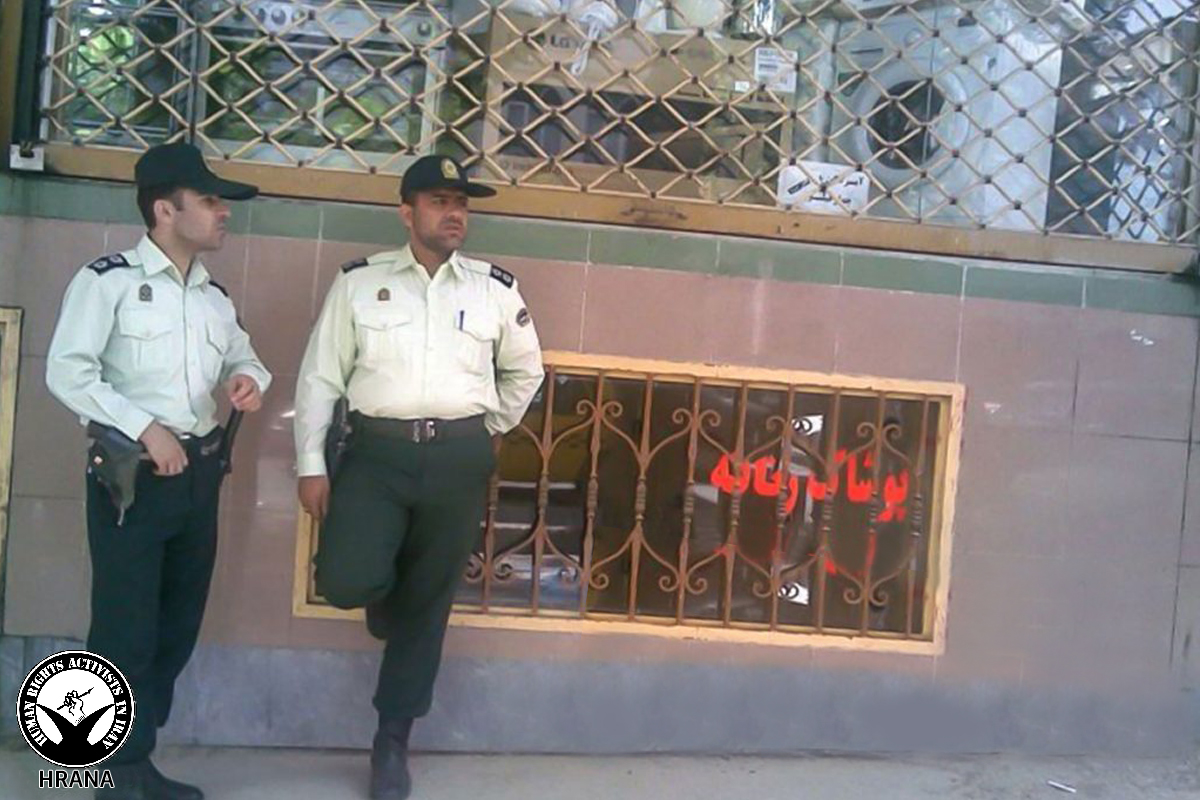
Security attentions have since zeroed in on Kurdistan, Kermanshah, and West Azerbaijan since merchants of these provinces went on strike to protest the young men’s hangings, protests which are being met by civic arrests and spray-painted threats onto the merchant’s shuttered shops.

The omnipresence of security forces in various Kurdish cities, particularly in the wake of the executions and IRGC’s recent missile attack on Kurdish political parties, has contributed to a growing sense of insecurity for Iranian Kurds.

There is still no update on the whereabouts of Jafar Rasoulpour, who was arrested on September 11th in Sardasht, West Azerbaijan Province, nor on Bagher Safari, age 60, who was taken away on Wednesday September 11th by security forces in Ravansar, Kermanshah.

Khaled Hosseini, Mozafar Salehania, and Mokhtar Zarei, who were arrested by security forces in Sanandaj and transferred to the Central Prison of this city on Tuesday and Wednesday, have reportedly been released on bail. Suran Daneshvar and Aram Fathi, two other activists arrested on Tuesday in Marivan, have been transferred to the detention center of the Islamic Revolutionary Guard Corps (IRGC). Eight other Marivan arrestees have since been released on bail: Moslem Bahrami, Mohammad Azkat, Dalir Roshan, Ahmad Tabireh, Nishervan Rezaei, Nooshirvan Khoshnazar, Aram Amani and Ahsan Partovi.

Oshnavieh resident Rashid Naserzadeh was also detained on Tuesday, and released on bail a few hours later.

On September 13th, HRANA reported on the arrest of 13 civil activists in the Iranian Kurdish cities of Marivan, Oshnavieh, Sardasht, and Ravansar in connection to the merchant strikes. That day, Soraya Khadri, a civil activist from Sanandaj and a member of Kurdistan’s Rojyar Charity Foundation, was arrested by security forces and transferred to an unknown location. Though the reason for her arrest has yet to be confirmed, it is suspected to be tied to the strike crackdown.

Zanyar and Loghman Moradi were put on death row after Iranian authorities accused them of murdering the son of a Friday prayer leader in Marivan, a charge they have always denied. Censured by human rights organizations from the outset for its shoddy documentation and lack of evidence, the Moradi’s case was still incomplete at the time they were put to death.

The Moradis wrote an open letter, published in May 2017, detailing their ordeal along with case facts they alleged were constructed by the Ministry of Intelligence. The letter also described torture they experienced at the hands of authorities.

Ramin Hossein Panahi, the third executed Kurd, was tried and sentenced to death by Branch One of the Revolutionary Court in Sanandaj on a charge of “acting against national security by violating the rights of others” on January 16, 2018. His sentence was upheld in mid-April by the Supreme Court before being forwarded to the Execution of Sentences Unit.

Eventually, these three Kurdish political prisoners were executed on the morning of Saturday, September 8th, after having been transferred to solitary confinement in Karaj’s Rajai Shahr Prison.
Prisoner Attempts Suicide to Escape Rajai Shahr Prison Mafia

Human Rights Activists News Agency (HRANA)- Rajai Shahr prisoner and father of one Ali Ahmadi, 50, has been transferred to a hospital after attempting suicide by pill overdose. As of the date of this report, his medical status is unknown.

According to a close source, Ahmadi attempted suicide to escape the prospect of continuous harassment from the prison mafia, a group of inmates maneuvered by Ward 1 Head “Hassan Kord” (real name Hasan Gord) who physically assaulted him for refusing to pay them, and then got away with it.

“On Kord’s orders, they went to hector Ahmadi into paying two million tomans (approximately 150 USD). When he couldn’t make the payment, they beat him up. When Ahmadi reported the beating and extortion to Kord and the prison authorities, nothing came of it,” the source said.

Currently held in Ward 1 of Rajai Shahr, located in Karaj, Alborz province (30 miles west of Tehran), Ahamdi has spent 13 years in prison on murder charges, and over the course of his sentence has obtained *forgiveness from three out of four of his victim’s family members.

Rajai Shahr is among the most redoubtable prisons of Iran. Though it is classified as a criminal penitentiary with the National Prison Bureau, it has for many years served as an exile for both political and non-political prisoners.

Human rights organizations have published numerous reports on discriminative mistreatment of prisoners, as well as prison authorities’ blatant disregard of regulation by abetting organized crime, smuggling, premeditated murder, and the unlawful directives of security authorities. HRANA previously published an exposé of key players in Iran’s prison system, laying bare the systematic nature of prison corruption.

Ahmadi is not the first prisoner to attempt suicide under Kord’s despotism; HRANA has reported on a number of Rajai Shahr prisoners who declared hunger strike, self-mutilated, or attempted suicide in similar circumstances. In a brief conversation with HRANA, one prisoner revealed that Hassan Kord was behind the assaults of at least five prisoners in the first week of September 2018 alone.

Kord, who collaborates with multiple prison gangs including “Hani Kordeh,” has a history of instigating violent brawls among inmates that have led to prisoner deaths. He plays a central role in Rajai Shahr’s funneling of recalcitrant or quarreling prisoners into an institutional no-man’s-land known as the “bloody ring,” a particular hall of the prison where many were killed in March 2018.

In 2016, HRANA reported on the murder of prisoner Babak Ghyasi, who had allegedly not been amenable to the demands of Kord or his associates. Earlier this year, controversial prisoner Vahid Moradi was also killed in a ward under Kord’s management.

* In Islamic penal code, the family of a murder victim may freely choose between “Qesas” (eye-for-an-eye) punishment (i.e. the execution of the defendant) and a death row pardon, often in return for blood money. In this legal sense, “family” includes parents, siblings, grandparents, aunts, and uncles, but not the victim’s spouse. Often the defendant must obtain unanimous forgiveness from the victim’s legal family in order to be pardoned.

Zahedan Prisoner Hanged on Drug and Weapons Charges

Human Rights Activist News Agency (HRANA)- Arafi Reigi, a 32-year-old prisoner of Zahedan’s Ward 5, was hanged to death early this morning, September 15, 2018.

Reigi had been in prison for six years on charges of drug trafficking and armed clashes, and had always denied the latter charge. According to a confidential source, Reigi was summoned September 12th for a purported transfer to a Ministry of Intelligence detention center. “Instead,” said the source, “he was taken to solitary confinement to await execution.”

Amnesty International annual reports indicate that Iran has the highest rate of execution in the world per capita. The HRANA Statistics Center reported that between March 21, 2017 and March 18, 2018, at least 322 persons have been executed and 236 have received the death penalty in Iran. Among those executed, there were 4 juvenile offenders—under 18 years of age at the time of the offense—and 23 executions carried out in public. More than sixty percent of Iran’s executions are not publicized, and are considered “secret” executions.

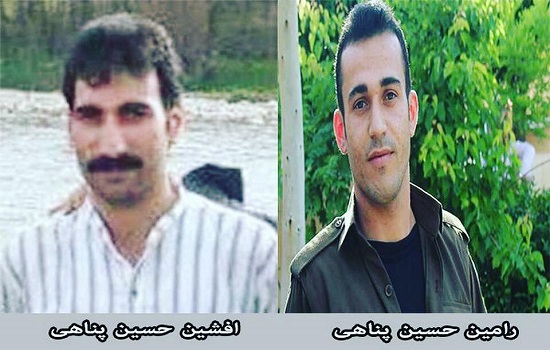
Letter from Afshin Hossein Panahi Honors Executed Brother, Supporters

Human Rights Activists News Agency (HRANA)- Following the execution of his brother Ramin, political prisoner Afshin Hossein Panahi has expressed his gratitude and solidarity in the form of a letter, addressed to an international community which continues to champion the memory and cause of his late sibling.
At an undisclosed location in Tehran province on September 8th, Ramin Hossein Panahi was hanged to death alongside Zanyar Moradi and Loghman Moradi, without notice to their respective families or lawyers, and pursuant to a legal process on which human rights organizations had already cried foul.
Once the brothers were hanged to death, their families received threatening messages from the Ministry of Intelligence and were refused the right to inter their bodies.
In the wake of these executions, residents and merchants of several Iranian cities where Iran’s Kurdish population is highest– particularly in the provinces of Kurdistan, Kermanshah, and West Azerbaijan –went on a general strike. In response, civil activists in the cities of Sanandaj, Marivan (Kurdistan), Oshnoviyeh, Sardasht (West Azerbaijan), and Ravansar (Kermanshah) have been taken into custody.
Seven political detainees at Evin Prison, including Atena Daemi, Nasrin Sotoudeh, and Golrokh Iraee, have written letters to express their condolence to the families of Moradi, Moradi, and Panahi.
United Nations High Commissioner for Human Rights Michelle Bachelet responded to the executions in the following statement: “I deeply deplore the executions last week of three Iranian Kurdish prisoners despite the serious concerns raised by Special Procedures mandate holders that they were not afforded fair trials, and were subjected to torture.”
Philip Luther, Amnesty International’s Research and Advocacy Director for the Middle East and North Africa, has also condemned these executions.
The full text of Afshin Hossein Panahi’s letter, translated into English by HRANA, is below:
A whisper echoes through the iron labyrinth
It sings, “endure! dawn is upon us!”

To the dear civil rights activists, and political parties and groups both inside and outside Iran,
I am thankful and grateful for your unfaltering efforts and support over the past year in trying to stay the execution of my innocent yet audacious brother.
I have a heavy heart and tearful eyes in my grief over the loss of Ramin, who died with dignity. He was proud to fight for the freedom of those who would *later rise in [his] defense and honor, those who have peacefully troubled the foundation of despotism.
Fettered in prison, I am no free man. Notwithstanding my innocence, and my faith in the righteousness of the freedom march, I suffer pains common to all Iranian civil and political activists, and my demands have become one with theirs. I demand my rights be realized, and I will not rest or falter until they are restored. I am infinitely thankful to those comrades who strive to raise the voice of Iran’s political hostages.
Let it be known that the strength of our pact and the spirit of our fight will prevail.
Afshin Hossein Panahi,
Sanandaj Central Prison
* Referring to the general strike in Kurdish areas of Iran
*************************
Afshin Hossein Panahi is a political activist who was arrested on June 26th, 2017 in his home. He was sentenced to eight and half years in prison by judge Saeedi of Branch one of Sanandaj Revolutionary Court on charges of “disseminating propaganda against the regime” and “collaboration with a Kurdish opposition group through participation in a Nowruz ceremony.” This sentence was upheld in appeals court. He was also arrested in 2011 for inquiring into the suspicious death of another one of his brothers, Ashraf Hossein Panahi. In that case, he was sentenced to one year in prison for “propaganda against the regime.”

Merchant Strikes Sparked by Recent Executions Lead to Backlash and Arrests

Human Rights Activists News Agency (HRANA) – Kurdish merchants in Iran’s Kurdistan, Kermanshah, and West Azerbaijan provinces have shut down shop and gone on strike, heeding a call from Kurdish activists to organize a rebellion in response to the recent execution of three Kurdish political prisoners.
Loghman Moradi, Zanyar Moradi, and Ramin Hossein Panahi were hanged to death in dubious circumstances on September 8th, sparking international outcry and rebuke from the UN High Commissioner for Human Rights. Kurdish opposition parties reacted to the untimely deaths of Moradi, Moradi and hossein Panahi by sounding the call to strike through Kurdish regions of Iran, inviting fellow Kurds to protest their comrades’ executions, HRANA previously reported.
The Kurdish shop owners began staging strikes September 12th, which have thus far led to the arrest of 16 political and civil activists in the Iranian Kurdish cities of Sanandaj, Marivan, Oshnavieh, Sardasht, and Ravansar. In addition to civic arrests, security forces have responded by spray-painting threats onto shuttered bodegas.
On Tuesday, Labor activist Khaled Hosseini was detained by security forces in Sanandaj–the Iranian city with the largest Kurdish population–along with Mozaffar Salehnia and Mokhtar Zarei, who were arrested one day later. All were transferred to Sanandaj Central Prison with a bail set at approximately $8000 USD (800 million IRR).
Meanwhile, the western border city of Marivan is experiencing the brunt of the crackdown: Moslem Bahrami, Suran Daneshvar, Aram Fathi, Mohammad Azkat, Dalir Roshan, Ahmad Tabireh, Nishervan Rezaei, Nooshirvan Khoshnazar, Aram Amani and Ahsan Partovi were all reportedly arrested there Tuesday.
Oshnavieh resident Rashid Naserzadeh was also detained on Tuesday, and released on bail a few hours later.
Jafar Rasoulpour was arrested the same day in Sardasht, West Azerbaijan Province. Bagher Safari, age 60, was taken in Wednesday by security forces in Ravansar, Kermanshah.
Zanyar and Loghman Moradi were put on death row after the Iranian authorities accused them of murdering the son of a Friday prayer leader in Marivan, a charge they have always denied. Censured by human rights organizations from the outset for its shoddy documentation and lack of evidence, the Moradi’s case was still incomplete at the time they were put to death.
The Moradis wrote an open letter, published in May 2017, detailing their ordeal along with case facts they alleged were constructed by the Ministry of Intelligence. The letter also described torture they experienced at the hands of authorities.
Ramin Hossein Panahi, the third executed Kurd, was tried and sentenced to death by Branch One of the Revolutionary Court in Sanandaj on a charge of “acting against national security by violating the rights of others” on January 16, 2018. His sentence was upheld in mid-April by the Supreme Court before being forwarded to the Execution of Sentences Unit.

Subscribe to Our Newsletter

Now is definitely not the time to stop reading!

Three More Deaths in Urmia Prison Attributed to Medical Neglect

Human Rights Activists News Agency (HRANA)- Urmia central prisoners Gholamreza Tubaragh Ghaleh, Reza Malek Rezaie, and Sajjad Jamali Fard have died due to authorities’ refusal to arrange for appropriate medical treatment, joining a dismal trend of detainee deaths related to medical neglect.

Fard died on Tuesday, September 11th, 2018 after his transfer to an outside hospital. Rezaie and Ghaleh passed away inside the prison.

Ghaleh was being held on alcohol-related charges; the charges of the other victims have yet to be confirmed.

Prisoner deaths related to detention-related disease and restrictions on hospital transfers have reached a total of five since March 2018, the beginning of the Iranian year. Moloud Vanousheh of Mahabad died of a long-neglected colon condition while being held on alcohol-related offenses. Ghorbanali Mir Esmaeili also died of unattended conditions while in Urmia’s psychiatric ward 2.

Prisoners at Urmia Central Prison continue to be exposed to the elevated health risks of a short-staffed prison clinic without a resident physician. On June 12, 2018, Bahaoldin and Davood Ghassemi, two brothers on Urmia’s death row, requested to be executed as soon as possible when prison authorities refused their transfer to an outside clinic for treatment. Both are suffering from foot infections secondary to spinal injuries which have been further exacerbated by the sanitary conditions of their quarters.

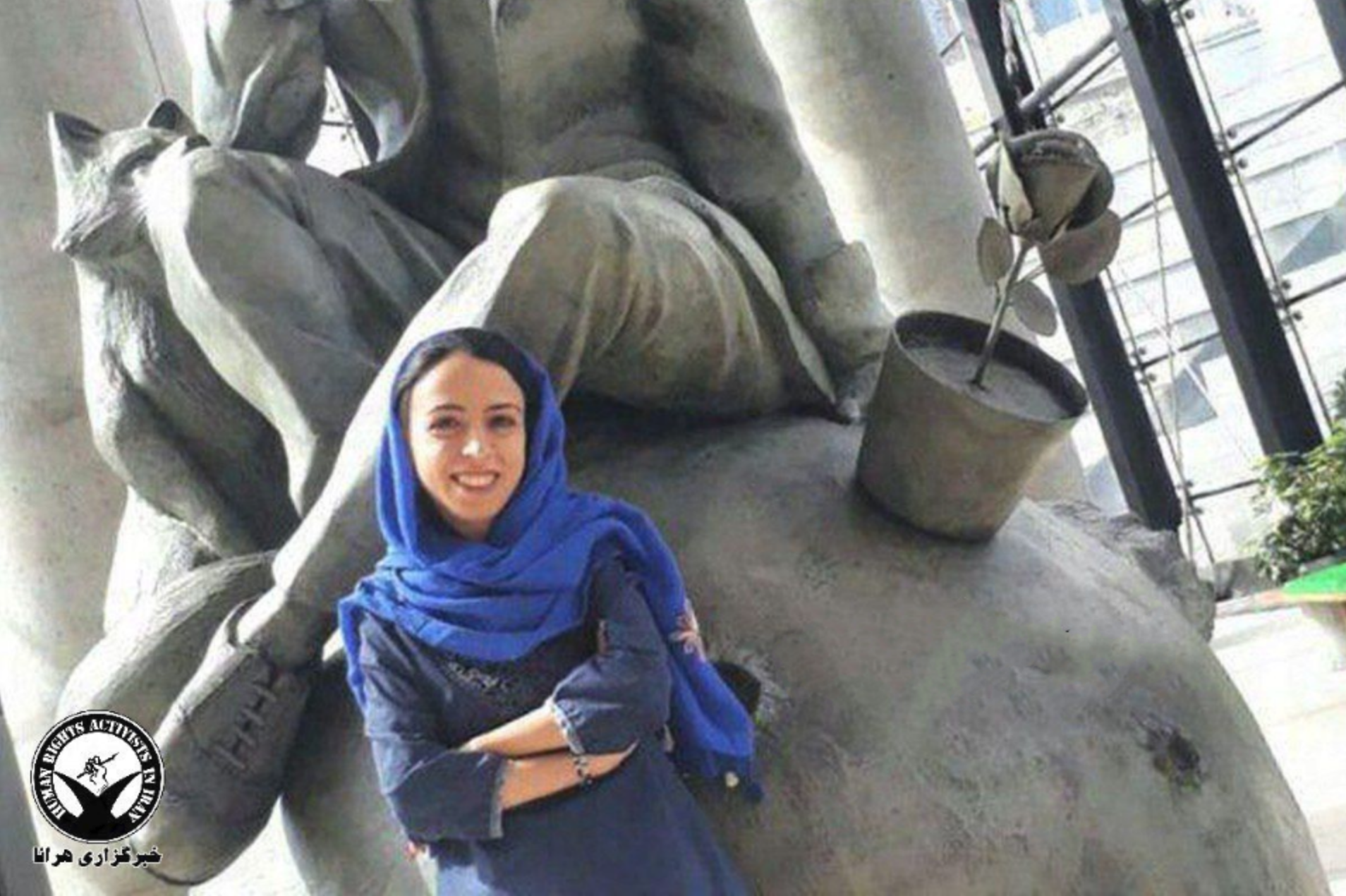
Crackdown on Women’s Rights Activists Continues: Najmeh Vahedi held on ghost charges for 11 days running

Human Rights Activists News Agency (HRANA) – Since women’s rights activist Najmeh Vahedi was arrested 11 days ago, her family has been struggling to learn more about the reasons behind her arrest on September 1st.

In a brief interview with HRANA, Najmeh’s brother Reza said, “In a one-minute phone conversation with my sister on Tuesday September 4th, she was only able to tell us that she didn’t know her charges or why she had been arrested. We keep inquiring [with authorities], and are getting anxious because it’s been 11 days and we still don’t know what’s going on.”

Najmeh Vahedi earned a BS in sociology from Tehran Allameh University and an MS in sociology from Tehran Alzahra University. She is now in her third semester of Women’s Studies at Tehran Allameh Tabatabai University.

On September 3, 2018, HRANA published a report on the detention of this women’s rights activist by security forces at her home.

Over the past few weeks, civil rights activists–especially women’s rights activists–have been pursued by authorities with a renewed fervor. Women’s rights activist Rezvaneh Mohammadi and women’s rights activist and attorney Hoda Amid were among those detained recently.

Vahedi and Amid had reportedly held educational training workshops for women inquiring about their rights in marriage contracts. At the time of this report, no further information was available on their respective charges, nor on the conditions facing them in custody.

Human Rights Watch issued a statement on September 5th of this year asking Iranian authorities to stop the repression of human rights defenders like Amid and Vahedi and to immediately release those who are in custody for peaceful expressions of dissent.

Amnesty International also voiced their opposition to this civil crackdown last week, demanding that affected prisoners be immediately released and that defendants not be limited to a list of regime-designated attorneys.

Death Row Juvenile Offender Stages Hunger Strike from Solitary Confinement

Human Rights Activists News Agency (HRANA) – Bahauldin Ghasemzadeh, a juvenile offender sentenced to be executed in Urmia Prison who was physically assaulted and transferred to a solitary cell on September 11th, has started a hunger strike in protest.

An informed source confirmed that Ghasemzadeh was transferred and beaten for complaining about authorities’ neglect of his and his brothers’ medical needs. First Ghasemzadeh was barred from hospital visits for his ulcers and spinal cord damage. Then, when he wanted to provide care to his paralyzed brother Davoud, who is also on death row, authorities told him “no.”

“Ghasemzadeh was regularly visiting and tending to his disabled brother at the prison clinic,” the source added. “Yesterday, the head of the prison informed him that he is not allowed to do so any more.”

On June 12, 2018, HRANA reported on the deplorable conditions of Bahauldin and Davoud Ghasemzadeh, two imprisoned brothers on death row who both suffer from spinal cord damage. The report stated that the brothers had developed infections in their feet secondary to these injuries, exacerbating their physical ailments. When prison authorities refused to send the two for outside medical care, the brothers requested their executions be carried out as soon as possible.

As previously reported by HRANA, the two were supposed to be transferred to another prison on April 1, 2018. However, as of the date of this report, high ranking prison officials have prevented the transfer.

Prisoners at the Central Prison of Urmia continue to suffer from a lack of medical attention due to a shortage of medical personnel on site. As of March 20, 2018, the beginning of the Iranian calendar, the deaths of at least five prisoners have been attributed to inadequate medical help.

Background on Death Row Prisoners Bahauldin and Davoud Ghasemzadeh

A source close to the Ghasemzadeh family told HRANA of the brothers’ backgrounds and history with authorities.

According to the source, Bahauldin was 17 when him and Davoud were arrested on charges of murdering two individuals in a tribal conflict. When the charges were formalized one year later, Bahauldin absconded from court and fled to Iraqi Kurdistan.

Bahauldin’s spine was injured in a severe beating by authorities upon his coerced return to Urmia.

“Security officers arrested his sister, mother, and other brother, transferring them to the Urmia Prison,” the source said. “They told him his family members wouldn’t be released until he came back. When he did one month later, he was physically assaulted and sustained the damage to his backbone and spinal cord.”

Both Davoud and Bahauldin are currently on death row. Davoud, the elder Ghasemzadeh, is now completely paralyzed and is held at the prison clinic full-time. Their other brother Javad was executed in Urmia in 2013 on a separate murder charge.

Prisoners at the Central Prison of Urmia continue to suffer from a lack of medical attention due to a shortage of medical personnel on site. As of March 20, 2018, the beginning of the Iranian calendar, the deaths of at least five prisoners have been attributed to inadequate medical help.

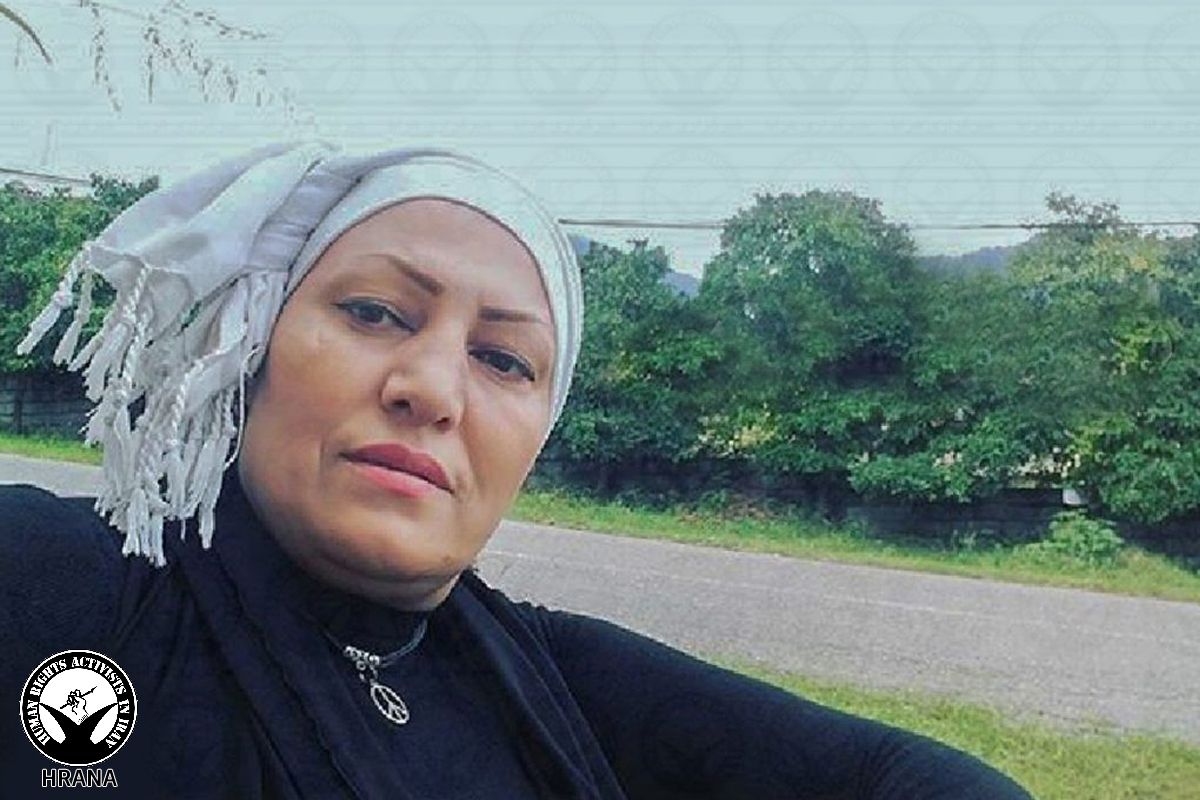
January Protests: Third Day of Hunger Strike for Prisoner Mahin-Taj Ahmadpour

Human Rights Activists News Agency (HRANA) – Mahin-Taj Ahmadpour, a political prisoner being held at Nashtaroud Prison of Tunekabon, has been on hunger strike for three days.

For her participation in the January protests in Tunekabon, Ahmadpour was sentenced in the city’s Revolutionary Court, and Branch 101 of its Penal Court, to 10 months in prison. She has been serving her sentence since August 14, 2018.

Ahmadpour declared hunger strike on Monday September 10, 2018 in protest to a lack of medical attention, authorities’ refusal to allow her access to the prison phone, and of prison authorities, who have reportedly threatened to develop a new case file against her.

An informed source elaborated to HRANA, “When they didn’t let Ahmadpour use the phone, it led to an argument. Instead of escalating the matter for handling by authorities, Mrs. Sha’bani the guard got involved, insulting the prisoner and threatening to get prison and security authorities to pursue further charges against her.”

One day after the incident, the guard told Ahmadpour that a new case file had been opened against her, charging her with blasphemy, even while the content of Ahmadpour’s altercation with Sha’bani was reportedly limited to their disagreement over use of the phone.

The source added, “Ahmadpour is anemic, and is supposed to receive seven units of blood every month. Due to her anemia, she has a high chance of developing leukemia and has to receive regular monthly injections as a preventative measure. Despite these conditions and supporting medical documentation, the prison authorities have not permitted her to be transferred to the hospital for her treatments.”

Mahin-Taj Ahmadpour is a 46-year-old resident of Tunekabon. A peddler by trade, she was arrested along with 14 other residents during the January 2018 countrywide rallies known as the January Protests. The Revolutionary Court of Tunekabon sentenced eight of these arrestees to 28 months’ imprisonment, divided among the defendants. Branch 101 of Criminal Court No. 2 of Tunekabon, presided by Judge Ebrahimi, also sentenced six of the arrestees to 24 collective months of prison time.

Ahmadpour was sentenced May 2, 2018 in Branch 101 of Tunekabon Criminal Court No. 2 to serve six-months prison sentence on a charge of “disrupting the public peace through participation in an illegal gathering.” On August 11, 2018, Tunekabon’s Revolutionary Court compounded the sentence with four months’ imprisonment for “propaganda against the regime.” As evidence against her, the court cited a combination of law enforcement reports and images and video taken during the January protests in Tunekabon.

Tensions Mount over Unlawful Execution of Three Kurdish Political Prisoners

Human Rights Activists News Agency (HRANA)- Shock, sorrow, and censure over the executions of Zanyar Moradi, Loghman Moradi, and Ramin Hossein Panahi continue to pour in from both international institutions and Iranian citizens in-country, further straining relations between Iranian authorities and the human rights activist community at large.
A number of Kurdish opposition groups have sounded the call to strike to Kurdish regions of Iran, inviting fellow Kurds to protest their comrades’ executions.
Michelle Bachelet, United Nations High Commissioner for Human Rights, has stated, “I deeply deplore the executions last week of three Iranian Kurdish prisoners despite the serious concerns raised by Special Procedures mandate holders that they were not afforded fair trials, and were subjected to torture.” Philip Luther, Amnesty International’s Research and Advocacy Director for the Middle East and North Africa, has also condemned these executions.
Imprisoned civil rights activist Atena Daemi was among a number of imprisoned civil rights activists publishing separate letters expressing sorrow and outrage over the men’s deaths. Golrokh Iraee and Human Rights Lawyer Nasrin Sotoudeh, two more imprisoned activists, wrote and published their own messages of protest and sympathy, with Sotoudeh likening their executions to the *political massacres of 1988.
Some of these letters have reportedly incited blowback from prison authorities, who have subjected Daemi and Iraee to repeated non-routine body searches after their letters were published. When these women inquired about the reason for the searches, they learned the order for frisking had been issued by the Prison’s Director. A Prosecutor Assistant has since promised to investigate.
Excerpts from the letters of Sotoudeh and Iraee, translated into English by HRANA, are below.
Nasrin Sotoudeh:
“The judicial system has executed three Kurdish compatriots. Our Kurdish compatriots have been plagued by oppression for decades. The verdict and sentences of the Revolutionary Court, condemning these three compatriots to die, was the product of an unlawful process that runs counter to Human Rights principles and the laws of the Islamic Republic. In at least one of these trials, had due process been respected, the defendant may very well have been acquitted.
Zanyar and Loghman Moradi were on hunger strike when they were hanged, another testament to the inherent brutality of the judicial system, who itself is supposed to protect us from violence.
I extend my condolences to our Kurdish compatriots, who have had a steadfast, crucial presence in the cultural promotion of Iran; to all Iranians; and, in particular, to the families of Moradi, Moradi, and Panahi. I hope that in heeding the diverse manifestations of Iran’s judicial violence, the urgent need to renounce all forms of it will become clear.”
Golrokh Iraee
“[Their death] invites the wrath of Kurdistan’s Children […] Zanyar Moradi, Loghman Moradi, and Ramin Hossein Panahi, freedom fighters, Kurdistan’s immortal resistance, teachers of patience and persistence, have left behind a lesson in determination. They were hanged while on hunger strike, in protest of their mistreatment at the hands of authorities; they stood up to the monsters of despotism and reactionarism.
They unmasked those traitors who call themselves statesmen and rulers. Let it be known that the time for lip service has passed. To hold them accountable, we must act.”
****
After being hanged to death in an undisclosed location in Tehran on September 8th without notice to their lawyers, the bodies of the Moradis and Hossein Panahi were *confiscated by the Iranian authorities. The Ministry of Intelligence has since threatened the men’s surviving family members.
Ahmad Amouee, journalist and former prisoner of conscience, published an account of the Moradi and Moradi families’ visit to Tehran’s main cemetery, Behesht-e Zahra, where officials had summoned them to bid farewell to their sons’ bodies. Their final resting place remains unknown.
* In the summer of 1988, on the orders of Ayatollah Khomeini, the Supreme Leader of Iran at the time, thousands of prisoners of conscience and political prisoners were executed after inquisition-style interrogation sessions. Almost all of these prisoners had already been tried and were either serving their sentence or, having completed their sentence, were awaiting release. All were buried in unmarked, often secret, mass graves.