Rajai Shahr Warden Breaks Prisoner’s Wrist, Toes

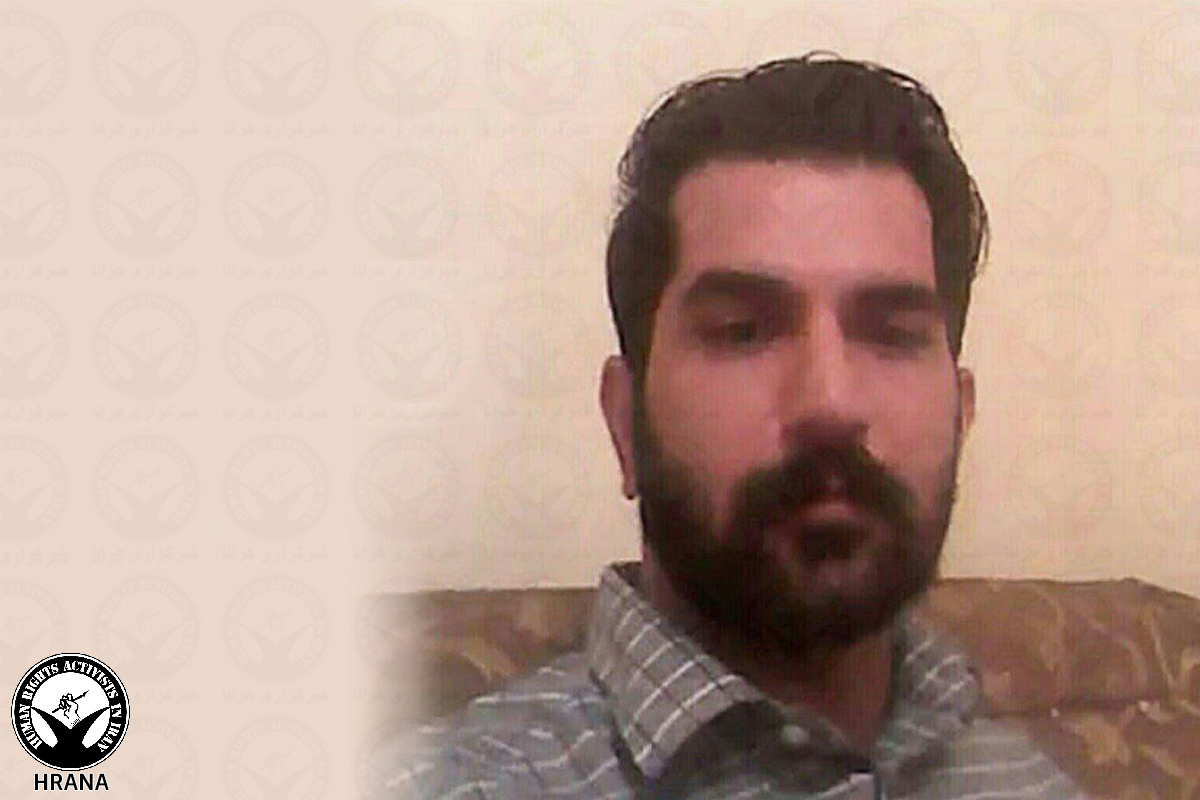
Human Rights Activists News Agency (HRANA) – A Rajai Shahr (Gohardasht) Prison warden known as “Mr. Zalali” assaulted 28-year-old prisoner Reza Ghasemi for unknown reasons on Tuesday, September 4th, breaking his right wrist and toes of both feet, confining him to a wheelchair.

Ghasemi is being held in Ward 10 of Rajai Shahr (30 miles west of Tehran), where beating and mistreatment of prisoners is not without precedent: Behrouz Hosseini from ward 6 was severely beaten Saturday, July 7, 2018 by prison staff; Earlier, on May 16th, Sunni prisoner Hamzeh Darvish, who had previously been transferred to the Coroner’s Office for health problems attributed to his hunger strike, was beaten. Prior to his visit to the Coroner’s office, prison officials reportedly intimidated and threatened him, warning him not to make incriminating statements against them.

Iranian President Hassan Rouhani has sloganeered against civil rights repressions, publishing a Civil Rights Charter and verbally pushing for the comprehensive implementation of its provisions. Article 64 of the charter reads, “anyone arrested, convicted, or imprisoned is entitled to their civil rights, including proper nutrition, clothing, health and medical care, educational and cultural services, religious worship and practices.” Thus far, though, Rouhani’s rhetoric has yet to materialize into concrete initiatives.

Imprisoned Civil Rights Activist Farhad Meysami Enters 38th Day of Hunger Strike

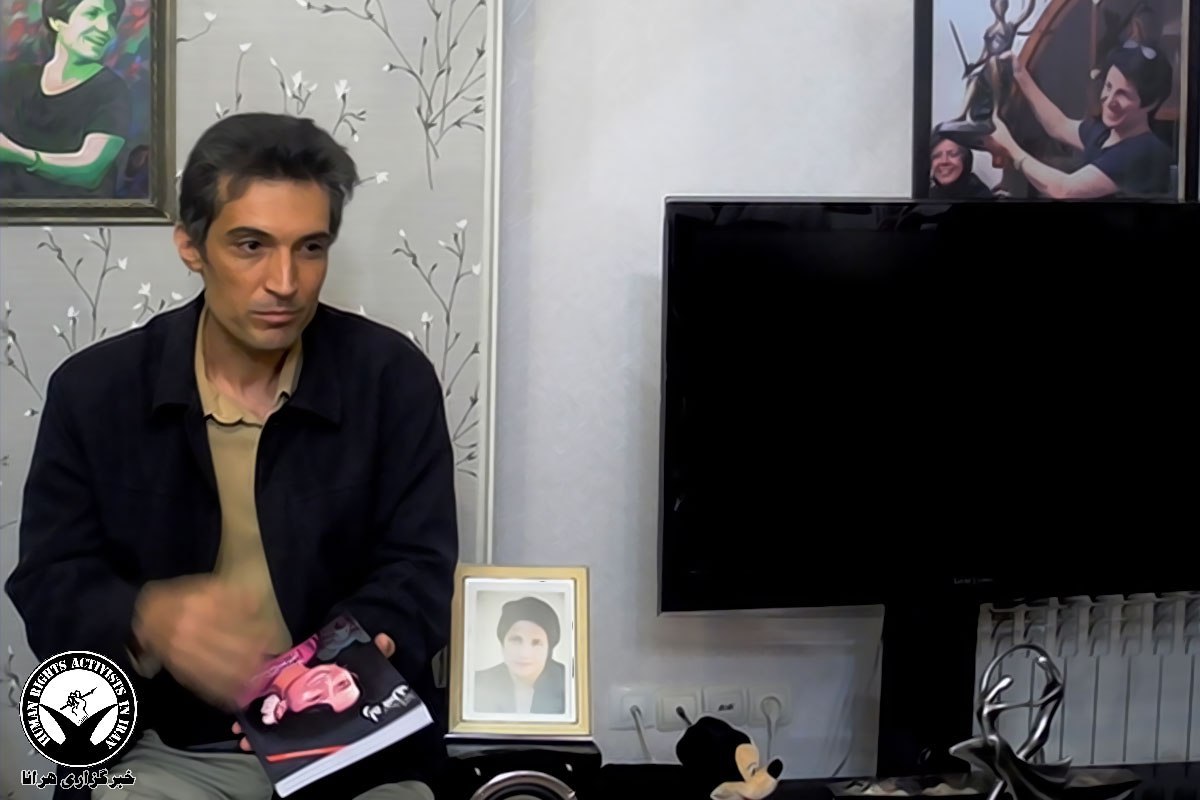
Human Rights Activists News Agency (HRANA) – The health condition of Farhad Meysami — who declared hunger strike the day after his arrest on July 31st in protest to his detention and the denial of his right to a lawyer of his choice — is in steady decline.

A source close to the matter told HRANA, “His blood pressure dropped very low on Saturday, September 8th. The doctor recommended he be treated in a hospital or the prison clinic, saying that his vital signs would remain unstable otherwise. He has lost 14 kilograms [30 pounds] since the start of his hunger strike, and weighs 64.5 kilograms [142 pounds] now.”

Suffering from intestinal colitis that he has been treating with medication for the past 18 years, Meysami has announced that his diet will be limited to that medicine, and will only end his hunger strike if Reza Khandan, the husband of imprisoned lawyer and human rights defender Nasrin Sotoudeh, is unconditionally released.

Meysami was arrested by security forces in his personal library on Tuesday, July 31, 2018, and during his interrogation was charged with “Collusion and conspiracy to threaten national security,” “Disseminating propaganda against the regime,” and “Insulting the hijab, an essential sacrament of Islam.” On Monday, September 3rd, Branch 7 of Evin Court added “Propagation of corruption and decadence” to his charging document.

Human Rights Watch previously issued a statement in which they mentioned Meysami’s ordeal, asking Iranian authorities to stop the repression of human rights defenders and immediately release those who are being persecuted for their peaceful expressions of dissent.

Amnesty International also appealed to Iranian authorities, opposing their crackdown on civil society and unlawful detention of lawyers and human rights activists including Farhad Meysami. They demanded these prisoners’ immediate release, and that authorities provide every detainee with access to a lawyer of their choice at the time of their arrest.

Iran, an open-air prison for lawyers: A report

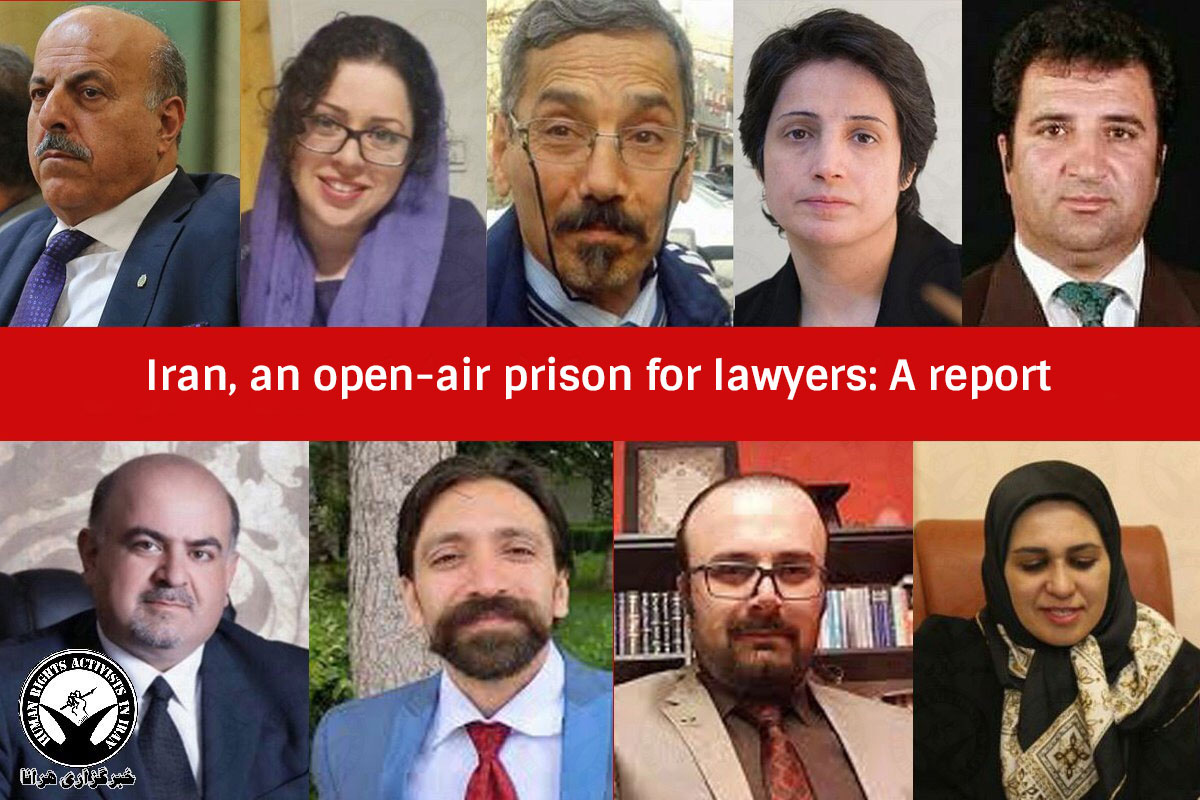
Human Rights Activist News Agency (HRANA) – This past week has seen a sharp increase in the arrests of lawyers in Iran, many among them specialists in defending civil rights, women’s rights, and human rights activists.

Nobel Peace Prize laureate Shirin Ebadi shed light on this trend in an exchange with HRANA, stating that Iranian officials and its judiciary aim to create a climate of intimidation in which citizens find it easier to turn a blind eye to government abuses of power.

“[Authorities] prefer no one dare protest [their] unlawful actions,” Ebadi said.

She went on to note that arrests of lawyers not only put innocent people behind bars, but they also leave the lawyer’s clients–often prisoners of conscience and other political detainees–defenseless.

Ebadi drew on historical context to explain that authorities of the early Islamic Republic recognized legal scholars and independent lawyers as “nuisances,” or impediments to illicit activity, from the outset. This wariness on the part of the Iranian authorities led an appointee of the Judiciary to close the Iranian Bar Association for 18 years.

When authorities finally sanctioned elections for the Bar Association’s new board of directors, their permission roughly coincided with the passing of a law mandating all members be pre-approved by a Judiciary-controlled organ called the Disciplinary Court of Judges. Ebadi cites this filtering as the reason behind the Bar Association’s lack of autonomy, as it is known to refrain from advocating for its arrested members.

The following is a list of legal practitioners affected by this recent wave of repression.

Nasrin Sotoudeh, lawyer and human rights activist

Nasrin Sotoudeh was among the first lawyers arrested on June 13th of this year. She was arrested in her home and subsequently taken to Evin Prison.

According to lawyer Payam Derafshan, who was arrested himself on August 31st and has since been released, Sotoudeh is being held on three counts: a five-year sentence for espionage, which does not figure on her formal charge sheet; a lawsuit brought by a prosecutorial interrogator in the central Iranian city of Kashan; and an arrest order issued by Branch 2 of the Interrogations Unit.

The prosecutorial interrogator recently doubled down on his accusations against Sotoudeh, presenting new charges of “helping to form house churches,” “inciting the organization of a referendum,” and “attempts to organize gatherings.”

Sotoudeh declared hunger strike on August 25th to protest both her arrest and the judicial pressures being placed upon her family, relatives, and friends.

Abdolfatah Soltani, lawyer, activist, and human rights defender

Soltani’s September 10, 2011 arrest was followed by a sentence of 18 years in prison and a 20-year ban from the Iranian bar association. According to an Iranian court, his trespasses include his acceptance of the Nuremberg International Human Rights Award, statements he made to the media about his casework, and his role as co-founder of the Center for Supporters of Human Rights (CSHR).

Soltani’s prison sentence was reduced to 13 years in an appeals court. Pursuant to the principle of concurrent sentences per Article 134 of the Islamic Penal Code, his sentence was reduced again to 10 years, and his 20-year Bar-association ban was reduced to two.

Years of enduring poor living conditions in prison, including being cut off from nutritious food and [potable] water, have taken a toll on Soltani: he now suffers from a host of health issues including broken teeth, anemia, irritable bowel syndrome, and [abnormal] blood pressure fluctuations.

The formal record of Soltani’s charges equates his human rights activities to “acting against national security.” Ten of the accusations being levelled against him are listed below:

1- Forming the illegal anti-security body CSHR
2- Giving interviews to counter-revolutionary media and foreign enemies
3- Acting against the regime on the pretext of human rights
4- Waging anti-regime psychological campaigns via published statements
5- Portraying Baha’i cult members as victims
6- Publishing human rights reports, all while cognizant of their adverse impact on Iranian national security and foreign politics and of their potential exploitation by the enemies of the revolution
7- Slandering the judiciary regarding testimonies extracted by torture and intimidation in prison
8- Disseminating disparaging news about the country and compromising public faith in the judiciary
9- Defending human rights cases and extremist clients on a pro bono basis
10-Anti-Islamic propagandizing and violating the principles of Islam by indiscriminately condemning execution sentences and implicitly rejecting the principle of Qesas [retribution] by calling it violent

While Soltani was in prison, his daughter Homa died of a heart attack on August 3rd at the age of 27. He was granted restricted furlough to attend her funeral.

Ghasem Sholeh-Saadi and Arash Kaykhosravi, lawyers and human rights activists

On August 18th, a number of protestors were detained during a public demonstration before Tehran’s Parliament building in protest to both the Caspian Sea treaty and the vetting of election candidates by the Guardian Council. Three lawyers–Ghasem Sholeh-Saadi, Arash Kaykhosravi, and Masoud Javadieh–were among those detained.

Several arrestees were released within hours, and Javadieh was released on bail the following day. Sholeh-Saadi and Kaykhosravi, facing charges from Branch 5 of the Evin prosecutor’s office, were sent to Great Tehran Penitentiary.

On August 21st, Sholeh-Saadi and Kaykhosravi, were sent again to the Evin prosecutor’s office, shackled and in prison garb. They were read their charges (“gathering and collusion against national security”), issued a one-month arrest order, and returned to prison.

Sholeh-Saadi is a legal scholar and former member of parliament. He had previously been convicted and jailed for “insulting the Supreme Leader” in a letter he infamously published in 2002.

Kaykhosravi has taken on such high-profile cases as that of lawyer Mohammad Najafi and Kavous Seyed Emami, the university professor and environmental activist who died in Evin Prison on February 8th. Prison authorities claimed Emami had committed suicide.

Kaykhosravi has since been transferred to Evin Prison.

Payam Dorafshan and Farokh Forouzan, lawyers

Attorneys Payam Dorafshan and Farrokh Forouzan were arrested in the home of their imprisoned colleague Arash Kaykhosravi on August 31st.

Dorafshan was among a group of lawyers suing Bijan Ghasemzadeh, interrogator in Branch Two of the Culture and Media court, for his decision to ban the popular messaging app Telegram. Forouzan works in children’s rights.

Both have since been released. The reason for their arrest remains unclear.

Mohammad Najafi, lawyer and human rights activist

On July 29th, Branch 102 of the Second Criminal Court in the central Iranian city of Arak sentenced lawyer Mohammad Najafi and dozens of other citizens to prison terms for participating in January’s Shazand County protests.

Najafi was convicted of “disrupting order and public peace by taking part in illegal gatherings” and sentenced to one year in prison plus 74 lashes. Prior charges of “publishing false information to disrupt the public conscience” brought the prison sentence to a total of two years.

Najafi is among those investigating the death of a protestor in January’s Shazand protests. He publicly spoke out about the death of Vahid Heydari, a citizen who died while in the custody of authorities after being arrested in Arak.

Zaynab Taheri

Lawyer Zaynab Taheri was arrested on June 19th, one day after the execution of her client Mohammadreza Salas Babajani, a Sufi Dervish prisoner convicted of killing three police officers. She had publicly advocated for Babajani on social media.

She was arrested by the Culture and Media court and convicted of both “publishing falsehoods to disrupt the public conscience” and “propaganda against the regime.” She was released on bail August 8th.

On August 31st, the International Federation of Human Rights, known by its French acronym FIDH, expressed concern over the harassment of Taheri by judicial authorities, asking Iranian officials to cease their harassment of her and other human rights defenders.

Taheri’s clients included Salas Babajani, Mohammad Ali Taheri, and Ahmadreza Jalali.

Hoda Amid, lawyer and women’s rights activist

On the morning of September 10th, security forces arrested Hoda Amid in her home along with Najmeh Vahedi, another women’s rights activist with a formal education in sociology who was with Amid at the time. Amid and Vahedi are known to have organized educational training workshops for women inquiring about their rights in marriage contracts.

The precise reason for Amid’s arrest and her current status remain unknown.

Political Executions: Zanyar & Loghman Moradi and Ramin Hossein-Panahi Hanged to Death

Human Rights Activists News Agency (HRANA) Zanyar Moradi, Loghman Moradi and Ramin Hossein-Panahi, three Iranian political prisoners, were reportedly executed on the morning of Saturday, September 8th in Karaj’s Rajai Shahr Prison.
Iran’s Fars news agency published a report on September 8th claiming these three men were “thugs who took military and terrorist measures in western Iran and brought insecurity and killed the loved ones of a number of families.”
On September 7th, families of Zanyar and Loghman Moradi had met them in solitary confinement cells, as requested by prison authorities.
Families of Zanyar and Loghman were contacted by authorities of Rajai Shahr on September 5th and asked to go to the prison, Zanyar’s brother told Hrana. “Loghman’s father and I were able to meet with them. Zanyar told us that they were sent to solitary confinement three days ago for unknown reasons…but they had guessed that it was for execution which is why they started a hunger strike that morning.”
Zanyar and Loghman Moradi were sentenced to death after being convicted of murdering the son of Marivan’s Friday prayer leader; a charge they have always denied.
On December 22, 2010, the two Kurdish family friends were sentenced to death by Branch 15 of the Tehran Revolutionary Court, presided by Judge Salavati. They were charged with membership in the banned leftist party Komele and murder of the son of Marivan’s Friday prayer leader on July 5, 2009. Both Zanyar and Loghman have repeatedly said their confessions to the crimes were extracted from them under duress.
Zanyar and Loghman had previously written an open letter, published in May 2017, detailing their case and the torture they had experienced.
Ramin Hossein-Panahi, too, was executed today in Rajai Shahr Prison, according to his lawyer, Hossein Ahmadiniaz.
Ramin’s family had not been contacted for a final visit, Ahmadiniaz told HRANA.
The legal team defending Hossein-Panahi had previously written a letter to the head of the Judiciary, asking for the execution order to stop on national security grounds.
Hossein-Panahi published a video on social media about ten days ago, insisting on his innocence and refuting the charges against him.

Dervish Hunger Striker Transferred to Prison Clinic

Human Rights Activists News Agency (HRANA) – Mojtaba Biranvand, a Dervish prisoner who went on hunger strike after being attacked by prison officials in the Great Tehran Penitentiary, was transferred to the prison’s clinic on September 7, 2018, after experiencing a steep drop in blood pressure.

Steadfast to the terms of his hunger strike, Biranvand has declined both intravenous treatment and transfer to an outside hospital. He was moved to declare a hunger strike after he and his comrades were violently raided by prison guards during a sit-in protest and transferred to solitary confinement cells. HRANA previously published an open letter from the Dervish prisoners outlining their terms of protest.

As punishment for his participation in protests against the restrictive measures imposed on Gonabadi Dervish spiritual leader Noor Ali Tabandeh, Biranvand was previously sentenced to seven years in prison and two years in exile, to be served in the southeastern province of Sistan & Baluchestan.

Subscribe to Our Newsletter

Now is definitely not the time to stop reading!

Three Women’s Rights Activists Detained in Three Days

Human Rights Activists News Agency (HRANA) – Rezvaneh Mohammadi is the third women’s rights activist to be taken into custody by authorities in the past three days.

A source close to Mohammadi’s family told HRANA that she was arrested by security forces for unknown reasons on the evening of Monday, September 3, 2018.

Mohammadi’s arrest comes only two days after the arrests of activists Najmeh Vahedi and Hoda Amid, an attorney, on September 1st. The two were reportedly arrested for hosting training workshops for women inquiring about their rights in marriage contracts. At the time of this report, no further information was available on their conditions or the reasons behind their arrests.

Mohammadi, Vahedi, and Amid join a recent wave of citizens detained for their active and public defense of human rights. Lawyers Arash Kaykhosravi, Payam Dorafshan, Farrokh Forouzan, and Ghasem Sholeh-Saadi were detained in August. Dorafshan and Forouzan have since been released.

Families of Kurdish Death Row Political Prisoners Fear Their Imminent Execution

Human Rights Activists News Agency (HRANA)- Family friends Zanyar and Loghman Moradi, two prisoners on death row in Rajai Shahr (Gohardasht) Prison of Karaj, were separately summoned from their respective wards on Wednesday, September 5th on the pretext of a meeting with the prison’s director. Instead, it is suspected that they have been transferred to a ward controlled by the Islamic Revolutionary Guard Corps (IRGC). Hours after the transfer, the prison telephone system inexplicably went dead.
The circumstances of their transfer felt all the more dubious the next day when, according to one of the prisoners’ family members, their families received a strange phone call: “Thursday, September 7th, an individual identifying himself as a ‘prison official’ called [us] asking [that we] come to the prison for visit. We are en route to Rajai Shahr [30 miles west of Tehran] in hopes of obtaining an update on these two members of our family.”
While this “prison official” gave no indication that the prisoners were scheduled to be executed, [a history of community experience with such circumstances gives the family reason to suspect] that the invitation to visit may very well be their last. Nonetheless, the family stores hope in their continued efforts to commute the family friends’ sentences and stay their execution.
Zanyar and Loghman Moradi were sentenced to death on December 22, 2010, on charges of “Moharebeh” (“enmity against God”), both accused of membership in Komeleh, a Kurdish opposition group, and for involvement in the July 5, 2009 murder of a Friday prayer Imam. [While their charges of membership in a Kurdish opposition party were tried in a revolutionary court, the Supreme Court ruled to direct their case to criminal court because their convictions and sentences were ultimately based on murder charges.] Both defendants previously announced that their confessions to murder were extracted under duress, intimidation, and torture at the hands of their interrogators.
Their most recent trial took place more than four years ago in the criminal court of Tehran, which, citing insufficient evidence and incomplete investigation of the case, forwarded their dossier multiple times to the authorities of Marivan (in the Kurdistan province) requesting they address its flaws.
Without accounting for all of the said deficiencies, Marivan court sent back the case, which has yet to be retried. Given the lack of concrete evidence against them, both prisoners would presumably be acquitted in a retrial; yet despite repeated requests from the defendants’ families for follow-up, and notwithstanding the courts’ legal responsibility to prevent unreasonable delays in criminal procedure, judicial authorities remain mum on the prospect of when–or even if–the Moradis might anticipate a more complete review of their case. The prisoners thus wait in a state of suspense over their fate, a wait which has grown more fraught with mounting concerns for their health.
Human rights organizations have been vocal in their opposition to the lack of due process and appropriate legal procedure that judicial authorities have thus far displayed in the Moradi case.
In May 2017, the Moradis wrote an open letter (1) to draw public attention to their case, their ordeal, and what they allege are false accusations constructed against them by security organizations.
On July 18, 2018, Zanyar Moradi’s father was assassinated by three gunshots in Panjovin, an Iraqi Kurdistan town near the Iranian border. His history of political activity, coupled with previous attempts on his life, raised suspicions that Iranian security forces were involved in his death.
Ramin Hossein Panahi

Ramin Hossein Panahi is on death row for similar political charges, i.e. ties to an opposition group similar to that of the Moradis. Parallels between the two cases and a lack of phone contacts from Rajai Shahr where he is currently being held in solitary confinement have heightened fears that Hossein Panahi, too, faces imminent execution.
Earlier this week, the Islamic Republic Judiciary executed three political prisoners in Zahedan (in southeastern Iran, home to the Baloch minority) in vindictive response to armed clashes that broke out between Iranian security forces and an armed opposition group.

Nasrin Sotoudeh’s charges: A closer look

Human Rights Activists News Agency (HRANA) – Human rights lawyer and activist Nasrin Sotoudeh, who is entering the second week of her hunger strike, has been imprisoned since June 14th, 2018 in Tehran’s Evin Prison.

Sotoudeh’s temporary detention warrant has been renewed twice in this 86-day stretch. She did not post the bail granted to her and remains in custody in the Evin Prison women’s ward. Her husband Reza Khandan, who had been publicly supporting her on social media, was arrested himself on September 4th.

Summary of Current Proceedings

According to lawyer Payam Dorafshan, who himself was imprisoned from August 31st until his release on September 6th, Sotoudeh is being held on three counts:

· A five-year sentence on an espionage charge that didn’t figure in her indictment
· An unspecified charge from a court investigator in Kashan (a city located in central Iran)
· An arrest warrant by Branch 2 of the Interrogations Unit

Sources close to Sotoudeh believe she has been arrested for carrying out her responsibilities as an attorney by defending the rights of those charged for protesting mandatory veiling.

Sotoudeh’s husband Khandan revealed in July that his wife was deprived the right to appoint her own legal counsel. Her attorney of choice was rejected by judicial authorities on the basis of a new law which, in cases of those accused of national security crimes, restricts defendants to choose a lawyer from a pre-approved list.

In late July, Sotoudeh was served a charge for which she has already been doled a five-year prison sentence: membership in LEGAM, a Persian abbreviation for the Step-by-Step Campaign to Abolish the Death Penalty in Iran.

In a letter from prison, Sotoudeh then announced that she refused to go to court, an action which, according to Khandan, provoked judicial authorities to bring new charges against her.

An investigator– together with the Assistant Prosecutor and the Evin Prison Director of the Execution of Sentences — visited Sotoudeh’s prison ward on August 25th to “complete the case.” Over the course of their visit, the investigator leveled three new accusations against Sotoudeh: assisting in the foundation of Christian house churches, incitement to hold referendums, and attempts to hold gatherings and sit-ins.

Following the visit, Sotoudeh wrote an open letter to announce her hunger strike, decrying both her own arrest and the pressures that judiciary authorities are reportedly placing on her family, relatives, and friends, e.g. the arrest of civil rights activist Farhad Meysami and the search of her own home as well as those of activists Mohammad Reza Farhadpour, Zhila Karamzadeh Makvandi, and her sister-in-law.

Her temporary detention warrant was renewed the second time on September 1st. Three days later, her husband Reza Khandan was arrested in his home by security forces after refusing to respond to a telephone court summons, allegedly from the Intelligence Bureau, that he had exposed as unlawful on his social media account.

Khandan was later charged in Branch 7 of Evin Prison Court with “Collusion against National Security,” “Propaganda against the regime,” and “Propagation of unveiling in public”. With a bail set at 700 million IRR (approximately $50,000 USD), he joined his wife in Evin Prison, albeit in a different ward. The couples’ children are now without a guardian.

International Reaction

Sotoudeh’s arrest in June incited lawyer and Nobel Peace Prize laureate Shirin Ebadi to write a protest letter to Javaid Rehman, UN Special Rapporteur on the situation of human rights in Iran, asking him to use all the legal means at his disposal to fight for Sotoudeh’s release.

Amnesty International issued a statement July 5th declaring that Sotoudeh was being persecuted “in connection with her work as a lawyer defending women who have peacefully protested against compulsory veiling (hijab). She is a prisoner of conscience.”

On September 4th, 2018, after the arrest of her husband and the announcement of her hunger strike, Amnesty International issued another statement:
“The Iranian authorities must immediately and unconditionally release both Nasrin Sotoudeh and Reza Khandan…The international community, including the EU, must do everything in their power to expedite the release of these two human rights defenders.”

Philip Luther, Amnesty International’s Research and Advocacy Director for the Middle East and North Africa, was emphatic in his defense of Sotoudeh, stating, “first the authorities jail Nasrin Sotoudeh on bogus charges, then harass, intimidate, and threaten her family and friends, and now arrest her husband. These callous actions illustrate the lengths to which Iranian authorities will go to silence human rights lawyers, even targeting their families” (2).

Nasrin Sotoudeh’s Background

Nasrin Sotoudeh Langroudi was born on June 9th, 1963 in Tehran, Iran. She is a legal expert, licensed lawyer, and social activist with a master’s degree in International Law. She has actively participated in several civic campaigns and associations, such as the Defenders of Human Rights Center, One Million Signatures Campaign to Change Discriminatory Laws Against Women, the Step-by-Step Campaign to Abolish the Death Penalty, and the Child Rights’ Protection Association. She has represented many victims of child abuse, as well as human and women’s rights activists and juvenile offenders facing the death penalty. Sotoudeh has frequently been lauded as a human rights champion and is a recipient of the EU’s Sakharov Prize for Freedom of Thought.

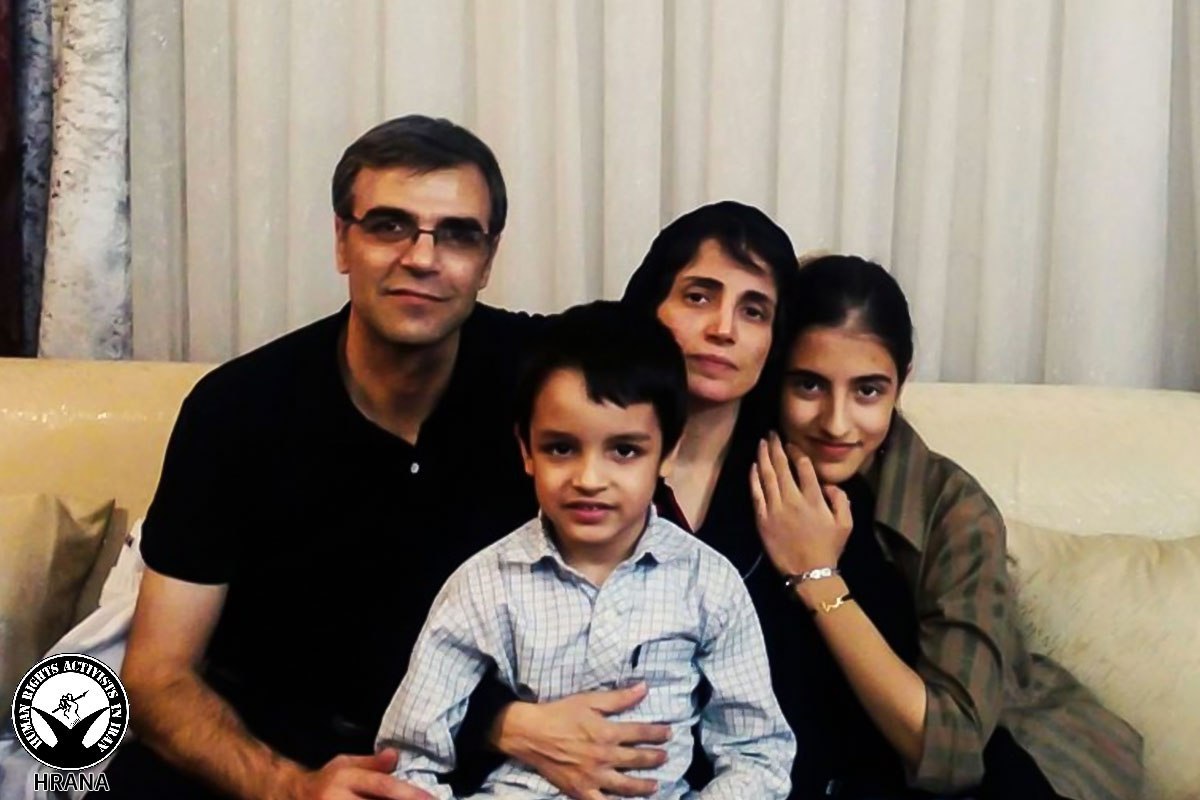
With her husband Reza Khandan, she has a daughter, Mehraveh, and one son, Nima.

Sotoudeh was previously arrested in August 2010, when she was issued an 11-year prison sentence, 20-year travel ban, and 20-year ban from practicing law. She appealed the sentence to six years in prison with a 10-year ban on practicing law. She spent September 4th, 2010 to September 18th, 2013 in Evin Prison on charges of “Acting against national security.” Immediately upon her release, her licence to practice law was revoked for three years. In response, she staged a sit-in before the Iranian Bar Association building. Joined in support by several other lawyers, the sit-in resulted in the restoration of her licence.

Prisoners in Iranian Baluchestan Brutally Tortured by IRGC Intelligence Unit

Human Rights Activists News Agency (HRANA) – At the hands of the Islamic Revolutionary Guards Corp’s Saravan Intelligence Unit, at least seven detainees have recently been subjected to torture.
HRANA has identified two of these victims as Najib Dehvari, 21, and Abdolshokur Sotoudeh, 22, both from Saravan. Saravan is a city in Iran’s southeastern Sistan & Baluchestan Province, home to the Baloch ethnic minority group.
Dehvari, Sotoudeh, and their comrades were initially arrested in connection to a sound bomb that went off in front of the Ministry of Intelligence Bureau in Saravan. There were no casualties. They were held in the IRGC Intelligence Detention Center before being transferred to Ward 1 of Zahedan Prison in the province’s capital city.
A source familiar with the case told HRANA that the seven were religious seminary students who confessed after enduring prolonged beatings and torture. The source added, “they were interrogated during the night, lashed with electrical cables shocked with electricity. The wounds are still visible on the soles of their feet, and they are unable to walk.”
The torture of prisoners by IRGC Intelligence Units and the Ministry of Intelligence is more widespread in Baluchestan than in other regions of Iran. In a technique commonly exerted by these centers, called the “miracle bed,” the prisoner is tied to a bed frame and repeatedly flogged with the goal of extracting a confession. Historically, prisoners often utter confessions to put an end to the torture, rather than authentically confess to a crime.
Massoud Ghanbarzehi, another prisoner was detained on charges of “Acting against national security through cooperation with opposition groups” back in June, was interrogated and tortured while being held for three weeks in a Zahedan Ministry of Intelligence detention center before being transferred to Zahedan Central Prison.
Three additional Intelligence Center detainees who previously reported on their torture–Mohammad Saber Malik-Raeisi, Abdulkarim Shah Bakhsh, and Noor Ahmad–shared accounts of the various torture methods they endured, among them the “miracle bed” technique.

Charges Evolve against Hunger Striking Civil Rights Activist

Human Rights Activists News Agency (HRANA) – Farhad Meysami, a civil rights activist who has been held in Evin Prison since July 31st and declared a hunger strike the next day, now faces a new charge: “Assembly and collusion to disturb national security.”

Meysami, who has lost a significant amount of weight and suffers from low blood pressure, announced that he will resort to a liquid-only hunger strike. He explained his strike was a protest of the arrest of Reza Khandan, husband of imprisoned human rights lawyer Nasrin Sotoudeh, earlier this week, as well as the authorities’ interrogation and home searches of civil rights activists Mohammed Reza Farhadpour and Zhila Karamzadeh Makvandi.

A source close to Meysami told HRANA that “despite visits from officials who attempted to persuade him to end the strike, such as the Assistant Prosecutor, the prison ward director, the prosecutor’s representative, and Director General of the detention centre Mr. Chahrmahali, Meysami is determined to continue. He will only be ingesting his colitis medication, as he has been doing for past 18 years.”

The source added that Meysami “would only end his hunger strike if Reza Khandan is unconditionally released.”

The same source indicated that Meysami, who is being held in Ward 209 of Evin Prison, was taken to Branch 7 of Evin Court on September 3, 2018, where he learned the charges and evidence against him had evolved. Court officials announced that day that he was being charged with “Assembly and collusion to disturb national security,” for– according to the investigator–a campaign Meysami was organizing with Nasrin Sotoudeh and Iranians living abroad. Other charges included “Propaganda against the regime,” brought in relation to a speech Meysami gave at Isfahan University and articles he had published. Meysami also faces the charge of “Propagation of corruption and decadence,” a charge thought to stem from his possession of a pin-back button that reads “I protest mandatory veiling.”

HRANA previously reported on Meysami’s arrest and interrogation ordeal. His interrogators have referred to him as a “Teacher of Civil Disobedience.”