An Overview on Eleven Prisoner Hunger Strikes in Various Prisons

In recent weeks, at least 11 detained or imprisoned citizens went on hunger strike in various prisons in protest against a failure to address their concerns.

According to HRANA, the news agency of Human Rights Activists, at least eleven prisoners in various prisons across the country are on hunger strike.

This report outlines their latest conditions:

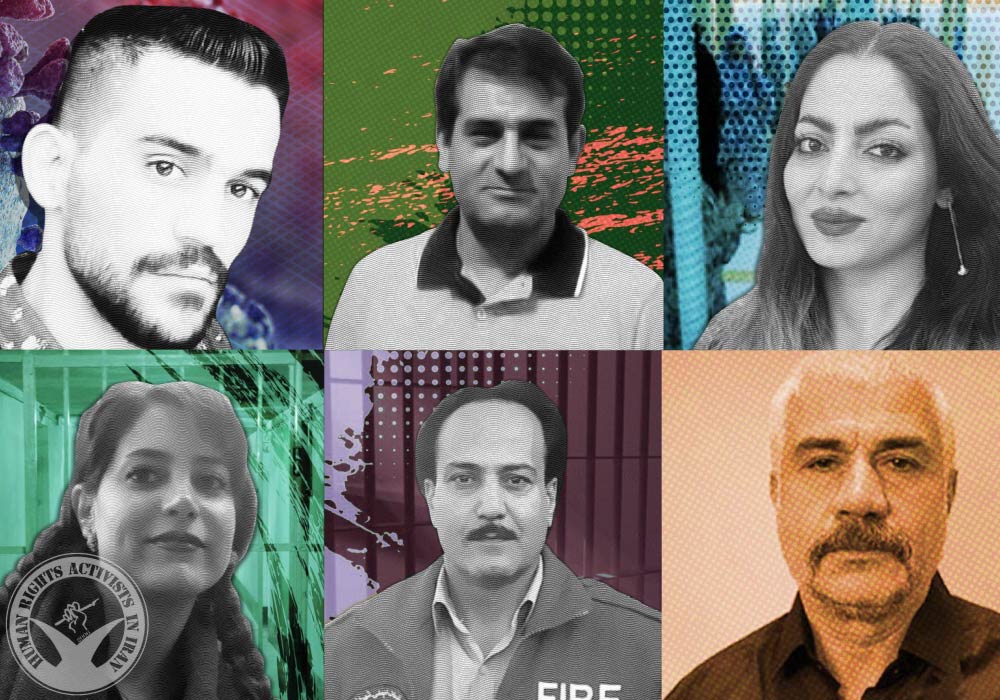
Zartosht Ahmadi Ragheb: On February 21, this civil activist was arrested at his house and transferred to Evin Prison. He has been on hunger strike since his arrest. On February 28, 2022, he was sent to a solitary confinement cell.

On March 2, he was transferred to the Greater Tehran Central Penitentiary, where prisoners of violent crimes are held. During the arrest, security agents searched his house and confiscated some of his personal belongings. Ragheb is a firefighter with 17 years of work experience who was fired from his job due to his civil activities.

Fariba Asadi: On February 27, this political prisoner went on hunger strike in Qarchak Prison following a quarrel and beating by a fellow inmate to protest against being held in the same ward as prisoners of violent crimes.

On January 3, she was arrested at her house and sent to Qarchak Prison in Varamin City to serve her sentence.

On December 12, 2021, she was summoned by the Executive Unit of the Qods Public and Revolutionary Court to endure her sentence. Earlier, along with three other defendants, she was sentenced to one year imprisonment on the charge of “propaganda against the regime.”

Arsham (Mahmood) Rezai: On February 7, the civil activist, who is jailed in Rajai Shahr Prison in Karaj City, went on hunger strike to protest against a failure to receive adequate medical treatment and refusal to grant him medical furlough. On February 27, the twenty-second day of his hunger strike, his weight had dropped to 52 kilograms and his blood pressure was critically low. He also suffers from a hiatal hernia, an Helicobacter pylori infection and a duodenal ulcer, which have worsened his health during the hunger strike.

Rezai was arrested on January 7, 2019 by security forces. On November 13 of that year, he was released on bail for 200 million tomans until the end of legal proceedings. On February 26, 2019, the Islamic Revolutionary Court sentenced Rezai, without informing his attorney that the court session was taking place, to eight years and six months imprisonment on charges of “propaganda against the regime”, “collusion against national security”, and “offensive statements against the supreme leader of Iran”. Per Article 134 of the Islamic Penal Code, the severest punishment of five years was enforceable. On January 20, the Revolutionary Court sentenced him to an additional 15 months in prison on new charges (which was later reduced to 11 months on appeal) and 4 months penal labor for the Ministry of Agriculture Jihad.

Mohammad Hooshangi: On February 23, Hooshangi went on hunger strike to protest his long-term detention in Urmia Prison. On March 7, he ended his hunger strike after prison officials promised to change bail from 7 billion to 2 billion tomans. In January of 2021, Hooshangi was arrested in Tehran and transferred to a detention centre at disposal of IRGC in Urmia City. Ultimately, after 7 months, he was relocated to Urmia Prison. He was charged with “membership in an anti-regime political groups”.

Ali Musa-Nejad Farkoosh: Since February 1, this civil activist, currently jailed in Rajai Shahr Prison in Karaj City, has been on hunger strike and refuses to take medicine as a way of demanding freedom for political prisoners and prisoners of conscience.

He suffers from diseases such as a hiatal gastric hernia and intestinal diverticulum. On February 27, after twenty-seven days on hunger strike, he had critically low blood pressure and an extreme weight loss of 13 kilograms.

He was granted medical furlough but was forced to return to prison on October 27, 2021 without completing treatment. Earlier, Forensic Medicine in Karaj City confirmed that he suffers from acute diseases that require surgery.

In June 2019, the Revolutionary Court of Tehran, headed by Judge Moghayeseh, sentenced Farkoosh to eight years in prison on charges of “assembly and collusion to act against national security”, “an offensive statement against the current and former supreme leaders of Iran” and “propaganda against the regime”. This verdict was upheld by Branch 36 of Tehran’s Court of Appeals. Per Article 134 of the Islamic Penal Code, the severest punishment of five years on the count of “assembly and collusion” is enforceable.

On November 29, 2020, he was sent to Rajai Shahr Prison to serve his sentence.

Ebrahim Seddigh Hamedani: On February 12, Hamedani went on hunger strike in Marivan Prison to protest against the relocation of him and his son to Sanandaj Prison. Earlier, on January 24, this political prisoner refused to take his medicine in protest, leading to severe hyperglycemia.

He and his son were transferred from Urmia Prison to Marivan and Kamyaran prisons, respectively.

On February 23, 2019, Hamedani was arrested alongside along his son Salar and daughter Maryam Seddigh. He was transferred to Urmia Central Prison on April 23, 2019. Maryam Seddigh Hamedani was released from prison on April 25, 2019.

Branch 2 of the Revolutionary Court of Urmia sentenced both men to 16 years imprisonment on charges such as “acting against national security through membership in an anti-regime organization” and “propaganda against the regime”.

In August of 2020, while serving their sentences, they were relocated to the detention centre of the Ministry of Intelligence in Urmia City and interrogated for allegedly spreading “propaganda against the regime inside prison”. Subsequently, a new legal case was opened against them and they were sentenced to an additional 11 months in prison.

Yousef Mehrad: The prisoner of conscience, who is jailed in Arak Prison, has been accused and condemned for blasphemy against the Prophet of Islam. On February 10, he went on hunger strike to protest the prohibition of phone calls. His latest condition since his hunger strike is unknown.

His lawyer, Mohammad Arman, announced that Mehrad has been sentenced to death for one charge and eight years in prison for the other by the Revolutionary Court of Arak. His court-appointed lawyer called the confirmation of this verdict by the Supreme Court unjust, and asserted that his client must be exonerated.

Previously, HRANA reported about this case, wherein two defendants, Sadrollah Fazeli Zare and Yousef Mehrad, were sentenced to death for “blasphemy against the Prophet of Islam” by Arak’s Revolutionary Court. In another trial, Mehrad was sentenced to 8 years in prison for “offensive statements against the current and formers supreme leader of Iran”.

On May 24, 2020, security forces arrested him at his house in Ardabil City. He was transferred to Arak Prison and was detained for two months in a solitary confinement cell. For eight months, he was not allowed to call his family and was denied family visitation. He is the father of three children.

Shakila Monfared: This political prisoner has been on hunger strike in Qarchak Prison in Varamin City since March 3.

She has gone on hunger strike to protest the housing of political prisoners in the same ward as prisoners of violent crime, the irresponsibility of prison officials towards her safety and a recent threat from a fellow inmates.

An informed source told HRANA that a prisoner of violent crimes threatened her with a sharpened piece of can and intended to injure her.

There is no further info about her condition since she was relocated to Ward 8 of the prison.

On August 31, 2020, security forces arrested Monfared while she was leaving her home. They transferred her to a detention centre at the disposal of the IRGC in Tehran. Reportedly, they did not have a warrant for this arrest.

On September 9 of last year, she was relocated to the quarantine section of the women’s ward of Evin Prison. On September 14, she was released on bail of 400 million tomans until the end of legal proceedings.

In January of this year, the joint court trial of Shakila Monfared, Arsham Rezaei, and Mohammad Abolhassani was held in Branch 26 of the Revolutionary Court of Tehran, presided over by Judge Iman Afshari. 27-year-old Monfared was sentenced to 6 years in prison and 4 months of probation work in the Agricultural Jihad on charges of “propaganda activities against the system” and “insulting the sanctities of Islam”.

In addition to the mentioned-above political prisoners and imprisoned civil activists, at least three other prisoners, Habibollah Miraki, Loghman Mamandi and Loghman Abdolllahzadeh, went on hunger strike in Kamyaran Prison to protest the refusal of prison officials to grant furlough. Abdolllahzadeh has been on hunger strike since last Sunday, and the first two prisoners since yesterday.

In Iran’s prisons, hunger strikes are common among prisoners despite causing long-term physical and mental impairment. Hunger strikes are used as a last resort to achieve urgent demands such as unlawful long-term detention without trials, violations of prisoners’ rights and infringement in due process.

Hossein Ronaghi Maleki Released on Bail after Seven Days Detention

On  March 2, civil activist Hossein Ronaghi Maleki was released on bail from prison. On February 23, his family announced that he was missing. After three days of inquiry at Evin Courthouse, their lawyers found out that he had been abducted by security forces and detained in Evin Prison.

According to HRANA, the news agency of Human Rights Activists, on the fifth day of detention, Ronaghi’s brother, Hasan Ronaghi, announced that he was allowed to make a phone call. Hossein Ronaghi Maleki told his family that he had been on hunger strike since the arrest, which raised concerns due to his poor health condition, including  severe kidney problems.

Ronaghi has faced other arrests and convictions due to his civil activities.

In 2009, IRGC intelligence agents arrested him and detained him for ten months in Ward 2-A of Evin Prison. On October 5, 2010, he was sentenced to 15 years imprisonment by Branch 26 of the Revolutionary Court. The verdict was upheld on appeal and he was sent to Ward 350 of Evin Prison. In May of 2016, he was released from jail after granting an imprisonment intolerance certificate due to his severe kidney problems.

Civil Activist Arasham Rezai On Hunger Strike, Refuses to Take Medicine

Imprisoned civil activist Arasham (Mahmood) Rezai went on hunger strike and refused to take medicine in protest against the refusal of his request for medical furlough. He needs urgent treatment for a hiatal hernia, stomach infection and duodenal ulcer.

According to HRANA, the news agency of Human Rights Activists, Rezai, a civil activist imprisoned in Rajai Shahr Prison, went on a hunger strike and refused to take his medicines.

On February 2, 2022, he was dispatched to the Hospital in Karaj City where he was diagnosed with a hiatal hernia, stomach infection and duodenal ulcer for which he needs treatment. Nonetheless, his request for a medical furlough has been rejected.

Moreover, he is suffering from damages to his left knee due to torture and being beaten by a shocker.

According to an informed source, prison officials will not dispatch him to a hospital for an MRI despite the prescription of a prison doctor.

Rezai was arrested on January 7 of 2019 by the regime’s intelligence and security forces. On November 13 of that year, he was released on bail for 2 billion Rial (approx. 8000 dollars).

On February 26, 2019, the Islamic Revolutionary Court sentenced Rezai, without informing the defendant’s attorney that the court session was taking place, to eight years and six months imprisonment on the charges of “propaganda against the regime”, “assembly and collusion against national security”, and “offensive statements against the supreme leader of Iran”. Grounded on Article 134 of the Islamic Penal Code, for the second charge, the severest punishment of 5 years was enforceable.

To serve his sentence, on October 18, 2020, he was arrested and transferred to a solitary confinement cell in Rajai Shahr Prison. Finally, he was relocated to a public section of this prison on December 19 2020.

On January 20 of this year, on new charges, the revolutionary court sentenced him to an additional 15 months imprisonment (which was later reduced to 11 months on appeal) and 4 months penal labour.

Soheila Hejab Beaten and Threatened Following Protest Against Poor Quality Prison Food

Since January 31, inmates of the women’s ward in the Correctional Center of Kermanshah have refused to get their meals in protest against the poor quality of the prison food. During the protest, the head of the prison guards beat political prisoner Soheila Hejab and threatened to open a new legal case against her and send her to an exile prison. Other protesting prisoners have been threatened with denial of visits and phone calls.

According to HRANA, the news agency of Human Rights Activists, an informed source stated that “on the first day, Soheila Hejab brought a piece of burned food to the head of the prison and asked her if he [could] eat it. He responded that they are running low on budget and therefore the food is what it is. When Soheila Hejab was returning to her ward, she saw the decorations for celebrating Fajr decade (an annual ten-day celebration for the triumph of the 1979 revolution). She protested why they do not use the costs of this celebration for improving food quality. Following a verbal quarrel, in response, the Head of Prison Guards Leila Hosseini-Nia beat her hard in the chest and hit her with a mirror.”

According to this source, prison officials have tried to accuse her of provoking a riot in prison. They have threatened to deny other prisoners visitations and phone calls unless they corroborated this and signed reports as witnesses.

Once before, in October 2021, Hejab was beaten in Qarchak Prison while on hunger strike.

Hejab was arrested by security forces on June 1, 2019, and then released from Evin Prison in Tehran on a bail of 3 billion tomans on March 14, 2020.

Branch 28 of the Revolutionary Court sentenced her to 18 years in prison on charges of “propaganda against the regime”, “illegal assembly”, “incitement of public opinions to riot” and “organizing unlawful political groups”.

On May 23, 2020, the intelligence unit of the Revolutionary Guards arrested and transferred her to Gharchak Prison in Varamin City to serve her sentence. She was then transferred to Sanandaj Prison and then, on January 7, to the Correctional Center of Kermanshah City.

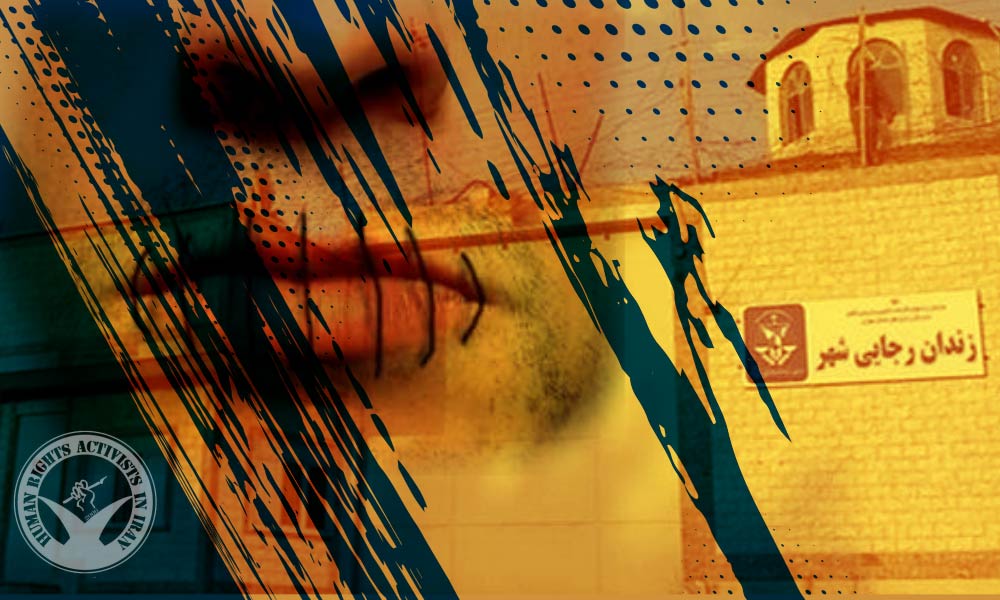
Sunni Prisoner Arkan Palani Jaf Sews Lips Together to Protest Lack of Furlough

Sunni prisoner Arkan Palani Jaf sewed his lips together in protest against the prison’s refusal to grant him furlough after several requests. Jaf has spent more than four  of his seven year sentence without furlough.

According to HRANA, the news agency of Human Rights Activists, a note from this prisoner which has been reached to HRANA, he complained that his request for furlough had been dismissed many times and that his family was rejected and humiliated by prison authorities in Evin Courthouse.

Earlier, on Monday, December 17, 2021,  he went on hunger strike, which ended after a few days.

Jaf was arrested in 2016 and sentenced by the Revolutionary Court to 7 years on the charge of “collaboration with ISIS”. According to an informed source, the security agents wanted to arrest his brother and when they failed, arrested him instead despite having no evidence for his association with ISIS.

Jaf is 28 years old and a resident of Sarpol Zahab City. He is currently jailed in Rajai Shahr Prison.

Subscribe to Our Newsletter

Now is definitely not the time to stop reading!

Ebrahim Seddigh Hamedani Transferred to Solitary Confinement While Still on Hunger Strike

Political prisoner Ebrahim Seddigh Hamedani was transferred to a solitary confinement cell in Marivan Prison while still on hunger strike.

According to HRANA, the news agency of Human Rights Activists, Hamedani and his son Salar Seddigh Hamedani have been on hunger strike for more than 11 days in protest against the housing of political prisoners in the same ward as prisoners of violent crime, which is in violation of prison regulations.

Hamdeani and his son were earlier transferred from Urmia Prison to Marivan and Kamyaran prisons, respectively.

An informed source HRANA that his health has been affected by the ward and by the hunger strike: “Considering that he suffers from diabetes, his health condition was exacerbated due to the continuation of the hunger strike. He has told to his family that most of his fellow prisoners in his ward use drugs which makes him exposed to drug pollution”.

On February 23, 2019, Hamedani was arrested alongside along his son Salar and daughter Maryam Seddigh. He was transferred to Urmia Central Prison on April 23, 2019.

Maryam Seddigh Hamedani was released from prison on April 25, 2019.

Branch 2 of the Revolutionary Court of Urmia sentenced both to 16 years imprisonment on the charges such as “acting against national security through membership in one of the anti-regime organizations” and “propaganda against the regime.”

In August of 2020, while they were spending their sentence terms, they were relocated to the detention centre of the Ministry of intelligence in Urmia city and interrogated for allegedly “propaganda against the regime inside prison.” Subsequently, a new legal case was opened against them.

In 2005, Ebrahim Seddigh Hamedani had earlier been sentenced to six years imprisonment for the same charges. He was released after serving two and a half years of his sentence on probation.

Adel Kianpour Dead in Sheyban Prison After a Week on Hunger Strike

On January 1, after a week on hunger strike, political prisoner Adel Kianpour died in Sheyban Prison in Ahvaz City. Judicial authorities have not yet announced the reason for his death.

According to HRANA, the news agency of Human Rights Activists, Kianpour was on hunger strike to protest the proceedings of his case.

Not much is known about his legal case. It is said that he was arrested after his return to Iran and has been imprisoned in Sheyban Prison for 14 months. He was sentenced to 3 years in prison for charges unknown in our report. Last October, he contracted COVID-19.

There are many precedents for the death of prisoners due to lack of adequate medical treatment in Iran’s prisons. In June 2021, political prisoner Sasan Niknafs died due to inadequate medical treatment in the Greater Tehran Prison. Also last year, Sufi Dervish activist Behnam Mahjubi was dispatched from Evin Prison to a hospital in Tehran City and allegedly died due to pill poisoning.

Inmate Dead After Hunger Strike and Suicide Attempt in Ilam Prison

On December 1, an inmate in Ilam Prison died of injuries stemming from a suicide attempt and inadequate medical treatment. The day before, the inmate had attempted suicide by pill following a four day hunger strike. After having his stomach pumped in prison healthcare, he was sent back to his ward without any medical supervision.

According to HRANA, the news agency of Human Rights Activists, quoting Kurdpa, the inmate was 30 year old Ruhollah Maleki. His death ultimately resulted from inadequate medical treatment and supervision by prison officials.

Maleki was sent back to his ward while he was still in critical health condition and in need of regular medical supervision. Moreover, he was beaten by prison guards and held in a solitary confinement cell on the second day of his hunger strike.

On March 6, 2013, Maleki was arrested for committing murder. He was sentenced to capital punishment in 2014.

Nosrat Beheshti Released on Bail From Vakilabad Prison

Civil activist and retired educator Nosrat Beheshti was released from Vakilabad Prison on bail of 1 billion tomans (237,955 USD). Her release is temporary, extending from Tuesday, November 30 until the end of legal proceedings.

According to HRANA, the news agency of Human Rights Activists, Beheshti has been in detention since her August 4 arrest. She was tried by Branch 4 of the Mashhad Revolutionary Court, headed by Judge Mansourim, on the charges of “propaganda against the regime” and “acting against national security”. She was sentenced to 5 years in prison on November 14.

On October 24, Beheshti began a hunger strike to protest prison officials’ refusal to send her to an outside hospital to treat her kidney pain. The strike lasted four days, and was resolved when she was dispatched to a hospital for treatment.

She has previously faced arrests due to her civil activities.

Political Prisoner Injured After Protest by Self-Immolation in Evin Prison

On Wednesday, October 27, political prisoner Mehdi Darini was injured by self-immolation and hospitalized in the healthcare center of Evin Prison.

According to HRANA, the news agency of Human Rights Activists, Darini’s demonstration was in protest of prison authorities’ refusal to release him on probation. He is currently enduring the second year of a five year term in Evin Prison in Tehran.

An informed source told HRANA that Darini had previously warned prison officials about his intentions if the interrogator refused to consider his demand to be released.

During the last interrogation, in response to his stating his intention to go on a hunger strike, the interrogator reportedly said, “All the better; the regime has already too many hungry mouths to feed.”

35-year-old Mehdi Darini, a production engineer, was sentenced to five years in prison by the Revolutionary Court of Tehran on a charge of ” blasphemy” and one year on a charge of “propaganda against the regime”. According to Article 134 of the Islamic Penal Code, a severest punishment of five years is enforceable.