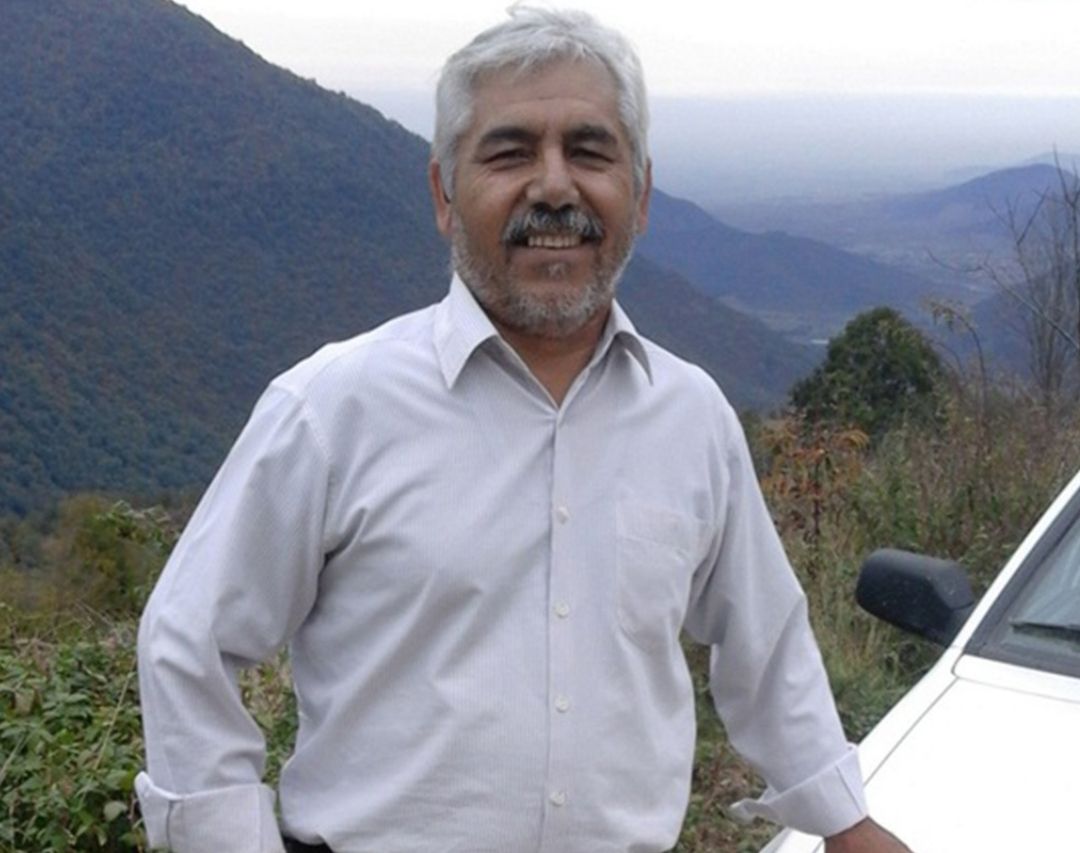
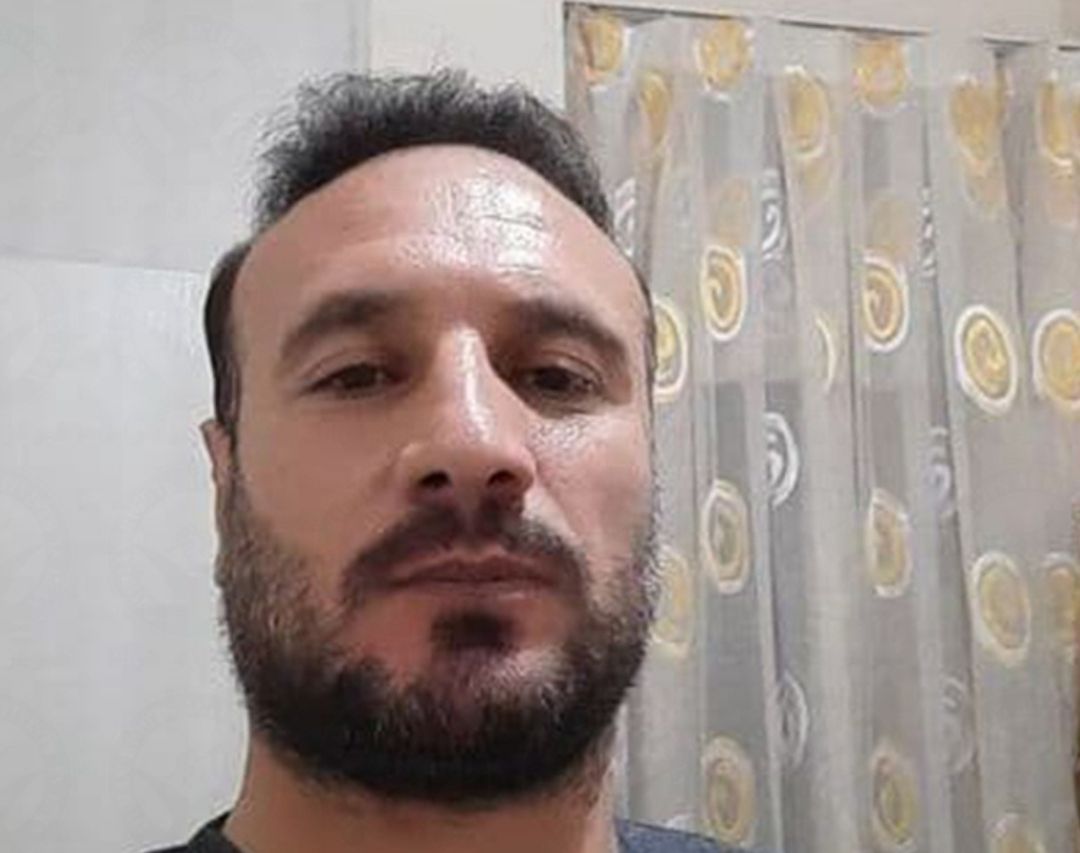
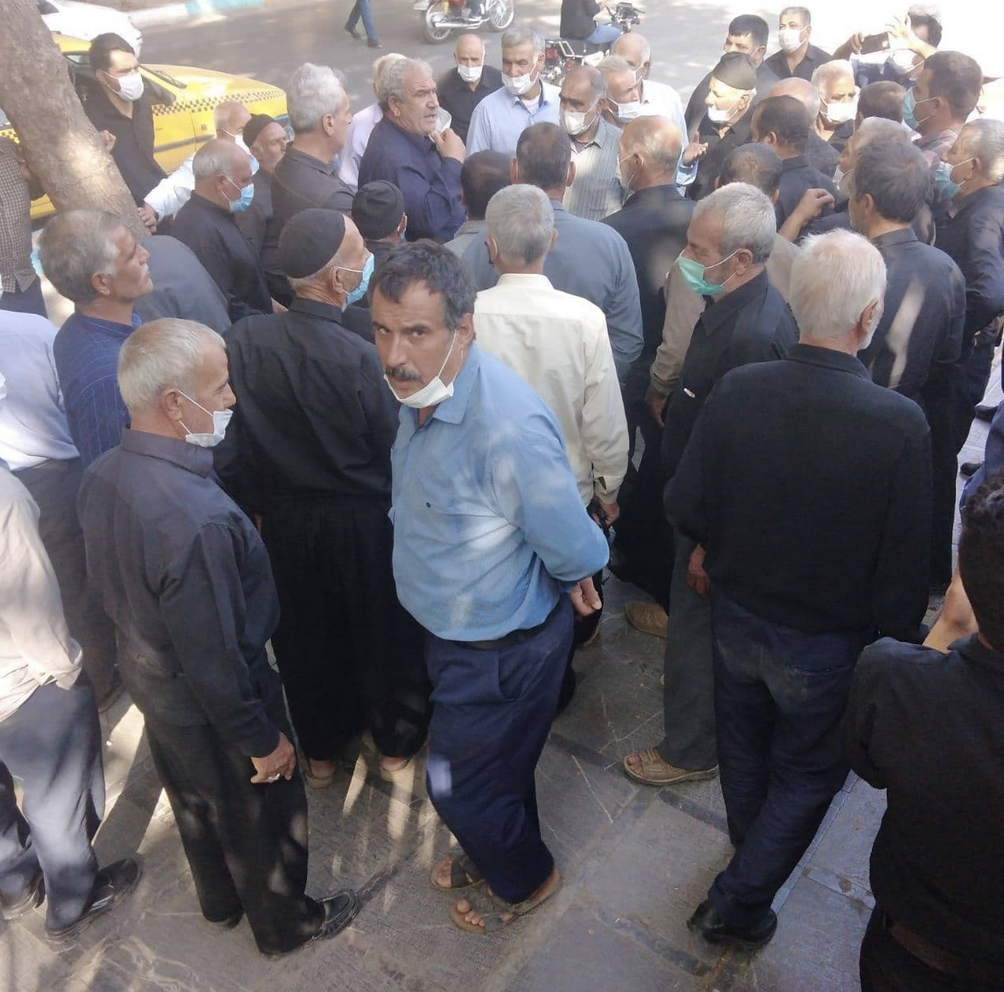
Human Rights Activists News Agency (HRANA)- Shock, sorrow, and censure over the executions of Zanyar Moradi, Loghman Moradi, and Ramin Hossein Panahi continue to pour in from both international institutions and Iranian citizens in-country, further straining relations between Iranian authorities and the human rights activist community at large.
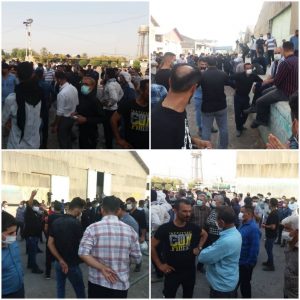
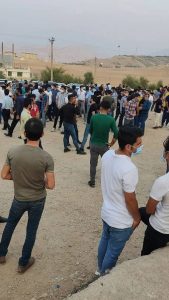
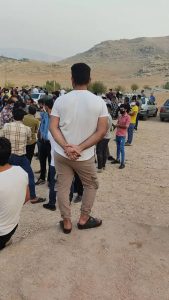
A number of Kurdish opposition groups have sounded the call to strike to Kurdish regions of Iran, inviting fellow Kurds to protest their comrades’ executions.
Michelle Bachelet, United Nations High Commissioner for Human Rights, has stated, “I deeply deplore the executions last week of three Iranian Kurdish prisoners despite the serious concerns raised by Special Procedures mandate holders that they were not afforded fair trials, and were subjected to torture.” Philip Luther, Amnesty International’s Research and Advocacy Director for the Middle East and North Africa, has also condemned these executions.
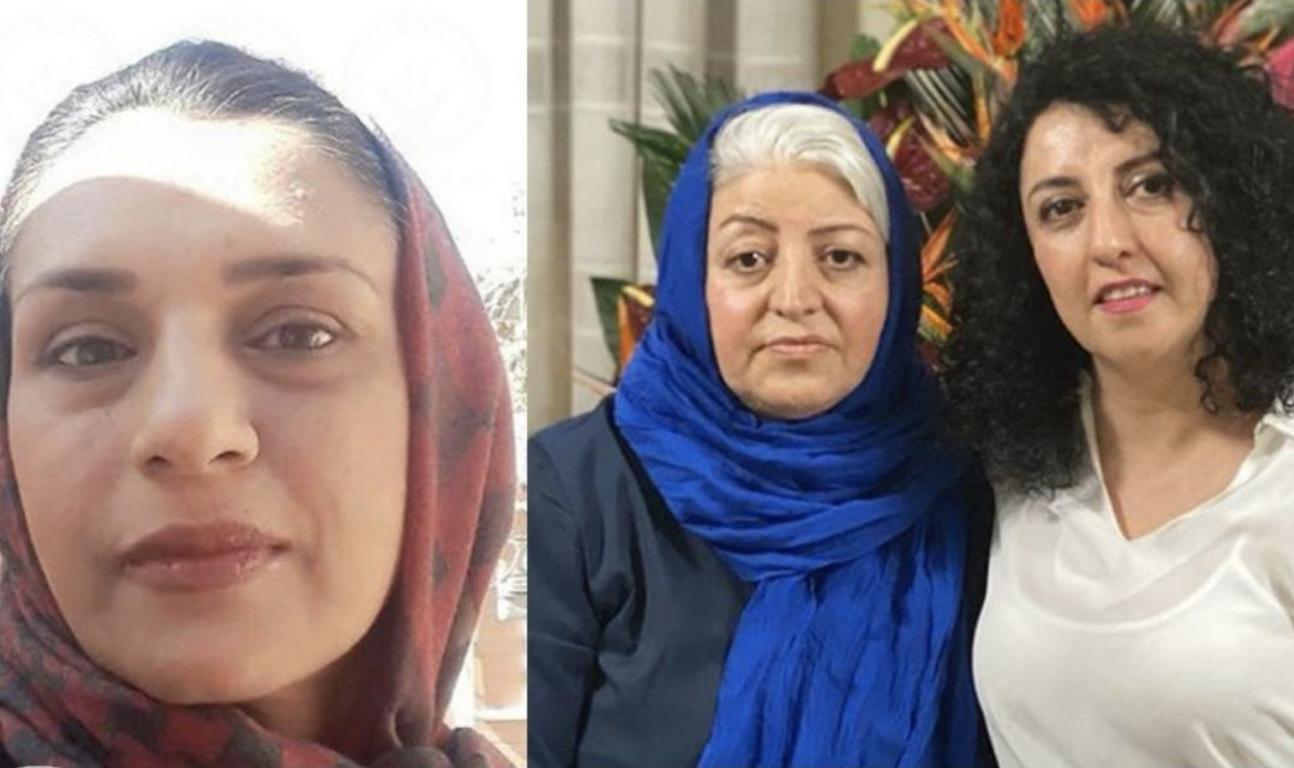
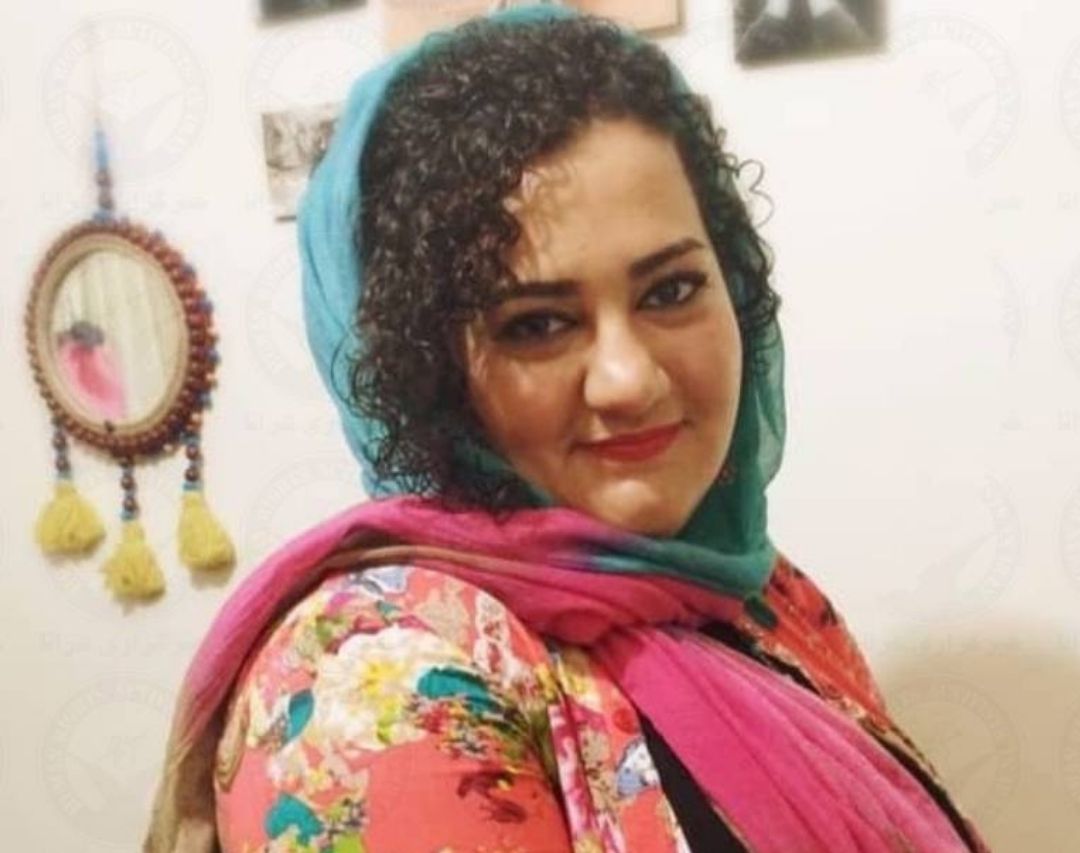
Imprisoned civil rights activist Atena Daemi was among a number of imprisoned civil rights activists publishing separate letters expressing sorrow and outrage over the men’s deaths. Golrokh Iraee and Human Rights Lawyer Nasrin Sotoudeh, two more imprisoned activists, wrote and published their own messages of protest and sympathy, with Sotoudeh likening their executions to the *political massacres of 1988.
Some of these letters have reportedly incited blowback from prison authorities, who have subjected Daemi and Iraee to repeated non-routine body searches after their letters were published. When these women inquired about the reason for the searches, they learned the order for frisking had been issued by the Prison’s Director. A Prosecutor Assistant has since promised to investigate.
Excerpts from the letters of Sotoudeh and Iraee, translated into English by HRANA, are below.
Nasrin Sotoudeh:
“The judicial system has executed three Kurdish compatriots. Our Kurdish compatriots have been plagued by oppression for decades. The verdict and sentences of the Revolutionary Court, condemning these three compatriots to die, was the product of an unlawful process that runs counter to Human Rights principles and the laws of the Islamic Republic. In at least one of these trials, had due process been respected, the defendant may very well have been acquitted.
Zanyar and Loghman Moradi were on hunger strike when they were hanged, another testament to the inherent brutality of the judicial system, who itself is supposed to protect us from violence.
I extend my condolences to our Kurdish compatriots, who have had a steadfast, crucial presence in the cultural promotion of Iran; to all Iranians; and, in particular, to the families of Moradi, Moradi, and Panahi. I hope that in heeding the diverse manifestations of Iran’s judicial violence, the urgent need to renounce all forms of it will become clear.”
Golrokh Iraee
“[Their death] invites the wrath of Kurdistan’s Children […] Zanyar Moradi, Loghman Moradi, and Ramin Hossein Panahi, freedom fighters, Kurdistan’s immortal resistance, teachers of patience and persistence, have left behind a lesson in determination. They were hanged while on hunger strike, in protest of their mistreatment at the hands of authorities; they stood up to the monsters of despotism and reactionarism.
They unmasked those traitors who call themselves statesmen and rulers. Let it be known that the time for lip service has passed. To hold them accountable, we must act.”
****
After being hanged to death in an undisclosed location in Tehran on September 8th without notice to their lawyers, the bodies of the Moradis and Hossein Panahi were *confiscated by the Iranian authorities. The Ministry of Intelligence has since threatened the men’s surviving family members.
Ahmad Amouee, journalist and former prisoner of conscience, published an account of the Moradi and Moradi families’ visit to Tehran’s main cemetery, Behesht-e Zahra, where officials had summoned them to bid farewell to their sons’ bodies. Their final resting place remains unknown.
* In the summer of 1988, on the orders of Ayatollah Khomeini, the Supreme Leader of Iran at the time, thousands of prisoners of conscience and political prisoners were executed after inquisition-style interrogation sessions. Almost all of these prisoners had already been tried and were either serving their sentence or, having completed their sentence, were awaiting release. All were buried in unmarked, often secret, mass graves.
Category: Freedom of Expression
Imprisoned Civil Rights Activist Farhad Meysami Enters 38th Day of Hunger Strike
Human Rights Activists News Agency (HRANA) – The health condition of Farhad Meysami — who declared hunger strike the day after his arrest on July 31st in protest to his detention and the denial of his right to a lawyer of his choice — is in steady decline.
A source close to the matter told HRANA, “His blood pressure dropped very low on Saturday, September 8th. The doctor recommended he be treated in a hospital or the prison clinic, saying that his vital signs would remain unstable otherwise. He has lost 14 kilograms [30 pounds] since the start of his hunger strike, and weighs 64.5 kilograms [142 pounds] now.”
Suffering from intestinal colitis that he has been treating with medication for the past 18 years, Meysami has announced that his diet will be limited to that medicine, and will only end his hunger strike if Reza Khandan, the husband of imprisoned lawyer and human rights defender Nasrin Sotoudeh, is unconditionally released.
Meysami was arrested by security forces in his personal library on Tuesday, July 31, 2018, and during his interrogation was charged with “Collusion and conspiracy to threaten national security,” “Disseminating propaganda against the regime,” and “Insulting the hijab, an essential sacrament of Islam.” On Monday, September 3rd, Branch 7 of Evin Court added “Propagation of corruption and decadence” to his charging document.
Human Rights Watch previously issued a statement in which they mentioned Meysami’s ordeal, asking Iranian authorities to stop the repression of human rights defenders and immediately release those who are being persecuted for their peaceful expressions of dissent.
Amnesty International also appealed to Iranian authorities, opposing their crackdown on civil society and unlawful detention of lawyers and human rights activists including Farhad Meysami. They demanded these prisoners’ immediate release, and that authorities provide every detainee with access to a lawyer of their choice at the time of their arrest.
Sentence Commuted for Activists Marking International Day against Torture
Human Rights Activists News Agency (HRANA)- Five of six activists detained and sentenced in 2016 for their observance of the UN International Day in Support of Victims of Torture have had their sentences commuted in the Appeals Court of Western Azerbaijan (located in northwestern Iran and home to Turkic, Azerbaijani, and Kurdish minorities).
What was an eight-month prison sentence looming over Meysam Azadi, Morteza Zarrin, Vahid Nasibi, Gholamali Hossein-Gholizadeh, and Vahid Faezpour has now been reduced to a fine of 2.4 million Tomans (approximately $165 USD). The sixth activist, Somayeh Alidoust, did not appeal.
In February 2016, HRANA reported on the sentencing of the above individuals in Branch 102 of the Criminal Court of Urmia, the capital of West Azerbaijan province. All six activists were among a group of 36 Azerbaijani and Turkic activists who were apprehended June 27, 2013 on Shahid Kalantari bridge in Urmia, on their way to the foothills of Sahand mountain [a mountain of symbolic importance in Azerbaijan] where they planned to commemorate the UN holiday.
Security and Police forces assaulted and inflicted wounds on several of the activists during their detention. Thirty were released within hours, while Azadi, Zarrin, Nasibi, Hossein-Gholizadeh, Faezpour and Alidoust were held for six days in the Urmia Intelligence Office before being released on a bail of 15 million Toman (approximately 5,000 USD).
The UN Convention against Torture was adopted by the UN General Assembly on December 10th, 1984 and came into effect in June 26, 1987. The convention is a treaty whose signatories acknowledge torture as a criminal offense and commit to both investigate torture allegations and send them to trial. In 1998, in observance of the convention, June 26th was declared the International Day in Support of Victims of Torture.
As of now, there are 163 parties to the Convention. Iran is neither a signatory nor a party to the Convention.
Thirty-Five January Protestors Must Answer to Khoy Court
Human Rights Activists News Agency (HRANA) – Thirty five residents of Khoy (northwestern Iran) were summoned to Branch One of the city’s Revolutionary Court on Monday, September 10th in connection with their participation in protests that gained exceptional momentum across the country last January.
HRANA was able to confirm the identities of the 35 residents: MohammadBagher Abazari, Amir Ebrahimzadeh Khoei, Ali Oroujzadeh Amirbeigi, Maryam Asadlou, Alireza Jabbari, Akbar Jafarpour, Hamed Jafari, Vahid Jafari, Mohammad HajiAllahyari, Naser Hajizadeh, Hadi HajiAlizadeh Parchlou, Sadra HajiAligholilou, Milad Hajilou, Ruhollah Hosseinzadeh, Mehdi Heidari Aghbash, Shayan Khalilzadeh, Vahid Rostamlou, Mehdi Zamankhani, Aref SoltanAlizadeh, Hatef SoltanAlizadeh, Hamid Sadegh, Arezoo Sahraei, AmirHossein Alinejad, Manouchehr GhareMohammadlou, Mohammad Ghalaji, Abbas Kouchari, Hamed Golvani, Shahriar Golvani, Milad Mafi Kandi, Mohammad MohsenNejad Khoei, Majid Mohammadi, Amir Mahmoudi, Reza Mehrani, Aidin Mohsennejad Khoei and MohammadEsmaeil Yekani.
Aidin Mohsenejad Khoei, an additional resident who was not previously detained, has received summons from the same court.
In the throes and final pulses of what came to be known as the “January protests,” various branches of the Iranian security apparatus–including Islamic Revolutionary Guards Corps (IRGC) Intelligence Agents, Police, and Criminal Investigation Police–came down on the aforementioned group, subjected them to interim interrogations, and released them on bail pending trial. HRANA reported on the contingent release of these arrestees last March.
The arrestees stand accused of “Assembly and collusion against the internal security of the country,” “Propaganda against the regime,” “Insulting the Supreme Leader of the Islamic Republic of Iran,” “Disturbing public conscience,” and “Disturbing public order.” They join the roughly 5,000 Iranian citizens who were detained and interrogated across the country in the tumult of the January protests, which led to the death of 25 individuals. Many who were detained were transferred directly to prison, and the precise whereabouts and fates of a number of them is still unknown.
Ministry of the Interior Abdolreza Rahmani Fazli previously stated that public demonstrations “turned violent” in 40 of the 100 cities where the January protests broke out.
Nasrin Sotoudeh’s charges: A closer look
Human Rights Activists News Agency (HRANA) – Human rights lawyer and activist Nasrin Sotoudeh, who is entering the second week of her hunger strike, has been imprisoned since June 14th, 2018 in Tehran’s Evin Prison.
Sotoudeh’s temporary detention warrant has been renewed twice in this 86-day stretch. She did not post the bail granted to her and remains in custody in the Evin Prison women’s ward. Her husband Reza Khandan, who had been publicly supporting her on social media, was arrested himself on September 4th.
Summary of Current Proceedings
According to lawyer Payam Dorafshan, who himself was imprisoned from August 31st until his release on September 6th, Sotoudeh is being held on three counts:
· A five-year sentence on an espionage charge that didn’t figure in her indictment
· An unspecified charge from a court investigator in Kashan (a city located in central Iran)
· An arrest warrant by Branch 2 of the Interrogations Unit
Sources close to Sotoudeh believe she has been arrested for carrying out her responsibilities as an attorney by defending the rights of those charged for protesting mandatory veiling.
Sotoudeh’s husband Khandan revealed in July that his wife was deprived the right to appoint her own legal counsel. Her attorney of choice was rejected by judicial authorities on the basis of a new law which, in cases of those accused of national security crimes, restricts defendants to choose a lawyer from a pre-approved list.
In late July, Sotoudeh was served a charge for which she has already been doled a five-year prison sentence: membership in LEGAM, a Persian abbreviation for the Step-by-Step Campaign to Abolish the Death Penalty in Iran.
In a letter from prison, Sotoudeh then announced that she refused to go to court, an action which, according to Khandan, provoked judicial authorities to bring new charges against her.
An investigator– together with the Assistant Prosecutor and the Evin Prison Director of the Execution of Sentences — visited Sotoudeh’s prison ward on August 25th to “complete the case.” Over the course of their visit, the investigator leveled three new accusations against Sotoudeh: assisting in the foundation of Christian house churches, incitement to hold referendums, and attempts to hold gatherings and sit-ins.
Following the visit, Sotoudeh wrote an open letter to announce her hunger strike, decrying both her own arrest and the pressures that judiciary authorities are reportedly placing on her family, relatives, and friends, e.g. the arrest of civil rights activist Farhad Meysami and the search of her own home as well as those of activists Mohammad Reza Farhadpour, Zhila Karamzadeh Makvandi, and her sister-in-law.
Her temporary detention warrant was renewed the second time on September 1st. Three days later, her husband Reza Khandan was arrested in his home by security forces after refusing to respond to a telephone court summons, allegedly from the Intelligence Bureau, that he had exposed as unlawful on his social media account.
Khandan was later charged in Branch 7 of Evin Prison Court with “Collusion against National Security,” “Propaganda against the regime,” and “Propagation of unveiling in public”. With a bail set at 700 million IRR (approximately $50,000 USD), he joined his wife in Evin Prison, albeit in a different ward. The couples’ children are now without a guardian.
International Reaction
Sotoudeh’s arrest in June incited lawyer and Nobel Peace Prize laureate Shirin Ebadi to write a protest letter to Javaid Rehman, UN Special Rapporteur on the situation of human rights in Iran, asking him to use all the legal means at his disposal to fight for Sotoudeh’s release.
Amnesty International issued a statement July 5th declaring that Sotoudeh was being persecuted “in connection with her work as a lawyer defending women who have peacefully protested against compulsory veiling (hijab). She is a prisoner of conscience.”
On September 4th, 2018, after the arrest of her husband and the announcement of her hunger strike, Amnesty International issued another statement:
“The Iranian authorities must immediately and unconditionally release both Nasrin Sotoudeh and Reza Khandan…The international community, including the EU, must do everything in their power to expedite the release of these two human rights defenders.”
Philip Luther, Amnesty International’s Research and Advocacy Director for the Middle East and North Africa, was emphatic in his defense of Sotoudeh, stating, “first the authorities jail Nasrin Sotoudeh on bogus charges, then harass, intimidate, and threaten her family and friends, and now arrest her husband. These callous actions illustrate the lengths to which Iranian authorities will go to silence human rights lawyers, even targeting their families” (2).
Nasrin Sotoudeh’s Background
Nasrin Sotoudeh Langroudi was born on June 9th, 1963 in Tehran, Iran. She is a legal expert, licensed lawyer, and social activist with a master’s degree in International Law. She has actively participated in several civic campaigns and associations, such as the Defenders of Human Rights Center, One Million Signatures Campaign to Change Discriminatory Laws Against Women, the Step-by-Step Campaign to Abolish the Death Penalty, and the Child Rights’ Protection Association. She has represented many victims of child abuse, as well as human and women’s rights activists and juvenile offenders facing the death penalty. Sotoudeh has frequently been lauded as a human rights champion and is a recipient of the EU’s Sakharov Prize for Freedom of Thought.
With her husband Reza Khandan, she has a daughter, Mehraveh, and one son, Nima.
Sotoudeh was previously arrested in August 2010, when she was issued an 11-year prison sentence, 20-year travel ban, and 20-year ban from practicing law. She appealed the sentence to six years in prison with a 10-year ban on practicing law. She spent September 4th, 2010 to September 18th, 2013 in Evin Prison on charges of “Acting against national security.” Immediately upon her release, her licence to practice law was revoked for three years. In response, she staged a sit-in before the Iranian Bar Association building. Joined in support by several other lawyers, the sit-in resulted in the restoration of her licence.
Authorities deny familial visit between cancer-afflicted prisoner of conscience and his detained wife
Human Rights Activists News Agency (HRANA) – Arash Sadeghi and Golrokh Iraee, a husband-wife pair of civil rights activists currently serving time in separate prisons, have been denied the right to see each other despite Sadeghi’s recent diagnosis of chondrosarcoma.
Separated by about 30 miles–Sadeghi held in Rajai Shahr in Karaj, and Iraee in the women’s ward of Evin prison in Tehran–have been permitted one visit, in June 2018, arranged in the interest of persuading Iraee to end her hunger strike.
An informed source told HRANA that in the wake of Sadeghi’s recent diagnosis, “Mr. Rostami, the assistant prosecutor in charge of Evin political prisoners, consented to the couple’s visit. [Rajai Shahr Prison Director] Gholamreza Ziaei, however, has opposed Sadeghi’s transfer to Evin for such visit. He cited Sadeghi’s activism in prison as the reason for his objection.”
Sadeghi’s recent diagnosis of chondrosarcoma, a malignant bone and joint cancer, has only heightened his loved ones’ anxiety over an already-shaky prognosis: in addition to bone cancer, Sadeghi suffers from asthma, acute ulcerative colitis, arrhythmia, dilated cardiomyopathy, kidney shrinkage, severe wounds in his large and small intestine, and IBS. His regime of 20 daily medications includes mesalazine, sulfasalazine, warfarin, clopidogrel, propranolol, pantoprazole, suprastine, domperidone, and bismuth subcirate. He went on a 72-day hunger strike in October 2016 to protest his wife’s arrest and incarceration over a story she had written in a private journal, and has yet to fully recover from the physical fallout of long-term starvation.
Sadeghi is serving a 19-year prison sentence imposed by the Revolutionary Court, while Iraee began serving her six-year sentence on October 24th, 2016. Since the recent Iranian New Year, or “Nowruz” celebration in March, her sentence was reduced to two and a half years.
On the orders of Evin Prison Director Chaharmahali, Sadeghi was previously transferred from Evin Prison to Rajai Shahr as a punitive measure. Iranian law has provisions allowing for monthly inter-prison visits between kin who are detained within the jurisdictions of Tehran and Alborz Province.
Charges Evolve against Hunger Striking Civil Rights Activist
Human Rights Activists News Agency (HRANA) – Farhad Meysami, a civil rights activist who has been held in Evin Prison since July 31st and declared a hunger strike the next day, now faces a new charge: “Assembly and collusion to disturb national security.”
Meysami, who has lost a significant amount of weight and suffers from low blood pressure, announced that he will resort to a liquid-only hunger strike. He explained his strike was a protest of the arrest of Reza Khandan, husband of imprisoned human rights lawyer Nasrin Sotoudeh, earlier this week, as well as the authorities’ interrogation and home searches of civil rights activists Mohammed Reza Farhadpour and Zhila Karamzadeh Makvandi.
A source close to Meysami told HRANA that “despite visits from officials who attempted to persuade him to end the strike, such as the Assistant Prosecutor, the prison ward director, the prosecutor’s representative, and Director General of the detention centre Mr. Chahrmahali, Meysami is determined to continue. He will only be ingesting his colitis medication, as he has been doing for past 18 years.”
The source added that Meysami “would only end his hunger strike if Reza Khandan is unconditionally released.”
The same source indicated that Meysami, who is being held in Ward 209 of Evin Prison, was taken to Branch 7 of Evin Court on September 3, 2018, where he learned the charges and evidence against him had evolved. Court officials announced that day that he was being charged with “Assembly and collusion to disturb national security,” for– according to the investigator–a campaign Meysami was organizing with Nasrin Sotoudeh and Iranians living abroad. Other charges included “Propaganda against the regime,” brought in relation to a speech Meysami gave at Isfahan University and articles he had published. Meysami also faces the charge of “Propagation of corruption and decadence,” a charge thought to stem from his possession of a pin-back button that reads “I protest mandatory veiling.”
HRANA previously reported on Meysami’s arrest and interrogation ordeal. His interrogators have referred to him as a “Teacher of Civil Disobedience.”
Eight Activists Condemned for Commemorating Forest Fire Victims
Human Rights Activists News Agency (HRANA) – Eight labor and environmental activists were released from custody Wednesday, September 8th after being tried and interrogated for “Disturbing Public Order” and posting a bail of approximately $3000 USD (300 millon Rials).
HRANA confirmed the identities of the released activists: Khaled Hosseini, Mozafar Salehnia, Ali Mirzaei, Vali Nasri, Hajar Saeidi, Hossein Goili, Habibollah Karimi and Reza Amjadi, all residents of Sanandaj (Capital of Kurdistan Province).
Within two days of their trial, all eight were either summoned or detained for having organized a funeral in honor of Sharif Bajour and three other environmental activists who died of smoke inhalation and burns while fighting the Marivan forest fire.
HRANA reported on the arrests of Khaled Hosseini and Mozafar Salehnia on September 4, 2018.
Authorities Charge Reza Khandan, Husband of Imprisoned Civil Rights Activist Nasrin Sotoudeh
Human Rights Activists News Agency (HRANA) Reza Khandan, husband of imprisoned lawyer and activist Nasrin Sotoudeh, had continued to speak out in defense of the causes championed by his wife. Today, September 4, 2018, he joins her in Evin Prison.
“Gathering and collusion against national security,” “Propaganda against the regime,” and “Promoting the removal of Hijab in society” are the accusations leveled at Khandan, who was arrested in his home by security forces earlier today before being charged in Branch 7 of the Evin Prosecutor’s Interrogation office. His bail has been set at 7 billion rials (approximately $53,000 USD).
Khandan’s arrest follows a court summons he received by phone, and disregarded, one day prior. He published a note detailing the incident:
“Someone called me on my cell today, saying they were from the Intelligence Ministry and saying I had to go there. No person or organization, other than judicial authorities, has the right to prosecute people, and even then, it has to be in writing,” Khandan said.
Khandan said that when he pointed out that the summons was illegitimate, the caller replied that Khandan would be arrested for non-compliance.
In a brief interview, Khandan’s lawyer Mohammad Moghimi enumerated pieces of evidence that authorities are using to build their case against his client, none of which he says can lawfully substantiate the charges: Khandan’s participation in a sit-in organized by his wife in front of the Iranian Bar Association office, his interviews with foreign media outlets, and pin-back buttons that were seized at his home.
On August 18, 2018, in a raid on Khandan’s home, security forces confiscated pin-back buttons reading “I am against forced veiling,” along with letters that Sotoudeh had written to him from prison. The same day, security forces proceeded to search the homes of Mohammadreza (Davoud) Farhadpour, Jila Karamzadeh Makvandi, and Khandan’s sister, whose name has yet to be confirmed by HRANA.
The day before Khandan’s arrest, the Ministry of Intelligence brought in Farhadpour and Makvandi for interrogation. They were subsequently transferred to Evin Court and charged in Branch 7 of the Prosecutor’s Office.
Farhadpour published a note confirming the news of his arrest and added that he crossed paths with civil rights activist Farhad Meysami while walking the corridors of Evin Court. Meysami was previously arrested in his home library on July 31, 2018, and has been on hunger strike since August 1st.
Charges Rack Up Against Mohammad Mahdavifar
Human Rights Activists News Agency (HRANA) – A four-year succession of court cases against civil rights activist Mohammad Mahdavifar continued on Sunday, September 2nd in Branch 1 of the Revolutionary Court of the defendant’s home city Aran va Bidgol (Isfahan Province), this time on charges of “Insulting the Iranian Leadership,” “Insulting the Founder of the Islamic Republic, Ayatollah Khomeini,” and “Propaganda Against the Regime.”
Present were presiding Judge Mousavi and Mahdavifar’s attorney Mohammad Najafi, who told a HRANA reporter: “The court convicted him using letters he addressed on his Telegram channel to Iran’s supreme leader Ayatollah Khamenei, as well as investigative reports on him from Kashan’s Intelligence Office and the Basij [a volunteer branch of the Islamic Revolutionary Guard Corps]. The court should reach a verdict in the coming days.”
Currently serving a two-year sentence in Isfahan Central Prison, Mahdavifar’s civic activities have thickened his rap sheet with Iranian authorities in recent years. He was arrested by security forces in Mashhad (Khorasan Razavi Province) on January 14, 2018 and remained detained until March, when the Criminal Court of Aran va Bidgol issued a sentence: two years’ imprisonment and an approximately $400 USD (40 million IRR) fine, for charges of “Publishing Misinformation with the Aim of Disturbing Public Opinion” and “Contact with Foreign Governments.” This verdict was upheld in Branch 16 of the Isfahan Court of Appeals. Later, on July 29, 2018, he was sentenced to another eight months in prison for “Aiding and Abetting in Spreading Misinformation” by Branch 101 of Criminal Court 2 of his local Judiciary.
Mahdavifar’s history with Iranian authorities goes back to 2014 when he was interrogated in Branch 2 of Aran va Bidgol Court for composing a politically-critical poem called “Alphabet” and reading it at the literary forums of Kashan. In 2015, he was sentenced to one and a half years’ imprisonment in Branch 105 of Criminal Court 2 on a charge of “Spreading Misinformation.” Branch 23 of the Appeals Court of Isfahan Province, presided by Hamid Reza Amani, reduced this sentence from 18 months to 10 months and an (approximately) $300 USD (3 million IRR) fine, by modifying the charge of “Spreading Misinformation” to “Propaganda Against the Regime.” Intelligence Forces would later arrest Mahdavifar in his home on September 19, 2016, and transfer him to solitary confinement in Isfahan prison, which is under the control of the Ministry of Intelligence. He spent 45 days there before being released.
A source close to Mahdavifar’s family previously told HRANA that Mohammad “is suffering from respiratory problems as a result of his exposure to chemical weapons during the Iran – Iraq war, yet is housed in Isfahan Central Prison’s general ward alongside people convicted of drug offenses.” While Iranian prison code stipulates that prisoners with certain religious beliefs and criminal records be kept apart for safety reasons, reports suggest that authorities often skirt this rule.
The source close to Mahdavifar’s family decried the unsuitable sanitary conditions of Ward 3, where Mohammad is currently being held. “Most inmates [there] smoke cigarettes and use drugs. He repeatedly requested to be transferred to another ward, but authorities haven’t followed up.”