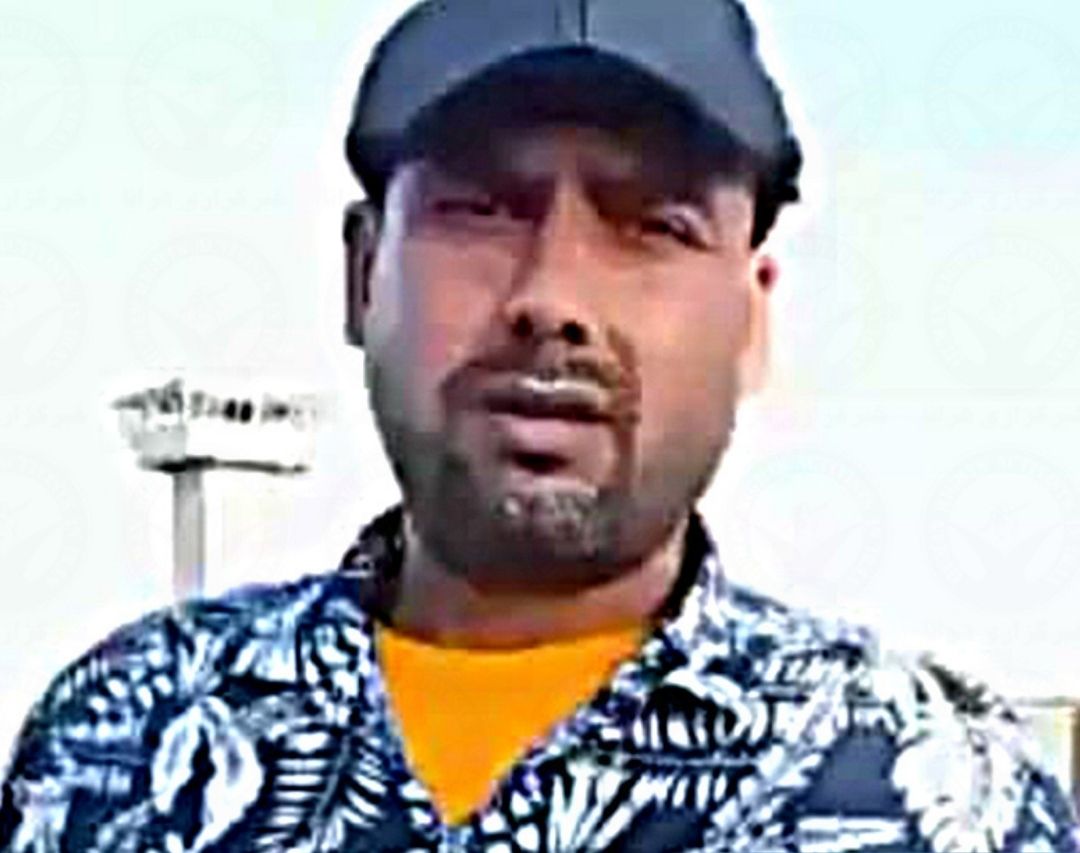
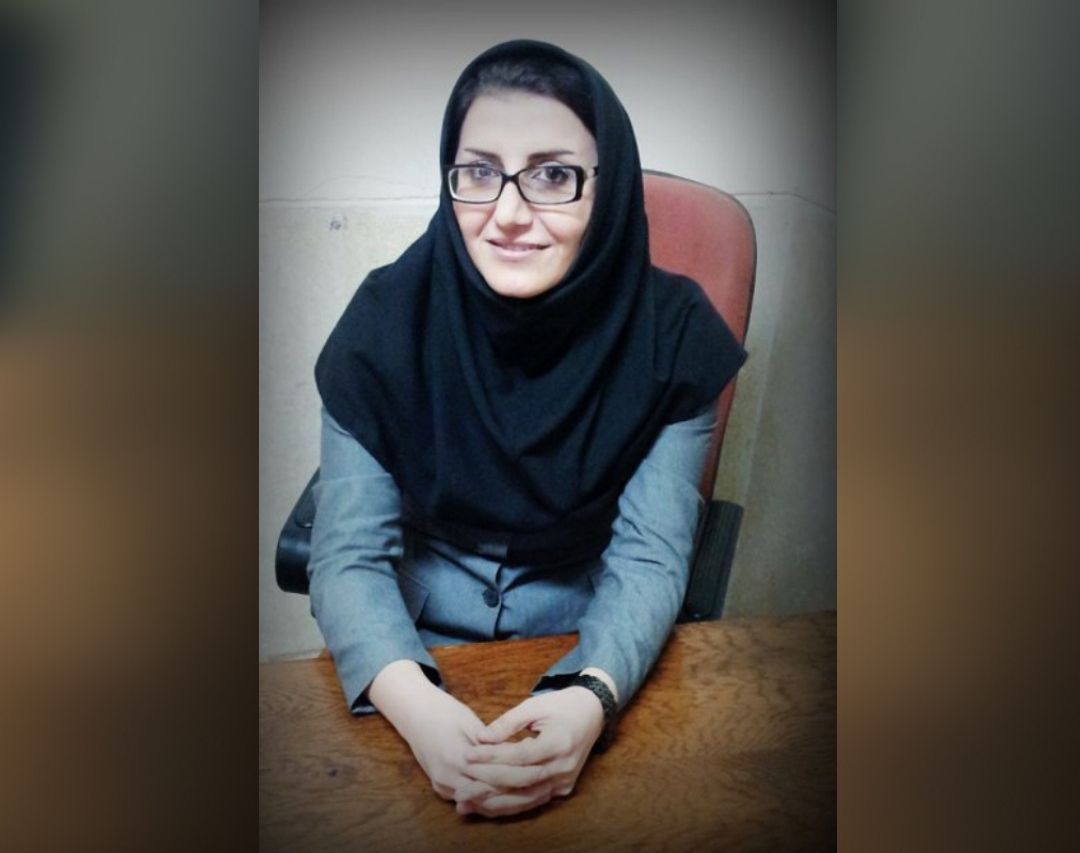
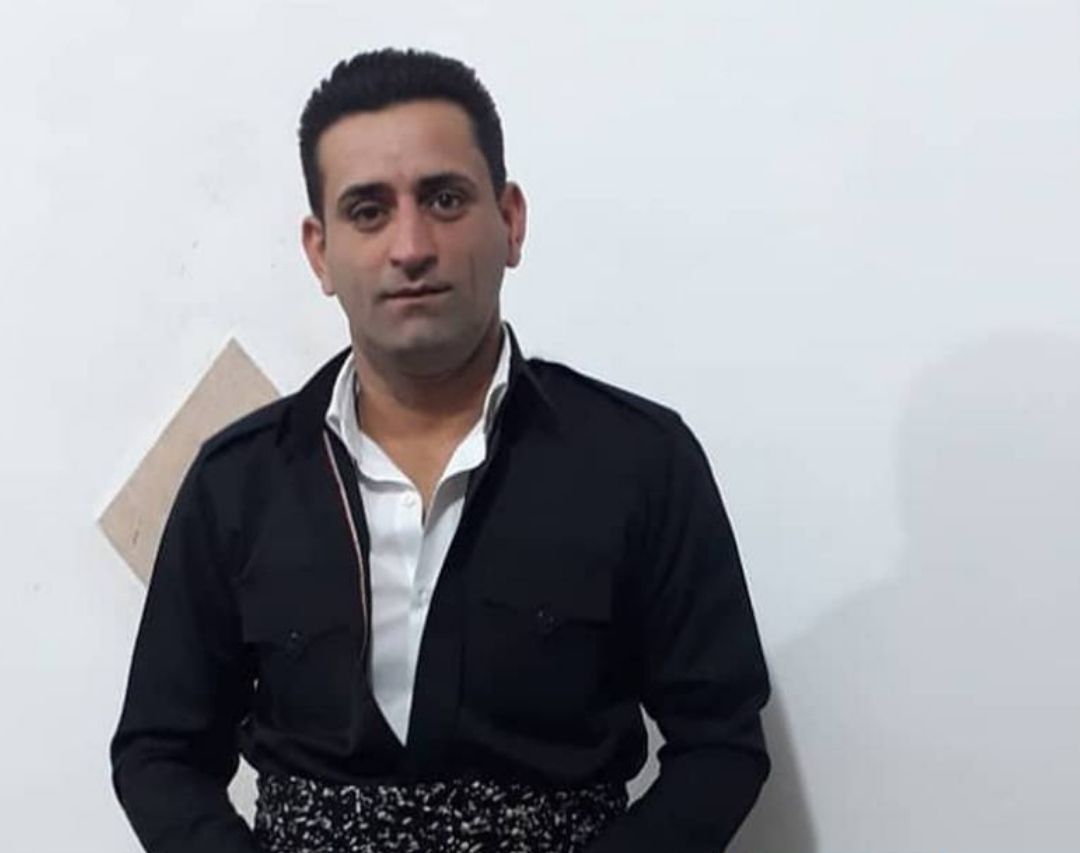
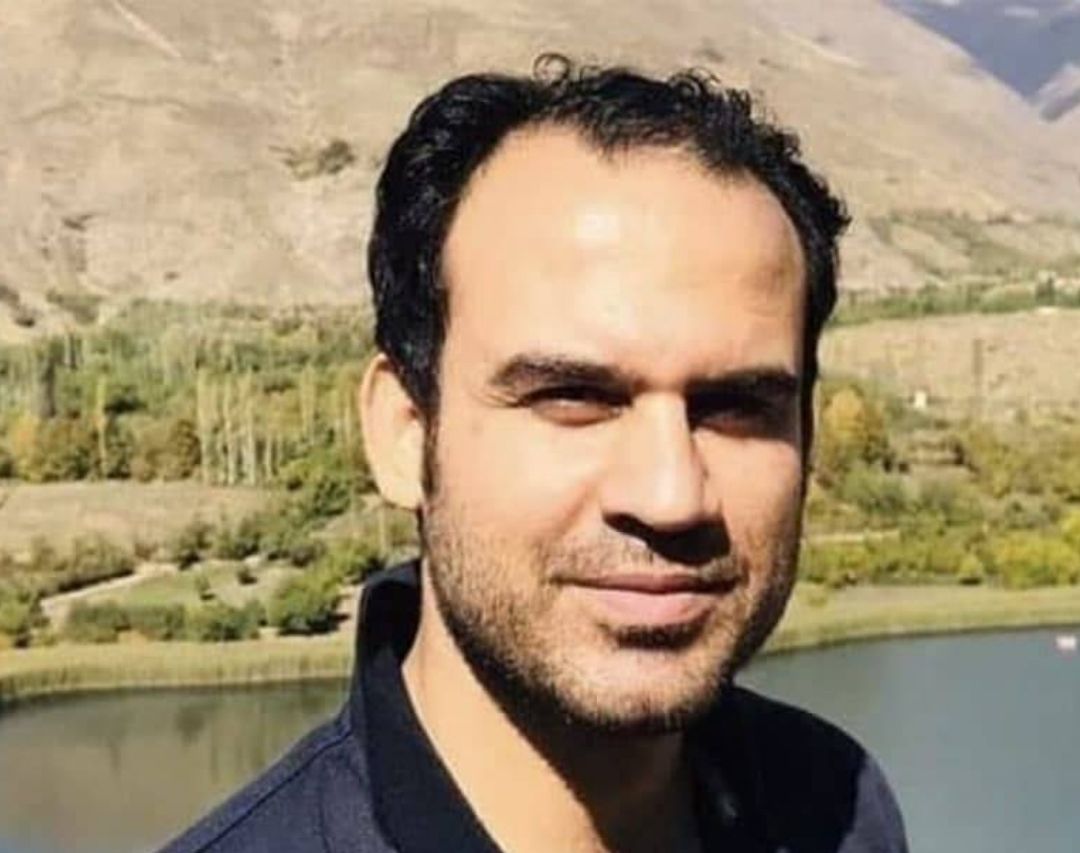
Journalist Ejlal Ghavami Sentenced to Prison Time in Absentia

Human Rights Activist News Agency (HRANA) – In a note on September 26th, human rights activist and journalist Ejlal Ghavami announced the news of his most recent legal tensions with Iranian authorities: four days earlier, he had been sentenced in absentia to eight months in prison for “spreading lies with intent to cause confusion among the masses,” pursuant to the findings of Branch 2 of Investigations Court, located in the Beheshti Judicial Complex of Sanandaj.

Ghavami was read these charges on August 20th of this year by Branch 109 of Sanandaj Criminal Court No. 2, in western Iran, which cited Ghavami’s writings as evidence for the conviction. Shortly thereafter, he was released on bail.

Authorities were already pursuing Ghavami for his media activities on March 25th of this year, when the Sanandaj cyber police– in response to complaints about him from the Basij– interrogated him about anti-governmental Telegram channels and the widespread protests that overtook Iran in January. Pursuant to these investigations, Branch One of Kurdistan Investigations Court charged him with “communication and collaboration with anti-regime channels” and “spreading lies and illegal materials.”

Though Ghavami was previously tried and acquitted in a preliminary court of “propaganda against the regime,” “speaking to anti-regime media,” “spreading lies,” and “insulting the IRGC,” the prosecutor objected to his initial acquittal, and he has been summoned to face the same charges again, on November 18th in Branch Four of Kurdistan Province Appeals Court.

On June 9th, along with civil activists of Kurdistan province Hiva Rahimi and Ahmad Khaliqi, Ghavami was summoned to the intelligence office of the IRGC for unknown reasons.

In a statement issued on August 31st, Amnesty International condemned the draconian sentencing of Iranian journalists by authorities.

Azerbaijani Activist Sentenced to 1 Year in Prison for Cultural Rally

Human Rights Activists News Agency (HRANA) – Kiumars Eslami, an Azerbaijani activist arrested during the July 4th Azerbaijani rallies at Babak Fort, has been sentenced to one year in prison by Judge Firooz Farahani Mazrae Jahan, on the charge of “propaganda against the regime.”

Babak Fort is a site in northwestern Iran, home to the country’s Azerbaijani minority group, that has gained popularity in recent years as an annual cultural rallying spot for Azerbaijani activists during the first week of July.

In justifying his verdict, the judge cited Eslami’s cultural and ‘separatist’ activities: “The defendant is one of the ethnic, separatist, and Pan-Turkic activists in Parsabad,” Jahan wrote. “In order to carry out this separatist activity, he prepares reports, translates Persian books into Turkish [In Persian, the Azerbaijani language is often referred to as Turkish], distorts them in cyberspace, and disseminates them to foreign networks associated with the opposition. He is a leader and a member of the sub-branches of the Pan-Turkic movement in Parsabad county.”

Another reason cited for Eslami’s conviction was his reference to Iran’s Azerbaijani provinces as “South Azerbaijan” in social media posts.

According to an informed source, the head of Parsabad’s intelligence office, known only as Hazrati, previously told Eslami that his case file would be closed if he announced on the news that he would cease his Azerbaijani-related activism and cut off contact with fellow activist Abbas Lasani, who was recently convicted of similar charges.

A native of Parsabad-e Moghan, also located in northwestern Iran, Eslami was previously held in Moghan Prison, where he reportedly sustained head wounds and bleeding during violent interrogations by Iranian authorities. He went on a nine-day hunger strike beginning July 28th to protest the prison conditions and his oppression in the judicial system. He was released on approximately $650 USD (120 million IRR) bail on August 9th.

53 Days into Solidarity Hunger Strike, Ailing Civil Rights Activist Farhad Meysami Stands His Ground

Human Rights Activists News Agency (HRANA)- In protest of the imprisonment of his comrade Reza Khandan, civil Rights Activist Farhad Meysami has now been starving himself for 53 consecutive days.

In a visit to the Evin Prison clinic September 22nd, according to a close source, doctors noted Meysami’s 42-pound weight loss and steep drop in blood pressure and urged him to be admitted to the clinic. Meysami refused, persistent in his requests to be transferred to an outside hospital.

Shortly thereafter, prison authorities, including the prison director, came to visit Meysami, who reiterated to them the sole condition in which he will end his hunger strike: the dropping of all charges against Reza Khandan.

Farhad Meysami was arrested in his personal study on July 31st. He was originally charged with “gathering and collusion aimed at disrupting national security,”; “propaganda against the regime”; and “insulting hijab, a necessary and sacred element of Islam.”

On September 3rd, however, Branch 7 of the Evin prosecutor’s interrogation department claimed that charges have since changed, with the last one replaced with “spreading corruption and prostitution.”

Human Rights Watch and Amnesty International have both asked for Meysami’s release.

Ahwazi Arab Protestors Arrested in Oil-Rich Khuzestan Province

Human Rights Activists News Agency (HRANA)- Several Ahwazi Arab residents of Susangerd, Dasht-e Azadegan (in the province of Khuzestan, southwestern Iran) were detained by security forces and transferred to an unknown location on September 19, 2018 after reportedly chanting protests during a Shiite religious ceremony.
An informed source told HRANA that security forces responded to a number of protesters who were chanting slogans against the regime’s policies and economic failures during local mourning ceremonies in observance of Muharram. Two of the arrested individuals have been identified as Ahma Sovidi and Fayez Afravi. The identities of their comrades have yet to be confirmed.
According to HRANA’s annual report, between March 2017 and March 2018, 6883 people were arrested in Iran for political reasons or for expressing their beliefs. 1281 of these were individual arrests (i.e. independent of coordinated raids or the crackdown of unified protests).
These include 66 media users, 14 environmental activists, 222 adherents to religious minorities (in addition to the Dervishes arrested during the Tehran Golestan Haftom incident in February 2017), 114 women’s rights activists, and 60 workers and labour activists.

Media Activist Hassan Shemshadi Caught in Bureaucratic Pitfalls

Human Rights Activist News Agency (HRANA) – In a September 18, 2018 session of the Computer Crimes Investigation Court, journalist and media activist Hassan Shemshadi was read charges on a case file for which he had already been summoned and charged twice.

Shemshadi’s ordeal with his current case file began when he was summoned to the Judicial Office of the Province of Sistan and Baluchistan for a social media post in which he stated that villagers on the outskirts of Zabul, in the throes of their poverty, were resorting to the consumption of cat and crow meat.

According to Shemshadi, this was his third summons in the last six months for the same complaint, and it indicated that his arrest warrant would be issued if he did not appear in the Computer Crimes Investigation Court within the next five days.

As indicated, Shemshadi appeared at the Computer Crimes Investigation Court of Tehran where a prosecution assistant told him that Zahedan Investigation Court had issued permission to “process his charges.”

“When I saw the case file number, I realized it was the same case file for which I had gone to Zahedan two months ago–the bail decision was even issued for it,” He said. “But the prosecution assistant said, ‘since I have not received anything to that effect from them, I’m bound by the law to arraign you. And you’re going to have to defend yourself.’”

Insisting that the same charges had already been processed two months ago, he was permitted to take up his complaint with the head of Investigation Court. “I explained the situation and offered him a copy of my numbered correspondence so he could check the system and see if I’m telling the truth or not.

Shemshadi said that the head of Investigation Court did just that, prepared a printout, signed it, sealed it, and sent it off to the court branch. “The prosecution assistant lady saw the printout and told me, ‘all set now! Good day!””

Hassan Shemshadi was born on October 23, 1969 in Khorramabad. He has collaborated with such networks as Radio and Television Broadcasting of Ghom, Khorram Abad, Central News Agency. He has also done reporting work in Syria and Iraq.

Subscribe to Our Newsletter

Now is definitely not the time to stop reading!

Against doctor’s orders, authorities take Arash Sadeghi back to prison after surgery

Human Rights Activists News Agency (HRANA) – Arash Sadeghi, a human rights activist imprisoned in Rajai Shahr Prison in Karaj, underwent a critical operation on September 12th for malignant bone cancer at Imam Khomeini hospital and was returned to prison just three days later, against the orders of his doctor.

According to an informed source, an individual introducing himself a judicial official insisted on the early transfer against the clear orders of doctors.

Sadeghi’s doctor had instructed that he be hospitalized under close medical supervision for at least 25 days following a very difficult surgery, said the source. According to the source, the doctor explained that Arash needs to stay in the hospital as he requires a medical team in case of stroke, infection, or severe fever. Furthermore, the medical team needs the 25 days to determine whether a patient will require chemotherapy, radiation therapy, or additional surgery.”

A source with information about Sadeghi’s condition told HRANA that specialists had determined Sadeghi needed to be hospitalized three days prior to his surgery, due to an irregular heartbeat and severe weakness, so Sadeghi could be prepared for the intensive surgery through proper nutrition and vitamin injections.

The surgical department had contacted the prison several times on September 8th, asking for Sadeghi’s transfer. Prison officials claimed, however, that the prosecution office had not issued the necessary permits for his early hospitalization. Just one day remaining until his surgery, the authorities finally transferred Sadeghi to the hospital on September 11th.

The source added that there was a heavy presence of plainclothes agents, whose organizational affiliation was unclear, in the cancer department of the hospital since early Tuesday, before Arash arrived.

Sadeghi’s surgery time had been given to another patient due to his late transfer, however, the doctor responsible for Sadeghi reportedly managed to secure an operating table. Sadeghi underwent a 7.5-hour operation, beginning on the morning of Wednesday, September 12th. Doctors removed a bone tumor from his right arm and collarbone, and samples were collected from areas suspected of metastasis, such as his rib cage and underarm. Bone taken from his pelvis was mixed with platelets and special [injectable] cement to replace the removed sections of his arm bone.

The source said that agents imposed restrictions on Sadeghi from the moment the surgery ended, thus complicating his recovery process. They prevented his stay in the recovery room as required by post-surgery procedure.

“While he was still unconscious, they handcuffed and shackled his left hand and leg, and blockaded the area around his bed, a move that prevented his doctor’s required constant checkups, and which was protested by his doctor,” the source said.

According to the source, Sadeghi suffered from wounds similar to bedsores from having to lie on his back due to handcuffs on one hand and operation bandages on the other.

Sadeghi was allowed to use the bathroom only three times a day, accompanied by three agents each time. The inhumane conditions and the restrictions imposed on Sadeghi provoked negative reactions from the hospital staff, and in several cases led to verbal altercations between them and the security agents.

Arash Sadeghi was not allowed any visitors during his stay at the hospital. His wife, Golrokh Iraee, remains imprisoned at Evin Prison serving a six year sentence.

Author and Humorist Kiyumars Marzban Detained

Human Rights Activists News Agency (HRANA) – On August 26, 2018, Islamic Revolutionary Guard Corps (IRGC) Intelligence forces arrested author and satirist Kiyumars Marzban in his home, confiscating several personal items including his mobile phone and laptop.

Last year, Marzban, 26, came back to Iran after eight years abroad to visit his ailing grandmother. While he entered the country without event, Branch 1 of the Evin Prosecutor’s Interrogation office opened up a case file and arranged for his arrest within his first year back home.

While Marzban alleges he never traveled to the U.S., a state-affiliated news site has accused him of “Networking in Iran” on contract with American partners. The same news site accuses Marzban, who also teaches art, of entering Iran with the intent to sensationalize and divide the community with his classes. As of the date of this report, no further information was available about the reasons for Marzban’s arrest.

Human Rights Watch revealed in a press release that he has not been allowed to visit his family yet.

Kiyumars Marzban began his career with filmmaking in 2005. By 2009 he had produced eight short films and left Iran to develop his portfolio in Malaysia. Shortly afterward, via Facebook, he launched the world’s premier Persian-language comedy podcast, called “Radio Sangetab” (Sangtab, the name of a village in northern Iran, is also a cooking method using hot stones). His works include “Kham Bodam Pokhte Shodam Balke Pasandideh Shodam” (I was raw, I became ripe and rather pleasant) and “Aziz Jan” (Dear darling).

Reformist Ex-deputy Minister Summoned for Interrogation

Human Rights Activists News Agency (HRANA) – Mostafa Tajzadeh, a leading reformist politician who was previously imprisoned on political grounds for seven years, has been summoned by Branch 4 of the interrogation office of the city of Qazvin, 90 miles northwest of Tehran.

Tajzadeh is a leading member of a group known as the Mojahedin of the Islamic Revolution Organization (MIRO), as well as a central council member of the Islamic Iran Participation Front (IIPF). Both organizations have been banned by the Iranian authorities.

On September 18th, Tajzadeh published a note on social media attributing the summons to a speech he had made in the house of Ayatollah Ghavami.

“The note says that I have five days to present myself, otherwise I am to be arrested,” his note said.

Tajzadeh complained about being summoned in the same year that Iran’s Supreme Leader issued new year’s vow not to arrest citizens exercising their freedom of speech.

“It will soon be known who this summons order came from,” Tajzadeh wrote.

After Tajzadeh’s September 15th speech, he reported that the Intelligence Department of the Islamic Revolutionary Guard Corps summoned a number of those in attendance.

Tajzadeh, who was a deputy interior minister during the self-proclaimed reformist government of President Mohammad Khatami, was previously arrested amid widespread protests known as the Green Movement that broke out across Iran after the 2009 presidential election. Convicted of both “gathering and collusion aimed at disrupting national security” and “propaganda against the regime,” he was sentenced to six years in prison by Judge Salavati in Branch 15 of Tehran’s Revolutionary Court. An appeals court later confirmed the sentence.

While in prison, he wrote critical letters addressed to Iran’s Supreme Leader, which put him on the radar of the IRGC. This culminated in an additional charge of “propaganda against the regime,” for which he was convicted and subsequently sentenced to a year in prison by Branch 28 of the Revolutionary Court, presided by Judge Moghiseh. He served a total of seven years in prison before his June 4, 2016 release.

Tajzadeh was also summoned to court last December, pursuant to complaints from Tehran prosecutors.

Civil Rights Activist Mohammad Davari Arraigned

Human Rights Activists News Agency (HRANA)- Mohammad Davari, a civil rights activist from Yasouj in the province of Kohgiluyeh and Boyerahmad, was read his charges in Branch 4 of the Investigation and Prosecution office on September 19th, after presenting himself in response to a summons he received last week.

After a round of questioning, judicial authorities issued a charge of “disseminating propaganda against the regime” and released him on bail pending completion of the investigation.

A source close to Davari’s family confirmed the news to HRANA, adding that the plaintiff in the case is the Islamic Revolutionary Guard Corps Intelligence Unit and that the judge admitted into evidence Davari’s “notes on cyberspace” and his promotion of books “against the regime and the Islamic Revolution.”

Contrary to the judge’s implication, Davari contests that his notes only touched on such subjects as the Tehran-Yasouj plane crash, labor conditions, and the environmental conditions in his home province. The books in question, published by Davari with the permission of the Ministry of Culture and Guidance, were about women’s rights, culture, and art.

Davari was arrested by Ministry of Intelligence forces on August 10, 2018. During his custody and until his August 27th release on a 200 million toman (approximately $20,000 USD) bond, he was denied medical care.

He was previously detained on March 5, 2018, for taking part in widespread popular protests in Iran. He was released ten days later on a 50 million toman (approximately $10,000 USD) bail.

Born in Dehdasht, about 90 miles west of Yasouj, Davari is a master’s student of political science who faced temporary detention on a prior occasion for pulling down a banner bearing the photo of late politician Hashemi Rafsanjani.

Imprisoned Civil Rights Activist Farhad Meysami Reaches 50th day on Hunger Strike

Human Rights Activists News Agency (HRANA) – Farhad Meysami has not had a single meal, or any food at all, for 50 days and counting, as his health condition continues to deteriorate.

A civil rights activist imprisoned in Tehran’s Evin Prison, Meysami announced his hunger strike August 1st, one day after his arrest by Iranian authorities, in protest of their refusal of the attorney of his choosing. Despite the decline of his health during the hunger strike, authorities have yet to send him to a hospital.

HRANA reported on Meysami’s weight loss and poor physical state on September 8th.

Mohammad Moghimi–lawyer of fellow Evin prisoner Reza Khandan, and incidentally, the attorney Meysami would have appointed if given the choice–said his client called him from Evin to report that Meysami’s strike had put him in mortal danger, and that he needed a transfer to the hospital right away.

Moghimi said that authorities’ denial of Meysami’s attorney of choice puts them in conflict with Iranian law. Once initial interrogations are over, each prisoner has a right to a lawyer of his or her choosing, according to Moghimi’s reading of Article 48 of Iranian penal code.

Meysami was arrested in his personal study on July 31st. He was originally charged with “gathering and collusion aimed at disrupting national security,”; “propaganda against the regime”; and “insulting hijab, a necessary and sacred element of Islam.”

On September 3rd, however, Branch 7 of the Evin prosecutor’s interrogation department claimed that charges have since changed, with the last one replaced with “spreading corruption and prostitution.”

Meysami, who suffers from ulcerative colitis, has said that during his hunger strike he will take only the medication that treats this condition, as he has taken for the past 18 years. Meysami has previously said that he would break his hunger strike only if his friend and fellow inmate Reza Khandan, who was arrested after Meysami’s hunger strike began, is released unconditionally.

Human Rights Watch and Amnesty International have both asked for Meysami’s release.