Ebrahim Raisi in Response to Questions About his Role in the 1988 Executions in Iran: “I Should be Praised and Admired”

In his first press conference since being announced as winner of Iran’s presidential election, Ebrahim Raisi was interviewed by Al Jazeera.

According to HRANA, the news agency of Human Rights Activist, Al Jazeera questioned the president elect about his role in the executions of the political prisoners in Summer 1988 in Iran, his inclusion on the human rights sanctions list, and the request for his trial by some human rights organizations.

In response, without claiming to have played a role in the 1988 executions, Raisi claimed that he has “always been a defender of the rights of the people, as a juristic”, and that “human rights has been at the axis of all (his) responsibilities”. He went on to state that he should be “praised and acclaimed” for this.

For the four decades of the Islamic Republic’s existence, Raisi has served in various positions in the judiciary against human rights and been responsible for the execution, imprisonment, torture, amputation to repression, justification of repression, violation of the rights of countless women, Bahai’s and others.

For his role in the massacre of political prisoners in the summer of 1988, in Tehran, he has been called the “Ayatollah of Massacre” by critics.

Parliament Approves General Plan to Reward Individuals Sanctioned by “Hostile” Countries and Increase Punishment for Espionage

The general plan to increase the punishment of espionage was approved by Parliament. The plan will also extend  benefits to individuals sanctioned by countries deemed “hostile” by a designated committee.

According to HRANA, the news agency of Human Rights Activists, quoting the Islamic Consultative Assembly News Agency (ICANA), under the proposed plan, those who spy for “hostile” countries will be considered “corruptors on earth” and sentenced to execution.

The determination of whether the spying country is hostile or not will fall under the responsibility of a committee consisting of representatives of the IRGC Intelligence Organization, the NAJA Intelligence Organization, and the Ministry of Intelligence, headed by the representative of the General Staff of the Armed Forces.

A member of the Parliamentary Judiciary Commission has stated that those who are on the list of sanctions of countries deemed hostile will be considered “self sacrificers” (a citizen classification most commonly reserved for veterans) and enjoy the attached rights and privileges.

Shahin Mirkhani Executed in Shirvan Prison

On May 30, Shahin Mirkhani was executed in Shirvan Prison in North Khorasan Province.

According to HRANA, the news agency of Human Rights Activists, quoting Iran Human Rights (IHR), 40-year-old Mirkhani, son of Rasoul, was previously sentenced to death on drug-related charges.

Per the report, an informed source said, “Shahin Mirkhani was sentenced to death for carrying 420 kilograms of crystal meth stimulant, and on Sunday was executed in the backyard of Shirvan Prison.”

Iran ranks first in the world in citizen executions per-capita, according to international organizations. The Statistics and Publication Center of the Human Rights Activists in Iran (HRA) reported that between January 1st and  December 20th of 2020, at least 236 citizens were executed. One of these citizens was executed publicly, and two were juvenile offenders. An additional 95 citizens were sentenced to death.

According to the report, more than 72% of executions in Iran are not reported by the government or the judiciary. Human rights organizations call these “secret executions.”

At the time of writing, Mirkhani’s execution has not been reported by domestic media or officials in Iran.

HRANA Recap: Recent Sentences and Summons in Iran

Khabat Mafakheri sentenced to 4 years in prison by the Revolutionary Court of Sanandaj


Khabat Mafakheri, a citizen of Sanandaj in Kurdistan Province, was recently sentenced to 4 years suspended imprisonment by the Revolutionary Court of Sanandaj.

According to HRANA, the news agency of Human Rights Activists (HRA), quoting Kurdpa, Mafakheri was arrested in early August 2020 and released on bail in mid-December of that year. According to the report, Mafakheri was notified of the verdict in the past few days and was charged with collaborating with one of the opposition parties.


Four Baha’is sentenced to a total of 12 years in prison


Branch 36 of the Tehran Court of Appeals upheld the convictions of Baha’i citizens Mona Mehrabi, Elham Karampisheh, Afsaneh Yadegar Ardestani, and Ehsanullah Yadegar Ardestani. The four citizens were previously sentenced by Branch 28 of the Revolutionary Court of Tehran to 3 years in prison each.


Court of Appeals upholds 3 year sentence for Maziar Seyednejad


According to HRANA, the news agency of Human Rights Activists, Branch 16 of the Court of Appeals of Khuzestan Province upheld the conviction of a labor activist Maziar Seyednejad. Seyednejad had previously been sentenced to three years in prison on charges related to his membership in an opposition group.


Citizen sentenced to 99 lashes and exile for extramarital affair


According to HRANA, the news agency of Human Rights Activists, quoting Aftab News, the case of a citizen who was sentenced to 99 lashes and two years of exile in an area with a brutal climate for having an extramarital affair has been referred to a court of equal rank in Tehran.

The International Covenant on Civil and Political Rights explicitly prohibits the use of degrading and inhumane punishment such as flogging.


Sunni cleric summoned and interrogated by Zabul City intelligence forces


According to HRANA, the news agency of Human Rights Activists, quoting the Baloch Activists Campaign, on May 29, Sunni cleric Abdul Samad Ijbari, the director of the Quran Education School in Hassanabad village of Zabul province, was summoned to the Zabul city intelligence office in Sistan and Baluchestan province and was interrogated.

The report states that the Sunni cleric was summoned following the presence of Mohammad Othman Qalandarzahi at the Hassanabad Mosque. The reason for the summons and the accusations against Ijbari are not yet known.


Golpayegani Comments on Ministry of Health’s Failure to Disclose Info on Wound Dressings Given in April 2020

Hamidreza Golpayegani, founder and CEO of the charity foundation EB Health House, gave a statement on the Ministry of Health’s handling of a delivery of 5.8 tons of wound dressings.

According to HRANA, the news agency of Human Rights Activists, Golpayegani specifically commented on the lack of communication and regulation from the Ministry.

“In April 2020, the Ministry of Health and the EB House negotiated with the German government and with the support of Germany and UNICEF, 5.8 tons of wound dressings was delivered to the Ministry of Health to be given to us periodically, but unfortunately there has not been a regulation in timing,” Golpayegani said. “We did not receive any wound dressing last October and November and the Ministry never told us how many wound dressings were received from Germany.”

EB Home Foundation is a charity foundation that assists patients with specific skin problems.

“An expert at the General Directorate of Medical Equipment said all 5.8 tons of dressings have been received,” Golpayegani added, “But they also need dressings for burns and diabetic wounds.”


Subscribe to Our Newsletter

Now is definitely not the time to stop reading!

Demanding Water, Wages, and Benefits: A Recap of This Week’s Protests

According to HRANA, the news agency of Human Rights Activists, at least 26 protests took place across the country this week, 6 of them today. The unassociated protests and their participants’ demands varied greatly, but all related, in one way or another, to political and economic institutions’ disregard for citizens’ needs. Here is a quick breakdown.


Pensioners Protest in 5 Cities


On May 16, retirees protested in at least 5 cities, including Tehran, Karaj, Khorramabad, Mashhad, and Kermanshah.

Pensioners carrying banners chanted slogans and marched in front of their local Social Security offices. They demanded an increase in pensions following the poverty line increase,  implementation of the equalization of salaries law, strict implementation of Article 96 of the Social Security Law, attention to supplementary insurance problems, and payment of end-of-year bonuses.


Teachers protest in Tehran and Tabriz


On May 16, several teachers protested in front of the Parliament Building in Tehran and in front of the Department of Education Building in Tabriz, calling for their demands to be addressed.


Families of the victims of the 2020 Ukrainian plane crash protest in Tehran


On May 16, a group of families of the victims of the 2020 Ukrainian plane crash gathered in front of the Judicial Organization of the Armed Forces in Tehran. The families protested the trial, the rejection of their request to study the case, and Foreign Minister Javad Zarif’s remarks about “curing the accident” in his leaked tape of the interview.


Municipal workers protest in Lowshan


According to the Iranian Labour News Agency (ILNA), on May 16, workers of the Municipality of Lowshan protested low wages and insurance problems in front of the municipal building for the second day in a row. According to the workers of Lowshan Municipality, on the morning of May 15, the protest broke out after Lowshan’s mayor insulted several service workers in the yard and inside the building.


Kaveh Glass Industrial Group workers protest in front of Ministry of Cooperatives, Labor, and Social Welfare


According to the Iranian Labour News Agency (ILNA), on May 16, a group of workers from the Kaveh Glass Industrial Group demanded fair working conditions and retirement benefits in front of the Ministry of Cooperatives, Labor, and Social Welfare.


Per the report, the workers demanded the right to retire after working 20 continuous years or 25 consecutive years, given the difficulty and high risk of the job.


According to news sources, the workers all have retirement status and have been insured in these difficult jobs for more than 20 years.  The workers claim that the employer not only did not help them to retire but also laid them off shortly before the benefits were set to activate. They are currently both jobless and unable to retire.


Teachers and staff of special-needs education schools protest in Khuzestan province


According to the Asr-e-Junub news agency, on May 16, teachers and staff of schools for children with special needs in Khuzestan province protested in front of the General Directorate of Education in Ahvaz. The protestors demanded increased salaries and the resolution of clerical insurance problems.


Literacy movement educators protest in front of Parliament Building


According to the ISNA news agency, on May 16, a group of educators of the literacy movement protested in front of the Parliament Building and requested Parliament representatives’ support, as their employment status is currently shaky.


Residents of Health Boulevard in Saravan protest in Sistan and Baluchestan Province


According to the Baloch Activists Campaign, a group of citizens living in Saravan’s Health Boulevard protested in front of the governor’s office and the office of Islamic Consultative Assembly representative Malek Fazeli on May 17.


The residents protested lack of electricity and poor infrastructure in the area, after numerous attempts to resolve the issue through the electricity department were unsuccessful.


Servants and school caretakers protest in Shiraz


According to the Free Union of Iranian Workers, on May 16, servants and caretakers of Shiraz schools demanded an increase in wages and benefits in front of the city’s education building.


Private school teachers protest in Ilam


According to the Free Union of Iranian Workers, on May 17, teachers and employees of private schools in Ilam protested outside the Department of Education building of the province. According to the report, the protestors have been working for years with very low salaries. They requested a salary raise and benefits increase and called on the elimination of discrimination they have been facing compared to government employees.

Safety Consultants protest outside Ministry of Labor building in Tehran


On May 19, a group of safety consultants from all over the country protested in front of the main door of the Ministry of Labor building in Tehran. They demanded an immediate cessation of the implementation of Technical Protection and Safety Services bylaws, and revision of the bylaws and instructions “in the presence of experts and representatives of real advisors”.


Kohgiluyeh and Boyer-Ahmad Water Company workers protest in Gachsaran


According to Kebnanews, on May 18, several members of Kohgiluyeh and Boyer Ahmad Water and Sewerage Company protested not receiving their wages and insurance benefits in front of the Dogonbadan’s Water and Sewerage Office in Gachsaran.  All of the protesting workers have been employed for more than 5 years by this company, and have not been paid for three months.


Karnameh Sabz’ teachers protest in Tehran


According to the Free Union of Iranian Workers, on May 19, teachers of Karnameh Sabz protested the uncertainty of their employment status in front of the Ministry of Education building in Tehran. Karnameh Sabz teachers are educators who took the Ministry of Education’s recruitment exam (Article 28 exam) and have been selected by officials, but no action has been taken by the ministry since the exam. On the previous day, teachers also protested in front of the Parliament building in Tehran.


Truck drivers protest in Arak  


According to the ISNA news agency, on May 19, several truck drivers in Arak protested for the fifth day in a row. They called on their union demands and complained about the failure of officials in the Road Maintenance & Transportation Organization.

Aseminun miners protest in Manujan in Kerman


On May 19, workers of the Aseminun mine in the city of Manujan in Kerman province protested not receiving their wages for the third day in a row of the strike. The

protesters demanded payment of their unpaid wages, the ousting of the current mine owner, and the transfer of ownership to the public sector.

Gardeners protest in Robat Karim

According to the Basi news agency, on May 20, several gardeners from Robat Karim protested in front of the governor’s office.  Protestors claimed their right to ownership had been violated by the Ministry of Agriculture Jihad even though they had the proper legal paperwork.


Agents and sellers of Sufi Cement protest in Tabriz


According to the Free Trade Union of Iran, on May 20, several agents and sellers of Sufi Cement gathered in front of the East Azerbaijan Governor’s Office in Tabriz to protest cement shortages.

Shareholders of Samen Coin protest in Tehran


According to the Free Trade Union of Iran, on May 20, 2021, a group of shareholders of Samen Coin protested in front of the Central Bank in Tehran.


Jovein Cement factory workers protest in Khorasan Razavi


According to the Free Trade Union of Iran, on May 20, 2021, workers of the Joven Cement Factory in Khorasan Razavi protested low wages and poor working conditions.


Villagers protest amid continued water shortages in the western suburbs of Karun


According to the IRIB news agency, on May 21, villagers of the western suburbs of Karun gathered in front of the Arvandan Oil and Gas Company refinery to protest authorities’ unfulfilled promises to address the ongoing water crisis in Karun. Twelve villages in the western suburbs of Karun, each with populations of  over 6,000, have been experiencing water shortages for nearly four years.


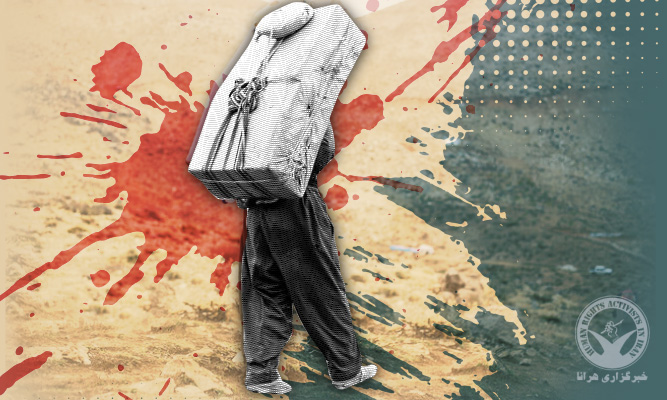
Kolbar Injured from Landmine Explosion in Nowsud Border Area

On Thursday, May 6th, a kolbar was injured in the leg after a landmine left over from the Iran-Iraq war exploded in the border area of Nowsud.

According to HRANA, the news agency of Human Rights Activists, quoting Kurdpa, the citizen has been identified as Nader Saberi, son of Mr. Barakhas, from Tilkuh village in Kamyaran.

Every year, landmines cause the death and injury of several compatriots in border areas. About 42,000 square kilometers of land in Iran is contaminated with leftover landmines and unexploded ordnance from the Iran-Iraq war.

The Iranian regime continues to produce and plant anti-personnel mines, and, contrary to international conventions, the regime believes that using these mines is the only effective way to secure the country’s long borders.

Accordingly, they have planted mines on border areas with Afghanistan, Pakistan, and Iraq. During the conflicts of the 1980s in Kurdistan, mines were planted in this region, as well.

Kermanshah province: Civilian Shot and Killed by Law Enforcement in Dalahu

A civilian was shot dead by law enforcement forces in Dalahu. According HRANA, the news agency of Human Rights Activists, quoting Kordpa, Sohbat Samadi Nasab died in Taleghani hospital on May 4, 2021 from injuries sustained from the firing.

According to the report,  the military forces shot Mr. Samadi Nasab directly on suspicion of “carrying contraband “, without any prior notice, on April 26, 2021. He was transferred to Taleghani hospital in Kermanshah for treatment and died the following week.

Military and security forces have a long history of shooting citizens without evidence, often fatally. Article 7 of the Law on the Use of Firearms by Officials at necessary cases states: “officers subject to this law, when using a firearm, should target the leg, as much as possible and be vigilant their actions will not cause death and assure to not harm third parties who are not involved in the incident.”

The note to this article also states that “the care for the injured is the responsibility of law enforcement officers and injured must be taken to medical centers as fast as possible”.

Citizen Drowns in Banar River After Being Chased by Military Forces

According to HRANA, the news agency of Human Rights Activists, quoting Kordpa, on May 9, 2021, a citizen from Margavar Rural District in Urmia fell into the Banar River and drowned after being chased by military forces.

Mr. Parviz Jabbari, 31 years old, was the son of Abdullah and a resident of Mansurabad village from the Margavar Rural District of Urmia.  A source reports that Jabbari was chased by government soldiers in the Benar-Darreh Valley, on suspicion of carrying smuggled goods.

The informed source added: “After Mr. Jabbari’s body was found and transferred to the village of Mansurabad, the security forces transferred the body to Urmia.”

Announcing Spreading Justice: A database of human rights abusers in Iran

HRANA – For fifteen years HRA has maintained a victim-centric approach to documenting and reporting on human rights violations in the Islamic Republic of Iran (IRI); The primary focus has been to document rights abuses and highlight the crimes perpetrated against victims. Through the years, while perpetrators have enjoyed widespread impunity, victims have endlessly struggled for justice. 

On the occasion of the International Day for the Right to the Truth Concerning Gross Human Rights Violations and for the Dignity of Victims, and alongside the adoption of the resolution on the situation of human rights in the IRI at the 46th session of the Human Rights Council, HRA launches Spreading Justice, a database of human rights violators in Iran. 

At Tuesday’s closing of the Human Rights Council, organizations, member States, and activists alike called for an end to impunity in Iran.  Spreading Justice was created to equip the international community with a tool to work towards holding perpetrators accountable, increasing both social and political pressure, and ending the widespread impunity that is currently enjoyed throughout the country.

The database, housed at www.spreadingjustice.org, includes unique profiles of both individual and institutional violators; those well known as well as those that seemingly fly under the radar. 

Who is included in the database?

While all known violators will be included, Spreading Justice is primarily focused on new human rights violations. While many individuals or institutions included in the database have been committing violations for several years, there are oftentimes recent events that have contributed to their place in the database. By placing a focus on recent events, researchers are better positioned to collect, document, and fact-check information on the violations in question. 

Along with profiles of individual violators, such as Masoud Safdari, there are also profiles for institutional violators like the Tehran Islamic Revolutionary Court. Profiles of institutional violators are linked to the profiles of affiliated individuals, both individual violators, as well as individual and group victims. This feature aims to aid in establishing connections for research purposes. Similarly, when users click on a victim’s name, they are directed to a list of any violators within the database that may also be affiliated.  

While the existing profiles are complete, users are able to aid in the development of profiles by anonymously submitting additional information. Informed users are encouraged to submit both missing information and information on violators not currently included through an anonymous, easy to use and secure form. All information submitted through this form is verified for authenticity before being added to the database. Utilizing a tool created by a German University, users are also able to submit information on a wide array of physical appearance indicators. Facemaker, the tool mentioned above, mocks a virtual drawing of the violator based on user submissions. These submissions are compiled for internal comparative analyses. 

HRA researchers have spent countless hours collecting, documenting, and verifying the information within the database. All of the information included has been through a strenuous fact-checking process and is verified for authenticity prior to being added. New profiles will continue to be added to the database in real-time as information is collected and verified. 

All of the information, documents, and reports collected on violators are both online and stored internally via PDF. Requests for documents can be made through the Contact Us page. 

How are the violators profiled?

Over the years, HRA has learned what information is most necessary for stakeholders when working towards holding violators accountable. The lessons learned were taken into consideration when building out the database. The individual violator profiles, where available, include a photo or photos of the violator, evidentiary documents (including witness or victim testimony and/or relevant multimedia), verified articles written by reputable media outlets that have mentioned the violator by name, and a detailed legal review written by Brian Currin, a leading expert in international human rights. One can also find information on work history, current residency, travel history, and educational background. 

The profiles include basic information such as full name and any alternative spellings, date of birth, place of birth, and any current institutional affiliation. If a violator has known family members, such as a spouse or child, they are listed by name. Additionally, there is information on physical appearance including, eye color, hair color, height, and weight. Certain aspects of the basic and physical information are categorized into one of three levels of certainty: exact, partial, and approximated. Information categorized as exact is verified and precise. Partial is listed when some part of the information provided is unknown at the time of writing. The approximation category is used when HRA researchers have used approximating techniques with available information to offer a range. Institutional Violators are profiled similarly. Users also have the ability to toggle between both unit and date conversions. 

Violators are tagged and searchable by documented victims, identified rights violations, and any relevant institutional affiliation. All of the profiles are available in a downloadable PDF format. Download links are located at the bottom of all violator profiles alongside a form to submit any missing information. 

How does one use the database?

Spreading Justice is available in both English and Farsi. Users can search the database utilizing a variety of tagged violation indicators including torture, the right to life, labor rights, women’s rights, social rights, prisoner’s rights, the right to peaceful assembly, freedom of expression and thought, and more. These searches enable those focused on specific violation types to filter. One can also search tags by institutional affiliation such as the Tehran Islamic Revolutionary Court or the Iranian Cyber Police among others. The database is also searchable by victim name to assist lawyers or researchers working on specific cases. There is additionally an option to search by keyword. Users can find the main search tool on the Spreading Justice homepage

Not simply a database

Spreading Justice is not simply a database, it also offers resources on Iranian power structures and judicial systems, unique reports and analyses on human rights violators in Iran, as well as statistical overviews including a breakdown of the situation of human rights in Iran by province and violation type. 

Similarly to the profiles, all of the information found at spreadingjustice.org including statistics, resources, and reports will be updated regularly. 


____

HRA encourages readers to share the database with their networks. For any additional information on Spreading Justice please contact Skylar Thompson, HRA Senior Advocacy Coordinator at [email protected]