End Draws Near for Zahedan Death Row Prisoner

Human Rights Activists News Agency (HRANA) – After 11 years of confinement, a Zahedan prisoner on death row for murder charges has been transferred today, September 5, 2018, to solitary confinement per protocol for detainees whose execution is imminent.

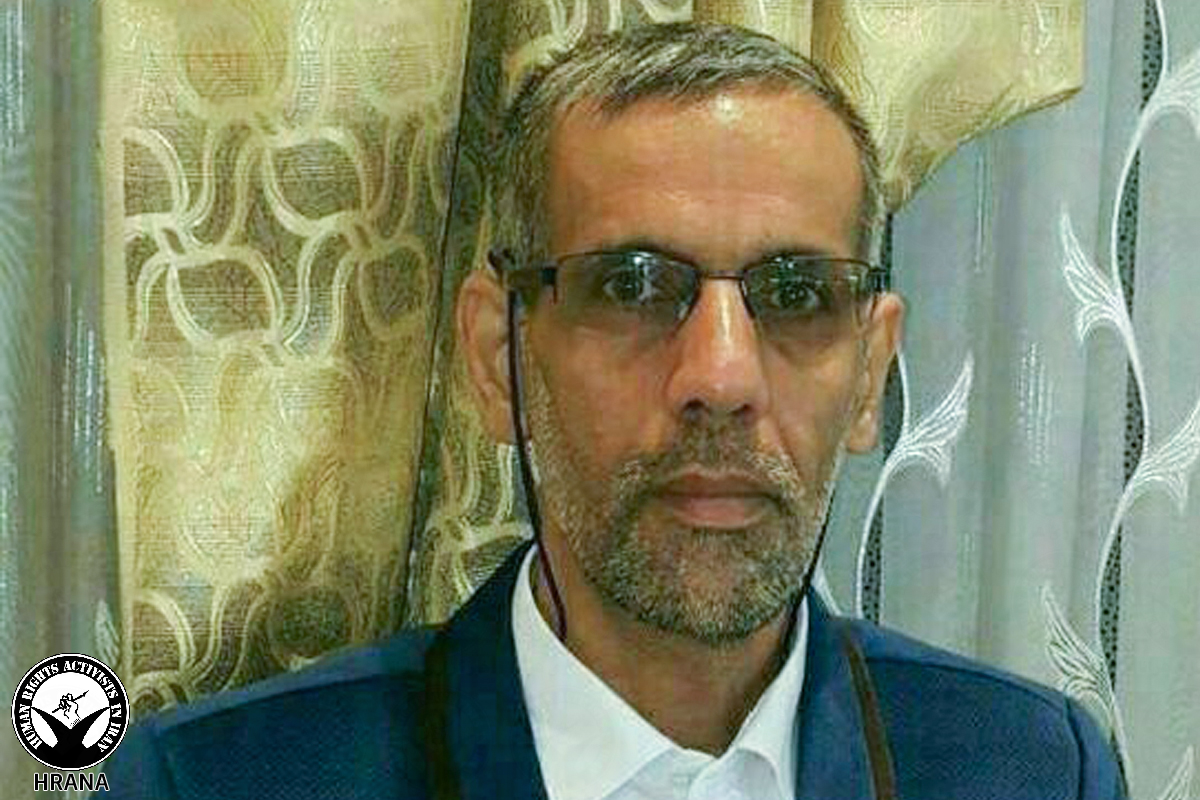
HRANA has confirmed the prisoner’s identity: Mehdi Sarani, 37, of Zabol. He is now in Ward 4 of the Central Prison of Zahedan (capital of the southeastern province of Sistan & Baluchestan and home to Baluchi minority).

According to Amnesty International’s annual report, Iran ranks first in the world in executions per capita.

An annual report published by the Center of Statistics at Human Rights Activists in Iran (HRAI) states that more than 60% of executions in Iran are not reported by the state or the Judiciary. These executions are referred to as “secret executions.”

According to registered data from 2,945 reports by the Statistics, Publications, and Achievements Division of HRAI, in the past year (from March 21, 2017, to March 18, 2018) at least 322 citizens were executed and 236 others were sentenced to death in Iran. Among these were the executions of four juvenile offenders and 23 public hangings.

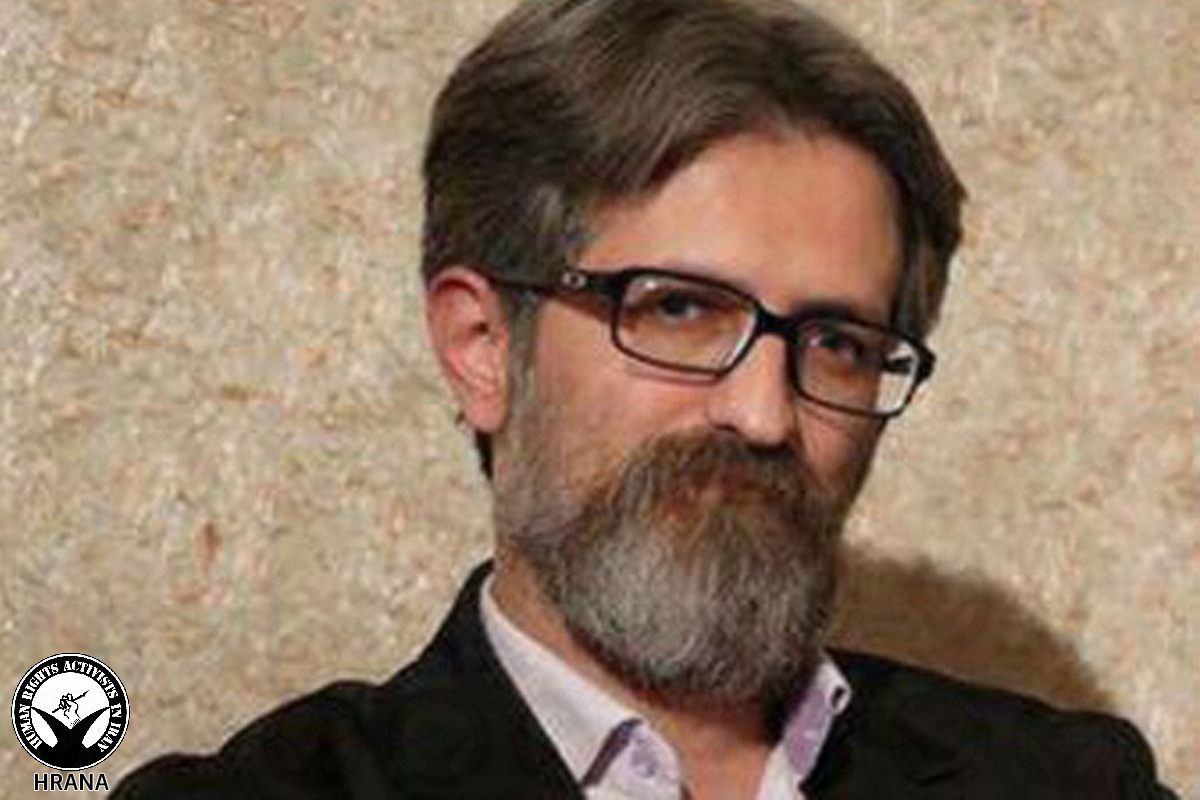
Update on Mostafa Daneshjoo: Evin Prison Authorities Won’t Budge on Medical Blockade

Human Rights Activists News Agency (HRANA) – Mostafa Daneshjoo, an attorney, is currently serving prison time for his legal advocacy and defense of the Gonabadi Dervishes, a religious minority. These days, Daneshjoo is sacrificing more than his freedom: he is now being forced to sacrifice his health.

Daneshjoo, despite suffering from acute lung and heart disease, has been barred access to medical attention of any kind since he was arrested on July 7, 2018.

According to Majzooban Noor, the Gonabadi Dervish Community News Website, when Daneshjoo was first detained, his family was cut off from contact with him for months. When they were finally permitted to see him in Ward 4 of Evin Prison, their relief was mingled with shock at the sight of his severely declining health.

Mostafa Daneshjoo is the former managing director of the Majzooban Noor website. While the clinic at Evin Prison has Daneshjoo’s medical file on hand, authorities–citing Daneshjoo’s prior arrest–are preventing him from seeking help, even from the generalists at the Evin Prison Clinic.

Daneshjoo was arrested in his mother’s home by seven armed officers in the early morning of July 7th. After spending 45 days in solitary confinement in Ward 209 of the Ministry of Intelligence detention center, he was transferred to Evin’s Quarantine Ward before being taken to Ward 4, typically reserved for prisoners with financial charges. Daneshjoo, who is asthmatic, experienced a sharp increase in symptoms after spending 45 days in a solitary cell without ventilation. While he was taken to Taleqani Hospital on July 21st, he was turned away without receiving care within a few hours.

Daneshjoo’s case file indicates that his current arrest warrant was issued by Branch 3 of the Shahid Moghaddas Prosecutor’s Office in Evin Prison. In a phone conversation at the time, he explained he was being pursued by authorities for his affiliation with the Dervishes who were involved in the Golestan Haftom incident. Authorities have reportedly wielded further punitive measures against him, according to a letter published in May 2017 by the Azad University Security Office, which announced that Daneshjoo was being prevented from pursuing his graduate studies in Penal Law and Criminology.

During prior defense proceedings of a number of Gonabadi Dervishes, following punitive reports from Iranian security agencies, Daneshjoo’s licence to practice law was revoked. He was sentenced — along with other attorneys, Dervish advocates, and his Majzooban Noor co-managers– to imprisonment on charges of “Membership in the Dervish anti-security sect,” “Acting against national security,” “Propaganda against the regime,” and “Disrupting public opinion.” Between 2011 and 2015, he served his sentence in Ward 350 of Evin Prison and was released in May 2015.

Labor Activists Arrested in Western Iran

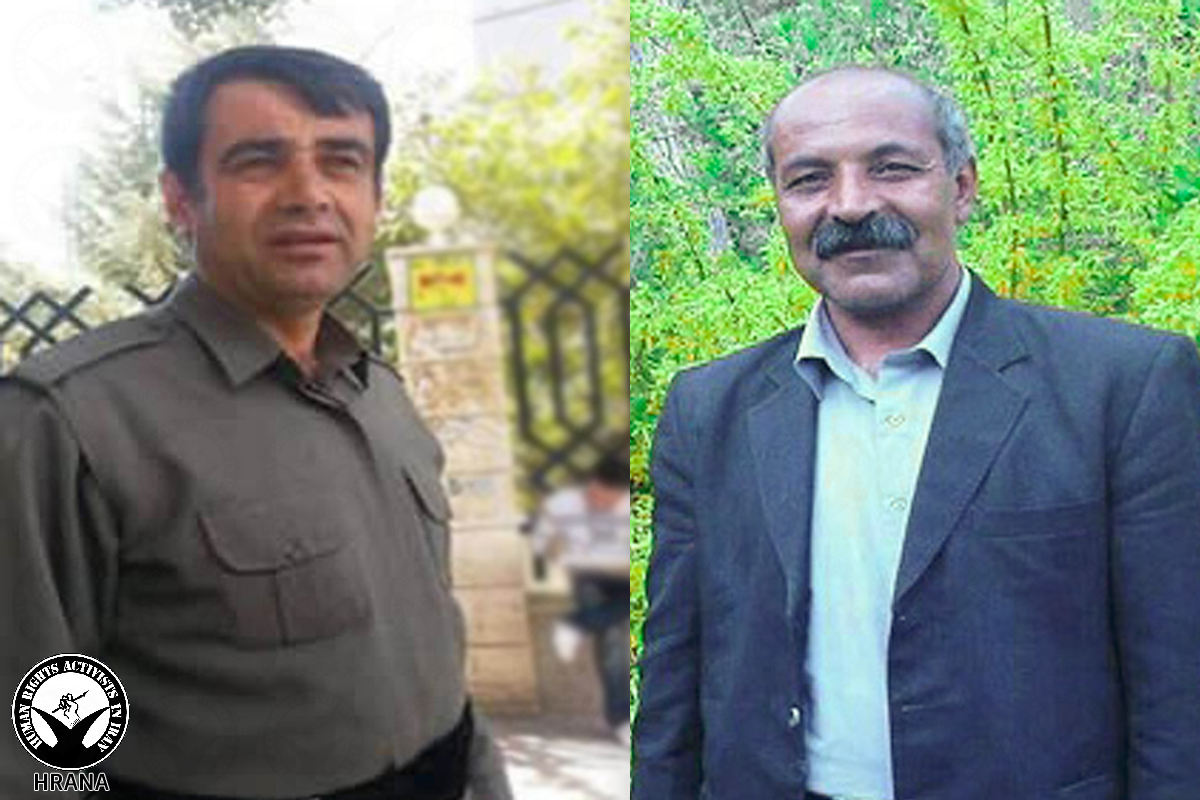
Human Rights Activists News Agency (HRANA) On Tuesday, September 4, 2018, two labor activists living in Sanandaj (capital of Kurdistan province in Iran) were detained by security forces and taken to an undisclosed location, a close source told HRANA. The source identified the activists as Khaled Hosseini and Mozafar Salehnia.

Hosseini and Salehnia were among five labor activists who were summoned to Branch One of Sanandaj Revolutionary Court on April 28, 2018, shortly before International Workers’ Day (May 1st).

They were previously interrogated on March 5, 2017, by Branch 4 of the Sanandaj Revolutionary Court for taking part in a Nowruz (Persian New Year) festival organized by a workers’ council in Pardis Hall of Sanandaj.

Authorities Charge Reza Khandan, Husband of Imprisoned Civil Rights Activist Nasrin Sotoudeh

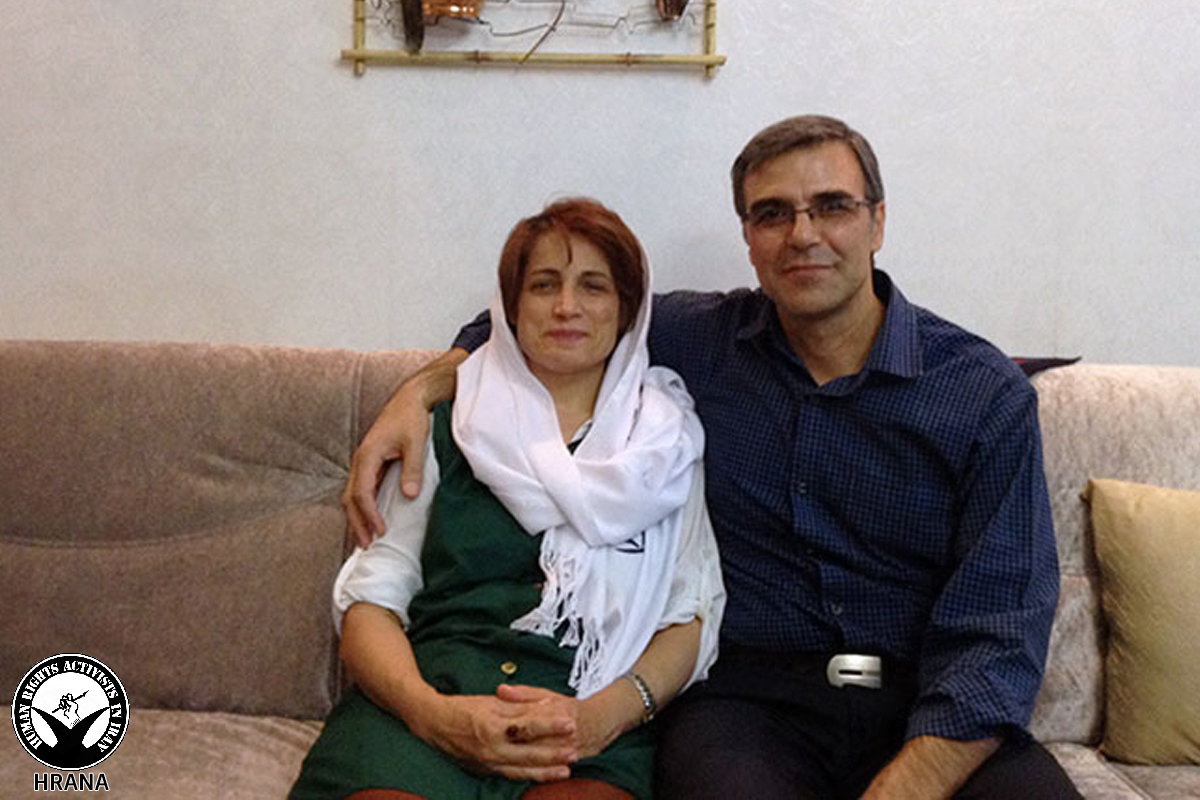
Human Rights Activists News Agency (HRANA) Reza Khandan, husband of imprisoned lawyer and activist Nasrin Sotoudeh, had continued to speak out in defense of the causes championed by his wife. Today, September 4, 2018, he joins her in Evin Prison.

“Gathering and collusion against national security,” “Propaganda against the regime,” and “Promoting the removal of Hijab in society” are the accusations leveled at Khandan, who was arrested in his home by security forces earlier today before being charged in Branch 7 of the Evin Prosecutor’s Interrogation office. His bail has been set at 7 billion rials (approximately $53,000 USD).

Khandan’s arrest follows a court summons he received by phone, and disregarded, one day prior. He published a note detailing the incident:

“Someone called me on my cell today, saying they were from the Intelligence Ministry and saying I had to go there. No person or organization, other than judicial authorities, has the right to prosecute people, and even then, it has to be in writing,” Khandan said.

Khandan said that when he pointed out that the summons was illegitimate, the caller replied that Khandan would be arrested for non-compliance.

In a brief interview, Khandan’s lawyer Mohammad Moghimi enumerated pieces of evidence that authorities are using to build their case against his client, none of which he says can lawfully substantiate the charges: Khandan’s participation in a sit-in organized by his wife in front of the Iranian Bar Association office, his interviews with foreign media outlets, and pin-back buttons that were seized at his home.

On August 18, 2018, in a raid on Khandan’s home, security forces confiscated pin-back buttons reading “I am against forced veiling,” along with letters that Sotoudeh had written to him from prison. The same day, security forces proceeded to search the homes of Mohammadreza (Davoud) Farhadpour, Jila Karamzadeh Makvandi, and Khandan’s sister, whose name has yet to be confirmed by HRANA.

The day before Khandan’s arrest, the Ministry of Intelligence brought in Farhadpour and Makvandi for interrogation. They were subsequently transferred to Evin Court and charged in Branch 7 of the Prosecutor’s Office.

Farhadpour published a note confirming the news of his arrest and added that he crossed paths with civil rights activist Farhad Meysami while walking the corridors of Evin Court. Meysami was previously arrested in his home library on July 31, 2018, and has been on hunger strike since August 1st.

Death Row Prisoners transferred to Solitary Confinement in Preparation for Execution

Human Rights Activist News Agency (HRANA) – At least ten prisoners on death row in Rajai Shar (aka Gohardasht) Prison, in the city of Karaj (west of Tehran), have been transferred to solitary confinement in preparation for their execution. Their families have been reportedly granted a final visit.

Most of the prisoners were sentenced to death on murder charges. Barring an official *pardon from the families of the victims, officials will proceed with their executions.

As of the date of this report, HRANA was able to confirm the identity of one of these prisoners, Shahab Taghizadeh. The remaining prisoners’ names are still being confirmed.

According to Amnesty International’s annual report, Iran has the highest rate of executions per capita in the world.

The HRANA Statistics Center reported that between March 21, 2017, and March 18, 2018, in Iran, at least 322 persons were executed and 236 were sentenced to death. Among those executed, there were four juvenile offenders—under 18 years of age at the time of the offense—and 23 executions carried out in public. Moreover, more than sixty percent of executions have not been publicized, and are considered “secret” executions.

* In the Islamic penal code, families of murder victims have the option of Qesas (an-eye-for-an-eye), the receipt of blood money in return for sparing the life of the accused.

Subscribe to Our Newsletter

Now is definitely not the time to stop reading!

Charges Rack Up Against Mohammad Mahdavifar

Human Rights Activists News Agency (HRANA) – A four-year succession of court cases against civil rights activist Mohammad Mahdavifar continued on Sunday, September 2nd in Branch 1 of the Revolutionary Court of the defendant’s home city Aran va Bidgol (Isfahan Province), this time on charges of “Insulting the Iranian Leadership,” “Insulting the Founder of the Islamic Republic, Ayatollah Khomeini,” and “Propaganda Against the Regime.”

Present were presiding Judge Mousavi and Mahdavifar’s attorney Mohammad Najafi, who told a HRANA reporter: “The court convicted him using letters he addressed on his Telegram channel to Iran’s supreme leader Ayatollah Khamenei, as well as investigative reports on him from Kashan’s Intelligence Office and the Basij [a volunteer branch of the Islamic Revolutionary Guard Corps]. The court should reach a verdict in the coming days.”

Currently serving a two-year sentence in Isfahan Central Prison, Mahdavifar’s civic activities have thickened his rap sheet with Iranian authorities in recent years. He was arrested by security forces in Mashhad (Khorasan Razavi Province) on January 14, 2018 and remained detained until March, when the Criminal Court of Aran va Bidgol issued a sentence: two years’ imprisonment and an approximately $400 USD (40 million IRR) fine, for charges of “Publishing Misinformation with the Aim of Disturbing Public Opinion” and “Contact with Foreign Governments.” This verdict was upheld in Branch 16 of the Isfahan Court of Appeals. Later, on July 29, 2018, he was sentenced to another eight months in prison for “Aiding and Abetting in Spreading Misinformation” by Branch 101 of Criminal Court 2 of his local Judiciary.

Mahdavifar’s history with Iranian authorities goes back to 2014 when he was interrogated in Branch 2 of Aran va Bidgol Court for composing a politically-critical poem called “Alphabet” and reading it at the literary forums of Kashan. In 2015, he was sentenced to one and a half years’ imprisonment in Branch 105 of Criminal Court 2 on a charge of “Spreading Misinformation.” Branch 23 of the Appeals Court of Isfahan Province, presided by Hamid Reza Amani, reduced this sentence from 18 months to 10 months and an (approximately) $300 USD (3 million IRR) fine, by modifying the charge of “Spreading Misinformation” to “Propaganda Against the Regime.” Intelligence Forces would later arrest Mahdavifar in his home on September 19, 2016, and transfer him to solitary confinement in Isfahan prison, which is under the control of the Ministry of Intelligence. He spent 45 days there before being released.

A source close to Mahdavifar’s family previously told HRANA that Mohammad “is suffering from respiratory problems as a result of his exposure to chemical weapons during the Iran – Iraq war, yet is housed in Isfahan Central Prison’s general ward alongside people convicted of drug offenses.” While Iranian prison code stipulates that prisoners with certain religious beliefs and criminal records be kept apart for safety reasons, reports suggest that authorities often skirt this rule.

The source close to Mahdavifar’s family decried the unsuitable sanitary conditions of Ward 3, where Mohammad is currently being held. “Most inmates [there] smoke cigarettes and use drugs. He repeatedly requested to be transferred to another ward, but authorities haven’t followed up.”

Appealing to “National Solidarity,” Hossein-Panahi’s Lawyers Plead for his Execution to be Stayed

Human Rights Activists News Agency (HRANA) – The legal team of Ramin Hossein-Panahi, a political prisoner on death row, wrote a letter to the head of the Iranian judiciary asking that their client’s execution be stayed, arguing that a retrial would instill a greater sense of national security in Iran.
The execution of Hossein-Panahi will lead to “hatred and division,” the lawyers said, while a gesture of mercy could unite the nation.
The lawyers sent a copy of this letter to HRANA. Below is the English translation of the letter:
Ayatollah Amoli Larijani
Exalted head of the Judiciary of the Islamic Republic of Iran,
Pursuant to articles 3, 8, 10, 22, 34, 35, 37, 38 and 156, we would like to address your Excellency.
The Judiciary is intended to be a haven for the oppressed; this notion of protection is the foundation of all judicial sentences and decisions. Naturally, the ultimate goal of the judicial process should be the same.
Islam’s judicial approach obeys the same concept. The principle of justice requires patience– especially in matters where the Islamic government is the wronged party. In the enlightened law of Islam, especially during the time of Ali [the First Shiite Imam], patience was paramount in dealing with those accused of Baqi [literally ‘violation,’ used to denote participation in armed uprising], and not a single soul faced with such charges was ever put to death.
Now that we find ourselves in an era of stability for the Islamic Revolution, we anticipate those charged with Baqi today will be met with the same patience that was practiced during Ali’s governance. Our client, a 23-year-old man named Ramin Hossein-Panahi, unwillingly became involved in some questionable matters. He was passing through the country only to meet with his parents — his intentions were limited to the carrying out of family affairs — yet Branch One of the Islamic Revolutionary Court in Sanandaj convicted him of Baqi and sentenced him to death. The case evidence reveals this sentence, by law, to be unfounded. In this wide sea of our Islamic compassion, and by the insightful laws of the Islamic Republic, his sentence must be nullified.
It is also the case that the country and the region face threats to their stability; and that inspiring solidarity among all Iranian peoples is an urgent necessity; and that the statements of Ayatollah Khamenei, who urged us to strive for a national unity, all guide your excellency to put a stop to the execution of Ramin Hossein-Panahi and to order a retrial of his case. There is no doubt that the judicious wisdom of your excellency’s choice to stop this execution will go down in history, bring honor to your name, and contribute significantly to fostering security through national harmony, cooperation, and solidarity. Alternatively, the execution of this young man will breed hatred, division, and mistrust, repeating a tired protocol of capital punishment which has failed to see us through our problems and hurdles.
Islamic Iran needs compassion and unity. If your Excellency orders to stop this execution and give our client a retrial, those goals will have been served.
Once more, with respect,
Maziar Tatayi, Hossein Ahmadiniaz, Osman Mozayan.
****
HRANA has published extensively on Hossein-Panahi’s case.
In a video posted online about 10 days ago, Hossein-Panahi refuted the accusations brought against him by the Iranian security apparatus.

Teacher Mohammad Habibi Transferred to Evin Prison

Human Rights Activists News Agency (HRANA) – Amid hopes that ailing prisoner Mohammad Habibi would be released for medical treatment, he was instead transferred from the Great Tehran Penitentiary to the Quarantine Ward of Evin Prison on Monday, September 3, 2018.

Despite suffering from a kidney condition, the union activist and member of the board of directors of the Teachers’ Union Association of the Province of Tehran was previously denied care on a prior release to the hospital.

A source close to Habibi’s family confirmed news of the Evin transfer to HRANA, adding that Habibi had updated his family on the phone and told them of a pending transfer from the Quarantine Ward to the General Ward, scheduled for Tuesday.

The source detailed Habibi’s difficulties thus far in getting adequate care. “According to a letter from a supervisory court official dated July 8 of this year, Habibi was to receive urgent medical attention. However, for unknown reasons, this letter was never delivered to Habibi. He only saw the letter ten days ago while seeking care at the internal clinic of Great Tehran Penitentiary, at which point he discussed it with officials and was transferred to Imam Khomeini Hospital.

In absence of a practicing nephrologist at Imam Khomeini Hospital, Habibi was examined by a general practitioner who recommended immediate admission for specialized testing and possible surgery. Though eight days have passed since this exam, authorities have yet to follow up on the recommendation, as his family grows ever more concerned about his health.

On August 4, 2018, Mohammad Habibi’s attorney Amir Raeisiyan reported that his client was sentenced to ten and a half years’ imprisonment, despite the fact that the maximum cumulative prison sentence for all of Habibi’s charges would be seven and a half years. At that time Habibi was subjected to the additional penalties of 74 lashings, a two-year ban on civic activities, and a two-year travel ban.

Prior to this, in separate open letters and press releases, the International Trade Union Confederation, the Council for Coordination of Teaching Syndicates, 6,500 teachers and civil society activists, and over 100 educators — all alumni of Shahid Rajai University– demanded his immediate release, and that attention is paid to his medical condition.

Habibi was previously arrested at his place of employment on March 3, 2018, and jailed for 44 days. On April 15, 2018, he was released on a bail of approximately $50,000 USD.

On May 10, 2018, the Council for Coordination of Teaching Syndicates urged teachers, be they retired or employed, to assemble in protest across the country. In Tehran, several of those who responded to the call were arrested and transferred to Evin Prison; all but Habibi were released on bail three days later.

Mohammad Habibi has remained in custody since, and according to a letter from his HR office, is no longer receiving his salary.

Yamani Followers Detained in Holy City of Qom

Human Rights Activists News Agency (HRANA) – As part of a crackdown on an alternative religious movement called “Yamani”, at least five more of its members were recently arrested in Qom and taken to an undisclosed location.

Ali Akbar Jokar, a Yamani devotee, was arrested on August 24th; one day later, at least four more members of the group were detained. A source close to the group disclosed the identities of two of these individuals to HRANA, Abbas Fathieh and Sadiq Doustkaam. The remaining two have yet to be identified. Jokar, Fathieh, and Doustkaam were reportedly detained by brute force and physically assaulted while in Qom, central Iran, home to a prominent Shiite Seminary and several holy shrines.

As of the date of this report, authorities have not responded to inquiries from the detainee’s families with their whereabouts.

HRANA previously reported on crackdowns on Yamani supporters in Torbat-e Heydarieh.

Believers of the Yamani faith revolve around their leader, Ahmad al-Hasan Yamani, who claims to be in contact with the Shiites’ 12th Imam. The 12th Imam, known as Mehdi or Mahdi, is an eschatological figure who Shiites believe to be alive, hidden, and biding time to return and restore Islamic utopia. In recent years, many individuals claiming to be in contact with Mehdi were met with intolerance by Iranian authorities. Such claims run counter to the ideology of the Iranian authorities and have provoked the security apparatus to appoint divisions that specialize in quelling belief groups like the Yamanis.

Appeals Court Convenes for Seven Azerbaijani Activists

Human Rights Activists News Agency (HRANA) – On Saturday, September 1, 2018, Branch 3 of the Appeals Court of the East Azerbaijan province convened to review the cases of seven Azerbaijani activists. Judge Alizadeh will preside over the appeals process.
Four of the activists – Akbar Aboulzadeh, Hamid Allahverdipour, Morteza Shokri, and Esrafil Fathollahzadeh – were present during the proceedings. The three others who were convicted – Saleh Molla Abbasi, Soleiman Kazemi, and Ebrahim Noori (detained in Tehran’s Evin Prison) – did not attend the court session.
The activists were arrested for their participation in public protests against the state-sponsored television series Fitileh in November 2015. Parts of the TV program were believed to contain material portraying Iran’s Azerbaijani ethnic minority in a derogatory light. In October 2017 they were sentenced to prison time in a four-page verdict issued by Branch 1 of the Revolutionary Court of Ahar (a city in northwestern Iran), on charges of “Assembly and collusion against national security through propagating against the regime”.
Saleh Molla Abbasi, Akbar Aboulzadeh, and Ebrahim Noori were each sentenced to ten months imprisonment, while Esrafil Fathollahzadeh, Hamid Allahverdipour, Morteza Shokri, and Soleiman Kazemi, were each sentenced to seven months imprisonment.
The Fitileh protests reportedly involved around 25 participants. While the rest of the participants were eventually acquitted, these seven were convicted and now await the result of their appeals.