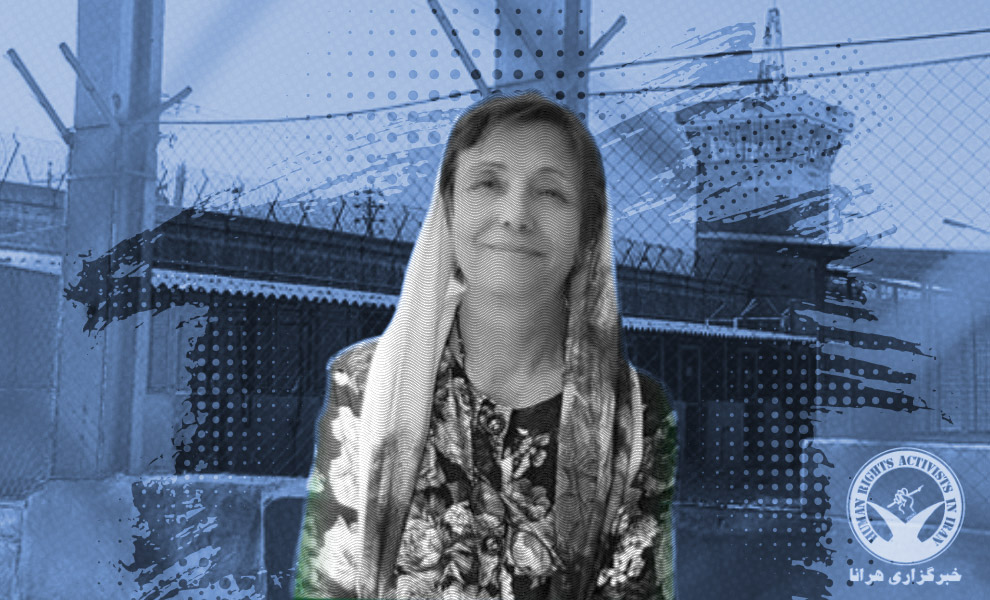
Shakila Monfared Denied Access to Medical Treatment in Qarchak Prison

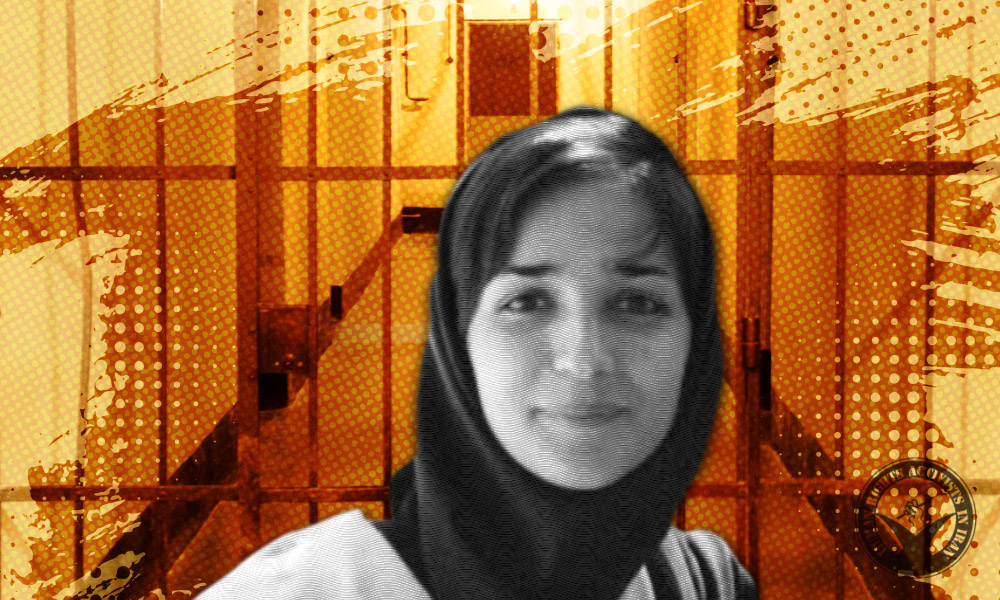
Political prisoner Shakila Monfared, who suffers from gastrointestinal disease and severe stomach pain, has been denied access to adequate medical treatment in Qarchak Prison in Varamin City.

According to HRANA, the news agency of Human Rights Activists, prison officials have barred her dispatch to a hospital outside the prison as well as leave on furlough for medical treatment.

“For the fifth time, her request for furlough has been rejected,” an informed source told HRANA. “They mentioned a report from the interrogator and judiciary officers on her interview with one of the media as the reason for this rejection. This claim stands at odd with the fact that she never had any interview and the interrogator refuses to provide any proof regarding this claim.”

On August 31, 2020, security forces arrested Monfared while she was leaving her home. They transferred her to one of the detention centers at disposal of IRGC in Tehran. Reportedly, they did not have a warrant for this arrest.

On September 9, of last year she was relocated to the quarantine section of the women ward of Evin Prison. On September 14, she was released on a bail of 400 million tomans until the end of legal proceedings.

In January of this year, the joint court trial of Shakila Monfared, Arsham Rezaei, and Mohammad Abolhassani was held in Branch 26 of the Revolutionary Court of Tehran, presided over by Judge Iman Afshari. 27-year-old Monfared was sentenced to 6 years in prison and 4 months of probation work in the Agricultural Jihad on charges of “propaganda activities against the system” and “insulting the sanctities of Islam”.

Monfared was granted furlough on August 23 of this year and returned to jail on September 7.

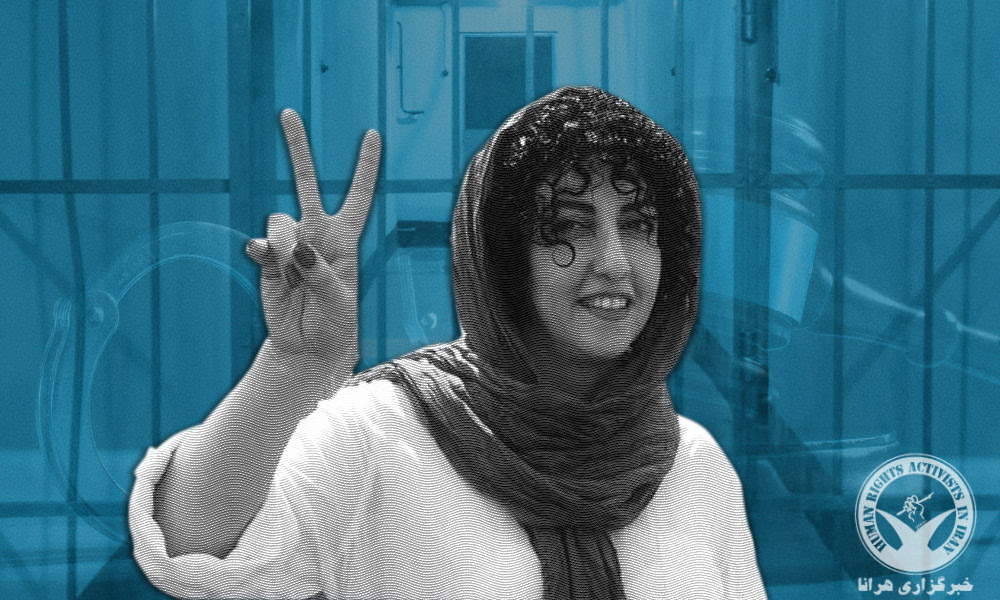
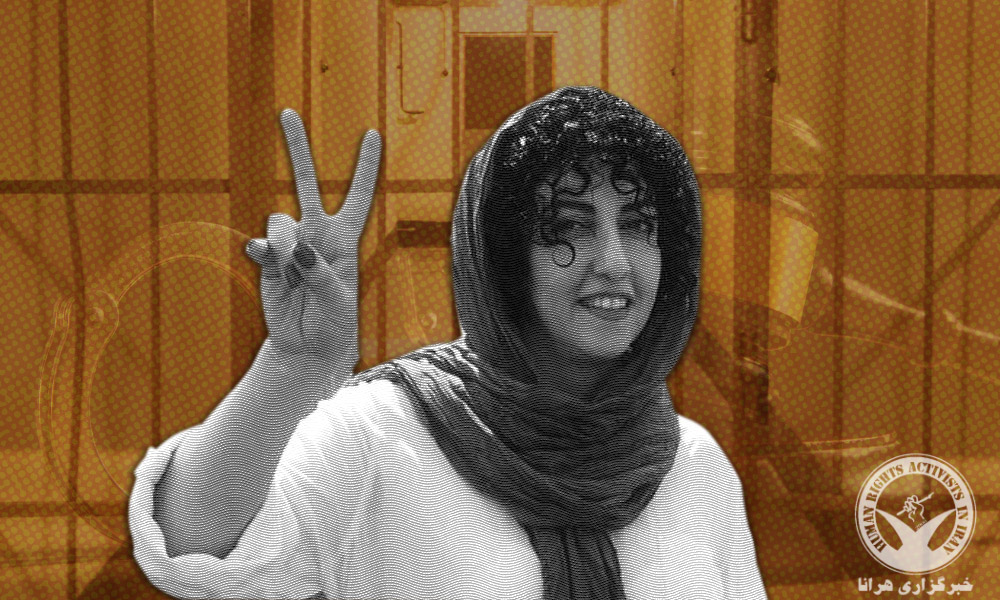
Narges Mohammadi Still in Solitary Confinement One Week After Arrest

Civil activist and spokesperson of the Defenders of Human Rights Center Narges Mohammadi is still in detention in Ward 209 of Evin Prison a week after her arrest.

According to HRANA, the news agency of Human Rights Activists, Mohammadi was arrested on November 16, during a ceremony honoring Ebrahim Ketabdar who was killed by security forces in Karaj during the November 2019 protests.

According to her husband, Taghi Rahmani, yesterday she was sent to Moghaddas Court to be notified of the charges against her, and then sent back to  solitary confinement.

This year, Branch 1177 of the Criminal Court in the Ghods Judicial Complex in Tehran sentenced Narges Mohammadi to 30 months in prison and 80 lashes, as well as fines. She had been charged with “propaganda against the regime through the issuance of a statement against the death penalty”, “sit-down strike at prison office”, “property destruction by breaking glass” and “libel and assault”.

According to a report published by HRANA, in an open statement, Narges Mohammadi stated of these charges that she will not, “under any circumstances”, attend any court hearing, and will refuse to accept any verdict from the judiciary courts.

From May 5, 2015, until October of last year, Narges Mohammadi was imprisoned.

In December 2019, Mohammadi and seven other political prisoners in the women’s ward of Evin Prison announced in a letter that they would go on a sit-down strike in support of bereaved families who lost loved ones in November 2019 national protests. Evin Prison officials threatened to deport her and others who participated in the strike to prisons known for their harsher conditions. Subsequently, she was punitively transferred from Evin Prison to Zanjan Prison in December 2019.

Based on Article 134 of the Islamic Penal Code and the charges against her, the severest punishment of 10 years was enforceable, but after five years and six months in prison, Narges Mohammadi was finally released from Zanjan Prison. Mohammadi has since been denied a passport and barred from leaving the country to visit her husband and children even though her previous conviction did not mention a supplementary ban on international travel.


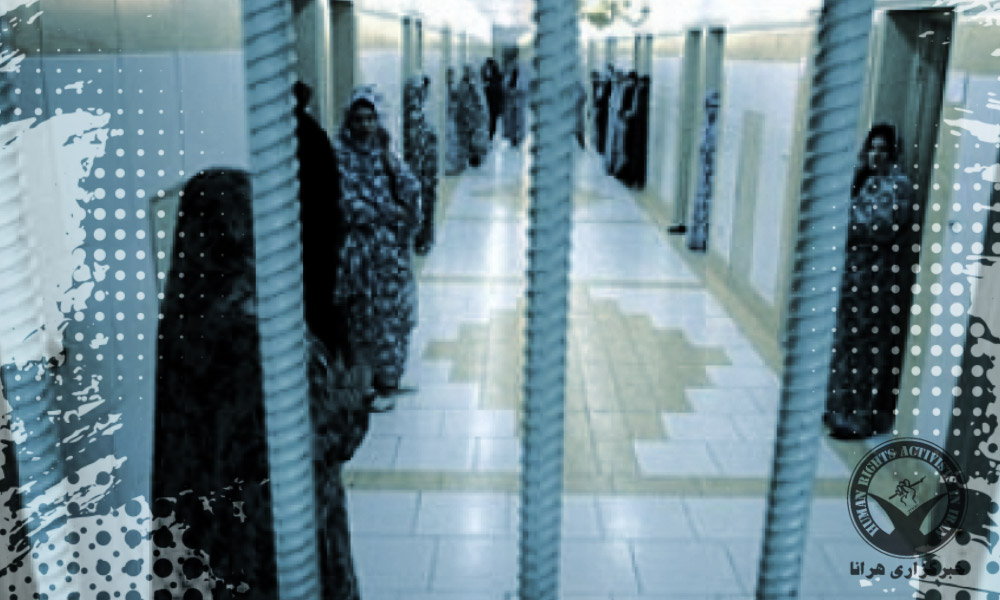
Inmates in Women’s Ward of Kachooie Prison Face Poor Conditions

Inmates in the Women’s Ward of Kachooie Prison in Karaj are being held in poor conditions, a new report reflects.

According to HRANA, the news agency of Human Rights Activists, the Women’s Ward is composed of one quarantine section, four salons, one corridor and one kitchen, and houses between 50 and 60 inmates.

Due to an inadequate heating system to warm the wards on increasingly-cold days, many inmates of this ward have gotten sick. Moreover, these inmates have to cope with many additional issues such as a shut-down kindergarten, shortages of bathroom and sanitary services, and a poorly-equipped food store.

This ward has only three toilets and one bathroom for the over 50 inmates. The shared kitchen is small and unsuitable. The food store fails to supply any foods and other requirements.

Some of the inmates are living with their little kids. For unknown reasons, the kindergarten of this ward has been closed.

Despite the inmates’ repeated complaints and demands that the heating system be fixed, the most urgent of these issues as the temperature drops, prison officials have not yet addressed the issue.

Narges Mohammadi Arrested by Security Forces in Karaj During Ceremony Honoring Ebrahim Ketabdar

Prominent civil activist and spokesperson of the Defenders of Human Rights Center Narges Mohammadi was arrested earlier this Tuesday during a ceremony honoring Ebrahim Ketabdar, who was killed by security forces in Karaj during the November 2019 protests.

According to HRANA, the news agency of Human Rights Activists, a gathering of the victim’s family and some civil activists at Ebrahim Ketabdar’s burial place in Karaj city turned violent after the interference of security agents, and Mohammadi was subsequently arrested.

This year, Branch 1177 of the Criminal Court in the Ghods Judicial Complex in Tehran sentenced Narges Mohammadi to 30 months in prison and 80 lashes, as well as fines. She had been charged with “propaganda against the regime through the issuance of a statement against the death penalty”, “sit-down strike at prison office”, “property destruction by breaking glass” and “libel and assault”.

According to a report published by HRANA, in an open statement, Narges Mohammadi stated of these charges that she will not, “under any circumstances”, attend any court hearing, and will refuse to accept any verdict from the judiciary courts.

From May 5, 2015, until October of last year, Narges Mohammadi was imprisoned.

In December 2019, Mohammadi and seven other political prisoners in the women’s ward of Evin Prison announced in a letter that they would go on a sit-down strike in support of bereaved families who lost loved ones in November 2019 national protests. Evin Prison officials threatened to deport her and others who participated in the strike to prisons known for their harsher conditions. Subsequently, she was punitively transferred from Evin Prison to Zanjan Prison in December 2019.

Based on Article 134 of the Islamic Penal Code and the charges against her, a severest punishment of 10 years was enforceable, but after five years and six months in prison, Narges Mohammadi was finally released from Zanjan Prison. Mohammadi has since been denied a passport and barred from leaving the country to visit her husband and children even though her previous conviction did not mention a supplementary ban on international travel.


Civil Activist and Retired Educator Nosrat Beheshti Sentenced to Five Years in Prison

Civil activist and retired educator Nosrat Beheshti, a resident of Mashhad, was sentenced to 5 years imprisonment by the Mashhad Revolutionary Court.

According to HRANA, the news agency of Human Rights Activists, she has been in detention since August 4 of this year.

Branch 4 of the Mashhad Revolutionary Court, headed by Judge Mansouri, sentenced Nosrat Beheshti to five years in prison on charges such as “propaganda against the regime” and “acting against national security.”

On October 24, Ms. Beheshti who suffers from kidney pain, went on hunger strike in protest against prison officials’ refusal to dispatch her to a hospital outside the prison. Four days later, after being dispatched to a hospital, she ended her hunger strike.

Beheshti was arrested once previously, on December 24, 2019, by intelligence agents at her house in Mashhad.

Subscribe to Our Newsletter

Now is definitely not the time to stop reading!

Aliyeh Motallebzadeh’s Request for Release on Probation Rejected

Aliyeh Motallebzadeh’s request for release on probation was recently rejected in a written notification by the Tehran prosecutor’s office.

According to HRANA, the news agency of Human Rights Activists, the photographer and women’s rights activist is currently enduring a two-year sentence in Evin Prison in Tehran.

On November 26, 2016, Motallebzadeh was summoned to the office of the ministry of intelligence and subsequently was detained in Ward 209 of Evin Prison. On December 19, 2016, she was released on bail of 300 million tomans.

In 2017, the Revolutionary Court of Tehran sentenced Motallebzadeh to three years in prison on charges of  “assembly and collusion to act against national security” and “propaganda against the regime”.

This verdict was upheld by Branch 36 of the court of Appeals in Tehran. In the issued lawsuit, “launching and participating in women empowerment workshop in abroad” had been invoked as an example of these charges. Grounded on Article 134 of the Islamic Penal Code, a severest punishment of two years was enforceable for her.

On October 11, 2020, Motallebzadeh arrived at Evin prison to begin her sentence, where she has been held since.

On April 26, 2021, she was punitively deprived of making phone calls after her complaints about the practice of holding detainees in solitary confinements in the prosecutor’s office of this prison.

On July 19, 2021, after contracting COVID, she was granted furlough and went on leave until August 30.

Aliyeh Motallebzadeh is a photographer, women rights activist and a member of the One Million Signatures Campaign for Gender Equality as well as a campaign to protect acid attack victims.


Rahil Mousavi Arrested By Security Forces in Khorramshahr City

On November 9, photographer and media activist Rahil Mousavi was arrested by security forces in Khorramshahr City.

According to HRANA, the news agency of Human Rights Activists, Mousavi was transferred to an unidentified location following the arrest.

Ms. Mousavi had previously faced other arrests. On December 8, 2016, intelligence agents detained her for a while due to taking photos of a protest against Karun water transfer.

The reasons for Mousavi’s arrest, the charges against her, and her whereabouts are still unknown as of this writing.

Female Worker Dead After Veil Caught in Machinery at Factory

On the evening of Saturday, November 5, a 21-year-old worker lost her life in a workplace accident in a factory after her veil was caught in machinery.

According to HRANA, the news agency of Human Rights Activists, quoting ILNA, Marzieh Taherian was killed in the spinning factory Nasaji Kavir Semnan, located in the industrial zone on the east of Semnan City

As her coworkers stated, the veil, which female workers are forced to wear despite being unsuitable for work conditions and safety issues, became caught in a ring spinning machine, and pulled her head inside the machine.

This horrific work accident has raised again many criticisms about strict forced veil rules, which have long caused discomfort and hazards for women in the workplace.

Baha’i Citizen Manijeh Azamian’s One Year Sentence Upheld by Court of Appeals

The court of appeals in Mazandaran Province recently upheld Baha’i citizen Manijeh Azamian’s one year prison sentence.

According to HRANA, the news agency of Human Rights Activists, 52-year-old Azamian had previously been sentenced on a charge of “propaganda against the regime” by Branch 1 of the Revolutionary Court of Babol.

On April 10, security forces searched Azamian’s house and confiscated several of her personal belonging such as her cell phone, PC hard drive, flash drives, and books about the Baha’i faith. They summoned her to appear at the Ministry of Intelligence office on the same day afternoon.

An informed source told HRANA, “During the interrogation, they called several phone numbers from the list on her cell phone and at least three of her non-Baha’i friends or neighbors were summoned for interrogation.”

Three days later, security forces arrested her and transferred her to Babol Prison. The next day, she was released on bail of 50 million tomans.

According to unofficial sources, it is estimated that more than 300,000 Baha’is live in Iran, but the Iranian constitution recognizes only Islam, Christianity, Judaism, and Zoroastrianism. Because their faith is not considered legitimate by authorities, the rights of Baha’is in Iran have been systematically violated for years.

This deprivation of the freedom to practice their religion is a breach of Article 18 of the Universal Declaration of Human Rights, and Article 18 of the International Covenant on Civil and Political Rights. The United Nations covenant holds that every person has the right to freedom of religion, freedom of converting religion, as well as freedom of expression, individually or collectively; openly or secretly.


Susan Rezaei-Poor Executed in Central Prison of Qazvin

On Wednesday, October 27, a female inmate who had been convicted of murdering her husband was executed in the Central Prison of Qazvin.

According to HRANA, the news agency of Human Rights Activists, quoting Iran Human Rights, Susan Rezaei-Poor, who had been previously sentenced to death, was executed in the Central Prison of Qazvin after spending six years in prison.

“Susan was forced by her family to marry her cousin without her consent,” an informed source stated. “In her confession, she said that her husband used to get drunk from the afternoon until late at night and beat her every day. Completely fed up with his behavior, she ultimately killed him.”

The most recent report of the Statistics and Publication Center of the Human Rights Activists in Iran (HRA) states that between October 8 of 2020 and October 9 of 2021, at least 266 citizens, including three juvenile offenders, were executed and 90 citizens were sentenced to death.

As the report points out, Iran’s judicial authorities do not publicly announce over 82% of executions. These unreported executions are known as “secret executions” by human rights organizations.

Rezaei-Poor’s execution has not been reported by official sources in Iran as of this writing.