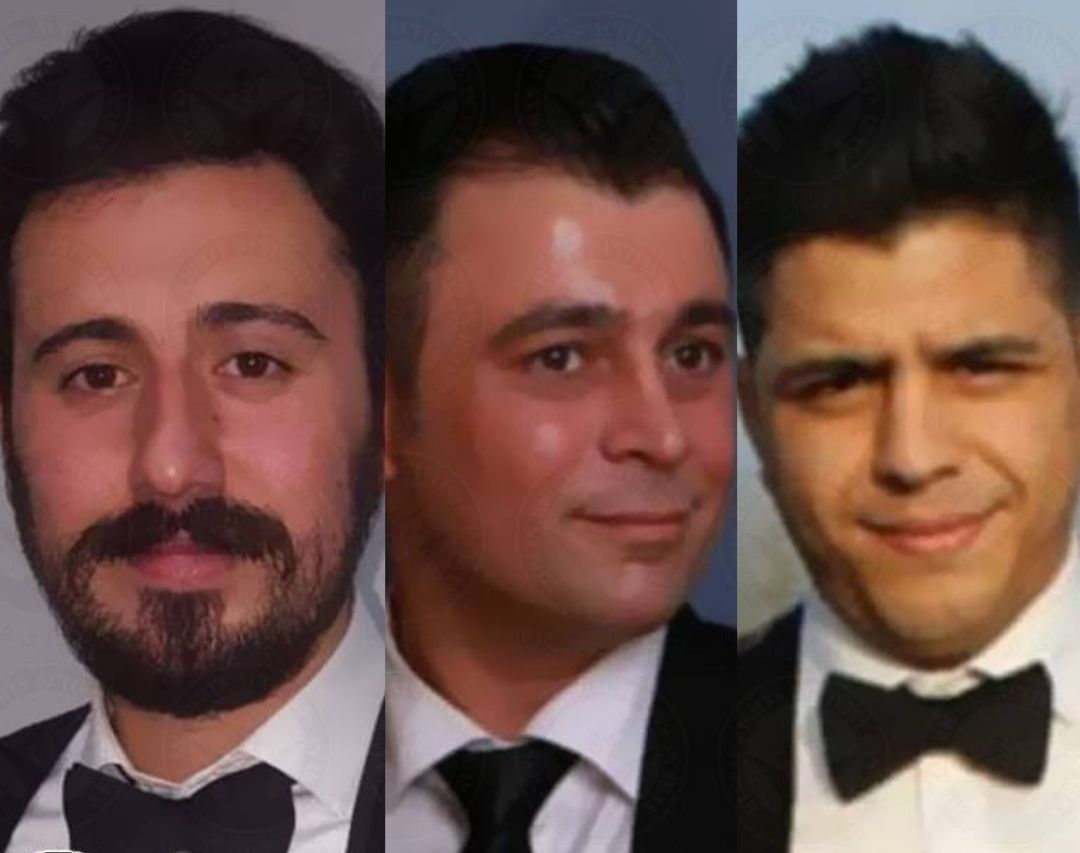
Citizen Detained by IRGC Intelligence Agents in Mazandaran

According to HRANA, the news agency of Human Rights Activists, quoting Mehr News Agency, a citizen was arrested by IRGC intelligence agents in Mazandaran province for what they described as “links to a monarchist group based abroad”.

The report says: “This operation revealed that this trained person and his associates were trying to recruit members in cyberspace and real-world to increase people’s dissatisfaction and to reduce the maximum turnout in the presidential election, and, like in 2009, inflame the political atmosphere.”

The report does not mention the identity of the detained citizen.

Parliament Approves General Plan to Reward Individuals Sanctioned by “Hostile” Countries and Increase Punishment for Espionage

The general plan to increase the punishment of espionage was approved by Parliament. The plan will also extend  benefits to individuals sanctioned by countries deemed “hostile” by a designated committee.

According to HRANA, the news agency of Human Rights Activists, quoting the Islamic Consultative Assembly News Agency (ICANA), under the proposed plan, those who spy for “hostile” countries will be considered “corruptors on earth” and sentenced to execution.

The determination of whether the spying country is hostile or not will fall under the responsibility of a committee consisting of representatives of the IRGC Intelligence Organization, the NAJA Intelligence Organization, and the Ministry of Intelligence, headed by the representative of the General Staff of the Armed Forces.

A member of the Parliamentary Judiciary Commission has stated that those who are on the list of sanctions of countries deemed hostile will be considered “self sacrificers” (a citizen classification most commonly reserved for veterans) and enjoy the attached rights and privileges.

Labor Activist Maziar Seyednejad Transferred to IRGC Detention Center in Evin Prison

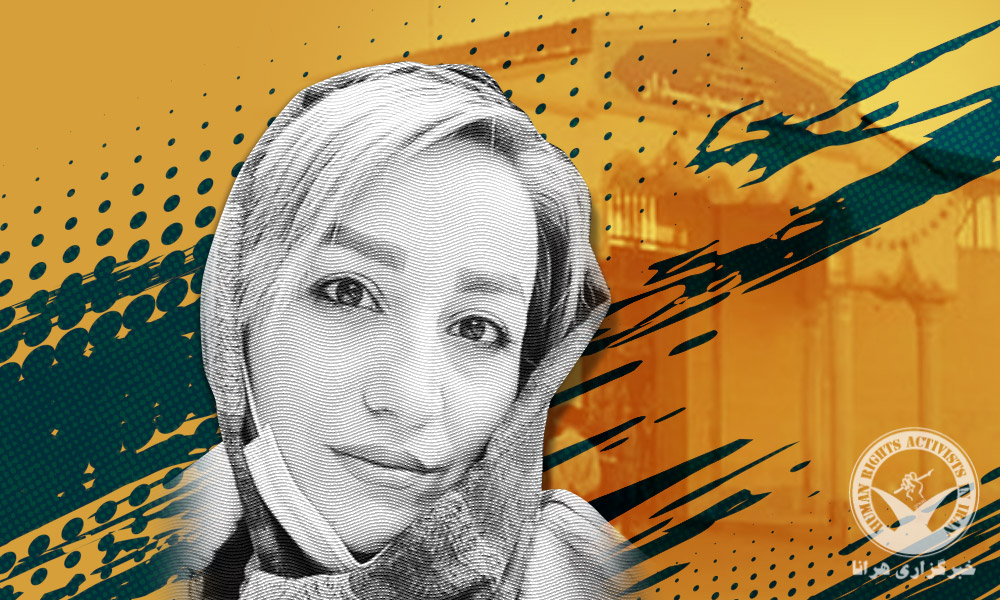
On Monday, June 7, labor activist Maziar Seyednejad was arrested by security forces at his private home in Tehran.

According to HRANA, the news agency of Human Rights Activists, Seyednejad is currently being held in solitary confinement in the Ministry of Intelligence Detention Center in Ward 209 of Evin Prison.

Recently, the labor activist’s 3 year sentence was confirmed by the Court of Appeals in the Khuzestan Province.

Seyednejad has not, as of yet, been allowed access to a lawyer.

HRANA Recap: Recent Hunger Strikes in Iranian Prisons

Khalid Pirzadeh on a hunger strike in the Greater Tehran Prison


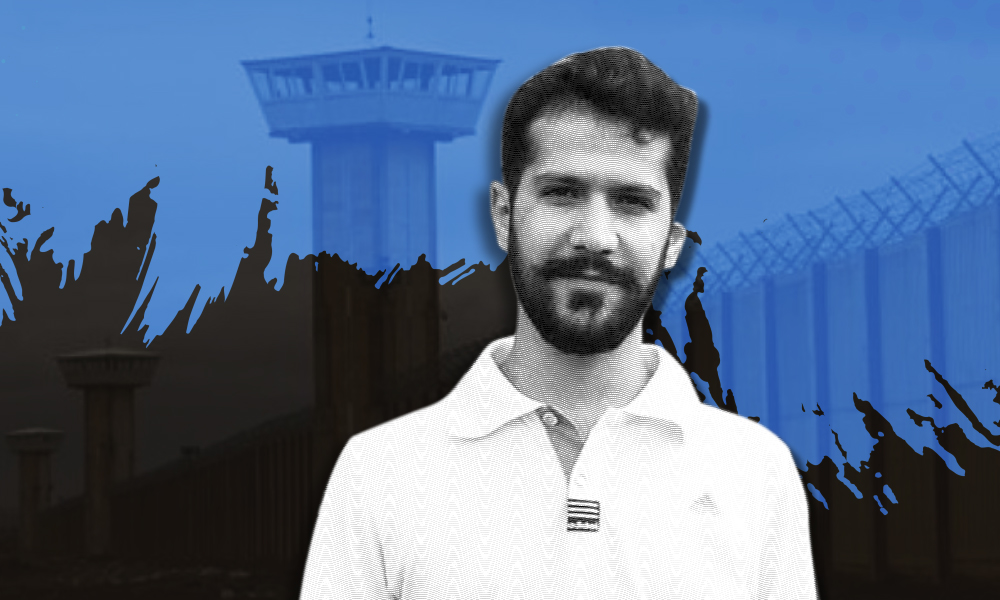
On May 31, political prisoner Khaled Pirzadeh went on a hunger strike for the second time this year in the Greater Tehran Prison.

According to HRANA, the news agency of Human Rights Activists, Pirzadeh has been denied visitations and leave in the 25 months since his imprisonment.

Earlier this year, Pirzadeh went on a hunger strike following the failure of authorities to fulfill their promise to agree to parole. Pirzadeh ended his hunger strike in March after authorities promised that his demands would be met.

In May of 2019, the political prisoner was sentenced by Branch 28 of the Revolutionary Court of Tehran, headed by Judge Mohammad Moghiseh, to 5 years in prison, and an additional 2 years for “insulting the leadership”.  According to Article 134 of the Islamic Penal Code, of the 7 total years, 5 can be enforced on Pirzadeh on the charge of “conspiracy and collusion”.

Khaled Pirzadeh underwent foot surgery in August 2020. His legs and spine were severely damaged during detention and required further surgery and physiotherapy. He was also barred from being hospitalized in December 2020 despite having a heart problem.


Iraj Hatami on a hunger strike in protest of continued imprisonment in Rajai Shahr Prison 


On May 30, Iraj Hatami, currently being held in Rajai Shahr Prison in Karaj, went on a hunger strike to protest his continued imprisonment and the fact that previous time served in detention has not been counted towards his 10 year sentence.

According to HRANA, the news agency of Human Rights Activists,  Hatami was arrested by security forces in October 2010 and sentenced to 10 years in prison on charges of “collaborating with a hostile US government”.

Before his arrest, Hatami worked for the Ministry of Defense and spent two years and three months in military detention. Had this time been counted by prison officials, Hatami’s 10 year sentence would have ended last year. Mr. Hatami suffers from diabetes and high blood pressure.


Farzad Samani on a hunger strike in the IRGC Intelligence Detention Center in Urmia


Farzad Samani, a student detained in one of the IRGC intelligence detention centers in Urmia, went on a hunger strike on May 30.

According to HRANA, the news agency of Human Rights Activists, quoting Kurdpa, Samani has been on a hunger strike to protest pressure from the IRGC’s intelligence services and the extension of his and Sakar Eini’s imprisonment for the sixth consecutive time.

The undergraduate student was arrested in his dormitory at Kharazmi University in Karaj in December 2020, and was later transferred to the IRGC Intelligence Detention Center in Urmia.

So far, no information is available on the charges against Samani and Eini.


Hossein Hashemi on a hunger strike in Tehran Prison after his punitive transfer


On Tuesday, June 1, political prisoner Hossein Hashemi went on a hunger strike in the Greater Tehran Prison.

According to HRANA, the news agency of Human Rights Activists,  Hashemi is one of the detainees from the November 2019 nationwide protests.

Per the report, Hashemi was taken from the ward under the pretext of going to interrogation, but was then transferred to the 4th section of the Greater Tehran Prison, which holds prisoners accused of violent crimes.

It is said that Mr. Hashemi’s transfer took place following a verbal argument with Eliassi, the supervising prosecutor of the Evin court. Eliassi had previously threatened to move Hussein Hashemi to a place where he would regret his actions.


Abolfazl Ghasali went on a hunger strike in Evin prison in Tehran

Tehran resident Abolfazl Ghasali, currently serving out a sentence in Evin Prison, has been on a hunger strike since May 27.

According to HRANA, the news agency of Human Rights Activists, Ghasali demands to be granted leave of absence during the COVID-19 outbreak, release on parole due to family’s financial problems, and a retrial.

Ghasali has had several nosebleeds since the day he started the hunger strike. The prisoner is also said to have suffered heart and lung problems during his detention due to poor nutrition and poor prison conditions. He also went on a hunger strike in December last year to protest the failure to address his needs.

In 2018, Branch 28 of the Revolutionary Court of Tehran, presided by Judge Mohammad Moghiseh, sentenced Ghasali to a total of 7 years in prison on charges of “Gathering and colluding and disturbing public order with the intention of committing a crime against national security”, and “insulting the Supreme Leader”.

3 years and 6 months of imprisonment are enforceable under Article 134 of the Islamic Penal Code.


Seyed Mohammad Hosseini Sentenced to 40 Years in Urmia Prison

On May 25, the Mahabad Revolutionary Court sentenced Seyed Mohammad Hosseini, a resident of Naqadeh in West Azerbaijan, to 40 years in prison.

According to HRANA, the news agency of Human Rights Activists, quoting Kurdpa, The First Branch of the Revolutionary Court of Mahabad summoned Hosseini and informed him upon arrival that he had been sentenced in absentia.

Hosseini is facing 40 years in Urmia Prison on charges of Moharebeh (rebellion, or “waging war against God” in Shariah Law) through membership in an opposition group.

In April, Hosseini’s last hearing was held in the First Branch of the Revolutionary Court of Mahabad, presided over by Judge Javad Gholami. The political prisoner also faced a hearing for Moharebeh in July 2019.

Hosseini is currently being held in Naqadeh Prison in the West Azerbaijan Province.

Subscribe to Our Newsletter

Now is definitely not the time to stop reading!

Suleiman Karimpour Sent to Mahabad Prison to Serve out 2-Year Sentence

On May 18, Soleiman Karimpour, a citizen of Mahabad in the West Azerbaijan province, was sent  to Mahabad Prison on charges of “collaborating with one of the opposition parties”.

According to HRANA, the news agency of Human Rights Activists, quoting Kurdpa,  Karimpour was sentenced by the Mahabad Revolutionary Court to two years in prison, and the confiscation of a private car. The sentence was later upheld by the Court of Appeals.

in September 2020, Suleiman Karimpour was arrested by security forces and later transferred from the IRGC Intelligence Detention Center to Mahabad Prison. He was released on bail in December 2020.

Per the report, Karimpour was denied a lawyer and family visits during his detention.


Mehran Naruyi Executed in Isfahan After IRGC Refuses to Provide Letter of Suspension to Prison Officials

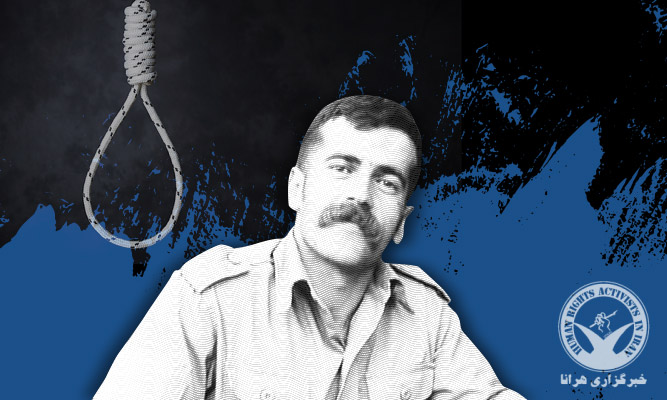
On May 16th, Mehran Naruyi was executed on drug-related charges in Dastgerd Prison in Isfahan, despite widespread calls to suspend the process until a fair trial could take place.

According to HRANA, the news agency of Human Rights Activists, quoting The Baloch Activists Campaign, on May 15th, Naruyi was transferred to solitary confinement in Dastgerd Central Prison before the execution.

Per the report, an informed source said “during the prisoner’s last meeting with his family, prison officials pointed out that they would suspend the sentence if they received a letter from the imam of Isfahan and Revolutionary Guards. However, the IRGC’s Intelligence Organization refused to provide the letter.”

On May 16, 2021, Amnesty International called for an stop to the execution of Naruyi, writing: “The Iranian authorities should grant this prisoner the right to a fair trial without resorting to the death penalty, as well as forcing confessions under torture.”

According to international organizations, considering its population, Iran ranks first in the world in the execution of its citizens. The Statistics and Publication Center of the Human Rights Activists in Iran (HRAI) reported that between January 1 and December 20 of 2020, at least 236 citizens were executed. One of these citizens was executed publicly, and two were juvenile offenders. An additional 95 citizens were sentenced to death.

According to the report, more than 72% of executions in Iran are not reported by the government or the judiciary. Human rights organizations call these “secret executions.”

Mehran Naruyi, son of Khodadad, is from Nosratabad city of Zahedan in Sistan and Baluchestan province. As of this writing, this execution has not been announced by any Iranian media or official sources.

Sistan and Baluchestan Province : Two Citizens Detained by Security Forces in the Cities of Konarak and Chabahar

On April 30, 2021, two citizens were arrested by security forces in the cities of Konarak and Chabahar and taken to an unknown location.

According to HRANA, the news agency of Human Rights Activists, quoting the campaign of Baluch activists, Molavi Yousef Abasteh, son of Yar Mohammad, was arrested by IRGC intelligence forces in his home, in the city of Konarak.

Another citizen, 19-year-old Ismail Parwan, son of Sediq and a resident of Bahu Kalat village, was also detained by Chabahar Ministry of Intelligence officials in Chabahar.

As of this writing, no information is available on the whereabouts of the detainees or the charges against them.

HRANA has identified Revolutionary Guard intelligence members, “Raouf” and “Sattar”

HRANA – Earlier this week, HRANA, the news body of Human Rights Activists in Iran (HRAI), detailed the identification of a man known by a number of names, most notably, Raouf. Raouf is a notorious security force member involved in a number of human rights violations in Iran. Operating in Ward 2A of Evin Prison, which belongs to the IRGC, Raouf is said to have participated in the interrogation and mistreatment of a large number of civil and political activists. 

Although his main place of work is believed to be in Ward 2A of Evin Prison, a number of political-civil activists or family members of prisoners have faced interrogations at the hands of Raouf at other locations, such as offices affiliated with the Revolutionary Guards in Tehran. 

He is responsible for interrogating a large number of political and civil activists, including Arash Sadeghi, Golrokh Erayi, Mahdieh Golroo, Soheil Arabi, Nastaran Naimi, and Athena Daemi. Most of these people are currently serving long prison sentences.

HRANA has spoken to a number of former political prisoners [whose names could not be mentioned for security reasons] personally interrogated by Raouf to confirm the identity and role of this security agent. Some of their statements are detailed below. 

One witness stated,  “Raouf slapped me so much during my interrogation that twice I bled after returning to my cell.” 

A former political prisoner, speaking anonymously, told HRANA, detailing his interrogation with Raouf,  “He hit me so hard that it caused one of my bones to break. He used a leather belt to beat me often for upwards of ten minutes. He did this while he verbally insulted my family and I.”

A human rights activist who served his sentence in Evin Prison told HRANA,  “He was present at all stages of my trial in the Revolutionary Court and repeatedly threatened my peers and I with new cases. He continued, “I still remember his face. I still remember how it bothered my wife…”

Mahdieh Golroo, a former student activist, confirmed Raouf’s role in interrogating her throughout her detention, posting a note on her personal page: “I have complained about his recent threats in Sweden by name, phone, and photo – to no avail.  It is my duty to expose the interrogators and those who destroy the lives of many with impunity.”

Since the original report was released, HRANA received information that Raouf is a pseudonym for the name Ali Hemmatian. We are not yet able to independently confirm and will continue to investigate further.

The below image displays Raouf sitting in the first row of Ayatollah Khamenei’s speech in 2015.

The information about Raouf drew public attention which led to additional witnesses coming forward to identify a number of other security figures within the country. Notably, these witness statements have led to the identification of an IRGC interrogator known as “Sattar.” Sattar is said to have played a role in detaining political prisoners involved in the 2019–20 Iranian protests (also known as Bloody November). 

The following image, which shows a meeting of the directors and researchers of the Islamic Revolutionary Documentation Organization with Ayatollah Khamenei on April 11, 2011, shows Sattar in color.

A group of witnesses, all of whom were detained during the November 2019 protests in Tehran, testified that after being arrested, they were taken to unknown locations where they were beaten and interrogated.

One of the victims told HRANA, “From the beginning of our detention [November 2019], we were blindfolded and then taken to an interrogation facility where we were beaten for several days.”  When asked about the man in question, the victim continued, “His colleagues called him Sattar; this name was perhaps because of the beard style he wore. However, when I saw him in those days,  he had a longer beard and shorter hair than in the 2011  picture [provided above].”

Another witness told HRANA, “While I was closing my business, located on Enghelab Street,  I was arrested by plainclothes men (November 2019). From the beginning of my arrest, I was beaten. In addition to myself, two or three other people were arrested and transported in the same vehicle, to an unknown location. After being transported, we were threatened and interrogated. The plainclothes man violently forced us to admit wrongdoing. This went on for two days before ultimately being handed over to the IRGC detention center in Evin Prison.”

A witness, detained at the same time, confirmed these witness statements and also stated, “There were a combination of forces present at the scene of the arrest that day and during the interrogation. Involved were plainclothes forces, Basij forces, and the IRGC. The person in question, Sattar, was in plain clothes, according to the case file and interrogation documents.” He continued, “When we were finally handed over to the IRGC, it was clear Sattar was affiliated with them.”

Sattar, in addition to the above-mentioned unknown places of interrogation, was also seen at the Yad Yaran Basij Resistance Base located on Argentina Street in Tehran.

Following HRANAs request for information, a number of other victims of Sattar’s interrogations contacted the news agency with information, including a court document discovered by HRANA and which named Sattar as “Massoud Safdari.”

A former prisoner who has experience dealing with the security forces detailed Sattar as the person who was present at the time of his televised forced confession. He told HRANA, “I remember his face very well, he was a rude person who, along with his colleagues, managed the video recording by threatening and intimidating me.” 

Another witness, whose identity is withheld for security reasons, told HRANA, “I was interrogated at an IRGC intelligence base in Tehran Afsariyeh district known as 1Alef. They recorded my televised confession. Sattar didn’t leave me alone even after they recorded their video. He abused me and harassed my family by threatening them over the phone.” 

Some sources also informed HRANA that Sattar, along with a number of other security forces, is living in the district of Shahrak Shahid Mahallati in Tehran.

From the summary of information received and based on the credibility of the sources, it seems that there is a team of young intelligence forces of the Revolutionary Guards in the internal security sector in the Tehran region; their traces can be seen in numerous cases. Sattar (likely Massoud Safdari), Majid Koushki (known as Majid Buffalo), and Massoud Hemmati, known to be on the Raouf team, all likely operating under the leadership of Raouf (likely Ali Hemmatian).

In an effort to complete information about this human rights abuser, HRANA News Agency is calling on victims and those aware of their status to assist in completing these investigations.

Former Civil Servant to Begin Prison Sentence

Human Rights Activists News Agency (HRANA) – Former political prisoner and ex-public official Feizollah Arabsorkhi has been summoned to begin his one-year prison sentence within the next five days.

Arabsorkhi was tried on charges of “propaganda against the regime” by Judge Ahmadzadeh in August of 2015 and issued a two-year ban on civic activities in addition to his one-year prison term.

Arabsorkhi has speculated that the charges are a vindictive move from the Intelligence Unit of the Islamic Revolutionary Guard Corps (IRGC) in response to his signature on a letter once published from prison.

In protest of the highly-contested Iranian presidential election of 2009, Arabsorkhi co-authored a letter with a number of political activists, interpreting a speech by security-judiciary agent Commander Moshfegh as evidence of corruption both before and after the ballots had been cast. Later arrested by the IRGC, he was convicted in Revolutionary Court Branch 15 of “propaganda against the regime” and “assembling and colluding against national security” in July of that year. He was released from Evin Prison in 2013 after completing his sentence.

Born September 23, 1958, Arabsorkhi holds a bachelor’s degree in social communications and membership in the reformist political group Mojahedin of the Islamic Revolution. He has served both on the cabinet of Mir-Hossein Mousavi as general manager of the Ministry of Culture and Islamic Guidance security office, and in the Khatami administration [1997 – 2005] as deputy trade minister for the Ministry of Commerce.