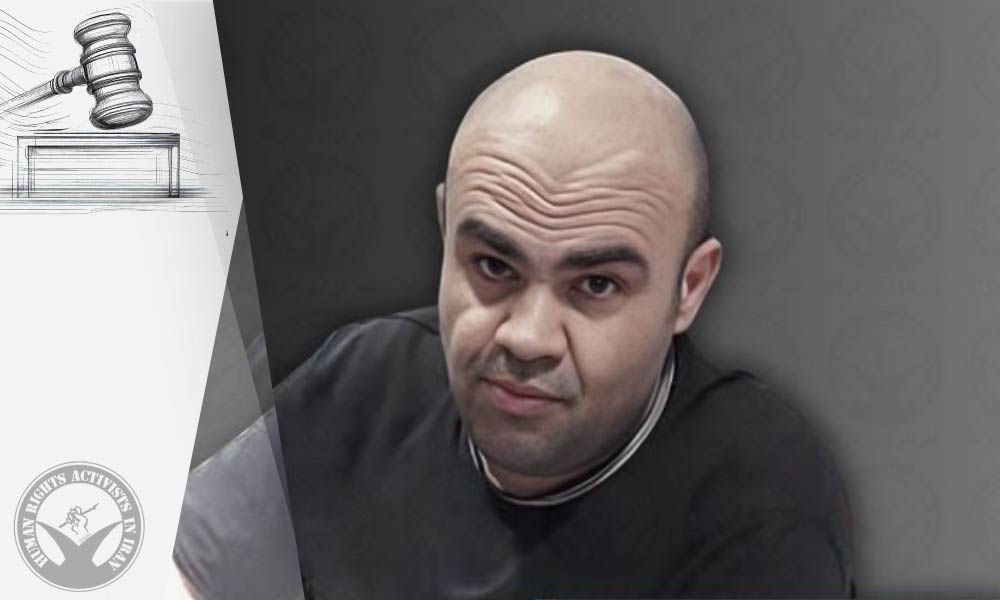
The Appellate Court of West Azerbaijan Province has reduced Abdolghani Darvishi’s prison sentence from five years to two years and six months. Originally convicted on political charges for “collaboration with anti-regime groups,” his sentence is now suspended for two years.
Darvishi was first detained by security forces on May 22, 2020, in Urmia and subsequently held in Tehran’s Evin prison, controlled by the Ministry of Intelligence. After a month, he was moved back to a detention center in Urmia and later placed in solitary confinement on October 22, 2020, at Urmia Prison.
He was released on bail from Urmia Prison on March 2, 2021. Darvishi, a resident of Urmia and a father of two, continues to reside there with his family.
On May 19, 2023, four prisoners were executed at Adelabad Prison in Shiraz for drug-related offenses and murder in unrelated cases.
According to the Iran Human Rights Organization, the executed individuals included Mojtaba Jooyandeh, approximately 40 years old, Mostafa Aghayi, 35 years old, and Nader Ghorbani, 28 years old. The fourth individual, an unidentified Afghan national, was also executed.
Approximately three to four years ago, Jooyandeh and Aghayi received death sentences for murder, whereas Ghorbani and the Afghan national were sentenced for drug offenses. Before the execution, the prisoners had been transferred from Pirbanoo Prison to Adelabad.
As of this report, no official sources or domestic media within the country have reported on these executions.
In 2023, the Department of Statistics and Publication of Human Rights Activists in Iran registered the execution of 767 individuals. Out of these, 7 were carried out in public. Among the executed individuals whose genders were identified, 21 were female. Additionally, 2 juvenile offenders, defined as individuals under the age of 18 at the time of their alleged crimes, were also executed. For a comprehensive examination of the details and statistics surrounding the executions in Iran, refer to HRANA’s annual report.
On May 20, 2024, Akbar Yousefi was arrested by Ministry of Intelligence agents at his home in Malekan, East Azerbaijan province.
According to a source close to his family who spoke to HRANA, the arrest is linked to a recent Instagram post by Yousefi about the helicopter crash that killed Iran’s president, Ebrahim Raisi, and several others, including the foreign minister.
Details regarding the specific charges against Yousefi remain unclear. Notably, Yousefi has a history of arrest and judicial confrontation during the nationwide protests in 2022.
On May 18, 2024, three inmates convicted of drug-related offenses were executed at Salmas Prison in West Azerbaijan province. HRANA identified one of the executed as 47-year-old Asghar Hajizadeh, a father of three.
According to reports received by HRANA, Hajizadeh and the two other inmates, all from a village in Salmas County, faced separate trials and received death sentences for drug offenses.
No official sources or domestic media outlets within the country have provided coverage of these executions at the time of writing. In 2023, 66% of HRANA’s reports on executions lacked official announcements by judicial authorities and went unreported by media inside Iran, highlighting a troubling lack of transparency in due process.
The reports from the Department of Statistics and Publication of Human Rights Activists for the year 2023 reveal a concerning prevalence of executions for drug offenses in Iran, constituting 56.4% of the total executions. For a comprehensive examination of the details and statistics surrounding the executions in Iran, refer to HRANA’s report.
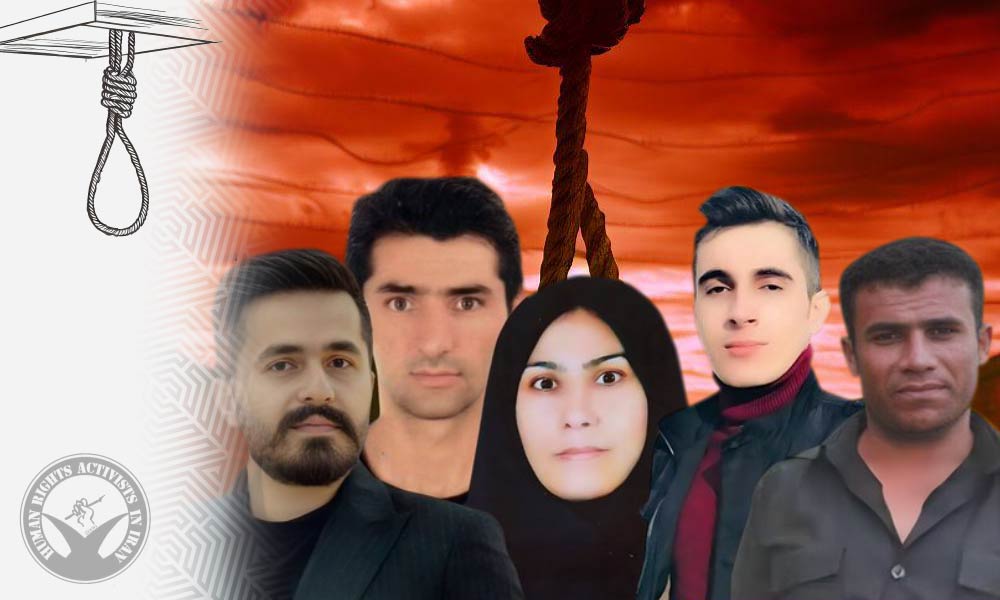
On May 18, 2024, five prisoners, including a woman, were executed at Urmia Prison in West Azerbaijan province for drug offenses.
HRANA reports the individuals executed are Parvin Mousavi, the female inmate, alongside Ramin Lavandpour, Parviz Ghasemi, Yousef Saeedi, and Mansour Naseri. Each had previously been sentenced to death on charges related to drug crimes.
No official sources or domestic media outlets within the country have provided coverage of these executions at the time of writing. In 2023, 66% of HRANA’s reports on executions lacked official announcements by judicial authorities and went unreported by media inside Iran, highlighting a troubling lack of transparency in due process.
The reports from the Department of Statistics and Publication of Human Rights Activists for the year 2023 reveal a concerning prevalence of executions for drug offenses in Iran, constituting 56.4% of the total executions. For a comprehensive examination of the details and statistics surrounding the executions in Iran, refer to HRANA’s report.
The Isfahan Revolutionary Court has sentenced 15 Baha’i women from Baharestan, Isfahan County, to a total of 75 years in prison along with other penalties.
The sentenced individuals are Mojgan Pourshafe Ardestani, Nasrin Khademi, Azita Rezvani-Khah, Shola Ashouri, Mojdeh Bahamin, Bashra Motahar, Sara Shakib, Samira Shakib, Roya Azad Khosh, Noushin Hemmat, Shurangiz Bahamin, Sanaz Rasteh, Maryam Khorsandi, Firoozeh Rastinejad, and Farkhandeh Rezvan Pay.
The court’s decision, issued on May 16, 2024, by Branch 1 of the Isfahan Revolutionary Court, mandates that each woman serves a five-year prison term. Additionally, they are required to pay a fine, are banned from leaving the country, and are deprived of social services for two years. The charges against them include “propaganda against the regime” and “assisting in propaganda/educational activities contrary to Islamic Sharia.” The women were initially summoned for an arraignment on May 1, 2024.
Among them, Pourshafee, Khademi, Rezvani-Khah, Azad Khosh, Shakib, Raseh, Ashouri, Bahamin, Rastinejad, Khorsandi, and Hemmat were previously arrested in 2021 and later released on bail.
Furthermore, Bahamin, Rezvan Pay, Motahar, and Shakib’s residences were subjected to raids and searches by Intelligence agents.
Baha’is are subjected to violations of their religious rights, comprising 82% of reports on infringements against religious minorities, according to HRA’s 2023 annual report.
The Baha’i faith is not recognized as a legitimate religion by Iranian authorities, leading to systematic and longstanding violations of the rights of Baha’is in the country. This includes the denial of their fundamental right to practice their religion, which constitutes a clear breach of both Article 18 of the Universal Declaration of Human Rights and Article 18 of the International Covenant on Civil and Political Rights. The United Nations covenant holds that every person has the right to freedom of religion, freedom of converting religion, as well as freedom of expression, individually or collectively; openly or secretly.
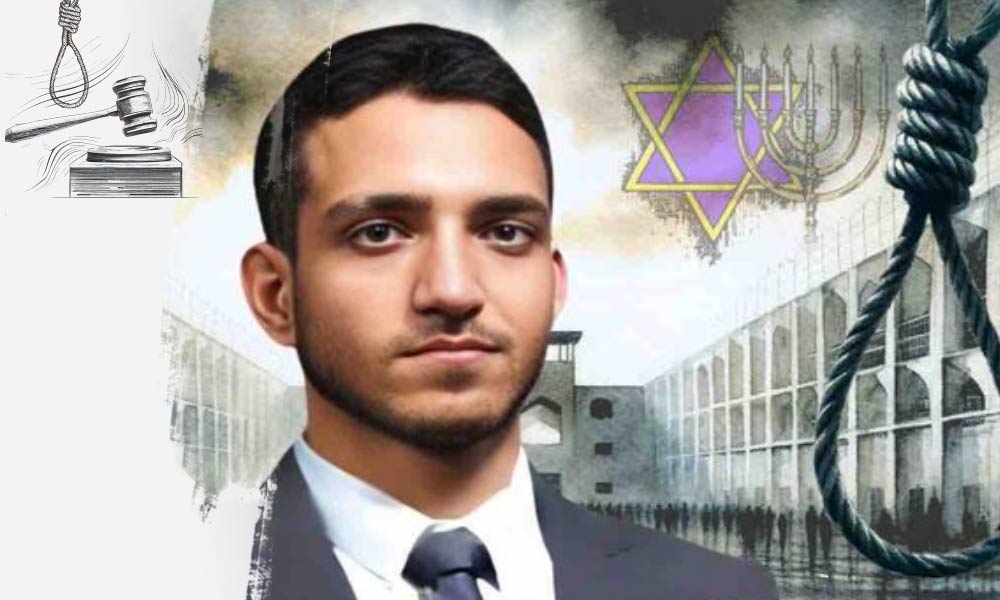
20-year-old Arvin Ghahremani, an Iranian Jew, is facing imminent execution following his conviction for killing a Muslim during a quarrel. As a member of a religious minority, the discriminatory laws make it difficult to spare his life.
Reports obtained by HRANA from Ghahremani’s close associates reveal that two years ago, Ghahremani was arrested and quickly sentenced to death for a fight that led to the death of Amri Shokri. Efforts by Ghahremani and the Kermanshah Jewish Committee to secure the victim’s family’s forgiveness through payment of blood money (Qisas) have been unsuccessful.
20-year-old Arvin Ghahremani, an Iranian Jew, is facing imminent execution following his conviction for killing a Muslim during a quarrel. As a member of a religious minority, the discriminatory laws make it difficult to spare his life. Reports from HRANA reveal that two years ago, Ghahremani killed Amir Shokri during a fight. He was arrested and quickly sentenced to death. Efforts by Ghahremani and the Kermanshah Jewish Committee to secure the victim’s family’s forgiveness through payment of blood money (Qisas) have been unsuccessful.
A video recently circulated on social media features Ghahremani’s mother appealing for public support to stop the execution. She pleads, “Pray for Arvin to come back home again.” Dr. Homayoun Sameyah Najafabadi, head of Iran’s Jewish Committee, confirmed that attempts to meet with the victim’s family and the newly appointed Imam of Friday Prayer in Kermanshah, Sheikh Mohammad-Hassan Rahimian, have been rejected. Efforts by the MP from Natanz to mediate were also fruitless, and proposals such as constructing a school in the victim’s name have been declined.
This case has heightened concerns within Iran’s Jewish community. Human rights activists argue that the retribution laws and their uneven application between Muslims and non-Muslims reflect systemic discrimination against religious minorities in Iran. These laws, rooted in religious ideology, often disadvantage non-Muslim citizens.
While Qisas mandates capital punishment if a non-Muslim kills a Muslim, the reverse scenario does not hold—a Muslim who kills a non-Muslim is only obliged to pay blood money. This legal disparity is a significant barrier to a fair trial and the achievement of civil rights in Iran.
The ongoing enforcement of unjust penalties for the murder of non-Muslims has led to numerous extrajudicial killings, especially of Iran’s Baha’i community, by extremist elements.
Tasnim, a security-affiliated news agency, reported that police apprehended 146 men and 115 women for allegedly holding a Satanist ritual and consuming alcohol.
According to the Police Intelligence Organization, three of the detainees are European nationals. The police claimed that the detainees had Satanic symbols on their shirts, hair, and faces. Additionally, 73 vehicles were seized.
The report did not disclose the identities of the detainees or their current location.
Iran’s regime and judiciary have consistently faced criticism for infringing on citizens’ privacy rights and personal affairs.
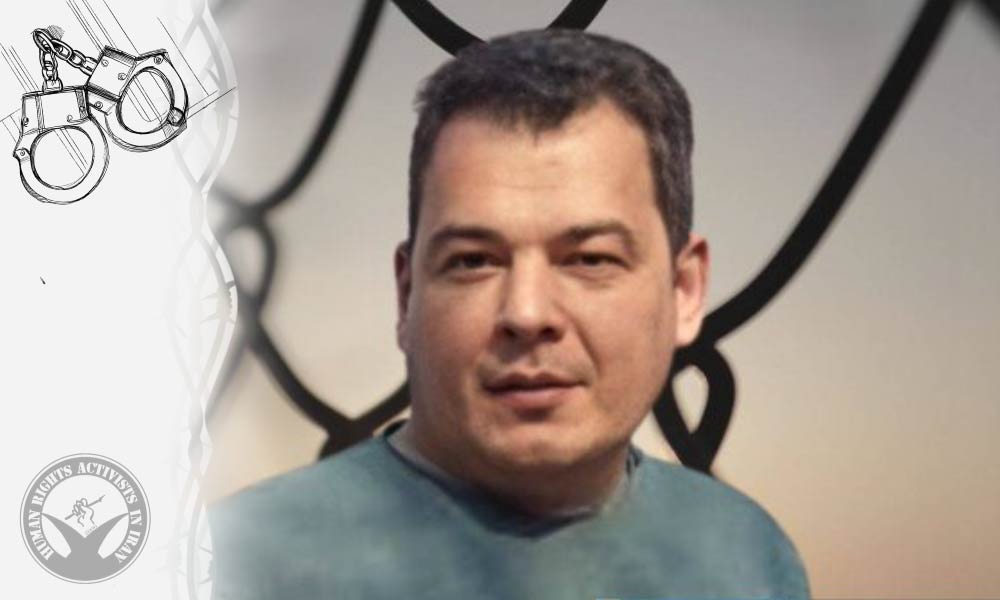
The Revolutionary Court of Tehran has sentenced Siamak Amini to four years and three months in prison, along with a two-year travel ban and additional penalties.
The verdict, issued on May 8, 2024, by Branch 26 of the Tehran Revolutionary Court, sentences 63-year-old Amini to three years and seven months for “assembly and collusion to undermine national security” and eight months for “spreading propaganda against the regime.” The detention period will be subtracted from his prison term. Additionally, Amini is banned from leaving the country, joining civil/political groups, and using smartphones for two years.
His support of the nationwide protests in 2022 on social media and association with anti-regime groups have been cited as the basis for these charges.
If the verdict is upheld on appeal, according to Article 134 of the Islamic Penal Code—which dictates that in cases of multiple charges, the harshest punishment shall be enforced—he will spend three years and seven months in prison.
Confirming Amini’s conviction, a source close to his family informed HRANA that at the beginning of last winter, IRGC intelligence agents raided his residence, conducted a search, and confiscated some of his personal items. He was then interrogated three times and ultimately released on bail of 500 million tomans, approximately $10,000. Amini suffers from an inflammatory disorder known as Behcet’s syndrome, which makes incarceration particularly challenging for him.
Siamak Amini, a resident of Tehran, is married and was previously incarcerated for five years in the 1980s as a political prisoner.
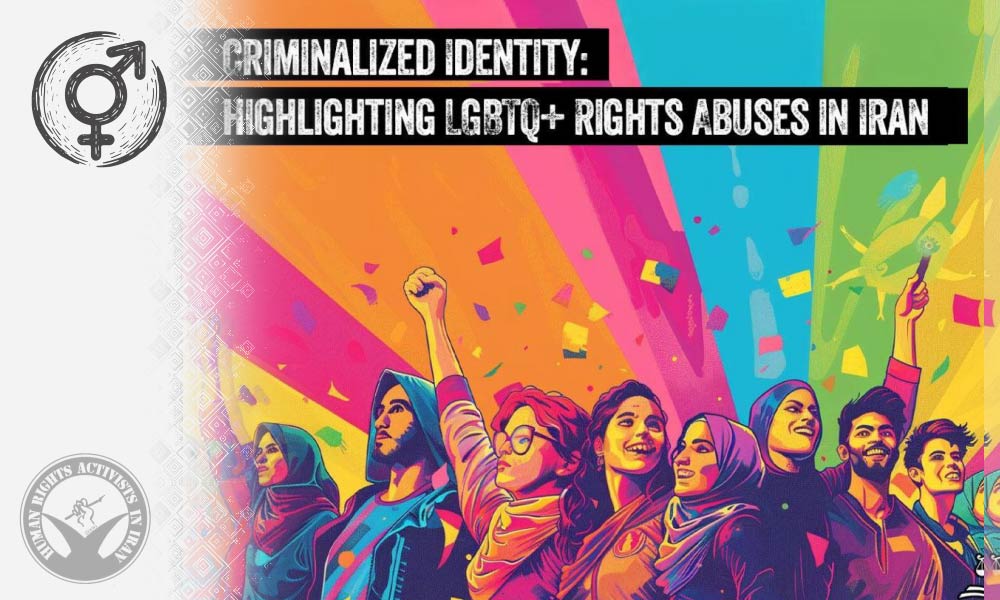
Iranian LGBTQ+ individuals face systematic persecution that is both state-sponsored and pervasive. Legal frameworks and government policies explicitly endorse violence and discrimination against the LGBTQ+ community.
HRA, through extensive research via its Spreading Justice initiative, has identified the state institutions and individuals involved in human rights violations against these sexual and gender minorities. The research draws on detailed case studies and insights from members of the community advocating for change both within and beyond the borders of Iran.
State-Sponsored Homophobia: Institutional and Legislative Enablers
The Iranian government’s perpetuation of discrimination against LGBTQ+ individuals is overt and multifaceted. Dating back decades, there are seemingly endless examples of the widespread, State-sponsored discrimination faced by LGBTQ+ individuals in Iran.
The following are a mere few:
The notorious, “Modesty and Hijab Bill,” though not fully ratified, has already been used by State broadcasters to actively promote homophobia. Article 8 paragraph 2 of this bill compels the Broadcasting Organization of Iran to produce content that counters homosexuality, effectively legislating hate and reinforcing societal prejudices against LGBTQ+ individuals. The bill also explicitly tasks the Broadcasting Organization of Iran with promoting content that vilifies homosexuality, contributing to the spread of hatred against homosexuals, sanctioned by state media. Despite awaiting confirmation by the Guardian Council, the police force has practically enforced the hijab law in numerous cities, further institutionalizing discrimination against the LGBTQ+ community under the guise of upholding modesty and moral values. One example of spreading hatred against the LGBTQ+ community is, guest speakers on talk shows spreading false narratives. For example on Jaryan talk show, the Guest speaker questions the boundaries of freedom of expression in Europe, stating that while they can insult prophets, according to him, speaking against homosexuality leads to consequences.
In addition, The Research Center of the Parliament –which is a part of the Islamic Council Research is responsible for conducting study and research projects to provide advisory opinions to the representatives, commissions, and presidium of the Islamic Council— has produced reports that suggested temporary marriage as a remedy to homosexuality, in essence legitimizing State interference in personal identities. In 2014 a report titled Temporary Marriage and Its Effect on Adjusting Illicit Sexual Relations stated “Out of 141,552 middle school students across the country, 24,889 were identified as homosexuals.” The report went on to advocate for temporary marriage as a corrective measure, reinforcing harmful stereotypes.
Forced Conformity
In Iran, the judiciary plays a critical role in enforcing discriminatory laws against the LGBTQ+ community, particularly impacting transgender individuals. A stark example of this is Judge Abbas Ghaderi, head of Branch 45 of the Special Judicial Complex for Family Matters in Tehran. Ghaderi is notorious for his harsh requirements for transgender individuals who seek the legal recognition of their gender. Under his jurisdiction, transgender individuals are compelled to undergo extensive and invasive surgeries to legally change their gender markers on identification documents.
Abbas Ghaderi
Ahmad Ahmadi-Sadr
Alireza Nadali Sherestanaki
The extensive nature of Ghaderi’s behavior can be explored in more depth via his profile on the Spreading Justice database.
Iran has a gender binary legal framework and the law mandates that individuals select either male or female and undergo corresponding gender-confirming surgeries for legal recognition. The mandated surgeries are physically demanding, carry significant medical risks, and entail high financial costs that many cannot afford. Requiring these surgeries as a condition for legal recognition imposes an unjust burden on transgender individuals, making their right to identity contingent upon their willingness and ability to undergo medical procedures. Moreover, those who refuse or are unable to choose a binary gender and undergo the prescribed surgeries face severe consequences. They are often denied access to basic services and rights, such as employment and education. This denial extends to various aspects of public life, effectively marginalizing them and limiting their ability to participate fully and freely in society.
In addition to these surgical requirements, transgender citizens must navigate a lengthy and arbitrary legal process to obtain identification documents that reflect their gender identity, often resulting in the removal of reproductive organs such as the uterus, ovaries, and testicles. These heavy and irreversible surgeries, coupled with the high costs and low quality of medical care available, further exacerbate the challenges faced by transgender Iranians. HRA has documented instances where local judges, like Judge Ghaderi, apply these requirements inconsistently, adding to the confusion and discrimination.
LGBTQ+ voices from inside the country
The situation for LGBTQ+ individuals in Iran is dire, marked by systemic discrimination, abuse, and persecution. Accounts from community members reveal the depth of their suffering and the pervasive fear that governs their lives.
“Being interrogated was a nightmare. They made fun of me, taunted me, and treated me like a criminal. Even soldiers who were supposed to be impartial joined in the abuse. When I was finally taken to prison, I was so humiliated that I wanted to disappear,” one individual recounted. This testimony highlights the hostile and dehumanizing treatment faced during interrogations.
The Iranian regime’s propaganda machinery further exacerbates the plight of LGBTQ+ individuals. “The regime actively fuels animosity against us. They even burn our flag in government marches and use derogatory language to perpetuate negative stereotypes about us. They exploit existing societal taboos to bolster their campaign of humiliation and oppression. This rhetoric reinforces deeply ingrained prejudices and strengthens the stigma surrounding our community,” shared another member. Such actions by the government serve to legitimize and intensify public hostility and discrimination against the LGBTQ+ community.
Living in constant fear, many LGBTQ+ individuals face profound personal and social risks. “My greatest fear is that coming out could cost me my freedom or my future. Arrests, job loss, or social ostracism are very real risks, even if I’m fortunate to have a supportive family. My fear is for those who have no such support,” explained a third individual. This fear is not unfounded, as Iran’s legal and social environment is extremely hostile towards LGBTQ+ individuals, often leading to severe consequences such as imprisonment, loss of employment, and social exclusion.
Military Service
In the realm of military service, discrimination persists with the “Nervous and Mental” classification in the medical exemption regulations. This classification, used to exempt transgender and homosexual individuals from mandatory military service, not only stigmatizes but also carries severe long-term repercussions. The label of a mental disorder is then recorded in their medical and military records, casting a long shadow over their lives, and impacting their ability to secure employment and access social services.
The military exemption, known as the “red card,” creates additional barriers to obtaining licenses or employment in public offices, reflecting a broader pattern of state-sanctioned discrimination against LGBTQ+ individuals in Iran. This systematic marginalization, reinforced by both legal mandates and societal attitudes, impedes the full participation of LGBTQ+ individuals in society.
Although there have been some changes since the enactment of the Examination and Medical Exemption Regulation for Conscription in 2014, which shifted the review of exemptions for transgender and homosexual individuals to specific sections, colloquially known as the “Nervous and Mental” section, the stigma attached to these exemptions persists. Despite the World Health Organization’s reclassification of being transgender from mental and behavioral disorders and the removal of homosexuality from the list of mental disorders in 1990, the implications of these exemptions remain problematic in Iran, especially considering the criminalization of same-sex relations. This has led to increased caution and strictness in issuing exemptions, which some manage to obtain only after extended efforts, often limited to an exemption from combat rather than a complete waiver from military service.
Systematic Exclusion from Professional and Social Arenas
The exclusion from additional professional and social arenas is another facet of discrimination faced by LGBTQ+ individuals in Iran. Notable figures such as Mohammad Heidari, former head of City Theater, and Seyed Sadegh Mousavi, head of the Evaluation and Supervision Council of the General Directorate of Performing Arts, have played significant roles in excluding transgender individuals from the arts. The case of Saman Arastoo, a well-known actor who faced systematic exclusion from theater productions following his gender confirmation surgery, illustrates the professional and personal costs of such discrimination.
Invisible Removal from the Work Environment
Some transgender individuals are deprived of continuing their careers in their specialized fields after coming out. Saman Arastoo, who was a recognized actor in cinema and theater, found himself ousted from the job market shortly after his gender confirmation. In 2020, in an interview with Ensaf News, addressing his removal from a theater production in 2008, Arastoo detailed that Mohammad Heidari, the head of City Theater, and Seyed Sadegh Mousavi Mousavi, from the Evaluation and Supervision Council, decided to remove him from the main character role after a lengthy review process. Arastoo stated, “Many students have been in my classes or participated in my self-awareness workshops. They are transgender and have studied at the University of Arts, and they are never given any work. I always tell the kids to make sure to do two or three art projects, whether in theater or cinema, before undergoing surgery so that they face fewer problems after the operation.”
Marginalization from the Social Sphere
The marginalization extends beyond professional spheres into social settings. Alireza Nadali, the spokesperson for the Islamic Council of Tehran City, has publicly criticized the presence of transgender citizens in Daneshjoo Park, suggesting that their presence in public spaces should be regulated and not be allowed in cultural spots of the city. This type of rhetoric contributes to the stigmatization and marginalization of transgender individuals, limiting their ability to participate in public life.
The Plight of Homeless Transgender Individuals
Economic and social challenges are further compounded for transgender individuals facing homelessness, a situation exacerbated by widespread family rejection owing to societal taboos and systemic barriers. In 2019, the Daneshgah News Agency highlighted the refusal of shelters to accommodate transgender individuals, citing a case where the Tehran Municipality was questioned for allowing a transgender individual to stay in a women’s shelter. In response to growing pressures, Ahmad Ahmadi Sadr from the Social Services and Participation Organization of Tehran announced plans in 2023 to establish specialized shelters. However, these promises were quickly retracted, underscoring a lack of genuine commitment to addressing the needs of transgender individuals facing homelessness.
Vulnerability to Violence
The vulnerability of LGBTQ+ individuals to violence is pronounced, with minimal protection or recourse available through legal channels. Incidents of violence, such as the assault on a 23-year-old transgender woman in Sanandaj by her brother, often go unaddressed by authorities, leaving victims without support or justice. The lack of a safe environment, even for welfare workers, places these individuals at greater risk, highlighting the systemic neglect and discrimination they face daily.
These examples starkly illustrate the multifaceted discrimination and exclusion faced by LGBTQ+ individuals in Iran, spanning professional, social, and personal spheres. The systemic nature of this exclusion, supported by both governmental policy and societal attitudes, necessitates urgent reforms to protect the rights and dignity of the LGBTQ+ community in Iran.
Security Measures Against LGBTQ+ Members
The plight of LGBTQ+ individuals in Iran extends into their treatment under security measures and legal actions. During the nationwide protests in 2022/23 Rahaa Ajoudani, a transgender citizen living in Tehran, was arrested and faced severe judicial consequences. She was sentenced to two and a half years in prison and banned from leaving the country, although her sentence was later converted to a fine due to “living conditions as a transgender woman and the lack of a proper facility for detention.” This adjustment speaks volumes about the unsuitable conditions in detention facilities, which were further highlighted by leaked surveillance footage showing inadequate facilities and oversight in the specific prison ward where she was held.
Furthermore, the morality police and law enforcement agencies have historically targeted transgender individuals based on their appearance. Recent allegations have included accusations of promoting immorality, leading to arrests and detentions. For instance, in Gonbad-e Kavus in April 2023, a citizen was detained on such charges. Additionally, State-affiliated media have been involved in propagating stigmatizing narratives, including releasing videos of “forced confessions” from five transgender individuals, casting further doubt on the fairness and transparency of legal proceedings against the LGBTQ+ community. The ultimate fate of these individuals remains unknown, underscoring the ongoing risks and uncertainties faced by the community.
Conversion Therapies
Conversion therapies, which are widely discredited by global health authorities, are still promoted and practiced, often under the guise of religious and psychological “treatment.” Dr. Davood Najafi Tavana, for instance, advertises conversion therapies on his website, offering medication, hypnotism, and aversion therapy as methods to change an individual’s sexual orientation from homosexual to heterosexual. Similarly, the Mehr news agency and the ISNA news agency have published claims supporting the efficacy of conversion therapy, despite widespread international condemnation of such practices. These actions are indicative of a broader societal and governmental stance that views homosexuality and diverse gender identities as disorders that need to be “cured” or “corrected,” further alienating and endangering the LGBTQ+ population.
The Organization of Psychology and Counseling, as the overseeing body for psychologists, does not take any action regarding the unscientific claims made by practitioners of conversion therapy. This is despite the fact that these so-called therapies have long-lasting or irreparable effects on individuals’ mental health, particularly adolescents. Among the responsibilities of this organization are issuing licenses and permits for members of the organization (psychologists and counselors) and monitoring the quality of their professional work.
Hate Speech
Hate speech against the LGBTQ+ community is rampant among high-ranking officials and media outlets in Iran. Historical and ongoing rhetoric from figures such as Ebrahim Raisi underscores the institutional disdain and disregard for LGBTQ+ rights. In a notable instance during a visit to Uganda in 2023, President Raisi criticized Western countries for promoting homosexuality, linking it to broader geopolitical conflicts and cultural wars. He stated, “Western countries are pressuring independent countries by attacking the family foundation, promoting the ugly phenomenon of homosexuality, spreading extremism and terrorism, and using human rights as a tool.” He further stated “This [homosexuality] is one of the dirtiest things that has happened in human history”, he even goes as far as saying homosexuality is created to “extinct humans”. His statements, alongside those of Vahid Yamin Pour, Secretary of the Supreme Council for Youth, who praised Uganda’s harsh anti-homosexuality laws, reflect a deep-seated animosity towards LGBTQ+ rights, both domestically and internationally.
The Urgent Need for Accountability and Reform
Iran’s legal framework and practices concerning homosexuality and in particular forced gender reaffirming surgery contravene several fundamental principles of international human rights law. These include the rights to life, privacy, freedom from torture and cruel treatment, bodily autonomy, and the principle of nondiscrimination.
The criminalization of homosexuality and importantly the imposition of the death penalty for consensual same-sex activities are severe violations of the right to life, as protected under Article 6 of the ICCPR. The United Nations Human Rights Committee (UNHRC) has consistently maintained, as noted in the general comment, that the death penalty should only be applied to the “most serious crimes,” a category that does not encompass consensual sexual relations. Furthermore, such criminalization on this ground constitutes an arbitrary interference with privacy.
Compulsory gender reaffirming surgeries infringe upon the right to health, which encompasses the right to make autonomous decisions regarding one’s body. This practice directly contravenes international human rights standards that protect individuals from non-consensual medical treatments and uphold their right to personal health decisions. The forced imposition of gender reaffirming surgeries on transgender individuals in this way amounts to cruel, inhuman, and degrading treatment.
Finally, discrimination based on sexual orientation and gender identity is prohibited by international human rights law. Iran’s laws target LGBTQ+ individuals, leading to systematic discrimination that violates their inherent dignity and equality.
The international community must support LGBTQ+ activists and pressure Iran to change its laws to meet international human rights standards and uphold its obligations. There must also be accountability for all past and ongoing violations.
By systematically identifying and discussing the roles of specific perpetrators and institutions, HRA seeks to underscore the accountability necessary for addressing human rights violations against LGBTQ+ individuals (as a persecuted group) in Iran.
In Iran, essential reforms must include decriminalizing homosexuality, abolishing the death penalty for consensual same-sex activities, and halting forced gender-reaffirming surgeries.
These changes are crucial to ensure that Iran respects and protects the fundamental human rights of all individuals, regardless of their sexual orientation or gender identity.
As the international community continues to watch, these efforts must be supported and amplified to foster real and lasting change.