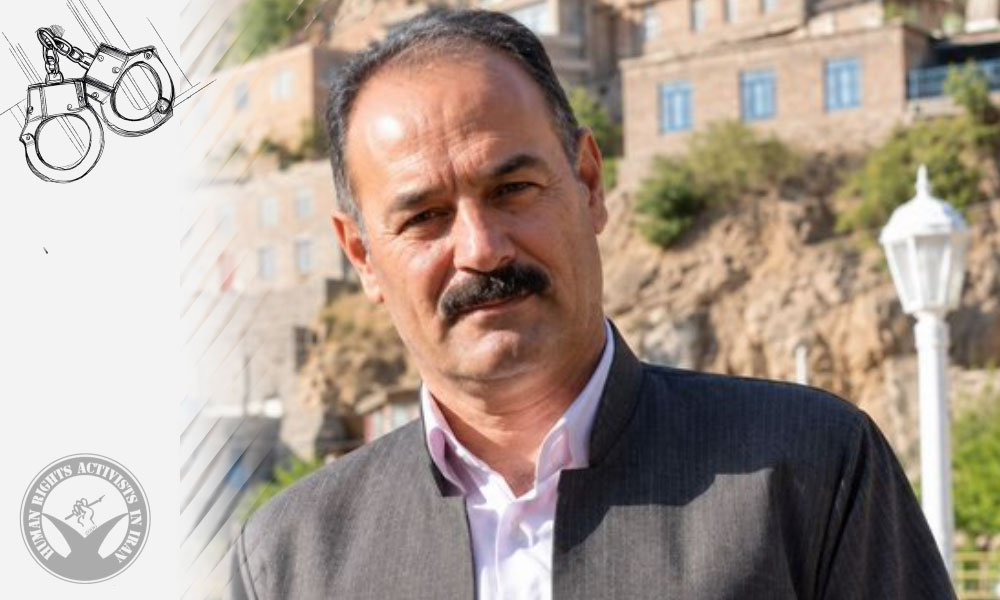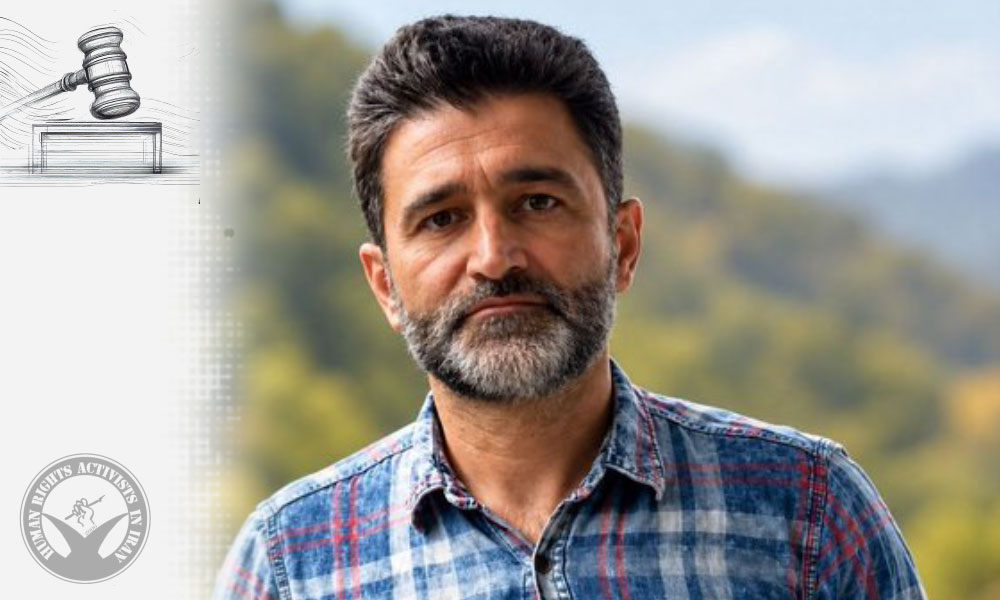
Manouchehr Bakhtiari Sentenced to 10 Years in Prison

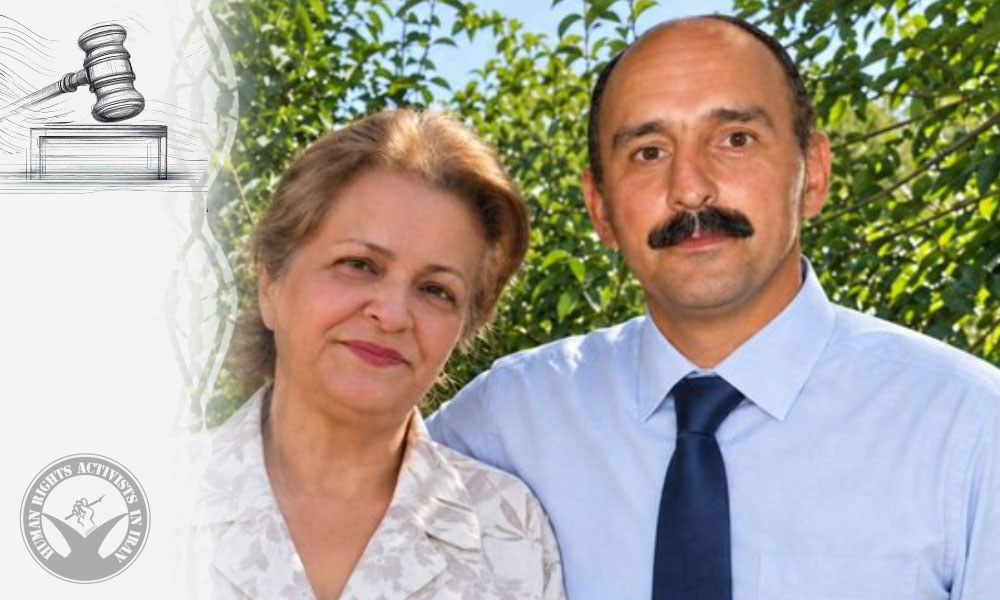
HRANA – Manouchehr Bakhtiari, the father of Pouya Bakhtiari, who was killed during the November 2019 protests, and a prisoner currently held in Bandar Abbas Prison, has been sentenced to an additional 10 years in prison by Branch 1 of the Bandar Abbas Revolutionary Court.

According to HRANA, Manouchehr Bakhtiari, who is currently held in Bandar Abbas Prison, has been sentenced to prison.

According to information obtained by HRANA, Bakhtiari was sentenced to one year in prison on the charge of “propaganda activity against the regime through media alignment with opponents of the regime,” four years in prison on the charge of “inciting people to war and killing with the intent of disrupting national security and creating social unrest,” and five years in prison for “sending videos to foreign-based online networks in a manner contrary to national security.”

The sentence was verbally communicated to Bakhtiari today, Tuesday, September 1, at Bandar Abbas Prison.

Previously, hearings in Bakhtiari’s case were held on June 3 and June 15 of this year at Branch 1 of the Bandar Abbas Revolutionary Court. During the hearings, he presented his defense against the charges brought against him. The case was initiated following a complaint filed against him by the Bandar Abbas prosecutor.

Manouchehr Bakhtiari was arrested on January 19, 2026, while serving his sentence of exile in Bandar Abbas and was subsequently transferred to the city’s prison.

Bakhtiari had previously been arrested by security forces at his home in Tehran on April 29, 2021, and was ultimately sentenced to three years and six months in prison, two years and six months of exile, and a two-year travel ban. After serving more than four years in prison, he was released from Choobindar Prison in Qazvin in October 2025 and transferred to Bandar Abbas to serve his exile sentence.

During his imprisonment, additional cases were also opened against Bakhtiari. In one case, he was sentenced to six months in prison. In another, he was sentenced to 18 years in prison and 74 lashes. The latter sentence was overturned on appeal, and the case was sent back to the Revolutionary Court for retrial.

Manouchehr Bakhtiari, the father of Pouya Bakhtiari, has stated that his 27-year-old son was shot and killed in Phase 4 of Mehrshahr, Karaj, during the November 2019 protests. According to Bakhtiari, Pouya, along with his mother and sister, joined protesters on the second day of demonstrations against the increase in gasoline prices. He was shot in the head and died before reaching the hospital.

Pouya Bakhtiari (born September 10, 1992; died November 16, 2019, in Mehrshahr, Karaj) was among those killed during Iran’s nationwide protests of 2019.

Political Prisoner Ali Zarei Sentenced to Death

HRANA – Ali Zarei Doozdarrehsi, a political prisoner and one of those injured during the 2022 nationwide protests who is currently held in Ghezel Hesar Prison in Karaj, has been sentenced to death by Branch 23 of the Tehran Revolutionary Court on the charge of “corruption on earth.”

According to HRANA, Ali Zarei Doozdarrehsi, who is being held in Ghezel Hesar Prison in Karaj, has been sentenced to death.

According to information obtained by HRANA, Branch 23 of the Tehran Revolutionary Court sentenced Zarei Doozdarrehsi to death on the charge of “corruption on earth through extensive engagement in political activities, creating the appearance of fabricated damages, producing false reports, propaganda against the regime, disrupting security, and illegally entering and exiting the country.” The sentence was communicated to him on August 23, 2026.

Zarei Doozdarrehsi, who had previously been residing in Germany, was arrested by Ministry of Intelligence agents on April 28, 2026, after entering Iran.

During the preliminary investigation stage, his case was reviewed by Branch 3 of the Prosecutor’s Office of District 33 in Tehran, also known as the Security Prosecutor’s Office.

He was ultimately transferred to Ghezel Hesar Prison in Karaj on June 30, 2026. He is currently being held in Unit 3, Ward 37 of the prison.

Ali Zarei Doozdarrehsi, approximately 27 years old and a resident of Tehran, suffered an injury to one of his eyes after being struck by pellet gunfire during the 2022 nationwide protests. He has previously faced arrest and judicial proceedings.

Monthly Report – August 2026: Human Rights Situation in Iran

HRANA- This monthly report provides an overview of statistics on human rights violations in Iran during August 2026. The continued issuance of death sentences against individuals facing political charges and the increase in prison sentences imposed on citizens for expressing their views and opinions were among the most notable human rights violations documented during the month.

Executions

In August, HRANA reported the executions of 78 people, including five women. Of those executed, 40 had been sentenced to death on murder charges, 29 on drug-related charges, and two on charges of moharebeh (“enmity against God”) in non-political cases. Four others were executed on security-related charges. In addition, two individuals, Ghaem Hosseini and Shahram Sadeghi, were hanged in connection with the January 2026 protests.

Of the 78 people executed, the charge against one individual remains unknown.

During the month, Iranian courts issued 21 death sentences, while seven death sentences were upheld by the Supreme Court. Most notably, 10 defendants in a case in Isfahan were sentenced to death in connection with the nationwide protests of January 2026.

Freedom of Thought and Expression

Over the past month, security forces arrested 311 individuals for expressing their views and opinions, while three others were summoned by security agencies. One case of a home search by security forces was also reported. For the same reasons, eight individuals were summoned to court and three were put on trial.

Prison sentences imposed on citizens for expressing their views and opinions increased significantly this month. In total, at least 7,238 months of imprisonment (more than 600 years) were handed down to 80 citizens, more than 2.5 times the figure recorded in the previous month. One of the most notable cases was the 20-year prison sentence imposed on Mohammad Ebrahimi in connection with the nationwide protests of January 2026. Additionally, 16 citizens in Mahabad were sentenced to a combined total of more than 77 years in prison for reasons related to political affiliation and the expression of their views.

In addition to prison sentences, courts imposed three instances of deprivation of civil and social rights, a total of 48 months of exile, and 523 lashes. Flogging sentences were also carried out against two individuals.

Prisoners’ Rights

Reports published by HRANA in August documented the following figures concerning violations of the rights of prisoners and detainees, particularly political prisoners and prisoners of conscience: 98 cases in which detainees were held in legal limbo, 50 reports of families being kept uninformed about the fate or whereabouts of detainees, four cases of prisoners being transferred to solitary confinement, 12 reports of pressure being exerted on detainees or prisoners, six cases of forced confessions, four cases of prisoners being beaten, including three political prisoners at Evin Prison who were beaten by prison guards, nine cases of denial of access to legal counsel, four cases of denial of telephone access, and three cases of denial of visitation rights.

Additionally, 21 cases of denial of medical care and six cases in which prisoners were denied medical leave despite urgent medical needs were reported.

Reports also documented hunger strikes by at least three prisoners. During the month, the death of a female prisoner at Vakilabad Prison in Mashhad was also reported following a lack of adequate medical care.

Kolbars and Fuel Carriers

In August, seven people were killed and four others were injured as a result of indiscriminate gunfire by the Islamic Republic of Iran’s security forces. This practice has a long history and has particularly affected kolbars (workers who carry goods on foot across border areas to earn a living) and fuel carriers (individuals who transport small quantities of fuel across the border for their livelihood). Among the seven people killed were three kolbars and two fuel carriers.

Workers’ Rights

In August, HRANA reported 50 labor protests and three labor strikes, representing an increase compared with previous months. HRANA also published reports on unpaid wages affecting approximately 500 workers. These reports further documented 350 cases of workers being dismissed or laid off.

According to the reports received, workplace accidents claimed the lives of 37 workers and injured 120 others, marking the highest monthly figures recorded since the beginning of the year.

Trade associations and labor unions held 81 protest gatherings during the month. Three individuals were also arrested by security forces. Additionally, 144 commercial establishments were closed and sealed.

Women’s Rights

During the month, 12 women lost their lives as a result of domestic violence. One woman and four men were also victims of so-called “honor killings,” and two cases of rape were reported.

Additionally, 30 commercial establishments were closed and sealed for alleged non-compliance with mandatory hijab regulations.

Children’s Rights

In August, HRANA’s reports documented the killing of four children and the deaths of two others as a result of negligence by the authorities.

Religious Minorities

During the month, 14 members of religious minorities were sentenced to a combined total of 539 months in prison. Among them were 12 Baha’i citizens residing in Sari, who received a combined total of more than 26 years in prison.

In addition to the prison sentences, 14 cases of deprivation of social rights, one case of property confiscation, and one case of restrictions on economic activity were reported.

Security forces also arrested at least 10 members of religious minorities during the month, summoned four others, and conducted five home searches.

Ethnic Rights

HRANA’s reports documented the arrests of at least 29 ethnic rights activists or members of ethnic minorities by security forces. According to the reports, 13 of these arrests were carried out without the presentation of an arrest warrant. Four individuals were also sentenced to a combined total of 360 months in prison. One case of physical assault and one home search were also reported.

Inhuman Punishment

As noted above, sentences totaling 539 lashes were issued during the month. The majority of these flogging sentences were imposed on individuals who participated in the January 2026 protests. In addition, sentences totaling 62 lashes were carried out.

An overview of human rights violation in Iran -August 2026

Six Prisoners Executed in Rasht and Tabriz Prisons

HRANA – The death sentences of at least six prisoners were carried out in prisons in Rasht and Tabriz.

According to HRANA, citing Iran Human Rights, two prisoners were executed in Rasht Prison on the morning of Tuesday, August 11.

The prisoners have been identified as Jalal Nemat-Zadeh, 51, a father of three from Anzali, and Behrouz Souri, approximately 40, from Rumeshkan County.

Nemat-Zadeh was arrested approximately five years ago on a drug-related charge and subsequently sentenced to death. Prior to that, he had been arrested three times on drug-related charges and had spent a total of 13 years in prisons in Rasht, Anzali, and Sari. Souri was also arrested approximately four years ago on a drug-related charge and sentenced to death by a Revolutionary Court.

Additionally, on the morning of Saturday, August 29, four prisoners were executed in Tabriz Prison.

The prisoners have been identified as Yavar Alizadeh, 28, from Tabriz; Hossein Khalilian, 40, from Tabriz; Mojtaba Vahedi, 28, from the village of Alvar Sofla and a resident of Zanjan, who was the father of one child; and Davoud Tarkhan, 48, from Tabriz.

Alizadeh and Khalilian had been sentenced to death on charges of murder, while Vahedi and Tarkhan had been sentenced to death on drug-related charges in separate cases.

As of the time of this report, the executions of these six prisoners have not been announced by domestic media outlets in Iran or official sources.

2022 Nationwide Protests: Four Citizens Sentenced to Prison

HRANA – Hamidreza Koohkan, Ahmadali Koohkan, Mohammad Kharout Din-Mohammadi (Hares Kharout), and Khaled Kashani, residents of Zahedan who were arrested in connection with the 2022 nationwide protests, were sentenced to prison by Branch 103 of the Zahedan Criminal Court II.

According to HRANA, citing the Balochistan Human Rights Documentation Network, the four citizens were sentenced to a total of 17 years in prison.

The individuals have been identified as Hamidreza Koohkan, son of Shirjan, aged 49, a married driver; Mohammad Kharout Din-Mohammadi (Hares Kharout), aged approximately 19; Ahmadali Koohkan, aged 27; and Khaled Kashani, aged approximately 33. All are residents of Zahedan.

According to the report, Hamidreza Koohkan, Ahmadali Koohkan, and Mohammad Kharout Din-Mohammadi (Hares Kharout) were each sentenced by Branch 103 of the Zahedan Criminal Court II to five years in prison, with time served in detention credited toward their sentences, on the charge of “participation in the intentional destruction of public and government property.” Khaled Kashani was also sentenced by the same judicial authority to two years and one day in prison on charges of “participation in the intentional destruction of public and government property” and “aiding and abetting the intentional destruction of a banner bearing the image of the Supreme Leader and the setting fire to public and government premises.”

The report states that Khaled Kashani’s sentence has been suspended for three years.

On February 6, 2024, Hamidreza Koohkan and Mohammad Kharout Din-Mohammadi (Hares Kharout) were arrested in Zahedan. Koohkan was subsequently transferred to the Ministry of Intelligence’s detention facility in Zahedan, where he remained until April 4, 2024, when he was transferred to Zahedan Prison following the completion of his interrogation.

Din-Mohammadi, who was 16 years old at the time of his arrest, was transferred to the Juvenile Correction and Rehabilitation Center in Zahedan. He was released on May 30, 2024, after posting bail of 1.5 billion tomans.

Ahmadali Koohkan was arrested on April 6, 2024, after being summoned to and appearing at the Ministry of Intelligence office in Zahedan. He was released from Zahedan Prison on bail on May 14, 2024. During the 2022 nationwide protests, on September 30, 2022, he was wounded at Zahedan’s Makki Mosalla after being struck by live ammunition in the pelvis and lower back, near his spinal cord.

Khaled Kashani was also arrested during the 2022 nationwide protests in connection with a case known as “Zahedan’s Bloody Friday.”

It should be noted that, against the backdrop of the 2022 nationwide protests, the city of Zahedan witnessed the killing of approximately 100 Baloch citizens, including at least 15 children, by law enforcement and security forces. The incident has since become known as “Zahedan’s Bloody Friday.”

Subscribe to Our Newsletter

Now is definitely not the time to stop reading!

January 2026 Protests: 13 Citizens Sentenced to Prison, Flogging, and Exile

HRANA – Mohammad Mohammadi, Mostafa Gholami, Zahed Khaledian, Vahed Khaledian, Shahrokh Mostafaei, Fereydoun Almasi, Rasoul Ghorbanpour, Saman Ganji, Davoud Rezaei, Reza Dehghani, Abuzar Moradhaseli, Anvar Alipanah, and Amir Khaledian, residents of Qorveh County, have been sentenced by Branch 102 of the Qorveh Criminal Court to a combined 24 years, three months, and one day in prison. In addition, Reza Dehghani, Abuzar Moradhaseli, Anvar Alipanah, and Amir Khaledian were sentenced to a combined 196 lashes. Amir Khaledian was also sentenced to two years of exile in Minab.

According to HRANA, citing Kolbar News, 13 citizens in Qorveh County have been sentenced to a combined 24 years, three months, and one day in prison, 196 lashes, and exile.

According to the report, the sentences were issued by Branch 102 of the Qorveh Criminal Court on charges including “disrupting public order” and “assembly and collusion.” Under the ruling, Mohammad Mohammadi was sentenced to four years, nine months, and one day in prison; Mostafa Gholami, Zahed Khaledian, and Vahed Khaledian were each sentenced to three years in prison; and Shahrokh Mostafaei and Fereydoun Almasi were each sentenced to one year and nine months in prison.

The ruling also sentenced Rasoul Ghorbanpour, Saman Ganji, and Davoud Rezaei to one year of discretionary imprisonment each.

Under the ruling issued by the same judicial branch, Reza Dehghani was sentenced to one year in prison and 41 lashes; Abuzar Moradhaseli to one year in prison and 31 lashes; Anvar Alipanah to one year in prison and 50 lashes; and Amir Khaledian to one year in prison and 74 lashes. Khaledian was also sentenced to two years of exile in the city of Minab, Hormozgan Province.

The report did not provide further details about the case or specify the charges brought against each of the individuals.

The individuals were arrested during the nationwide January protests and were eventually released after a period of detention.

Background on the January 2026 Protests

It should be noted that protests and strikes by shopkeepers and bazaar merchants began in Tehran on Sunday, December 28, 2025, and within two days spread beyond markets and commercial centers. With the participation of students, citizens, and various social groups, these protests became one of the largest protest movements of recent years. Following the crackdown by security and law enforcement forces, thousands were killed or injured, and tens of thousands were arrested or summoned by security agencies. For more information, readers may refer to HRANA’s comprehensive report titled “Crimson Winter,” documenting the first fifty days following the outbreak of Iran’s nationwide protests.

January 2026 Protests: Supreme Court Upholds Death Sentence of Ali-Asghar Peyghambari

HRANA – The Supreme Court has upheld the death sentence of Ali-Asghar (Alireza) Peyghambari, one of those arrested during the nationwide protests of January 2026. According to HRANA’s investigation, the prisoner was recently transferred from Greater Tehran Prison to Ghezel Hesar Prison in Karaj.

According to HRANA, the Supreme Court has upheld the death sentence of Ali-Asghar (Alireza) Peyghambari, 26, who was arrested during the January 2026 protest.

According to HRANA’s investigation, Peyghambari was also recently transferred from Greater Tehran Prison to Ghezel Hesar Prison in Karaj. Given that his death sentence has been upheld, his transfer to Ghezel Hesar Prison, where executions are carried out, has raised concerns among his family.

In this regard, Payam Derafshan, one of Peyghambari’s attorneys, confirmed in an interview with Emtedad that his client’s death sentence had become final. He stated that the ruling was issued under the Law on Intensifying Punishment for Espionage and Cooperation with Israel and was subsequently upheld by the Supreme Court. According to Derafshan, his client had no organizational or other ties to “hostile groups,” and based on the defense presented in court, the only action attributed to him was his presence at one of the protests. The attorney also stated that a request for a retrial and a stay of execution is being prepared.

HRANA previously reported that Peyghambari had been sentenced to death by Branch 23 of the Tehran Revolutionary Court and that his case had been referred to Branch 9 of the Supreme Court for review.

Ali-Asghar (Alireza) Peyghambari was arrested by security forces on January 9, 2026, amid the nationwide protests. He was released on bail in March 2026.

The first hearing on the charges against Peyghambari was held in April-May 2026 before Branch 23 of the Tehran Revolutionary Court. His second hearing was held before the same branch in late May 2026. Following the hearing, Peyghambari was arrested and transferred to Greater Tehran Prison.

Previously, an informed source told HRANA that Peyghambari had not participated in the demonstrations and had inadvertently found himself amid the crowd and unrest associated with the protests after leaving his workplace. This account differs from his attorney’s recent statement that his client was accused of being present at one of the protests.

Background on the January 2026 Protests

It should be noted that protests and strikes by shopkeepers and bazaar merchants began in Tehran on Sunday, December 28, 2025, and within two days spread beyond markets and commercial centers. With the participation of students, citizens, and various social groups, these protests became one of the largest protest movements of recent years. Following the crackdown by security and law enforcement forces, thousands were killed or injured, and tens of thousands were arrested or summoned by security agencies. For more information, readers may refer to HRANA’s comprehensive report titled “Crimson Winter,” documenting the first fifty days following the outbreak of Iran’s nationwide protests.

Isfahan Shohada Square Case: 10 Sentenced to Death, 16 Receive Combined 256 Years in Prison

HRANA – 10 defendants in the case known as the “Isfahan Shohada Square” case, have each been sentenced by Branch 1 of the Isfahan Revolutionary Court to death and 11 years in prison. These verdicts were issued at the initial stage of proceedings.

According to HRANA, Branch 1 of the Isfahan Revolutionary Court has issued sentences for 16 citizens arrested in connection with the January 2026 protests, in a case known as the “Isfahan Shohada Square” case.

According to information obtained by HRANA, Taraneh Rahimi, Navid Elyasi, Abolfazl Dadgostar, Mehdi Mansouri, Ahmadreza Saeedi, Mehrdad Boveyri, Mohammadmehdi Asadi, Armin Gholami, Parsa Jafari, and Mehdi Jafari (Khosravi) were each sentenced to death and 11 years in prison. Romina Rahimi and Milad Boveyri were each sentenced to 36 years in prison, Hamed Mehralian to 26 years, and Setayesh Saedi, Sajjad Abedi, and Ali Boveyri to 16 years each.

Accordingly, the prison sentences imposed on the 16 defendants in this case total 256 years. These verdicts were issued at the initial stage of proceedings.

The case known as the “Isfahan Shohada Square” case was opened in connection with the protests of the January 2026 and events that took place in and around the square. Two people lost their lives during these events, one of whom was identified as a member of the Islamic Revolutionary Guard Corps (IRGC) and the other as a homeless citizen. Following these events, 16 citizens were arrested and prosecuted on charges including “moharebeh (enmity against God) through carrying bladed weapons,” “destruction of public property,” “assembly and collusion,” and “propaganda against the regime.”

HRANA had previously reported on the trial proceedings involving these individuals. Before the hearing, the defendants’ lawyers did not have access to a substantial portion of the case file and objected that they had not been given sufficient time to review the documents and evidence.

The hearing on the charges against the defendants was held at Dastgerd Prison in Isfahan in the presence of Judges Morteza Barati and Mohammadreza Tavakoli. Although the case had been registered with Branch 5 of the Isfahan Revolutionary Court, it was heard by judges from Branch 1 of the city’s Revolutionary Court.

During the hearing, Ahmadreza Saeedi told the judges that he had been subjected to torture during interrogation. He alleged that the investigator assigned to the case personally used an electric shock device to injure his neck and genitals. As of the time of this report, it remains unclear whether a complaint has been filed regarding this allegation or whether a separate case has been opened to investigate it.

At the same time, the nature of the defendants’ alleged connection to the deaths of the two individuals has remained among the unresolved issues in the case. According to information obtained by HRANA, the indictment issued against the 16 defendants does not contain any specific charge related to the killing of the two individuals. Instead, the judicial proceedings have focused primarily on other charges, including “moharebeh,” “destruction of public property,” “assembly and collusion against national security,” and “propaganda against the regime.”

A source familiar with the proceedings previously told HRANA that no evidence was presented during the hearing that specifically established the defendants’ role or participation in the deaths of the two individuals. According to the source, the location where the IRGC member died was some distance from the area where several of the defendants had been active near the shoe stores in Shohada Square, and no clear connection between them and the incident that resulted in his death had been established.

Regarding the homeless citizen who also died during these events, according to information received by HRANA, a video found on the mobile phones of some of the defendants and included among the evidence in the case shows Taraneh Rahimi asking a group of people who were involved in a confrontation with the man not to beat him.

The women charged in this case are currently being held in Dowlatabad Prison, while the men are being held in Dastgerd Prison in Isfahan.

Background on the January 2026 Protests

It should be noted that protests and strikes by shopkeepers and bazaar merchants began in Tehran on Sunday, December 28, 2025, and within two days spread beyond markets and commercial centers. With the participation of students, citizens, and various social groups, these protests became one of the largest protest movements of recent years. Following the crackdown by security and law enforcement forces, thousands were killed or injured, and tens of thousands were arrested or summoned by security agencies. For more information, readers may refer to HRANA’s comprehensive report titled “Crimson Winter,” documenting the first fifty days following the outbreak of Iran’s nationwide protests.

Najmeh Sadat Bonyan Arrested and Transferred to Sepidar Prison in Ahvaz

HRANA – Najmeh Sadat Bonyan, a resident of Dezful who is active in the field of diving, was arrested today by security forces and transferred to Sepidar Prison in Ahvaz.

According to HRANA, on Saturday, August 29, 2026, Najmeh Sadat Bonyan, a resident of Dezful, was arrested and transferred to Sepidar Prison in Ahvaz.

An informed source confirmed the matter to HRANA, stating that Sadat Bonyan informed her relatives during a phone call that she had been transferred to Sepidar Prison in Ahvaz. She also stated that the charge brought against her is “insulting the sacred.”

Sadat Bonyan identified the judge handling her case as “Zadali.”

As of the time of this report, no precise information has been obtained regarding the judicial branch handling her case, the agency responsible for her arrest, the specific conduct underlying the charge, or the bail or other security measure ordered in her case.

Ms. Bonyan is active in the field of diving in Dezful.

January 2026 Protests: Omid Pourfathollah Sentenced to Prison

HRANA – Omid Pourfathollah, arrested during the January 2026 protests, was sentenced by the Mashhad Revolutionary Court to 12 years, six months, and one day in prison. Five years of the sentence have been suspended.

According to HRANA, Omid Pourfathollah has been sentenced to prison.

According to information received by HRANA, Mr. Pourfathollah was sentenced by the Mashhad Revolutionary Court to a total of 12 years, six months in prison on charges including forming a group with the aim of disrupting national security and propaganda against the regime. Five years of his prison sentence have been suspended.

An informed source, confirming the news to HRANA, said: “The sentence was issued pursuant to the Law on Intensifying Punishment for Espionage and Cooperation with the Zionist Regime and Hostile States.”

Omid Pourfathollah was arrested by security forces in Mashhad during the January 2026 protests and was released after some time on bail pending legal proceedings.

Background on the January 2026 Protests

The protests and strikes by shopkeepers and bazaar merchants began in Tehran on Sunday, December 28, 2025, and within two days spread beyond markets and commercial centers. With the participation of students, citizens, and various social groups, these protests became one of the largest protest movements of recent years. Following the crackdown by security and law enforcement forces, thousands were killed or injured, and tens of thousands were arrested or summoned by security agencies. For more information, readers may refer to HRANA’s comprehensive report titled “Crimson Winter,” documenting the first fifty days following the outbreak of Iran’s nationwide protests.