Samad Dowlatkhah Sentenced to One Year in Prison

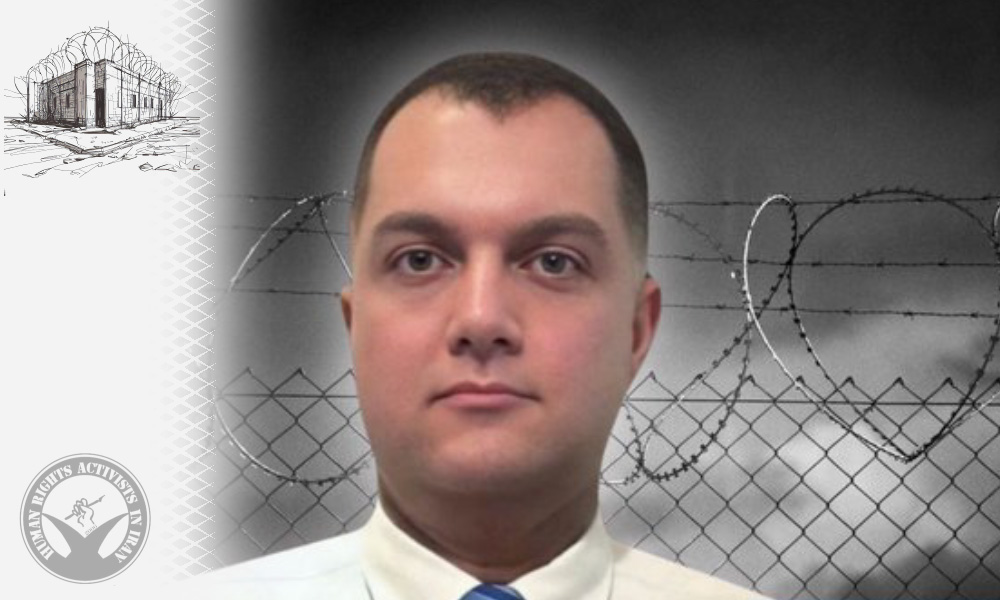
Samad Dowlatkhah, a resident of Dehdasht, was sentenced in absentia to one year in prison by Branch 103 of the Criminal Court 2 in Kohgiluyeh County.

On October 8, Judge Saeed Taheri-Nasab of the Criminal Court 2 issued this sentence in absentia, convicting Mr. Dowlatkhah of blasphemy. The ruling was subsequently communicated to him.

Mr. Dowlatkhah was previously detained by security forces in Dehdasht on October 18, 2023, but was released on bail a few hours later.

In a separate case, he faced a hearing on January 23, 2024, at Branch 101 of the Criminal Court 2 in Charam on the charge of “propaganda against the regime.”

Samad Dowlatkhah has a history of legal actions against him due to his activism.

Three Prisoners Transferred to Solitary Cells for Imminent Execution in Ghezel Hesar Prison

Yesterday, November 4, three prisoners in Ghezel Hesar Prison in Karaj, previously sentenced to death for drug-related charges, were moved to solitary confinement in preparation for their execution.

The transfer of these prisoners, sentenced earlier for drug-related offenses, was carried out as part of preparations for their execution. One of the three prisoners is an Afghan national. Further details, including the identities of these inmates, are being investigated by HRANA.

According to data gathered by the Department of Statistics and Publication of Human Rights Activists, Ghezel Hesar Prison in Karaj witnessed the highest number of executions in 2023, with Zahedan Prison following closely behind. For a comprehensive examination of the details and statistics surrounding the executions in Iran, refer to HRANA’s report.

Two Prisoners Executed in Urmia Prison

On Monday, November 4, 2024, two prisoners previously convicted of murder in separate cases were executed in Urmia Prison, according to HRANA.

The two men, identified as Ali Momeni and Ramin Kazem Aliloo, had been moved to solitary confinement on Sunday, November 3, in preparation for their executions.

A third prisoner on death row, who is Ali Momeni’s brother, received a temporary reprieve from the victim’s family and was returned to the general prison ward.

At the time of this report, prison officials and relevant authorities have not officially confirmed these executions.

According to latest HRANA’s annual report over between October 10, 2023, and October 8, 2024, at least 811 individuals were executed by hanging in Iran, rising to 23.06% compared to the same period last year. Of these executions, four were carried out in public. Many of the defendants were denied a fair trial.

Iranian Jewish Citizen Arvin Ghahremani Executed

At dawn on Monday, November 4, Arvin Ghahremani (also known as Nathaniel), a young Iranian Jewish man, was executed in Dizelabad Prison in Kermanshah. His execution followed a conviction and death sentence stemming from a deadly altercation, as reported by Mizan, the judiciary’s media outlet.

Ghahremani had been arrested in November 2022 after a dispute over financial issues with Amir Shokri, a Muslim citizen, escalated into violence, resulting in Shokri’s death. Following a swift judicial process, Ghahremani was sentenced to death.

The Kermanshah Prosecutor’s Office stated that Ghahremani’s trial included his chosen legal representation, who filed three appeals for a retrial—all denied by the Supreme Court. Despite efforts by prominent figures to negotiate with Shokri’s family for a pardon or to accept blood money (diyah), the family ultimately refused, demanding the death sentence be carried out.

Previously, HRANA reported rising concerns among Iran’s Jewish community and human rights advocates about Ghahremani’s case, particularly the rejection of his retrial requests and the execution’s impending likelihood.

Human rights activists argue that qisas (retributive justice) laws in Iran exhibit systemic discrimination against religious minorities, as these laws are applied unequally. Under Iranian law, qisas mandates capital punishment if a non-Muslim kills a Muslim, but does not apply the same punishment if a Muslim kills a non-Muslim; in such cases, only blood money or lesser punishments are typically imposed. Activists assert that this disparity undermines fair trial standards and the equal rights of non-Muslim citizens.

This lack of legal protection has historically enabled extrajudicial killings of non-Muslim citizens, especially Iran’s Baha’i community, by extremist groups, intensifying concerns about religious discrimination in Iran’s justice system.

Two Prisoners Executed in Qom Prison

At dawn on Tuesday, October 29, the death sentences of two prisoners, previously convicted of murder in a joint case, were carried out in Qom Prison.

HRANA has confirmed the identities of these individuals as Ali Mostavafi and Hossein Ali Maleki, both residents of Malard County.

Based on information received by HRANA, Mostavafi and Maleki had been previously arrested on murder charges and were subsequently sentenced to death in a joint case by the judicial authorities.

As of this report’s publication, prison officials and responsible agencies have not publicly announced the executions.

According to the Department of Statistics and Publication of Human Rights Activists in Iran, in 2023, at least 767 citizens, including 21 women and 2 juvenile offenders, were executed. Of these, the executions of 7 individuals were carried out in public. Additionally, during this period, 172 others were sentenced to death, with 5 of them sentenced to public execution. It is worth noting that during the same period, the initial death sentences of 49 other individuals were also upheld by the Supreme Court.

Subscribe to Our Newsletter

Now is definitely not the time to stop reading!

Three Citizens Sentenced to a Total of 4 Years in Prison on Political Charges

Diako Azizi, Loghman Zangi, and Siamand Zangi, residents of Oshnavieh, have each been sentenced to 16 months in prison by the city’s Criminal Court, according to a report by Kurdpa.

The verdict, issued by Branch 101 of Oshnavieh’s Criminal Court 2 under Judge Ansari, charges Azizi, Zangi, and Zangi with “collaboration with an opposition group” against the government. Each individual received a 16-month prison term.

These citizens were initially detained by security forces in Oshnavieh on Wednesday, September 4, 2024. Following their arrests, Siamand Zangi was released on bail on September 25, and Loghman Zangi was released on October 5, 2024.

Female Student Detained After Removing Clothes

This afternoon, November 2, a female student at Tehran’s Islamic Azad University, Science and Research Branch, removed her clothes in a public. Student sources report that security forces violently detained her, transferring her to an undisclosed location.

According to Amirkabir Newsletter, the confrontation began when university security officers approached the student aggressively, citing her lack of compliance with hijab regulations. In response to this altercation, she removed her clothing and remained in only her undergarments as a form of protest before being detained with force.

In contrast, Fars News Agency disputed the claims of violent treatment, alleging instead that “the student attended class in inappropriate attire. After university security reminded her of the campus dress code, she undressed and walked around the university grounds unclothed.”

However, some sources have attributed the student’s actions to her mental state, denying any link to the issue of compulsory hijab.

The student’s identity remains unknown. HRANA continues to investigate whether mandatory hijab may have been a factor in this incident and to clarify the student’s possible motivations.

The original report was published on November 2 and was updated with new information on November 4.

Gholamhossein Kalbi, Political Prisoner in His 24th Year of Life Sentence, Denied Medical Care Amid Deteriorating Health

Political prisoner Gholamhossein Kalbi is now in his 24th year of a life sentence at Sheiban Prison in Ahvaz. He suffers from multiple health conditions, yet has been denied specialized medical care and transfer to treatment centers.

As per HRANA’s information, Mr. Kalbi suffers from a hernia, ear and dental infections, and has recently contracted a fungal infection that has caused severe toe infections. Despite his worsening condition and repeated transfers to the prison infirmary, he has only received basic examinations and minimal medication due to limited medical resources. Kalbi urgently needs specialized medical care, which has yet to be approved.

According to a source close to the case, the Ministry of Intelligence, overseeing Kalbi’s file, recently rejected his request for transfer to a prison near his home in Mahshahr. “He is held in Sheiban’s security ward, where he lacks any area for exercise and lives in overcrowded conditions, with twice the capacity in his cell,” the source told HRANA.

Kalbi was arrested on January 8, 2001, along with Saeed Masouri, in Dezful, on charges of membership in the People’s Mojahedin Organization of Iran. In 2002, he was sentenced to death by the Tehran Revolutionary Court on charges of “enmity against God” (Moharebeh). His death sentence was later commuted to life imprisonment.

After his arrest, he spent 14 months in solitary confinement at the Ministry of Intelligence’s detention facility in Ahvaz before being transferred to Ward 209, and later to Ward 350 of Evin Prison. Following his sentencing, he was moved to Mahshahr Prison and later to Karun Prison in Ahvaz. After the closure of Karun Prison in February 2016, he was transferred along with other prisoners to Sheiban Prison.

In October 2016, his brother, the last remaining member of his family, suffered a stroke and passed away while en route to the prison for a face-to-face visit with him—a visit he had managed to secure after five years of effort. The judicial authorities denied Mr. Kalbi leave to attend his brother’s funeral.

The troubling case of Kalbi underscores a broader pattern of neglect within Iranian prisons. In 2023, the Department of Statistics of Human Rights Activists in Iran documented 1,390 instances of denial or neglect of medical care for prisoners, highlighting a systemic issue that urgently demands attention.

Prisoner Executed in Zahedan Prison

On Thursday, October 31, 2024, the execution of a prisoner previously sentenced to death on murder charges was carried out in Zahedan Prison, according to Haal Vsh.

The prisoner has been identified as Hassan Ekhlasi, approximately 35 years old, a resident of Golshan County.

According to this report, Mr. Ekhlasi was arrested in 2011 in Golshan County on charges of murder with a bladed weapon. He was later sentenced to death by the Criminal Court. On Tuesday, he was transferred from Zahedan Prison’s Security Ward 2 to solitary confinement in preparation for the execution.
As of the time of this report, the execution has not been publicly confirmed by prison authorities or relevant officials.

In 2023, 66% of HRANA’s reports on executions lacked official announcements by judicial authorities and went unreported by media inside Iran, highlighting a troubling lack of transparency in due process.

According to the Department of Statistics and Publication of Human Rights Activists in Iran, in 2023, at least 767 citizens, including 21 women and 2 juvenile offenders, were executed. Of these, the executions of 7 individuals were carried out in public. Additionally, during this period, 172 others were sentenced to death, with 5 of them sentenced to public execution. It is worth noting that during the same period, the initial death sentences of 49 other individuals were also upheld by the Supreme Court.

Three Prisoners Executed in Dastgerd Prison, Isfahan

Today, October 31, the death sentences of three prisoners, previously convicted on charges of murder and drug-related offenses, were carried out in Dastgerd Prison, Isfahan.

HRANA has confirmed the identities of the prisoners as Kourosh Salehian, Amir Jahandar, and Reza Bidabadi. Early this morning, Reza Bidabadi, sentenced to death on murder charges, was executed by hanging. Meanwhile, Salehian and Jahandar were executed on Monday, October 28, with Salehian convicted of murder and Jahandar on drug-related charges.

As of this report, prison officials and relevant authorities have yet to publicly confirm these executions.

According to latest HRANA’s annual report over between October 10, 2023, and October 8, 2024, at least 811 individuals were executed by hanging in Iran, rising to 23.06% compared to the same period last year. Of these executions, four were carried out in public. Many of the defendants were denied a fair trial.