Supreme Court Rejects Retrial Plea for Death-Row Inmate Abbas Deris

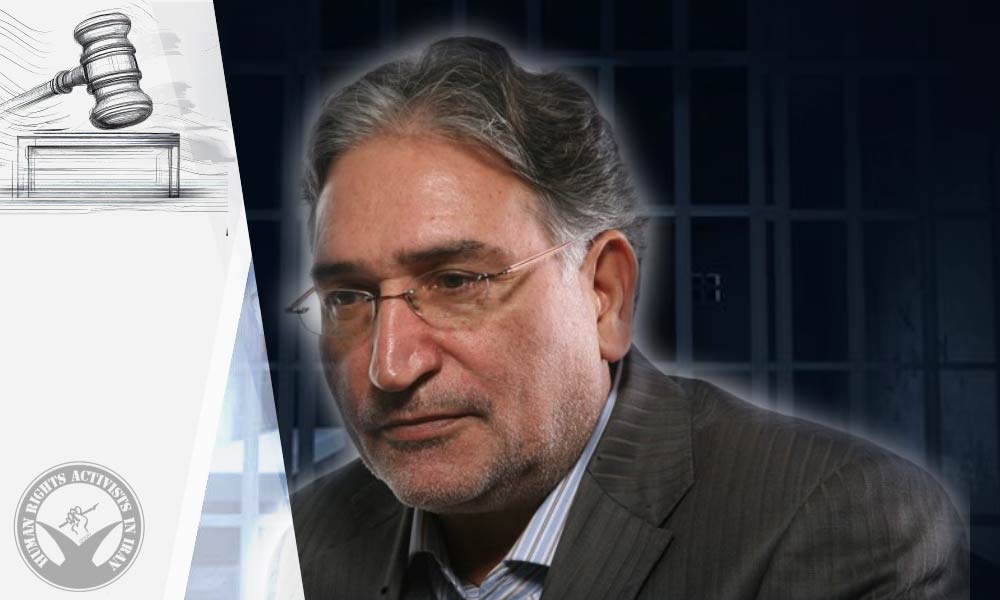
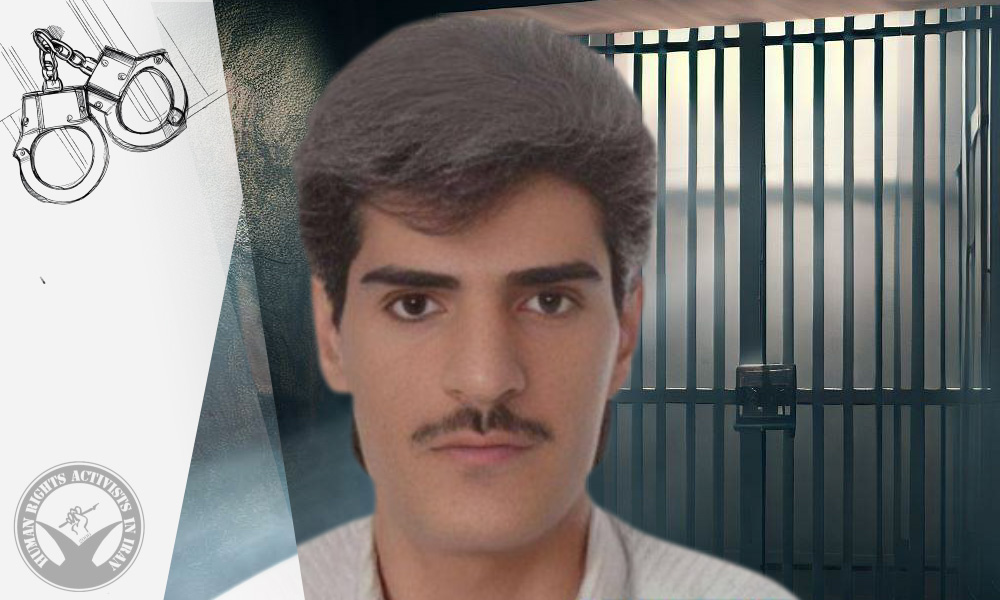
The Supreme Court has dismissed Abbas Deris’s plea for a retrial. Deris, arrested during the 2019 nationwide protests (Aban Protests), faced a death sentence, with his arrest linked to charges of “enmity against God (Moharebeh).”

Despite significant flaws in the legal case and the initial verdict, the Supreme Court of Iran rejected the retrial request, as confirmed by Deris’s lawyer, Fereshteh Tabanian. The legal team has now invoked Article 477 of Iran’s Criminal Procedure Code, which allows for a retrial if a final verdict is deemed inconsistent with Islamic law.

Having initially filed the retrial request in July 2023 to Branch 9 of the Supreme Court, Deris saw a temporary suspension of the verdict. However, in the subsequent month, Tabanian announced that Branch 39 of the Supreme Court upheld the death sentence, disregarding the acknowledged flaws in the case.

Abbas Deris, currently incarcerated at Mahshahr Prison, was accused of firing shots at security forces during the protests, leading to the death of Police Captain Reza Sayyadi. His coerced confession during interrogation by the IRGC was later broadcast by Iran-state TV. However, during the trial, Deris admitted to participating in the protests but denied any involvement in shooting at security forces.

It is noteworthy that Deris’s brother, also a co-defendant, was acquitted of all charges. Both were arrested on December 8, 2019. Abbas Deris, aged approximately 49, is a father of three children.

Background on Aban Protests:

In November 2019, a surge in fuel prices triggered widespread protests across numerous cities in Iran. The Parliamentary National Security and Foreign Policy Commission reported 7,000 arrests during these protests. Human rights organizations documented hundreds of deaths at the hands of the security apparatus.


Four Political Prisoners on Death Row Executed

On January 29, 2024, a somber day unfolded at Ghezel Hesar Prison in Karaj as four political prisoners on death row—Mohsen Mazloum, Pezhman Fatehi, Vafa Azarbar, and Hazhir Faramarzi—were executed. The previous day, they were transferred from Evin Prison to Ghezel Hesar in anticipation of their impending execution.

Despite international efforts urging Iran’s regime to halt the execution, these prisoners met their fate. Masoud Shams-Nejad, their legal representative, expressed his dismay, stating, “My clients were executed this morning, notwithstanding the fact that both preliminary and final indictments had established that the defendants were arrested before the alleged operation. It’s retribution before the crime, an irony which has now a reality.”

On July 23, 2022, Iran Police Intelligence (FARAJA) arrested them in the Sumay-ye Beradust District of Urmia County. Tasnim, a security-institution-affiliated news agency, reported their arrest as part of “a network of Israeli spies.” The agency claimed they possessed operational and communication equipment, along with explosive materials, and had entered the country from the Kurdistan region with plans to carry out unprecedented terrorist operations in sensitive, secure locations.

Approximately 80 days after their arrest, Iran’s state TV aired their coerced confessions, accusing them of spying for foreign intelligence and stating they had been apprehended in sensitive sites in Isfahan.

Their lawyer had earlier decried the due process and conviction as unjust and unfair, asserting that he and his clients were denied their rights throughout the proceedings.

Human rights organizations had questioned the details of these individuals’ legal cases, including the credibility of the charges, evidence, legal proceedings, and the performance of security institutions. In recent weeks, prominent groups and figures emphasized that the Iranian regime had scapegoated them through a setup case, mirroring a precedent set by the regime.

Concerns Rise as Khaled Pirzadeh Hospitalized in Evin Prison

Political prisoner Khaled Pirzadeh has been hospitalized since January 19, 2024, due to a deteriorating health condition.

A reliable source close to Pirzadeh’s family confirmed the news, stating, “Last week, Pirzadeh was admitted to Loghman Hospital in Tehran due to heart arrhythmia. He is currently in the ICU with a bound chain on his ankle.”

Earlier this year, Pirzadeh was sentenced to five years and eight months in prison by Branch 26 of the Revolutionary Court for “assembly and collusion against national security” and an additional eight months for “propaganda against the regime.”

In September 2023, security forces arrested Pirzadeh in Ahvaz, and he was subsequently transferred to Ward 209 of Evin Prison in Tehran. On October 15, he was moved to Ward 6 within the same prison.

It is noteworthy that Pirzadeh has a history of previous arrests and convictions related to his activism.

Farshad Dastmardi Receives Three-Year Sentence on Political Charges

Farshad Dastmardi, one of the detainees during the 2022 nationwide protests, has been sentenced to three years, seven months, and 16 days by the Criminal Court in Dehdasht.

Presiding over the case, Judge Taheri issued a three-year prison term for “disturbing public opinion and acting against national security” and seven months plus 16 days for “propaganda against the regime.”

Reportedly, this verdict was handed down without a formal trial, as shared by a source close to Taheri’s family.

Dastmardi was arrested by IRGC’s Intelligence agents in Dehdasht in August 2023 and later transferred to the Ministry of Intelligence’s facility in Yasuj. He was released on bail on January 21, 2024.

During the 2022 nationwide protests, he was also arrested by security forces and released on bail of one and a half billion tomans, approximately 30,000 dollars. This previous arrest further adds to the series of judicial confrontations Dastmardi has faced over time.

Execution of Three Inmates in Shirvan and Sabzevar Prisons

In a recent development, three inmates were executed in Shirvan and Sabzevar Prisons for crimes related to murder and drug offenses.

On January 22, 2024, the Iran Human Rights Organization reported the execution of 37-year-old Hossein Ali Shakurian and 51-year-old Naser Mavedat at Sabzevar Prison. Both individuals had been convicted of drug offenses in separate legal cases three and five years ago, respectively.

Additionally, on January 21, Shirvan Prison carried out the execution of 40-year-old Moslem Aliyari, who had been convicted of murder. The circumstances surrounding these executions raise concerns and prompt discussions on the broader issues related to capital punishment.

No official sources or domestic media outlets within the country have provided coverage of these executions at the time of writing. The lack of official information raises concerns about transparency and accountability in the execution process.

In 2023, the Department of Statistics and Publication of Human Rights Activists in Iran registered the execution of  746 individuals. Out of these, 6 were carried out in public. Among the executed individuals whose genders were identified, 597 were male and 20 were female. Additionally, 2 juvenile offenders, defined as individuals under the age of 18 at the time of their alleged crimes, were also executed. For a comprehensive examination of the details and statistics surrounding the executions in Iran, refer to HRANA’s annual report.

Subscribe to Our Newsletter

Now is definitely not the time to stop reading!

Journalist Parisa Salehi Receives One-Year Prison Sentence and Additional Penalties

Journalist Parisa Salehi has been sentenced to one year in prison by the Revolutionary Court in Karaj. In addition to imprisonment, she faces exile, a travel ban, and restrictions on internet and social media usage.

Salehi disclosed that Branch 1 of the Karaj Revolutionary Court, led by Judge Musa Asef Al-Hosseini, issued the verdict, imposing a one-year prison term, a two-year ban on leaving the country, a mandatory two-year residence in Zanjan, and limitations on internet and social media usage for two years for the charge of “propaganda against the regime.”

In September 2023, security forces conducted a comprehensive search of Salehi’s residence, leading to her subsequent summons to the Karaj courthouse. There, she was indicted and later released on bond.

Salehi is a journalist at Donya-e-Eqtesad Newspaper and a master’s student in economics at the University of Tehran.

Executions of Three Inmates for Drug Offenses and Murder in Shiraz Prisons

On January 24, 2024, three inmates were executed for drug offenses and murder in Adelabad and Pir-bano Prisons in Shiraz, according to Iran Human Rights Organization.

The executed individuals include Fazel Shafiei, 40, and Morteza Nadimi, 35, both identified as having been executed in Adelabad Prison. They were convicted of drug offenses four and two years ago, respectively. The third inmate, convicted of murder five years ago, was executed in Pir-Bano Prisons.

As of the time of writing, no official sources or domestic media outlets within the country have provided coverage of these executions. The absence of official information raises concerns about transparency and accountability in the execution process.

In 2023, the Department of Statistics and Publication of Human Rights Activists in Iran registered the execution of  746 individuals. Out of these, 6 were carried out in public. Among the executed individuals whose genders were identified, 597 were male and 20 were female. Additionally, 2 juvenile offenders, defined as individuals under the age of 18 at the time of their alleged crimes, were also executed. For a comprehensive examination of the details and statistics surrounding the executions in Iran, refer to HRANA’s annual report.


Supreme Court Upholds Death Sentence for Yousef Ahmadi

Branch 39 of the Supreme Court in Iran has confirmed the death sentence for political prisoner Yousef Ahmadi, according to Kurdpa.

Currently incarcerated in Sanandaj Prison, Ahmadi was initially condemned for Baghi (armed rebellion) by the Sanandaj Revolutionary Court, presiding over by Judge Saeed, in September 2023.

In the same legal proceeding, co-defendants Mohammad Karimi, Baset Karimi, and Mohammad Feyzi were handed prison sentences of 25, 20, and 20 years, respectively. These individuals were first apprehended by security forces in April 2020 and later transferred to Sanandaj Prison after the completion of the interrogation process at a security detention facility.

One of Kurdpa’s sources revealed that collaboration with a Kurdish opposition party was cited during the trial as an example supporting this charge. However, specific details regarding their case and the actions underlying the charges remain undisclosed.

Dual Execution in Hamedan Prison for Drug-Related Crimes

On January 21, 2024, Hamedan Prison officials carried out the execution of two inmates convicted of drug-related offenses.

HRANA has identified the individuals as Salman Salimi from Kermanshah and Ahmad Haeri.

As of the current writing, there have been no reports on these executions from official sources or domestic media outlets within the country.

The reports from the Department of Statistics and Publication of Human Rights Activists for the year 2023 reveal a concerning prevalence of executions for drug offenses in Iran, constituting 56.4% of the total executions. For a comprehensive examination of the details and statistics surrounding the executions in Iran, refer to HRANA’s report.


Execution of Inmate in Ghezel Hesar Prison, Karaj

On January 23, 2024, Ghezel Hesar Prison officials carried out the execution of inmate Ahmad Asgarat, convicted of murder.

According to HRANA, Asgarat was implicated in the murder of a man, allegedly in collaboration with his wife, following an extramarital affair.

As of now, there have been no reports on this execution from official sources or domestic media outlets within the country.

It’s worth noting that on the same day, two other prisoners, Mohammad Ghobadloo and Farhad Salimi, were also executed.

According to data gathered by the Department of Statistics and Publication of Human Rights Activists, Ghezel Hesar Prison in Karaj witnessed the highest number of executions in 2023, with Zahedan Prison following closely behind. For a comprehensive examination of the details and statistics surrounding the executions in Iran, refer to HRANA’s report.