Five Inmates Executed in Ghezel Hesar and Arak Prisons

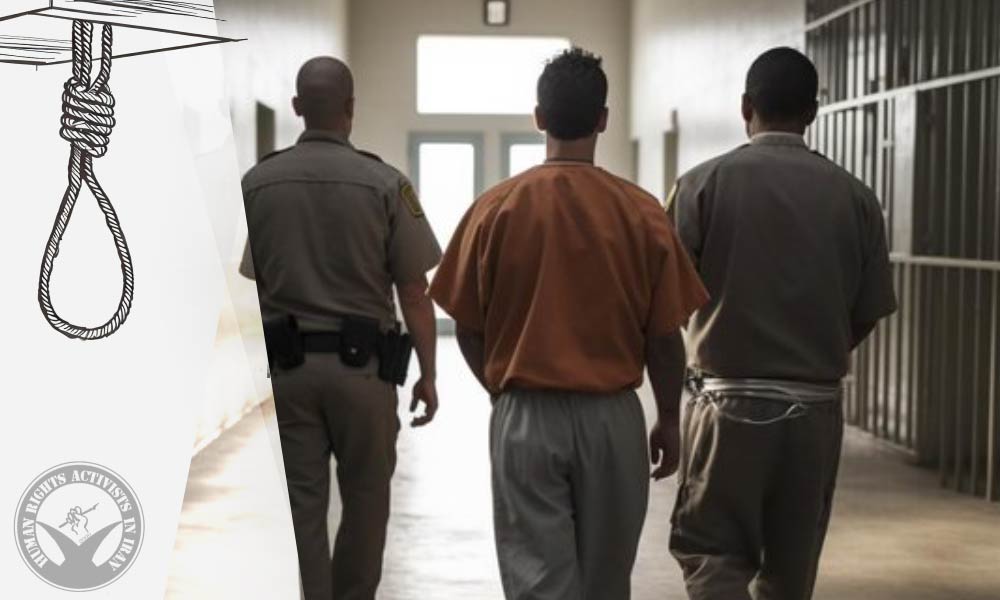
Five inmates were executed on May 10, 2023, with three of them executed in Ghezel Hesar Prison in Karaj and two in Arak Prison. All five inmates had previously been convicted of drug-related crimes.

HRANA has identified the three inmates executed in Ghezel Hesar as Hossein Panjak, Abdolhossein Emami Moghadam, and Babak Aghaye. According to an informed source, they had been imprisoned for 17, 9, and 8 years, respectively. Mizan, the judiciary’s news agency, claimed that these individuals were members of a “cocaine cartel known as Panjak.”

Currently, five death-row inmates are still being held in solitary confinement, awaiting imminent execution.

On the same day, two inmates, convicted of drug-related crimes, were executed in Arak Prison. HRANA is working to identify these inmates.

None of the official sources or media outlets inside the country have reported these executions at the time of writing.

This recent surge in executions is alarming, as at least 65 prisoners, including two women and two prisoners of conscience, have been executed in various Iranian prisons over the past twelve days.”

Fatemeh Tadrisi Arrested in Tehran

On May 9, 2023, Fatemeh (Mojgan) Tadrisi was arrested by security forces and taken to Qarchak Prison in Varamin.

According to HRANA, the news agency of Human Rights Activists, on May 9, 2023, Fatemeh Tadrisi was arrested by security forces in Tehran.

According to an informed who spoke to HRANA, to participate in a teachers’ rally, Tadrisi went to Baharestan Square, where she was arrested by security forces. In a phone call, she informed her family that she had been detained in Qarchak Prison in Varamin. This marks Tadrisi’s third arrest since the start of the nationwide protests in 2022. She was previously detained for a month in Kachooie Prison and spent some time in Evin Prison.

The reasons for Tadrisi’s arrest and the allegations against her are currently unknown


Three Inmates Executed in Rajai Shahr Prison

Three inmates were executed on May 10, 2023, in Rajai Shahr Prison in Karaj. Two of the individuals had been convicted of murder, while the third had been convicted of rape. Their identities have not been disclosed.

According to HRANA, the news agency of Human Rights Activists, on May 10, 2023, quoting Rokna, three inmates were executed in Rajai Shahr Prison.

One of the inmates was reportedly convicted of murder three years ago, while the second was involved in a fatal group fight in southern Tehran eight years ago. The third had previously been convicted of rape.

Yesterday, HRANA reported that death-row inmates in Rajai Shahr Prison had been relocated to solitary confinement, often an indication of imminent execution. This recent surge in executions is alarming, as at least 57 prisoners, including two women and two prisoners of conscience, have been executed in various Iranian prisons over the past eleven days.

UN Human Rights Chief Volker Türk has described this surge as “frightening” and urged Iranian authorities to halt all executions.”

In 2022, the Department of Statistics and Publication of Human Rights Activists in Iran registered 457 reports related to the death penalty. This included 92 death sentences, including the conviction of 6 people to public execution and 565 execution sentences were carried out, 2 of which have been carried out in public. Based on the announced identifications of some of the executed individuals, 501 were male and 11 were female. In addition, 5 juvenile offenders were executed in 2022, meaning they were under the age of 18 at the time they committed the crime.


Iran’s Execution Rate Rises Alarmingly with At Least 57 Executions in Eleven Days

Over the past eleven days, at least 57 prisoners, including two women and two prisoners of conscience, have been executed in various Iranian prisons. The executions were for drug-related crimes, murder, “spreading corruption on earth,” and blasphemy. HRANA has compiled a statistical analysis of the details of the executions during this period.

According to HRANA, the news agency of Human Rights Activists, there has been a noticeable increase in the execution of prisoners in Iranian prisons from April 28 to May 9, 2023.

Based on the reports compiled by HRANA, the death sentences were carried out in several prisons, including Rajai Shahr (Karaj), Ghezel Hesar (Karaj), Urmia, Salmas, Ardabil, Dastgerd (Isfahan), Vakilabad (Mashhad), Neishabur, Torbat-e-Jam, Rasht, Yazd, Birjand, Qazvin, Minab, Bandar Abbas, Zahedan, Khorramabad, and Iranshahr.

Out of the 57 executed prisoners, 36 were convicted of drug-related charges, 17 for murder, two for insulting the Prophet of Islam, and one for alleged “spreading corruption on earth.” In one case the charges remain unknown.

At least 38 death-row prisoners were also transferred to solitary confinement in Salmas, Urmia, Khorin, Ghezel Hesar (Karaj), Yazd, Bandar Abbas, Birjand, Adelabad (Shiraz) and Zahedan, which could be a prelude to their execution. HRANA is investigating their fate, and the statistics presented in this report could increase.

As of the time of writing, most of these executions have not been announced by official sources or media inside Iran.

The issuance and execution of death sentences violate the right to live and have been heavily criticized by international organizations, with Iran ranking first globally in execution rate per capita.

On May 9, UN Human Rights Chief Volker Türk called these recent increases in executions “frightening” and urged Iranian authorities to halt all executions. “On average so far this year, over 10 people are put to death each week in Iran, making it one of the world’s highest executors,” said Türk.

In 2022, the Department of Statistics and Publication of Human Rights Activists in Iran registered 457 reports on the execution of 565 people and death sentences for 92 people, six of whom were sentenced to be hanged in public. Of these 565 executions, two death sentences were carried out in public, and five were juvenile offenders who were under 18 years old at the time of committing the alleged crime.

The breakdown of charges for these executions is as follows: 122 individuals were executed for drug-related offenses, 59 for murder, 6 for undisclosed charges, 1 for adultery, 1 for ideological charges, 1 for corruption, 1 for Moharebeh (political security), and 1 for non-political Moharebeh.

Skylar Thompson, the head of Global Advocacy and Accountability of Human Rights Activists, stated that “the surging rate of executions in Iran illustrates an utter disregard for human life. Under no circumstance does the ongoing use of the death penalty, for drug-related offenses in particular, amount to what is permittable under international law. Iranian authorities have an absolute obligation to uphold international human rights standards and instead, there is ongoing impunity for grave violations of the right to life–and more. The international community must not delay in sounding the alarm, they should call for a stay of executions for those currently facing execution and a moratorium on the death penalty, at a minimum, for crimes not amounting to “most serious” under international law.”


Ten Death-Row Prisoners at Risk of Imminent Execution in Rajai Shahr Prison

HRANA, Human Rights Activists News Agency- Ten inmates on death row have been relocated to solitary confinement in Rajai Shahr Prison in Karaj, indicating their imminent execution.

The charges of which they have been convicted are currently unknown, but many prisoners convicted of murder or armed robbery are held in this prison. HRANA is working to identify these inmates.

In 2022, the Department of Statistics and Publication of Human Rights Activists in Iran registered 457 reports related to the death penalty. This included 92 death sentences, including the conviction of 6 people to public execution and 565 execution sentences were carried out, 2 of which have been carried out in public. Based on the announced identifications of some of the executed individuals, 501 were male and 11 were female. In addition, 5 juvenile offenders were executed in 2022, meaning they were under the age of 18 at the time they committed the crime.

It is important to note that Iran’s judicial authorities do not publicly announce most executions, which are known as “secret executions” by human rights organizations.

Subscribe to Our Newsletter

Now is definitely not the time to stop reading!

Arash Sadeghi Sentenced to over Four Years

The Tehran Revolutionary Court sentenced former political prisoner Arash Sadeghi to four years and three months, with three years and seven months being enforceable.

According to HRANA, the news agency of Human Rights Activists, former political prisoner Arash Sadeghi was sentenced to four years and three months in prison.

Sadeghi’s lawyer revealed that in a retrial, Branch 26 of the court sentenced Sadeghi to three years and seven months for assembly and collusion against national security and eight months for propaganda against the regime.

If the verdict is upheld on appeal, based on Article 134 of the Islamic Penal Code, three years and seven months for the first charge will be enforceable.

Sadeghi had previously been sentenced to five years and eight months in late-January 2023, along with additional punishment for the same court branch. The retrial was held on April 11, 2023, following Sadeghi’s lawyer’s objection.

Amid the 2022 nationwide protests, on October 12, 2022, security forces arrested Sadeghi and took him to Ward 209 of Evin Prison. On January 21, 2023, he was released on bail.

Sadeghi faced other arrests and convictions in the past.

Ghafar Rezaian Arrested in Tehran

On May 7, 2023, security forces arrested Ghafar Rezaian, a resident of Zanjan, in Tehran and took him to an undisclosed location.

According to HRANA, the news agency of Human Rights Activists, on May 7, 2023, Ghafar Rezaian was arrested in Tehran.

According to an informed who spoke to HRANA, the arrest was allegedly due to Rezaian’s online activism, as he had been previously threatened with arrest by security forces.

The institution responsible for the arrest and Rezaian’s current whereabouts remain unknown.

Ghafar Rezaian faced other arrests and convictions for his activism.


Student Majid Shia Ali Sentenced to Two Years and Six Months

Majid Shia Ali, a PhD student at the Islamic Azad University of Mashhad, has been sentenced to two years and six months in prison, with one year and six months being enforceable, according to Article 134 of the Islamic Penal Code.

The Court of Appeals of Razavi Khorasan Province handed down the verdict, sentencing Shia Ali to one year and six months for ‘membership in groups inside the country to act against national security,’ six months for ‘propaganda against the regime,’ and six months for ‘insulting the Supreme Leader of Iran.’ The Mashhad Revolutionary Court had initially sentenced Shia Ali to six years and six months for these same charges.

According to reports obtained by HRANA, Shia Ali faced this legal case for publishing a post online about the 2022 nationwide protests.

In November 2022, Shia Ali was arrested and spent 56 in detention, including 40 days in solitary confinement in an IRGC detention facility. He was later released on bail from Vakilaad Prison in early February 2023.

Enayatollah Naeimi Arrested After Court Hearing

HRANA, Human Rights Activists News Agency- On May 6, 2023, Baha’i citizen Enayatollah Naeimi was arrested and taken to an undisclosed location after a court hearing held by the Isfahan Revolutionary Court. The charges against Naeimi remain unknown.

Naeimi had previously been arrested on September 28, 2023, in Isfahan, during which security forces searched his house, workplace, and garden in the Isfahan suburbs. He was later released temporarily on bail from Isfahan Prison.
Naeimi was a member of the now-disbanded Baha’i group, “Yaran e Iran” or “Friends of Iran,” which catered to the spiritual and social needs of the Baha’i community.

According to HRANA annual report, from the total human rights reports regarding the violation of religious minorities’ rights, 64.63% belonged to the violation of the rights of Baha’is.

According to unofficial sources, it is estimated that more than 300,000 Baha’is live in Iran, but the Iranian Constitution recognizes only Islam as the official religion, in addition to Christianity, Judaism, and Zoroastrianism. Baha’i faith is not considered legitimate by the authorities, and the rights of Baha’is in Iran have been systematically violated for years.

The deprivation of the freedom to practice their religion is a breach of Article 18 of the Universal Declaration of Human Rights and Article 18 of the International Covenant on Civil and Political Rights. The United Nations covenant holds that every person has the right to freedom of religion, freedom of converting religion, as well as freedom of expression, individually or collectively; openly or secretly.


Two Prisoners of Conscience Executed in Arak Prison

On May 8, 2023, Yousef Mehrad and Seyed Sadrollah Fazeli Zare were executed in Arak Prison after being sentenced to death for insulting the Prophet of Islam. Earlier, HRANA had reported on their relocation to solitary confinement for one day which is deemed as a prelude to carrying out the death penalty.

According to Mizan, the judiciary’s news, Fazeli Zare had been accused of “insulting the Prophet of Islam, blasphemy, apostasy, accusing the Prophet of Islam’s mother of adultery, and burning the Quran”, while Mehrad was charged with “insulting the Prophet of Islam and blasphemy.”

The prisoners were among seven individuals arrested for running a Telegram channel named “Criticism of Superstition and Religion,” and had been held in solitary confinement for two months since their arrest.

In the first two parts of their legal case, the Arak Criminal Court sentenced Mehrad and Fazeli Zare to death for insulting the prophet of Islam. In the third part, the Arak Revolutionary Court sentenced Mehrad, Fazeli Zare, and another co-defendant, Farhad Chehrehsa, to eight years for “running groups to act national security.”
Despite an appeal by their lawyers to the Supreme Court, the verdict was upheld.

Mehrad was a resident of Ardabil and the father of a three-year-old child.