





Human Rights Activists News Agency (HRANA) – Maryam Akbari Monfared, a political prisoner held in the women ward’s of Evin Prison, has penned an open letter in response to the highly controversial September 8th executions of Kurdish political prisoners Ramin Hossein Panahi, Loghman Moradi, and Zanyar Moradi.
Monfared, whose own siblings have been executed, expressed her sympathy for the mothers and sisters of the executed prisoners and chastised the broken promises of both current president Hassan Rouhani and the past 40 years of Iran’s Islamic governance.
The full text of her letter, translated into English by HRANA, is below: 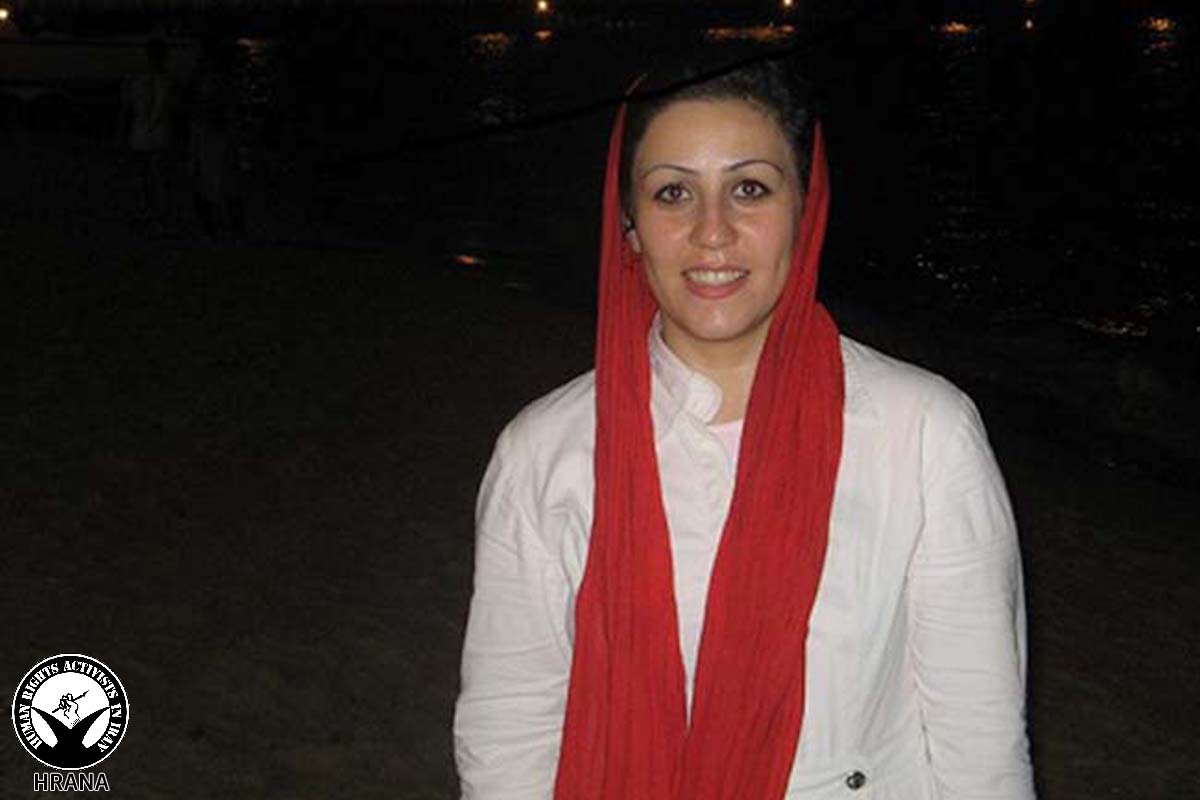
It has been a week since that day, September 8th, 2018.
September is the month of blood in Iran: September 8th, 1978*, and September of 1981**.
September 8th: Everyone is worried. My ward mates and I have heart palpitations. We are in a swarm of contradictory news flashes. Some say the families were told the executions have stayed; someone else says that their families visited them yesterday for the last time.
And then comes the 8 p.m. news, broadcasting a speech from a figurehead of a government touting “prudence and hope.”*** I think to myself, “Hope is such a beautiful word!”. Rouhani promises to break the chains of injustice with a golden key and to sow new hopes in the souls of the nation. He campaigned as his predecessors did before him, riding the wave of the country’s emotional elan. The ink on the ballots was still wet when he changed his stripes. How despicable of him to preside over the nation’s highest rate of executions and civilian crackdowns in 30 years.
All eyes in the ward are transfixed on the TV screen and the news ticker running at the bottom. Ears in the ward are attuned to the speaker’s’ every word.
Finally, the 10:30 p.m. broadcast: “Three terrorists…”
That’s right. For 40 years, they sent this land’s youth to the gallows, lined them up before firing squads, sent them off wholesale to torture chambers and prisons. Then, brazenly, they speak of their actions under the guise of eliminating “terrorism” and other excuses of this ilk. The chariots of oppression, torture, and captivity have been riding unbridled for 40 years.
I don’t intend to re-narrate the crimes of the regime, for the vileness and cruelty of the establishment are readily apparent. The news is abuzz with sympathy and condolences. Perhaps now it is too late to add my own….but for a while, I was unable to muster the presence of mind to pen even a few lines to the mothers and sisters of these beloved men.
To my mothers and sisters: I know your pain very well. I can almost sense the unbearable, scalding pain in your hearts. I know the whispers of the warm lullabies you used to sing, even those lost in the wrinkled lines of your bodies or drowned out by screams in a faraway land. I know the bitter taste of those tears shed by poppy flowers.
I know that you are adding a page to what will be the proud and bright history of Iran’s fight for freedom. I wish to honor your motherhood, this exalted, humane quality, and to thank you for your endless, unabating kindness. Your name is a comforting breeze in the sky. Your familiar faces and your kind gaze bear the promise of life, love, and resistance. When the flames of injustice burn your cheeks, I will put out the flames by touching your cheek to my own, which is frozen in the grimace of injustice.
I am brimming with unspoken words. My tears and the lumps in my throat are bursting with the pain of oppression. But now is not the time to cry. We have to spread our screams all over like ashes. I will lean against your warm chest from behind these stony and cold prison walls. My heart is ablaze with pain, and the tip of the flames reach my throat. This is not only the fire of pain–it is also the fire of life. I wish to carry your tears and your anguish on my shoulder, to feel the burden of this responsibility for the rest of my life. My mothers! My sisters! We must harness the power of our collective pain to soothe the wounds of the Iranian freedom movement.
The vampire will not leave its throne of darkness unless we shake that throne and force it to flee. Let me hold your warm hands with my cold hands, and together, we will join the ranks of the justice movement for our loved ones. To bring to justice the ones responsible for these horrific crimes, we must join forces.
Maryam Akbari Monfared
Evin Prison
September 2018
************************
Maryam Akbari Monfared was arrested amid the 2009 Green Movement protests, and in June 2010 was sentenced to 15 years in prison by Judge Salavati in Branch 15 of Revolutionary Court for “enmity against God and the Islamic government through membership in the Iranian Mojahedin-e Khalq (MEK).” Monfared has denied these accusations.
Two of her brothers were executed in 1981 and 1984 by revolutionary courts for membership in the MEK. In the summer of 1988, two more of her siblings — a brother and a sister — were executed as part of a widespread massacre of political prisoners. In a letter to former UN Special Rapporteur Ahmad Shaheed, Monfared quoted her sentencing Judge: “You [Monfared] are bearing the burden of your siblings’ [political activities].”
Monfared served the first two years of her sentence in Karaj’s Rajai Shahr Prison on the western outskirts of Tehran. She was then transferred in May 2011 along with eight other female prisoners to Gharchak Prison in Varamin, southeast Tehran. Shaheed protested the transfer and shed light on the deplorable conditions at Gharchak. As a result, Monfared was then transferred to the Evin Prison women’s ward, where she is serving the remainder of her sentence.
* In the last months of the Shah’s reign preceding the revolution, September 8th, 1978 came to be known as “Black Friday” when soldiers opened fire on protesters assembled in Jaleh Square, killing many.
** Iran’s then-new Islamic government intensified its crackdown on the opposition in the summer of 1981, arresting and executing a countless number of people.
*** “Prudence and Hope” was Rouhani’s slogan during both of his presidential campaigns.
Category: Ethnic Minorities
Ahvaz Resident Hassan Heydari Released on Bail

Human Rights Activist News Agency (HRANA) – On Monday, September 17, 2018, Hassan Heydari, a resident of Ahvaz (southwestern Iran) was released on 3 billion rials (approximately $23,000 USD) bail and awaits trial.
Heydari was arrested by Ahvaz Intelligence agents in August of this year. Local eyewitnesses attested that the agents beat him severely at the time of his arrest.
Hassan Heydari, a married, 25-year old poet originally from Koot Abdullah in Ahvaz, is an active participant in private poetry readings.
Azerbaijani Activist Abbas Lasani Spurns Text-Message Summons

Human Rights Activists News Agency (HRANA) – Abbas Lasani, an Azerbaijani activist and former political prisoner, will not be responding to the SMS he received from Branch 2 of Tabriz Revolutionary Court.
A resident of Ardabil in northwestern Iran–home to the country’s Azerbaijani ethnic minority–Lasani said that due to authorities’ spurious method of summoning him, he refused to attend the hearing scheduled for him on Tuesday, September 18th.
“Even ignoring the suspect intent of this summons, their delay in sending it, and the timing of the hearing on [the eve of the Muharram holidays]– it’s impossible to ignore that the summons is illegitimate, arriving by text message with no official hard copy,” Lasani said. “Appropriate preparations can’t be made in these circumstances.”
Lasani and three other Azerbaijani activists were first arrested by Intelligence agents on July 2, 2018, a few days before an annual gathering at Babak Fort, a site that has acquired symbolic importance for Azerbaijani rallies in recent years. Prior to his arrest, he had shared a video encouraging people to attend the gathering. He was released on $3,500 USD (500 million IRR) bail July 11, 2018.
Lasani was among the first of more than 80 Azerbaijani activists arrested throughout Ardabil, West Azerbaijan, and East Azerbaijan provinces at the time of the Babak Fort gathering.
Amnesty International issued a statement on August 5th of this year, calling the arrests of Azerbaijani activists “arbitrary” and unlawful, and demanded the immediate release of all individuals detained for their participation in Azerbaijani Turkic cultural gatherings.
Ahwazi Arab Activist Ahmad Neisi Released After Completing Prison Sentence

Human Rights Activists News Agency (HRANA) – Ahwazi Arab activist Ahmad Neisi (Tamimi) has completed his two-year prison sentence and was released Tuesday, September 11th from Sheyban Prison in Ahvaz, southwestern Iran.
Neisi, age 32, was among a group of four arrested by Iranian Cyber Police (FATA) in 2016 in Khuzestan province in connection to their social network activity. Along with Taregh Achrash 28, Mohammad Mahavi, 29, and Majed Achrash, 26, he was transferred upon his arrest to Evin Prison in Tehran. All four were transferred to the Ahvaz Sheyban Prison one month later.
Neisi, Achrash, Mahavi, and Achrash’s case was reviewed by Branch 2 of the Ahvaz Revolutionary Court presided by Judge Zare. After four months, they were released on bail of 2,000,000,000 Rials (approximately $15,000 USD).
Shortly afterwards, all four defendants were tried again in the same court on a charge of “acting against national security” for their social network activity, and were each sentenced to a two-year imprisonment. The conviction was upheld in appeals court.
While the conviction was being forwarded to the Enforcement Department, Neisi was unable to post bail in the interim, and turned himself in to Sheyban Prison on August 12th, 2016.
Rajai Shahr Political Prisoners Share Final Memories of Moradis and Hossein Panahi
Human Rights Activists News Agency (HRANA)- Almost one week after the hangings of Loghman Moradi, Zanyar Moradi, and Ramin Hossein Panahi (1), their fellow prisoners have written a letter to condemn their execution and relate the events leading up to it.
Dated Wednesday, September 12th, 2018, the letter was written from the Rajai Shahr Prison grounds in Karaj, on the western outskirts of Tehran, where the men were last known to be held.
The full text of their letter, translated into English by HRANA, is below:
“The tragedy happened Saturday, September 8th. As of Wednesday the 6th, [the mens’] prison visits were stopped, and on different pretexts, their comings and going within the prison, even to the clinic, were restricted. First they called Zanyar, then Loghman, up to the [prison] director’s office. Up to that point, nothing seemed out of ordinary. We paid little attention to the silence of our adjacent ward, which was usually abuzz. Silence meant that inmates there had been denied their courtyard time. Up until 4 p.m. that day, the absence of Zanyar and Loghman did not strike us as abnormal. At 4:30 p.m., though, we started to worry. When looked at all together, the anomalies of that day felt like the pulse of something sinister.
Then we were told that a truck had collided with a telephone cable, resulting in a service outage; a story we had heard before at around the same time a criminal act was about to take place. Hearing it again concerned us even more. Our only hope was that flaws had been found in their case, and that it had just been transferred to the Sanandaj Prosecutor’s Office to assign jurisdiction. In other words, we were clinging to the hope that their criminal case was not yet closed. Little did we know that rulers with snakes on their shoulders (2) were hungry for young brains, and that the court and judiciary of Zahakis are blind to the rule of law and due process.
When the sun sets on a dictatorship, the execution and massacring of prisoners is due course. Such are the workings of fate.
Miserable are those who, in face of these murders, will retreat in fear. Should that happen, the criminals will only gain resolve in their misdeeds. Cowardice conveys to them that the people can, and will, abide crime. Blessed are those who accept Zanyar, Loghman, and Ramin as their own children, children who were hanged in the prime of their youth to uproot the scaffolds and the gallows, to restore a clear skyline for the future.
Us prisoners and co-inmates of the fallen, we brace ourselves for this next, and hopefully last, wave of executions. What greater honor than to be among the last executed, to know that no young people after us will be forced to walk those gallow steps again.
If there were one single reason (although there are many) that this regime is incorrigible and will not be reformed under any circumstances, it is its killing of our nation’s noblest youth, like Zanyar, Loghman, and Ramin.
And so to those delusional people who put us on guard of how things would “get worse” [should the regime be toppled], we have to ask: what situation could conceivably be worse than this?
As fellow inmates of these three courageous martyrs of the gallows, we condemn their executions as criminal acts, and extend our condolences to their families. We have faith that their spilled blood will rattle the gates and guide a fettered nation to the dawn of freedom and justice.
Arash Sadeghi, Ebrahim Firoozi, Payam Shakiba, Pirouz Mansouri, Saeed Shirzad, Saeed Masouri, Javad Fooladvand, Hassan Sadeghi, Majid Asadi, Mohammad Banazadeh Amirkhzai
Rajai Shahr (Gohardasht) Prison
September 12th, 2018

Longtime Political Prisoner Eulogizes Fallen Moradis: “Their slippers are still outside their cells”

Human Rights Activists News Agency (HRANA)- For 10 years, Saeed Massouri, Iran’s oldest political prisoner, was detained in Rajai Shahr with Loghman and Zanyar Moradi, who were executed along with Ramin Hossein Panahi on September 8th, 2018 (1). In response to their hangings, Massouri has written a letter entitled “The Circle of Love and Rebellion.”
The full text of his letter, translated into English by HRANA, is below:
The Circle of Love and Rebellion
In prison, your cellmate and ward mates become your family. They are the one we depend on the most; they are the ones with whom we share the moments, the hours, and the many details of our lives. When I speak of three children, three friends, three brothers like Zanyar, Loghman, and Ramin — especially Loghman and Zanyar, with whom I shared a ward for 10 years — I can barely stand the sound of my own breathing. I shared in their joy and sorrow, their court sessions and solitary confinement, their stress and anxiety, their deprivation and crisis, in each and every condition imposed on us by prison life. In their absence, the prison air is stifling and heavy.
I no longer hear the sound of Zanyar’s laugh; I no longer hear the passing jokes of Loghman as he comes down the hallway. Night falls, and I can no longer visit their cells and graze from their plates. My God… their slippers are still outside their cells, but they will never be back… to think of it all, I feel as though I were the one who’s been buried.
How I wish I could rip from my chest this heavy heart, so weighed down by forty years of injustice and oppression. I wish that by crying I could drain my own veins, tear by tear, and find solace. I wish I could show the whole world what they’re doing, taking our best, most precious youth and slaughtering them, watching their bodies swing from the noose with blank, demonic stares. Then they call the killings an exercise of their authority, ranting against an offensive, threatening that if they are hit once, they will strike back tenfold. Such is their formula for dealing with the populace: when the people, exasperated at the plunder of society, stage peaceful strikes or protests, rulers deem it a “hit” and hit back by killing ten prisoners. They hang them to avenge by terror, laying accusations of “criminal” and “mercenary” upon the dead. Our people know who our children are, despite it all, by the music of their hearts.
In truth, if these three young men, and men and women like them, were not here to pierce through the darkness by offering the light of their lives, the curse of oppression and injustice would be eternal. If it weren’t for their sacrifice, then we would have no recourse but to seek freedom, justice, and human rights beneath the cloaks of mullahs, the likes of Khatami (former President) and Rouhani (current President), and our defeat would be written.
This wretched, oblivious, and eternally delusional class don’t realize that the black-and-blue circles on the necks of the fallen are circles of love, an offering from the dead to the living. They are not unlike the crown of thorns that Jesus wore.
That same vivid contusion will be the axis of concentric rings of revolt and rebellion, waged by freedom fighters against all forms of injustice and oppression.
Saeed Massouri
September 12th, 2018 / Gohardasht (Rajai Shahr) Prison, Karaj
***********
Saeed Massouri was born in 1965. After studying in Norway, he was arrested by Ministry of Intelligence agents in the city of Dezful (province of Khuzestan, southwestern Iran) upon returning to Iran in 2001. He spent 14 months in an Intelligence Office solitary cell in Ahwaz (capital of Khuzestan province) before being transferred to section 209 of Evin Prison. He was sentenced to death in 2002, but in an appeals court his sentence was commuted to life imprisonment. He is currently serving the 18th year of his sentence in the political prisoners’ ward of Rajai Shahr.
Letter from Afshin Hossein Panahi Honors Executed Brother, Supporters
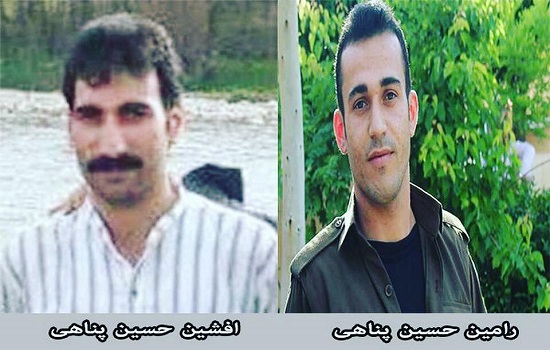
Human Rights Activists News Agency (HRANA)- Following the execution of his brother Ramin, political prisoner Afshin Hossein Panahi has expressed his gratitude and solidarity in the form of a letter, addressed to an international community which continues to champion the memory and cause of his late sibling.
At an undisclosed location in Tehran province on September 8th, Ramin Hossein Panahi was hanged to death alongside Zanyar Moradi and Loghman Moradi, without notice to their respective families or lawyers, and pursuant to a legal process on which human rights organizations had already cried foul.
Once the brothers were hanged to death, their families received threatening messages from the Ministry of Intelligence and were refused the right to inter their bodies.
In the wake of these executions, residents and merchants of several Iranian cities where Iran’s Kurdish population is highest– particularly in the provinces of Kurdistan, Kermanshah, and West Azerbaijan –went on a general strike. In response, civil activists in the cities of Sanandaj, Marivan (Kurdistan), Oshnoviyeh, Sardasht (West Azerbaijan), and Ravansar (Kermanshah) have been taken into custody.
Seven political detainees at Evin Prison, including Atena Daemi, Nasrin Sotoudeh, and Golrokh Iraee, have written letters to express their condolence to the families of Moradi, Moradi, and Panahi.
United Nations High Commissioner for Human Rights Michelle Bachelet responded to the executions in the following statement: “I deeply deplore the executions last week of three Iranian Kurdish prisoners despite the serious concerns raised by Special Procedures mandate holders that they were not afforded fair trials, and were subjected to torture.”
Philip Luther, Amnesty International’s Research and Advocacy Director for the Middle East and North Africa, has also condemned these executions.
The full text of Afshin Hossein Panahi’s letter, translated into English by HRANA, is below:
A whisper echoes through the iron labyrinth
It sings, “endure! dawn is upon us!”
To the dear civil rights activists, and political parties and groups both inside and outside Iran,
I am thankful and grateful for your unfaltering efforts and support over the past year in trying to stay the execution of my innocent yet audacious brother.
I have a heavy heart and tearful eyes in my grief over the loss of Ramin, who died with dignity. He was proud to fight for the freedom of those who would *later rise in [his] defense and honor, those who have peacefully troubled the foundation of despotism.
Fettered in prison, I am no free man. Notwithstanding my innocence, and my faith in the righteousness of the freedom march, I suffer pains common to all Iranian civil and political activists, and my demands have become one with theirs. I demand my rights be realized, and I will not rest or falter until they are restored. I am infinitely thankful to those comrades who strive to raise the voice of Iran’s political hostages.
Let it be known that the strength of our pact and the spirit of our fight will prevail.
Afshin Hossein Panahi,
Sanandaj Central Prison
* Referring to the general strike in Kurdish areas of Iran
*************************
Afshin Hossein Panahi is a political activist who was arrested on June 26th, 2017 in his home. He was sentenced to eight and half years in prison by judge Saeedi of Branch one of Sanandaj Revolutionary Court on charges of “disseminating propaganda against the regime” and “collaboration with a Kurdish opposition group through participation in a Nowruz ceremony.” This sentence was upheld in appeals court. He was also arrested in 2011 for inquiring into the suspicious death of another one of his brothers, Ashraf Hossein Panahi. In that case, he was sentenced to one year in prison for “propaganda against the regime.”
Merchant Strikes Sparked by Recent Executions Lead to Backlash and Arrests
Human Rights Activists News Agency (HRANA) – Kurdish merchants in Iran’s Kurdistan, Kermanshah, and West Azerbaijan provinces have shut down shop and gone on strike, heeding a call from Kurdish activists to organize a rebellion in response to the recent execution of three Kurdish political prisoners.
Loghman Moradi, Zanyar Moradi, and Ramin Hossein Panahi were hanged to death in dubious circumstances on September 8th, sparking international outcry and rebuke from the UN High Commissioner for Human Rights. Kurdish opposition parties reacted to the untimely deaths of Moradi, Moradi and hossein Panahi by sounding the call to strike through Kurdish regions of Iran, inviting fellow Kurds to protest their comrades’ executions, HRANA previously reported.
The Kurdish shop owners began staging strikes September 12th, which have thus far led to the arrest of 16 political and civil activists in the Iranian Kurdish cities of Sanandaj, Marivan, Oshnavieh, Sardasht, and Ravansar. In addition to civic arrests, security forces have responded by spray-painting threats onto shuttered bodegas.
On Tuesday, Labor activist Khaled Hosseini was detained by security forces in Sanandaj–the Iranian city with the largest Kurdish population–along with Mozaffar Salehnia and Mokhtar Zarei, who were arrested one day later. All were transferred to Sanandaj Central Prison with a bail set at approximately $8000 USD (800 million IRR).
Meanwhile, the western border city of Marivan is experiencing the brunt of the crackdown: Moslem Bahrami, Suran Daneshvar, Aram Fathi, Mohammad Azkat, Dalir Roshan, Ahmad Tabireh, Nishervan Rezaei, Nooshirvan Khoshnazar, Aram Amani and Ahsan Partovi were all reportedly arrested there Tuesday.
Oshnavieh resident Rashid Naserzadeh was also detained on Tuesday, and released on bail a few hours later.
Jafar Rasoulpour was arrested the same day in Sardasht, West Azerbaijan Province. Bagher Safari, age 60, was taken in Wednesday by security forces in Ravansar, Kermanshah.
Zanyar and Loghman Moradi were put on death row after the Iranian authorities accused them of murdering the son of a Friday prayer leader in Marivan, a charge they have always denied. Censured by human rights organizations from the outset for its shoddy documentation and lack of evidence, the Moradi’s case was still incomplete at the time they were put to death.
The Moradis wrote an open letter, published in May 2017, detailing their ordeal along with case facts they alleged were constructed by the Ministry of Intelligence. The letter also described torture they experienced at the hands of authorities.
Ramin Hossein Panahi, the third executed Kurd, was tried and sentenced to death by Branch One of the Revolutionary Court in Sanandaj on a charge of “acting against national security by violating the rights of others” on January 16, 2018. His sentence was upheld in mid-April by the Supreme Court before being forwarded to the Execution of Sentences Unit.
At Least Six Ahwazi Arab Citizens Arrested For Reasons Undisclosed

Human Rights Activists News Agency (HRANA) – A number of Ahwazi Arab citizens were arrested by intelligence agents Wednesday, September 12th in Molashiyeh, located in southern Ahvaz County in Iran’s Khuzestan Province, near the Iran-Iraq border.
HRANA was able to identify six of the arrestees as Lami Shamoosi, age 31; Eidan Shamoosi, 28; Shani Shamoosi, 29; Farhan Shamoosi, 27; Amir Shamoosi, 19; and Jasem Heydari, 21.
Many more than these six have been detained, according to estimates from local sources. At the time of this report, no further information was available on their location or the reason for their arrests.
An annual report published by Human Rights Activists in Iran (HRAI) states that in 2017, 6883 citizens were arrested in Iran on ideological or political grounds. Among these were the arrests of 1281 individuals accused of posing a political, ideological, or security-related threat to Iranian citizenry.
The demographics of the arrest pool include 66 media activists, 14 environmental activists, 222 religious minorities, 114 women protesters and women’s rights activists, and 60 laborers and labor activists.
Tensions Mount over Unlawful Execution of Three Kurdish Political Prisoners

Human Rights Activists News Agency (HRANA)- Shock, sorrow, and censure over the executions of Zanyar Moradi, Loghman Moradi, and Ramin Hossein Panahi continue to pour in from both international institutions and Iranian citizens in-country, further straining relations between Iranian authorities and the human rights activist community at large.
A number of Kurdish opposition groups have sounded the call to strike to Kurdish regions of Iran, inviting fellow Kurds to protest their comrades’ executions.
Michelle Bachelet, United Nations High Commissioner for Human Rights, has stated, “I deeply deplore the executions last week of three Iranian Kurdish prisoners despite the serious concerns raised by Special Procedures mandate holders that they were not afforded fair trials, and were subjected to torture.” Philip Luther, Amnesty International’s Research and Advocacy Director for the Middle East and North Africa, has also condemned these executions.
Imprisoned civil rights activist Atena Daemi was among a number of imprisoned civil rights activists publishing separate letters expressing sorrow and outrage over the men’s deaths. Golrokh Iraee and Human Rights Lawyer Nasrin Sotoudeh, two more imprisoned activists, wrote and published their own messages of protest and sympathy, with Sotoudeh likening their executions to the *political massacres of 1988.
Some of these letters have reportedly incited blowback from prison authorities, who have subjected Daemi and Iraee to repeated non-routine body searches after their letters were published. When these women inquired about the reason for the searches, they learned the order for frisking had been issued by the Prison’s Director. A Prosecutor Assistant has since promised to investigate.
Excerpts from the letters of Sotoudeh and Iraee, translated into English by HRANA, are below.
Nasrin Sotoudeh:
“The judicial system has executed three Kurdish compatriots. Our Kurdish compatriots have been plagued by oppression for decades. The verdict and sentences of the Revolutionary Court, condemning these three compatriots to die, was the product of an unlawful process that runs counter to Human Rights principles and the laws of the Islamic Republic. In at least one of these trials, had due process been respected, the defendant may very well have been acquitted.
Zanyar and Loghman Moradi were on hunger strike when they were hanged, another testament to the inherent brutality of the judicial system, who itself is supposed to protect us from violence.
I extend my condolences to our Kurdish compatriots, who have had a steadfast, crucial presence in the cultural promotion of Iran; to all Iranians; and, in particular, to the families of Moradi, Moradi, and Panahi. I hope that in heeding the diverse manifestations of Iran’s judicial violence, the urgent need to renounce all forms of it will become clear.”
Golrokh Iraee
“[Their death] invites the wrath of Kurdistan’s Children […] Zanyar Moradi, Loghman Moradi, and Ramin Hossein Panahi, freedom fighters, Kurdistan’s immortal resistance, teachers of patience and persistence, have left behind a lesson in determination. They were hanged while on hunger strike, in protest of their mistreatment at the hands of authorities; they stood up to the monsters of despotism and reactionarism.
They unmasked those traitors who call themselves statesmen and rulers. Let it be known that the time for lip service has passed. To hold them accountable, we must act.”
****
After being hanged to death in an undisclosed location in Tehran on September 8th without notice to their lawyers, the bodies of the Moradis and Hossein Panahi were *confiscated by the Iranian authorities. The Ministry of Intelligence has since threatened the men’s surviving family members.
Ahmad Amouee, journalist and former prisoner of conscience, published an account of the Moradi and Moradi families’ visit to Tehran’s main cemetery, Behesht-e Zahra, where officials had summoned them to bid farewell to their sons’ bodies. Their final resting place remains unknown.
* In the summer of 1988, on the orders of Ayatollah Khomeini, the Supreme Leader of Iran at the time, thousands of prisoners of conscience and political prisoners were executed after inquisition-style interrogation sessions. Almost all of these prisoners had already been tried and were either serving their sentence or, having completed their sentence, were awaiting release. All were buried in unmarked, often secret, mass graves.