Azerbaijani Turk Activist Roozbeh Piri Sentenced to Six Years In Prison

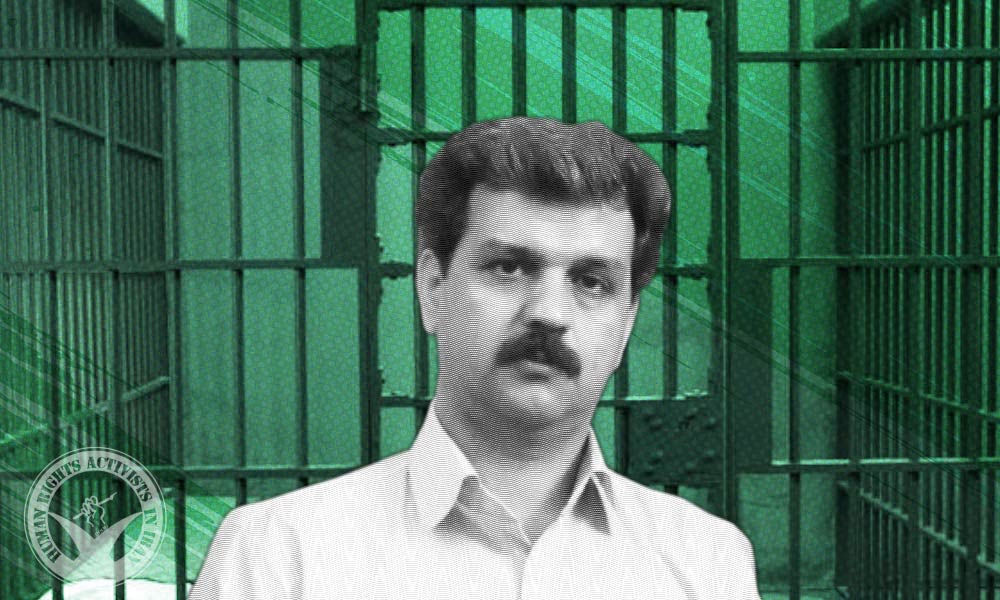
Recently, Branch 3 of Tabriz’s Revolutionary Court sentenced Azerbaijani Turk activist Roozbeh Piri to six years in prison. If upheld on appeal, the severest punishment of 5 years from this sentence is enforceable as dictated by Article 134 of the Islamic Penal Code.

According to HRANA, the news agency of Human Rights Activists, the court, headed by Judge Fath-Nejad, sentenced to one year in prison on the charge of propaganda against the regime and five years on the charge of “membership in anti-regime political groups”.

On September 9, security forces arrested him in Tabriz City. After holding him in detention, they transferred him to Tabriz Prison. On September 29, he was released on bail.

Piri had previously been arrested and convicted for peaceful activities. He was arrested during the nationwide protests in Tabriz in November 2019 and sentenced by the court of appeals to 91 days in prison. Piri was released from Tabriz Prison in July 2020 after serving his sentence.

Later, he was charged with “spreading lies” on the Internet and sentenced to pay a fine of 5 million tomans (1190 USD) by Branch 103 of Tabriz’s Criminal Court. This sentence was upheld on appeal. Reportedly, the conviction was in retaliation for revealing his brother’s harassment and torture by intelligence agents.

Piri is the editor of Tabriz Magazine and the founder of Navid Etedal, an independent student organization at Tabriz Azad University.

Two Baha’i Citizens Arrested and Sent to Yazd Prison to Serve Their Sentences

On December 13, Baha’i citizens Mitra Bandi Amir-Abadi and Hiva Yazdan Mehdi-Abadi were arrested at their home by security forces and sent to Yazd Prison to serve their sentences.

According to HRANA, the news agency of Human Rights Activists, Amir-Abadi and Mehdi-Abadi, along with two other Baha’i citizens, had been sentenced by Branch 2 of Yazd’s Revolutionary Court, headed by Judge Reza Javad Mousavi. They were sentenced to a combined 13 years and 4 months on the charge of “membership in Baha’i anti-regime groups and propaganda against the regime”. On appeal, they were acquitted from the first charge and the verdict was changed to 8 months imprisonment each.

Amir-Abadi and Mehdi-Abadi were arrested on May 30, 2020, and released on bail after three months of detention. Both women had previously faced other arrests and convictions. In December 2017, Mehdi-Abadi was detained for “teaching music to children” and transferred to Yazd Prison. She was released on bail on December 25 of that year.

Regarding the prosecution and harassment of Baha’is by Iran’s regime, HRA Senior Advocacy Coordinator Skylar Thompson stated that HRA strongly condemned these discriminatory acts against religious minorities in Iran. She asked that the regime take action to ensure Iranian people, and particularly Baha’i citizens, are entitled to the freedom of religion and can perform religious acts freely.

According to unofficial sources, it is estimated that more than 300,000 Baha’is live in Iran, but the Iranian constitution recognizes only Islam, Christianity, Judaism, and Zoroastrianism. Because their faith is not considered legitimate by authorities, the rights of Baha’is in Iran have been systematically violated for years.

This deprivation of the freedom to practice their religion is a breach of Article 18 of the Universal Declaration of Human Rights and Article 18 of the International Covenant on Civil and Political Rights. The United Nations covenant holds that every person has the right to freedom of religion, freedom of converting religion, as well as freedom of expression, individually or collectively; openly or secretly.

Inmate Dead After Hunger Strike and Suicide Attempt in Ilam Prison

On December 1, an inmate in Ilam Prison died of injuries stemming from a suicide attempt and inadequate medical treatment. The day before, the inmate had attempted suicide by pill following a four day hunger strike. After having his stomach pumped in prison healthcare, he was sent back to his ward without any medical supervision.

According to HRANA, the news agency of Human Rights Activists, quoting Kurdpa, the inmate was 30 year old Ruhollah Maleki. His death ultimately resulted from inadequate medical treatment and supervision by prison officials.

Maleki was sent back to his ward while he was still in critical health condition and in need of regular medical supervision. Moreover, he was beaten by prison guards and held in a solitary confinement cell on the second day of his hunger strike.

On March 6, 2013, Maleki was arrested for committing murder. He was sentenced to capital punishment in 2014.

The Latest on the Teachers and Educators’ Protests

After several consecutive days of protests, thousands of retired and working teachers and educators, joined by supporters, demonstrated in more than 100 cities across the country. These protests were held on December 13 by the call of the Coordination Council of Iranian Teachers’ Trade Associations.

According to HRANA, the news agency of Human Rights Activists, demands included the implementation of an already-enacted plan whereupon the incomes of teachers will be increased depending on rank, to up to 80% of the salaries of faculty members. 

They also asked for unpaid severance payments for retirees who went into pension last year. The implementation of this plan will reduce disparities in income and pay gaps. 

Chants included “teacher wake up, stand up against discrimination”, “Free Imprisoned teachers”, “If our problem is not solved, the school will be closed”.

In these demonstrations, some protesters had some handheld placards with slogans in support of the recent protests in Isfahan against water supply mismanagement.

In Alborz Provinces and in Tehran (in front of Parliament), these protests turned violent due to the interference of security forces.

In Saqqez City, teachers chanted in support of Amanj Amini, the teacher who had been previously arrested, beaten and mistreated by security forces during the protest.

Alireza Shariati Sentenced to One Year in Prison

Branch 1 of Behbahan’s Revolutionary Court sentenced Alireza Shariati, a resident of Behbahan City, to one year in prison. According to this verdict, Shariati is prohibited from any political activities and membership in any political group for two years.

According to HRANA, the news agency of Human Rights Activists, the court— headed by Judge Mehman-Navaz— tried Shariati on the charge of “propaganda against the regime”. This was substantiated in trial by invoking his participation in circulating the hashtag “No to the Islamic Republic” during the recent presidential election and publishing media posts in remembrance of the victims of the protests in 2009 and November 2019.

In November 2020, security forces arrested Shariati. He was released from the police detention centre on bond the day after. He had been threatened many times via phone or interrogation in the Office of the Ministry of Intelligence.

Subscribe to Our Newsletter

Now is definitely not the time to stop reading!

Shirkoo Tabnak Sent to Prison to Serve His Sentence

On December 11, Shirkoo Tabnak, a resident of Bukan City, was sent to the city’s prison to serve his prison term. In September, Bukan’s Criminal Court sentenced him to one year in prison, of which seven months has been suspended.

According to HRANA, the news agency of Human Rights Activists, quoting Kurdpa, Tabnak was imprisoned in Bukan Prison to serve his five months in prison. He has been charged with “propaganda against the regime and advocacy for  one of the anti-regime political parties”.

On July 14, security forces arrested him without showing any warrant. Four days later, he was released on bail from the detention centre at the disposal of the Ministry of Intelligence.

Forty Seven Political Prisoners on Hunger Strike in Urmia Prison

On December 12, 47 political prisoners went on a hunger strike in Urmia Prison to protest against their relocation to a new ward with insufficient space and poor equipment.

According to HRANA, the news agency of Human Rights Activists, reporting information from a close relative of one of these inmates, the head of the prison announced that within two next weeks, they will be transferred to a newly built high-security ward. Daily time outside will be reduced to two hours.

In Iran’s prisons, hunger strikes are common among prisoners despite causing long-term physical and mental impairment. Hunger strikes are used as a last resort to achieve urgent demands such as unlawful long-term detention without trials, violations of prisoners’ rights and infringement in due process.

Three Inmates Executed in Isfahan Prison and Adel-Abad Prison in Shiraz

On December 12, an inmate previously convicted of drug-related crimes was executed in Isfahan Prison. He had been transferred to a solitary confinement cell one day before the execution. Additionally, in Adel-Abad Prison in Shiraz, two inmates were executed for committing murder.

According to HRANA, the news agency of Human Rights Activists, the inmate was identified as 33 year old Abdolsalam Barahooi, a resident of Zahedan City. While his wife was permitted a final visit, the rest of his family was denied the opportunity.

In 2018, Barahooi was arrested for carrying drugs in Isfahan and thereafter sentenced to death.

Moreover, Iran Human Rights reported the execution of two inmates identified as Bakhtiar Sarmadi and Hossein Heydarzadeh in Adel-Abad Prison in Shiraz City.

Sarmadi and Heydarzadeh were charged with killing a man five years ago. Their case had three defendants, and the third defendant was sentenced to 12 years in prison for aiding and abetting the murder.

None of the official sources and media outlets inside the country have reported this execution at the time of writing.

The most recent report from the Statistics and Publication Center of the Human Rights Activists in Iran (HRA) states that between October 8 of 2020 and October 9 of 2021, at least 266 citizens, three of whom were juvenile offenders, were executed and 90 citizens were sentenced to death.

As the report points out, Iran’s judicial authorities do not publicly announce over 82% of executions. These unreported executions are known as “secret executions” by human rights organizations.
Educator and Civil Activist Rasoul Bodaghi Arrested Violently by Security Forces  

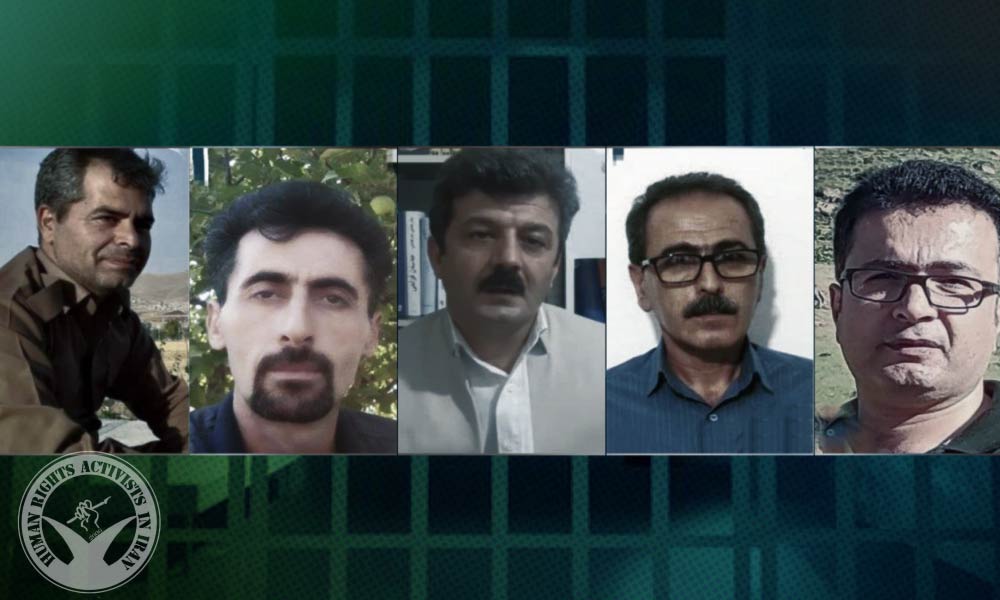
On December 11, Rasoul Bodaghi, a member of the Board of Directors and the Coordination Council of the Iranian Teachers’ Trade Association was arrested by security forces in his home.

According to HRANA, the news agency of Human Rights Activists, quoting the Teachers’ Trade Association, security forces raided his house and arrested him violently. They also searched the house and confiscated his cell phone, as well as his wife’s.

The reasons for the arrest, his whereabouts and the security institution responsible for his arrest are still unknown at the time of writing.

HRANA Recap: This Week’s Protests in Iran

According to HRANA, the news agency of Human Rights Activists, a number of protests took place this week in Iran, many of which were continuations of ongoing movements.  Read our recap below for details, photos, and videos from the demonstrations.

Friday, December 3

For several consecutive days, a number of workers at the Haft-Tappeh Sugarcane Agro-Industry Company assembled to ask to returnto work and for modifications in their contract. 

Saturday, December 4

In a continuation of their protest , the workers of the Haft-Tappeh Sugarcane Agro-Industry Company assembled in front of the governorate building in Shush City. 

A group of people with disabilities held protests in three cities. They assembled before the building of the Plan and Budget Organization in Tehran and in front of the governorate building in the cities of Saqqez and Mashhad.  

These citizens asked for minimum wage disability benefits in accordance with Article 27 of the National Law on the Protection of the Rights of Persons with Disabilities.

Dozens of workers at copper mining companies in Sungun Varzeqan City went on a strike for the fifth consecutive day. They assembled and marched on the perimeter of the workplace. Their demands include closing the disparity in wages, addressing contract issues and implementation of a “Job Classification Plan”.


A number of workers at the petrochemical company Makran in Chabahar City went on a strike to protest against delayed wages and benefits. As one of the workers said, the contractor of the Urea and Ammonia Company Sina has not paid their wages under the pretext of a delay in payroll checks from the CEO. The workers said that they can hardly afford their livelihoods and are fed up with empty promises from the company.

Sunday, December 5

A group of seasonal workers at the Haft-Tappeh Sugarcane Agro-Industry Company protested in three separate assemblies. One group gathered in front of Kaab Amir, the parliament member of Shush City Kaab Amir, another in front of the governorate building, and a third in front of the building of the Ministry of Cooperatives, Labour, and Social Welfare. They asked for a return to work and better job contracts.

Victims of frauds by the trading company Sekkeh Samen assembled in front of the Justice building in Tehran to protest against a delay and other shortcomings in the conviction of the company.


Retirees of the steel company Fulad assembled in Tehran, Isfahan and Ahvaz before the buildings of the company’s Retirement Association. They asked for raises in their pensions, as well as removing disparities in pensions. 


Personnel of cooperatives in charge of managing Edalat stock assembled and protested against delayed payments and uncertainty in their job. 

One of the protesters said: “We are about 700 people who, after 15 years working in 352 offices of this cooperative, have not had any official contract. Moreover, we can hardly afford our livelihoods due to 44 months of unpaid wages”.

Shareholders of several housing cooperatives assembled and protested on the side of the road connecting Tehran to Karaj. Complaints included the unfair allocation of land, as well as some shareholders not receiving a house, even after 37 years.

Monday, December 6

Personnel of cooperatives in charge of managing Edalat stock assembled in front of the building of the deputy minister of Cooperatives, Labour, and Social Welfare and protested against delayed payments and a lack of job security.

The retirees of the Social Security Organization assembled in front of organization’s building in Ahvaz City. They asked for better health insurance coverage and an increase in the end-of-year benefits.

Personnel of the petrochemical company Farabi assembled in front of the company security building to ask for the implementation of “Job Classification Plan”. They also protested about the reduction in wages that stemmed from a  decrease in overtime works and working hours at holidays.


Tuesday, December 7

In Kerman, a group of residents from the southern parts of the province assembled in front of the entrance of the water tunnel carrying water from Halil River to Kerman. They claimed that this water transfer project would bring about water shortages in their region. Protestors set up tents and tried to prevent tunnel drilling. In response, the project contractor maintained that they have obtained all required permits and the project will go on.

A number of workers of the Iran Electricity Industry Company assembled in front of the building of the Ministry of Energy to ask to be under contract with companies under the Ministry of Energy rather than private contractors.

A group of students from the University of Medical Sciences of Shahrekord assembled at the campus to ask for their demands.

A number of seasonal workers at the Haft-Tappeh Sugarcane Agro-Industry Company assembled in front of the Governorate building in Shush City. They asked for official contracts with the company rather than employment as contractors.

A number of citizens who have purchased pieces of land from the government assembled in front of the building of the Ministry of Cooperatives, Labour, and Social Welfare in Umria City. Reportedly, after 30 years, the legal issues of their properties have not yet been settled. 


A group of farmers in Abadeh County in Farsi Province assembled in front of the governorate building to protest against the closure of their water wells. 

Wednesday, December 8

A number of the workers of the Ahvaz Water and Wastewater Company assembled before the company building to protest against the recent company merger with its counterparts in rural areas. According to these protesters, the company can hardly afford to pay salaries due to the cost of the 500 additional personnel that accompanied the merger. Reportedly, the company is four months behind on payments.


A group of workers of the Ilam Petrochemical Company assembled before the governorate building to protest against the layoff of 60 workers. Despite a direct order by the president, the company did not let these fired workers return to work.

Thursday, December 9

A group of educators and teachers in Qom Province assembled before the building of the Ministry of Education. These teachers demanded the implementation of a plan, which has already been enacted by parliament, whereby teachers’ income will be raised in accordance with a ranking

A group of contracted teachers and educators in Isfahan city assembled in front of the Ministry of Education to protest against low wages, the pay gap and other issues.


A group of retailers from a Friday market in Yasuj City assembled and protested in front of the governorate building. They claim that they cannot afford to move the market to somewhere else, as was requested by authorities.