HRA Hosts ‘A Way Forward’, a Virtual Panel on Role of Diplomacy in Human Rights Work

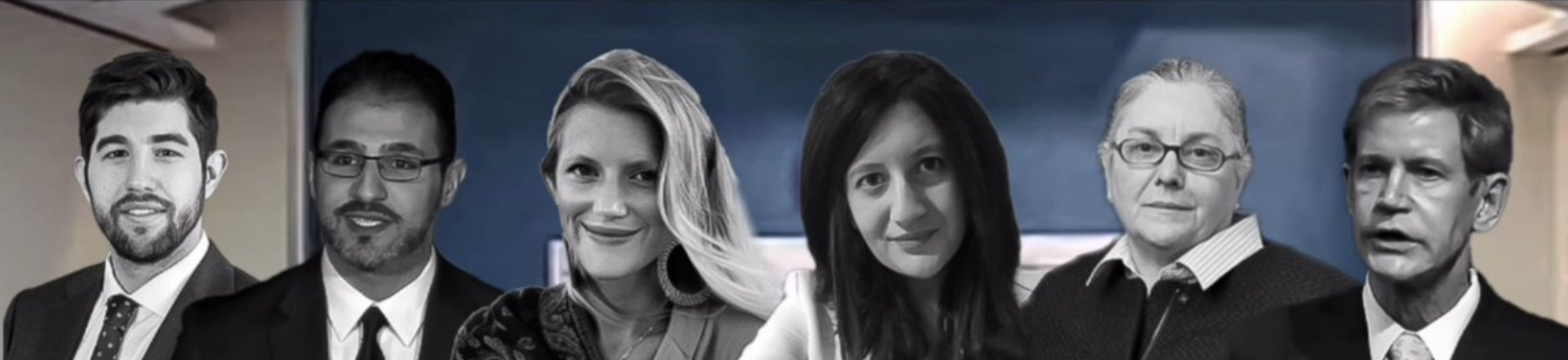
On Thursday, September 16, HRA hosted “A Way Forward”, a virtual discussion on the role of diplomacy in advancing the goal of promoting human rights in Iran. The event, which had over 100 participants, was moderated by lawyer and human rights activist Shabnam Mojtahedi, and panelists included representatives from a number of prominent human rights organizations.


Dr. Javid Rehman, UN Special Rapporteur on the situation of human rights in Iran, delivered the event’s opening remarks, in which he highlighted the importance of protecting and promoting a more free civil sector, and emphasized the extent to which human rights and civic freedom go hand in hand.

“We can see around the world that in countries where there is a dynamic and free civil society, there is better protection of human rights,” Rehman said. “In Iran, civic space is under significant constraint. Civic space actors, such as human rights lawyers, defendants, and journalists are targeted, harassed and excluded. Moreover, the channels for political participation are by law severely restricted and manipulated, to the extent that they prevent meaningful participation.”

Mohammad Al Abdallah, Syrian rights activist and Director of the Syrian Justice and Accountability Center, spoke on the culture of impunity in the Middle East, and the ways in which widespread human rights violations can become normalized in a region over time.

“When you don’t have a well-designed policy that is consistently related to human rights in the region, that will be interpreted as a green light. ‘Go ahead, we don’t care, nobody is looking,'”

There was a particular emphasis throughout the discussion, from several of the panelists, on the effectiveness of accountability and rights work on a granular level. Between holding individual violators accountable and working with individual victims, activists and small organizations can make a tangible difference in the communities they oversee.

Panelist Christina Storm, who now serves as director of the rule of law division of the DT institute, started her career as a trial lawyer where she founded Lawyers Without Borders. Through this organization, she spent 20 years harnessing lawyers around the world to advance human rights on local and international courts, and most of that work happened at an individual level.

“My work has been focused on how to leverage internationally protected rights, and in particular Iran’s international obligations and commitments in a local/domestic context,” Storm said.

Panelist Michael Page, who serves as deputy director in the Middle East and North Africa division at Human Rights Watch (HRW), proposed that three ways the US can further goals of human rights in Iran are adopting a ‘Do no harm’ approach, building multilateral pressure on human rights issues in coordination with Iranian policy, and holding Iranian officials accountable outside of the country.

On the subject of accountability,  discussion attendant Hamed Esmaeilion asked how human rights organizations can better support the victims of Ukraine International Airlines Flight 752, which was shot down by the IRGC, killing over 170 people, and then covered up by the Iranian government.

Page spoke on organizations’ capacity to push for domestic accountability.

“We need to show […] if there has been any domestic accountability for what has happened,” Page said. “The short answer is [that there has] not, but I think that’s the first step.”

Meanwhile, Al Abdallah pointed out the work that can be done in providing resources and relief to the affected families, in what he calls a ‘victim-centered approach’.

“Part of the work that human rights organizations can do is supporting the families and helping them better frame their policy demands with member states,” Al Abdallah said, “as well as encouraging diplomats to meet with the families.”

Several participants asked questions relating to sanctions, and panelists touched on a number of ways in which broad sanctions end up having harmful effects on the countries whose human rights violators they purport to be holding accountable.

“Broad Sanctions in Iran have contributed to serious hardships for ordinary Iranians,” Page said. “Working with businesses and civil society, I think the Biden administration should, as a starting point, seek to mitigate the negative impact of broad sanctions including this issue of ‘over-compliance’, in which companies refuse to sell goods or services to people in Iran because of the risk of sanctions, even though those goods and services have humanitarian exemptions.”

On a related thread, panelist Patrick Clawsen, a senior fellow at Washington institute, pointed to the US-sponsored sanctions with Swiss and South Korean governments, which were designed to facilitate Iranians’ access to humanitarian goods.

“None of these have worked,” Clawson said. “A major issue is that the Iranian Authorities have decided that they have adequate access to humanitarian goods through the channels they are now using, which can best be described as evading the sanctions. And they find it easier to use barter and other means (…) rather than going through the quite-onerous requirements.””

Thompson suggested an increased emphasis on holding individual violators accountable, rather than further investing in these broad economic sanctions that have historically proven so ineffective.

“There needs to be a broad expansion of the use of targeted sanctions regimes,” Thompson said. “Targeting individuals has proven to be a more effective policy than targeting institutions,”

Rehman additionally called for creative solutions, on the part of both NGO’s and governmental organizations, in working to integrate principles of human rights into every level of the civic process.

“As part of the rule of international law, It is imperative that human rights be a part of every bilateral and multilateral discussion, not just with Iran, but with all countries.”

The full discussion is available below.


Inmate Executed in Zanjan Prison on Drug-Related Charges

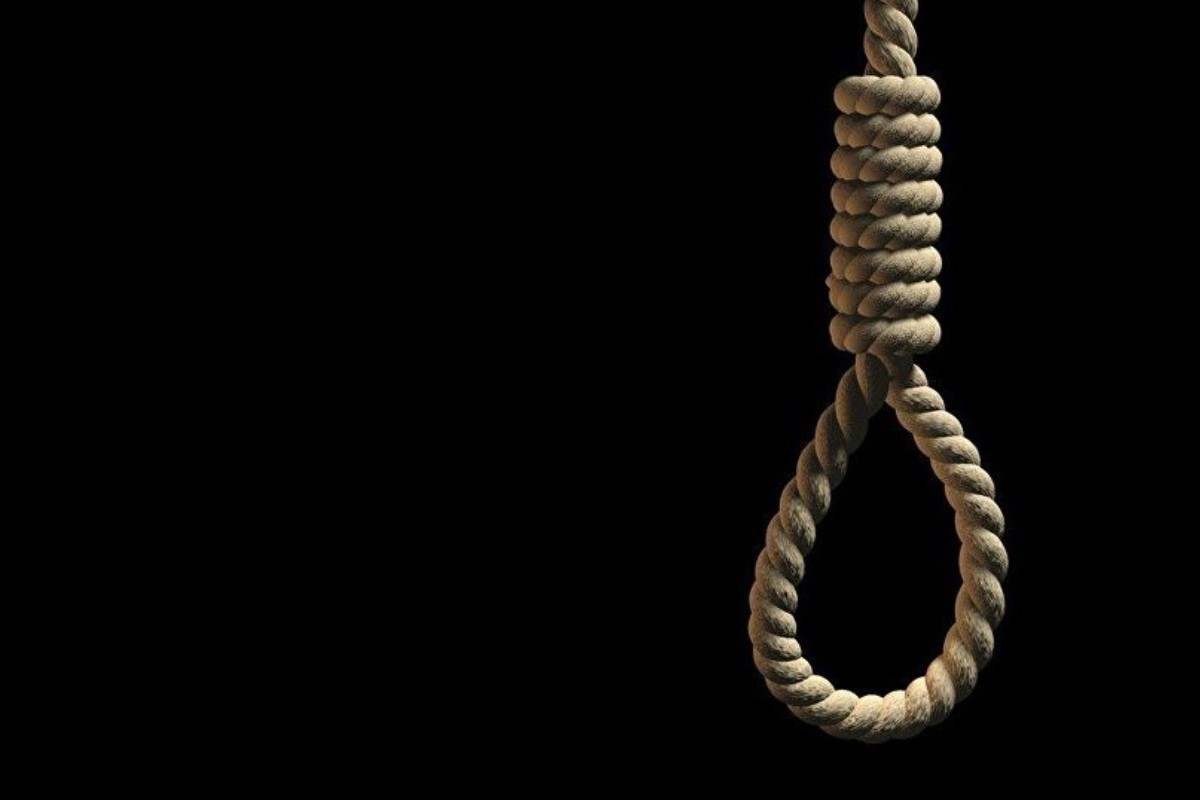
This Tuesday, September 21, Mr. Jodat Rabt (Jodatian) was executed in Zanjan Prison on drug-related charges.

According to the HRANA, the news agency of Human Rights Activists, quoting Kurdpa, Rabt was a native of Sheshmal village in the Urmia area. He was a husband and father of three.

Rabt was arrested four years ago on drug-related charges and later sentenced to death by the judiciary.

Iran ranks first in the world in citizen executions per capita, according to international organizations. The Statistics and Publication Center of the Human Rights Activists in Iran (HRA) reported that between January 1 and December 20 of 2020, at least 236 citizens were executed. One of these citizens was executed publicly, and two were juvenile offenders.

An additional 95 citizens were sentenced to death. According to the same report, more than 72% of executions in Iran are not reported by the government or the judiciary, which human rights organizations call “secret” executions.

Prisoner Executed in Taybad Prison in Razavi Khorasan Province

At dawn on Monday, September 20th, a prisoner who had previously been sentenced to death on drug-related charges was executed in Taybad Prison.

According to the HRANA, the news agency of Human Rights Activists, the prisoner was a native of Herat in Afghanistan.

He was married, and had been kept in prison for the past three years. HRANA is investigating to find the exact name and more details about the identity of this man.

Iran ranks first in the world in citizen executions per capita according to international organizations. The Statistics and Publication Center of the Human Rights Activists in Iran (HRA) reported that between January 1 and December 20 of 2020, at least 236 citizens were executed. One of these citizens was executed publicly, and two were juvenile offenders.

An additional 95 citizens were sentenced to death. According to the same report, more than 72% of executions in Iran are not reported by the government or the judiciary, which human rights organizations call “secret” executions.

As of this writing, the execution of this man has not been announced by Iranian media or official sources.

Prisoner Executed in Rajai Shahr Prison in Karaj

On Wednesday, September 15, a prisoner who had previously been sentenced to death for murder was executed in Rajai Shahr prison in Karaj.

According to the HRANA, the news agency of Human Rights Activist, quoting Rokna, six years after the incident, this sentence was referred to the Judgment Execution Branch after being approved by the Supreme Court, and it was carried out last Wednesday.

Iran ranks first in the world in citizen executions per capita, according to international organizations. The Statistics and Publication Center of the Human Rights Activists in Iran (HRA) reported that between January 1 and December 20 of 2020, at least 236 citizens were executed.

One of these citizens was executed publicly, and two were juvenile offenders. An additional 95 citizens were sentenced to death. According to the same report, more than 72% of executions in Iran are not reported by the government or the judiciary, which human rights organizations call “secret” executions.


Twelve Azerbaijani Turk Activists Summoned to Revolutionary Court of Ardabil

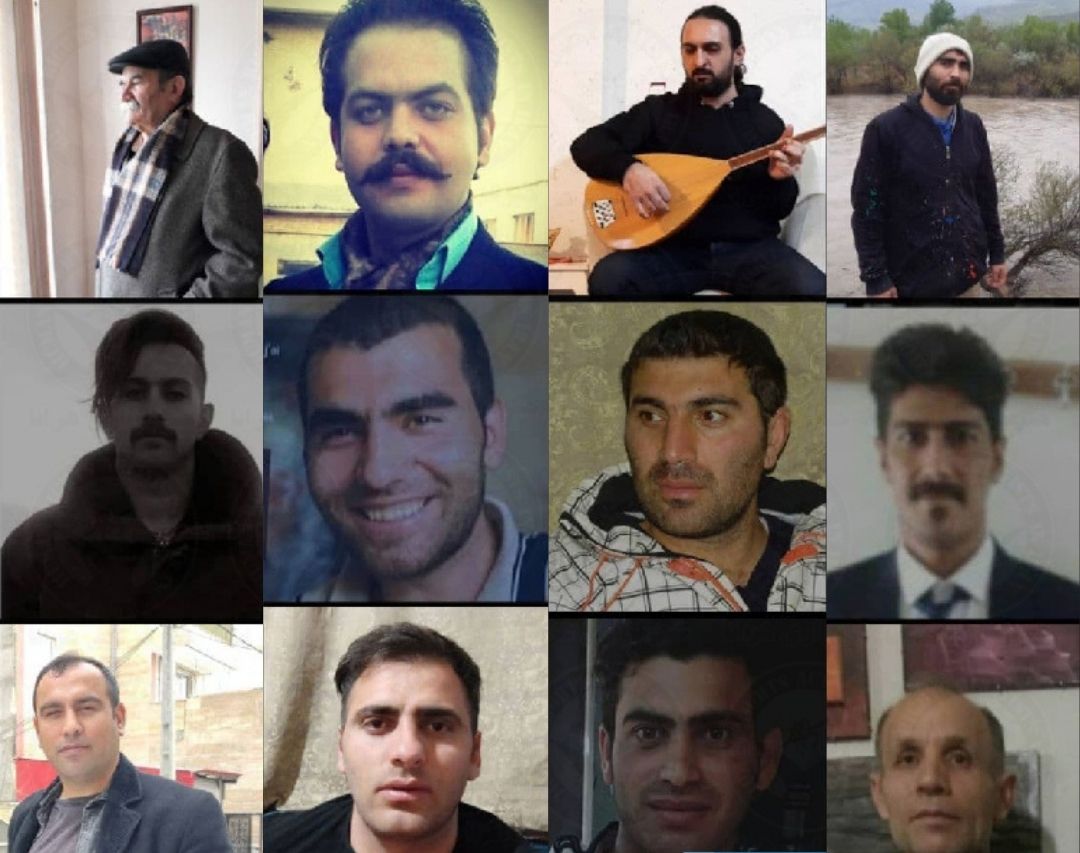
Twelve Azerbaijani Turk activists were recently summoned to the Second Branch of the Ardabil Revolutionary Court related to a charge of ‘insulting the leadership’.

According to the HRANA, the news agency, of Human Rights Activists, the activists have been identified as Hossein Balakhani Issa Lou, Mostafa Parvin, Morteza Parvin, Hamed Heydari Baris, Mohammad Jolani Ojagh, Parviz Siabi Gorjan, Sobhan Bakhshi, Mehdi Hooshmand, Bahman Khairjoo, Mojtaba Parvin, Asgar Akbarzadeh Khezrabadi, and Sajad Jolani Ojagh.

The report states that the activists were asked to go to this branch on Monday, September 20, to defend themselves.

The activists have been accused of ‘participating in disturbing public order by creating a commotion’, ‘attempt to harm themselves’,’ insulting and rebelling against law enforcement officers on duty’, ‘insulting the leadership’, and ‘participating in the community and colluding against internal security’.

These citizens had already been summoned to Branch 10 of the Ardabil Public and Revolutionary Prosecutor’s Office on April 21 in connection with the September 2020 rallies in the Turk-populated areas of the country. They had been arrested violently by police during which in some cases resulted in broken arms and noses.

According to Article 27 of the Constitution, participation in rallies and demonstrations is free of charge and is considered peaceful if participants are unarmed.

Subscribe to Our Newsletter

Now is definitely not the time to stop reading!

Citizen Detained by Security Forces in Baneh

On September 15, Anvar Rasouli was arrested by security forces in Baneh City in Kurdistan Province.

According to HRANA, the news agency of Human Rights Activists, Rasouli was transferred to an unknown location following the arrest.

Anvar Rasouli is 45 years old and from Abolhassan village. The report says that Mr. Rasouli was arrested without a court order.

As of this writing, no information is available on the reasons for Rasouli’s detention or the charges against him.

Taregh Azizi Arrested by Security Forces in Nikshahr

On the evening of Friday, September 17, Taregh Azizi from Nikshahr was arrested by security forces.

According to HRANA, the news agency of Human Rights Activists, quoting RASANK, after his arrest, Azizi was transferred to an unknown location.

According to this report, Mr. Azizi is said to have been summoned several times by the IRGC intelligence of the Shahid Memar base in Iranshahr in Sistan and Baluchestan Province, previously.

At the time of writing, no information is available on the reasons for Azizi’s detention or the charges against him.

Amin Hassanpour Violently Arrested by Security Forces in Urmia

On Thursday, September 16, 22-year-old Amin Hassanpour from Urmia was violently arrested by security forces without a court order.

According to the HRANA, the news agency of Human Rights Activists, quoting Center of Democracy and Human Rights in Kurdistan, Hassanpour was transferred to an unknown location following his arrest, during which he was reportedly beaten.

As of this writing, no information is available on the reasons for Hassanpour’s arrest or the charges against him.

Citizen Detained by Security Forces in Nikshahr

On Tuesday, September 14, a citizen was arrested by security forces in Nikshahr.

According to HRANA, the news agency of Human Rights Activists, quoting RASANK, after the arrest the citizen was taken to an unknown location.

According to this report, the identity of this citizen is Niaz Mollazehi. Mollazehi is a resident of the village of Mahban in the city of Nikshahr.

No information is available on the reasons for detention, the charges, and the detainee’s whereabouts at the time of writing.

HRANA Recap: This Week’s Protests in Iran

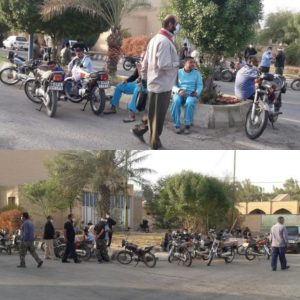
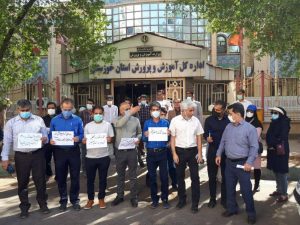
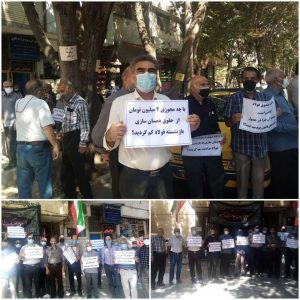
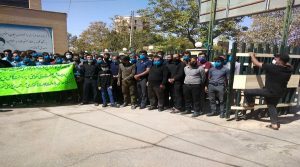
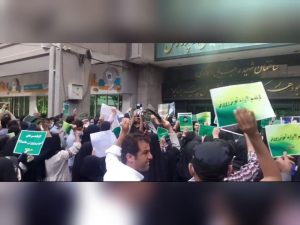
According to HRANA, the news agency of Human Rights Activists, a number of protests took place this week in Iran, many of which were continuations of ongoing movements.  Read our recap below for details, photos, and videos from the demonstrations.

Saturday, September 11

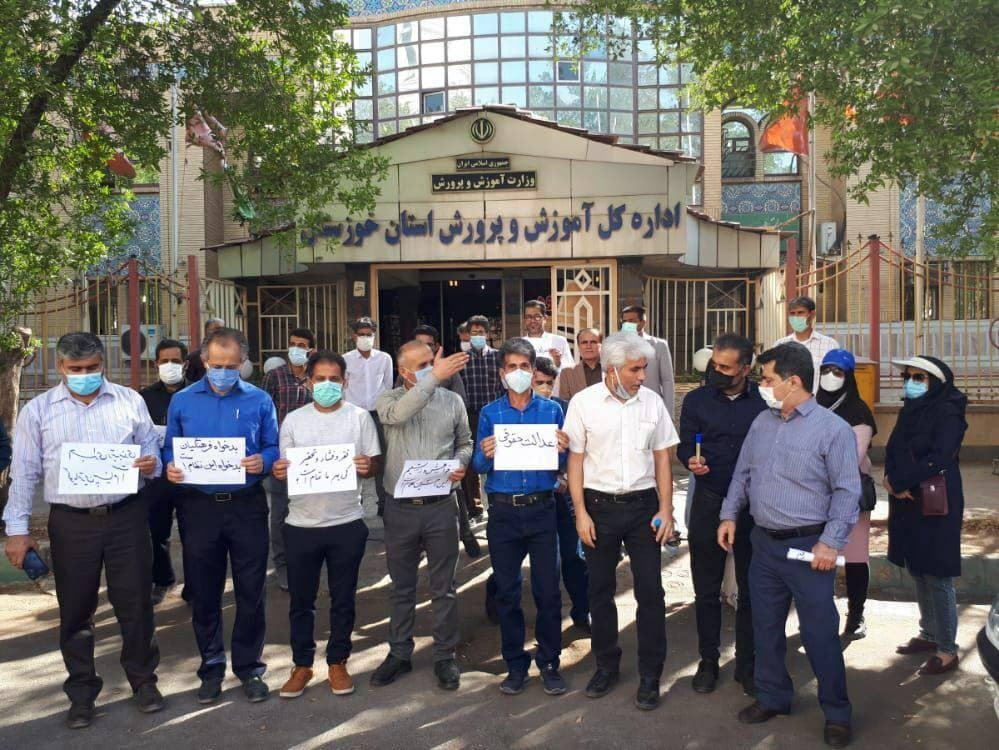
Several workers of Abadan Municipality and workers of Arvand Free Zone in Abadan, some  workers of Hoveyzeh Municipality, a group of teachers in Ahvaz, a group of Job applicants of Karname-Sabz for the eighth consecutive day in Tehran, shareholders of Amin Khuzestan Fund in Ahvaz, and a group of teachers in Shiraz, in Protest rallies called on their demands to be addressed this Sunday.

Workers of Abadan Municipality:

Workers of Hoveyzeh Municipality:

Protest of teachers in Ahvaz:

Job applicants of Karname-Sabz in Tehran:

Shareholders of Amin Khuzestan Fund:

Protest of teachers in Shiraz:

Sunday, September 12

A group of job applicants of Karname-Sabz for the ninth day in a row in Tehran, a group of retirees of the Isfahan Steel’s Fund, and a number of shareholders of Saipa Diesel Company protested on Sunday.

Job applicants of Karname-Sabz:

Retirees of the Isfahan Steel’s Fund:

Shareholders of Saipa Diesel Company:

Monday, September 13

A number of shareholders of Cryptoland Exchange in Tehran, a group of workers at the Galltut Coal Mine in Zarand in Kerman province, job applicants of Karname-Sabz for the tenth consecutive day in Tehran, and a number of workers at the Shafa Rud dam in Rezvanshahr county in protest rallies called for their demands to be addressed.


Shareholders of Cryptoland exchange in Tehran:

Workers of the Galltut Coal Mine in Zarand:

Job applicants of Karname-Sabz:

Tuesday, September 14

A number of employed and retired teachers and a group of teachers of the Literacy Movement in Tehran, a group of teachers in Khorramabad, a number of teachers in Ahvaz, a few lost cryptoland exchange shareholders in Tehran, a group of job applicants of Karname-Sabz for the 11th day in a row in Tehran, a group of third-party workers at the Fajr Jam refinery, and workers of Steam company in Bushehr, rallied to call on their demands to be addressed.

Workers of Steam company in Bushehr:

Protest of teachers in Tehran:

Protest of teachers in Lorestan:

Protest of teachers in Khuzestan:

Job applicants of Karname-Sabz:

Retiree teachers in 2020:

Shareholders of Cryptoland exchange in Tehran:

Workers of the Fajr Jam refinery:

Wednesday, September 15, and Thursday September 16

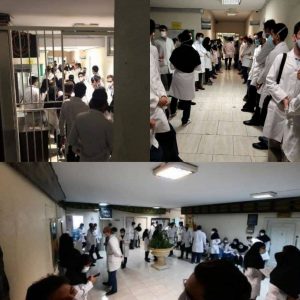
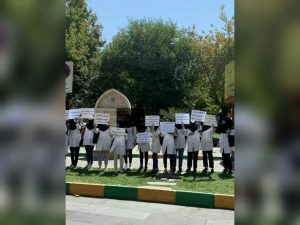
A group of job applicants of Karname-Sabz for the thirteenth day in a row, in Tehran, a number of medical interns at Mofid Hospital in Tehran, a group of workers at Bandar Emam Petrochemical Company, and a number of medical students at the Azad University in Mashhad rallied to call on their demands to be addressed.

Job applicants of Karname-Sabz:

Medical interns at Mofid Hospital in Tehran:

Medical students at the Azad University in Mashhad:

Workers of Bandar Emam Petrochemical: