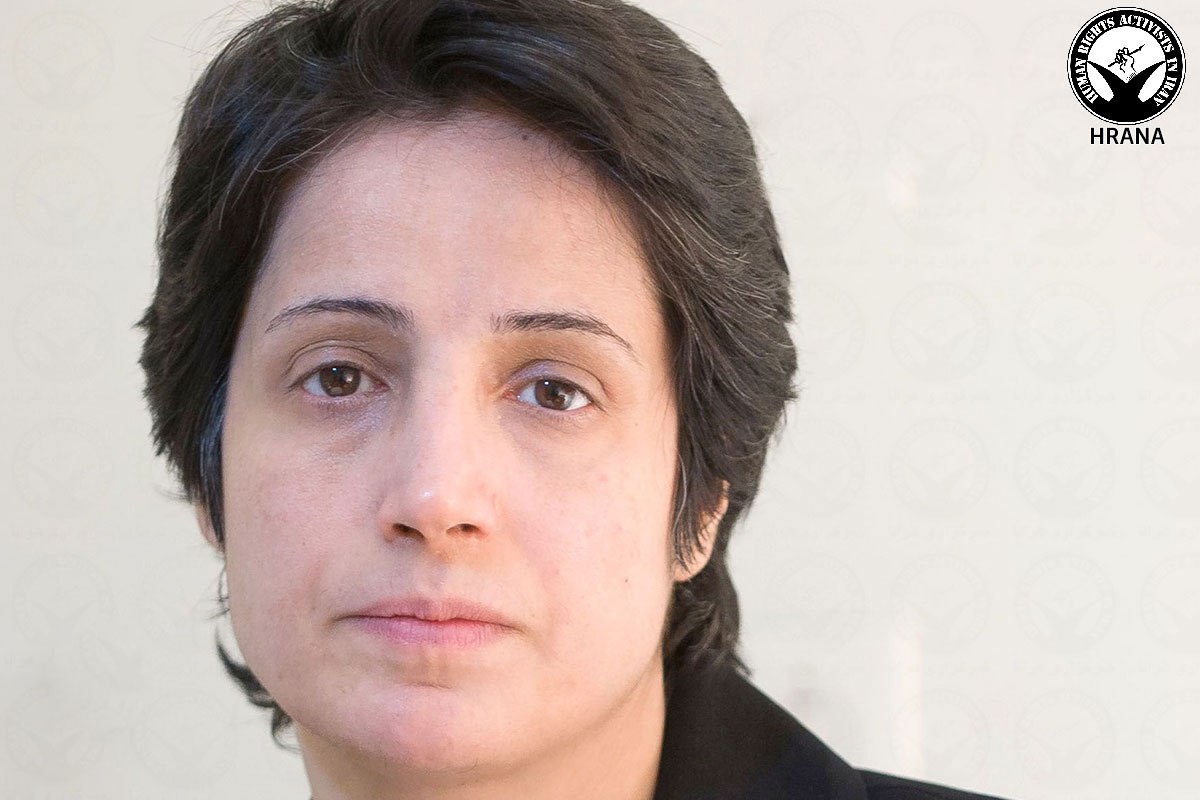
Letter from Nasrin Sotoudeh Regarding her Refusal to Appear in Court

Human Rights Activists News Agency (HRANA) – In an open letter, lawyer and human rights activist Nasrin Sotoudeh explained her recent refusal to appear in court. She was arrested on charges of collusion and propaganda against the regime on June 13, 2018, and has since been held at Evin Prison.

On June 23rd, her husband Reza Khandan announced that a bail of 650 million Tomans (approximately $155,000 USD) was set for Sotoudeh. She declined to post bail, however, and has since remained in detention at Evin’s General Ward.

In October 2014, Sotoudeh staged a sit-in before the Iranian Bar Association for several days to protest her three-year suspension from practicing law. Assisted by a number of bar members who rallied behind her cause, the protest eventually resulted in the lifting of the suspension and renewal of her law license.

On Saturday, August 14, 2018, Nasrin Sotoudeh’s attorney Payam Dorafshan reported on two open cases against her. He said, “Nasrin Sotoudeh is presently serving a sentence of five years’ imprisonment for charges of espionage not even contained in her indictment, as well as a detention order issued by the second branch, and is again being brought to conviction in the court of Kashan.”

In September of 2010, Sotoudeh was sentenced to eleven years’ imprisonment, twenty years’ suspension from practicing law, and a twenty-two year exit restriction. This sentence was reduced in an appeals court to six years of imprisonment and ten years of licence suspension, and she was eventually released after spending three years in prison.

Nasrin Sotoudeh has refused to respond to her recent court summons and will not be appearing in court. She shares her rationale in the open letter cited below.

My Fellow Citizens,

As you know, two months ago, per the verdict of a trial in absentia in Branch 28 of the Revolutionary Court, I was unlawfully detained and brought to Evin Prison for arraignment.

From the moment I was arraigned, in protest, I have refused the defense chosen for me per the recent amendment to Article 48 of the Criminal Procedure Code. My reasons for refusal are listed below:

1- Precinct 33 Court, which relocated to Evin Prison in the summer of 2009, exclusively handles the cases of political prisoners. Legal practitioners have contested the very existence of this court from the outset, due to its location within a prison, where practitioners work under heavy security surveillance, thus exposing the court to the meddling of national security organs. This violates the independence of the judiciary enshrined in the constitution. Illegally and in violation of article 35 of the constitution, this court prevents defendants from choosing their own attorney.

2- Exercising my right to the attorney of my own choosing, from the moment of my summons to the Evin Court, I provided the names of three colleagues to whom I would entrust my case. However, the prosecutor in charge of my case has to date refused to appoint any of them as my attorney.

As I do not intend to be represented by an attorney approved by the Intelligence Office of the Judiciary, I hereby face my predetermined sentence and refuse to present myself or any defense to the court and inspector.

In hopes that the law and justice be served in our beloved country, Iran,

Nasrin Sotoudeh

August 2018
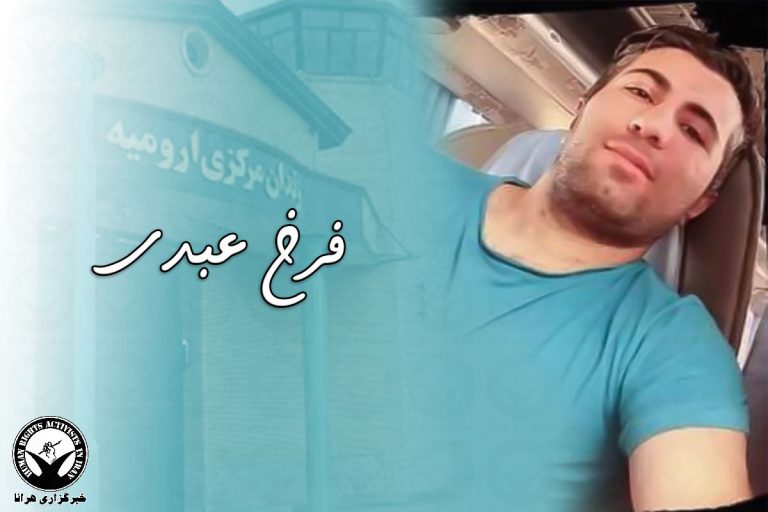
Imprisoned Telegram Activist Farrokh Abdi Issued Additional Sentence

Human Rights Activists News Agency (HRANA) – Last Thursday, August 16, 2018, Urmia resident and Telegram activist Farrokh Abdi was sentenced by Branch 102 of the Criminal Court of Urmia to fifteen months of discretionary imprisonment for “insulting sanctities.”

Abdi previously received a three-year sentence from Branch 2, which was reduced to fifteen months in an appeals court, for “collaboration with anti-regime groups”.

An informed source told HRANA that Farrokh Abdi is currently detained in the general Ward 3-4 of Urmia Prison. In a punitive measure disproportional to the severity of his conviction, the source added, officials have forestalled his transfer to the prison’s political ward.

At Arrival of Security Forces, Alternative Worship Turns Violent

Human Rights Activists News Agency (HRANA) – In one of many recent attacks from security forces on Shiite sub-sects, a peaceful ceremony commemorating the death of the ninth Shiite Imam was broken up on August 12th when officers arrived and began beating those in attendance.

The owner of the shop that hosted the gathering was arrested the following day, only to be released when members of a group called “Ansar Imam Mehdi” gathered in front of the Intelligence Bureau of Torbat Heydarieh to demand his release. On August 16th, two of these protestors were arrested on orders from the Revolutionary Court.

Several individuals who have gained a following in recent years by claiming to have contact with the Shiite eschatological figure Imam Mehdi — also known as the 12th Imam — have also come under fire from security forces, particularly the Ministry of Intelligence. Iranian authorities have since appointed special divisions to address religious activities that contravene the ideology of the regime, often resulting in violent clashes.

A source close to the Ansar Imam Mehdi group told HRANA, “If they refuse to release our brothers, members plan to assemble in front of the Revolutionary Court and peacefully announce that we are not the enemy; we only demand our basic rights such as freedom of conscience, opinion, the right to life, and the right to hold our religious ceremonies for imams.”

The situation escalated on August 19th, the anniversary of the death of the fifth Imam, when a group of about 60 people were met with tear gas, electric shocks, and blunt-force assault from security forces outside the Revolutionary Court. The group, who reportedly read religious texts to appeal to a religious common ground with authorities, were heard chanting “freedom of opinion is our undeniable right” and imploring for the release of their comrades.

In a report to HRANA, the aforementioned source said the gathering served to commemorate the fifth Imam in the same manner that the group had intended on August 12th, “which should not be a crime in Iran.” He said that an elderly man with heart problems was among those beaten and that security forces, rather than relenting when the man felt pains in his chest, arrested him. “They attacked our sisters,” the source added, “not even the children were spared from beatings, and some of them were trampled.”

The group in question had been regularly congregating around Seyed Ahmad Hossein, a man who claims to have contact with Imam Mehdi. The government crackdown on the group first began on November 9, 2017, when six seminary students and professors, including Mohammad Javad Choobtarash, were seized from a residence in Qom and held in the Intelligence Bureau for interrogation. Most of those detained that day were released on bail shortly after.

Other arrests related to this religious group are as follows:

May 7, 2018: Ahmad Reza Zaraghi, a seminary student, who had been released 16 days earlier on bail, was arrested a second time by the security forces at his sister’s home in Qaem Shahr, northern Iran, and transferred to Tehran in police custody.

May 2, 2018: Cleric Mohammad Hossein Bigdeli was arrested at a holy shrine in the city of Qom.

March 7, 2018: Massoud Ghorbani was arrested, released, and again summoned to the Clerics Special Court before being transferred to Qom Saheli Prison.

February 6, 2018: Ahmad Kohandel was arrested in connection to his group affiliation.

January 11, 2018: Qom seminary student Seyyed Hamed Miri, 31, was arrested.

Steel and Sugarcane Workers Organize Protests in Southwestern Iran

Human Rights Activists News Agency (HRANA) – Worker groups from two major industries in the southwestern province of Khuzestan organized protests on Monday, August 12th outside the office of the local manager of Bank Melli.

Bank Melli is the current owner of the industrial complex housing the Iran National Steel Industrial Group (INSIG) of Ahvaz and Haft Tapeh Sugarcane Agro-Business (HTSA). Workers from these companies gathered to demand back pay and the right to form independent councils.

August 12th marked the third consecutive day of protests, which workers said they will continue until the company meets their demands.

INSIG’s CEO Kasra Ghafoori voiced to the media his company’s response to the crisis. “I sympathize with the INSIG workers,” he told Iran Labour News Agency (ILNA). “It’s hard to live when you haven’t been paid for four months, but INSIG’s raw materials will be provided by next week.”

INSIG is among a group of companies founded by Amir Mansoor-Aria’s Ahvaz-based investment group. After Mansoor-Aria was displaced from management due to criminal convictions, the Iranian Judiciary assumed control of the company until its recent privatization.

All told, INSIG companies employ about 4,000 workers, none of which have been paid in the past few months. Worker frustrations culminated in a new wave of protests on Saturday, August 18th.

Update:

The workers of Haft Tapeh Sugarcane Agro-Business (HTSA) continued to strike in front of factory management offices on the fourth day of consecutive protests.

Employees across company sections joined in a chant of “You’re a disgrace, Ghafari”, asking for dismissal of the sector’s manager.

The workers demanded the company resolve insurance payments, provide 1,500-day contracts for workers, and communicate transparently on the recent outsourcing of one of HTSA’s sections and the company’s uncertain future.

One of the workers stated that the company has yet to deliver on their promises to secure worker contracts and benefits.

HRANA reported that INSIG and HTSA protests were still active as of Monday, August 20th.

Update: Wednesday August 22, 2018

For the fifth day in a row, workers of the Haft Tapeh Sugarcane Agro-Business (HTSA) gathered in protest in front of the company’s security department.

Payment of delayed wages and stopping the company’s breaking up and privatization are among the demands made by the workers during this protest. The workers are also demanding “intervention by high-ranking provincial authorities on the question of the company’s management,” HTSA’s trade union has said.

Esmayil Bakhshi, the workers’ representative, gave a speech in today’s gathering and spoke of workers that have self-immolated under the pressure of authorities.

“To solve this problem of the workers, they were sent to different departments for a while,” Bakhshi said. “but it turned out that they wanted to fire them. After they chose self-immolation, instead of solving their problems, they asked them why did they want to burn themselves and ruin the company’s reputation?”

“The security department managers have lost or changed their real mission for years now,” Bakhshi said. “The real mission of this department should be to create a safe and secure space for workers for them to do their work in utmost security. For years, however, they’ve tried their best to disrupt the security of workers.”

The worker representative then spoke about the new manager of the security department who has a past in the police force.

“If you are here to follow that same mission, we will support you,” he said. “But you have been a police commander before and are now a manager. This is a working-class environment, not a military barracks. If you stand with workers, we will stand with you. If you stand against workers, we will stand up to you. So, do your real job!”

Esmayil Bakhshi addressed the employers at the end of his speech: “We are ready for negotiations. The only solution is for you to talk to us so that we can solve the problems.”

The workers of HTSA have repeatedly organized strikes and gatherings to protest the contract conditions, worker expulsions, wage delays and privatization of the company assets.

Update: Thursday, August 23, 2018

On Thursday, August 23rd, workers of the Haft Tapeh Sugarcane Agro-Business (HTSA) in southwestern Iran started the sixth day of their strike. A number of authorities, including the agriculture minister, came to visit the workers and follow up on their grievances.

In addition to the Minister of Agriculture, the Governor General of the Khuzestan province and a representative of the Shush County governor’s office met with the workers.

Before the meeting, HTSA workers had addressed an open letter to the authorities.

“The community of Haft Tape workers will stand behind their valiant representatives, absolutely and to the last breath. If they are met with any harm or accusation, all workers of this company will back their representatives and will not stop supporting them under any circumstances,” the letter said.

“Our gatherings have been aimed at demanding our rights and asking for help from the respected authorities. Our demands from the beginning have been aimed at driving out the capitalists from this region and bringing the company back into public ownership. We have been working in a very calm environment, away from threats, violence and anti-government slogans. It is now the turn of the respected authorities of the county, the province and the country to give what is the right of the devout and hardworking workers of this land and to put an end to years of injustice that has brought suffering to the workers, their families and the people of this region,” the letter continued.

“We will follow up on the grievances of the retired workers and payment of their pensions,” Agriculture Minister Mahmood Hojatti said.

Labor Activist Behnam Ebrahimzadeh Detained

Human Rights Activists News Agency (HRANA) – Former political prisoner and labor activist Behnam Ebrahimzadeh was arrested by security forces around Kermanshah (western Iran) and taken to an unknown location on Friday, August 17, 2018.

According to a source close to Mr Ebrahimzadeh’s family, he was detained while en route to assist survivors of the Kermanshah earthquake that claimed thousands of casualties in November 2017.

After several days of persistent inquiry, his family learned of his detention, but remain in suspense as to the reason for his arrest.

Behnam Ebrahimzadeh, born in 1977 in Oshnavieh (West Azerbaijan province), has been detained several times since 2008. On June 12, 2010, he was arrested and interrogated in solitary confinement for four months, and later transferred to Ward 350 of Evin prison. At the conclusion of a brief trial without a defense lawyer, Judge Salavati of Branch 15 of the Revolutionary Court in Tehran sentenced Mr Ebrahimzadeh to twenty years in prison. The sentence was later reduced to 5 years in an appeals court.

Over the course of his five-year sentence in Evin Prison, Ebrahimzadeh endured multiple beatings and transfers to solitary confinement. His detention at Evin coincided with the 2014 incident known as “Black Thursday” in which plainclothes agents and Evin Prison staff coordinated a group assault on Ward 350 inmates. Later, he was illegally exiled to Rajai Shahr Prison in Karaj, where he was repeatedly harassed and shifted among wards.

Near the end of his five-year sentence, Ebrahimzadeh faced new charges of anti-regime collusion and propaganda, allegedly committed while he was in prison. He contested the charges in the Tehran Appeals Court. On July 31, 2016, the new sentence of nine and a half years imprisonment was first reduced to seven years and ten months, and then to 15 days with a fine of approximately $100 USD (4,500,000 Rials).

Authorities had also accused Mr Ebrahimzadeh of “violating a detention order” and “using satellite equipment and game cards” during his time in Evin.

More recently, on September 24, 2017, Ebrahimzadeh was released from a ten-day detainment after being arrested along with several others in front of Rajai Shahr Prison, where they were rallying in a demonstration of solidarity with prisoners on hunger strike.

Subscribe to Our Newsletter

Now is definitely not the time to stop reading!

Imprisoned Civil Rights Activist Farhad Meysami on Hunger Strike

Human Rights Activist News Agency (HRANA)- Farhad Meysami, who was arrested and transferred to Ward 209 of Evin Prison on July 31, 2018, has been on hunger strike since August 1st. He faces charges of “Collusion and conspiracy to threaten national security”, “Disseminating propaganda against the regime,” and “Insulting the hijab, an essential sacrament of Islam” from Branch 7 of Evin Court.

Reza Khandan, husband of Nasrin Sotoudeh, the human rights lawyer who was previously imprisoned on similar charges, related Mr Mesyami’s case updates to HRANA.

“Farhad Meysami [declared his strike] when he contacted his mother, which was 20 days into his detention,” Mr Khandan said, explaining that news hadn’t spread earlier because Mr Meysami was being held in solitary confinement. In the same phone conversation, according to Mr Khandan, Mr Meysami said he was anticipating a transfer to the prison’s general ward in three days.

Reading from the interrogation sheet intended to elucidate his charges, Mr Meysami cited accusations of “provoking women to appear without hijab in the street”. Mr Khandan conjectures that Mr Meysami’s charges actually stem from his possession of pin-back buttons reading “I protest mandatory Hijab”.

“Farhad Meysami’s mother was extremely worried following the news of his hunger strike and intimated that she wanted to start a hunger strike as well,” Mr Khandan added. “But some friends and I dissuaded her, given her age and her need to take medications on a daily basis.”

Earlier, Arash Keikhosravi — who has been detained in the Great Tehran Penitentiary for the past four days — told HRANA that “on Sunday, August 12th, Mr Meysami’s mother and I went to Branch 7 of Evin court to follow up on his case and to see how he was doing. I planned to register as his lawyer, but the officials at the branch told me that section 48 of the Criminal Procedure Code bars me from doing so.”

Section 48 of the recently-amended Criminal Procedure Code states that those accused of national-security crimes must choose their lawyer from a list approved by the Iranian judiciary. Human Rights Organizations have argued that this new policy gives further license to infringe on the rights of defendants.

Mr Keikhosravi also said that “Mr Meysami’s mother went to see the case investigator after receiving a phone call in which she could hear the sounds of her son’s interrogation and torture.”

The investigator reportedly denied that the call had come from Evin authorities, promising her a phone call from her son to alleviate some of her worries and assure her of his wellbeing.

Latest Report on Baha’is Detained in Shiraz

Human Rights Activists News Agency (HRANA) – On Friday, August 17, 2018, security forces detained a number of Baha’i residents of Shiraz and transferred them to the Detention Center of the Intelligence Office of Shiraz (No. 100). Dorna Isma’ili, Negar Mithaghiyan, and Hooman Isma’ili were released later that day. Pezhman Shahriyari, Mahboob Habibi, and Koroush Rowhani remain in custody.

On Friday, HRANA issued two reports about the seizure and detention of Baha’is via Intelligence Office No. 100. In the hours following HRANA’s report, news networks affiliated with Iranian security agencies buzzed with accounts of unexplained and coordinated arrests of at least 40 Baha’i residents of Shiraz. As of the date of this publication, HRANA has not been able to confirm their reports and continues to investigate.

Baha’is in Iran do not have freedom of religion. This systematic repression is in violation of Article 18 of the Universal Declaration of Human Rights as well as Article 18 of the International Covenant on Civil and Political Rights. These documents assert the rights of every individual to freedom of religion, religious conversion, and expression of their religious belief as individuals or groups, publicly or privately.

Unofficial reports indicate that there are over three hundred thousand Baha’is living in Iran. Meanwhile, the Iranian constitution only recognizes Islam, Christianity, Judaism, and Zoroastrianism as permissible religions, effectively rendering the Baha’i faith illegal. This loophole allows the Iranian government to systematically violate the rights of Baha’is with impunity.

Appeals Court Issues Verdict of Fines and Lashing for Three Azerbaijani Activists

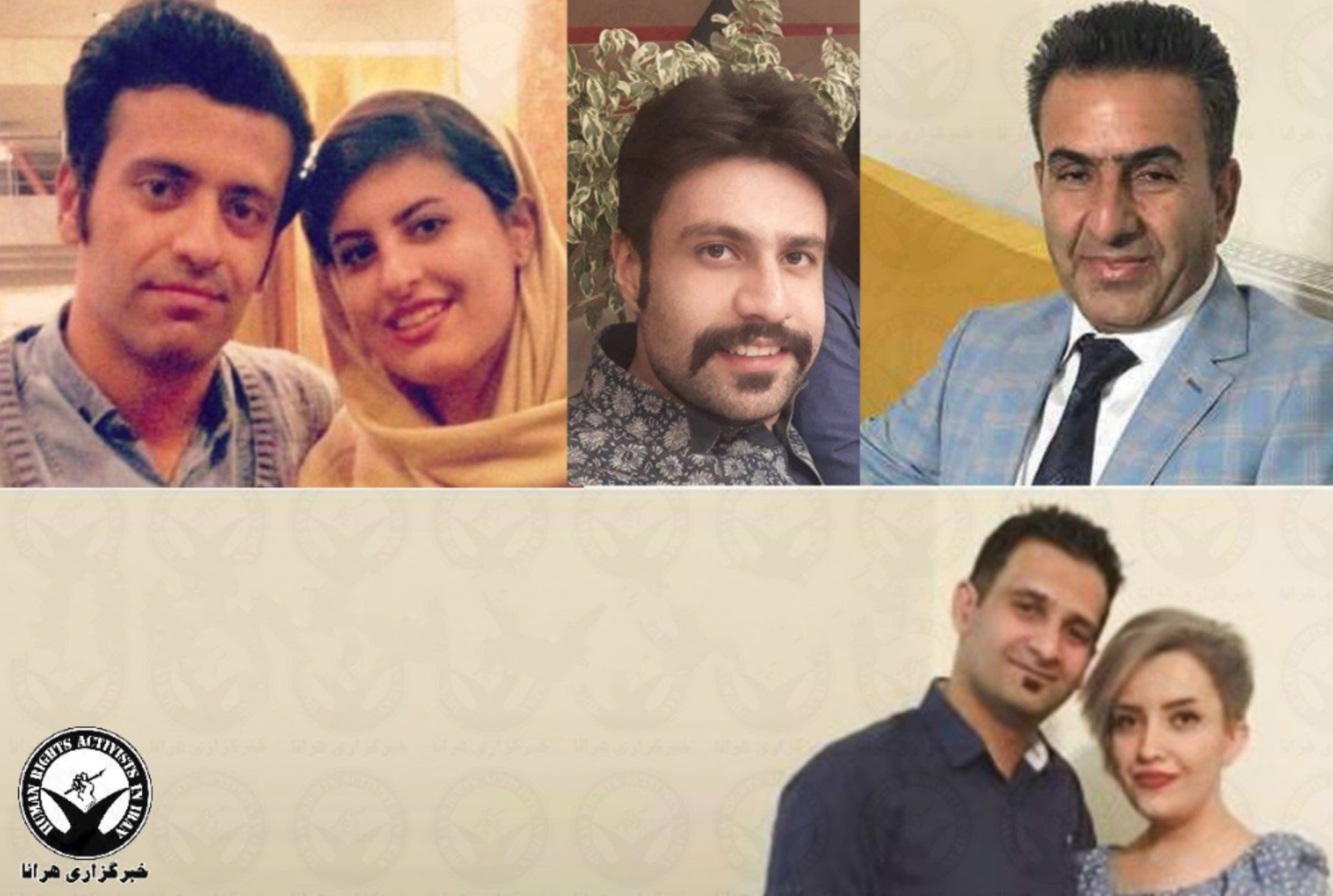
Human Rights Activists News Agency (HRANA) – On August 5, 2018, Branch 11 of the Appeals Court of Ardabil reached a verdict on the cases of three Azerbaijani activists, calling for fines of 21 million rials each (approximately $500 USD each), 70 lashes, and a four-month suspended imprisonment sentence.
On charges of “disturbing the public peace,” activists Baytullah Barzegar, Sina Ghorbani Irshadi, and Siyamak Ghardashi were issued their original verdict on January 30, 2018, from Branch 101 of the No. 2 Criminal Court of Meshginshahr. Branch 11 of the Appeals Court of Ardabil rejected the activists’ initial three requests for appeal, remaining firm on their sentence of three million rials (with the threat of 70 lashes for recidivism) and 18 million rials (with the threat of 4 months’ imprisonment for recidivism). Per the original verdict, their sentence was to be suspended for a probationary period of 3 years.
Last July, HRANA covered Baytullah Barzegar’s defense proceedings, as well as those of other activists arrested in conjunction with a demonstration held on International Mother Language Day. Barzegar has been taken into police custody on multiple occasions, including a 2015 Meshginshahr imprisonment for his participation in public protests against the state-sponsored television series Fitileh, which was widely believed to portray Azerbaijani peoples in a derogatory light.

From left to right: Azerbaijani activists Baytullah Barzegar, Sina Ghorbani Irshadi and Siyamak Ghardashi

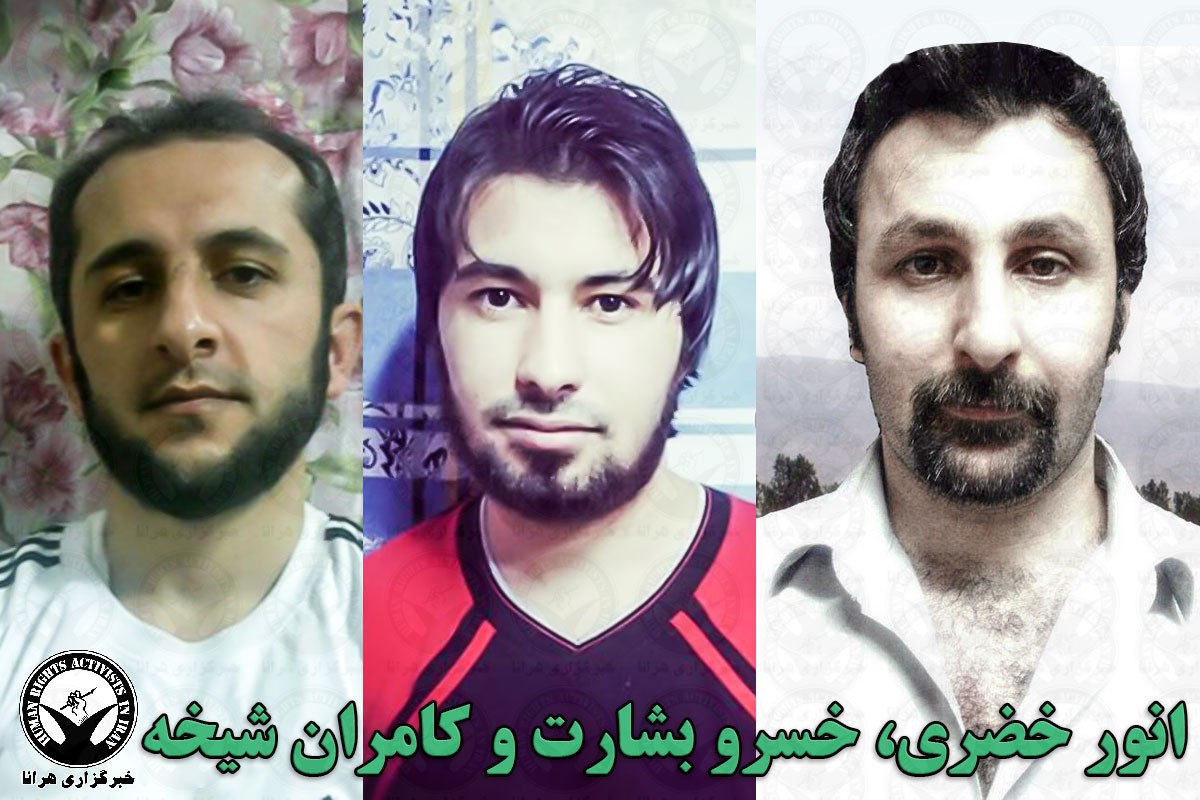
Three Sunni Prisoners Transferred to Rajai Shahr Prison

Human Rights Activists News Agency (HRANA) – Three Sunni prisoners in Urmia Central Prison were transferred to Rajai Shahr Prison in Karaj in the evening hours of Sunday, August 19, 2018.

Prisoners Anvar Khezri, Khosro Besharat, and Kamran Sheikheh, according to an inside source, faced transfer in connection to charges of “Moharebeh” (enmity against God) brought by the Tehran Revolutionary Court. Khezri, Sheikheh, and Besharat were originally transferred to Urmia for trial in September of last year and had been held in Urmia Central Prison since then.

Last month, HRANA reporters testified to the state of uncertainty surrounding the verdict on the mens’ charges of aiding and abetting murder. Khezri, Besharat, and Sheikheh have been sentenced to 10 years in prison. Sheikheh has been sentenced to death.

These three men, along with inmates Davood Abdollahi, Farhad Salimi, Ghasem Abesteh, and Ayub Karimi, spent 6 years in prison before being sentenced to death in March 2016 by Judge Moghiseh of Tehran’s Revolutionary Court, branch 28. Judge Razini of Iran’s Supreme Court later reversed the sentence.

Following the reversal of their sentence, security forces charged the three Sunni men with “acting against national security”, “propaganda against the regime”, “membership in Salafist groups”, “spreading corruption on earth” and the aforementioned Moharebeh. Authorities have yet to elaborate on these allegations.

Inside sources related to HRANA that the defendants deny any history of violence, and believe the charges are a pretext for persecuting them for their religious beliefs and practices, including attending meetings and distributing Sunni literature. Khezri, Besharat, and Sheikheh have reportedly endured mental and physical torture over the course of their interrogations.

HRANA previously reported on Khezri’s poor bill of health, including respiratory problems caused by torture. In the same report, doctors who examined Khezri stated his symptoms were caused by “a heavy blow” to his chest.

The three men have thus far been denied the right to appoint lawyers of their choice or defend themselves in the court.

Despite the efforts of their state-appointed lawyer Mahmoud Alizadeh-Tabataba’i, these seven prisoners will soon have spent nine years in a state of legal suspension, one that has caused severe mental and psychological strain for both them and their families.

The prisoners have attempted in various ways to push their case forward, including staging a hunger strike and requesting clarification of their charges and verdict.

Iranian Actress Interrogated for her Instagram Posts

Human Rights Activists News Agency (HRANA) – In response to a summons she received last Wednesday, film and TV actress Parastoo Salehi underwent interrogation on Sunday, August 19, 2018, by the Monitoring and Follow-Up Unit of the Iranian Judiciary.

Salehi reported that she was being called out for criticizing the economic and social situation in Iran on her social media account. Recently, she had used her public Instagram profile to decry such issues as embezzlement, the drop in the value of Iranian currency, citizens being detained for political reasons, rape, cases of child abuse, and the Caspian Sea Agreement.

“[The authorities] were friendly and respectful, but a summons is a summons,” Salehi said.

Salehi quoted her interrogators as saying, “You’re bringing everybody down with all of these problems. It doesn’t benefit the country or society.” She said they pressed her to name who she was “taking orders from” to direct her social media activity.

“I support the Iranian people, not any particular party, faction, or group” she added. “I only reflect on events and repeat what the people are saying. If we speak out, we are met with warnings and threats. If we don’t, we are accused of opportunism. I’ve been repeatedly asked by activists why I don’t join them on the streets.”

“I am not afraid,” she added. “What happened to Nasrin Sotoodeh [a recently imprisoned lawyer] and many others? I find it odd that amid all of these corrupt people, I am the one who gets summoned.”

Salehi added that “Rouhani’s administration is the worst Iran has seen in 40 years