HRANA– In September 2026, Human Rights Activists in Iran (HRA) launched a legal and advocacy initiative aimed at advancing accountability for alleged crimes against humanity committed by Iranian State authorities. At the center of this effort was HRA’s submission to Germany’s Federal Prosecutor General requesting the opening of a structural investigation (Strukturermittlungsverfahren) into the situation in Iran, with a particular evidentiary focus on the repression surrounding the nationwide protests of December 2025 and January 2026.
1. Overview
HRA submitted the request on September 1, 2026, with legal support from UpRights and German counsel. The nearly 109-page submission was the product of months of intensive investigation and drew on more than 60 interviews with victims, witnesses, and family members inside and outside Iran, together with extensive documentary and digital evidence. HRA also conducted weapons and injury analysis and mapped suspected perpetrators, relevant institutions, and command structures. The submission identifies upwards of 50 suspected perpetrators and analyzes their roles, institutional affiliations, links to documented incidents, and positions within relevant command structures.
The filing was accompanied by a coordinated public-engagement effort intended to explain the legal strategy, bring greater attention to the evidence documented by HRA, and build support for sustained accountability work. This included a public event in Berlin on September 3 bringing together German policymakers, lawyers, civil society representatives, media, and human rights practitioners; an article in Just Security explaining why Germany is particularly well placed to act and why investigative work should begin now; and an upcoming Just Access podcast addressing the filing.
Together, these activities sought to advance a central proposition underlying HRA’s work: documentation undertaken today can create the evidentiary foundation for accountability opportunities that may arise years later.
2. The Criminal Complaint and Request for a Structural Investigation
The submission asks Germany’s Federal Prosecutor General to open a structural investigation into alleged crimes against humanity committed by Iranian State authorities under Section 7 of the German Code of Crimes against International Law (Völkerstrafgesetzbuch, VStGB). HRA argues that the information submitted provides sufficient factual indications of multiple underlying acts potentially amounting to crimes against humanity and meets the threshold under Section 152(2) of the German Code of Criminal Procedure for opening an investigation.
The submission focuses principally on the nationwide protests that began on December 28, 2025. What began with shopkeepers and bazaar merchants in Tehran rapidly developed into a nationwide movement encompassing at least 203 cities across all 31 provinces. HRA documented 682 protest events, including 627 street demonstrations and 55 university assemblies.
According to HRA’s verified minimum figures at the time of submission, at least 7,068 people were killed, including 6,548 protesters, 236 children, and 77 other civilians, and at least 53,987 people were arrested or detained. HRA also documented at least 369 forced confessions broadcast through State and associated media. HRA emphasizes that these figures are verified minimums and do not purport to capture the full scale of the alleged violations.
Nature and Patterns of the Alleged Crimes
The evidence presented describes an alleged nationwide campaign involving multiple organs of the Iranian State, including the Islamic Revolutionary Guard Corps (IRGC), Basij forces, the Law Enforcement Command (LEF), intelligence and security forces, and the Judiciary.
The submission documents allegations including unlawful killings and mass shootings; arbitrary arrest and mass detention; enforced disappearance and incommunicado detention; torture and other ill-treatment; forced confessions; sexual violence; politically motivated persecution; interference with access to medical treatment; intimidation and coercion of victims’ families; interference with funerals, burials, and the recovery of bodies; and the use of capital proceedings and death sentences following manifestly unfair trials. More than 50 representative incidents are included to illustrate alleged criminal conduct across different locations, victim profiles, State institutions, and methods of repression.
HRA’s investigation also identified recurring features across geographically dispersed locations. These included the use of live ammunition, pellet-firing weapons, tear gas, and other forms of force against predominantly unarmed protesters and bystanders. The submission further describes a correlation between the nationwide telecommunications shutdown, the deliberate shutdown of public street lighting, and a marked escalation in lethal and other unlawful force. HRA argues that the recurrence of substantially similar methods across different locations indicates a coordinated pattern rather than a series of isolated incidents.
The submission also addresses alleged abuses following arrest. HRA documented reports of incommunicado detention, denial of access to lawyers, coerced confessions, expedited proceedings involving capital offenses, and death sentences following proceedings lacking basic fair-trial guarantees. It argues that these practices raise serious concerns that the criminal justice system itself has been used as an additional instrument of repression against protesters and perceived dissidents.
Suspected Perpetrators and Institutional Structures
A significant component of the investigation involved moving beyond documentation of individual incidents to examine who may bear responsibility for the alleged crimes.
The submission identifies nearly 50 suspected perpetrators and analyzes their positions, institutional affiliations, geographical areas of responsibility, links to representative incidents, and roles within relevant command structures. They include commanders within the IRGC, Basij, and LEF; heads of intelligence departments; governors; prison officials; prosecutors; and judicial authorities. The underlying information draws in part on HRA’s Spreading Justice Database and Pasdaran Documentation Project Database.
This perpetrator mapping was intended not to prejudge individual criminal responsibility, but to preserve and organize information relevant to determining how particular individuals, units, institutions, and command structures may have contributed to the alleged crimes.
3. Why a Structural Investigation
The request for a structural investigation reflects the nature of both the alleged crimes and the practical obstacles to accountability.
Unlike an investigation centered from the outset on a particular available suspect, a structural investigation would allow German prosecutors to examine the broader factual and organizational structures underlying the alleged crimes; collect and preserve testimonial, documentary, and digital evidence; identify patterns connecting individual incidents; map relevant State institutions and units; establish command structures and institutional relationships; and assess the potential responsibility of individuals who may have planned, ordered, facilitated, contributed to, or directly committed the underlying acts.
Although the December 2025–January 2026 crackdown provides the submission’s principal evidentiary focus, HRA argues that an investigation should not necessarily be confined to that period. The submission situates the recent events within a broader recurring pattern of repression against perceived opponents and civilian protesters, including the response to the 2022 “Woman, Life, Freedom” protests.
The objective is therefore both immediate and long-term: to preserve evidence and investigate structures now, rather than waiting until an individual suspected of involvement happens to become available to German authorities.
4. Why Germany
HRA argues that there is currently no realistic domestic route to accountability in Iran for alleged crimes committed by State authorities. Iran is not a State Party to the Rome Statute and has not lodged a declaration accepting ICC jurisdiction, leaving the ICC without jurisdiction over crimes committed wholly within Iran absent an unlikely United Nations Security Council referral.
At the same time, there are concrete links between the alleged crimes, available evidence, and Germany and the wider European context.
Victims, Witnesses, and Evidence in Europe
Victims, witnesses, and family members of people killed, injured, tortured, arbitrarily detained, or otherwise affected are already outside Iran. HRA has interviewed individuals who fled following the protests and are in Turkey or reaching EU countries, as well as victims and family members elsewhere in Europe and North America. HRA anticipates that continuing displacement may result in additional victims and witnesses reaching Europe.
Germany’s substantial Iranian diaspora provides additional possibilities for identifying witnesses and securing testimonial, documentary, and other evidence. A German structural investigation could also facilitate cooperation with other European jurisdictions in identifying and interviewing victims and witnesses and preserving evidence for possible future proceedings.
Potential Future Presence of Suspects
HRA has also documented past travel to Germany and other European States by senior current and former Iranian officials, including IRGC, government, and judicial officials, for personal, family-related, and medical reasons. HRA argues that these patterns make it realistic that persons potentially implicated in the alleged crimes may enter or transit through Germany or another European jurisdiction in the future, even though it is impossible to predict precisely who will travel, when, or where.
A structural investigation would therefore allow the evidentiary and investigative groundwork to be developed before such a situation arises, rather than requiring prosecutors to begin from scratch once a potential suspect comes within reach.
Transnational Repression
HRA further situates Germany’s interest within the context of Iranian State-sponsored transnational repression. It describes links between Iranian State actors—including the IRGC, Quds Force, Ministry of Intelligence and Security, and associated networks—and surveillance, intimidation, threats, attempted abductions, and assassination plots targeting perceived opponents abroad. The submission notes that members of the Iranian diaspora have faced threats and intimidation in Germany and argues that some State actors implicated in domestic repression are also linked to increased transnational activities targeting perceived opponents outside Iran.
Together, the availability of evidence and witnesses, potential future presence of suspects, Germany’s Iranian diaspora, transnational repression affecting Germany, and Germany’s experience with structural investigations form the principal practical nexus supporting HRA’s request.
5. September 3 Berlin Event
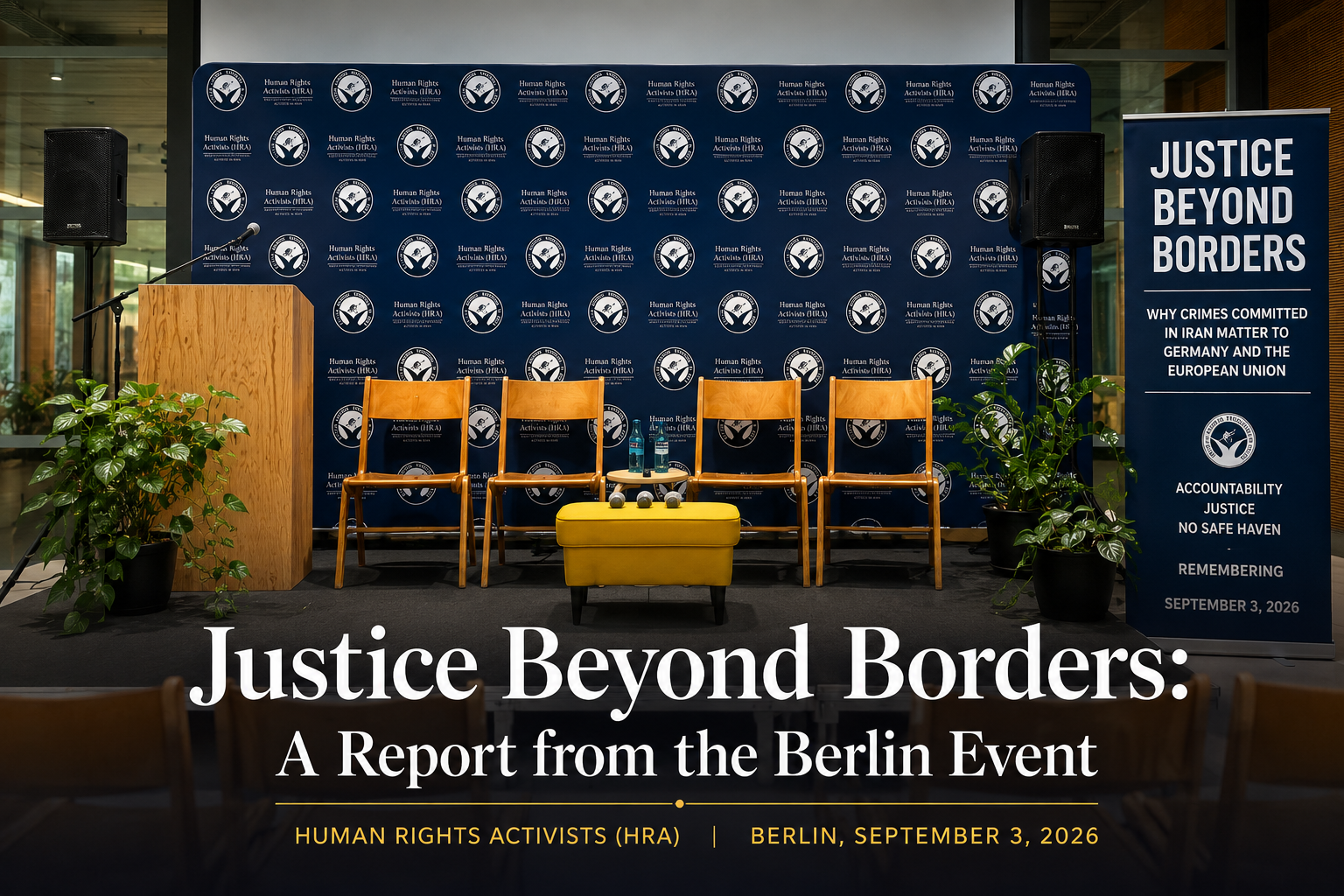
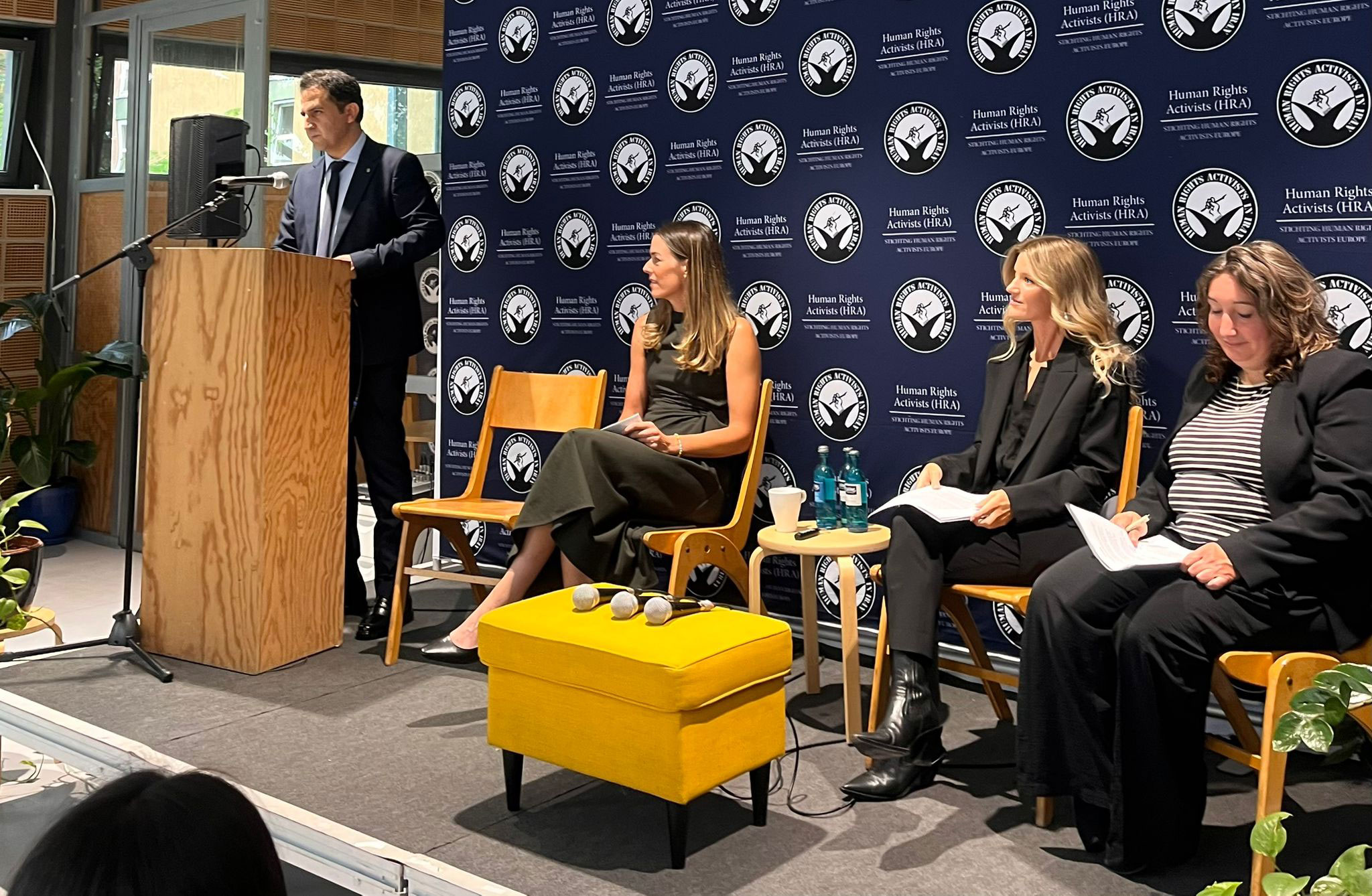
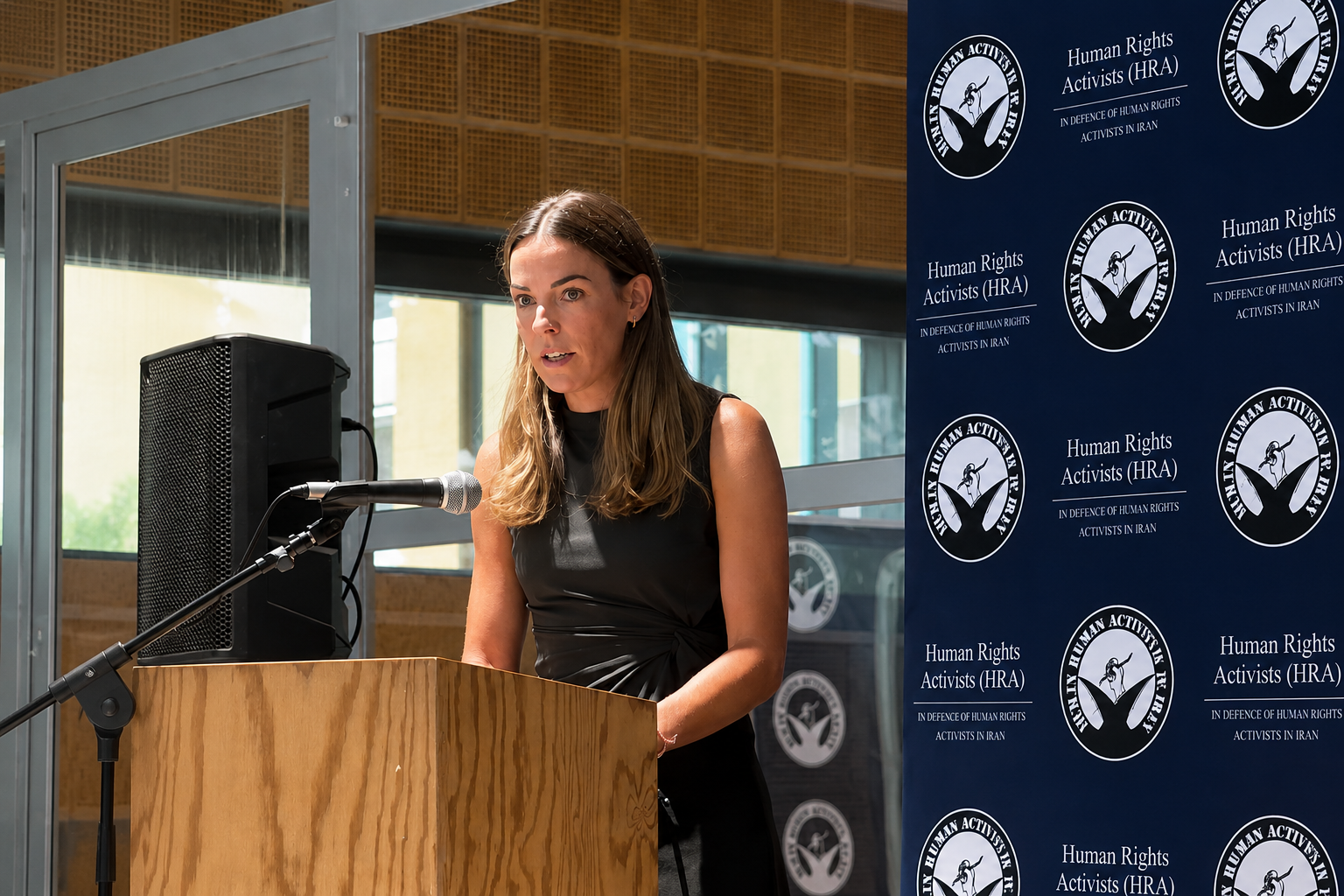
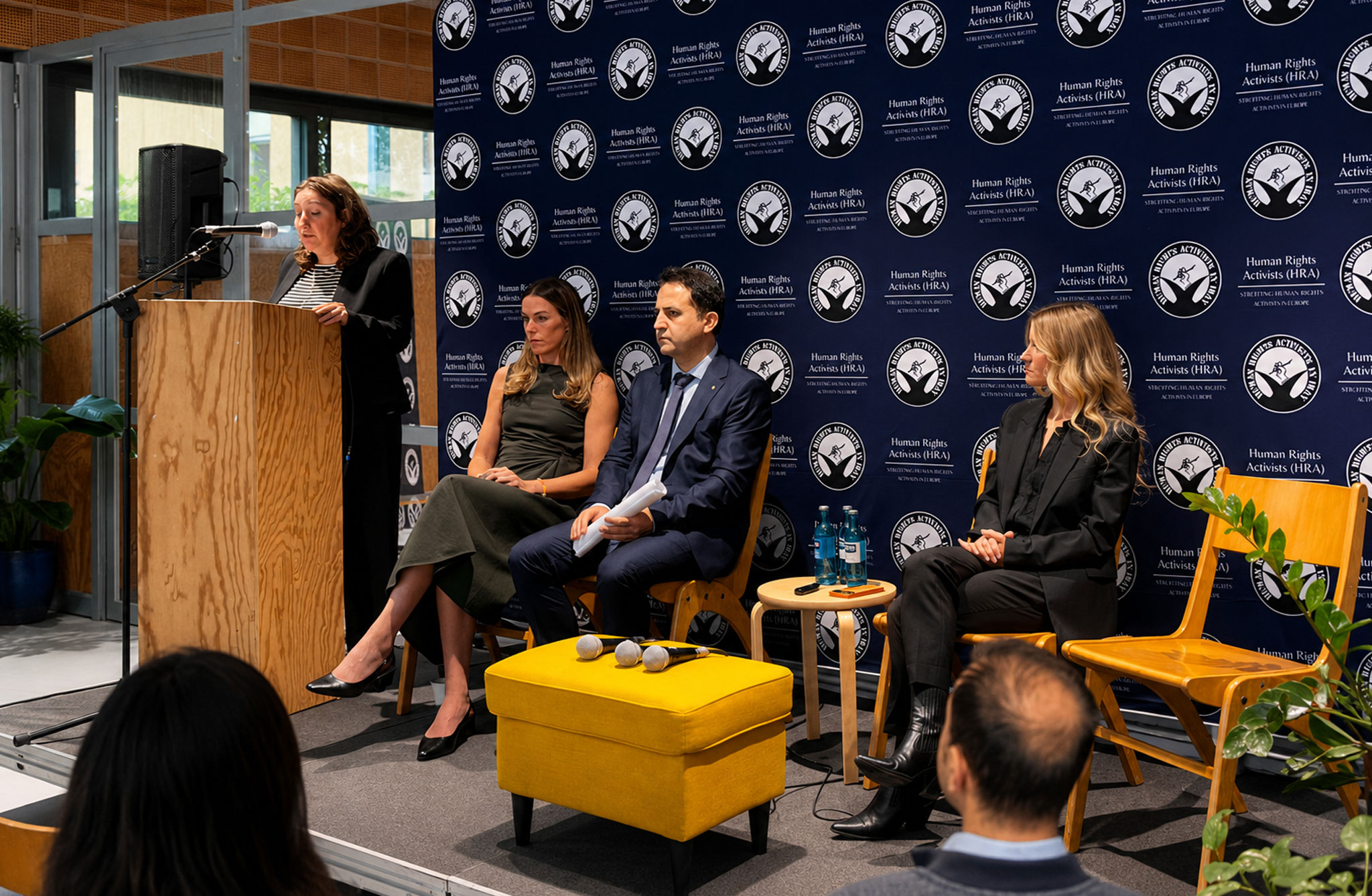
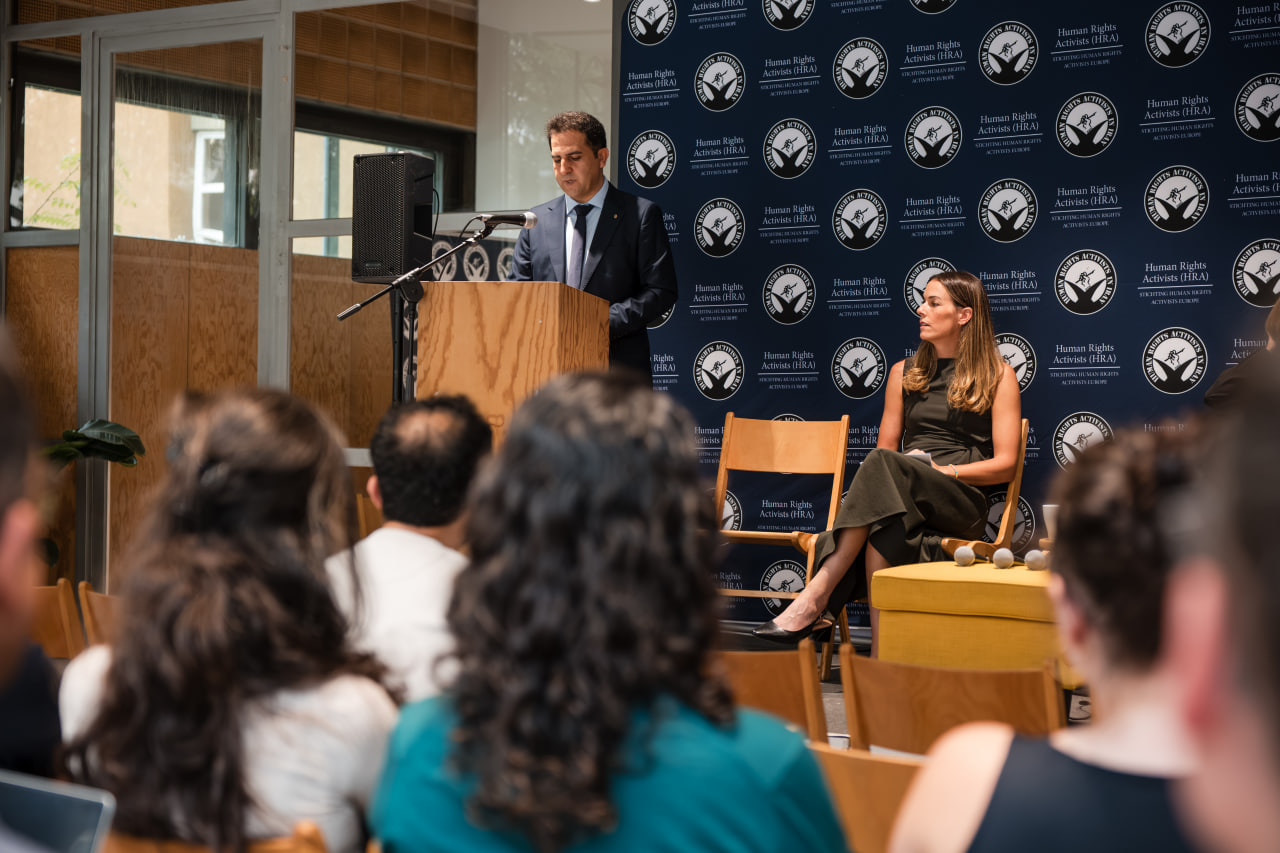
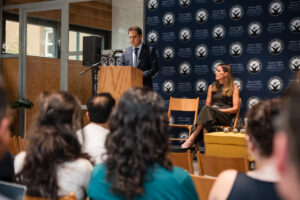
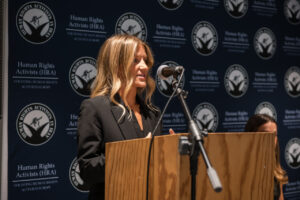
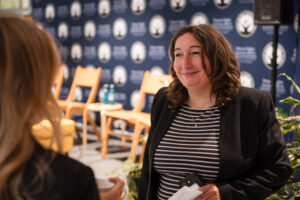
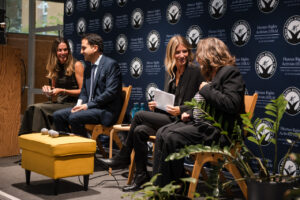
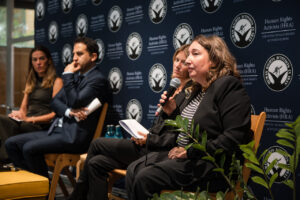
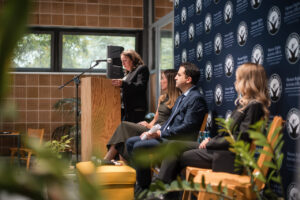
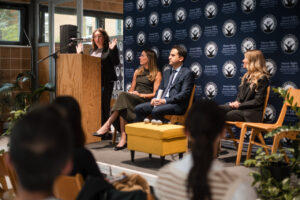
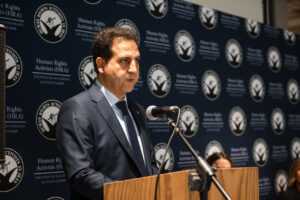
Two days after the submission, HRA and UpRights convened a panel event in Berlin to publicly announce the filing and discuss its significance. The audience included German policymakers, lawyers, civil society representatives, media, activists, and human rights practitioners.
The panel was moderated by Skylar Thompson, Deputy Director of HRA, and featured Jennifer Connet, Legal Advisor at HRA; Valérie Gabard, Co-Director of UpRights; and Sina Yousefi, an Iranian human rights lawyer and former Deputy Chair of the Human Rights Commission of the East Azerbaijan Bar Association.
Skylar Thompson
Thompson provided the broader context for HRA and UpRights’ efforts to pursue legal action in Germany and discussed plans for continued cooperation with investigative and prosecutorial efforts across Europe. She emphasized the importance of sustained documentation and international coordination, particularly as victims and witnesses continue to leave Iran and opportunities for accountability may emerge unpredictably. She also underscored that systematic documentation is the foundation on which both present and future accountability efforts depend.
Sina Yousefi
Yousefi brought the perspective of an Iranian human rights lawyer who had practiced in Iran in the aftermath of the 2022 nationwide protests. Drawing on his professional and personal experience, he discussed patterns of repression directed against protesters and explained why the events following the “Woman, Life, Freedom” protests remain relevant to understanding the more recent crackdown.
His contribution also reinforced an important aspect of the submission: the December 2025–January 2026 crackdown should not necessarily be understood in isolation from recurring patterns of State repression documented during earlier protest movements. The Executive Summary similarly asks German prosecutors to consider the broader situation in Iran, including alleged international crimes committed in connection with the 2022 protests.
Jennifer Connet
Connet presented aspects of HRA’s investigation and its engagement with victims and witnesses. She discussed the scale of HRA’s documentation and emphasized that the investigation depended fundamentally on the courage and trust of individuals who shared their experiences and evidence, including people who remain inside Iran.
Her presentation placed individual testimony within the broader patterns identified through HRA’s investigation: killings and shootings, injuries caused by live ammunition and pellet weapons, fear of seeking medical treatment, detention and torture, forced confessions, interference with families’ efforts to recover and bury their relatives, and other alleged abuses. These individual experiences form part of the evidentiary basis through which HRA has sought to identify patterns extending across locations, institutions, and stages of the crackdown.
Valérie Gabard
Gabard explained why a structural investigation is particularly suited to the allegations documented by HRA. As she emphasized, the alleged crimes are not connected simply to one suspect or one isolated incident, but to a broader State-backed system. A structural investigation can therefore provide a framework for investigating the broader situation while supporting potential future criminal accountability.
This closely reflects the rationale set out in the complaint: German prosecutors would be able to examine organizational structures and patterns, preserve evidence, identify relevant institutions and command relationships, and assess potential individual responsibility without waiting for a particular suspect to become immediately available.
The event concluded with questions from participants and a broader discussion about legal strategies, practical challenges, and opportunities for pursuing accountability beyond Iran, including the role German and European civil society could play as the initiative develops.
6. Extending the Initiative Beyond the Filing
The Germany initiative extended beyond the formal submission and the September 3 Berlin event. HRA also sought to bring the legal and strategic questions raised by the filing into broader legal, policy, and public discussions, with particular emphasis on why investigative action is possible before a specific suspect becomes available to German authorities.
As part of this effort, HRA’s Skylar Thompson and Jennifer Connet published an article in Just Security examining the strategic rationale for opening a structural investigation in Germany. While the submission sets out the underlying evidence and legal basis for HRA’s request, the article situates that request within the broader practice of universal-jurisdiction accountability. It emphasizes the value of beginning investigative work before the future presence of a particular suspect can be predicted, drawing on Germany’s experience with structural investigations concerning other situations, including Syria and Ukraine.
Together, these engagements form part of HRA’s broader effort to ensure that the filing serves not only as a submission of evidence to German authorities, but also as a basis for sustained engagement with legal practitioners, policymakers, civil society, and others working on accountability for alleged crimes committed in Iran.
7. Civil Society Engagement and Next Steps
The submission expressly contemplates continued cooperation between German authorities and civil society organizations possessing relevant evidence and expertise. HRA asks the Federal Prosecutor General to engage directly with HRA and other organizations that have documented the events. It notes that civil society organizations have established trusted relationships with victims and witnesses, accumulated substantial documentation concerning incidents and suspected perpetrators, and developed contextual and technical expertise that can support investigative efforts.
HRA has stated its readiness to cooperate with German authorities, including by facilitating access to relevant information and, where appropriate and subject to necessary safeguards and informed consent, supporting engagement with victims and witnesses.
The Berlin event was therefore not simply a launch event. It was also intended to begin a longer conversation with German policymakers, lawyers, and civil society about how these constituencies can support accountability efforts after the filing itself. The legal submission provides the formal request; continued documentation, engagement with victims and witnesses, monitoring of potential suspects, civil society coordination, and engagement with prosecutorial authorities constitute the next phase.
8. Significance of the Initiative
The September 2026 initiative brings together several strands of HRA’s work: documentation of individual violations; analysis of patterns of repression; identification and mapping of suspected perpetrators and State institutions; engagement with victims and witnesses; legal analysis; and advocacy aimed at translating that documentation into concrete accountability opportunities.
The filing is particularly significant because it seeks to convert a substantial body of civil society documentation into an investigative framework capable of supporting accountability over the long term. The Executive Summary argues that the alleged crimes were neither isolated nor confined to particular perpetrators, but formed part of a widespread and systematic attack against a civilian population involving multiple State institutions. HRA therefore asks German prosecutors to investigate the structures, patterns, evidence, and potential responsibility underlying the alleged crimes rather than waiting until a particular suspect becomes available.
 |  |  |
 |  |  |
 |  |  |