Lawyer Says Mohammad Nourizad is in Critical Condition in Evin Prison

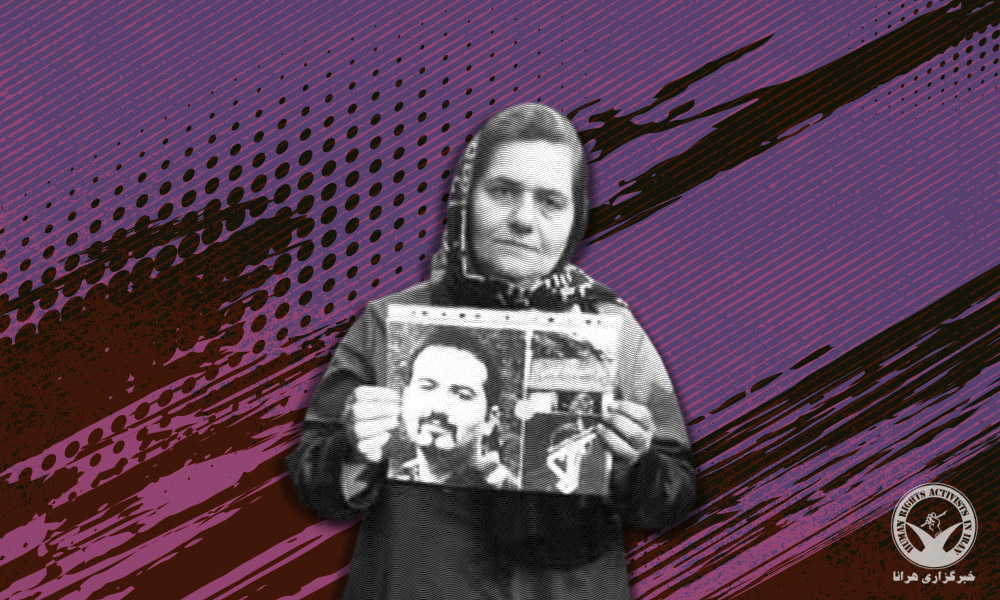
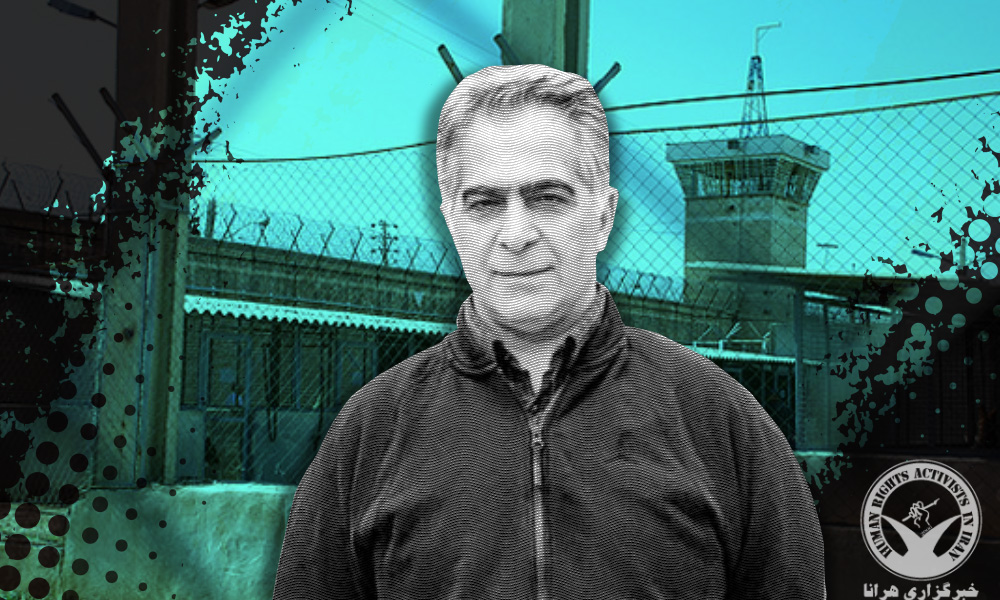
Mohammad Hossein Aghasi, Mohammad Nourizad‘s lawyer, told HRANA that his client is in critical condition in Evin Prison and that the duration of his hunger and drug strike has put him in serious danger.

According to HRANA, the news agency of Human Rights Activists, Aghasi emphasized that his client has lost 55 pounds and is experiencing severe hearing loss.

Aghasi stated that although the prison prosecutor recently agreed to send him on leave, Nourizad has refused the offer, stating that he will continue his strike until his request for his and his son’s unconditional release is fulfilled.

Ali Nourizad, Mohammed’s son, was arrested by security forces in Tehran in January 2020 for protesting a rally against the downing of a Ukrainian plane by the IRGC, and for expressing sympathy with the victims’ families.  He was released on bail a month later. The Tehran Revolutionary Court eventually sentenced him to 3 and a half years in prison. This sentence was upheld by the Tehran Court of Appeals. He has been serving out his sentence in Greater Tehran since October of last year.

Mr. Nourizad wants to be acquitted of all charges that were unjustly issued against him.

Mr. Aghasi added: “I really demand that the case of Mr. Nourizad and other people, who are known as the signatories of the leadership resignation statement from whom 11 are my clients, to be processed and judged by a fully independent judiciary so they can see how arguments about the convictions and issued sentences are completely incorrect.”

Earlier this year, UN experts expressed concern over the health condition of Mohammad Nourizad in Evin Prison and called for his immediate release.

66-year-old Nourizad is an Iranian director, screenwriter, journalist, and activist. Nourizad became an outspoken critic of the Islamic Republic a decade ago and has since been arrested and imprisoned several times for his civic work and visits to families of political prisoners.

As Mr. Aghasi stated, Nourizad has been wounding himself every day as a sign of objection; he has fainted 37 times. According to Aghasi, his conversations with his client and even the insistence of Nourizad’s wife and child did not work, and it seems that he has made his decision.

“I do not want my name to be on the list of those who are indifferent to current affairs,” Nourizad has said in a meeting with his lawyer. “And I am willing to give my life for it.”

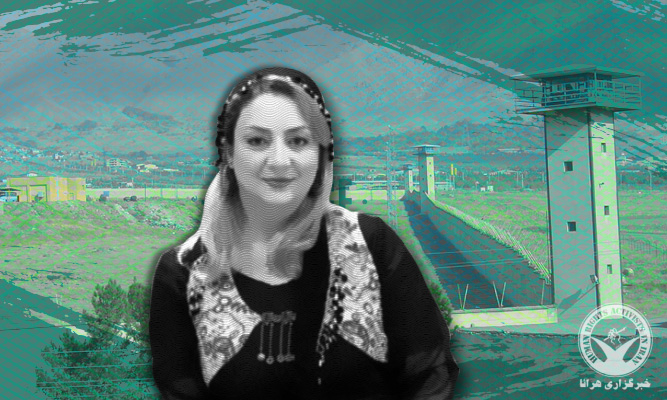
Lakan Prison Officials Turn off Air Conditioning in Women’s Ward and Cut Inmates’ Quarantines Short

Following the transfer of 9 new female prisoners to the quarantine ward of Lakan Prison in Rasht, 15 residents of the quarantine ward were transferred to the public ward before the end of their quarantine period.

According to HRANA, the news agency of Human Rights Activists, air conditioning in the women’s ward was also turned off for at least 8 hours during the day. The lack of air conditioning, coupled with steadily rising summer temperatures have created conditions under which it is nearly impossible for the inmates to wear masks.

According to an informed source, after protesting, prisoners were told that they would be sent directly to public wards without quarantine, even if other new entrances arrived.

It is worth mentioning that civil activist Athena Daemi, who was deported from Evin Prison to Lakan on March 17, 2010, was kept in quarantine for 23 days.

Sydney Pen Association Demands Immediate Release of Reza Khandan Mahabadi, Baktash Abtin and Keyvan Bazhan from Evin Prison

On Sunday, June 20, the Sydney Pen Association in Australia issued a statement in light of Ebrahim Ra’isi’s election as next President of the Islamic Republic.

According to HRANA, the news agency of Human Rights Activists, quoting the Writers’ Association of Iran, the statement calls for the immediate release of Reza Khandan Mahabadi, Baktash Abtin and Keyvan Bazhan, currently being held in Evin prison for their writings critical of the State. All three authors are members of the Writers’ Association of Iran, and each has published several books on Iranian history, sociology, and literature.

“The three authors need medical attention and authorities have not taken any of them to hospital,” the statement says.

In April, Baktash Abtin’s lawyer announced that his client had contracted COVID but had not received the necessary treatment. Reza Khandan Mahabadi suffers from osteoarthritis of the neck and Keyvan Bazhan has a thyroid disease. Penn Sydney was recently informed by inmates that another wave of coronavirus has spread to Evin Prison, further endangering the lives of its inmates.

The writers were first sentenced to imprisonment when now-president-elect Ebrahim Ra’isi was head of the judiciary on charges of propaganda against the Islamic Republic and acting against national security. They were also accused of attending the graves of disgruntled poets and writers and critics of the regime.

The prosecution cited the publication of a book on the history of the Writers’ Association of Iran, an institution that has criticized Iran’s past and present governments for decades, and the defendants were sentenced to a total of 18 years in prison by the Revolutionary Court of Tehran.

In January 2019, an appeals court in Tehran reduced the sentence to a total of 15 years and six months in prison. Baktash Abtin and Reza Khandan Mahabadi were sentenced to six years in prison each, and Keyvan Bazhan was sentenced to three years and six months.

Abtin, Khandan Mahabadi and Bazhan were arrested on October 26 of last year, after attending the Judgment Enforcement Unit of the Evin Court, and  were transferred to the infamous Evin Prison to serve out their sentences.

The statement cites a joint text by Reza Khandan Mahabadi, Baktash Abtin and Keyvan Bajan, which was issued from inside the prison on June 6, 2021.

Below is an excerpt from their text:


We are addressing all writers and libertarians who have made “freedom of expression everywhere and for all” the focus of their human endeavors. This is the demand that the historical-global movement for freedom of expression has practically and always pursued. The Writers’ Association of Iran, of which we are three members, has been active as part of this movement for more than half a century; A movement that must be enhanced by its power and volume; Because apart from the daily threat of freedom of expression by the ruling powers, many people in the world are completely deprived of it; Including writers and people of Iran. We are currently in prison, and according to the sentence, we have to endure a total of 13 and a half years in prison because we are writers who oppose censorship and demand freedom of expression without exception. We are not the first prisoners and oppressed of this movement and we will not be the last until “freedom of expression everywhere and for everyone” is achieved.


Reza Khandan Mahabadi, Baktash Abtin, Keyvan Bazhan


Bektash Abtin concluded in his story to Sydney Pen Association president Mark Isaac,  “Freedom is never given to anyone on a gold tray; it comes at a high price. In a country like Iran, death very easily finds intellectuals, libertarians and those who fight for freedom of expression. We are not worried about the trial and the prison and its difficulties, because we have made our decision.”

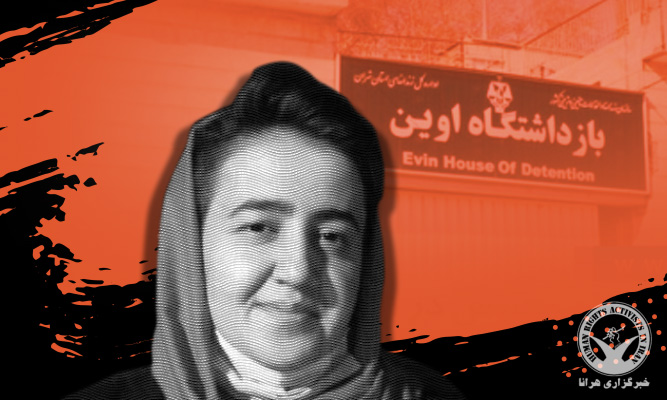
Political Prisoner Narges Adibi Denied Medical Leave from Evin Prison

Political prisoner Narges Adibi has been denied medical leave from Evin Prison despite having numerous medical problems.

According to HRANA, the news agency of Human Rights Activists, Ms. Adibi suffers from bronchitis, asthma, and severe joint pain.

Branch 26 of the Tehran Revolutionary Court, presided over by Judge Mashallah Ahmadzadeh, sentenced Adibi to 8 years in prison on charges of conspiracy, insulting the leadership, insulting the founder of the Islamic Republic, and propaganda against the regime.

Branch 54 of the Tehran Court of Appeals, presided over by Judge Babaei, reduced the sentence to 3 years and 6 months in May of last year.

58-year-old Narges Adibi is the daughter of Hussein and mother of two children. She was arrested in July of last year and transferred to Evin Prison to serve out her sentence, where she has been held since.


Ahmad Reza Jalali’s Lawyer Expresses Concern About His Condition in Evin Prison

Ahmad Reza Jalali’s lawyer, Helaleh Mousavian, has expressed concern about her client’s condition in Evin Prison. According to HRANA, the news agency of Human Rights Activists, Reza Jalali is a university professor and dual citizen of Iran and Sweden currently on death row.

The professor, who traveled to Iran in May 2016 at the invitation of the University of Tehran, was arrested by security forces on charges of “moharebeh through espionage for Israel”. Moharebeh, loosely translated as “waging war against God”, is a pillar of Sharia Law that is typically applied to those suspected of connection to any acts against the state.

Mr. Jalali was sentenced to death for espionage, and the sentence was upheld by the Supreme Court in December 2017.

Ahmad Reza Jalali worked at the Center for Natural Disasters after graduating from medical school in Iran. He immigrated to Sweden in 2009 to continue his studies and earned a doctorate. He completed his postdoctoral in Disaster Medicine at the University of Piedmont in Italy, and later, settled in Sweden with his wife and two children.

According to a HRANA report published in November 2020, Ahmad Reza Jalali was transferred to solitary confinement for a week to be prepared for execution. In December of that year, Ms. Mousavian was informed that her client’s death sentence was put on hold and he was transferred to ward 209 of Evin prison.

“Fortunately, Mr. Jalali was transferred to a public ward in April, but so far, despite all the efforts, his death sentence has not changed,” Mousavian said. “I am very worried about my client, especially now that the presidential election is over and the result is out. Despite my repeated expressions of concern, no effective action has been taken by the country of dual citizenship and the European Union.”

Subscribe to Our Newsletter

Now is definitely not the time to stop reading!

Political Prisoner Abdul Rasoul Mortazavi Sentenced to 2 Additional Years

Political prisoner Abdul Rasoul Mortazavi was sentenced by Branch 26 of the Revolutionary Court of Tehran to two additional years in prison in a new case recently opened against him.

According to HRANA, the news agency of Human Rights Activists, the new charges against Mortazavi include “propaganda against the regime” and “disturbing public order”.

Mortazavi, who lost his leg during the Iraq-Iran war, was transferred from Evin Prison in Tehran to Rajai Shahr Prison in Karaj in early April. During the move, prison authorities took his prosthetic leg and did not return it.

Under the pretext of finally giving back his leg, officials then transferred Mortazavi to solitary confinement in Rajai Shahr on April 20th, where he is currently being held. He has been denied requests for sick leave and denied the right to make phone calls while in solitary confinement. His leg has still not been returned.

In mid-August 2019, Abdol Rasoul Mortazavi and 13 civil society activists published an open letter and requested the resignation of Ayatollah Khamenei. He was subsequently sentenced to 26 years in prison, from which 11 years are enforceable.

Mohammad Nourizad, Hashem Khastar, Mohammad Hossein Sepehri and several other signatories to the statement are also currently serving prison sentences.

Eight Azerbaijani Turk Activists End Hunger Strike in Ardabil and Evin Prisons After Officials Promise to Meet Their Demands

On June 14, eight Azerbaijani Turk activists ended their hunger strike in Ardabil and Evin Prisons after the authorities’ favorable promise that their demands would be met.

According to HRANA, the news agency of Human Rights Activists, on Saturday, June 13, Abbas Lesani went on a hunger strike to protest the non-observance of the principle of separation of prisoners based on crime and the punitive transfer of political prisoners to wards with prisoners of violent crimes.
Seven other prisoners had gone on hunger strikes in support of Lesani’s endeavor.
The prisoners involved were Abbas Lesani, Yousef Kari, Mehrdad Sheikhi, Ali Vaseghi, Reza Vaseghi, Siamak Mirzaei, Behnam Sheikhi, and Kianoosh Aslani.

Labor Activist Maziar Seyednejad Transferred to IRGC Detention Center in Evin Prison

On Monday, June 7, labor activist Maziar Seyednejad was arrested by security forces at his private home in Tehran.

According to HRANA, the news agency of Human Rights Activists, Seyednejad is currently being held in solitary confinement in the Ministry of Intelligence Detention Center in Ward 209 of Evin Prison.

Recently, the labor activist’s 3 year sentence was confirmed by the Court of Appeals in the Khuzestan Province.

Seyednejad has not, as of yet, been allowed access to a lawyer.

 Political Prisoner Soheil Arabi Faced with New Charges

On May 31, Soheil Arabi, a prisoner of conscience in Rajai Shahr Prison in Karaj, was taken to a virtual arraignment hearing on new charges.

According to HRANA, the news agency of Human Rights Activists, Branch 3 of the Evin Prosecutor’s Office held the hearing and charged Arabi with “propaganda activities against the regime and disturbing the public opinion”.

Mr. Arabi was accused of creating reports on the poor condition of the Greater Tehran Penitentiary, criticizing the conduct of prison authorities, especially the prison’s assistant prosecutor, going on a hunger strike to support political prisoners deprived of  medical treatment, and writing statements in support of the nationwide protests of November 2019.

Arabi was punitively transferred from the Greater Tehran Prison to Rajai Shahr Prison in Karaj last September. He was then summoned and acquitted by Branch 8 of the Shahr-e-Shahri Prosecutor’s Office for another lawsuit in December.

Soheil Arabi has been imprisoned since November 2013 and has been deprived of leaves of absence throughout his entire imprisonment.

HRANA Recap: Recent Hunger Strikes in Iranian Prisons

Khalid Pirzadeh on a hunger strike in the Greater Tehran Prison


On May 31, political prisoner Khaled Pirzadeh went on a hunger strike for the second time this year in the Greater Tehran Prison.

According to HRANA, the news agency of Human Rights Activists, Pirzadeh has been denied visitations and leave in the 25 months since his imprisonment.

Earlier this year, Pirzadeh went on a hunger strike following the failure of authorities to fulfill their promise to agree to parole. Pirzadeh ended his hunger strike in March after authorities promised that his demands would be met.

In May of 2019, the political prisoner was sentenced by Branch 28 of the Revolutionary Court of Tehran, headed by Judge Mohammad Moghiseh, to 5 years in prison, and an additional 2 years for “insulting the leadership”.  According to Article 134 of the Islamic Penal Code, of the 7 total years, 5 can be enforced on Pirzadeh on the charge of “conspiracy and collusion”.

Khaled Pirzadeh underwent foot surgery in August 2020. His legs and spine were severely damaged during detention and required further surgery and physiotherapy. He was also barred from being hospitalized in December 2020 despite having a heart problem.


Iraj Hatami on a hunger strike in protest of continued imprisonment in Rajai Shahr Prison 


On May 30, Iraj Hatami, currently being held in Rajai Shahr Prison in Karaj, went on a hunger strike to protest his continued imprisonment and the fact that previous time served in detention has not been counted towards his 10 year sentence.

According to HRANA, the news agency of Human Rights Activists,  Hatami was arrested by security forces in October 2010 and sentenced to 10 years in prison on charges of “collaborating with a hostile US government”.

Before his arrest, Hatami worked for the Ministry of Defense and spent two years and three months in military detention. Had this time been counted by prison officials, Hatami’s 10 year sentence would have ended last year. Mr. Hatami suffers from diabetes and high blood pressure.


Farzad Samani on a hunger strike in the IRGC Intelligence Detention Center in Urmia


Farzad Samani, a student detained in one of the IRGC intelligence detention centers in Urmia, went on a hunger strike on May 30.

According to HRANA, the news agency of Human Rights Activists, quoting Kurdpa, Samani has been on a hunger strike to protest pressure from the IRGC’s intelligence services and the extension of his and Sakar Eini’s imprisonment for the sixth consecutive time.

The undergraduate student was arrested in his dormitory at Kharazmi University in Karaj in December 2020, and was later transferred to the IRGC Intelligence Detention Center in Urmia.

So far, no information is available on the charges against Samani and Eini.


Hossein Hashemi on a hunger strike in Tehran Prison after his punitive transfer


On Tuesday, June 1, political prisoner Hossein Hashemi went on a hunger strike in the Greater Tehran Prison.

According to HRANA, the news agency of Human Rights Activists,  Hashemi is one of the detainees from the November 2019 nationwide protests.

Per the report, Hashemi was taken from the ward under the pretext of going to interrogation, but was then transferred to the 4th section of the Greater Tehran Prison, which holds prisoners accused of violent crimes.

It is said that Mr. Hashemi’s transfer took place following a verbal argument with Eliassi, the supervising prosecutor of the Evin court. Eliassi had previously threatened to move Hussein Hashemi to a place where he would regret his actions.


Abolfazl Ghasali went on a hunger strike in Evin prison in Tehran

Tehran resident Abolfazl Ghasali, currently serving out a sentence in Evin Prison, has been on a hunger strike since May 27.

According to HRANA, the news agency of Human Rights Activists, Ghasali demands to be granted leave of absence during the COVID-19 outbreak, release on parole due to family’s financial problems, and a retrial.

Ghasali has had several nosebleeds since the day he started the hunger strike. The prisoner is also said to have suffered heart and lung problems during his detention due to poor nutrition and poor prison conditions. He also went on a hunger strike in December last year to protest the failure to address his needs.

In 2018, Branch 28 of the Revolutionary Court of Tehran, presided by Judge Mohammad Moghiseh, sentenced Ghasali to a total of 7 years in prison on charges of “Gathering and colluding and disturbing public order with the intention of committing a crime against national security”, and “insulting the Supreme Leader”.

3 years and 6 months of imprisonment are enforceable under Article 134 of the Islamic Penal Code.