A Daily Overview of Human Rights Violations in Iran for January 4, 2019

The following is an overview of human rights violations in Iran on January 4th, 2019 based on the information compiled and verified by Human Rights Activists News Agency (HRANA).

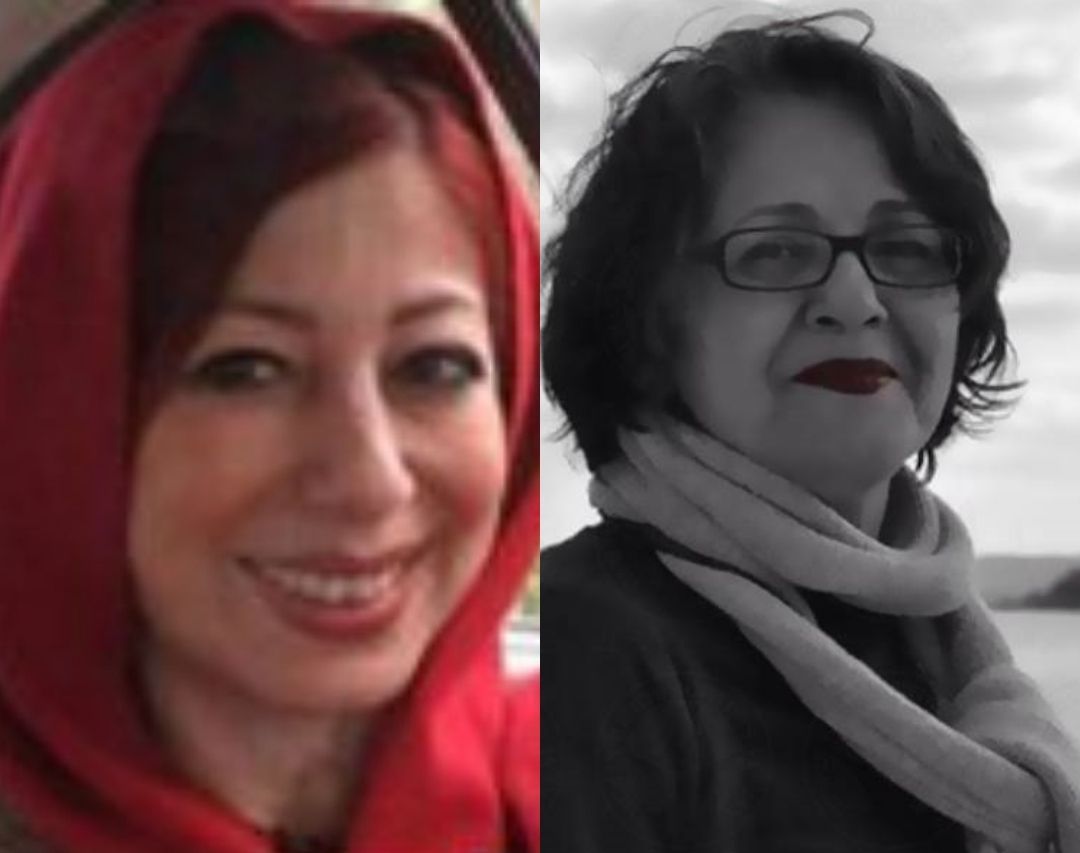
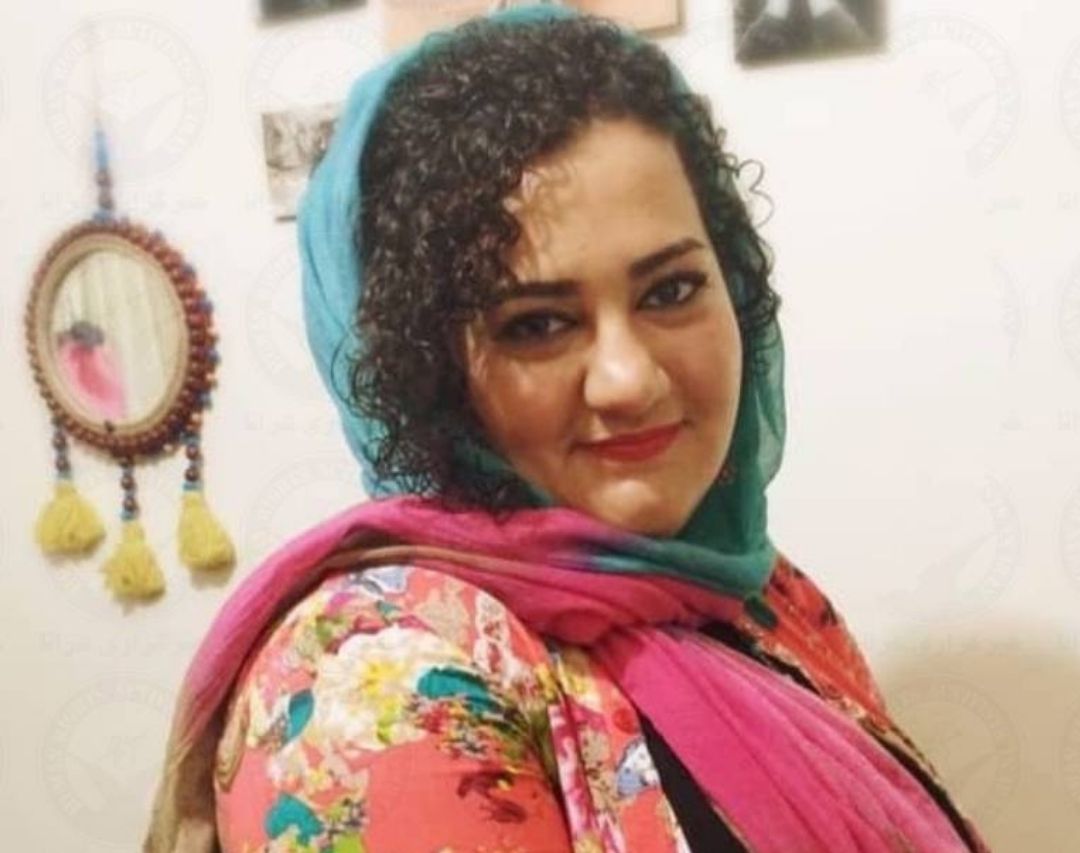
(1) Golrokh Iraee, a civil rights activist and Evin prisoner of conscience, has written an open letter to protest human rights violations in Iran. According to Hrana, Golrokh Iraee was arrested along with her husband on September 6, 2014. She spent 20 days in a solitary confinement in Evin prison before being released on a bail of 800 million rials [approximately $19,000]. On October 24, 2016, she was arrested again without a warrant. She was sentenced to six years in prison for blasphemy and “gathering and collusion against the regime.” She was later granted amnesty per Article 134 of Islamic Penal Code, which reduced her prison term to 2.5 years. Iraee’s husband Arash Sadeghi is serving a 19-year sentence in Karaj’s Rajai Shahr Prison.

(2) Esmail Bakhshi, a detained trade unionist who has been released on bail, has written an open letter to protest physical and mental abuse, interrogation, and tortures in prison. He invited the minister of intelligence, Mahmoud Alavi, to a debate. He is a workers’ representative of Haft Tappeh Sugarcane Mill and has been released on bail on December 12. He was detained for 40 days in prison.

(3) A young Kurdish Kulbar (border courier), Yaghoub Kamyan Niksirat, was shot and killed by a border patrol agent shooting in Urmia.

(4) Mohammadreza Nematipour, a worker of Iran National Steel Industrial Group (INSIG) was arrested and transferred to Sheiban prison in Ahvaz on January 2nd. At least 8 workers of INSIG are still in prison.

(5) Two Arab citizens were arrested in Ahvaz on January 2nd. Khalil Khasarji and Hashem Afari’s whereabouts are still unknown.

(6) Two construction workers were killed and injured by avalanche at Shemshak-Dizin road because of negligence in the oversight of safety conditions.

(7) A member of parliament, Amir Khojasteh, announced that four people who were involved in a high-profile corruption case, were sentenced to death. He added that 31 people have been charged with bribery, fraud, and embezzlement in this case and he has been requested public execution in Tehran Azadi square for all of them.

(8) Farmers of Varzaneh in Isfahan province have protested for 13 consecutive days regarding their water right. Water scarcity is one of the greatest challenges in Iran.

A Daily Overview of Human Rights Violations in Iran for December 6, 2018

The following is an overview of human rights violations in Iran on December 6th, 2018 based on the information compiled and verified by Human Rights Activists News Agency (HRANA).

Continue reading “A Daily Overview of Human Rights Violations in Iran for December 6, 2018”

A Daily Overview of Human Rights Violations in Iran for December 5, 2018

The following is an overview of human rights violations in Iran on December 5th, 2018 based on the information compiled and verified by Human Rights Activists News Agency (HRANA). Continue reading “A Daily Overview of Human Rights Violations in Iran for December 5, 2018”

CCTSI Rallies Teachers into Second Round of Strikes

Human Rights Activists News Agency (HRANA)- The Coordinating Council of Teacher Syndicates in Iran (CCTSI) rallied educators across the country into a second round of general strikes November 13th, mobilizing in protest of the “Full-Time Teacher” bill, which continues to move forward despite significant pushback.

Strike activity was reported in several provinces, as teacher-activists and their allies staged sit-ins in the principal’s offices of their respective schools. “The goal of the sit-in,” a CCTSI statement read, “is to oblige our rulers to uphold the constitution by providing free, quality, and accessible education to students, and to stop their attack on the livelihood of teachers.”

CCTSI and their sympathizers voiced similar demands during a first round of strikes in October of this year.

Teachers made their demands known on handheld placards protesting low teacher salaries, environmental conditions unsuitable for learning, the Full-Time Teacher Bill, class discrimination in the education system, privatization, language discrimination, and the continued persecution of teacher-activists.

From Evin Prison, Vice President of the Centre for Human Rights Defenders Narges Mohammadi sent a message in support of the strikers:

“The children of this land learn “D E C E N C Y” from their teachers, and a teacher’s [decency] manifests in free expression and conscience.

The children of this land learn “P E A C E” and “F U L F I L L M E N T” from their teachers, and their teachers’ fulfillment lies in a humane, dignified life.

We support the teachers’ general strike of November 13 and 14, to free the fettered “T E A C H E R,” to elevate the teacher’s status, and preserve the right to peaceful protest.

Narges Mohammadi”

Open Letter: Golrokh Iraee Champions the Healthcare Rights of her Ailing Husband

Human Rights Activists News Agency (HRANA)- Civil rights activist and Evin prisoner of conscience Golrokh Ebrahimi Iraee has written an open letter to protest the IRGC’s continued medical blockade on her husband, Arash Sadeghi, who has been effectively deprived of chemotherapy since undergoing surgery for chondrosarcoma on September 12th.

The full text of Iraee’s letter, translated into English by HRANA, is below:

Authorities have offered no explanation for blocking visits and phone calls between me and my husband Arash Sadeghi. Since December 2017, the only contact we’ve had is a two-hour visit. And that was five months ago.

I have heard many reports that Arash is faltering in his battle with cancer. Only two days after undergoing surgery for his condition, he was harried out of the hospital against medical advice by the Sarallah IRGC [based in Tehran and responsible for securing the capital city]. Mal-equipped to counter the progression of Arash’s disease, the Rajai Shahr Prison clinic abdicated responsibility for his post-surgery care. Despite an infection to his surgery site, authorities have denied his request to be transferred to a hospital.

Specialists have stressed that the next stages of Arash’s treatment will require chemotherapy, and the state physicians in Gohardasht (Rajai Shahr) prison have asserted their inability to administer or monitor this treatment. No action has been taken to hospitalize him so that his chemo can begin.

Arash has been detained multiple times. He lost his mother to a raid by regime agents. He was denied the right to continue his studies and has been stripped of his civil rights. Finally, he was sentenced to 19 years in prison without any proof or evidence [of a crime]. Now he faces the rancor and spite of the Sarallah IRGC.

Arash is being denied medical care, one of the most basic rights promised to prisoners in the laws of the Islamic Republic.

Throughout our prison terms, we never asked to be spared their spite, but this time Arash’s life is at stake. My worst fear has come true, and we are well past the tipping point; I don’t know to what extent Arash’s health can be restored.

In the present circumstances, laws that profess to protect prisoners are unveiled as masks of humanity, a farce for the international stage. Despotism can no longer contain the true motive of these laws, which rulers make no effort whatsoever to enforce.

We cannot expect humanity from those who have already proven devoid of it. What matters is the fleeting sands of time, the dissipating moment, the joy that seems a more distant dream each day.

I am certain that with each display of callousness towards his health, Arash will be all the more emboldened. He will do as he has done with every other injustice, coercion, and anguish: he will overcome.

I thank every friend and organization standing shoulder to shoulder with us, and am grateful for the dear comrades who have stood by Arash in Gohardasht. May conscience break dawn on the dark night of ignorance.

Golrokh Iraee
Evin Prison
November 12, 2018

____________________________________________________________________________________

Golrokh Iraee was arrested along with her husband on September 6, 2014. First held at an IRGC safe house for two days, she then spent 20 days in the solitary cells of Evin’s Section 2A, under IRGC jurisdiction, before being released on a bail of 800 million rials [approximately $19,000 USD].

On October 24, 2016, the IRGC arrested Iraee again without a warrant. She was sentenced to six years in prison for blasphemy and “gathering and collusion against the regime.” She was later granted amnesty per Article 134 of Islamic Penal Code, which reduced her prison term to 2.5 years.

Iraee’s husband Arash Sadeghi is serving a 19-year sentence in Karaj’s Rajai Shahr Prison.

Subscribe to Our Newsletter

Now is definitely not the time to stop reading!

Impromptu Exile Transfer Prompts Abdolreza Ghanbari to Hunger Strike

Human Rights Activist News Agency (HRANA) – Teacher and political prisoner Abdolreza Ghanbari, who on October 13th of this year was taken to Evin Prison’s Ward 8 to serve the remainder of a once-dormant sentence, has reportedly declared hunger strike following his November 10th transfer to the Quarantine Ward of Rajai Shahr Prison.

Confirming news of Ghanbari’s current hunger strike to HRANA, a close source added that his most recent sentence made no mention of an exile order.

Ghanbari’s judicial ordeal has been rife with major upsets, as previously reported by HRANA. After being arrested at the school where he taught in 2009 for backing the “Ashura” protests tailing that year’s contentious presidential elections, he was interrogated for two months and found himself facing a death sentence: Judge Salavati of Revolutionary Court Branch 15, convicting Ghanbari of “Moharebeh” [enmity against God]” through alleged ties to the opposition group People’s Mujahedin of Iran (MEK), ruled to send him to the gallows.

Four suspenseful years later, the Supreme Court acquitted Ghanbari of the Moharebeh charge, effectively sparing his life. Branch 1 of Revolutionary Court settled his remaining charges with a 15-year prison sentence, which was later reduced to 10 years in appeals court.

After enduring more than 6 years of his 10-year prison term, he went free in the Spring of 2016 — only to be re-sentenced the following Fall to 15 years in prison, per reconsideration proceedings led by Judge Moghiseh in Branch 28 of Revolutionary Court.

Ghanbari is currently detained in Rajai Shahr.

Evin Prison Women’s Ward Denies Medical Care to Baha’i Negin Ghadamian

Human Rights Activists News Agency (HRANA)- Despite the blessing of Prosecution Assistant Rostami, Baha’i prisoner Negin Ghadamian is being denied extra-prison dental care for a severe gum infection, jaw pain, and toothache.

Prison authorities, including clinic head Agha Khani, have opposed Ghadamian’s medical transfer, insisting her treatment take place inside the prison.

The swelling population of the Women’s Ward places prisoners in increased medical precarity, as authorities — apparently arbitrarily — have barred external medical transfers almost entirely. An informed source told HRANA that prison dentistry relies on limited equipment, delivers mediocre care, and sticks patients with steep fees.

HRANA published a report on September 30th detailing the living conditions in the Women’s Ward at Evin. “Evin Prison dentistry operates in less-than-sterile conditions and exposes patients to remarkably high risk for infections,” the report reads. “Cavity fillings are expensive there, putting patients out as much as 20 million rials (approximately $114 USD) or preventing them, for lack of means, from getting the fillings they need.”

Security agents first arrested Ghadamian on May 24, 2011, after which she went free on 50 million tomans [approximately $12,000 USD] bail. In March 2012, she was sentenced in absentia by Judge Moghiseh on charges of “acting against national security through membership in the illegal Baha’i organization.” She was arrested at the airport on December 17, 2017, to serve her sentence.

Evin Prosecutor Gives Silent Treatment to Prisoner With Multiple Illnesses

Human Rights Activist News Agency (HRANA) – The condition of Evin prisoner Alireza Golipour has significantly declined over the course of his prison sentence, his lawyer Azita Gharebeygloo told HRANA.

Statements from the prison’s medical team — that effective treatment will not be viable inside the prison — were confirmed by the Medical Commission’s opinion that an extra-prison medical transfer is in order, Gharebeygloo said.

Less clear, however, is whether or not this urgency will resonate with the judiciary.

“The commission’s report was announced to the prosecutors, but they have yet to give us any response,” she said.

In an interview with HRANA this past March — when Golipour was suffering from epilepsy, heart disease, and a lymph node infection, all exacerbated by his hunger strike — his attorney was already pressing for him to receive specialized care.

On March 2nd, the head of Evin’s prison clinic assessed Golipour to be in critical condition after he suffered a mild heart attack and consented to a medical transfer on the condition that it be cleared by the prison’s supervisory prosecutor. The prosecutor has yet to consent.

A group of Evin prisoners later addressed a letter to prison authorities imploring them to arrange for Golipoor’s treatment.

Retrial Denied to Imprisoned Couple Struggling with Health Problems

Human Rights Activists News Agency (HRANA)- A request for retrial for a married couple imprisoned on political grounds has been denied for the second time by Branch 33 of Iran’s Supreme Court.

Hassan Sadeghi and Fatemeh Mosana, who have been tortured and incarcerated multiple times over the past four decades since the Revolution, are currently serving 15-year prison sentences; Sadeghi in Karaj’s Rajai Shahr prison, and Mosana in Tehran’s Evin prison.

After being tortured by intelligence agents during an arrest, Sadeghi sustained eye injuries that have developed into secondary ailments, including glaucoma. His glaucoma-afflicted right eye may soon require surgery, but the advancement of his disease informs a poor prognosis. Though he has made an appointment with an ophthalmologist, he won’t be able to honor it: the prosecutor’s office refuses to issue Sadeghi the permit he needs to go there.

Sadeghi was first arrested in 1981 at the age of 16, and was tortured over the course of his six-year detention; the impact of multiple lashings ground a dent into his skull. Under psychological and physical duress, Sadeghi also developed an ulcer and gastrointestinal infection. Years later, gel insoles and orthopedic shoes help relieve the chronic foot pain caused by his torturers, who fractured his heel bone with repeated whips of a cable to the soles of his feet — yet the prosecutor’s office bars Sadeghi from even buying them himself.

Mosana, 41, was first arrested in 1980 at the age of 13. With her mother, she was charged with “Moharebeh” [enmity against God] and “Baqi” [rebellion] for membership in the opposition group MEK. Both served three years in prison; meanwhile, three of her brothers and a sister-in-law were executed for opposition activities.

Mosana suffered a leg injury while incarcerated in 2016 that required the application of a cast, a treatment that authorities delayed for two and a half months. After her complaints of chronic pain were ignored by prison staff, she was transferred to an outside medical facility where doctors diagnosed her with permanent tendon rupture.

Sadeghi was again arrested along with Mosana and his two children in February 2013 for commemorating his late father, an anti-regime activist. Authorities sealed Sadeghi’s home after the arrest and detained their 10-year-old daughter Fatemeh for three days. Their son Iman, 19 years old at the time, was in custody for a month and a half.

Sadeghi and Mosana spent a year behind bars before going free on bail. Judge Ahmadzadeh of Revolutionary Court Branch 26 would later order the couple to serve 15 years in prison and surrender their property, including their home and their shop. This sentence was later upheld in appeals court.

Mosana was detained September 30, 2015, to begin serving the 15-year sentence. Her husband was arrested in turn while visiting her in Evin prison on February 7, 2016. Their children, now aged 26 and 19, are in the care of their elderly grandmother.

Motaleb Ahmadian, Political Prisoner Ailing with 22 Years to Go

Human Rights Activists News Agency (HRANA)- A prisoner in his eighth year of a 30-year sentence is in urgent need of medical care.
Evin prisoner Motaleb Ahmadian, 31, suffers from orchitis [infection and inflammation of the testes]. The infection recently spread to his bladder, a close source revealed, adding that the diagnosis was confirmed during ultrasonography tests Ahmadian underwent while on transfer to Telaghani hospital. His illness requires treatments that would drain excess fluid from the infection sites; uncontrolled, an infection of this type could lead to cancer. He is currently on the prison doctor’s waiting list for a medical transfer to undergo surgery, which he must pay out of his own pocket at an estimated 20 million tomans [approximately $1,500 USD].
Ahmadian was convicted on multiple counts: Moharebeh [enmity against God] through membership in a Kurdish opposition group; illegal entry into the country while armed and supporting a military group; and aiding and abetting murder. The charges stem from armed clashes in Saghez in 2010 that resulted in the death of a policeman and a civilian.
In August 2018, Branch 1 of Kurdistan provincial criminal court sentenced Ahmadian to eight years in prison for “aiding and abetting murder” and ordered him to pay half of the murder victims’ “blood money” [a designated sum owed to the families of homicide victims]. He was given an additional year and fined 20 million tomans [approximately $1,500] USD] on assault charges. Initially ordered to serve his sentence in exile in the southern city of Minab, he was instead transferred from Sanandaj to Tehran’s Evin Prison for reasons that were not disclosed.
Ahmadian, a Baneh native, was originally arrested October 5, 2010, after which he spent 230 days in solitary confinement. On May 3, 201,6 he was transferred to Saghez Prison after another prisoner made statements linking him to a weapon that was found there. This charge held water for some time, despite the material implausibility of smuggling a weapon from Sanandaj, where Ahmadian was held, to Saghez, more than 120 miles away. He was eventually acquitted and transferred back to Sanandaj.
Further back, Ahmadian was fined 100,000 tomans [approximately $300 USD] and sentenced to a year in prison for illegal border crossings in 2008 and 2011.
Saghez, Sanandaj, and Baneh are located in the province of Kurdistan on Iran’s border with Iraq. It is home to Iran’s Kurdish minority.