Narges Mohammadi Sentenced to 30 Additional Months in Prison, Flogging, and Fines

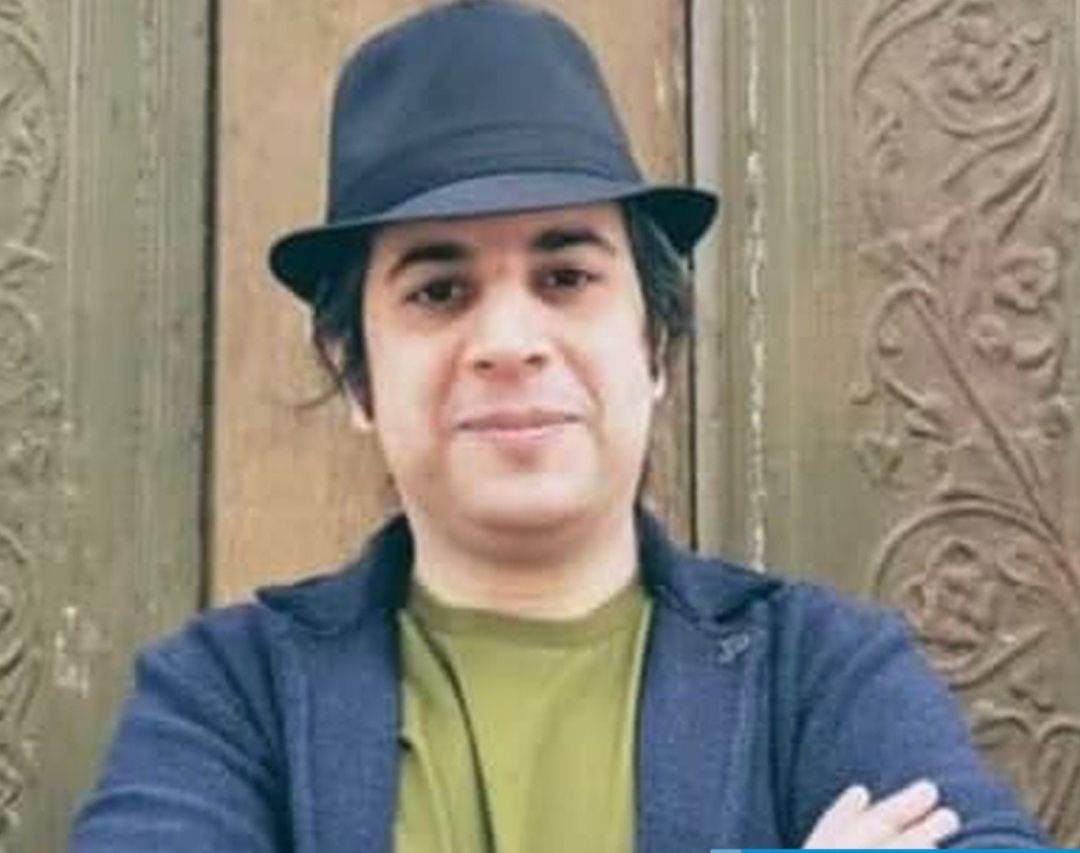
On May 19, less than a year after completing a five year sentence and being released from Zanjan Prison, human rights activist Narges Mohammadi was sentenced by Branch 1177 of the Criminal Court in the Quds Judicial Complex in Tehran to 30 more months in prison, 80 lashes, and two fines.

In March, HRANA, the news agency of Human Rights Activists, reported that Narges Mohammadi had published an open letter in response to her latest summons to the Evin Courthouse.

“I have not attended any hearing,” Mohammadi said in the letter. “I will not accept the verdict issued by the court and I definitely will disobey.”

According to HRANA, Mohammadi is facing a slew of protest-related charges, including “Propaganda activities against the Islamic Republic of Iran through the issuance of a statement against the death penalty”,  “Sit-down strike in the prison office”, “Breaking glass”, “Libel and assault”, and “Rebelling against the prison administration who asked to end the sit-down strike”.

In December 2019, Mohammadi and seven other political prisoners in the women’s ward of Evin Prison announced in a letter that they would go on a sit-down strike in support of bereaved families who lost loved ones in November 2019 national protests. Evin Prison officials threatened to deport Mohammadi and others who participated in the strike to prisons known for their harsher conditions. She was transferred from Evin Prison to Zanjan Prison in December 2019.

After five years and six months in prison, Narges Mohammadi was finally released from Zanjan in October 2020. Mohammadi has since been denied a passport and barred from leaving the country to visit her husband and children even though her previous conviction did not mention a supplementary ban on international travel.

Whether Mohammadi’s latest sentence is carried out given her refusal to accept the charges remains to be seen.

Farzin Rezaei Roshan Transferred to Aminabad Psychiatric Hospital

Exiled political prisoner Farzin Rezaei Roshan, who has been held in solitary confinement in Rajai Shahr Prison since May 10, was recently transferred to Aminabad Psychiatric Hospital.

According to HRANA, the news agency of Human Rights Activists, Roshan was sent to Rajai Shahr Prison on the pretext of being transferred to a hospital, and then held in one of its solitary confinement cells until his move to Aminabad.

Roshan was arrested by IRGC intelligence agents in June 2017 and held in Ward 2A of Evin Prison until he was released on bail 8 days later. Branch 26 of the Revolutionary Court of Tehran, presided over by Judge Mashallah Ahmadzadeh, sentenced Roshan to four years in prison on charges of “propaganda against the system and assembly and collusion against national security”.

Roshan was arrested and transferred to Evin Prison to endure his sentence in March, 2019. He had been imprisoned until his transfer to Aminabad Psychiatric Hospital, where he currently resides.

UN Experts Express Concern Over the Health Condition of Mohammad Nourizad in Evin Prison

On Tuesday, May 4th, UN experts issued a statement expressing concern over the health condition of civil activist Mohammad Nourizad and calling for his immediate release from Evin Prison. Javid Rehman, Special Rapporteur on Human Rights in Iran, Niels Melzer, Special Rapporteur on Torture and Other Cruel, Inhuman or Degrading Treatment or Punishment, and several other UN experts stated that Mr. Nourizad has been in critical condition for some time, and continued deprivation of treatment could prove fatal.

According to HRANA, the news agency of Human Rights Activists, UN experts have stated that Mr. Nourizad’s case is “emblematic of the situation many Iranian political activists face in detention” , citing the transfer of Mr. Nourizad to Loghman Hospital in Tehran, on April 14, 2021, after fainting. The statement reveals that once revived, Mr. Nourizad “found someone injecting him with an unknown substance, that he did not consent to or was informed of”. Nourizad was denied information about the substance or its purpose from officials, despite his explicit requests.

66-year-old Nourizad is an Iranian director, screenwriter, journalist, and activist. Nourizad became an outspoken critic of the Islamic Republic a decade ago, and has since been arrested and imprisoned several times for his civic work and visits to families of political prisoners.

In mid-August 2019, 14 activists, including Nourizad, signed a letter calling for the resignation of Ayatollah Khamenei. Several signatories were arrested, and others were pressured after the letter went public. Mr. Nourizad was arrested by security forces on August 11, 2019, along with several union and civil activists and sent to Vakilabad Prison in Mashhad (he was later transferred to Evin Prison, where he currently resides).

In the first part of his case, Mr. Nourizad was charged by Branch 4 of the Revolutionary Court of Mashhad, presided by Judge Mansouri, on charges such as “insulting the founder of the Islamic Republic, insulting sacred values, insulting the leadership, disturbing public opinion, cooperating with foreign media, and participating in illegal gatherings”, and was sentenced to 15 years in prison, 3 years of exile to Izeh, and a 3-year ban from leaving the country. Branch 35 of the Appeals Court in Razavi Khorasan Province revised the verdict to 15 years in prison, 2 years of exile to Izeh, and a 2-year ban on leaving the country.

In August 2020, in the second part of his case, he was sentenced by Branch 2 of the Mashhad Criminal Court to 8 months imprisonment, 74 lashes, and exile to Tabas on the charge of “disturbing public order” for appearing in front of the building where Kamal Jafari Yazdi was appearing; and sentenced to another 74 lashes on a charge of “spreading lies”. This verdict was confirmed by the Court of Appeal of Khorasan Razavi Province.

In May of this year, Mr. Nourizad announced that he has been sentenced to another year in prison on a charge of defending the rights of Baha’i citizens living in Ivanki, prompting this public concern. Mohammad Nourizad suffers from myriad underlying conditions, including asthma, heart problems, and high blood pressure. The forensic medicine organization previously ordered his release for medical reasons. According to these UN experts, considering Nourizad’s critical health condition and overwhelming consensus from professionals,  he cannot stay in prison.

Arash Sadeghi freed from Rajai Shahr Prison in Karaj

According to HRANA, the news agency of Human Rights Activists, on May 1, 2021, political prisoner Arash Sadeghi was freed from Rajai Shahr Prison in Karaj. After serving 5 years and 6 months in prison, including his previous detention, Mr. Sadeghi was released under Article 12 of the law on reducing sentencing. Previously, he was sentenced by the Revolutionary Court to 15 years, of which 7 years and 6 months were enforceable with the application of Article 134 of the Islamic Penal Code. Since Mr. Sadeghi’s previous suspended sentence of 4 years had been served, only 7 years and six months of imprisonment remained enforceable after sum up of the issued sentences.

Despite the early release, Sadeghi’s time in prison has not been without cost. Until he was freed, Arash Sadeghi had been denied the right to visit and call his wife, Golrokh Ebrahimi Erayi, a political prisoner in Amol Prison. The couple had been prohibited from visiting, despite legal provisions for meetings between imprisoned family members residing in different prisons.  In 2017, Sadeghi went on a hunger strike for more than seventy days to protest her re-arrest, and the prolonged hunger strike caused irreparable damage to his physical health.

While in Rajai Shahr, Sadeghi also developed a malignant type of bone cancer called chondrosarcoma. Sadeghi underwent surgery to combat the disease, but prison officials denied him access to the tri-annual post-surgery treatment recommended by physicians, leading to myriad complications. The lack of adequate treatment, coupled with the permanent physical damage from his 2017 hunger strike had devastating effects; Sadeghi’s chrondrosarcoma returned, and he needed to undergo an additional 30 sessions of radiotherapy and kinesiotherapy.

This is the most recent release of political prisoner Arash Sadeghi, who has spent the last decade serving a series of sentences for his human rights work. Sadeghi was first arrested by Ministry of Intelligence agents in July 2009 in front of Allameh Tabatabai University in Tehran along with several students protesting the 2009 election results. He was released on bail 90 days later. In 2010 he was re-arrested and imprisoned in ward 350 of Elvin Prison for 15 months. Sadeghi was arrested yet again in 2014 by IRGC intelligenge, and released on a bail of 600 million tomans in March of 2015. Finally, and most recently, he was arrested in June 2016 and sent back to Elvin Prison, and then transferred to Rajai Shahr, where he  remained until his May 1st release.

Whether Sadeghi is able to recover from his time in prison remains to be seen, but a recent bone marrow scan test confirms promising signs in the body.

Saba Kord Afshari was sentenced to extra 15 years of imprisonment despite being acquitted

Saba Kord Afshari, a civil activist who is currently imprisoned in Evin Prison, has been sentenced to 15 years in prison for “promoting corruption”, a charge of which she was previously acquitted. Her lawyer has expressed his concerns regarding her acquittal which was communicated to her in prison, emphasizing the unlawful proceedings of her case. Should this error in judgment fail to be remedied Ms. Kord Afshari, who is currently serving a nine-year sentence can face up to 24 years of imprisonment in total.

According to HRANA Saba Kord Afshari, a civil activist imprisoned in Evin Prison was informed of her acquittal from a 15-year sentenced on the charge of “spreading corruption”. Hossein Taj, Ms. Kord Afshari’s lawyer states: “On Tuesday, May 26, 2020, Saba Kord Afshari contacted me from Evin Prison and informed me that she was informed of re-announcement of her previous sentence of 15 years, from which she was acquitted in the appeals court. According to her, this was done through a letter issued by the execution division, although I was informed of her acquittal in person following her court at Branch 36 of the Court of Appeal. I was informed today that the content of her verdict of the appeals court (from which she was acquitted) has changed, and I intend to follow up with the intelligence department of the Judiciary system.”

Ms. Kord Afshari received this new verdict after she was issued an acquittal in writing on March 17, 2018, by the Evin Prosecutor’s Office on the charge of “promoting corruption and prostitution through appearing without a headscarf in public.” On May 26, 2020, she received another notice by the Ershad Prosecutor’s Office in which she is sentenced to 15 years imprisonment for “promoting corruption and prostitution through appearing without a headscarf in public” 1 year and 6 months of imprisonment for “propaganda against the regime.” As well as “assembly and collusion with an intent to commit a crime against the national security.”


Arrest

Saba Kord Afshari was arrested for the first time on August 2, 2018, alongside 50 others, during a series of protests that occurred July-August 2018 against the deterioration of Iran’s economy as well as the corruption within the government. She was first transferred to Qarchak Prison in Varamin and later, in October 2018, to Evin prison’s women’s ward. In August 2018, she was sentenced to one year in prison on the charge of “disrupting the public order” at Branch 28 of Tehran’s Revolutionary Court led by Judge Moghiseh. She was released on 14 February 2019 when Iran’s Supreme Leader pardoned a large number of prisoners in honor of the 40th anniversary of the Islamic Revolution.

On June 2, 2019, Ms. Kord Afshari was rearrested by security forces at her home and was transferred to the Vozara Detention Center in Tehran. Her house was searched during this raid, and several items of her personal belongings including her mobile phone and laptop were also confiscated. This civil activist was charged only one day after her arrest in Branch 1 of the General and Revolutionary Court of Tehran’s 21st District Court (Ershad Prosecutor’s Office) and was transferred to Qarchak Prison in Varamin for interrogation for 11 days, on June 21st she was transferred from Qarchak to the IRGC Intelligence center of Evin Prison’s Ward 2-A and was once again returned to Qarchak Prison on July 2, 2019.


Trial

Saba Kord Afshari was transferred to Evin Prison on August 13, 2019, and her trial was held on August 19, 2018. Finally, on September 26, 2019, she was sentenced by Branch 26 of the Revolutionary Court of Tehran, presided over by Judge Iman Afshari. Her sentences included 15 years of imprisonment on the charge of “promoting corruption and prostitution through appearing without a headscarf in public” 1 year and 6 months in prison on the charge of “propaganda against the state” and 7 years and 6 months in prison on the charge of ” assembly and collusion with an intent to commit a crime against the national security”, which adds up to a total of 24 years in prison along with other social deprivations. Due to the number of crimes and previous records, each charge was added by one-half. This sentence was reduced to nine years in prison in December 2019 at Branch 36 of the Tehran Court of Appeals, presided over by Judge Ahmad Zargar.

In accordance with Court of Appeals, Saba Kord Afshari was sentenced to 1 year and 6 months imprisonment on the charge of “propaganda against the regime” and 7 years and 6 months in prison on charges of ” assembly and collusion with an intent to commit a crime against national security.”Based on Article 134 of Iran’s Islamic Penal Code, the charge with the highest penalty will be considered; this means that Ms. Kord Afshari should serve 7 years and six months in prison for the charge of “assembly and collusion to commit a crime against the security of the country”. Hossein Taj, Ms. Kord Afshari’s lawyer, has previously stated: “The Court of Appeals acquitted Saba Kordafsari of a part of her charges and as a result, her sentence was reduced to 9 years, 7.5 of which are imposable by law. We also remain hopeful that the Judiciary system mitigates the sentences of Ms. Kord Afshari and other political prisoners.” Now, if the penal system fails to correct their violations, Ms. Kord Afshari, who is serving a nine-year prison sentence in Evin Prison, could face up to 24 years in prison.

It should be noted that Raheleh Ahmadi, a civil activist and Saba Kord Afshari’s mother, is also serving a 31-month prison term at Evin Prison alongside her daughter.

Saba Kord Afshari was born on July 7, 1998.

Subscribe to Our Newsletter

Now is definitely not the time to stop reading!

Coronavirus outbreak in Iranian prisons

On February 29, 2020, Ebrahim Raisi, the Chief Justice of Iran, issued a circular laying out policies to prevent the spread of Coronavirus in prisons.  This order mandates giving 15 -30 days furlough to prisoners with sentences less than five years. Another part of this order is about reducing entries into prisons, temporary releases, and public activities in prisons. In addition, this order mandates to increase alternative sentences and suspended prison terms instead of imprisonments.

Although the Chief Justice of Iran announced that the prisoners with less than five years prison term will be granted furlough, the prison authorities are not cooperative with political prisoners and prisoners of conscience to implement this regulation. As an example, Esmaeil Abdi and Negin Ghadamian were sentenced to five years imprisonment and after spending four and three years in prison respectively, they were not granted any furlough. Nazanin Zaghari’s husband reported that she is suspected to have Coronavirus. She is serving the 4th year of her five-year imprisonment sentence. Reportedly, three women were diagnosed with Coronavirus in Evin Prison.

The number of prisoners suspected of having coronavirus is increasing. Several prisoners suspected of having coronavirus were identified in Urmia, Khorramabad, Gorgan, Sanandaj, Qom, and other prisons.


A letter from political prisoner’s families

With the current spread of Coronavirus in prisons in Iran, some of the families of the political and security prisoners have written a letter to the judicial authorities on February 26, 2020, requesting furlough for prisoners until this crisis (Coronavirus) is over in the prisons. Considering the closed environment of the prison, malnutrition of the prisoners, shortage of medical care and facilities, high density of prisoners, and the occurrence of some cases suspected to be related to coronavirus has raised concerns of the families of prisoners.

The families of the following prisoners have signed this letter:

Mahmoud Beheshti Langeroudi, Esmaeil Abdi, Mohammad Habibi, Narges Mohammadi, Amir Salar Davoudi, Farhad Meisami, Roeen Otoufat, Jafar Azimzadeh, Shahnaz Akmali, Majid Azarpey, Atena Daemi, Sam Rajabi, Morad Tahbaz, Niloufar Bayani, Abdolreza Kouhpaieh, Amirhossein Khaleghi, Houman Jokar, Taher Ghadirian, Neda Naji, Mehrdad Mohammadnejad, Mohammad Abolhasani, Peyman Koushkbaghi, Aras Amiri, Jafar Fazel, and Alireza Golipour.

In some of the prisons, such as Khorramabad or Sanandaj Prisons, the prisoners asked the authorities to provide them with medical and hygiene necessities and to quarantine the prisoners who are suspected to be infected and have threatened that if this negligence is continuous, they will go on hunger strike. Other prisons such as Karaj, Tabriz, Evin and many other prisons across the country are also demanding similar precautions.


A death in Greater Tehran Central Penitentiary

It should be noted that on the same day, a prisoner of Greater Tehran Central Penitentiary who had symptoms similar to that of Coronavirus passed away after the prison authorities delayed in transferring him to the hospital to receive proper medical care. His name was Hamid Reza and he was 44 years old. He was convicted of a financial felony who was serving his sentence in Greater Tehran Central Penitentiary. He was initially diagnosed with symptoms of flu but after a few days, he started to cough and eventually passed away in the prion.

In addition, 60 prisoners of Greater Tehran Central Penitentiary who were working in the kitchen or service sector, were transferred to Rajai Shahr Prison. Moreover, 7 other prisoners in section 5 ward 2 have Coronavirus symptoms; they were kept in the medical ward without receiving medical care and were not transferred to the hospital.


Evin Prison and the violation of the Prisoners Classification Regulation

Amir Hossein Moradi, Saeed Tamjidi, Mohammad Rajabi, Milad Arsanjani, Jamil Ghahremani, and 15 other arrestees of the last November’s protests who were kept in Greater Tehran Central Penitentiary, were moved from their cell after an inmate was diagnosed with Coronavirus in their cell. Amir Hossein Moradi returned to prison on February 29, 2020, after spending a week in the hospital for another disease. He returned to his cell but after an hour he was transferred to the medical ward for his positive test results of Coronavirus. Although they were told that they will be transferred to Yaft Abad Hospital, they were transferred to ward 1 of this prison, which belongs to the prisoners who committed violent crimes. In June 2019, Alireza Shir Mohammadi, a political prisoner, was fatally stabbed in this ward by two other inmates of this ward who were charged with a drug felony. After this incident, the prison authorities moved other political prisoners from this ward to avoid future incidents. This is against prisoners’ segregation rule. According to a close source “section, 1 of the Greater Tehran Central Penitentiary has 10 wards and one suite which had been used as an exile to punish the prisoners who get in the fight or carry drugs. Since 2018, the political prisoners have been transferred to this suite. This suite has limited facilities and does not even have access to prison commissaries. Their door should be locked all the time however, in the case of Mr. Shir Mohammadi, the warden intentionally did not lock the door which was illegal.

Alireza Shir Mohammadi, a 21-year-old political prisoner at the Greater Tehran Central Penitentiary was murdered in prison on June 10, 2019. He was attacked by two other prisoners, who were later convicted of murder and sentenced to death. The prisoner in question was stabbed in the neck and stomach and died before arriving at the hospital. Shir Mohammad Ali was arrested on July 14, 2018, and was sentenced to eight years in prison on charges of “blasphemy”, “insulting the former and current Supreme Leaders”, and “propaganda against the state”.  He was detained in a solitary confinement cell for 36 days after being arrested. His bail was set at 80 million Tomans but the Revolutionary Court illegally rejected his release on bail. Throughout his prosecution process, he did not have access to an attorney because of his financial conditions. He was waiting for the decision of the appeal’s court when he was murdered. He protested his detention along with non-political prisoners and went on a hunger strike on March 14, 2019, which ended on April 16 after prison authorities accepted his demands. He also wrote open letters criticizing the “unsafe” and “inhumane” conditions of Greater Tehran’s Penitentiary Prison. He wrote an open letter five days into his hunger strike on March 18, 2019. In this letter, he explained the awful condition he was experiencing in prison. In addition, he claimed that he was denied regular social rights that any prisoner is entitled to have. However, his main request, reflected in this letter, was to be transferred to another prison (Evin prison). No judicial authorities or prison officials reacted to his open letter. 

A prisoner of ward 4 of Evin Prison was transferred to an unknown place for his positive test results of Coronavirus. He kept with several other prisoners and political prisoners of this ward who are on hunger strike and are more vulnerable to this disease.


Khorramabad and Ghezel Hesar Prisons

On March 1, 2020, the prisoners of Khorramabad Prison have started a sit-in to protest not being sent to furlough although Coronavirus has spread in this prison. There is a shortage of access to medical care and hygiene products for the diagnosis and treatment of Coronavirus. Several prisoners who have symptoms of this disease did not receive any treatment and were kept with other prisoners. Several prisoners who went on furlough were returned to prison. A close source to a family of a prisoner in this prison told HRANA that a sick inmate with severe coughs received neither medical care nor disinfecting substances and hygiene products such as alcohol, mask, and gloves.

Two prisoners of Qezelhesar Prison, Basat Ali Khazaei, and Gholamhossein Abolfavaei were moved to the quarantine section in the health ward due to having positive test results of Coronavirus. They were charged with drug felony and kept in a ward with 500 other inmates.


Rajai Shahr and Urmia Prisons

The prisoners are deprived of medical care, disinfecting substances, and hygiene products such as alcohol, mask, and gloves.  Payam Shakiba, Mohammad Banazadeh Amirkhizi, and Majid Asadi are serving their third year in prison. Arash Sadeghi, who is diagnosed with Chondrosarcoma (bone cancer), has had an infection in his right hand, digestion issues, and because of his weak immune system should be prioritized to be granted a furlough. Saeed Shirzad is spending the last months of his prison sentence.

On March 2, 2020, Mohammad Ghanbardoost, a political prisoner, was transferred to the hospital due to having symptoms of coronavirus disease. He kept with other political prisoners and may infected others. He was arrested on August 16, 2017, and was sentenced to five years in prison on the charge of “cooperating with Takfiri groups”.

Several Coronavirus suspected patients in Urmia Prison were transferred to hospitals outside the prison. One Urmia prisoner died in hospital, but prison authorities claimed that he was infected outside the prison.


Update on political prisoners temporary releases

On March 3, 2020, Mohammad Karimi granted a furlough and temporarily released until April 3, 2020. Mr. Karimi was sentenced to one-year imprisonment on the charge of “propaganda against the state” which was upheld by the appeals court. on July 3, 2020, he was arrested and transferred to Evin Prison to serve his sentence.

On March 2, 2020, Shahnaz Akmali, political prisoner, was granted a furlough and temporarily released until April 3, 2020. She was arrested on January 15, 2020. She was sentenced to one-year imprisonment and was banned from having any social media account, membership in any group, and leaving the country on the charge of “propaganda against the state”. An appeals court upheld her sentence without hearing either Ms. Akmali or her attorney. She is the mother of Mostafa Karim Beygi one of the people who was killed by security forces during green movement uprising in 2009.

On February 29, 2020, Reza Gholamhosseini, a political prisoner of Bandar Abbas Prison, was granted a furlough and temporarily released until April 3, 2020. He was arrested on September 25, 2019, and was sentenced to three years imprisonment on the charges of “propaganda against the state” and “insulting supreme leader”. His sentence was reduced to 18 months later because he did not request an appeal.

Seven prisoners are on hunger strikes in Urmia and Evin prisons

Evin Prison

Amir Salar Davoudi, attorney detained in Evin Prison, has been on hunger strike from February 9, 2020, protesting not being granted a furlough. In a note published on February 12, 2020, Amir Salar Davoudi explained his motives to go on hunger strike protesting authorities who refused to grant him a furlough and added “I have been incarcerated for 15 months of which I spend 190 days in a solitary confinement cell but my request for a furlough has been denied. I am going on hunger strike to protest this decision. I hold the judicial authorities responsible.” He has been detained in Evin Prison since November 20, 2018. On June 1, 2018, he was sentenced by Branch 15 of the Revolutionary Court of Tehran to 30 years in prison of which the highest penalty is 15 years imprisonment for the charge of “establishing a channel in the Telegram app”. His other charges are “insulting officials”, “propaganda against the state”, “cooperating with enemy states through interviewing with Voice Of America (VOA) television channel”, and “forming a group to overthrow the state”.

Four other political prisoners of Evin Prison, Barzan Mohammadi, Reza Mohammad Hosseini, Mehdi Meskinnavaz, and Khaled Pirzadeh have been on hunger strike from February 1, 2020, protesting denial of their request for parole, neglecting political prisoners requests, not conforming to the prison classification regulation, lengthy prosecutions, receiving unreasonable prison sentences, and finalizing the primary courts verdicts without an opportunity to appeal.

Barzan Mohammadi was arrested in August 2017 because of his activities on social media. He was sentenced to six years in prison for the charges of “assembly and collusion with an intention to disrupt the public order”, and “propaganda against the state” by the primary court. His appeal court was in session in March 2019 where his sentence was reduced to 3.5 years imprisonment

Reza Mohammad Hosseini’s was sentenced to 16.5 years imprisonment; he was sentenced to seven years imprisonment for the charge of “assembly and collusion”, three years imprisonment for the charge of “insulting the Supreme Leader”, three years imprisonment for the charge of “crossing the border unlawfully”, two years imprisonment for the charge of “unlawful entry to the country” and 1.5 years imprisonment for the charge of “disobeying the officers’ orders”. He was arrested in May 2019 by the IRGC intelligence officers and was taken to the IRGC’s detention center in Evin Prison. He was later transferred to the Ward 4 of Evin Prison. Reza Mohammad Hosseini was taken to the hospital on February 11, 2020, after experiencing asthenia. His situation is unknown after the transfer.

Khaled Pirzadeh was sentenced to five years imprisonment for the charge of “assembly and collusion”, and to two years imprisonment for the charge of “insulting the Supreme Leader”.

Mehdi Meskinnavaz tried at Branch 26 of the Revolutionary Court of Tehran in August 2019 and was sentenced to five years imprisonment for the charge of “assembly and collusion and propaganda against the state”. He was also exiled to Fahraj in Kerman Province and ban from membership in political parties and groups.


Urmia Prison

Siamak Ashrafi Ashgasou, a political prisoner of Urmia Prison, is on hunger strike from January 21, 2020, protesting the denial of his request to parole and his family being disrespectfully treated by the court employees. He was arrested in June 2016 by the security forces and was sentenced to five years imprisonment for the charge of “membership in an opposition group” and to eight months imprisonment for “draft evasion” by Branch 2 of the Revolutionary Court of Urmia. He requested parole after serving more than three years of his sentence.

Bashir Pirmawaneh has been on hunger strike from January 25, 2020, protesting his request for parole not being processed. He was arrested in March 2016 and was tried in April 2016 at Branch 2 of the Revolutionary Court of Urmia where he was sentenced to five years imprisonment for “membership in an opposition group”. The sentence was later reduced to four years. He has served more than a third of his sentence at the time of his request.

A Daily Overview of Human Rights Violations in Iran for January 31, 2019

The following is an overview of human rights violations in Iran on January 31st, 2019 based on the information compiled and verified by Human Rights Activists News Agency (HRANA).

(1) Arash Sadeghi, a detained civil rights activist, was deprived from medical care which health professionals have said he desperately requires. He is suffering from bone cancer and infection in a surgical wound on his arm. Also, he has an urgent need for chemotherapy.

(2) Of the one million phone calls the Emergency Social Services Hotline received last year, 21 thousand were regarding child abuse and domestic violence.

(3) Saba Kord-Afshar and Yasaman Aryani, political prisoners, wrote an open letter reacting to a newspaper article that described the political prisoners’ conditions ‘favorable’, giving an overview of the hardship they face in the Evin’s women’s ward.

(4) The director of the Department of Environment of Tabas announced that two poachers were arrested in Tabas city along with a carcass of a chinkara.

(5) Parvin Mohammadi, a labor activist and the vice-president of the Free Union of Workers in Iran, was transferred to the Kachoui prison in Karaj to serve her one-month detention. She was arrested on January 29.

(6) Mohammad Ali Zahmatkesh, a teacher’s rights activist in Shiraz, was sentenced to two years imprisonment and one year of exile. His accusations are  “propaganda against the state” and “insulting the Founder of the Islamic Republic”.

(7) Shahin Barzegar, an Azerbaijani Turkic minority rights activist, began his three-months imprisonment sentence in the Tabriz prison. His charge was attending the funeral ceremony of a former prisoner, Hasan Damirchi.

(8) Soroush Agahi, a Baha’i prisoner of the Evin prison, was released on bail. He and Neda Shabani, another Baha’i citizen, have been arrested in Karaj on November 28, 2018.

(9) Amnesty International requested the release of Iranian labor activists Esmail Bakhshi and Sepideh Gholian who spoke out about abuse and torture they suffered in detention. They have been rearrested and are at risk of severe torture.

(10) A prisoner was executed in Nowshahr and a 24-year old was sentenced to death in Birjand. A prisoner who was accused of murder, was spared from hanging on gallows by consent of next of kin in Karun after 12-year in prison.

(11) A member of Iranian Parliament representing Nishabur, Hajar Chenarani, confirmed that 200 workers of Khorasan Exhaust Manufacturing Company have been laid off.

(12) A 66-year old Christian converted, Esmail Maghrebi-Nejad, was arrested by security forces in Shiraz on January 15 and his whereabouts is still unknown. His home was raided, and his belongings confiscated.

(13) Saeed Sadeghifar ,an Azerbaijani Turkic minority rights activist, was released on bail. The security forces on Tuesday, arrested him in Ardabil. His court was on January 24, on the charge of “establishing illegal groups with the intention to disturbing national security”.

A Daily Overview of Human Rights Violations in Iran for January 23, 2019

The following is an overview of human rights violations in Iran on January 23rd, 2019 based on the information compiled and verified by Human Rights Activists News Agency (HRANA).

(1) At least six protests were organized across the country on January 23, 2019. The municipality workers in Marivan, Borujerd, and Shadegan, the retired employees in Tehran, costumers of Kerman Motors in Tehran, and the families of victims’ of Sanchi oil tanker collision have held separate protests to request their redemands.

(2) The authorities of Evin prison refused to transfer Narges Mohammadi and Nazanin Zaghari Ratcliffe to a hospital. Mohammadi is in urgent need of medical care such as anti-seizure drugs.

(3) Esmat Salahshour was sentenced to five years imprisonment in Urmia, on the charge of “cooperation with a Kurdish opposition group”. Mokhtar Zarei has been tried in absentia and was sentenced to three years in prison. He is accused of “insulting the Supreme Leader” and “propaganda against the state”.

(4) Yashar Soltani, director of Memari News website, was sentenced to five years in prison, and was banned for two years form traveling, membership in any social or political group, and internet activism. He was arrested in 2016 after he reported on alleged corruption in Tehran’s municipal government.

(5) Majid Hosseini was released on bail today. He was transferred from solitary confinement to the quarantine ward of Evin prison recently. Arsham rezaei who was arrested with him, is still in prison. He was arrested with Arsham Rezaei on the charges of “insulting the Supreme Leader” and “collusion against the state”.

(6) Iraj Mohammadi was released on bail after ten days, in Miandoab. He was accused of “propaganda against the state” because a former political prisoner transferred the amount of money into Mohammadi’s bank account.

(7) Leila Mir-Ghaffari was sentenced to paying fines for de-veiling. In October she was sentenced to two-year in prison for having pointed to a picture on the wall. Mir-Ghaffari was initially detained for supporting the “Girls of Enghelab Street.”

(8) Rahman Jasbi Zargani who was married and had two children, was executed in Sepidar prison in Ahvaz on the charge of murder. He was accused of murdering his cousin in a fight in 2009. In 2018, at least 236 people have been executed and 195 people have been sentenced to death in Iran.

(9) Sepideh Gholian was detained in the Intelligence Ministry’s detention center in Ahvaz but Esmail Bakhshi ‘s whereabouts is still unknown. They have been rearrested after the broadcast of their under-torture confessions on the national television. Their families have been under pressure from security forces not to discuss the matter publicly. Moreover, Amnesty International warns that they are at grave risk of further torture.

(10) Saeed Shirzad, a political prisoner in Rajaee Shahr prison in Karaj, has been refused urgent medical care despite doctors requested his transfer to hospital for his severe kidneys’ failure a month ago. While the prosecutor’s office has assured that he would receive treatment a month ago, prison authorities have prevented this transfer.

(11) Two workers died and one was injured in Charmshahr village in Tehran province because of negligence in the oversight of safety conditions in their workplace. Iran ranked 102 in the workplace safety among other countries.

(12) Four female prisoners including a juvenile offender, accused of murder were spared from hanging on gallows by consent of next of kin in Shahr-e Rey prison. In addition, Sohrab Nosrati was saved from execution in Rajaee shahr prison in Karaj.

(13) Two thousand workers of Abadan municipality have unpaid wages. The workers of Ghoflkar Company in Qazvin have held a protest to request their unpaid wages on Tuesday.

(14) Ahwazi Arab citizens, Hassan Alvani, Malek Abdollahi, and Gheis Chaian have been arrested by security forces in Ahvaz and Shush. Their whereabouts are still unknown.

(15) Tehran appeals court sentenced Christian converted ,Majid Reza Souzanchi Kashani, to two-year prison term. He was charged with “membership in evangelical groups” and “evangelical-related activities”.

(16) The arrest of 11 poachers in Sarab and 160 illegal tree removals in Bandar Abbas have been reported by the Department of Enviroment.

A Daily Overview of Human Rights Violations in Iran for January 11, 2019

The following is an overview of human rights violations in Iran on January 11th, 2019 based on the information compiled and verified by Human Rights Activists News Agency (HRANA).

(1) Tohid Ghoreishi was transferred to Evin prison after an attack to Sunni prisoners’ ward in Rajai-shahr prison by the Special Forces. He is facing new accusations while serving the last months of his seven years sentence.

(2) Esmail Bakhshi ‘s lawyer confirmed that none of the Iranian authorities have reached out to him regarding his complaint. He wrote a letter explaining his torture in prison and called on the Minister of Intelligence for a debate concerning torture and abuse in prisons.

(3) In a bus rollover in Assaluyeh on Thursday, 13 workers of Bushehr Petrochemical Company were injured.

(4) Nasrollah Lashani a political prisoner, ended his hunger strike. He was on hunger strike since January 7, 2019, protesting mistreatment by the prison officials and being banned from having visitors. Lashani is a Nationalist-Religious Activist who was accused of ‘propaganda against the state’ and was sentenced to six years in prison. He was beaten and insulted in front of his wife and his 8-years-old son during a family visit on December 26, 2018.

(5) Expulsion of Shayan Manavi, a Baha’i Civil Engineering student from Azad University of Qods due to his faith. Baha’i students in Iran routinely experience denial of entrance to university or expulsion during their studies.

(6) The parliament authorities have shown concern about Zahra Navidpour ‘s death. She accused a member of parliament for repeatedly raping her. She reported that there were several women who had been raped by Salman Khodadadi but did not file a complaint, fearing their lives.

(7) Mostafa Mostafavi, a Sunni prisoner, had been held for 27 days in a solitary confinement of the intelligence office before he was transferred to Urmia prison. He is accused of ‘cooperation with Kurdish opposition groups’.

(8) A prisoner who was sentenced to death on the charge of murder, was saved from the gallows by the intercession of Imam of Friday prayers and forgiveness of the next of kin in Andimeshk after six years.

(9) A manager of a clothing retailer was arrested and her business was closed down in Astaneh-ye Ashrafiyeh in Gilan province because of advertising in social media. In October, several photographers were arrested in Shiraz because of ‘inappropriate content’ in their Instagram account.

(10) Several customers of the Iranian automobile manufacturers in protest to the company’s false promises to deliver their purchased car and fulfilling their demands, have been protesting for three consecutive days in the international auto fair in Tehran.

(11) Nour Mohammad Shimvaari, a prisoner of Zahedan prison, was severely beaten and injured by prison wardens. His wrist was fractured, and he was denied medical care.