Lawyer Says Mohammad Nourizad is in Critical Condition in Evin Prison

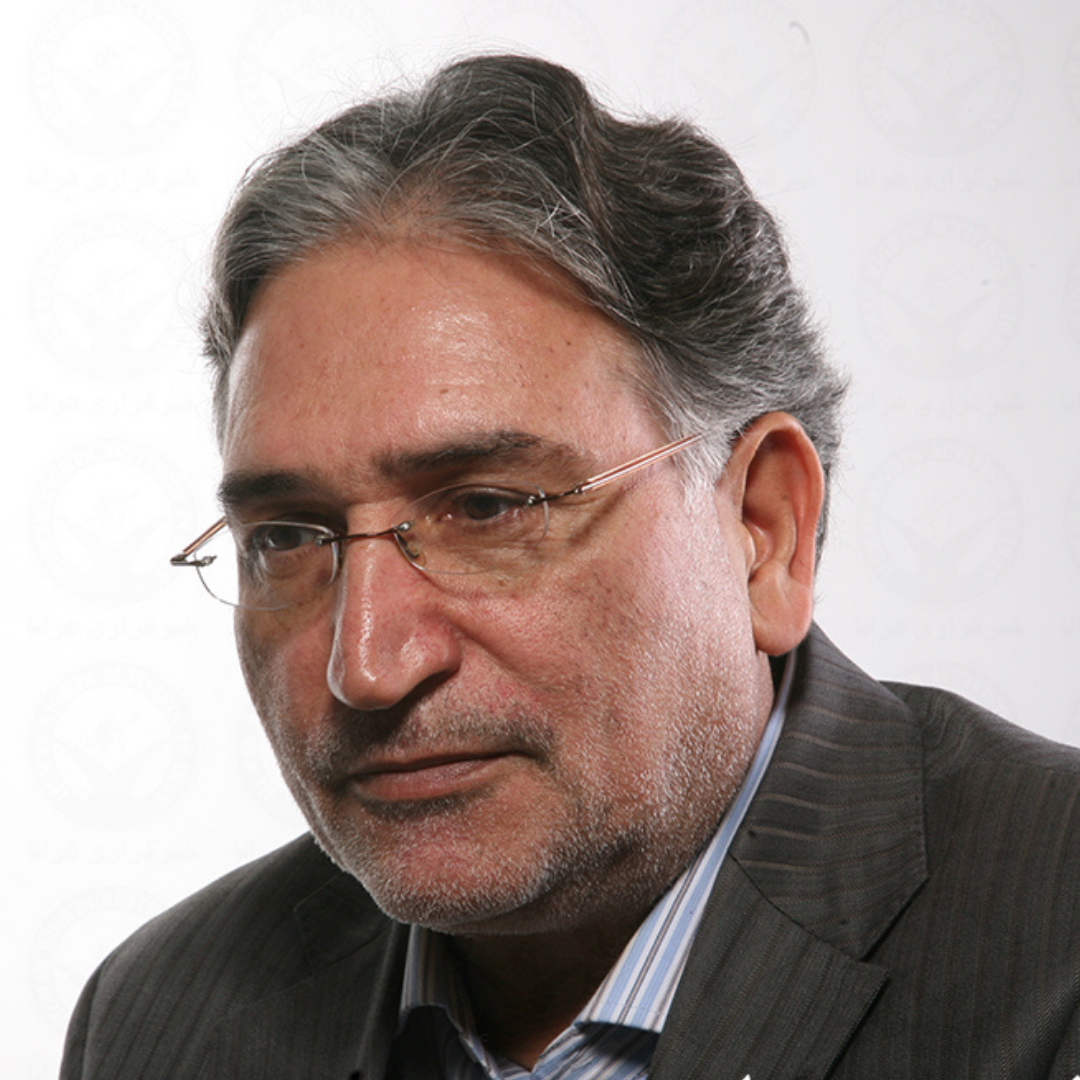
Mohammad Hossein Aghasi, Mohammad Nourizad‘s lawyer, told HRANA that his client is in critical condition in Evin Prison and that the duration of his hunger and drug strike has put him in serious danger.

According to HRANA, the news agency of Human Rights Activists, Aghasi emphasized that his client has lost 55 pounds and is experiencing severe hearing loss.

Aghasi stated that although the prison prosecutor recently agreed to send him on leave, Nourizad has refused the offer, stating that he will continue his strike until his request for his and his son’s unconditional release is fulfilled.

Ali Nourizad, Mohammed’s son, was arrested by security forces in Tehran in January 2020 for protesting a rally against the downing of a Ukrainian plane by the IRGC, and for expressing sympathy with the victims’ families.  He was released on bail a month later. The Tehran Revolutionary Court eventually sentenced him to 3 and a half years in prison. This sentence was upheld by the Tehran Court of Appeals. He has been serving out his sentence in Greater Tehran since October of last year.

Mr. Nourizad wants to be acquitted of all charges that were unjustly issued against him.

Mr. Aghasi added: “I really demand that the case of Mr. Nourizad and other people, who are known as the signatories of the leadership resignation statement from whom 11 are my clients, to be processed and judged by a fully independent judiciary so they can see how arguments about the convictions and issued sentences are completely incorrect.”

Earlier this year, UN experts expressed concern over the health condition of Mohammad Nourizad in Evin Prison and called for his immediate release.

66-year-old Nourizad is an Iranian director, screenwriter, journalist, and activist. Nourizad became an outspoken critic of the Islamic Republic a decade ago and has since been arrested and imprisoned several times for his civic work and visits to families of political prisoners.

As Mr. Aghasi stated, Nourizad has been wounding himself every day as a sign of objection; he has fainted 37 times. According to Aghasi, his conversations with his client and even the insistence of Nourizad’s wife and child did not work, and it seems that he has made his decision.

“I do not want my name to be on the list of those who are indifferent to current affairs,” Nourizad has said in a meeting with his lawyer. “And I am willing to give my life for it.”
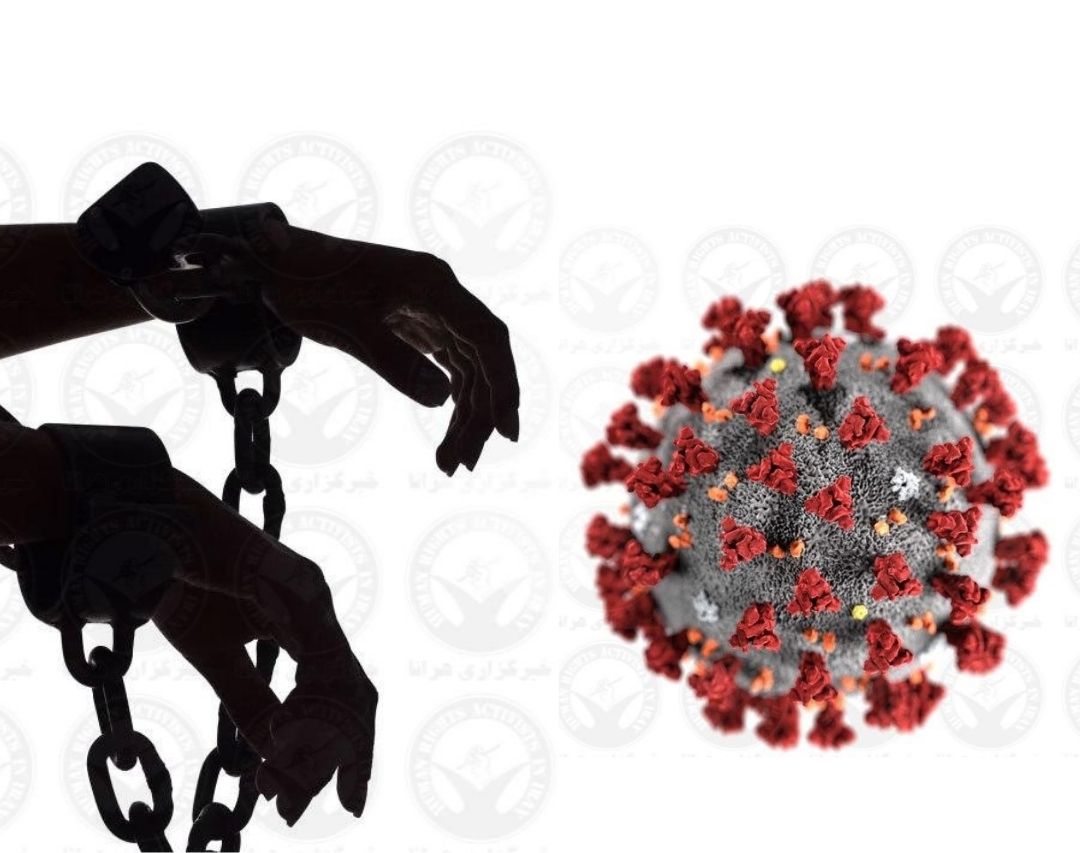
Lakan Prison Officials Turn off Air Conditioning in Women’s Ward and Cut Inmates’ Quarantines Short

Following the transfer of 9 new female prisoners to the quarantine ward of Lakan Prison in Rasht, 15 residents of the quarantine ward were transferred to the public ward before the end of their quarantine period.

According to HRANA, the news agency of Human Rights Activists, air conditioning in the women’s ward was also turned off for at least 8 hours during the day. The lack of air conditioning, coupled with steadily rising summer temperatures have created conditions under which it is nearly impossible for the inmates to wear masks.

According to an informed source, after protesting, prisoners were told that they would be sent directly to public wards without quarantine, even if other new entrances arrived.

It is worth mentioning that civil activist Athena Daemi, who was deported from Evin Prison to Lakan on March 17, 2010, was kept in quarantine for 23 days.

Sydney Pen Association Demands Immediate Release of Reza Khandan Mahabadi, Baktash Abtin and Keyvan Bazhan from Evin Prison

On Sunday, June 20, the Sydney Pen Association in Australia issued a statement in light of Ebrahim Ra’isi’s election as next President of the Islamic Republic.

According to HRANA, the news agency of Human Rights Activists, quoting the Writers’ Association of Iran, the statement calls for the immediate release of Reza Khandan Mahabadi, Baktash Abtin and Keyvan Bazhan, currently being held in Evin prison for their writings critical of the State. All three authors are members of the Writers’ Association of Iran, and each has published several books on Iranian history, sociology, and literature.

“The three authors need medical attention and authorities have not taken any of them to hospital,” the statement says.

In April, Baktash Abtin’s lawyer announced that his client had contracted COVID but had not received the necessary treatment. Reza Khandan Mahabadi suffers from osteoarthritis of the neck and Keyvan Bazhan has a thyroid disease. Penn Sydney was recently informed by inmates that another wave of coronavirus has spread to Evin Prison, further endangering the lives of its inmates.

The writers were first sentenced to imprisonment when now-president-elect Ebrahim Ra’isi was head of the judiciary on charges of propaganda against the Islamic Republic and acting against national security. They were also accused of attending the graves of disgruntled poets and writers and critics of the regime.

The prosecution cited the publication of a book on the history of the Writers’ Association of Iran, an institution that has criticized Iran’s past and present governments for decades, and the defendants were sentenced to a total of 18 years in prison by the Revolutionary Court of Tehran.

In January 2019, an appeals court in Tehran reduced the sentence to a total of 15 years and six months in prison. Baktash Abtin and Reza Khandan Mahabadi were sentenced to six years in prison each, and Keyvan Bazhan was sentenced to three years and six months.

Abtin, Khandan Mahabadi and Bazhan were arrested on October 26 of last year, after attending the Judgment Enforcement Unit of the Evin Court, and  were transferred to the infamous Evin Prison to serve out their sentences.

The statement cites a joint text by Reza Khandan Mahabadi, Baktash Abtin and Keyvan Bajan, which was issued from inside the prison on June 6, 2021.

Below is an excerpt from their text:


We are addressing all writers and libertarians who have made “freedom of expression everywhere and for all” the focus of their human endeavors. This is the demand that the historical-global movement for freedom of expression has practically and always pursued. The Writers’ Association of Iran, of which we are three members, has been active as part of this movement for more than half a century; A movement that must be enhanced by its power and volume; Because apart from the daily threat of freedom of expression by the ruling powers, many people in the world are completely deprived of it; Including writers and people of Iran. We are currently in prison, and according to the sentence, we have to endure a total of 13 and a half years in prison because we are writers who oppose censorship and demand freedom of expression without exception. We are not the first prisoners and oppressed of this movement and we will not be the last until “freedom of expression everywhere and for everyone” is achieved.


Reza Khandan Mahabadi, Baktash Abtin, Keyvan Bazhan


Bektash Abtin concluded in his story to Sydney Pen Association president Mark Isaac,  “Freedom is never given to anyone on a gold tray; it comes at a high price. In a country like Iran, death very easily finds intellectuals, libertarians and those who fight for freedom of expression. We are not worried about the trial and the prison and its difficulties, because we have made our decision.”

Political Prisoner Narges Adibi Denied Medical Leave from Evin Prison

Political prisoner Narges Adibi has been denied medical leave from Evin Prison despite having numerous medical problems.

According to HRANA, the news agency of Human Rights Activists, Ms. Adibi suffers from bronchitis, asthma, and severe joint pain.

Branch 26 of the Tehran Revolutionary Court, presided over by Judge Mashallah Ahmadzadeh, sentenced Adibi to 8 years in prison on charges of conspiracy, insulting the leadership, insulting the founder of the Islamic Republic, and propaganda against the regime.

Branch 54 of the Tehran Court of Appeals, presided over by Judge Babaei, reduced the sentence to 3 years and 6 months in May of last year.

58-year-old Narges Adibi is the daughter of Hussein and mother of two children. She was arrested in July of last year and transferred to Evin Prison to serve out her sentence, where she has been held since.


Ahmad Reza Jalali’s Lawyer Expresses Concern About His Condition in Evin Prison

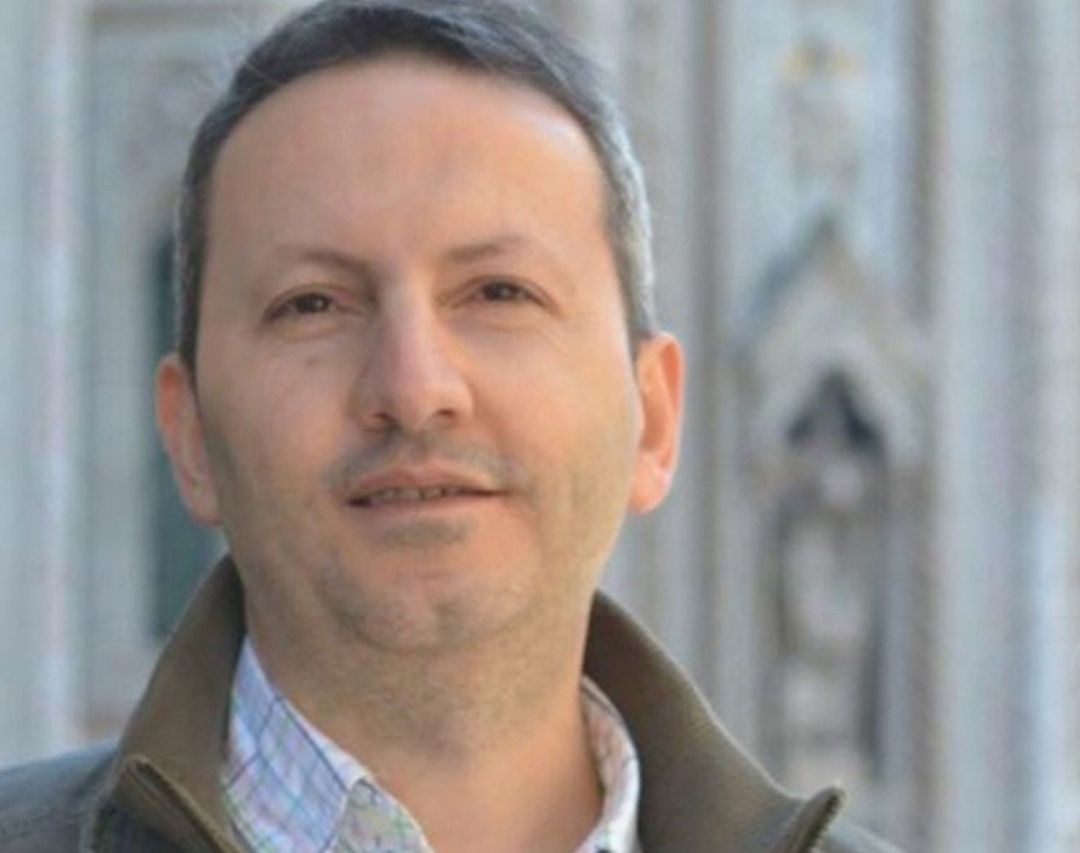
Ahmad Reza Jalali’s lawyer, Helaleh Mousavian, has expressed concern about her client’s condition in Evin Prison. According to HRANA, the news agency of Human Rights Activists, Reza Jalali is a university professor and dual citizen of Iran and Sweden currently on death row.

The professor, who traveled to Iran in May 2016 at the invitation of the University of Tehran, was arrested by security forces on charges of “moharebeh through espionage for Israel”. Moharebeh, loosely translated as “waging war against God”, is a pillar of Sharia Law that is typically applied to those suspected of connection to any acts against the state.

Mr. Jalali was sentenced to death for espionage, and the sentence was upheld by the Supreme Court in December 2017.

Ahmad Reza Jalali worked at the Center for Natural Disasters after graduating from medical school in Iran. He immigrated to Sweden in 2009 to continue his studies and earned a doctorate. He completed his postdoctoral in Disaster Medicine at the University of Piedmont in Italy, and later, settled in Sweden with his wife and two children.

According to a HRANA report published in November 2020, Ahmad Reza Jalali was transferred to solitary confinement for a week to be prepared for execution. In December of that year, Ms. Mousavian was informed that her client’s death sentence was put on hold and he was transferred to ward 209 of Evin prison.

“Fortunately, Mr. Jalali was transferred to a public ward in April, but so far, despite all the efforts, his death sentence has not changed,” Mousavian said. “I am very worried about my client, especially now that the presidential election is over and the result is out. Despite my repeated expressions of concern, no effective action has been taken by the country of dual citizenship and the European Union.”

Subscribe to Our Newsletter

Now is definitely not the time to stop reading!

Political Prisoner Abdul Rasoul Mortazavi Sentenced to 2 Additional Years

Political prisoner Abdul Rasoul Mortazavi was sentenced by Branch 26 of the Revolutionary Court of Tehran to two additional years in prison in a new case recently opened against him.

According to HRANA, the news agency of Human Rights Activists, the new charges against Mortazavi include “propaganda against the regime” and “disturbing public order”.

Mortazavi, who lost his leg during the Iraq-Iran war, was transferred from Evin Prison in Tehran to Rajai Shahr Prison in Karaj in early April. During the move, prison authorities took his prosthetic leg and did not return it.

Under the pretext of finally giving back his leg, officials then transferred Mortazavi to solitary confinement in Rajai Shahr on April 20th, where he is currently being held. He has been denied requests for sick leave and denied the right to make phone calls while in solitary confinement. His leg has still not been returned.

In mid-August 2019, Abdol Rasoul Mortazavi and 13 civil society activists published an open letter and requested the resignation of Ayatollah Khamenei. He was subsequently sentenced to 26 years in prison, from which 11 years are enforceable.

Mohammad Nourizad, Hashem Khastar, Mohammad Hossein Sepehri and several other signatories to the statement are also currently serving prison sentences.

Eight Azerbaijani Turk Activists End Hunger Strike in Ardabil and Evin Prisons After Officials Promise to Meet Their Demands

On June 14, eight Azerbaijani Turk activists ended their hunger strike in Ardabil and Evin Prisons after the authorities’ favorable promise that their demands would be met.

According to HRANA, the news agency of Human Rights Activists, on Saturday, June 13, Abbas Lesani went on a hunger strike to protest the non-observance of the principle of separation of prisoners based on crime and the punitive transfer of political prisoners to wards with prisoners of violent crimes.
Seven other prisoners had gone on hunger strikes in support of Lesani’s endeavor.
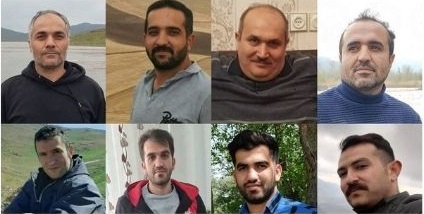
The prisoners involved were Abbas Lesani, Yousef Kari, Mehrdad Sheikhi, Ali Vaseghi, Reza Vaseghi, Siamak Mirzaei, Behnam Sheikhi, and Kianoosh Aslani.

Labor Activist Maziar Seyednejad Transferred to IRGC Detention Center in Evin Prison

On Monday, June 7, labor activist Maziar Seyednejad was arrested by security forces at his private home in Tehran.

According to HRANA, the news agency of Human Rights Activists, Seyednejad is currently being held in solitary confinement in the Ministry of Intelligence Detention Center in Ward 209 of Evin Prison.

Recently, the labor activist’s 3 year sentence was confirmed by the Court of Appeals in the Khuzestan Province.

Seyednejad has not, as of yet, been allowed access to a lawyer.

It is Time that Iran be Held Accountable 

HRANA – Last month the world turned its attention to Iran for its seemingly arbitrary transfer of a detained British-Australian academic. Kylie Moore-Gilbert, who was detained in September 2018 and is serving a ten-year sentence, was moved from the notorious Evin Prison to an unspecified location. When Human Rights Activists News Agency (HRANA) released the report, nearly every major media publication across the globe once again jumped to denounce her detention. Widespread speculation as to Moore-Gilbert’s whereabouts ensued. 

As a human rights professional who focuses on Iran, it was gratifying to see such a swift and appropriate response. However, what about the countless grave and horrific human rights violations that happen every day in this country? Violations that are so numerous that they have become seemingly rote. 

In the week following Moore-Gilbert’s transfer, peaceful protestors outside Iran’s Ministry of Petroleum were violently attacked by Regime Security Forces. In the month of October, at least 130 Iranians were arrested for activities related to their political or ideological beliefs; 83 of which involved the detention of individuals participating in peaceful gatherings related to the ongoing Armenian-Azerbaijani conflict. 

Iran carried out 19 hangings in the month of October alone, sentencing an additional 8 to that same fate throughout the month.

At least 12 members of the Baháʼí religious minority were barred from entering university based solely on their religious beliefs. One man received 80 lashes for converting to Christianity; a thief was sentenced to having his hand amputated.

Iranian courts tried more than 70 political cases which resulted in convictions that totaled 295 years in prison and 2,590 lashes.  A cleric was summoned to court for suggesting there was no problem with women riding a bicycle, an activity for which all women in the country are banned. Two women, sentenced to 33 months each for writing a letter requesting the resignation of the Supreme Leader, were summoned by authorities to begin serving their time. A teacher was sentenced to 45 lashes for drawing a cartoon.

This list is by no means exhaustive. 

These violations are not a secret. HRANA, the very source that initially reported on Moore-Gilbert’s move, reported and continues to report on the numerous human rights violations happening daily in Iran against Iranians, as well as dual and foreign nationals. There remains little to no response.

Detained British-Australian academic Kylie Moore-Gilbert

Why is this? 

I do not have the answer to that question, but I do know the differences these cases bear. The violations listed above are against Iranian citizens; Moore-Gilbert is a foreigner. Her case is, therefore, more appealing to the press it garners a more widespread response – and outcry. 


I’m reminded of a quote from Howard Bakerville, a young American who famously became a martyr of Iran’s Constitutional Revolution; he once said, “The only difference between me and these people is my place of birth, and that is not a big difference.” Today I fear there are times, unacceptably so, that this is the difference between life and death, between respect for rights and deprivation thereof. Will the world only shine the light on Iran when a Westerner is tangled in its web? Under international human rights law, States have a duty to respect, protect, and fulfill the rights of those within their jurisdiction. It’s time that Iran be held accountable to its own citizens just as it is to those dual and foreign nationals that find themselves trapped within the confines of a state where deprivation of fundamental human rights continues to be the norm. 

Moore-Gilbert has since been returned to Evin Prison. Her return, much like her move, was documented extensively. The reason for her move remains unknown.


Skylar Thompson

Skylar Thompson is a Senior Advocacy Coordinator with Human Rights Activists in Iran (HRAI). For inquiries please contact email: [email protected]


A Daily Overview of Human Rights Violations in Iran for December 28, 2018

The following is an overview of human rights violations in Iran on December 28th, 2018 based on the information compiled and verified by Human Rights Activists News Agency (HRANA).

(1) Zahra Abbasi, a 16-year-old pregnant girl, self-immolated and died in Dishmok city in Kohgiluyeh and Boyer-Ahmad Province. Five other women have self-immolated in Dishmok in the current year.

(2) During the last few days, 24 residents of Hendijan have been transferred to hospital for drinking contaminated water. They have been diagnosed with dysentery.

(3) Two Azerbaijani Turkic rights activists, Reza Jafarlou and Akbar Gholizadeh, who had been arrested on December 10th and detained in Urmia prison were released on bail. Three other activists, Oldouz Ghasemi, Amir Sattari, and Javad Ahmadi Yaekaneli were summoned to the Revolutionary Court in Naqadeh.

(4) Mohammad Saber Malek Reisi and Shir Ahmad Shirani, two political prisoners of Ardabil prison, who were returned to the prison after 12 days of interrogation, have been transferred to quarantine. They also have been barred from having visitors or phone calls.

(5) Seyed Mohammad Mohammadi, a political prisoner in the Evin prison, has served 14 months of his 2-year sentence. He was accused of ‘propaganda against the state’, ‘insulting the Supreme Leader’, and ‘insulting the authorities’.

(6) More than 40 students of an elementary school in Babol have been poisoned. Students with food poisoning symptoms have been hospitalized for treatment. The cause of the poisoning is unknown.

(7) Zahedan prisoners suffer from lack of access to adequate medical and mental health care, mistreatment by prisoners’ staff, malnutrition, quarantined when they complained about their situation, etc.

(8) Six firefighters were injured during an incident in Jey Industrial Zone in the central district of Isfahan

(9) Three protests and strikes have been organized on December 28, 2018. Nishabur public service workers, Farmers of Isfahan province, and staff of Islamic Azad University Meybod branch, requested their demands in separate protests.