Baha’i Citizen Payam Vali Face New Charge While Imprisoned

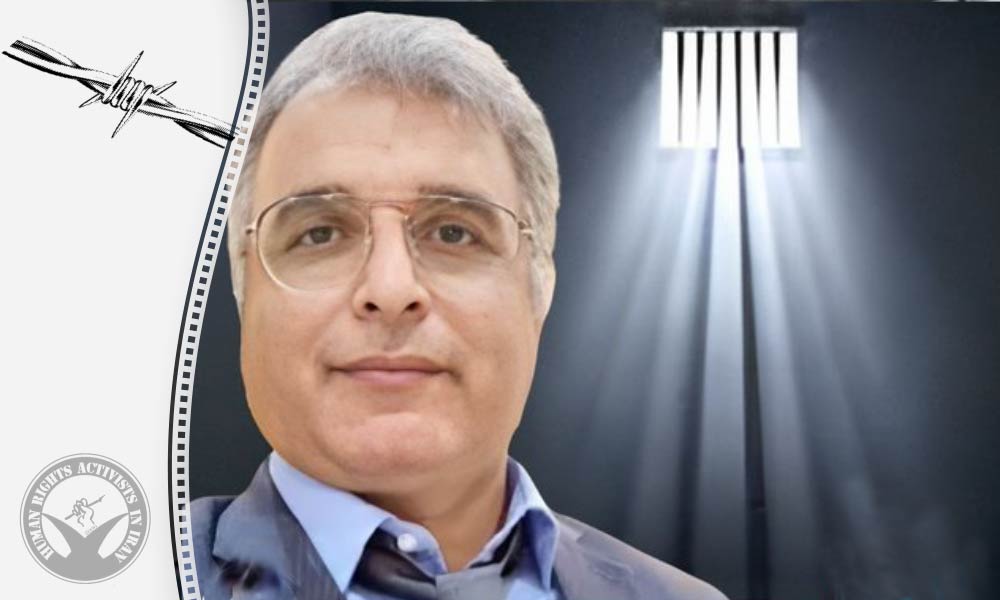
Payam Vali, a Baha’i citizen currently serving his sentence in Qezel Hesar Prison, Karaj, is confronted with a fresh legal case.

The Karaj Revolutionary Court has accused Vali of “spreading falsehood on the Internet through the dissemination of unlawful content.” This case has been transferred from the court to a branch of the prosecutor’s office in Karaj, as it reportedly exceeds the jurisdiction of the Revolutionary Court.

Vali’s arrest took place on September 24, 2022, when security forces apprehended him at his residence in Karaj and conducted a search of his house. Subsequently, he was detained in Rajai Shahr Prison before being relocated to Ghezel Hesar Prison.

On May 10, 2023, the Alborz Court of Appeals sentenced Vali to six years for “collaboration with adversary countries,” three years and one month for “inciting people to commit violence,” and eight months for “propaganda against the regime.” According to Article 134 of the Islamic Penal Code, the first charge carries an enforceable prison term of six years.


Four Inmates Executed for Drug-Related Crimes in Ghezel Hesar Prison

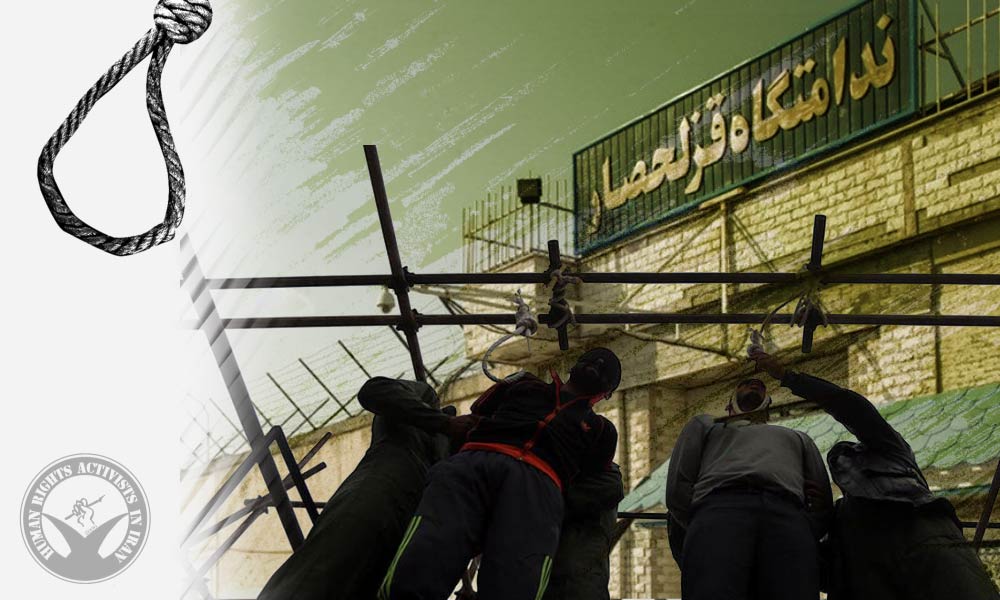
On May 20, 2023, four inmates convicted of drug-related crimes were executed in Ghezel Hesar prison, Karaj.

HRANA has identified them as Saeed Geravand, Samad Geravand, Shahab Mansouri Nasab and Shahram Sharghi.
A knowledgeable informant speaking to HRANA revealed that a number of inmates had initiated a hunger strike in protest of the escalating number of executions. Prior to their scheduled executions, these four inmates, along with three others, were relocated to solitary confinement, as reported by HRANA earlier.

At the time of writing, no official sources or domestic media outlets within the country have reported on these executions.

In recent weeks, the number of execution has been alarmingly raised.
In 2022, the Department of Statistics and Publication of Human Rights Activists in Iran registered 457 reports related to the death penalty. This included 92 death sentences, including the conviction of 6 people to public execution and 565 execution sentences were carried out, 2 of which have been carried out in public. Based on the announced identifications of some of the executed individuals, 501 were male and 11 were female. In addition, 5 juvenile offenders were executed in 2022, meaning they were under the age of 18 at the time they committed the crime.


Execution of Eight Inmates Carried Out in Multiple Prisons across Iran

Eight inmates were recently executed in Karaj, Fereydunkenar, Minab and Bandar Abbas for murder and drug-related crimes.

According to HRANA (Human Rights Activists News Agency), two Afghan nationals who were found guilty of murder were executed on May 10, 2023, in Ghezel Hesar prison, Karaj. HRANA is working on identifying these individuals.

Furthermore, IRNA reported the execution of an inmate in Fereydunkenar, Mazandaran Province, on May 15, 2023. This inmate had previously been convicted of murder for the tragic suffocation of his wife and child using carbon monoxide.

According to the Tasnim News Agency, on the same day, May 15, five inmates were executed in Minab and Bandar Abbas prisons for their alleged involvement in drug smuggling.

This concerning surge in executions has become a cause for alarm in recent weeks. HRANA has obtained reports indicating that between April 28 and May 9, 2023, a minimum of 57 prisoners, including two women and two prisoners of conscience, have been executed in various prisons throughout Iran.

In 2022, the Department of Statistics and Publication of Human Rights Activists in Iran registered 457 reports related to the death penalty. This included 92 death sentences, including the conviction of 6 people to public execution and 565 execution sentences were carried out, 2 of which have been carried out in public. Based on the announced identifications of some of the executed individuals, 501 were male and 11 were female. In addition, 5 juvenile offenders were executed in 2022, meaning they were under the age of 18 at the time they committed the crime.


Five Inmates Executed in Ghezel Hesar and Arak Prisons

Five inmates were executed on May 10, 2023, with three of them executed in Ghezel Hesar Prison in Karaj and two in Arak Prison. All five inmates had previously been convicted of drug-related crimes.

HRANA has identified the three inmates executed in Ghezel Hesar as Hossein Panjak, Abdolhossein Emami Moghadam, and Babak Aghaye. According to an informed source, they had been imprisoned for 17, 9, and 8 years, respectively. Mizan, the judiciary’s news agency, claimed that these individuals were members of a “cocaine cartel known as Panjak.”

Currently, five death-row inmates are still being held in solitary confinement, awaiting imminent execution.

On the same day, two inmates, convicted of drug-related crimes, were executed in Arak Prison. HRANA is working to identify these inmates.

None of the official sources or media outlets inside the country have reported these executions at the time of writing.

This recent surge in executions is alarming, as at least 65 prisoners, including two women and two prisoners of conscience, have been executed in various Iranian prisons over the past twelve days.”

Iran’s Execution Rate Rises Alarmingly with At Least 57 Executions in Eleven Days

Over the past eleven days, at least 57 prisoners, including two women and two prisoners of conscience, have been executed in various Iranian prisons. The executions were for drug-related crimes, murder, “spreading corruption on earth,” and blasphemy. HRANA has compiled a statistical analysis of the details of the executions during this period.

According to HRANA, the news agency of Human Rights Activists, there has been a noticeable increase in the execution of prisoners in Iranian prisons from April 28 to May 9, 2023.

Based on the reports compiled by HRANA, the death sentences were carried out in several prisons, including Rajai Shahr (Karaj), Ghezel Hesar (Karaj), Urmia, Salmas, Ardabil, Dastgerd (Isfahan), Vakilabad (Mashhad), Neishabur, Torbat-e-Jam, Rasht, Yazd, Birjand, Qazvin, Minab, Bandar Abbas, Zahedan, Khorramabad, and Iranshahr.

Out of the 57 executed prisoners, 36 were convicted of drug-related charges, 17 for murder, two for insulting the Prophet of Islam, and one for alleged “spreading corruption on earth.” In one case the charges remain unknown.

At least 38 death-row prisoners were also transferred to solitary confinement in Salmas, Urmia, Khorin, Ghezel Hesar (Karaj), Yazd, Bandar Abbas, Birjand, Adelabad (Shiraz) and Zahedan, which could be a prelude to their execution. HRANA is investigating their fate, and the statistics presented in this report could increase.

As of the time of writing, most of these executions have not been announced by official sources or media inside Iran.

The issuance and execution of death sentences violate the right to live and have been heavily criticized by international organizations, with Iran ranking first globally in execution rate per capita.

On May 9, UN Human Rights Chief Volker Türk called these recent increases in executions “frightening” and urged Iranian authorities to halt all executions. “On average so far this year, over 10 people are put to death each week in Iran, making it one of the world’s highest executors,” said Türk.

In 2022, the Department of Statistics and Publication of Human Rights Activists in Iran registered 457 reports on the execution of 565 people and death sentences for 92 people, six of whom were sentenced to be hanged in public. Of these 565 executions, two death sentences were carried out in public, and five were juvenile offenders who were under 18 years old at the time of committing the alleged crime.

The breakdown of charges for these executions is as follows: 122 individuals were executed for drug-related offenses, 59 for murder, 6 for undisclosed charges, 1 for adultery, 1 for ideological charges, 1 for corruption, 1 for Moharebeh (political security), and 1 for non-political Moharebeh.

Skylar Thompson, the head of Global Advocacy and Accountability of Human Rights Activists, stated that “the surging rate of executions in Iran illustrates an utter disregard for human life. Under no circumstance does the ongoing use of the death penalty, for drug-related offenses in particular, amount to what is permittable under international law. Iranian authorities have an absolute obligation to uphold international human rights standards and instead, there is ongoing impunity for grave violations of the right to life–and more. The international community must not delay in sounding the alarm, they should call for a stay of executions for those currently facing execution and a moratorium on the death penalty, at a minimum, for crimes not amounting to “most serious” under international law.”


Subscribe to Our Newsletter

Now is definitely not the time to stop reading!

Outbreak of Cholera in Tehran and Karaj Prisons

HRANA News Agency – In the recent weeks, an outbreak of Cholera has been reported in Ghezel Hesar, Rajai-Shahr and Pardis prisons.

According to a report by Human Rights Activists News Agency (HRANA), the Ghezel Hesar prison hospital has diagnosed three cases of Cholera amongst the prisoners.Additionally, one prisoner in Rajai-Shahr Prison and another one in Pardis Prison have tested positive for Cholera.

Given the fact that the Cholera infection is caused by a bacterial toxin in contaminated food and water, and the drinking water is reported to be unsanitary especially in Ghezel Hesar and Rajai-Shahr prisons, an outbreak of Cholera in Tehran and Karaj’s prisons are highly probable.

Additionally, several times every week, debris and dirt are reported to be present in Rajai-Shahr Prison’s drinking water.Although prisoners have voiced their concerns and objected to this situation, nothing has been done so far to address the problem.