Four Protesters Sentenced to Prison and Flogging

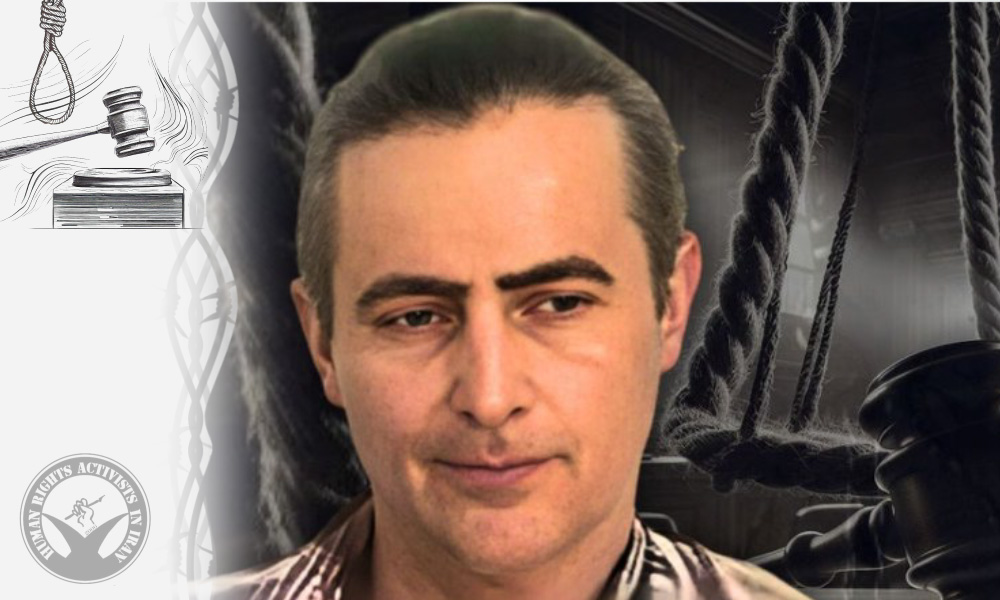
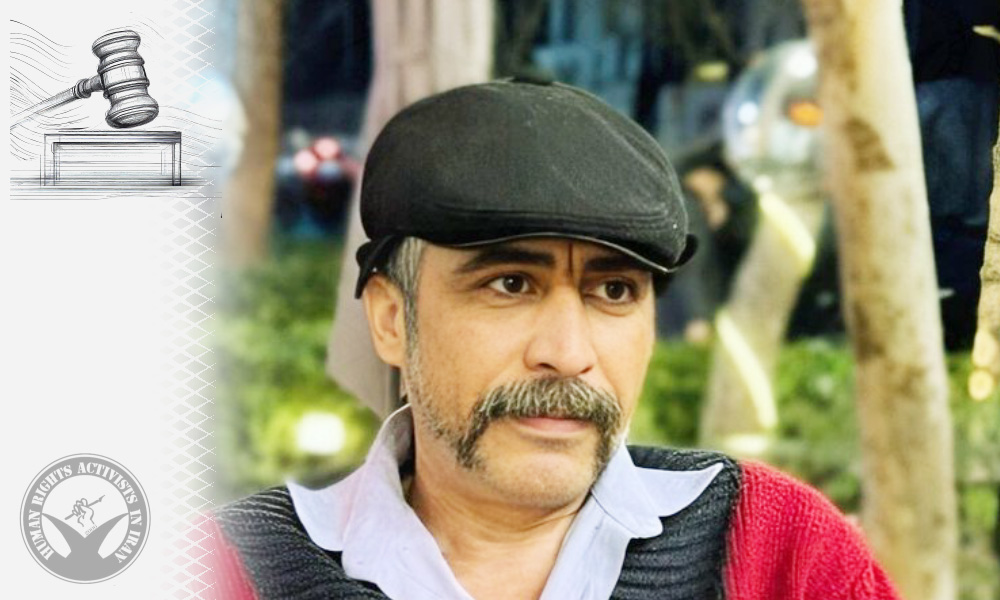
HRANA News Agency – Masoud Vazifeh, Sohrab Hassan-Khani, Sina Maleki, and Mojtaba Ebrahimi — political defendants — were sentenced by Branch 26 of the Tehran Revolutionary Court to a total of 9 years in prison, 184 lashes, and paying a fine. These individuals had previously staged a sit-in to protest death sentences issued against defendants in the so-called “Ekbatan Complex” case. They were later released after being arrested.

Based on the ruling issued by Iman Afshari, the presiding judge of Branch 26 of the Tehran Revolutionary Court:

  1. Masoud Vazifeh was sentenced to one year in prison for “propaganda against the regime,” one year in prison and 74 lashes for “disturbing public order and peace,” and two years in prison plus a 50-million-toman fine for “spreading falsehoods.” He did not attend the court sessions, and the verdict was issued in absentia.

  2. Sohrab Hassan-Khani was sentenced to eight months in prison and 40 lashes for “disturbing public order and peace,” and two years in prison along with a 50-million-toman fine for “spreading falsehoods.”

  3. Sina Maleki was sentenced to six months in prison and 30 lashes for “disturbing public order and peace.” His sentence has been suspended for three years. During the suspension period, he is also banned from using a smartphone.

  4. Mojtaba Ebrahimi was sentenced to 14 months in prison and a 30-million-toman fine for “spreading falsehoods,” and eight months in prison and 40 lashes for “disturbing public order and peace” (with time served counted toward the sentence). His sentence has also been suspended for three years, and he is banned from using a smartphone during the suspension period.

Masoud Vazifeh was released from Evin Prison on bail on February 5, Mojtaba Ebrahimi on January 4, Sohrab Hassan-Khani on December 30, 2024, and Sina Maleki during the winter.

These individuals had been arrested by security forces in December 2024 after staging a sit-in to protest the death sentences in the “Ekbatan Complex” case. Following their arrest, they were transferred to The Ministry of Intelligence’s detention facility, known as Ward 209 of Evin Prison.

Masoud Vazifeh has previously faced arrest and judicial action due to his activism.

It is worth noting that in November 2024, attorney Babak Paknia reported that death sentences had been issued for Milad Armoun, Alireza Kafaei, Amir Mohammad Khosh-Eghbal, Navid Najaran, Hossein Nemati, and Alireza Barmarz Pournak— all defendants in the “Ekbatan Complex” case. These sentences were issued by Branch 13 of the Tehran Criminal Court.

Gelareh Abbasi Sentenced to Prison

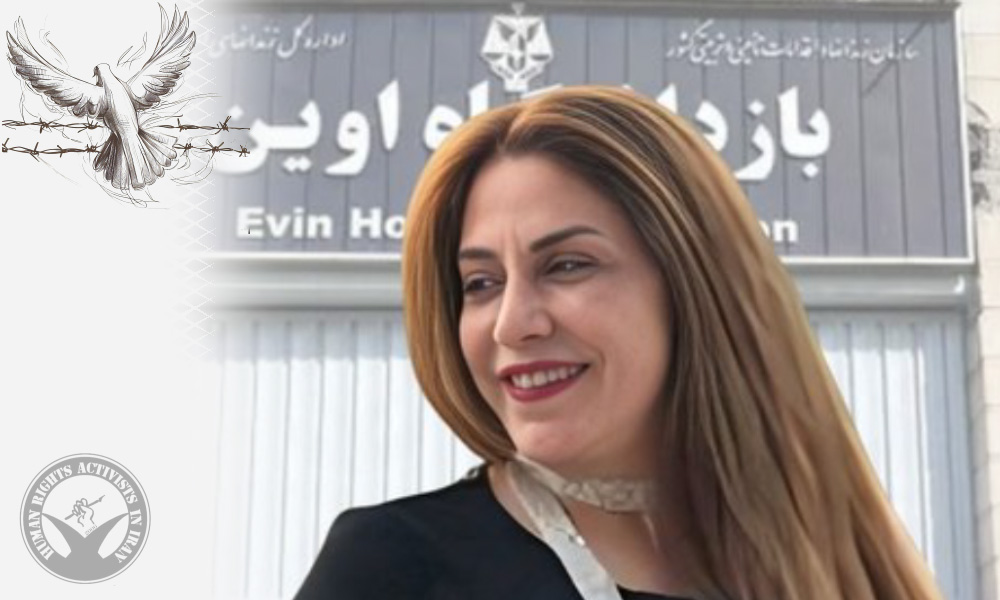
HRANA News Agency – Gelareh Abbasi, a political defendant, has been sentenced to 51 months in prison by Branch 23 of the Tehran Revolutionary Court.

According to HRANA, the news agency of Human Rights Activists in Iran, the court sentenced Abbasi to a total of four years and three months on charges of “assembly and collusion against national security” and “propaganda against the regime.”

Abbasi was arrested on February 16, 2025, at her home in western Tehran by agents of the Ministry of Intelligence and transferred to Evin Prison. She was released from Evin Prison on March 28, 2025, after posting a bail of one billion tomans.

Earlier, in a separate case, Abbasi had been sentenced by Branch 26 of the Tehran Revolutionary Court, presided over by Judge Iman Afshari, to two years and six months in prison for “assembly and collusion against national security.” After serving several months, she was released from Evin in February 2023.

Gelareh Abbasi, 48, is the mother of a young daughter and the head of her household.

Supreme Court Rejects Second Request for Retrial of Death Row Political Prisoner Mehdi Hassani

HRANA News Agency – Amin Adel Ahmadian, attorney at law, has announced that the Supreme Court of Iran has rejected the second request for retrial filed on behalf of Mehdi Hasani (Hassani), a political prisoner sentenced to death.

Ahmadian stated that the Supreme Court’s Branch 29 rejected the second retrial request without even requesting the case file from Branch 26 of the Revolutionary Court. He also noted that no judicial body had allowed him access to the case documents.

Hassani’s first retrial request had previously been rejected by Branch 39 of the Supreme Court on February 24, 2024.

On January 26, 2025, Hassani and Behrooz Ehsani Eslamlou were transferred from Evin Prison to Ghezel Hesar Prison in Karaj under the pretext of receiving medical attention. Their executions were subsequently halted following the registration and temporary acceptance of their retrial requests by the Supreme Court.

In late September 2023, Mehdi Hassani and Behrouz Ehsani Eslamloo were tried in Branch 26 of the Tehran Revolutionary Court, presided over by Judge Iman Afshari. The court sentenced both men to death on charges including baghi (armed rebellion), moharebeh (enmity against God), spreading corruption on earth, gathering classified information, and collusion against national security. These verdicts were later upheld by Iran’s highest judicial authority and communicated to their lawyers.

Alleged membership in the People’s Mojahedin Organization of Iran (PMOI/MEK) is among the charges brought against them.

Mehdi Hassani, aged about 47, is married and the father of two. He was arrested on September 9, 2022, while attempting to leave the country and was later transferred to Evin Prison.

Amirhossein Maghsoudlou (Tataloo) Sentenced to Death

HRANA News Agency – The spokesperson for Iran’s Judiciary has announced that Iranian singer Amirhossein Maghsoudlou, known as “Tataloo,” has been sentenced to death by Branch 6 of the Criminal Court One of Tehran Province. Previously, following an appeal by the Tehran Prosecutor, a five-year prison sentence issued in the same case was overturned by the Supreme Court, which then referred the case to a parallel court for retrial.

Judiciary spokesperson Asghar Jahangir stated: “After the Supreme Court overturned Mr. Maghsoudlou’s five-year prison sentence, the case was referred to Branch 6 of the Criminal Court One of Tehran Province. This court has sentenced Amirhossein Maghsoudlou to death on the charge of ‘sabb al-nabi’ (insulting the Prophet). The verdict is currently under review by the Supreme Court.”

In December 2024, following an appeal by the Tehran Prosecutor, the initial five-year sentence—previously issued by Branch 9 of Tehran Province’s Criminal Court—was nullified by the Supreme Court.

Separately, in September-October 2024, Tataloo was sentenced to ten years in prison on charges of “promoting immorality and indecency” in another case. That ruling was upheld on appeal, and the case was sent to the enforcement branch. Hearings for this case were held between March 4 and May 7, 2024, in Branch 26 of the Revolutionary Court, presided over by Judge Iman Afshari.

Maghsoudlou was extradited from Turkey to Iran in December 2023 and was ultimately arrested in coordination with judicial authorities.

Previously, while living abroad, he was summoned to the Tehran Criminal Court following complaints by a number of victims of betting websites.

Minoo Roozehdar Sentenced to Imprisonment and Fine

HRANA News Agency – Minoo Roozehdar , a Tehran resident, has been sentenced to 14 months in prison and paying a fine by Branch 26 of the Tehran Revolutionary Court.

Presided over by Judge Iman Afshari, Branch 26 of the Tehran Revolutionary Court sentenced Ms. Roozehdar to 14 months in prison and a 30 million toman fine on charges including propaganda against the regime and spreading false information. Her prison sentence has been suspended for four years.

Minoo Roozehdar had been arrested by security forces on January 20, 2025, in Tehran and transferred to the IRGC Intelligence Detention Facility, known as Ward 1-A. After one week, she was moved to the women’s ward of Evin Prison. She was released on March 4, 2025, after posting bail.

Roozehdar is a Tehran resident and mother of three.

In 2024, the Department of Statistics and Publication of HRA reported a total of 84 cases where Branch 26 of the Tehran Revolutionary Court, presided over by Judge Iman Afshari, issued verdicts that violated the human rights of defendants.

Subscribe to Our Newsletter

Now is definitely not the time to stop reading!

Mehdi Meskinnavaz Sentenced to Over 5 Years in Prison on Appeal

HRANA News Agency – The 10-year prison sentence of Mehdi Meskinnavaz (Meskin-Navaz), a political prisoner held in Bandar Anzali Prison, has been reduced to five years and six months following the acceptance of his retrial request and a new review by Branch 21 of the Tehran Province Court of Appeals.

On Sunday, April 13, 2025, his lawyer, Ali Sharifzadeh Ardakani, announced that with the Supreme Court accepting Meskinnavaz’s request for retrial and the case being referred to Branch 21 of the Appeals Court, his client’s sentence was reduced from 10 years to five years and six months.

In January 2025, the Supreme Court approved his retrial request, and the case was sent to an equivalent branch for reconsideration.

Meskinnavaz was arrested on September 7, 2024, to begin serving his sentence and was transferred to Bandar Anzali Prison.

In July 2023, in connection with a new case opened against him while in prison, he was sentenced by Branch 26 of the Tehran Revolutionary Court, presided over by Judge Iman Afshari, to 10 years in prison for “forming a group to disrupt national security,” and to 1 year for “propaganda against the regime.” He was also sentenced to two years of complementary punishment, including a ban on residing in Tehran Province and neighboring provinces, as well as a travel ban.

Mehdi Meskinnavaz, 46, is a resident of Bandar Anzali. He has a history of arrest and judicial sentencing due to his activism.

Filmmakers of “My Favourite Cake” Sentenced to Imprisonment and Fines

HRANA News Agency – Behtash Sanaeeha and Maryam Moghaddam, directors of the film My Favourite Cake, along with producer Gholamreza Mousavi, have been sentenced by Branch 26 of Tehran’s Revolutionary Court to a total of five years and four months in prison and monetary fines. All prison sentences have been suspended for five years.

Sanaeeha and Moghaddam were each sentenced to 14 months of imprisonment and paying a fine for “propaganda against the regime through spreading falsehoods with the intent to disturb public opinion.” Their prison terms are suspended for five years.

In a separate charge, all three—Sanaeeha, Moghaddam, and Mousavi—were sentenced to one year of suspended imprisonment and ordered to forfeit related equipment for “participation in the production of obscene content.” Judge Iman Afshari also sentenced them to pay a fine each and ordered the confiscation of all remaining equipment for “screening the film without official permission.”

The court session for these three individuals, as well as three other defendants in the case—two actors and a cinematographer—was held on March 1, 2025.

Despite international recognition of My Favourite Cake, including the Silver Hugo at the Chicago International Film Festival, Sanaeeha and Moghaddam were unable to attend due to a travel ban imposed on them.

The film was produced without censorship and did not enforce the mandatory hijab for female actors, prompting sharp criticism from Iran’s Ministry of Culture and Islamic Guidance.

My Favourite Cake, a 2024 drama, received the Silver Hugo at the Chicago Film Festival and gained significant attention after being released online.

Critical Health Concerns Amid Medical Neglect of Political Prisoner Marziyeh Farsi in Evin Prison

HRANA News Agency – Marzieh Farsi, a political prisoner held in Evin Prison, has been denied access to specialized medical care and transfer to medical facilities despite her poor health condition.

A source close to her family confirmed the news to HRANA, stating: “Ms. Farsi suffers from heart disease, persistent dizziness, headaches, nausea, and severe physical weakness. She also had breast cancer in the past and underwent surgery. However, after her arrest and transfer to prison, she was not sent to a hospital for specialized medical examinations. This has worsened her physical condition, and her health is currently in a concerning state.”

On February 14, 2024, Farsi was sentenced to 15 years in prison by Branch 26 of the Tehran Revolutionary Court on suspicion of membership in opposition groups.

The specific charges cited by the judge for this sentence remain unclear. However, Iman Afshari, the presiding judge of Branch 26, has a history of issuing unfair verdicts against political activists. Her trial was held in absentia by the same court earlier in February.

On August 21, 2023, Farsi was arrested by security forces in Tehran. Shortly after, she informed her family in a phone call that she had been transferred to The Ministry of Intelligence’s detention facility, known as Ward 209 of Evin Prison. She was later moved to the women’s ward of the same prison.

Marzieh Farsi has previously been arrested and imprisoned for her activism.

Political Prisoner Behfar Lalehzari Awaits Supreme Court Review of Retrial Request After 14 Months in Limbo

HRANA News Agency– Behfar Lalehzari, a political prisoner held in Evin Prison, has been waiting more than 14 months for the Supreme Court of Iran to review his retrial request. Despite repeated follow-ups, his case remains unresolved.

According to HRANA, the news agency of Human Rights Activists in Iran, the Supreme Court has yet to process Lalehzari’s retrial petition.

A source close to the prisoner’s family confirmed the prolonged delay, telling HRANA: “During a visit by a judicial official to Ward 4 of Evin Prison, Behfar Lalehzari raised his protest over the lack of progress on his retrial request pending in Branch 39 of the Supreme Court. The official responded by claiming the case file had been ‘lost’ and that the branch currently has no file to review.”

In protest, Lalehzari launched a hunger strike on February 11, 2025, demanding action on his case. He ended his strike in late March after prison authorities promised to address his demands.

Lalehzari first submitted his retrial request to the Supreme Court in February 2024. Despite suffering from multiple health conditions, he has filed nine requests for medical furlough to date—each denied by prison officials.

On September 18, 2023, security forces arrested Behfar Lalehzari at his home. After seven days in solitary confinement at the Security Police detention facility, he was transferred to Evin Prison.

Later, Branch 26 of the Tehran Revolutionary Court, presided over by Judge Iman Afshari, sentenced him to four years in prison for “assembly and collusion against internal security” and one year for “propaganda against the regime,” totaling five years. The verdict was upheld by Branch 36 of the Tehran Court of Appeals.

A Statistical Overview of Human Rights Violations in Iran in the Hijri Year 1403

HRANA News Agency -The year 1403 paints a stark picture of the continued violation of human rights in Iran. The persistent threat to freedom of thought and expression, the crackdown on peaceful protesters, increased pressure on ethnic and religious minorities, the prosecution and harassment of human rights activists, the execution of juveniles, the plight of child laborers, violations of women’s rights and the rights of sexual and gender minorities, and the poor conditions in detention centers and prisons are just some examples of the daily human rights violations in Iran. The comprehensive report by the Statistics and Publications Center of Human Rights Activists in Iran, presented below, provides a distressing account of human rights violations in the country over the past year.

Provincial Comparison: Introducing HRANA’s Human Rights Violation Index (HRVI)

This year, HRANA – the news agency of the Human Rights Activists in Iran (HRA) – has introduced the Human Rights Violation Index (HRVI) as a data-driven tool for analyzing and comparing the human rights situation across different provinces of Iran. The index provides organizations and researchers with a geographical and temporal framework for monitoring human rights violations.

The HRVI is built on thousands of HRANA’s reports and comprises 37 carefully developed indicators. It categorizes human rights violations into three main areas, each represented by a sub-index:

Political Rights Suppression Index (PRSI):
This sub-index measures actions by Iran’s security and judicial apparatus aimed at suppressing political and civil activism. It covers state-led violations against a wide range of groups, including civil rights activists, labor and women’s rights advocates, journalists, and others. Focused on direct government involvement, it captures incidents such as arbitrary arrests by security forces, prison sentences for political charges, and frequent summons or interrogations.

PRSI values across Iran’s provinces, reflecting the intensity of political repression.


Lack of Legal Protection Index (LLPI):

This sub-index assesses the government’s failure or unwillingness to provide legal protection for vulnerable groups such as women, workers, and children. It measures the state’s inability to shield people from violence, discrimination, and exploitation through a variety of indicators.

LLPI values across Iran’s provinces, reflecting the extent of legal protection failures for vulnerable groups.

Physical Integrity Index (PII):
This sub-index tracks state-led violent actions directly targeting citizens, including prisoners, kulbars (border porters), and fuel carriers. It also covers severe and inhumane punishments such as executions, torture, and prolonged solitary confinement.

PII values across Iran’s provinces, reflecting the intensity of state-led physical violence and inhumane punishments.

Each indicator is weighted according to the severity and impact of the violation to ensure that the most egregious cases have a greater influence on the overall index. The final HRVI score is calculated based on the weighted sum of these three sub-indices.

HRVI values across Iran’s provinces, reflecting the overall severity of human rights violations.

For a detailed breakdown of the indicators and the methodology behind the index, please refer to the HRVI documentation.

In summary, through extensive data collection and statistical modeling, the Human Rights Violation Index offers a quantitative and structured approach to assessing the human rights landscape in Iran.

Freedom of Thought and Expression

In 1403, a total of 1,141 reports were recorded in the field of thought and expression. During this period, at least 1,300 people were arrested, 168 of whom were detained without a judicial warrant. Additionally, 307 cases of prosecution, 39 cases of home searches, 25 instances of convicting publications, 3 cases of internet filtering, 1 case of property confiscation, 74 protest gatherings, 3 cases of preventing gatherings, 2,621 summonses to judicial authorities, and 161 instances of sentence enforcement were documented.

In this domain, judicial authorities issued at least 22,986 months of imprisonment for 548 individuals. This included 20,864 months of enforceable imprisonment and 2,122 months of suspended sentences. Notably, 4,965 months of these sentences were issued by the appellate court and 252 months by the Supreme Court. Additionally, 81 individuals were fined a total of 5,589 million tomans (approximately 70,000 dollars), 95 individuals were sentenced to 6,994 lashes, 28 individuals to 1,152 months of exile, and 78 individuals were deprived of their social rights.


Annual Statistical Comparison of Arrests in the Past Five Years (Freedom of Thought and Expression)
YearNumber of ArrestsArrests per Million PeoplePercentage Change Compared to Previous Year
13992,29227.5-45%
14001,41916.88-11%
140128,647338.2+95%
14022,49629.25-48%
14031,30028.89


Judicial Authorities Issuing the Most Sentences in the Freedom of Thought and Expression Category
Judge NameCourt BranchCourt PlaceNumber of CasesPrison Sentences (Months)LashesFine (Million Toman)
Jabar Javadi RamiCriminal Court Branch 2Tehran443,5765,550
Iman AfshariRevolutionary Court Branch 26Tehran412,0951484,460
Mohammad Reza TavakoliRevolutionary Court Branch 1Isfahan292,244
Abbasali HouzanAppellate Court Branch 36Tehran231,569
Mahdi RasekhiRevolutionary Court Branch 3Rasht171,023
Abolghasem SalavatiRevolutionary Court Branch 15Tehran151,015
Mohammad-Sadegh Iran AghidehAppellate Court Branch 11Gilan11727
Mahdi FakhriCriminal Court Branch 101Boukan11145
Sajad DoostiRevolutionary Court Branch 1Mahabad9402
Mohammad KaramiRevolutionary Court Branch 1Sanandaj7277


Children’s Rights

In 1403 Hijri year, a total of 498 reports were recorded in the field of children’s rights. During this period, at least 27 cases of child rape and sexual abuse, 43 cases of child murder, 5 cases of honor killings, 3 abandoned newborns, 9 deaths and 17 injuries among child laborers, 14 deaths and 204 injuries of children due to officials’ negligence, 58 suicides, at least 4,296 cases of child abuse, 28 arrests of individuals under 18, at least 3 million school dropouts, and approximately 2 million child laborers were documented. Additionally, 48 months of enforceable imprisonment were reported for 2 individuals under the age of 18.

Also, at least 5 juvenile offenders were executed in Iran over the past year.

According to official data from the Iranian Statistics Center, as of 1398 in the Hijri calendar, approximately 16.8% of girls aged 15 to 19 in Iran had been married. Among the limited available government statistics on this issue, a report from the same center shows that between winter 1400 to autumn 1401, at least 27,448 girls under the age of 15 were married in Iran. While the rate of child marriages among girls under 15 had been declining since 1396, the trend reversed and began rising again from 1398 onward.

Reports indicate that in 1399 and 1400, 31,646 and 32,655 girls under 15 were married, respectively. The number of marriages involving girls under 15 increased by 933 cases in autumn 1401 compared to the summer of the same year. Furthermore, in autumn 1401, over 5,500 more girls aged 15 to 19 were married compared to the previous season (summer 1401).

According to this report, most child brides become mothers at a very young age. As announced by the National Organization for Civil Registration, in 1400, at least 69,103 newborns were born to mothers aged 10 to 19, and 1,474 newborns were born to mothers aged 10 to 14.

Etemad newspaper reported that Iranian authorities would stop publishing statistics on child marriages and the number of children born to underage mothers. According to the report, an official from National Organization for Civil Registration confirmed that an “order was issued” to prevent the release of this data.

Women’s Rights

In 1403, a total of 253 reports were recorded in the field of women’s rights. These included 125 cases of femicide, 33 honor killings (including the murder of 19 men), 16,567 cases of domestic violence, 5 acid attacks, 3 suicides, 30,642 cases of enforcement related to improper veiling, 2 cases of prosecution, and 14 months of imprisonment for women. Additionally, 74 cases of flogging and fines amounting to 9,500,000 tomans were issued against women.

Over the past year, at least 649 arrests were documented in this category, of which 643 were due to non-compliance with mandatory hijab laws.

Workers’ Rights

In 1403, a total of 1,712 reports were recorded in this category, documenting the arrest of 13 individuals. Additionally, 10 workers or labor activists were sentenced to a total of 340 months of enforceable imprisonment. Furthermore, one individual was sentenced to 24 months of exile. Other documented cases include 31 summonses to judicial authorities, 12 interrogations, 3 trials, 5 instances of sentence enforcement, 5 cases of self-immolation, 6 suicides, 724 protests, 1,377 strikes, 1 house search, and 1 case of property confiscation.

Reports from 1403 indicate that delays or non-payment of wages affected at least 18,121 workers for a total of 592 months. Additionally, 4,765 workers were dismissed or laid off, 585 cases of unemployment were recorded, and 525,592 workers experienced a total of 488 months without insurance coverage. Furthermore, 11 factory closures were reported, leaving 4,835 workers in an uncertain employment status. At least 2,042 workers lost their lives in workplace accidents, and 16,113 workers sustained work-related injuries. Iran ranked 102nd globally in workplace safety compliance, a very low ranking.

Trade and Labor Unions

In 1403, the Statistics and Publications Center recorded 1,436 incidents related to trade unions and professional associations across Iran. These reports include the arrest of 28 union activists, 122 summonses to judicial or security authorities, 536 closures of business premises, 5 instances of physical assault, 1 license revocation, 17 trials in judicial courts, 19 security agency interrogations, 13 dismissals or layoffs, 4 cases of forced retirement, 1,187 protests, and 70 strikes. Additionally, at least 1,613 individuals experienced wage delays totaling 393 months, 3 home searches, and 6 cases of sentence enforcement.

Moreover, 75 individuals were sentenced to a total of 881 months in prison, including 777 months of enforceable imprisonment and 104 months of suspended sentences. Of this total, 147 months were issued by the appellate court. Additionally, 5 individuals were sentenced to 168 months of exile, 1 individual received 29 lashes, and 29 individuals were fined a total of 59,540,000 tomans.

Prisoners’ Rights

In 1403, the following violations of prisoners’ rights were documented: 14 cases of physical assault against political prisoners, 375 instances of medical neglect or deprivation of healthcare services, 312 illegal transfers of prisoners to solitary confinement, 79 hunger strikes, 36 cases of forced transfers or exile of prisoners, 335 cases of threats and pressure against political and ideological prisoners, 156 instances of denied family visits, 5 prisoner deaths due to illness, 18 suicides, 2 cases of self-immolation, 7 prisoner murders, 106 instances of denied access to legal representation, 105 cases of restrictions on phone calls, 75 cases of failure to separate prisoners based on their offenses, 495 cases of prisoners being held in unsuitable conditions, 18 forced confessions, and 99 instances of denial of medical leave.

Additionally, 275 cases of prisoners being held incommunicado and 928 cases of detainees being kept in an indeterminate legal status were documented.

Executions

As in previous decades since the 1979 Revolution, executions in Iran continue to represent one of the most severe forms of human rights violations. In 1403, at least 1,050 individuals — including 29 women and 5 juvenile offenders — were executed. Among them, 5 executions were carried out publicly. During the same period, 189 additional people were sentenced to death, including one individual specifically condemned to public execution. Notably, the Supreme Court also upheld the death sentences of 55 individuals within this timeframe.


Annual Statistical Comparison of Executions in the Past Five Years
YearNumber of ExecutionsExecutions per Million PeoplePercentage Change Compared to Previous Year
13992462.95+334%
14003514.17+192%
14016207.3+75%
14027719.03+35%
14031,05012.18


Execution Rate by Province (Executions Per 100,000 People)
ProvincePopulationNumber of ExecutionsExecution Rate
Alborz2,712,4001907.19
Fars4,851,2741082.23
Isfahan5,120,850841.64
Razavi Khorasan6,434,501671.04
East Azerbaijan3,909,652631.61
Kerman3,164,718451.42
West Azerbaijan3,265,219431.32
Lorestan1,760,649402.27
Sistan and Baluchestan2,775,014361.3
Zanjan1,057,461312.93
South Khorasan768,898314.03
Yazd1,138,533302.63
Golestan1,868,819291.55
Hamadan1,738,234291.67
Qazvin1,273,761282.2
Gilan2,530,696281.11
Kermanshah1,952,434241.23
Qom1,292,283231.78
Khuzestan4,710,509180.38
Mazandaran3,283,582170.52
Hormozgan1,776,415170.96
Markazi1,429,475140.98
Ardabil1,270,42090.71
Ilam580,15891.55
Semnan702,36071
Kohgiluyeh and Boyer-Ahmad713,05260.84
Kurdistan1,603,01160.37
Bushehr1,163,40060.52
North Khorasan863,09240.46
Chaharmahal and Bakhtiari947,76320.21


Ethnic Minorities’ Rights

In 1403, a total of 278 reports were documented in the category of ethnic-national rights. According to these reports, the arrest of 332 citizens was recorded, of which 153 arrests were carried out without a judicial warrant. Although the charges against 234 of these detainees remain unclear, based on patterns and the historical actions of security agencies in the mentioned regions, these arrests have been categorized under ethnic rights violations.

Additionally, 29 individuals were sentenced to a total of 1,244 months in prison, including 1,178 months issued by primary courts and 66 months by appellate courts. Furthermore, 4 individuals were fined a total of 53,600,000 tomans. Other documented cases include the summons of 59 individuals to security and judicial authorities, 5 instances of sentence enforcement, 36 trials, and 17 interrogations.


Annual Statistical Comparison of Arrests in the Past Five Years (Ethnic Minorities’ Rights)
YearNumber of ArrestsArrests per Million PeoplePercentage Change Compared to Previous Year
13994004.79-25%
14003584.26-10%
14012422.9+33%
14023714.35-11%
14033323.85


Religious Minorities’ Rights

In 1403, a total of 169 reports were documented in the category of religious minorities’ rights. According to these reports, 124 citizens were arrested. Additionally, 86 individuals were sentenced to a total of 4,364 months of enforceable imprisonment and 516 months of suspended imprisonment. Of this total, 4,070 months were issued by primary courts and 810 months by appellate courts.

Other documented violations include 63 summonses to judicial and security authorities, 49 trials, 19 interrogations, 1 case of preventing the burial of deceased individuals, 2 cases of cemetery destruction, 47 home searches, 37 travel bans, 20 instances of sentence enforcement, 1 case of property confiscation, and 10 cases of restrictions on economic activities.


Annual Statistical Comparison of Arrests in the Past Five Years (Religious Minorities’ Rights)
YearNumber of ArrestsArrests per Million PeoplePercentage Change Compared to Previous Year
13991001.2+20%
1400670.8+80%
14011752.1-31%
14021481.73-17%
14031241.44


Judicial Authorities Issuing the Most Sentences in Religious Minorities’ Rights
Judge NameCourt BranchCourt TypeNumber of CasesPrison Sentences (Months)LashesFine ( million Toman)
Mohammad Reza TavakoliRevolutionary Court Branch 1Isfahan282,2201,800
Kamran ZareAppellate Court Branch 37Fars7232261.3
Mahdi RasekhiRevolutionary Court Branch 3Rasht5145320.02
Iman AfshariRevolutionary Court Branch 26Tehran4524910
Gholi Mir NasabRevolutionary Court Branch 2Sari3100


Protests and Strikes

In 1403, at least 2,255 protest gatherings took place across Iran. This figure includes 724 labor protests, 1,187 trade union protests, 74 protests related to freedom of thought and expression, 47 student protests, and 48 environmental protests. Additionally, 175 protests were held across 31 provinces by citizens, most of whom were victims of financial fraud or individuals whose civil rights had been violated. Alongside these protests, at least 70 trade union strikes and 1,377 labor strikes were also recorded.

Civilian Killings

Throughout 1403, a total of 355 civilians were shot by military forces, resulting in the deaths of 156 individuals. This includes the deaths of 31 kolbars (border couriers), 42 fuel carriers, and 83 other civilians. Additionally, 199 civilians sustained injuries due to indiscriminate gunfire by military personnel, comprising 105 kolbars, 51 ordinary citizens, and 43 fuel carriers.

It is also worth noting that 30 other kolbars were involved in accidents due to environmental and geographical conditions such as hypothermia and falls from heights. Of these, 21 kolbars were injured, and 9 lost their lives. Moreover, 19 fuel carriers were involved in accidents following pursuits by military forces, resulting in the deaths of 5 and injuries to 14 others.

Landmine and Explosion Victims

Landmines left from past wars continue to pose a deadly threat to border residents each year. Meanwhile, the Iranian government continues to produce and plant anti-personnel mines, insisting—contrary to international treaties—that the use of such mines is the only effective way to secure the country’s long borders.

According to data from the past year, at least 9 civilians lost their lives due to landmine explosions in border areas, while 19 others sustained injuries.

Flogging and Amputation Sentences

The International Covenant on Civil and Political Rights explicitly prohibits degrading and inhumane punishments such as flogging and amputation. However, according to compiled data from 1403, at least 4 defendants were subjected to a total of 108 lashes under judicial orders in Iran. Additionally, Iranian courts sentenced at least 159 individuals to a total of 10,984 lashes.

Furthermore, the amputation sentences of two convicts were carried out, while four other individuals were sentenced to amputation by Iranian judicial authorities.

Sentences Issued

Over the past year, courts across Iran issued verdicts in 744 cases, collectively sentencing individuals convicted on political or ideological grounds to 27,857 months of enforceable imprisonment and 21,831 months of suspended imprisonment. Of these, 43,209 months were ruled by primary courts, 6,227 months by appellate courts, and 252 months by the Supreme Court.

Additionally, judicial authorities issued fines totaling 9,999,172,000 tomans, 7,127 lashes, 86 travel bans, 142 instances of deprivation of social rights, and 1,344 months of exile.

Arrests

In the past year, the arrest of 2,491 individuals in Iran was based on political or ideological grounds, or in clear violation of human rights principles. Among the most significant cases were 1,300 arrests related to freedom of thought and expression. Other documented arrests include:

. 13 laborers and labor activists
. 28 individuals under 18
. 4 student activists
. 28 trade union activists
. 124 religious minority members
. 1 individual in the cultural sector
. 1 individual from the LGBTQ+ community
. 11 environmental activists
. 332 individuals of ethnic backgrounds

It should be noted that the charges against 234 of these ethnic individuals remain unclear. However, based on established patterns and the actions of security agencies in the affected regions, these arrests have been classified under ethnic-national rights violations.

Additionally, at least 649 arrests related to women’s rights were recorded, of which 643 were due to non-compliance with mandatory hijab laws.

Comparison of the Number of Convicted Individuals Over the Past Five Years
YearNumber of Convicted IndividualsPercentage Change Compared to Previous Year
1399741+0.4%
14001,051+40%
14011,075-30.7%
1402843-11.7%
1403744


Comparison of the Number of Imprisonment Sentences (Months) Over the Past Five Years
YearNumber of Months of Imprisonment IssuedPercentage Change Compared to Previous Year
139926,775+4%
140013,316+109.1%
140133,671-17.2%
140233,790-17.5%
140327,857


Judicial Authorities Issuing the Most Sentences in the Past Year
Judge NameCourt BranchCourt PlaceNumber of CasesPrison Sentences (Months)LashesFine (Million Toman)
Mohammad Reza TavakoliRevolutionary Court Branch 1Isfahan574,4641,800
Iman AfshariRevolutionary Court Branch 26Tehran512,793148 lashes1,356
Jabar Javadi RamiCriminal Court Branch 2Tehran443,5765,550 lashes
Abbasali HouzanAppellate Court Branch 36Tehran312,0131,000
Abolghasem SalavatiRevolutionary Court Branch 15Tehran261,999
Mahdi RasekhiRevolutionary Court Branch 3Rasht251,312320.02
Mohammad-Sadegh Iran AghidehAppellate Court Branch 11Gilan13800800
Mahdi FakhriCriminal Court Branch 101Boukan11145
Sajad DoostiRevolutionary Court Branch 1Mahabad9156
Mostafa NarimaniRevolutionary Court Branch 3Karaj8431


Annual Statistical Comparison of Arrests in the Past Five Years
YearNumber of ArrestsArrests per Million PeoplePercentage Change Compared to Previous Year
13992,95035.37-18%
14001,88422.28+30%
140129,950353.6-92%
14023,86445.28-35%
14032,49128.89


Final Note

It is important to emphasize that the statistics presented in this report do not fully capture the state of human rights in Iran. The Iranian government restricts the activities of independent human rights organizations and limits their access to essential information. As a result, these figures represent only a minimum estimate of the human rights situation in the country, compiled exclusively by civil society groups — including HRANA — and documented by its Statistics and Publications Center.