Continued Israeli Attacks on Iran; Civilian Casualties Reported in at Least 12 Provinces

HRANA News Agency – In the early hours of Friday, June 13, 2025 (Khordad 23, 1404), starting around 3:30 AM, a wave of airstrikes by the Israeli military began targeting Iranian territory and was ongoing at the time of this report (Friday, June 13, 2025 at 11pm Tehran time). These attacks, which have affected at least 12 provinces, have struck not only military targets but also residential areas and civilian sites. According to official and local sources, at least 678 people have been killed or injured so far, including four children, dozens of women, and a Red Crescent aid worker.

Geographic Scope of the Strikes

Strikes have been reported in the provinces of Tehran, East Azerbaijan, West Azerbaijan, Ardabil, Isfahan, Ilam, Kermanshah, Markazi, Hamedan, Fars, Khuzestan, and Kurdistan. The main weapons reportedly used include ballistic missiles, air-launched cruise missiles, and suicide drones. However, Israeli officials have not yet released details on the specific weapons deployed.

Prominent Casualties

State media have confirmed the deaths of several high-ranking military commanders and nuclear scientists, including Amir Ali Hajizadeh (the IRGC Aerospace Forces), Mohammad Bagheri (the Chief of Staff of the Iranian Armed Forces), Hossein Salami (the IRGC’s commander-in-chief ), Gholamali Rashid (the commander of Khatam-al Anbiya Central Headquarters.), Mehdi Rabani (Deputy Chief of General Staff of the Armed Forces), and Davood Sheikhian (Commander of the IRGC Aerospace Air Defense). Scientists mentioned include Abdolhamid Minouchehr, Ahmadreza Zolfaghari, Seyed Amirhossein Faghi, Mohammad Mehdi Tehranchi, and Fereydoon Abbasi. Reports also indicate that some of their family members were killed.

Widespread Military Activity

Multiple reports have noted military activities, including defensive operations, not only in the provinces listed but also in cities such as Kermanshah, Eslamshahr, Tabriz, Bushehr, Qom, Sardasht, Pakdasht, Khorramabad, Karaj (Mohammadshahr), Nahavand, Andimeshk, and across many areas of Tehran, including Parchin, Chitgar, Sattarkhan, Amirabad, Khaniabad-e-No, Lavizan, District 18, Chamran South at Hemmat Intersection, District 10, Ayatollah Kashani, 13 Aban neighborhood, Majidieh, and Khalij-e Fars (District 18 of Tehran). Additional activities were observed at military bases and facilities such as Tabriz airbase, Mehrabad and Bushehr airports, the Khatam al-Anbia Air Defense Base, Kermanshah missile base, a military depot near Tabriz, Hazrat Masoumeh air defense group (Qom), Imam Ali Barracks (Khorramabad), the radar center in Nahavand, and the 8th Fighter Base in Isfahan.


Human Casualties and Losses

Casualties Without Verified Classification
ProvinceKilledInjuredKey Targeted Locations
Tehran78329Gheytarieh, Mehrabad, Andarzgoo, Marzdaran, Saadat Abad, Chamran Town, Nobonyad, Narmak, Mahallati Town
East Azerbaijan1835Areas around Tabriz, Bostanabad, Maragheh
Kermanshah012Qasr-e Shirin and a border county
Other provinces (total of 10)095Various locations

Civilian Casualties
ProvinceKilledInjuredKey Targeted Locations
Tehran3555Various neighborhoods
Kermanshah10Welfare Organization building, Qasr-e Shirin
Unknown1Teenager Amirali Amini
Ardabil02Khoroslu Telecommunications Site, Bileh Savar

Military Casualties
ProvinceKilledInjuredKey Targeted Locations
Tehran70Various centers – High-ranking military personnel
East Azerbaijan20Khatam al-Anbia Air Defense Base, 2nd Tactical Air Base
Qom20“Hazrat Masoumeh” Air Defense Site
West Azerbaijan10Sardasht border regiment base
Lorestan1424th Ba’ath Garrison in Borujerd

Among the victims, at least 35 women and children have been identified. The identities of some victims and whether they were civilians or military personnel are still under investigation.

Communications Disruption and Secondary Impacts

Following the attacks, Iran’s Ministry of Communications temporarily restricted internet access “due to the country’s special conditions.” WhatsApp, which had been unblocked last January, was reblocked, and access to Cloudflare-based services was disrupted. This has significantly hindered independent media operations, emergency data transmission, and immediate access to information.

International Humanitarian Law (IHL) Analysis

The ongoing attacks clearly constitute an international armed conflict (IAC), requiring all parties to abide by the Geneva Conventions and customary international law. The core principles of distinction, proportionality, and precaution apply:

  • Distinction: Differentiating between military targets and civilians. Direct attacks on residential areas, schools, social service centers, and aid personnel, if not used for military purposes, violate this principle.

  • Proportionality: Even when military targets exist, attacks must not cause civilian harm that outweighs the expected military advantage.

  • Precaution: Attackers must issue effective warnings and choose less harmful methods or weapons. No prior warnings or alternative measures have been reported thus far.

Responses and Calls for Accountability

Hours after the attacks began, the Human Rights Activists in Iran (HRA) published a detailed statement urging all parties to uphold their binding obligations under international humanitarian law and to take immediate actions including:

. Precise identification of military targets and avoidance of civilian areas;

. Issuing effective warnings to allow time for evacuation or shelter;

. Avoiding strikes on densely populated areas and critical infrastructure;

. Assessing the proportionality of military gains versus potential civilian harm.

The statement questioned the necessity of the military targets, adequacy of warnings, and extent of civilian infrastructure damage, emphasizing that “compliance with international humanitarian law is not optional—it is a legal and ethical obligation.” It warned that any deviation from these principles constitutes a serious violation.

HRA not only called for an immediate end to indiscriminate and disproportionate attacks but also committed to “daily documentation, harm analysis, and pursuit of accountability.”

Conclusion

As attacks continue, the lack of transparency about military targets, significant civilian casualties, the deaths of aid workers, and destruction of infrastructure have intensified concerns about widespread violations of humanitarian law. If left unchecked, the human toll—from population displacement to collapse of essential services—could further destabilize regional security in the long term.

HRANA will continue to monitor developments and publish up-to-date field reports and analysis.

Saadat Abad – TehranInjured people in TehranInjured people in Tehran
A Complex in Saadat Abad – TehranKuhak- TehranTehran
Mahallati District-TehranWelfare Organization Building in Qasr-e ShirinTehran
Patrice Lumumba Street – TehranShahr Ara- TehranNarmak -Tehran
TehranKetab Sq-TehranA girl-only high school in District 3-Tehran
A tower in TehranChamran Complex in TehranTehran
TehranTabrizTehran
Andarzgu-Tehran

Masoumeh Shahnavaz Arrested by Intelligence Ministry Agents in Sabzevar

HRANA News Agency – On Friday, June 13, Masoumeh Shahnavaz, a resident of Sabzevar, was arrested by Intelligence Ministry agents at her home and taken to an undisclosed location. During the arrest, security forces searched her home and confiscated several of her and her family’s personal belongings.

Shahram Sadidi, Ms. Shahnavaz’s son, reported that his mother was violently arrested by Intelligence Ministry agents at her home in Sabzevar. During the arrest, agents searched the house and confiscated personal items belonging to his mother and their family.

He added that the arrest was in response to her reaction to Israeli airstrikes. According to Sadidi, Masoumeh Shahnavaz has undergone open-heart surgery twice and her life is at risk. Her whereabouts remain unknown as of the time of this report. Masoumeh Shahnavaz is a retired schoolteacher living in Sabzevar.

It is worth noting that Shahram Sadidi, who now resides outside Iran, has previously been arrested and faced legal action due to his activism.

Unresolved Detention: Bijan Kazemi Still Held in Evin Prison

HRANA News Agency – Bijan Kazemi, a resident of Kuhdasht,  remains in limbo in Evin Prison more than four months after his arrest.

Kazemi has been in detention for over four months and remains in an uncertain state. A source informed HRANA that Kazemi has been denied visitation rights and access to his lawyer. No legal proceedings have taken place regarding his case thus far.

Bijan Kazemi was transferred to the Ministry of Intelligence’s detention facility, known as Ward 209 of Evin Prison, on January 22, 2025. He was initially arrested by Intelligence Ministry agents in Kuhdasht, Lorestan province, on January 19, 2025.

As of the time of this report, the reasons for his arrest and the charges against him remain unknown.

Kazemi has previously faced legal action due to his activism.

Businessman Saeed Mohammadi Doraki Held in Legal Limbo in Evin Prison

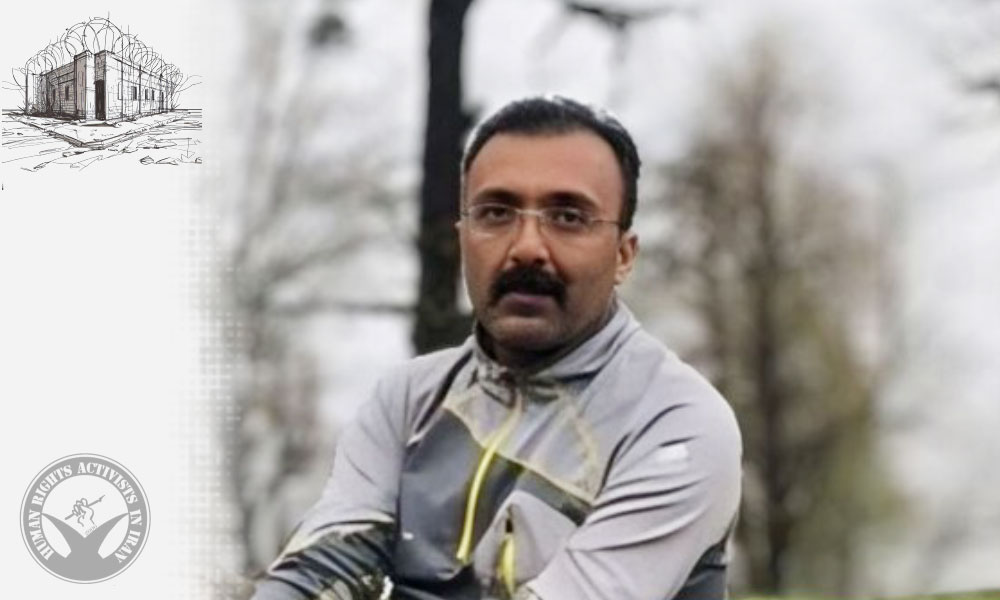
HRANA News Agency – Saeed Mohammadi Doraki, a 61-year-old businessman from Isfahan, remains in a state of legal limbo in Evin Prison more than a year after his arrest.

A source close to his family told HRANA: “Mr. Doraki has been held in Evin Prison for over a year without any clear judicial process. In protest of this indefinite detention, he is currently on a hunger strike.”

Doraki was arrested on April 21, 2024, upon arrival at Tehran’s Imam Khomeini International Airport after returning to Iran.

It is noteworthy that he had previously written a letter from prison claiming to offer solutions for improving Iran’s economic and social conditions. Some close to him believe these activities may have contributed to the continuation of his detention.

Saeed Mohammadi Doraki, a businessman originally from Isfahan, had been residing in Turkey prior to his arrest.

Retired Teacher Zina Fereydounian Sentenced to Prison

HRANA News Agency – Zina Fereydounian, a retired teacher from Qorveh, has been sentenced by the city’s Revolutionary Court to over 13 months of prison and an additional three years of suspended imprisonment in two separate cases.

According to HRANA, the news agency of Human Rights Activists in Iran, Fereydounian was sentenced to 10 months in prison for “propaganda against the regime.” In a separate case, she was sentenced to 91 days of discretionary imprisonment and an additional three years of suspended prison time. The court also imposed a travel ban on her.

Following the court’s refusal to allow her to serve her sentence under electronic monitoring outside prison, the 10-month sentence was referred to the sentence enforcement unit.

A source close to Faridounian’s family told HRANA: “In Qorveh, she supported vulnerable groups by covering wedding and living expenses. Her prison sentence stems solely from her criticism of social conditions.”

Subscribe to Our Newsletter

Now is definitely not the time to stop reading!

Revolutionary Court Sentences Two Retired Workers in Ahvaz to Prison

HRANA News Agency – Mohammad-Zaman Kamrava and Morad Zohrabi, two retired Social Security Organization workers from Ahvaz, have each been sentenced to two years in prison by Branch 2 of the Ahvaz Revolutionary Court.

According to HRANA, citing The Independent Iranian Workers Union, the ruling was issued on June 7, 2025, and has been formally communicated to the defendants. Both Kamrava and Zohrabi were convicted of “assembly and collusion to act against national security” and “propaganda against the regime,” with each receiving a two-year prison sentence.

The charges stem from their participation in retiree protests held in front of the Ahvaz Social Security office during February 2022, part of the nationwide Sunday demonstrations by retirees.

It’s worth noting that in late-April 2024, Kamrava was arrested by security forces following another retiree protest in Ahvaz and was later released.

Both men are residents of Ahvaz and retired from the Social Security Organization. Their legal representation is currently being handled by attorney Farzaneh Zilabi.

Appeals Court Upholds Sentences for Creators of My Favourite Cake

HRANA News Agency – The prison and financial penalties for Behtash Sanaeeha and Maryam Moghaddam, directors of the film My Favourite Cake, along with the film’s producer Gholamreza Mousavi, have been upheld in full by Branch 36 of the Tehran Appeals Court. In the initial ruling, the three were sentenced to a total of five years and four months in prison and ordered to pay monetary fines.

As per the ruling issued on May 27, 2025, the defendants were collectively sentenced to five years and four months in prison and fined 1.4 billion rials.

In the lower court ruling, issued by Branch 26 of the Tehran Revolutionary Court, Behtash Sanaeeha and Maryam Moghaddam were each sentenced to 14 months in prison and fined 400 million rials for “propaganda against the regime through spreading falsehoods to disturb public opinion.” Their prison terms were suspended for five years. Additionally, Sanaeeha, Moghaddam, and Mousavi were each sentenced to one year in prison—also suspended for five years—and had their equipment confiscated for “collaboration in producing obscene content.”

Separately, Judge Iman Afshari convicted all three of “screening the film without a license,” ordering them to pay 200 million rials in fines and to forfeit all related equipment.

On March 1, 2025, a hearing for the three filmmakers, along with three other defendants—two actors and a cinematographer—was held in the same court.

The indictment for the filmmakers was issued in February 2025.

Despite My Favourite Cake receiving awards at international festivals—including the Silver Hugo at the Chicago International Film Festival—Sanaeeha and Moghaddam, who are also a married couple, were unable to attend due to a travel ban.

The film was produced without censorship or enforcement of the mandatory hijab for its female actors. It drew significant criticism from officials at the Ministry of Culture and Islamic Guidance.

It’s worth noting that My Favourite Cake, a drama released in 2024, won the Silver Hugo at the Chicago International Film Festival and attracted public attention after its online release.

Three Prisoners Executed in Malayer, Arak, and Zanjan

HRANA- Over the course of Monday and Tuesday, three prisoners were executed in the prisons of Malayer, Arak, and Zanjan.

According to HRANA, at dawn on Monday, June 9, Mostafa Hajibabaei was executed in Malayer Prison, Hamedan Province, on a murder charge. He had previously been arrested and later sentenced to death by a criminal court for the alleged killing.

HRANA also reported another execution on Tuesday, June 10, in Zanjan Prison. The prisoner has been identified as Mirza Morad Rezaei, a resident of Kuhdasht. Based on information received by HRANA, he had been arrested on drug-related charges and later sentenced to death by the Revolutionary Court.

That same day, a prisoner named Ali Rezaei—a father to one daughter and a resident of Khondab—was executed in Arak Prison. He had been arrested approximately six years ago on a murder charge and sentenced to death by a criminal court.

As of the time of this report, none of these executions have been officially confirmed by prison authorities or responsible institutions.

In 2024, according to 812 reports compiled by HRANA, the Iranian regime executed 930 individuals in its prisons—marking the highest number of executions in the past 12 years. Despite the scale of these executions, prison officials and other relevant authorities publicly acknowledged only 6% of them, highlighting the regime’s lack of transparency and accountability.

Six Baha’i Women in Hamedan Sentenced to a Total of 38 Years and 11 Months in Prison

HRANA – six Baha’i women residing in Hamedan—have been collectively sentenced to 38 years and 11 months in prison by Branch 2 of the Hamedan Revolutionary Court.

According to HRANA, the news agency of Human Rights Activists in Iran, the sentences were recently issued and formally communicated to the defendants. The charges include “membership in the Baha’i community” and “teaching and promoting activities deemed contrary to Islamic principles.”

The details of the verdict for each individual are as follows:

  • Neda Mohebi was sentenced to five years in prison for teaching and promoting the Baha’i faith, and an additional two years and eight months for membership in the Baha’i community. Three years of her sentence have been suspended for five years.

  • Atefeh Zahedi, Farideh Ayoubi, Noora Ayoubi, Zarrindokht Ahadzadeh, and Zhaleh Rezaei were each sentenced to two years and eight months for Baha’i community membership, and three years and seven months for promoting activities against Islamic law. For Noora Ayoubi, Ahadzadeh, and Rezaei, two years of their prison sentences were suspended for five years.

All six were previously released on bail in December 2023 after being detained by security forces on November 7, 2023. They were held in The Ministry of Intelligence’s detention facility in Hamedan. Security forces also searched the homes of Zhaleh Rezaei and Farideh Ayoubi following their arrests.

Over the past decade, the Iranian Bahá’í community has been disproportionately targeted by Iran’s security forces and judiciary—more than any other minority group. In the past three years, an average of 72 percent of the reports on religious rights violations collected by HRANA have documented the Iranian regime’s repression of the Bahá’í community.

Three Prisoners Executed in Ghezel Hesar Prison

HRANA – At dawn today, Wednesday, June 11, the death sentences of three prisoners previously convicted of drug-related offenses were carried out in Ghezel Hesar Prison in Karaj.
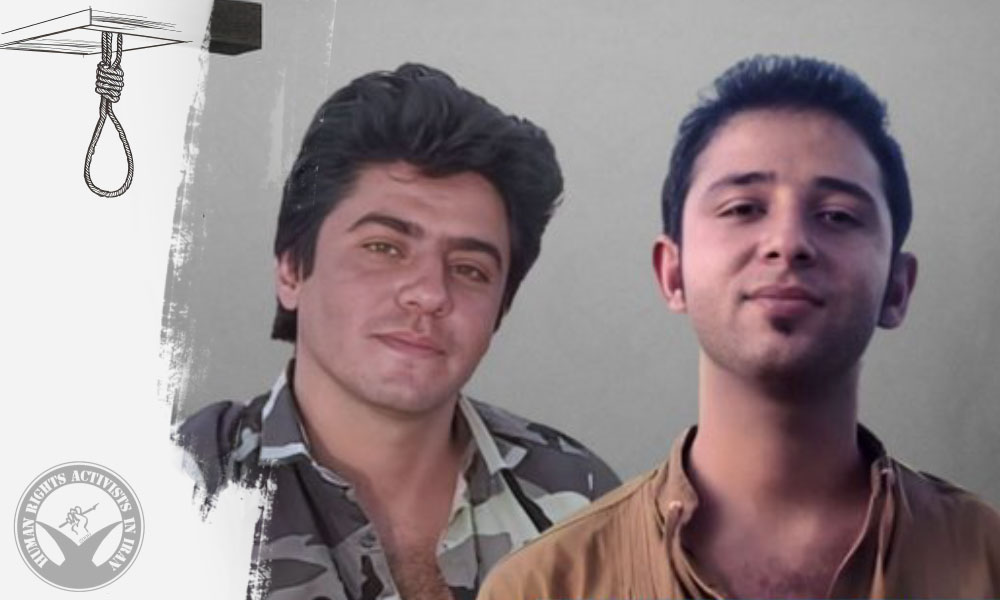
HRANA has identified the individuals executed this morning as: Ardeshir Soltanabadi from Harsin, Masoud Naseri from Kermanshah, and Sajad Moradian from Nourabad.

According to information received by HRANA, the three had been arrested on drug-related charges and later sentenced to death by the Revolutionary Court.

As of the time of this report, prison officials and responsible authorities have not officially announced the executions.

According to HRANA’s statistics, Ghezel Hesar Prison in Karaj carried out the highest number of executions among all Iranian prisons, with 150 inmates hanged. This figure has nearly doubled compared to the previous year — a deeply alarming increase that underscores the escalating use of capital punishment in Iran.