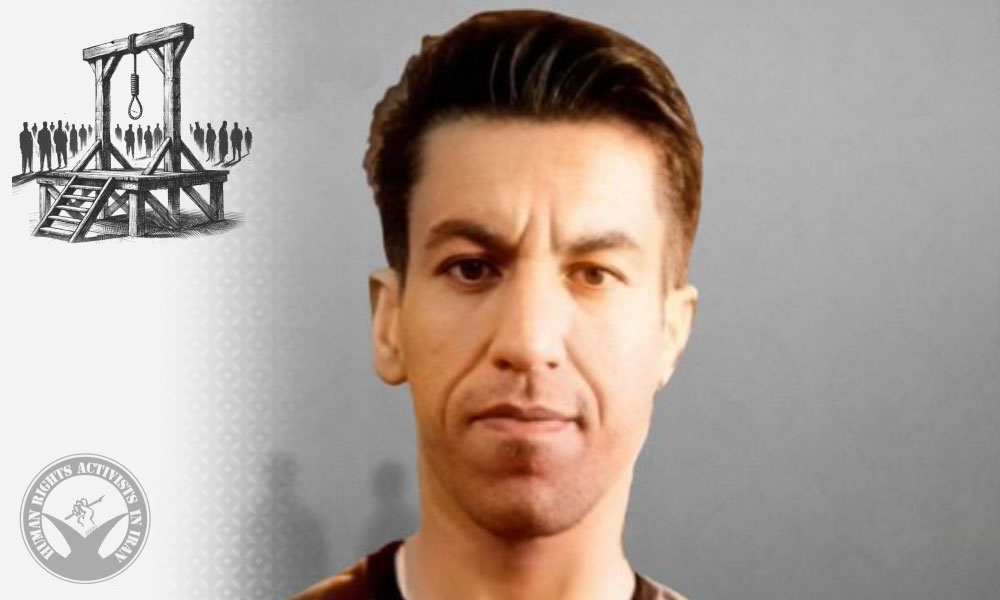
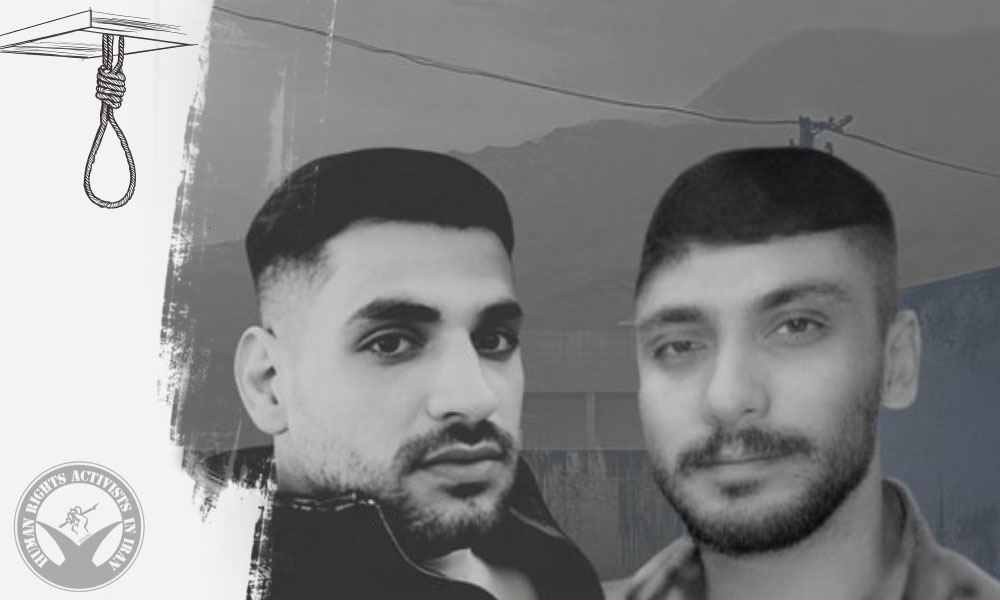
HRANA News Agency – The death sentence of a prisoner previously convicted of murder was carried out in Dorud Prison, Lorestan province, on March 13, 2025.
The identity of this prisoner has been confirmed by HRANA as Ahmad Yarmohammadi. Based on information received by HRANA, Mr. Yarmohammadi had been arrested earlier on charges of murder and was subsequently sentenced to death by the criminal court.
As of the time of this report, the execution of this prisoner has not been officially announced by prison authorities or relevant institutions.
In 2024, the Department of Statistics and Publication of Human Rights Activists in Iran documented 812 cases related to the right to life, including the sentencing of 214 individuals to death and the execution of 930 individuals. Among these, 4 executions were carried out in public. Of those executed, 818 were male, 26 were female, and 5 were juvenile offenders—individuals under 18 years old at the time of their alleged crimes.
HRANA News Agency –The Revolutionary Court of Ahvaz has sentenced Mohammad Amouri, a citizen held in Sheiban Prison, to one year in prison.
Based on the verdict issued by the Ahvaz Revolutionary Court and communicated to Mr. Amouri, he has been sentenced to one year in prison on the charge of propaganda against the regime, with time spent in detention counted toward the sentence.
On January 8, 2025, Mohammad Amouri was arrested by agents of the Ministry of Intelligence in Ramhormoz and transferred to The Ministry of Intelligence’s detention facility. He was eventually moved to Sheiban Prison in Ahvaz.
Mohammad Amouri is a 27-year-old citizen from Ramshir, Khuzestan Province.
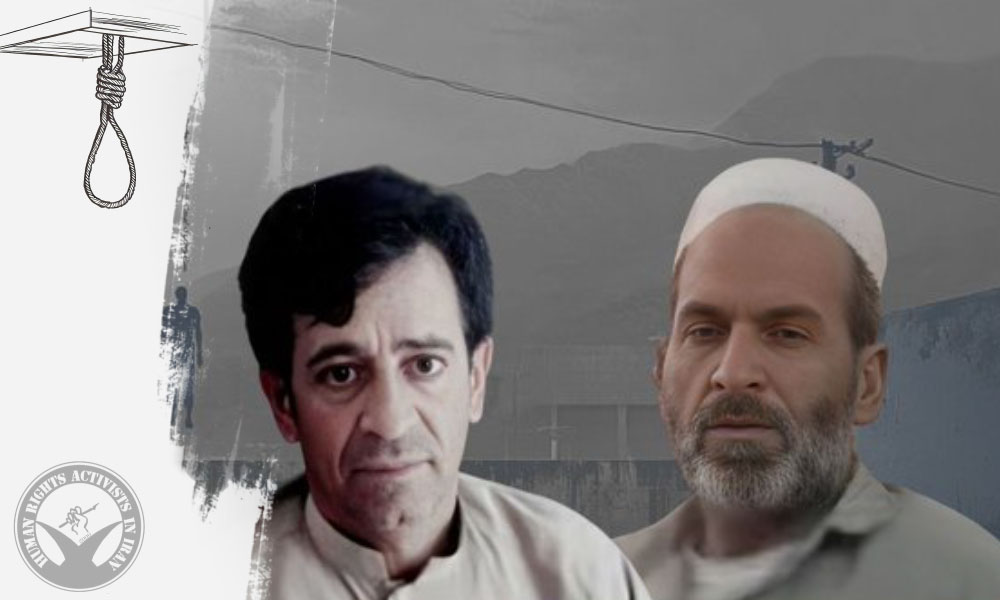
HRANA News Agency – The Shahin Dezh Criminal Court has sentenced two citizens, Naser Akbari and Taleb Bagheri, to 21 months of imprisonment each, in addition to monetary fines, on political charges.
According to the verdict issued by Branch 101 of the Shahin Dezh Criminal Court on March 13, 2025, both individuals were sentenced to 7 months and 16 days in prison for “propaganda against the regime” and 13 months and 17 days in prison along with a fine of 28,400,000 tomans for “spreading falsehoods online with the intent to disturb public opinion.”
The court issued the verdict against Mr. Bagheri in absentia due to his failure to appear at the hearing.
Naser Akbari, a resident of Shahin Dezh, was arrested by security forces on October 12, 2023. After four months in detention, he was released on bail. Mr. Akbari has a prior record of arrest and conviction related to his activities.
Taleb Bagheri is a resident of Parsian County in Hormozgan Province.
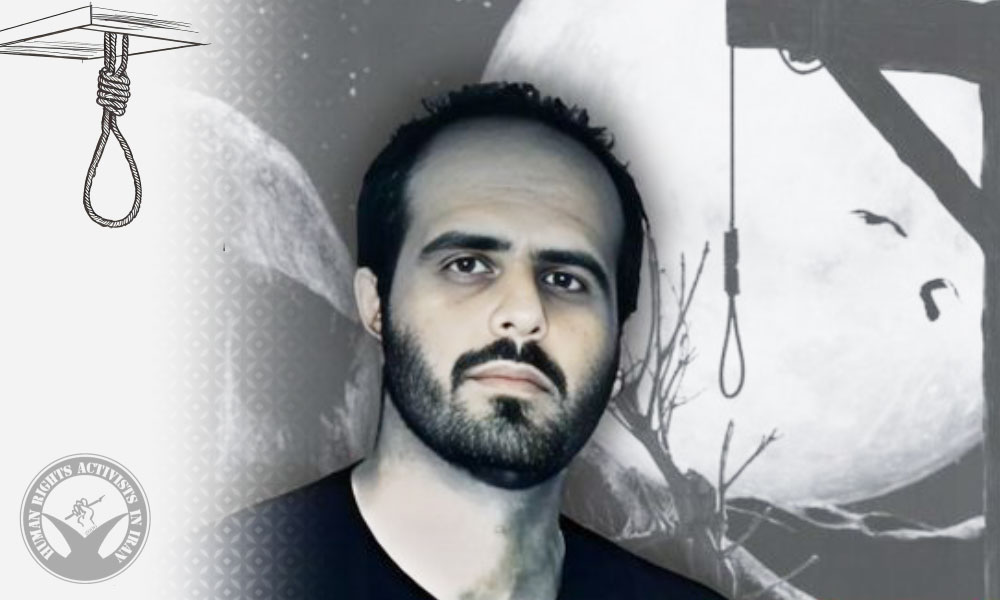
HRANA News Agency – Today, Friday, March 21, Balal Irandoost, a resident of Sarbaz County, was arrested by agents of The Ministry of Intelligence and taken to an undisclosed location.
According to HRANA, quoting Rasank News, the individual has been identified as Balal Irandoost, approximately 30 years old, and a resident of Sarbaz County, Sistan and Baluchestan province.
According to the report, Mr. Irandoost was arrested by The Ministry of Intelligence agents while driving on the Sarbaz-Rask road and transferred to an unknown location.
The reasons for his arrest and the charges against him remain unknown.
HRANA News Agency – Mahnaz Tarah, a political prisoner, is currently serving the 16th month of her sentence in Evin Prison. Recently, her request for furlough was denied.
A source close to her family confirmed the news to HRANA, stating that her recent furlough request was rejected following interference from the IRGC Intelligence Organization. An agent named Esmail Shafiee, affiliated with IRGC Intelligence, is directly in charge of Ms. Tarah’s case.
In January of this year, Mahnaz Tarah’s request for a retrial was denied by Branch 9 of the Supreme Court, presided over by Judge Ghasem Mazinani. Earlier, in November, 2024, her request for conditional release had also been rejected by the IRGC Intelligence.
Mahnaz Tarah was violently arrestedby security forces on November 13, 2023, on a street in Tehran. She was eventually transferred from the Ministry of Intelligence’s detention facility, known as Ward 209 of Evin Prison, to the public ward of the prison on November 23 of the same year.
In January of 2024, she was sentenced by Branch 26 of the Tehran Revolutionary Court, presided over by Judge Iman Afshari, to three years and eight months in prison for “assembly and collusion to act against national security” and eight months for “propaganda against the regime.” Her sentence was reduced to two years and nine months following a plea of no contest.
Mahnaz Tarah has had previous encounters with judicial and security authorities.
HRANA – French President Emmanuel Macron has announced the release of Olivier Grondeau, a French citizen who had been imprisoned in Iran. Grondeau has now returned safely to France.
According to HRANA, quoting Iran newspaper, Grondeau’s release was confirmed earlier today. President Macron welcomed his return and reaffirmed France’s commitment to defending its citizens.
Meanwhile, the French Foreign Minister revealed that Grondeau spent 887 days in Iranian prisons.
Olivier Grondeau was arrested in October 2022 in Shiraz and later sentenced to five years in prison on national security-related charges. His family has repeatedly rejected these accusations, emphasizing that Grondeau traveled to Iran on a tourist visa due to his passion for Persian poetry.
HRANA News Agency – Amirali Minaei, a Christian convert currently serving his prison sentence in Evin Prison, was recently assaulted by one of the prison guards. Following the incident, Mr. Minaei experienced chest pain and heart-related issues but has been denied proper medical care.
Based on a report of Article 18, Mr. Minaei was recently beaten by a guard named Mehdi Salim. The guard directly struck Mr. Minaei’s chest and heart area. Despite his deteriorating condition, the authorities prevented his transfer to the prison clinic or examination by a cardiologist.
Mr. Minaei, who suffers from heart problems, was under a doctor’s care before his imprisonment. However, since the start of his sentence, all his requests for medical visits or referral to a specialist have been repeatedly denied.
Amirali Minaei, a 31-year-old Christian convert, was arrested by security forces in Tehran on December 7, 2023. He was later released on bail set at 600 million tomans.
In March 2024, he was sentenced to 3 years and 7 months of discretionary imprisonment and deprivation of social rights on charges of propaganda against the regime through his activities and establishing a house church.
On April 29, 2024, Mr. Minaei was transferred to Ward 8 of Evin Prison to begin serving his sentence.
HRANA News Agency – Hamidreza Moraveji Sabzevari, a scholar and researcher in the field of mysticism, has been detained by security forces in Sabzevar for the past nine days. His whereabouts remain unknown, raising serious concerns among his family and those close to him.
According to HRANA, the news agency of Human Rights Activists in Iran, Mr. Moraveji Sabzevari was arrested on Wednesday, March 12, 2025, at his private residence by security forces and transferred to an undisclosed location. Since his arrest, there has been no information regarding his condition or place of detention.
Some state-affiliated media outlets have reported the charges against him as “encouraging people to corruption and conducting educational and promotional activities contrary to the sacred principles of Islam.”
Hamidreza Moraveji Sabzevari is a prominent researcher in the field of mysticism. Over the years, he has conducted more than two thousand sessions dedicated to the interpretation and analysis of the Quran, Rumi’s Masnavi, Attar’s Conference of the Birds, Hafez’s Ghazals, and other mystical texts.
HRANA News Agency – Branch 1 of the Revolutionary Court of Sabzevar has sentenced Mojtaba Moghiseh, a resident of Sabzevar, to seven months and 15 days of imprisonment and one year of exile.
According to the verdict recently issued and officially communicated to Mr. Moghiseh, he was convicted on the charge of propaganda against the regime. In addition, a separate case against him on the charge of insulting sanctities remains under review at Branch 103 of the Criminal Court of Sabzevar.
His trial was held on March 11 at the Sabzevar Revolutionary Court.
Earlier, on March 6, Mojtaba Moghiseh was released from Vakilabad Prison in Mashhad after posting bail set at 2 billion tomans. He had been transferred to Vakilabad Prison from Sabzevar Prison on February 21.
Moghiseh was initially arrested on December 31, 2024, after being summoned to Branch 7 of the Public and Revolutionary Prosecutor’s Office in Sabzevar. He was subsequently transferred to Sabzevar Prison.
A former detainee of the 2022 nationwide protests, Moghiseh has a history of arrest and conviction due to his activism.
HRANA News Agency -The year 1403 paints a stark picture of the continued violation of human rights in Iran. The persistent threat to freedom of thought and expression, the crackdown on peaceful protesters, increased pressure on ethnic and religious minorities, the prosecution and harassment of human rights activists, the execution of juveniles, the plight of child laborers, violations of women’s rights and the rights of sexual and gender minorities, and the poor conditions in detention centers and prisons are just some examples of the daily human rights violations in Iran. The comprehensive report by the Statistics and Publications Center of Human Rights Activists in Iran, presented below, provides a distressing account of human rights violations in the country over the past year.
Provincial Comparison: Introducing HRANA’s Human Rights Violation Index (HRVI)
This year, HRANA – the news agency of the Human Rights Activists in Iran (HRA) – has introduced the Human Rights Violation Index (HRVI) as a data-driven tool for analyzing and comparing the human rights situation across different provinces of Iran. The index provides organizations and researchers with a geographical and temporal framework for monitoring human rights violations.
The HRVI is built on thousands of HRANA’s reports and comprises 37 carefully developed indicators. It categorizes human rights violations into three main areas, each represented by a sub-index:
Political Rights Suppression Index (PRSI):
This sub-index measures actions by Iran’s security and judicial apparatus aimed at suppressing political and civil activism. It covers state-led violations against a wide range of groups, including civil rights activists, labor and women’s rights advocates, journalists, and others. Focused on direct government involvement, it captures incidents such as arbitrary arrests by security forces, prison sentences for political charges, and frequent summons or interrogations.
PRSI values across Iran’s provinces, reflecting the intensity of political repression.
Lack of Legal Protection Index (LLPI): This sub-index assesses the government’s failure or unwillingness to provide legal protection for vulnerable groups such as women, workers, and children. It measures the state’s inability to shield people from violence, discrimination, and exploitation through a variety of indicators.
LLPI values across Iran’s provinces, reflecting the extent of legal protection failures for vulnerable groups.
Physical Integrity Index (PII):
This sub-index tracks state-led violent actions directly targeting citizens, including prisoners, kulbars (border porters), and fuel carriers. It also covers severe and inhumane punishments such as executions, torture, and prolonged solitary confinement.
PII values across Iran’s provinces, reflecting the intensity of state-led physical violence and inhumane punishments.
Each indicator is weighted according to the severity and impact of the violation to ensure that the most egregious cases have a greater influence on the overall index. The final HRVI score is calculated based on the weighted sum of these three sub-indices.
HRVI values across Iran’s provinces, reflecting the overall severity of human rights violations.
For a detailed breakdown of the indicators and the methodology behind the index, please refer to the HRVI documentation.
In summary, through extensive data collection and statistical modeling, the Human Rights Violation Index offers a quantitative and structured approach to assessing the human rights landscape in Iran.
Freedom of Thought and Expression
In 1403, a total of 1,141 reports were recorded in the field of thought and expression. During this period, at least 1,300 people were arrested, 168 of whom were detained without a judicial warrant. Additionally, 307 cases of prosecution, 39 cases of home searches, 25 instances of convicting publications, 3 cases of internet filtering, 1 case of property confiscation, 74 protest gatherings, 3 cases of preventing gatherings, 2,621 summonses to judicial authorities, and 161 instances of sentence enforcement were documented.
In this domain, judicial authorities issued at least 22,986 months of imprisonment for 548 individuals. This included 20,864 months of enforceable imprisonment and 2,122 months of suspended sentences. Notably, 4,965 months of these sentences were issued by the appellate court and 252 months by the Supreme Court. Additionally, 81 individuals were fined a total of 5,589 million tomans (approximately 70,000 dollars), 95 individuals were sentenced to 6,994 lashes, 28 individuals to 1,152 months of exile, and 78 individuals were deprived of their social rights.
Annual Statistical Comparison of Arrests in the Past Five Years (Freedom of Thought and Expression)
Year
Number of Arrests
Arrests per Million People
Percentage Change Compared to Previous Year
1399
2,292
27.5
-45%
1400
1,419
16.88
-11%
1401
28,647
338.2
+95%
1402
2,496
29.25
-48%
1403
1,300
28.89
–
Judicial Authorities Issuing the Most Sentences in the Freedom of Thought and Expression Category
Judge Name
Court Branch
Court Place
Number of Cases
Prison Sentences (Months)
Lashes
Fine (Million Toman)
Jabar Javadi Rami
Criminal Court Branch 2
Tehran
44
3,576
5,550
–
Iman Afshari
Revolutionary Court Branch 26
Tehran
41
2,095
148
4,460
Mohammad Reza Tavakoli
Revolutionary Court Branch 1
Isfahan
29
2,244
–
–
Abbasali Houzan
Appellate Court Branch 36
Tehran
23
1,569
–
–
Mahdi Rasekhi
Revolutionary Court Branch 3
Rasht
17
1,023
–
–
Abolghasem Salavati
Revolutionary Court Branch 15
Tehran
15
1,015
–
–
Mohammad-Sadegh Iran Aghideh
Appellate Court Branch 11
Gilan
11
727
–
–
Mahdi Fakhri
Criminal Court Branch 101
Boukan
11
145
–
–
Sajad Doosti
Revolutionary Court Branch 1
Mahabad
9
402
–
–
Mohammad Karami
Revolutionary Court Branch 1
Sanandaj
7
277
–
–
Children’s Rights
In 1403 Hijri year, a total of 498 reports were recorded in the field of children’s rights. During this period, at least 27 cases of child rape and sexual abuse, 43 cases of child murder, 5 cases of honor killings, 3 abandoned newborns, 9 deaths and 17 injuries among child laborers, 14 deaths and 204 injuries of children due to officials’ negligence, 58 suicides, at least 4,296 cases of child abuse, 28 arrests of individuals under 18, at least 3 million school dropouts, and approximately 2 million child laborers were documented. Additionally, 48 months of enforceable imprisonment were reported for 2 individuals under the age of 18.
Also, at least 5 juvenile offenders were executed in Iran over the past year.
According to official data from the Iranian Statistics Center, as of 1398 in the Hijri calendar, approximately 16.8% of girls aged 15 to 19 in Iran had been married. Among the limited available government statistics on this issue, a report from the same center shows that between winter 1400 to autumn 1401, at least 27,448 girls under the age of 15 were married in Iran. While the rate of child marriages among girls under 15 had been declining since 1396, the trend reversed and began rising again from 1398 onward.
Reports indicate that in 1399 and 1400, 31,646 and 32,655 girls under 15 were married, respectively. The number of marriages involving girls under 15 increased by 933 cases in autumn 1401 compared to the summer of the same year. Furthermore, in autumn 1401, over 5,500 more girls aged 15 to 19 were married compared to the previous season (summer 1401).
According to this report, most child brides become mothers at a very young age. As announced by the National Organization for Civil Registration, in 1400, at least 69,103 newborns were born to mothers aged 10 to 19, and 1,474 newborns were born to mothers aged 10 to 14.
Etemad newspaper reported that Iranian authorities would stop publishing statistics on child marriages and the number of children born to underage mothers. According to the report, an official from National Organization for Civil Registration confirmed that an “order was issued” to prevent the release of this data.
Women’s Rights
In 1403, a total of 253 reports were recorded in the field of women’s rights. These included 125 cases of femicide, 33 honor killings (including the murder of 19 men), 16,567 cases of domestic violence, 5 acid attacks, 3 suicides, 30,642 cases of enforcement related to improper veiling, 2 cases of prosecution, and 14 months of imprisonment for women. Additionally, 74 cases of flogging and fines amounting to 9,500,000 tomans were issued against women.
Over the past year, at least 649 arrests were documented in this category, of which 643 were due to non-compliance with mandatory hijab laws.
Workers’ Rights
In 1403, a total of 1,712 reports were recorded in this category, documenting the arrest of 13 individuals. Additionally, 10 workers or labor activists were sentenced to a total of 340 months of enforceable imprisonment. Furthermore, one individual was sentenced to 24 months of exile. Other documented cases include 31 summonses to judicial authorities, 12 interrogations, 3 trials, 5 instances of sentence enforcement, 5 cases of self-immolation, 6 suicides, 724 protests, 1,377 strikes, 1 house search, and 1 case of property confiscation.
Reports from 1403 indicate that delays or non-payment of wages affected at least 18,121 workers for a total of 592 months. Additionally, 4,765 workers were dismissed or laid off, 585 cases of unemployment were recorded, and 525,592 workers experienced a total of 488 months without insurance coverage. Furthermore, 11 factory closures were reported, leaving 4,835 workers in an uncertain employment status. At least 2,042 workers lost their lives in workplace accidents, and 16,113 workers sustained work-related injuries. Iran ranked 102nd globally in workplace safety compliance, a very low ranking.
Trade and Labor Unions
In 1403, the Statistics and Publications Center recorded 1,436 incidents related to trade unions and professional associations across Iran. These reports include the arrest of 28 union activists, 122 summonses to judicial or security authorities, 536 closures of business premises, 5 instances of physical assault, 1 license revocation, 17 trials in judicial courts, 19 security agency interrogations, 13 dismissals or layoffs, 4 cases of forced retirement, 1,187 protests, and 70 strikes. Additionally, at least 1,613 individuals experienced wage delays totaling 393 months, 3 home searches, and 6 cases of sentence enforcement.
Moreover, 75 individuals were sentenced to a total of 881 months in prison, including 777 months of enforceable imprisonment and 104 months of suspended sentences. Of this total, 147 months were issued by the appellate court. Additionally, 5 individuals were sentenced to 168 months of exile, 1 individual received 29 lashes, and 29 individuals were fined a total of 59,540,000 tomans.
Prisoners’ Rights
In 1403, the following violations of prisoners’ rights were documented: 14 cases of physical assault against political prisoners, 375 instances of medical neglect or deprivation of healthcare services, 312 illegal transfers of prisoners to solitary confinement, 79 hunger strikes, 36 cases of forced transfers or exile of prisoners, 335 cases of threats and pressure against political and ideological prisoners, 156 instances of denied family visits, 5 prisoner deaths due to illness, 18 suicides, 2 cases of self-immolation, 7 prisoner murders, 106 instances of denied access to legal representation, 105 cases of restrictions on phone calls, 75 cases of failure to separate prisoners based on their offenses, 495 cases of prisoners being held in unsuitable conditions, 18 forced confessions, and 99 instances of denial of medical leave.
Additionally, 275 cases of prisoners being held incommunicado and 928 cases of detainees being kept in an indeterminate legal status were documented.
Executions
As in previous decades since the 1979 Revolution, executions in Iran continue to represent one of the most severe forms of human rights violations. In 1403, at least 1,050 individuals — including 29 women and 5 juvenile offenders — were executed. Among them, 5 executions were carried out publicly. During the same period, 189 additional people were sentenced to death, including one individual specifically condemned to public execution. Notably, the Supreme Court also upheld the death sentences of 55 individuals within this timeframe.
Annual Statistical Comparison of Executions in the Past Five Years
Year
Number of Executions
Executions per Million People
Percentage Change Compared to Previous Year
1399
246
2.95
+334%
1400
351
4.17
+192%
1401
620
7.3
+75%
1402
771
9.03
+35%
1403
1,050
12.18
–
Execution Rate by Province (Executions Per 100,000 People)
Province
Population
Number of Executions
Execution Rate
Alborz
2,712,400
190
7.19
Fars
4,851,274
108
2.23
Isfahan
5,120,850
84
1.64
Razavi Khorasan
6,434,501
67
1.04
East Azerbaijan
3,909,652
63
1.61
Kerman
3,164,718
45
1.42
West Azerbaijan
3,265,219
43
1.32
Lorestan
1,760,649
40
2.27
Sistan and Baluchestan
2,775,014
36
1.3
Zanjan
1,057,461
31
2.93
South Khorasan
768,898
31
4.03
Yazd
1,138,533
30
2.63
Golestan
1,868,819
29
1.55
Hamadan
1,738,234
29
1.67
Qazvin
1,273,761
28
2.2
Gilan
2,530,696
28
1.11
Kermanshah
1,952,434
24
1.23
Qom
1,292,283
23
1.78
Khuzestan
4,710,509
18
0.38
Mazandaran
3,283,582
17
0.52
Hormozgan
1,776,415
17
0.96
Markazi
1,429,475
14
0.98
Ardabil
1,270,420
9
0.71
Ilam
580,158
9
1.55
Semnan
702,360
7
1
Kohgiluyeh and Boyer-Ahmad
713,052
6
0.84
Kurdistan
1,603,011
6
0.37
Bushehr
1,163,400
6
0.52
North Khorasan
863,092
4
0.46
Chaharmahal and Bakhtiari
947,763
2
0.21
Ethnic Minorities’ Rights
In 1403, a total of 278 reports were documented in the category of ethnic-national rights. According to these reports, the arrest of 332 citizens was recorded, of which 153 arrests were carried out without a judicial warrant. Although the charges against 234 of these detainees remain unclear, based on patterns and the historical actions of security agencies in the mentioned regions, these arrests have been categorized under ethnic rights violations.
Additionally, 29 individuals were sentenced to a total of 1,244 months in prison, including 1,178 months issued by primary courts and 66 months by appellate courts. Furthermore, 4 individuals were fined a total of 53,600,000 tomans. Other documented cases include the summons of 59 individuals to security and judicial authorities, 5 instances of sentence enforcement, 36 trials, and 17 interrogations.
Annual Statistical Comparison of Arrests in the Past Five Years (Ethnic Minorities’ Rights)
Year
Number of Arrests
Arrests per Million People
Percentage Change Compared to Previous Year
1399
400
4.79
-25%
1400
358
4.26
-10%
1401
242
2.9
+33%
1402
371
4.35
-11%
1403
332
3.85
–
Religious Minorities’ Rights
In 1403, a total of 169 reports were documented in the category of religious minorities’ rights. According to these reports, 124 citizens were arrested. Additionally, 86 individuals were sentenced to a total of 4,364 months of enforceable imprisonment and 516 months of suspended imprisonment. Of this total, 4,070 months were issued by primary courts and 810 months by appellate courts.
Other documented violations include 63 summonses to judicial and security authorities, 49 trials, 19 interrogations, 1 case of preventing the burial of deceased individuals, 2 cases of cemetery destruction, 47 home searches, 37 travel bans, 20 instances of sentence enforcement, 1 case of property confiscation, and 10 cases of restrictions on economic activities.
Annual Statistical Comparison of Arrests in the Past Five Years (Religious Minorities’ Rights)
Year
Number of Arrests
Arrests per Million People
Percentage Change Compared to Previous Year
1399
100
1.2
+20%
1400
67
0.8
+80%
1401
175
2.1
-31%
1402
148
1.73
-17%
1403
124
1.44
–
Judicial Authorities Issuing the Most Sentences in Religious Minorities’ Rights
Judge Name
Court Branch
Court Type
Number of Cases
Prison Sentences (Months)
Lashes
Fine ( million Toman)
Mohammad Reza Tavakoli
Revolutionary Court Branch 1
Isfahan
28
2,220
–
1,800
Kamran Zare
Appellate Court Branch 37
Fars
7
232
–
261.3
Mahdi Rasekhi
Revolutionary Court Branch 3
Rasht
5
145
–
320.02
Iman Afshari
Revolutionary Court Branch 26
Tehran
4
524
–
910
Gholi Mir Nasab
Revolutionary Court Branch 2
Sari
3
–
–
100
Protests and Strikes
In 1403, at least 2,255 protest gatherings took place across Iran. This figure includes 724 labor protests, 1,187 trade union protests, 74 protests related to freedom of thought and expression, 47 student protests, and 48 environmental protests. Additionally, 175 protests were held across 31 provinces by citizens, most of whom were victims of financial fraud or individuals whose civil rights had been violated. Alongside these protests, at least 70 trade union strikes and 1,377 labor strikes were also recorded.
Civilian Killings
Throughout 1403, a total of 355 civilians were shot by military forces, resulting in the deaths of 156 individuals. This includes the deaths of 31 kolbars (border couriers), 42 fuel carriers, and 83 other civilians. Additionally, 199 civilians sustained injuries due to indiscriminate gunfire by military personnel, comprising 105 kolbars, 51 ordinary citizens, and 43 fuel carriers.
It is also worth noting that 30 other kolbars were involved in accidents due to environmental and geographical conditions such as hypothermia and falls from heights. Of these, 21 kolbars were injured, and 9 lost their lives. Moreover, 19 fuel carriers were involved in accidents following pursuits by military forces, resulting in the deaths of 5 and injuries to 14 others.
Landmine and Explosion Victims
Landmines left from past wars continue to pose a deadly threat to border residents each year. Meanwhile, the Iranian government continues to produce and plant anti-personnel mines, insisting—contrary to international treaties—that the use of such mines is the only effective way to secure the country’s long borders.
According to data from the past year, at least 9 civilians lost their lives due to landmine explosions in border areas, while 19 others sustained injuries.
Flogging and Amputation Sentences
The International Covenant on Civil and Political Rights explicitly prohibits degrading and inhumane punishments such as flogging and amputation. However, according to compiled data from 1403, at least 4 defendants were subjected to a total of 108 lashes under judicial orders in Iran. Additionally, Iranian courts sentenced at least 159 individuals to a total of 10,984 lashes.
Furthermore, the amputation sentences of two convicts were carried out, while four other individuals were sentenced to amputation by Iranian judicial authorities.
Sentences Issued
Over the past year, courts across Iran issued verdicts in 744 cases, collectively sentencing individuals convicted on political or ideological grounds to 27,857 months of enforceable imprisonment and 21,831 months of suspended imprisonment. Of these, 43,209 months were ruled by primary courts, 6,227 months by appellate courts, and 252 months by the Supreme Court.
Additionally, judicial authorities issued fines totaling 9,999,172,000 tomans, 7,127 lashes, 86 travel bans, 142 instances of deprivation of social rights, and 1,344 months of exile.
Arrests
In the past year, the arrest of 2,491 individuals in Iran was based on political or ideological grounds, or in clear violation of human rights principles. Among the most significant cases were 1,300 arrests related to freedom of thought and expression. Other documented arrests include:
. 13 laborers and labor activists . 28 individuals under 18 . 4 student activists . 28 trade union activists . 124 religious minority members . 1 individual in the cultural sector . 1 individual from the LGBTQ+ community . 11 environmental activists . 332 individuals of ethnic backgrounds
It should be noted that the charges against 234 of these ethnic individuals remain unclear. However, based on established patterns and the actions of security agencies in the affected regions, these arrests have been classified under ethnic-national rights violations.
Additionally, at least 649 arrests related to women’s rights were recorded, of which 643 were due to non-compliance with mandatory hijab laws.
Comparison of the Number of Convicted Individuals Over the Past Five Years
Year
Number of Convicted Individuals
Percentage Change Compared to Previous Year
1399
741
+0.4%
1400
1,051
+40%
1401
1,075
-30.7%
1402
843
-11.7%
1403
744
–
Comparison of the Number of Imprisonment Sentences (Months) Over the Past Five Years
Year
Number of Months of Imprisonment Issued
Percentage Change Compared to Previous Year
1399
26,775
+4%
1400
13,316
+109.1%
1401
33,671
-17.2%
1402
33,790
-17.5%
1403
27,857
–
Judicial Authorities Issuing the Most Sentences in the Past Year
Annual Statistical Comparison of Arrests in the Past Five Years
Year
Number of Arrests
Arrests per Million People
Percentage Change Compared to Previous Year
1399
2,950
35.37
-18%
1400
1,884
22.28
+30%
1401
29,950
353.6
-92%
1402
3,864
45.28
-35%
1403
2,491
28.89
–
Final Note
It is important to emphasize that the statistics presented in this report do not fully capture the state of human rights in Iran. The Iranian government restricts the activities of independent human rights organizations and limits their access to essential information. As a result, these figures represent only a minimum estimate of the human rights situation in the country, compiled exclusively by civil society groups — including HRANA — and documented by its Statistics and Publications Center.