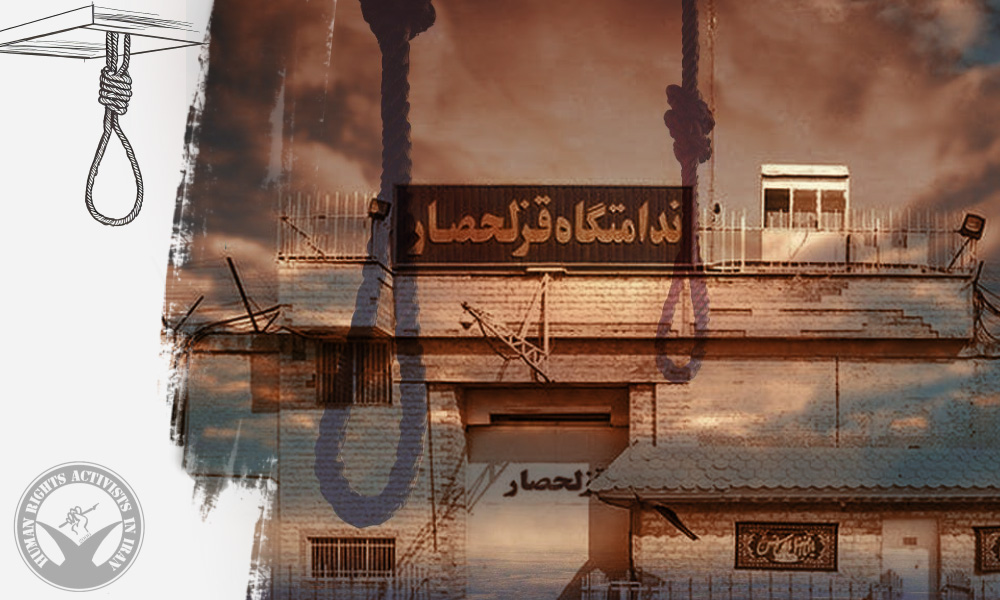
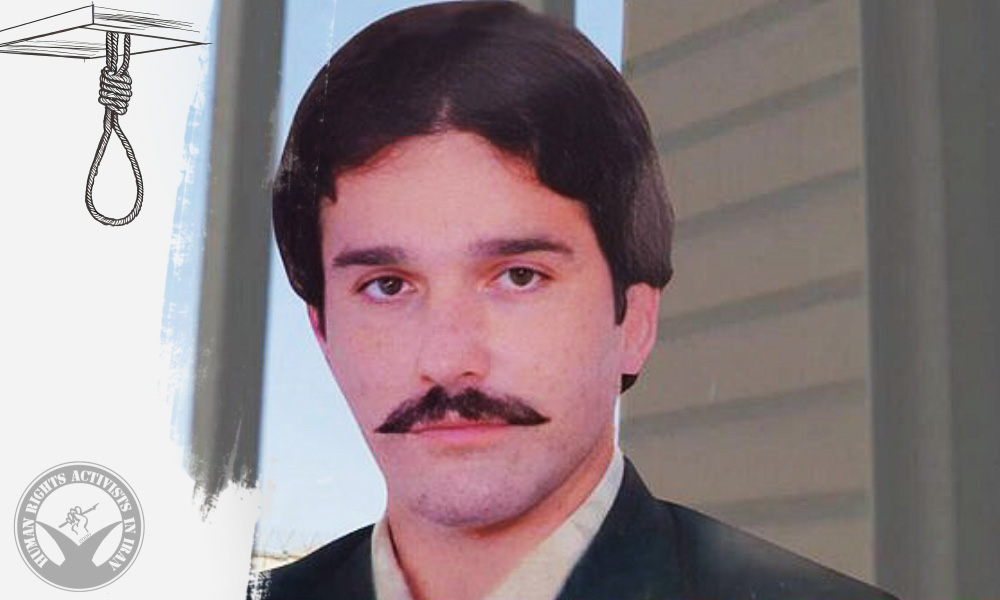
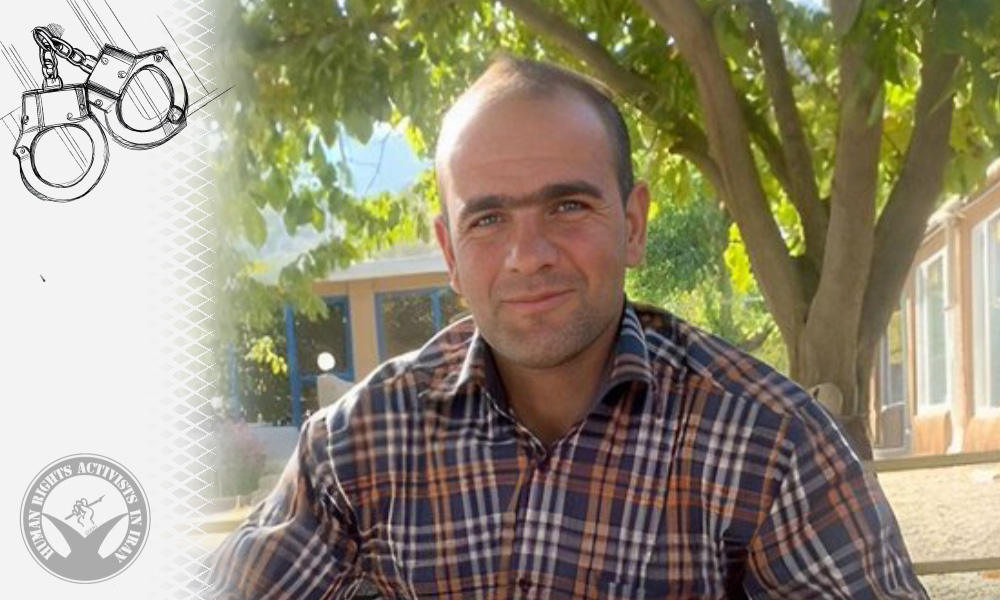
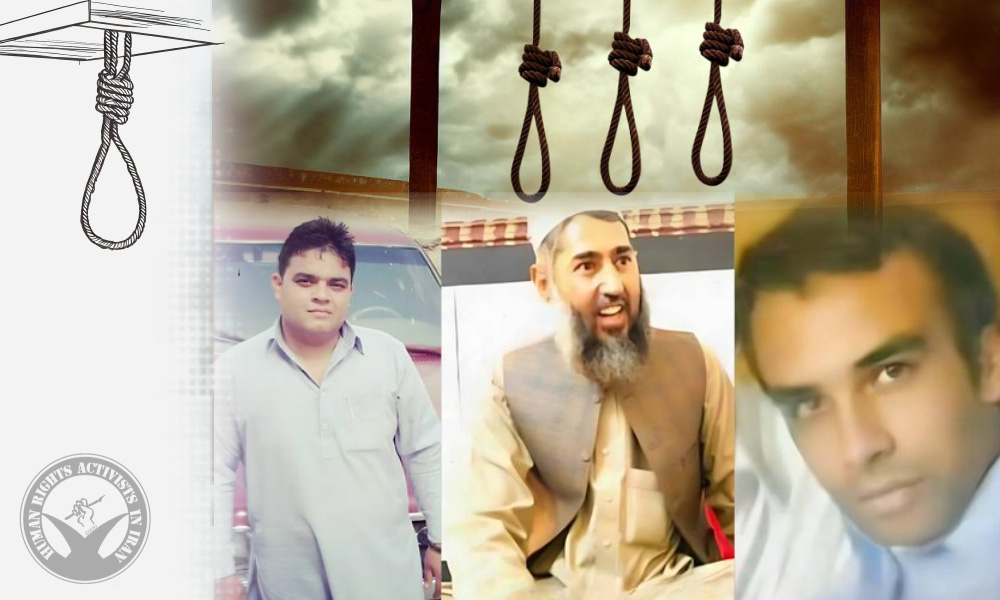
At dawn today, September 11, two prisoners previously arrested and sentenced to death on drug-related charges were executed in Ghezel Hesar Prison, Karaj.
HRANA has confirmed the identities of the executed prisoners as Sajjad Bandegi and Abdulrahman Tajik, the latter being an Afghan national. Both had been sentenced to death for drug offenses. Yesterday, they, along with another inmate, were transferred to solitary confinement in preparation for their execution.
The third prisoner, whose identity remains undisclosed, is still being held in solitary confinement, awaiting further action.
As of this report, prison authorities and official sources have not formally announced the executions.
The reports from the Department of Statistics and Publication of Human Rights Activists for the year 2023 reveal a concerning prevalence of executions for drug offenses in Iran, constituting 56.4% of the total executions. For a comprehensive examination of the details and statistics surrounding the executions in Iran, refer to HRANA’s report.
Morteza Yousefi, who was a former champion of Iran’s national Greco-Roman wrestling team, was executed at dawn today, Wednesday, September 11, in Nowshahr Prison. He had previously been sentenced to death on charges related to drug offenses.
The identity of the prisoner has been confirmed by HRANA as Morteza Yousefi, approximately 41 years old, a resident of the village of Sang-e Tajen, Nowshahr, with a bachelor’s degree in physical education and a former champion of Iran’s national Greco-Roman wrestling team.
Mr. Yousefi had previously been arrested on drug-related charges and sentenced to death by the judiciary.
In a prior letter to Gholamhossein Mohseni Ejei, the head of the judiciary, Yousefi had written that three judges involved in his case had requested a reduction in his sentence, and that the Supreme Court had overturned his death sentence, which had also been approved by the Supreme Leader’s pardon commission. In the letter, he wrote that the implementation of his pardon required only final approval and the order of the head of the judiciary.
Shortly after, Hassan Rangraz, head coach of Iran’s national Greco-Roman wrestling team, also shared an image of Yousefi’s letter and urged the head of the judiciary to revoke the death sentence and reduce his punishment.
However, the requests by Yousefi and the support of athletes and wrestling officials were ignored by the judiciary, and Morteza Yousefi was finally executed at dawn today in Nowshahr Prison.
As of the time of this report, prison authorities and relevant institutions have not officially announced his execution.
The reports from the Department of Statistics and Publication of Human Rights Activists for the year 2023 reveal a concerning prevalence of executions for drug offenses in Iran, constituting 56.4% of the total executions. For a comprehensive examination of the details and statistics surrounding the executions in Iran, refer to HRANA’s report.
On Tuesday, September 10, Kamran Afsari, a resident of Marivan, was arrested by security forces in the city and transferred to an unknown location, according to Kolbar News.
The individual has been identified as “Afsari, 29 years old, from the village of Ney, a suburb of Marivan.”
The report states, “Security forces, without presenting a judicial warrant, violently searched the family home and arrested this citizen. Additionally, the agents assaulted Mr. Afsari’s mother.”
As of the time of this report, there is no information on the reasons for his arrest, his whereabouts, or the charges against him.
Afsari has previously been summoned and interrogated by authorities.
Alireza Torfi, a political detainee, has been held in Sheiban Prison, Ahvaz, for six months without formal charges. He has also been denied proper medical care and transfer to healthcare facilities.
A source familiar with Torfi’s health confirmed to HRANA: “Alireza suffers severely from kidney stones, to the extent that he is unable to move. Yet, he has been deprived of specialized medical attention and transfer to a hospital.”
Torfi, 36, was arrested by security forces in March of this year and transferred to Sheiban Prison.
As of this report, no information regarding the charges against Torfi has been made available.
Mashallah Karami, father of executed protester Mohammad Mehdi Karami, was sentenced to four years and three months in prison by the Alborz Province Appeals Court in relation to part of his case, according to Shargh Newspaper.
Ali Sharifzadeh, Karami’s defense lawyer, explained that Karami was sentenced to three years and seven months for “assembly and collusion against national security,” and eight months for “propaganda against the regime.”
The lawyer emphasized, “We will appeal the Appeals Court’s decision, and we hope that by filing for a retrial, the Supreme Court will overturn the ruling.”
In a previous trial by the Karaj Revolutionary Court, Karami had been sentenced to five years in prison for “assembly and collusion against national security,” and one year for “propaganda against the regime.”
In August of this year, Karami was sentenced by Branch 102 of the Nazarabad Criminal Court 2 to eight years and ten months in prison, along with a fine of 1.9 billion tomans and asset confiscation, for “money laundering and illicit acquisition of wealth.”
Sharifzadeh had earlier argued that the security charges brought against his client were not consistent with his actions. He added, “Mr. Karami simply distributed charity meals, funded by public donations. This was presented to the court, but it was not adequately considered. Moreover, my client’s assets had no connection to the security charges against him.”
It is worth noting that in recent days, five citizens were fined by the Alborz Appeals Court for providing financial support to Mashallah Karami. These citizens had previously been sentenced by the Karaj Revolutionary Court to two years in prison and fined 24 million tomans each for “aiding in assembly and collusion against national security” through their financial support of Karami.
Mashallah Karami, the father of Mohammad Mehdi Karami, an executed protester, was arrested by security forces on August 22, 2023. He was transferred from The Ministry of Intelligence’s detention facility to Karaj Central Prison on October 28 of the same year.
Notably, on the morning of Saturday, January 7, 2023, Mohammad Mehdi Karami, a protester arrested during the nationwide protests and implicated in the case known as the “murder of Basij member Rouhollah Ajamian,” was executed.
Five citizens, including Ali Vahabi (an Iran-Iraq war veteran), Mojdeh Bahrololum Tabatabai, and Mahsa Vahabi, were each sentenced to pay a fine of 6 million tomans by the Alborz Province Appeals Court.
The recent verdict by Branch 12 of the Alborz Appeals Court found these five citizens, three of whom are family members—Ali Vahabi (a war veteran), Mojdeh Bahrololum Tabatabai, and Mahsa Vahabi—guilty of “aiding and abetting in assembly and collusion against national security” through financial support for Mashallah Karami. They were each fined 6 million tomans.
These five people had previously been sentenced by the Karaj Revolutionary Court to two years in prison and a fine of 24 million tomans on the same charges.
Payam Derafshan, a defense lawyer, revealed that they were also sentenced by the Nazarabad Criminal Court 2 to 91 days in prison for “aiding and abetting in illicit acquisition of wealth” in a separate case.
Derafshan added that he has filed an appeal and is awaiting the Alborz Appeals Court’s decision.
According to HRANA, more than five citizens were sentenced to prison by the Nazarabad Criminal Court 2 in this case.
Mashallah Karami, the father of Mohammad Mehdi Karami, an executed protester, was arrested by security forces on August 22, 2023. He was transferred from The Ministry of Intelligence’s detention facility to Karaj Central Prison on October 28 of the same year.
On May 21, 2024, Karami was sentenced by the Revolutionary Court to five years in prison for “assembly and collusion against national security” and one year for “propaganda against the regime.”
In a separate part of his case, Karami was sentenced by Branch 102 of the Nazarabad Criminal Court 2 to eight years and ten months in prison, along with a 1.9 billion toman fine and confiscation of assets, on charges of “money laundering and illicit acquisition of wealth.”
Notably, on the morning of Saturday, January 7, 2023, Mohammad Mehdi Karami, a protester arrested during the nationwide protests and implicated in the case known as the “murder of Basij member Rouhollah Ajamian,” was executed.
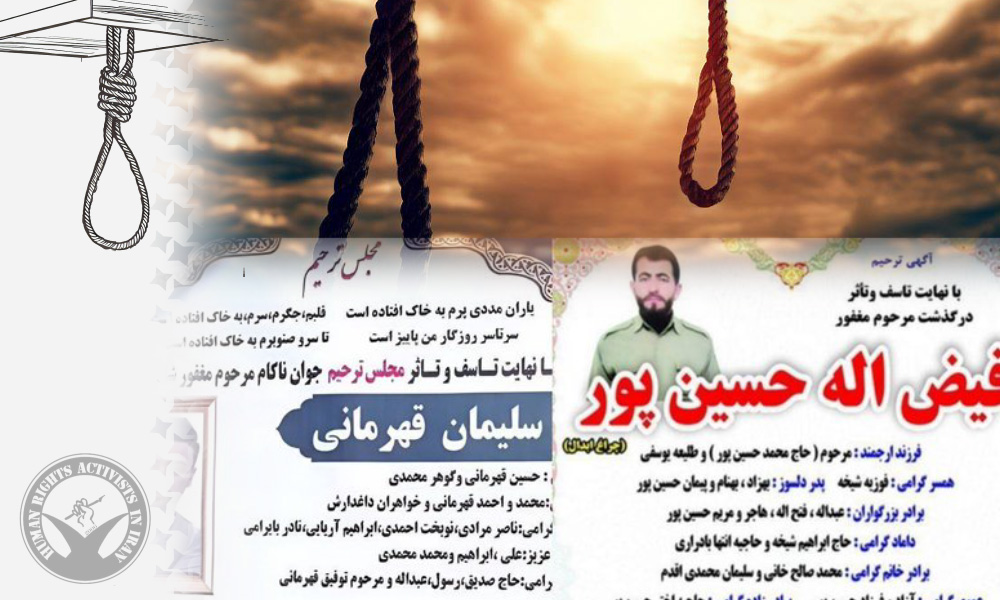
At dawn on Monday, September 9, the death sentences of two prisoners convicted of murder were carried out in Miandoab Prison, according to a report by Kurdpa.
Their identities have been reported as “Soleiman Ghahremani, from Shahin Dezh, and Feyzollah Hosseinpour, married and father of three, from Shahin Dezh and residing in Bukan.”
These two prisoners were arrested five years ago on murder charges and were subsequently sentenced to death by the judiciary.
No official sources or domestic media outlets within the country have provided coverage of these executions at the time of writing.
In 2023, 66% of HRANA’s reports on executions lacked official announcements by judicial authorities and went unreported by media inside Iran, highlighting a troubling lack of transparency in due process.
According to the Department of Statistics and Publication of Human Rights Activists in Iran, in 2023, at least 767 citizens, including 21 women and 2 juvenile offenders, were executed. Of these, the executions of 7 individuals were carried out in public. Additionally, during this period, 172 others were sentenced to death, with 5 of them sentenced to public execution. It is worth noting that during the same period, the initial death sentences of 49 other individuals were also upheld by the Supreme Court.
On Saturday, September 7, 18-year-old Mardin Dehghani, a resident of Marivan, was arrested by security forces and transferred to an undisclosed location, according to Kurdpa.
Dehghani, originally from the village of Sardosh, was detained early in the morning. “Security forces arrived at 6 a.m., conducted a search of his family home without presenting a judicial warrant, and arrested him,” a source close to the family reported. The agents also confiscated the mobile phones of Dehghani’s mother and brother during the raid.
As of this report, no details have emerged regarding the reason for Dehghani’s arrest, his current location, or the charges he may be facing.
As the two-year anniversary of Mahsa Zhina Amini’s death in detention approaches, HRA explores a surge in women’s activism in Iran and the worsening repression by the government in response. Despite the passage of time, accountability for the violence remains largely absent, and the situation continues to deteriorate.
This report features personal accounts from female prisoners and women who have had interactions with various hijab monitoring bodies. The report delves into a brief historical evolution of protests for women’s rights, and the growing solidarity among women activists over the past 44 years. Further, it examines the government’s view of these movements as threats, leading to an increase in punitive actions such as arrests, violence, and severe legal consequences.
Through this analysis, HRA aims to highlight the resilience of Iranian women in the face of extreme repression and the broader implications of their struggle for freedom and equality.
The Backdrop Women’s Activism in Iran
1. Historical Background
In the 44 years since the Islamic Revolution, women’s rights in Iran have been significantly curtailed. The repression and violence against women have not only manifested in physical harm but have also been deeply embedded in political and legislative reforms. Key changes included granting men the exclusive right to seek divorce, implementing mandatory hijab rules, and lowering the legal marriage age for girls from 18 to 9. Women also could not leave the country without the permission of their husbands significantly impacting their right to freedom of movement. Additionally, The Family Protection Courts were initially abolished and replaced by regular courts, later succeeded by family courts presided over by clerics. These cleric-led courts routinely favored husbands in family disputes, further entrenching gender inequality.
Over the past 44 years, these restrictions have fueled a significant increase in women’s activism in Iran, leading to a decades-long struggle. One of the first major protests occurred on March 6, 1979, after Khomeini announced that women would be required to wear veils when entering government property or working in government ministries. This sparked a six-day protest, led by women, opposing the mandatory hijab ruling and advocating for equal rights. In response, pro-Khomeini Islamist forces met the protests with extreme violence and intimidation, including the chant: “Either hijab or a smack in the head!” Despite this, many women refused to be silenced, continuing to form women’s associations and gather, particularly in universities. By 1983, the government had passed laws punishing women who refused to comply with mandatory veiling. These laws led to severe harassment, assaults on women’s activists, and their eventual arbitrary arrests.1
2. Previous Protests
After the 1979 protest, numerous protests and significant moments of women-led activism have continued. On 12 June 2006, the One Million Signatures Campaign began after a gathering in Tehran’s Haft-Tir Square to mark Iranian Women’s Unity Day. Various groups came together to demand reform of discriminatory laws against women, especially focusing on family laws. Iranian women had been advocating for change for decades, but this campaign represented the most comprehensive and dynamic effort seen thus far. After months of preparation, the campaign produced three key documents: (1) A petition calling for legal changes, which was meant to collect one million signatures. (2) A campaign plan that outlined the goals, methods, and structure of the movement. (3) A pamphlet titled The Effect of Laws on Women’s Lives, distributed by activists to raise awareness and gather support. The campaign, known for its grassroots approach, united women from diverse backgrounds and built a strong foundation for a long history of advocating for women’s rights in Iran. Despite facing government repression and the arrest of activists, it became a significant milestone in the fight for gender equality. The One Million Signatures Campaign continues to symbolize the ongoing struggle for legal reforms and gender justice in Iran.2
Launched in May 2017, The White Wednesday movement encouraged women to wear white head scarves or other white clothing on Wednesdays as a peaceful yet bold act of resistance. By choosing white—a symbol of peace—the movement underscores the desire for freedom and autonomy in the face of state-enforced dress codes. Through the present day, women bravely share videos and photos of themselves, sometimes removing their hijabs in public, on social media platforms, despite knowing the severe consequences they could face from the government–they are the faces of the collective bravery of Iranian women. This movement has not only mobilized women but has also garnered support from men and others who stand in solidarity against the regime’s oppressive laws. The Iranian government has responded with harsh repression, arresting and imprisoning those who participate.
3. 2022 Protests “Woman, Life, Freedom”
The 2022 protests represented a culmination of years of frustration, inequality, and repression. After the death in detention of Masha Zhina Amini following her encounter with the morality police for alleged hijab compliance, the country erupted in nationwide protests for 82 consecutive days–and more in some areas. Protestors came out onto the street with the slogan ‘Woman, Life, Freedom’, these protests were centralized around women’s rights but also the repressive laws, and the regime itself. These protests were violently quashed by the anti-riot police and Iran’s militia force (Basij). Teargas, pellets, and live ammunition were used in the repression of protests. One HRA investigation even uncovered the use of paintball guns. The protests took place in 31 provinces, 160 cities, and 143 major universities. Tragically, these protests also led to the death of at least 530 individuals,3 including 68 children and teenagers. It’s also estimated that 18,242 protesters were arrested, HRA confirmed the identity of 3,670 arrested citizens, 605 students and 61 journalists or activists.
The 2022 nationwide protests were unlike any other protests the country had seen before. Unlike recent protests, which were largely driven by economic or environmental concerns, these demonstrations were centered on political and human rights demands. Because the protests were sparked by the death of a young Kurdish and Sunni woman, her identity highlighted the intersection of gender, ethnic, and religious discrimination.
Iranian youth, with an average age of 15 according to law enforcement officials, played a pivotal role in these protests. An unprecedented solidarity emerged between Iranians within the country and those in the diaspora, uniting almost all classes of society, including the urban middle class, lower and upper classes, different ethnic and religious groups, sexual minorities, and various trade groups such as teachers, workers, students, professors, artists, and athletes. Businesses also demonstrated their support by participating in strikes. In terms of duration, these protests are among the longest continuous protests since the inception of the Islamic Republic.
The international community, particularly celebrities in arts, culture, and politics, has shown unprecedented support for the protesters, amplifying their demands and drawing global attention to the situation in Iran. The protests’ focus on women’s rights has revealed the progressive and assertive nature of Iranian society. The protests were often women led and demonstrated significant female leadership and participation and supported by men. One distinguishing feature of these protests is the unarmed demonstrators who frequently confronted security forces, often standing together to prevent arrests and resisting the Moral Security Police, whose decades-long interference in women’s personal lives fueled public anger.
In addition to the street protests, cyber warfare emerged between opponents and supporters of the regime, with numerous government sites being hacked. The hashtag #MahsaAmini became the first in Twitter’s history to surpass 284 million tweets, reflecting the global solidarity with the protesters. The Iranian government, this time, allowed FARAJA, the main law enforcement agency, greater latitude in repressing the protests, and employed alternative methods for controlling communication, such as reducing internet speed rather than cutting it off entirely, and filtering certain sites. Media outlets close to Iran’s security apparatus attempted to cover the protests in a way that favored the government, often underreporting the number of deaths during the protests.
These protests, despite lacking centralized leadership, have demonstrated the determination of Iranian society, particularly its younger generation, to secure their basic human rights. Iran’s ethnic groups, especially Kurdish and Baloch citizens, who are predominantly Sunni Muslims, have played a significant role in these protests and have also faced some of the most brutal crackdowns.4
Government’s Perception and Response
1. Threat Perception
The increased activism around women’s rights, especially regarding the compulsory hijab has made women a target of the government. Since the 16 of September 2022 up until the 18th of August 2024, 682 women have been detained for hijab-related reasons. During the same time period, 18 women’s rights activists have been arrested. Notable arrests include Narges Mohammadi, Zhina Modarresi Gorji and Zeinab Khenyab.
Following the recent protests, several political leaders and officials in Iran have made statements regarding the mandatory hijab and women’s activism. On April 3, 2024, Ali Khamenei, the Supreme Leader of Iran, declared that compulsory veiling is a “religiously mandated decree and obligatory for women.” He attributed non-compliance to “foreign interference” and emphasized the need to address this issue.5
Subsequently, on April 13, 2024, Abbas Ali Mohammadian, the Commander of Tehran’s police force, announced that the police in Tehran and other provinces would begin confronting individuals who promote “social abnormalities,” such as appearing without a headscarf. He specifically mentioned that those who ignored previous police warnings would receive a final warning, with legal action to follow.6
On April 21, 2024, Hassan Hassanzadeh, the Commander of the Revolutionary Guards in Tehran, introduced the formation of trained groups (the so-called “Ambassadors of Kindness”) to enforce compulsory veiling in public spaces, though he did not specify their exact composition or institutional affiliation.7
Finally, on April 23, 2024, Ahmadreza Radan, the Commander-in-Chief of Iran’s police force (FARAJA), announced the implementation of the “irreversible Noor Plan,” which has received approval from the parliament, judiciary, and government. On the same day, FARAJA issued a statement equating defiance of compulsory veiling with activities of “organized criminal gangs…involved in corruption, prostitution, and pornography.” Additionally, a “Bill to Support the Culture of Chastity and Hijab” is nearing adoption in Iran’s parliament. If passed, this law will formalize the government’s crackdown on women and girls defying the compulsory veiling mandate and will severely deepen the gender divide.8
The Iranian government perceives women’s activism, particularly in opposition to compulsory hijab, as a significant threat to its ideological and social control. Statements from key political and military leaders relieve a narrative that frames defiance of mandatory veiling not merely as a social or religious issue but as a challenge to state authority, ‘influenced by foreign interference.’ These statements also highlight the premeditated intent of the regime to suppress dissent. The rhetoric used by figures such as Ali Khamenei and Ahmadreza Radan equates women’s activism with organized crime and societal corruption, showcasing a deep-seated fear of the potential for these movements to destabilize the regime’s traditionalist foundations. The implementation of measures like the “irreversible Noor Plan” and the formation of enforcement groups like the “Ambassadors of Kindness” further underscores the government’s commitment to quelling these movements through legal, political, and physical means, viewing the activism as a direct assault on the state’s moral and cultural codes. This reaction highlights the regime’s view of women’s activism not just as a demand for rights but as a broader existential threat to the state’s ideological hegemony.
2. Current hijab monitoring bodies
The hijab monitoring bodies often enforce violent methods to force women to comply with the mandatory hijab rules. So far in 2024, around 620 women have been arrested under Operation Noor. On June 21, on a street in Tehran, two teenage girls were violently assaulted and arrested by agents.9 These girls were then transferred to the Morality Police in a white van. According to the mother of one of the girls, when she visited the Morality Police, she saw her daughter with a bruised face, swollen lips, a bruised neck, and torn clothes. Additionally, they were threatened not to file complaints against the officers.
This incident resulted in injuries to at least one of the girls, Nafas Haji-Sharif, 14 years old. Maryam Abbasi, Nafas Haji-Sharif’s mother, disclosed that on July 1, her daughter was beaten by agents. She provided documents, including a video of the confrontation recorded by CCTV cameras, to Ensaf News. The video released from the time of the girls’ arrest shows that the girls were trying to hide on another street but were attacked by the agents. In the video, one of the girls is seen being severely beaten by the officers. As she resisted arrest, the officers grabbed her hair, dragged her violently on the ground, and forced her into a white van.
Maryam Abbasi said, “The hijab enforcers violently forced my daughter and her friend into the van, and her head was slammed into an electric post. Inside the van, they put their foot on my daughter’s neck and pulled her hair.” She also provided pictures of the injuries on her daughter’s body.
Abbasi mentioned that when she went to the Morality Police, she found her daughter with a bruised face, swollen lips, and a bruised neck. She also claimed that the officers involved in the incident treated her dismissively and ignored her complaint. She stated that the on-duty judge allowed her access to the CCTV footage, but subsequent follow-ups have been unsuccessful. She continues to call on various police and judicial authorities to investigate and address her complaint.
Meanwhile, the Morality Police claim that a female officer’s fingers were broken in the altercation and that the case’s judge threatened them not to file a complaint against the officers. Abbasi said, “In the presence of a lawyer, they told me not to complain against the officers; otherwise, the Intelligence and Security forces would get involved, making it costly for you and out of our control.”
In a similar act of violence against women, on July 22, Arezou Badri was heading home from work with her sister Sara while their car was flagged by the Law Enforcement Forces (LEF) for improper hijab. Instead of de-escalating the situation, a First Sergeant in the LEF opened fire on the car as Sara attempted to drive away. One of the bullets struck Arezou in the spine. She was rushed to the hospital for emergency surgery. Arezou will likely never walk again.
In a conversation with HRA, several women told their stories of what it was like to be confronted and arrested by Operation Noor officers. One women stated “With the resumption of the Noor Plan this year (April 13, 2024), at 6 PM in Enghelab Square, I was attacked by plainclothes officers and baton-wielding hijab enforcers, both male and female, in Tehran’s Enghelab Square. The arrested women present on that day were taken away in ambulances, motorcycles, and white Peugeot cars. After a two-hour chase through the alleys of Enghelab to the route home, I was hit by tear gas and attacked by four plainclothes motorcyclists armed with batons and wooden sticks. I dragged myself to the next alley and street”.
Iranian women paint a harrowing picture of the oppressive and violent treatment they endure at the hands of their government. They recount experiences of being brutally targeted for the slightest deviation from the state-imposed dress code, such as improper hijab. Women are not only subjected to arbitrary arrests and physical assaults but also face severe, life-altering consequences for resisting these draconian measures. The government’s response to any form of dissent is often swift and ruthless, with agents employing excessive force, including beatings, shootings, and threats, to enforce compliance.
One woman’s testimony encapsulates the pervasive fear and helplessness felt by many:
Government’s Hostility and Vengeance
The rise in activism in Iran has made these very women significant force, leading the government to see them as a threat at both social and structural levels. Women’s issues, such as the compulsory hijab, are increasingly difficult for the Islamic Republic to justify internationally, adding pressure on the regime.
The hijab is central to the Islamic Republic’s identity, especially after the 1979 revolution when its enforcement impacted women’s workforce participation. Any concession on the hijab is viewed as a step towards secularism, which the regime perceives as an existential threat. Therefore, women’s demands for freedom and equality are seen as a fundamental challenge to the regime’s ideological foundation.
These factors have fueled the government’s hostility towards women. Traditional societal norms in Iran complicate the government’s ability to label women protesters as terrorists or vandals, giving women more freedom to radicalize their protests. The government’s use of extreme and illegal measures, such as sexual violence against female detainees, strict new laws, and brute force, highlights its desperation to maintain control.
Following the 2022 protest, the ‘Hijab and Chastity bill’ was introduced, eventually expanding from 15 to 70 articles to enforce stricter regulations on mandatory hijab and gender segregation in public spaces. The bill imposes severe penalties, including fines and corporal punishments, and utilizes technology like AI for enforcement. It empowers the Basij group, intensifying societal control. Despite concerns about privacy and freedom, the bill has been pushed forward, with recent amendments requiring police to obtain legal authorization before intervening in certain cases.10 11
The Hijab and Chastity Bill violates several key international human rights standards, especially under the International Covenant on Civil and Political Rights (ICCPR) to which Iran is a signatory. Firstly, the bill violats the Right to Freedom of Expression ( Art, 19 ICCPR); compulsory dress interferes with the freedom of expression and Right to Freedom of Thought, Conscience, and Religion ( Article 18, ICCPR) International law upholds an individual’s right to wear religious attire is voluntary, therefore forcing women to adhere to religious dress code contravenes this right.
Additionally, the Bill also violates the right to Gender Equality and Non-Discrimination (Article 3, ICCPR). The law disproportionately targets women and enforces gender-based discrimination. By mandating specific dress codes for women only, the bill discriminates on the basis of gender, violating the principle of equality before the law. Gender-based discrimination is explicitly prohibited under international human rights law.
Lastly, The bill violates article 17, ICCPR, by enforcing strict dress codes through surveillance and state monitoring (including street enforcers and the potential for penalties based on social media activity), the law infringes on the individual’s right to privacy. Intruding into personal dress choices and punishing non-compliance directly violates the principle that individuals should be free from unwarranted interference in their personal life
Amir-Hossein Bankipour Fard, a member of the Islamic Consultative Assembly, stated on May 12,2024 that under the Hijab and Chasity bill citizens could be arrested for four reasons. (1) Individuals who are considered to be semi-naked, (2) those who are ‘connected’ to anti-regime or foreign groups, (3) Individuals who resists after being warned, (4) foreigners who do not have acceptable documentation with them. These measures, like many, are vague in nature leaving far too much discretion in the hands of authority. This subsequently led to the deportation of Kobra Gholami in August 2024. She is an Afghan citizen and researcher at Al-Zahra University, who was deported to Afghanistan after she “received a warning about her hijab”, Bankipour has also stated that the nƒahmew bill will include camera surveillance.
Unprecedented Repression Signals a Growing Threat
Despite the government’s efforts, women’s activism continues, signaling its failure to fully suppress their movement. This situation has led to unprecedented repressive measures, including the potential issuance of death sentences to women activists, as a drastic and symbolic attempt to reassert control.
Among the harsh measures taken against women is the imprisonment of eleven prominent female activists in Gilan province. This crackdown on dissent extends to the imposition of death sentences as a form of retaliation. For example, Sharifeh Mohammadi, a labor activist, has been sentenced to death on charges of ‘Baghi’ (armed rebellion). Similarly, Pakhshan Azizi, a political prisoner, also received the death penalty on charges related to her alleged membership in anti-regime groups. Arrested on August 4th, 2023, in Tehran, Azizi was denied access to a private lawyer and was unable to see her family. After enduring four months of intense interrogation, she was transferred to the women’s ward of Evin Prison, where she remains detained.
The Iranian government’s relentless crackdown on women’s activism reveals its profound fear of losing control over a society that is increasingly demanding basic human rights and freedoms. Despite decades of repression, women in Iran continue to challenge the regime’s authoritarian grip, especially around the issues of compulsory hijab and broader gender discrimination. The state’s response—marked by escalating violence, arbitrary arrests, and draconian legislation—reflects its desperation to maintain an ideological stronghold that is becoming ever more tenuous. However, the resilience of Iranian women, who persist in their fight despite the ever-present threat of severe punishment, underscores a growing crisis for the regime. The harsh measures, including imprisonment and even death sentences, may silence some voices temporarily, but they also ignite a deeper resolve among others, ensuring that the struggle for freedom and equality in Iran is far from over. As one activist poignantly stated, “Hope lies in the continuous efforts of ordinary people to live, to expand life; hope lies in the progressive slogans of the masses despite the absence of progressive mass organizations and the presence of reactionary opposition media; hope lies in women not backing down from the street battles for their minimal freedoms despite the severe consequences. If there is any hope for me, it is certainly in the streets of Iran and among the people who have repeatedly risked their lives over the years and have attacked the Iranian regime.’
In a conversation with HRA a woman shares her experiences being arrested and interrogated by Ministry of Intelligence forces:
Insights from Iranian Women
The conditions faced by women in Iranian prisons are a stark testament to the regime’s efforts to suppress dissent and break the spirit of those who challenge its authority. Women imprisoned for their activism, resistance to the mandatory hijab, or other acts of defiance endure extreme hardships that are both physical and psychological in nature.
Testimonies from women detainees reveal a disturbing pattern of abuse. One prisoner recounts, “They tried to break us with isolation and deprivation, but our resolve only grew stronger.” In facilities like Evin prison, women are subjected to solitary confinement, where they are cut off from the outside world, denied basic rights such as medical care, and prevented from contacting their families.12 The unsanitary conditions, overcrowding, and lack of proper nutrition exacerbate their suffering, turning their imprisonment into a daily battle for survival.
High-security wards like Ward 209 in Evin Prison, controlled by the Ministry of Intelligence, are notorious for their harsh conditions. Women held here, often those seen as particularly threatening to the regime, are isolated even further. “They moved me to Ward 209 to silence me, but even in the darkness of solitary confinement, I knew I had to keep fighting,” said one woman who experienced this brutal treatment.
Hunger strikes have emerged as a desperate form of protest for these women, who use their bodies as the only means left to demand justice. The Iranian authorities respond to these protests with predictable cruelty. Rather than addressing the grievances of the prisoners, they intensify the repression. One prisoner stated, “When they saw we wouldn’t break, they only made it worse—more isolation, more threats.” In some cases, prisoners who refuse to wear the chador during court appearances or police check-ins face additional punishment, such as relocation to even harsher wards or further restrictions on their already limited freedoms.
Despite the brutal conditions, the spirit of resistance among these women remains unbroken. Their courage and resilience not only highlight the severe abuses they face but also serve as a beacon of hope and defiance against a regime determined to silence them. As one woman powerfully expressed, “They can imprison our bodies, but they will never imprison our fight for justice.”
A testament to unwavering commitment
Since the tragic and unlawful death of Mahsa Zhina Amini while in state custody, Iranian women have continued to demonstrate unparalleled courage and resilience in defiance of a systematic campaign of gender-based oppression orchestrated by the Iranian government. The international community must recognize and support this movement–and not only at times when it makes the headlines.
Despite decades of structural repression, Iranian women remain at the forefront of a growing movement for equality, fundamental rights, and personal autonomy, persistently challenging the discriminatory policies and practices of the regime. The Iranian government’s brutal attempts to suppress these voices – through widespread and systematic use of violence, arbitrary detention, and gender-based discriminatory laws – clearly amount to a sustained attack on the fundamental human rights of women.
As HRA’s investigation into the crime against humanity of gender and political persecution demonstrates, the ongoing state-sanctioned violence against women and girls in Iran fits squarely within the legal parameters of such crimes under international law. Under Article 7(1)(h) of the Rome Statute of the International Criminal Court (ICC), gender persecution is recognized as a crime against humanity when it involves “the intentional and severe deprivation of fundamental rights contrary to international law by reason of the identity of the group or collectivity.” The Iranian regime’s pervasive gender-based discrimination, coupled with its violent enforcement of discriminatory laws, constitutes such a deprivation of rights, including the rights to life, liberty, and security of person, freedom of expression, and freedom from torture and other cruel, inhuman, or degrading treatment.
Although Iran is not a party to the Rome Statute, which specifically enumerates gender persecution as a crime against humanity, customary international law imposes binding obligations on all states, including Iran, to prevent and punish acts of persecution on the basis of gender.
Customary international law, derived from consistent state practice, holds that persecution—whether on political, racial, religious, or gender-based grounds—violates fundamental human rights.
This oppression is not an isolated incident but part of a broader state policy aimed at the systemic subjugation of women. HRA’s investigation highlights the widespread and systematic nature of this persecution, a defining characteristic of crimes against humanity under international law. The regime’s crackdown on women’s rights activists and political prisoners is designed to stifle dissent and maintain a patriarchal structure that is incompatible with the basic principles of gender equality enshrined in international human rights instruments.
Testimonies collected by HRA from activists and political prisoners further reinforce the conclusion that the regime’s repressive tactics, while temporarily silencing some, cannot extinguish the movement for gender equality and human dignity.
As one woman interviewed by HRA expressed: “I hope that women will be recognized as half of the country’s human population and that conditions will change in a way that respects their rights and human dignity, and we will see them enjoying basic freedoms such as social freedoms.”
Such sentiments are a testament to the resilience and determination of Iranian women and symbolize the hope for a future where gender equality is realized, and repression is met with accountability.
It is essential for the international community to stand in solidarity with Iranian women, whose activism challenges not only gender inequality but also a deeply entrenched system of oppression that violates the very essence of universal human rights. There is both a legal and moral obligation to respond. The fight for women’s rights in Iran is not only a struggle for gender equality; it is a critical component of the global fight for justice, human dignity, and the rule of law and silence is complicity.
3. HRA’s reporting includes both civilians and security forces, though the vast majority of those killed were civilian protesters.
4. See HRA and parter UpRights inivestigation into the crime of humanity of gender and political persecution in the context of the 2022 protests, https://www.hra-iran.org/hra-with-legal-support-of-uprights-gender-political-persecution-in-iran-since-at-least-sept-2022-2/
At dawn today, Monday, September 9, the execution of six prisoners previously sentenced to death for non-political crimes, such as drug-related offenses, was carried out in Zahedan Prison.
Haal Vsh identified of four of these prisoners as: Saeed Hassanzahi, 30 years old, father of three, from and residing in Zahedan; (first name unknown) Roudini, from Zahedan; Noor-Mohammad Noori (Noorzahi), married, from Afghanistan; and Farzad Sanchouli, 29 years old, father of three, from Zabol and residing in Zahedan.
These prisoners were transferred from the public ward to the prison’s quarantine section on Saturday night in preparation for their execution. They met with their families for the last time this morning.
According to the report, Mr. Hassanzehi was arrested in 2020 at his home on drug-related charges and was later sentenced to death by the Zahedan Revolutionary Court.
Mr. Noori was arrested in August 2022 at the Milak border terminal in Zabol on similar charges and was sentenced to death by the Zabol Revolutionary Court. He was transferred to Zahedan Prison in June 2023.
As for Mr. Sanchouli, he was arrested in Zabol around four years ago on drug-related charges and was later sentenced to death by the Zabol Revolutionary Court. He was transferred to Zahedan Prison about two years ago.
As of the time of this report, the execution of these prisoners has not yet been officially announced by prison authorities or relevant institutions.