Prisoner Executed in Naqadeh Prison for Drug Offenses

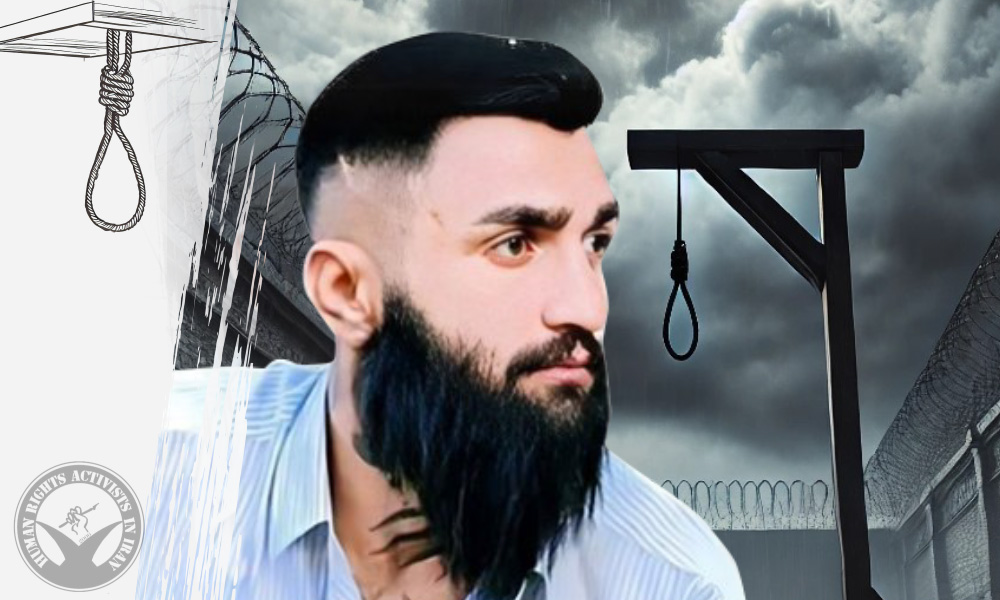
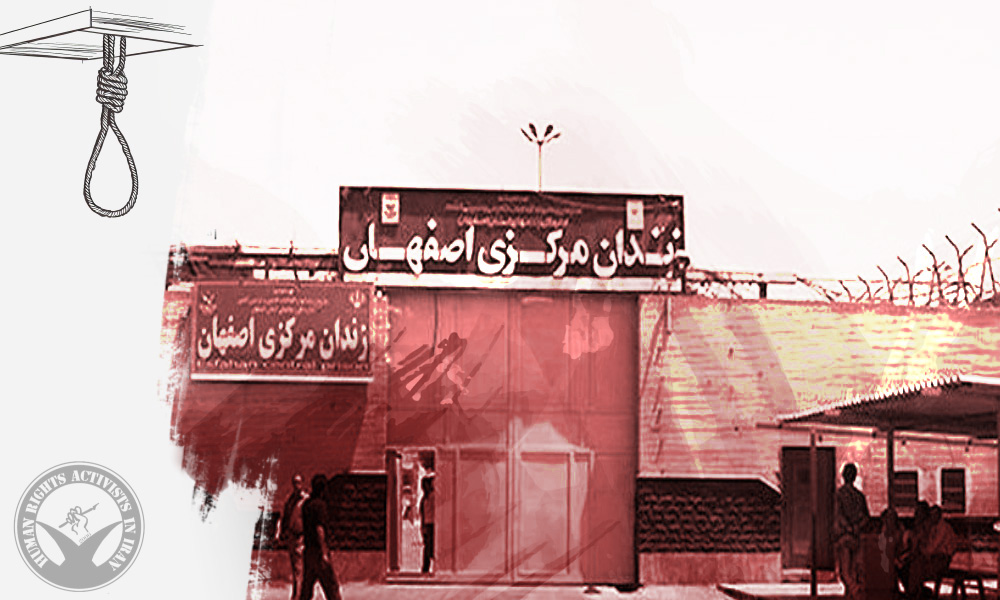
Today, October 31, the death sentence of a prisoner previously convicted on drug-related charges was carried out in Naqadeh Prison.

HRANA has identified the prisoner as Vahid Binami, a 40-year-old resident of Piranshahr. He was previously arrested on drug-related charges and subsequently sentenced to death by the judiciary.

As of this report, prison officials and responsible authorities have not yet publicly announced the execution of this prisoner.

The reports from the Department of Statistics and Publication of Human Rights Activists for the year 2023 reveal a concerning prevalence of executions for drug offenses in Iran, constituting 56.4% of the total executions. For a comprehensive examination of the details and statistics surrounding the executions in Iran, refer to HRANA’s report.

Execution of Prisoner Carried Out in Ahvaz’s Sepidar Prison

Early Wednesday morning, October 30, a prisoner sentenced to death on murder charges was executed in Sepidar Prison, Ahvaz.

HRANA has identified the individual as Sardar Safarpour, who was initially detained on murder charges and later received a death sentence from the judiciary.

As of this report, officials from the prison and relevant authorities have not officially announced Safarpour’s execution.

According to the Department of Statistics and Publication of Human Rights Activists in Iran, in 2023, at least 767 citizens, including 21 women and 2 juvenile offenders, were executed. Of these, the executions of 7 individuals were carried out in public. Additionally, during this period, 172 others were sentenced to death, with 5 of them sentenced to public execution. It is worth noting that during the same period, the initial death sentences of 49 other individuals were also upheld by the Supreme Court.

Four Prisoners Executed in the Central Prison of Karaj on Drug-Related Charges

At dawn yesterday, October 29, four prisoners convicted on drug-related charges were executed in the Central Prison of Karaj.

According to HRANA, the news agency of Human Rights Activists in Iran, three of the executed prisoners have been identified as Mohammad Nedaei, Ali Akbar (Mohsen) Akhayer, and Akbar Khorram Taj. These individuals were arrested approximately six years ago on drug-related charges and later sentenced to death.

Kurdpa identified the fourth prisoner as Morovat-Ali Karami, from Kermanshah, who was also executed on similar charges on Tuesday morning.

As of this report, prison authorities and relevant institutions have not publicly confirmed these executions.

The reports from the Department of Statistics and Publication of Human Rights Activists for the year 2023 reveal a concerning prevalence of executions for drug offenses in Iran, constituting 56.4% of the total executions. For a comprehensive examination of the details and statistics surrounding the executions in Iran, refer to HRANA’s report.

Prisoner Executed at Jiroft Prison on Murder Charges

At dawn today, October 30, a prisoner previously sentenced to death on murder charges was executed in Jiroft Prison, Kerman Province.

The prisoner has been identified by HRANA as “Ahmad Salari.” Mr. Salari was arrested ten years ago on murder charges and subsequently sentenced to death by the judiciary.

As of the time of this report, prison officials and relevant authorities have not publicly announced the execution.

According to latest HRANA’s annual report over between October 10, 2023, and October 8, 2024, at least 811 individuals were executed by hanging in Iran, rising to 23.06% compared to the same period last year. Of these executions, four were carried out in public. Many of the defendants were denied a fair trial.

Four Prisoners Executed at Ghezel Hesar Prison in Karaj

At dawn on October 30, four prisoners were executed at Ghezel Hesar Prison in Karaj. Two of these individuals had been sentenced to death on drug-related charges, while the other two were convicted of “moharebeh” (enmity against God) due to armed robbery.

HRANA, the news agency of Human Rights Activists in Iran, identified the executed prisoners as “Abdullah Tajik, an Afghan national, Mostafa Gholamzadeh, Mohammad Jalali, and Saman Anbari.” According to HRANA, Mr. Tajik and Mr. Gholamzadeh were sentenced for drug-related offenses, while Mr. Jalali and Mr. Anbari were convicted of moharebeh for their involvement in armed robbery.

Earlier, on Monday, HRANA reported that eight prisoners had been moved to solitary confinement in Ghezel Hesar Prison, all of whom were facing death sentences on drug-related charges. Except for Abdullah Tajik and Mostafa Gholamzadeh, the remaining prisoners were subsequently returned to the general ward.

As of this report, prison authorities and relevant institutions have not officially announced these executions.

According to data gathered by the Department of Statistics and Publication of Human Rights Activists, Ghezel Hesar Prison in Karaj witnessed the highest number of executions in 2023, with Zahedan Prison following closely behind. For a comprehensive examination of the details and statistics surrounding the executions in Iran, refer to HRANA’s report.

Subscribe to Our Newsletter

Now is definitely not the time to stop reading!

Execution of Two Prisoners in Zanjan Prison

At dawn on October 27, two prisoners convicted of murder in separate cases were executed in Zanjan Prison.

HRANA has identified the prisoners as Taher Ganj Khanlou, a military officer from Zarrinabad in Zanjan Province, and Mohammadreza Nemati, a resident of Tarom. Both had been arrested on individual murder charges and later sentenced to death by judicial authorities.

As of this report, prison officials and relevant institutions have not issued an official statement regarding the executions.

According to latest HRANA’s annual report over between October 10, 2023, and October 8, 2024, at least 811 individuals were executed by hanging in Iran, rising to 23.06% compared to the same period last year. Of these executions, four were carried out in public. Many of the defendants were denied a fair trial.

Eight Prisoners Transferred to Solitary Confinement for Imminent Execution in Ghezel Hesar Prison

Yesterday, October 28, eight prisoners in Ghezel Hesar Prison in Karaj, previously sentenced to death on drug-related charges, were moved to solitary confinement in preparation for their executions.

According to HRANA, the news agency of Human Rights Activists in Iran, these prisoners were transferred to solitary as part of the process to carry out their sentences. HRANA is actively investigating further details, including the identities of the prisoners, and will report as more information becomes available.

According to data gathered by the Department of Statistics and Publication of Human Rights Activists, Ghezel Hesar Prison in Karaj witnessed the highest number of executions in 2023, with Zahedan Prison following closely behind. For a comprehensive examination of the details and statistics surrounding the executions in Iran, refer to HRANA’s report.

Iranian-German Dual Citizen Jamshid Sharmahd Executed

Today, October 29, Jamshid Sharmahd, an Iranian-German dual citizen previously convicted of “spreading corruption on earth,” was executed, as reported by Mizan, the judiciary’s news agency. The report did not specify where the execution took place but stated that it was carried out at dawn.

In March 2023, Tehran’s Revolutionary Court sentenced Sharmahd to death on charges that included “spreading corruption on earth through planning and directing terrorist actions.” The Supreme Court upheld this sentence in April 2023. Sharmahd’s trial was conducted in Branch 15 of Tehran’s Revolutionary Court, presided over by Judge Abolqasem Salavati, with proceedings taking place in both civil and criminal courts.

Previously, official reports, citing a security source, announced the Ministry of Intelligence’s arrest of an individual allegedly connected to a political group. Without identifying Sharmahd by name, the source referred to the individual as “Masmatos,” reportedly the second-in-command of the “Thunder” (Tondar) group. Shortly afterward, the Ministry of Intelligence confirmed Sharmahd’s arrest, describing him as a key member of Tondar.

Sharmahd’s daughter, Ghazaleh, had stated that the family’s chosen lawyer was denied access to the case, her father was held in solitary confinement, and he had been forced to sign documents under duress.

In 2006, Fereydoun (Faroud) Fouladvand, the founder of the Kingdom Assembly of Iran, disappeared along with two associates in Hakkari Province, Turkey. Following this, Sharmahd claimed partial leadership of the group, although Rosita Montazeri, the then-spokesperson for the Assembly, disputed his leadership role.

Born in 1955, Jamshid Sharmahd held dual Iranian-German citizenship and resided in the United States.

Four Prisoners Executed in Dezful and Maragheh Prisons

The death sentences of four prisoners previously convicted on charges related to drug offenses and murder were carried out in Dezful and Maragheh prisons, according to the Iran Human Rights Organization.

The identities of these individuals are reported as follows: Khaled Chenari, 30 years old; Abolnabi Kalani, 26 years old; Soleiman Maleki-Nejad, 35 years old; and Hassan Dorostkar.

The report states that Khaled Chenari and Abolnabi Kalani were arrested three years ago on murder charges in a joint case and were sentenced to death by the judiciary. Their executions took place on Sunday, October 27, at Dezful Prison. Before their transfer to Dezful Prison, these two inmates had been held in Ramhormoz Prison.

On Wednesday, October 23, Soleiman Maleki-Nejad, who was arrested roughly three years ago on drug-related charges and subsequently sentenced to death, was executed in Maragheh Prison.

Hassan Dorostkar was executed in Maragheh Prison on Monday, October 21. He had been arrested four years ago on murder charges and sentenced to death by the judiciary.

At the time of this report, prison authorities and responsible organizations have not publicly announced these executions.

According to latest HRANA’s annual report over between October 10, 2023, and October 8, 2024, at least 811 individuals were executed by hanging in Iran, rising to 23.06% compared to the same period last year. Of these executions, four were carried out in public. Many of the defendants were denied a fair trial.

Death Sentences of Four Sunni Prisoners Finalized, Case Referred for Execution

The death sentences of four Sunni prisoners—Eido Shahbakhsh, Abdolghani Shahbakhsh, Abdolrahim Ghanbarzehi Gorgij (Rahim Mirbaloch), and Soleiman Shahbakhsh—have been confirmed by Branch 32 of the Supreme Court and referred to Branch 1 of the Tehran Security Prosecutor’s Office for execution. They are currently held in Ghezel Hesar Prison in Karaj.

On February 4, 2024, Judge Mohammadreza Amuzad Khalili of Branch 28 of the Tehran Revolutionary Court sentenced these men to death, accusing them of armed rebellion through membership in opposition groups and armed uprising against the regime. Their death sentences were later upheld by the Supreme Court following their appeal.

HRANA’s investigation into their case reveals significant rights violations during their imprisonment. The prisoners faced extreme pressure from security agencies, including denial of legal representation, prolonged solitary confinement, physical and psychological torture, and deprivation of basic rights such as family visits and phone calls.

Since 2012, following the initial arrests of Eido and Abdolghani Shahbakhsh, court hearings have been irregular. Despite initial acquittals by the Zahedan Revolutionary Court, objections by security agencies led to the re-arrest of the defendants in 2016 and continued prosecution.

A source close to Abdolrahim Ghanbarzehi’s family told HRANA that he was subjected to severe physical and psychological pressure during solitary confinement and was coerced into making confessions while in the IRGC’s Salman Detention Center in Zahedan, in violation of Article 38 of Iran’s Constitution and international anti-torture conventions.

A key issue in this case has been the frequent transfer of case files between courts in Zahedan and Tehran, causing delays and uncertainty for the defendants. Despite multiple requests for regular hearings and proper defense, initial acquittals were overturned due to pressure from security agencies, leading to their eventual death sentences.

With the Supreme Court now confirming their death sentences, the case has entered a critical phase, with the execution possibly imminent. The families of the prisoners maintain their innocence and argue that the judicial process has been fraught with serious human rights violations.