Two Protesters Arrested in Ilam

HRANA  – Two citizens were arrested today in Ilam for what authorities described as “blocking roads and chanting protest slogans.”

According to HRANA, citing the Islamic Republic of Iran Broadcasting (IRIB) news agency, the two citizens were arrested today, March 17, 2026. Authorities claimed the arrests were made due to “creating roadblocks, chanting slogans, and threatening citizens.”

The detainees have been accused of cooperating with Israel and the United States and of intending to disrupt public order.

The report does not disclose the identities of the arrested individuals or where they are being held.

Since February 28, Iranian territory has been targeted by military attacks by Israel and the United States. For more information, readers can refer to HRANA’s report on the seventeenth day after the start of these attacks, published last night.

At Least 71 Citizens Arrested in Various Cities

HRANA – Amid ongoing military clashes and an increasingly securitized climate across the country, domestic media have reported the arrest of 71 citizens in various parts of Iran, including Shahrud, Yazd, Jam, and the provinces of Hormozgan and Razavi Khorasan. Authorities have accused them of “espionage” and providing information to foreign media outlets.

At the same time, a video purportedly showing the forced confession of one of the detainees has been circulated, though the circumstances under which it was recorded remain unclear. Separately, the police commander of Yazd Province announced that 59 websites and individuals involved in selling VPN services have been identified.

According to Hamshahri Newspaper, two citizens were arrested in Shahrud. The police commander of Semnan Province claimed in this regard that these individuals had been collecting information as part of targeted activities and providing it to foreign networks and media outlets. During their arrest, several prohibited items as well as communication and technical equipment were reportedly discovered and confiscated.

Meanwhile, the Tasnim news agency reported the arrest of another citizen in connection with the same allegations in Yazd. At the same time, a video of this citizen’s forced confession was released, though the conditions under which it was recorded remain unknown.

Another report by Tasnim states that 55 citizens in Hormozgan Province were arrested in connection with what authorities described as “cooperation with foreign countries.”

The Fars news agency also reported the arrest of 10 individuals in Razavi Khorasan Province, claiming that four of them had been gathering information and the locations of sensitive sites and economic infrastructure for espionage purposes. It also alleged that a three-person cell among those arrested had been planning field operations “under the guidance of a liaison from a monarchist group and with organized financial and media support.”

Additionally, three citizens in Jam County were arrested for what authorities described as “sending images of bombing sites to foreign media outlets.”

Furthermore, according to Mehr, the police commander of Yazd Province announced that “59 websites and individuals selling VPN services have been identified.” The report did not provide information regarding judicial or security actions taken against them.

These reports did not disclose the identities of those arrested or the locations where they are being held.

Since February 28, Iranian territory has been targeted by military attacks by Israel and the United States. For more information, readers can refer to HRANA’s report on the seventeenth day after the start of these attacks, which was published last night.

Six Citizens Arrested by Security Forces

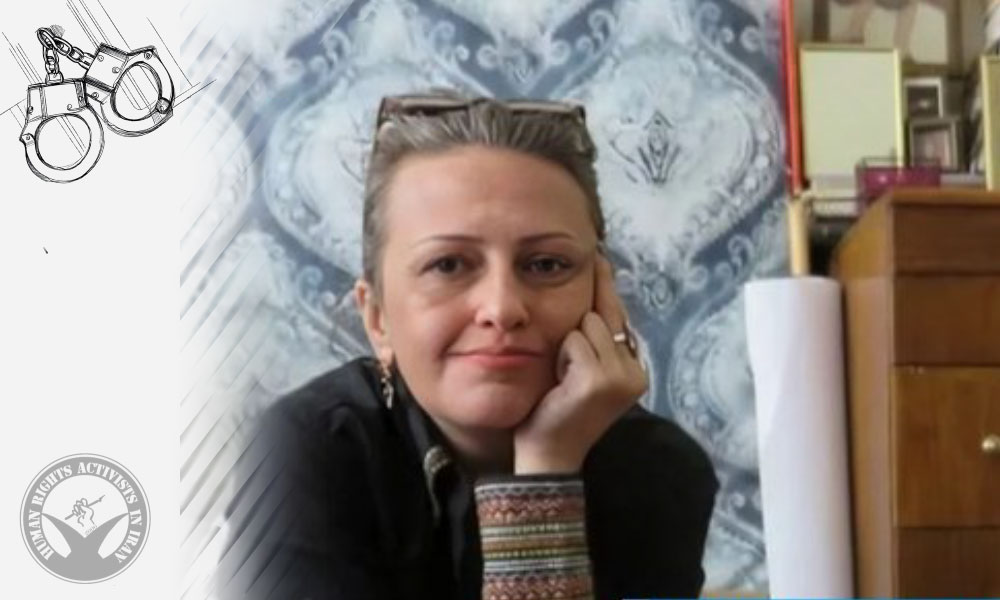
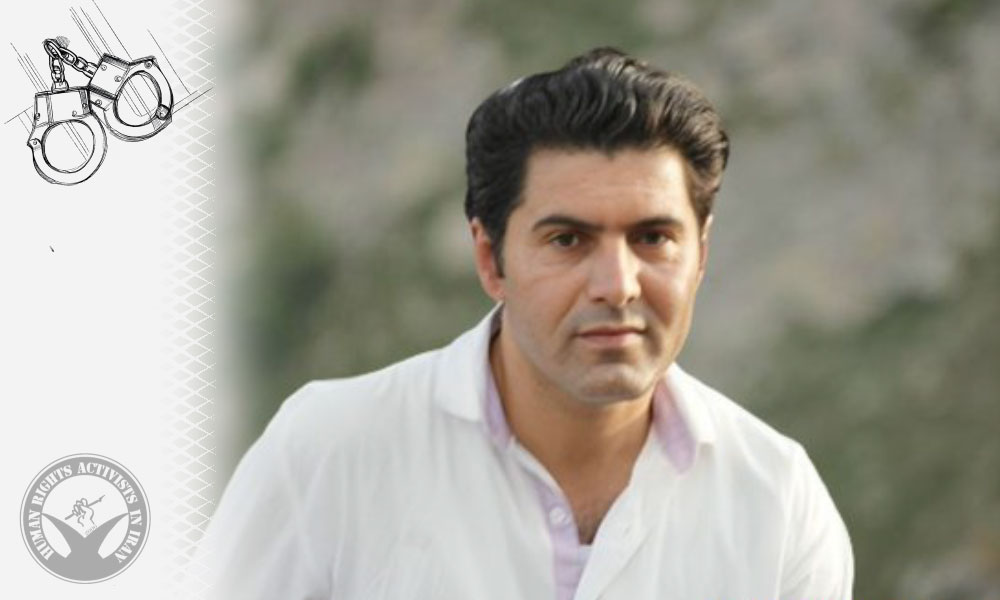
HRANA – Sasan Chamanara and Parastoo Chamanara in Ilam; Sobhan Azizi and Omid Khorshidi in Saqqez; Davood Ganji, a gamer and computer programmer, in Neyshabur; and Pejman Zare, a Baha’i citizen, in Shiraz were arrested on different dates. Meanwhile, Yaser Rahmani-Rad, a general practitioner, was released from Khorramabad Prison on bail.

Based on reports received by HRANA, yesterday Sasan Chamanara and Parastoo Chamanara were arrested by security forces in Ilam and transferred to an undisclosed location. In addition, on March 14, Davood Ganji, a gamer and computer programmer in Nishapur, was arrested. A Baha’i resident of Shiraz, Pejman Zare, was also arrested at his home by security forces on March 15.

Separately, the Kurdpa news agency reported that two citizens, Sobhan Azizi and Omid Khorshidi, were arrested in Saqqez on March 14.

At the time of writing, no information is available regarding the reasons for the arrests, the detainees’ whereabouts, or the charges brought against them.

Additionally, Yaser Rahmani-Rad, a general practitioner, was released from Khorramabad Prison on Wednesday, March 11, on bail. He had previously been arrested on February 9 by the IRGC Intelligence Organization in Khorramabad in connection with the nationwide protests. He faces charges of spreading falsehoods with the intent to disturb public opinion and propaganda against the state.

Among these individuals, Yaser Rahmani-Rad and Sasan Chamanara have previously faced security-related actions due to their activities.

It is worth noting that gatherings and strikes by shopkeepers and bazaar merchants began on Sunday, December 28, in Tehran, and after two days expanded beyond markets and commercial centers. With the participation of students, citizens, and various social groups, the protests became one of the largest waves of demonstrations in recent years. Following the crackdown on the protests by law enforcement and security forces, thousands of people were killed or injured, and tens of thousands were arrested or summoned by security institutions. For more information, readers can refer to HRANA’s comprehensive report titled “Crimson Winter,” which documents the first fifty days after the start of Iran’s nationwide protests.

UN Special Rapporteur: Islamic Republic Responded to January Protests with Gunfire, Internet Shutdowns, and Threats of Execution

HRANA – Mai Sato, the United Nations Special Rapporteur on the human rights situation in Iran, in her latest report to the Human Rights Council, has highlighted the violent suppression of nationwide protests in January, widespread internet and communications shutdowns, and the worsening human rights crisis in Iran following military attacks by Israel and the United States. She emphasized that the use of lethal force against protesters, concealing the scale of the crackdown through communications blackouts, and the use of charges carrying the death penalty to silence dissent have been key elements of this crisis.

According to HRANA, Mai Sato’s latest report, presented today, Monday, March 16, at the 61st session of the United Nations Human Rights Council, reviews the human rights situation in Iran between January 2025 and February 2026. However, its main focus is the nationwide protests that began on December 28, 2025.

Sato states that “severe economic hardship ignited demonstrations that rapidly spread into a nationwide movement spanning all 31 provinces, with people from diverse ethnic, religious and socioeconomic backgrounds, including children, demanding fundamental change in governance.”

In the report, Iran’s government’s response to the protests is described as “some of the most severe violence deployed against protesters in
recent history.” Sato writes that she has received numerous accounts indicating the excessive and lethal use of force against protesters, including the use of military weapons and shotguns, firing from elevated positions, and targeting vital areas of the body such as the head and chest. She stresses that shooting into unarmed crowds and the use of lethal force are incompatible with international standards and states that the government’s official narrative portraying the protests as “terrorist” activity is not supported by the available evidence.

One of the most important sections of the report concerns the number of those killed. According to a statement by Iran’s Supreme National Security Council on January 22, authorities of the Islamic Republic announced the death toll at 3,117 people. However, Mai Sato’s report—citing HRANA—states that at least 7,015 confirmed deaths had been recorded by February 15. This figure includes at least 6,508 protesters, among them 226 children, and 214 members of security forces. In addition, the report notes that 11,744 other deaths are still under review. Sato emphasizes that even this conservative estimate is more than twice the official figure released by the government, and that the gap between official statistics and field data adds to the suffering of families who are still searching for their loved ones.

In one case specifically highlighted in the report, Sahand Naseri, a 15-year-old teenager who was shot in the chest and killed during protests in Karaj, is presented as a symbol of a young generation that took to the streets with hope for the future but was met with deadly violence. Sato uses this case to illustrate the deep gap between the government’s official narrative and the human reality of the protests.

The report also presents a concerning picture of the situation of detainees. Sato writes “the total number of current detainees connected to the nationwide protests remains unknown, leaving families with no certainty about whether their loved ones are alive and, if so, where they are being held.” According to the report, Iranian domestic media reported on January 16 that around 3,000 people had been arrested, but data collected by civil society organizations suggests “that total arrests may run into tens of thousands, with arrestees including protesters, medical professionals, children and students, artists and writers, lawyers, journalists, and human rights defenders. By mid-February, the judiciary’s spokesperson confirmed over 10,500 people had been referred for prosecution and nearly 9,000 indicted. Most worryingly, at least 30 individuals, including two children aged 17, are reportedly facing the death penalty in connection with the nationwide protests, following expedited judicial proceedings.”

Another major focus of the report is the communications blackout and internet shutdown. Sato states that on January 8, 2026, the Iranian government “imposed a near-total shutdown of telecommunications services nationwide. Both international connectivity and significant elements of domestic communications were disrupted. The shutdown significantly disrupted protest coordination and access to emergency services, financial transactions and essential communications, leaving many families unable to determine the fate or whereabouts of detained or injured relatives for days. The imposition of telecommunications shutdowns in parallel with the use of force, discussed below, creates conditions that shield human rights violations from scrutiny.”

Sato describes this situation as evidence of the use of “communications infrastructure as an instrument of repression.” She considers the National Information Network, control over access to the global internet, the collection of user data, and new restrictive policies to be part of a broader strategy in which access to information is treated not as a right but as a revocable privilege. The report adds that the blackout has also had severe economic consequences, with some small and medium-sized businesses losing up to 80 or 90 percent of their income.

Another prominent part of the report addresses violations of medical neutrality. Sato states that during the protests, hospitals and medical centers, rather than serving as safe spaces for the wounded, became sites of repression, identification, and arrest. The report notes that security forces entered hospital wards, beat or detained doctors and nurses, confiscated patient lists, and even prevented the treatment of injured individuals. In a stark conclusion, Sato writes that the result has been the creation of a healthcare environment in which “many injured protesters abandoned treatment out of fear of arrest,” and saving lives has effectively been criminalized.

The report also addresses the broader human rights situation in Iran and points to an unprecedented increase in executions. According to the report, at least 1,639 people were executed in Iran in 2025, a figure that represents a significant increase compared to the previous year. Sato warns that security-related charges carrying the death penalty, such as moharebeh (enmity against God), efsad-e fel-arz (corruption on earth), and espionage, are increasingly being used as tools to suppress political dissent, and that the same pattern is now visible in cases related to the nationwide protests.

In the final section of the report, Sato also refers to developments that occurred after the report had been finalized, noting that the human rights situation in Iran has worsened following military attacks by Israel and the United States. She describes these attacks as inconsistent with the United Nations Charter and as violations of the principle prohibiting the use of force, while also expressing concern about Iran’s retaliatory attacks in the region. According to the report, attacks on civilians, schools, and medical facilities have been among the incidents reported following these developments. At the same time, conditions in prisons have also deteriorated, including severe shortages of food and medical services for prisoners. Sato stresses that “illegal military intervention should not be mistaken for a solution to the human rights situation in Iran,” and that any resolution must be based on the rule of law, the will of the Iranian people, and full accountability for documented violations.

In conclusion, the UN Special Rapporteur describes the nationwide protests of winter 2025 as a defining moment in Iran’s human rights crisis—a moment that, in her words, has exposed the structural nature of repression in the Islamic Republic: from the use of lethal force against protesters and internet shutdowns to attacks on hospitals, forced confessions, mass arrests, and the use of the death penalty to intimidate society. She calls on Iranian authorities to release all detainees held for the peaceful exercise of their fundamental rights, clarify the fate of the missing, end internet shutdowns and digital repression, and conduct independent and impartial investigations into the killings and other violations that have occurred.

It is worth noting that gatherings and strikes by shopkeepers and bazaar merchants began on Sunday, December 28, in Tehran, and after two days expanded beyond markets and commercial centers. With the participation of students, citizens, and various social groups, the protests became one of the largest waves of demonstrations in recent years. Following the crackdown on the protests by law enforcement and security forces, thousands of people were killed or injured, and tens of thousands were arrested or summoned by security institutions. For more information, readers can refer to HRANA’s comprehensive report titled “Crimson Winter,” which documents the first fifty days after the start of Iran’s nationwide protests.

Report on the Arrest and Release of Eight Citizens in Various Cities

HRANA –  several citizens have been arrested in Mashhad and Tehran.

Based on information received by HRANA, Javad Saraki was arrested by security forces in Mashhad about a week ago and transferred to Vakilabad Prison. No information is available regarding the charges against him.

Mohammad Moradi, 48, was also arrested in Tehran on February 8 and subsequently transferred to Ward 209 of Evin Prison. About one month after his arrest, he informed his family during a phone call that he had been transferred to an undisclosed location.

Hamed Rasoulkhani was also arrested on either January 8 or January 9 during protests in Mashhad and transferred to Vakilabad Prison in the city. Efforts by Rasoulkhani’s family to allow a lawyer access to his case have so far been unsuccessful. Rasoulkhani, one of the individuals previously detained in connection with the memorial ceremony marking the seventh day after the death of Khosrow Alikordi in Mashhad, had earlier been released from Vakilabad Prison in December after posting bail.

Meanwhile, according to Kurdpa, on Saturday, March 14, Khabat Dehdar, who had previously been arrested on February 10, was released from Sanandaj Prison after posting bail. This Sanandaj resident has previously faced security-related pressure due to his activities.

BBC Persian also reported the arrest of documentary filmmaker Mojgan Ilanlou along with her husband and daughter, Mohammad Pirhadi and Leila Pirhadi. These individuals were arrested yesterday morning by security forces and transferred to an undisclosed location. Ms. Ilanlou has previously faced judicial action due to her activities.

According to Kolbar News, Pishva Aghapour, a 22-year-old resident of Bukan, was arrested on March 5 and his place of detention remains unknown. The report states that his arrest was accompanied by physical violence. It also notes that he has previously faced security-related pressure.

It is worth noting that gatherings and strikes by shopkeepers and bazaar merchants began on Sunday, December 28, in Tehran, and after two days expanded beyond markets and commercial centers. With the participation of students, citizens, and various social groups, the protests became one of the largest waves of demonstrations in recent years. Following the crackdown on the protests by law enforcement and security forces, thousands of people were killed or injured, and tens of thousands were arrested or summoned by security institutions. For more information, readers can refer to HRANA’s comprehensive report titled “Crimson Winter,” which documents the first fifty days after the start of Iran’s nationwide protests.

Subscribe to Our Newsletter

Now is definitely not the time to stop reading!

Over 500 People Arrested for Sending Information to Media Outlets About the War

HRANA – The Commander-in-Chief of Iran’s Law Enforcement Force announced the arrest of 500 citizens. Ahmadreza Radan, without specifying the locations of these arrests, claimed that the individuals were detained for sending information to and communicating with foreign media outlets. In a separate development, the Public Relations Office of the IRGC Quds Base in Gilan Province announced the arrest of four citizens in Astaneh-ye Ashrafiyeh, alleging that they were affiliated with opposition groups.

According to Fars News Agency, the Commander-in-Chief of the country’s Law Enforcement Force announced the arrest of 500 citizens. Ahmadreza Radan claimed that 250 of the 500 detainees were among individuals with “significant cases” who had been in contact with certain groups and foreign media outlets and had provided information and identified certain targets, thereby facilitating attacks on them. He also alleged that these individuals had attempted to disrupt public order.

Fars also reported that four citizens were arrested in Astaneh-ye Ashrafiyeh. In a statement regarding these individuals, the Public Relations Office of the IRGC Quds Base in Gilan Province claimed that they were affiliated with opposition groups and had been arrested in the city.

The reports did not provide further details, including the identities of those arrested or the locations where they are being held.

Since February 28, Iranian territory has been targeted by military attacks by Israel and the United States. For more information, you can refer to HRANA’s report on the sixteenth day after the start of these attacks, published last night.

Mother and 15-Year-Old Son Arrested for Insulting the Supreme Leader

HRANA – Ameneh Ghasemzadeh and her son, Aryo Moshrefi, a 15-year-old teenager, were arrested in the early days of the war in Savojbolagh County. There is still no information available about their place of detention.

Based on information received by HRANA, the arrest of this mother and son took place in the early days of the war. However, no information has yet been obtained regarding the location where Ms. Ghasemzadeh and her teenage son are being held. Ghasemzadeh was arrested at her workplace, while her son was arrested at their home.

A knowledgeable source close to the family of these citizens confirmed the matter to HRANA, stating: “The reason for their arrest was expressing happiness over the death of Ali Khamenei,” amounting to insulting the Supreme Leader.

So far, no information has been obtained about the charges brought against this mother and son.

Ameneh Ghasemzadeh had been working at a clothing manufacturing factory in Nazarabad.

Since February 28, Iranian territory has been targeted by military attacks from Israel and the United States. For more information, you can refer to HRANA’s report on the fifteenth day after the beginning of these attacks, published last night.

At Least 90 Citizens Arrested in Various Provinces in Connection with the War

HRANA –Security authorities announced that a total of 90 individuals have been arrested in various provinces on charges of “anti-security” activities.

According to HRANA, citing Fars News Agency, the Public Security Police (FARAJA) reported the arrest of 54 citizens. In the statement, without specifying where the arrests took place, authorities claimed that the detainees intended to act as leaders in organizing street protests and damaging citizens’ property. It was further stated that at the time of arrest, 11 of these individuals opened fire on police officers, and several firearms and ammunition were seized from them.

FARAJA described these individuals as “monarchists” and claimed that two of them had sent the geographic coordinates of important locations to the intelligence services of countries involved in the war.

In another report, the news agency stated that 13 citizens in Qom Province were arrested by IRGC forces in the province on charges of “security-related” activities. Three Starlink satellite devices were confiscated from them.

According to the Islamic Republic of Iran Broadcasting (IRIB) News Agency, the Ministry of Intelligence also announced the arrest of 23 citizens in the provinces of Mazandaran, Razavi Khorasan, and Khuzestan.

The Ministry of Intelligence stated that 10 individuals were arrested in Mazandaran, 10 in Razavi Khorasan, and 3 citizens in Khuzestan. The reported reason for the arrest of 20 of these individuals was sending images of military locations and economic infrastructure to countries involved in the war.

Regarding the three individuals arrested in Khuzestan, the report claimed that they had carried out armed attacks against security forces and public places in recent days.

The reports did not provide information about the identities or places of detention of these individuals.

Since February 28, 2026, Iran has been subjected to a series of military attacks carried out by Israel and the United States. For further details, readers can refer to HRANA’s report, which provides a statistical overview of the war and its consequences.

14 Citizens Arrested by IRGC Intelligence Agents in Kerman Province

HRANA – The Prosecutor of Kerman Province announced that 14 citizens have been arrested in the province by agents of the IRGC Intelligence, claiming that they are “key elements linked to the axis of the United States and Israel.”

According to Fars News Agency, 14 citizens were arrested in Kerman Province. Announcing the news, the Prosecutor of Kerman Province claimed that the arrested individuals were among the “main elements connected to the axis of the United States and Israel” and had intended to carry out “anti-security activities.”

These arrests were carried out by agents of the IRGC Intelligence Organization.

The report did not mention the identities of the detainees or their place of detention.

Since February 28, Iranian territory has been targeted by military attacks carried out by Israel and the United States. For more information, see HRANA’s report on the thirteenth day following the start of these attacks, published last night.

Report on the Arrest of Several Individuals in Fars and Lorestan Provinces

HRANA – The deputy commander of the Law Enforcement Forces in Fars Province announced that a citizen was arrested for setting up a network in several provinces across the country to sell unfiltered internet via Starlink. Meanwhile, IRGC Intelligence reported the arrest of several citizens in Fars Province for what it described as “sending images to a foreign-based media outlet.” The Lorestan Police Information Center also announced that seven citizens in the province were arrested on charges of espionage.

According to Mehr News Agency, a citizen was arrested in Shiraz. Regarding the case, the deputy commander of the Fars Provincial Police stated that the 37-year-old citizen was arrested for establishing a network across several provinces in order to sell unfiltered internet via Starlink. The individual’s Starlink device and related equipment were also discovered and confiscated.

In a separate development, the Islamic Republic of Iran Broadcasting (IRIB) News Agency published a statement from the IRGC Intelligence announcing that several citizens in Fars Province were arrested for “sending images to a foreign-based media outlet.”

The statement claimed that the individuals were collecting images on the social media platform Telegram under the title “Leon” and sending them to the Iran International network. It alleged that by broadcasting these images they intended to provoke public opinion and incite unrest in the streets. The organization also described the detainees as being connected to one of the groups opposed to the government.

According to Fars News Agency, the Lorestan Police Information Center reported the arrest of seven citizens in the province on charges of espionage. According to the statement, the individuals had taken photographs of certain locations.

Although countering espionage is not considered a violation of human rights, given the Iranian government’s record of instrumentally using such accusations to confront political opponents, these kinds of claims, particularly when details and the judicial process remain unclear—are consistently viewed with skepticism.

The reports did not mention the date of the arrests or the identities of the detainees.

Since February 28, Iranian territory has been targeted by military attacks carried out by Israel and the United States. For more information, see HRANA’s report on the thirteenth day following the start of these attacks, published last night.