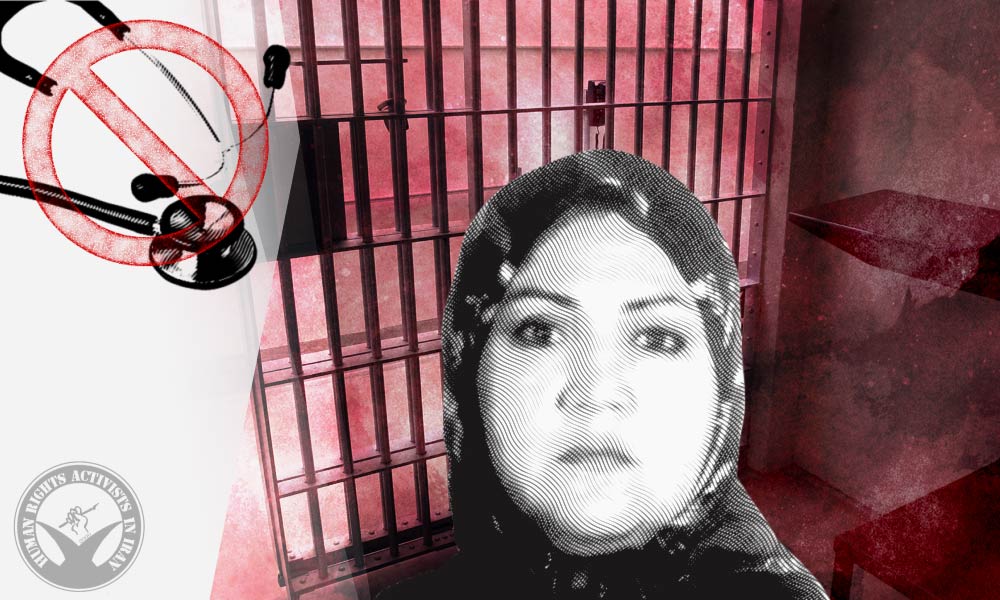
Christian Convert Sekineh Behjati Summoned to Serve Her Two Year Sentence

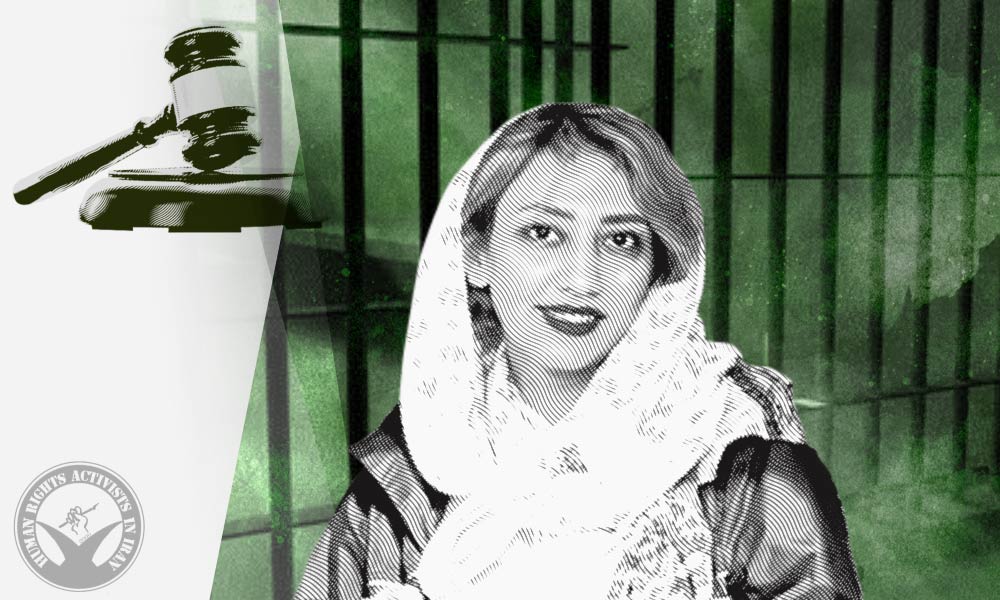
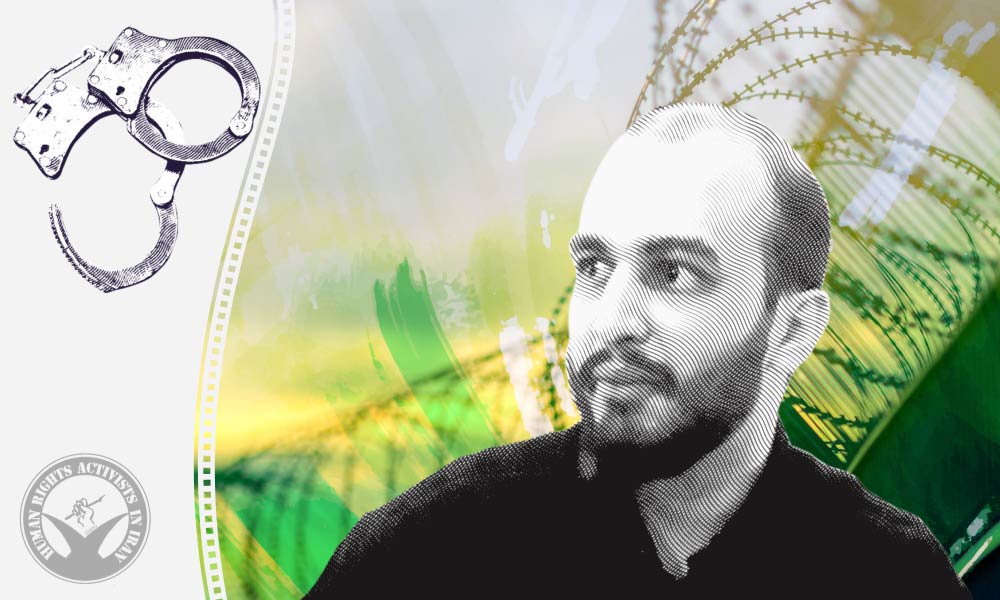
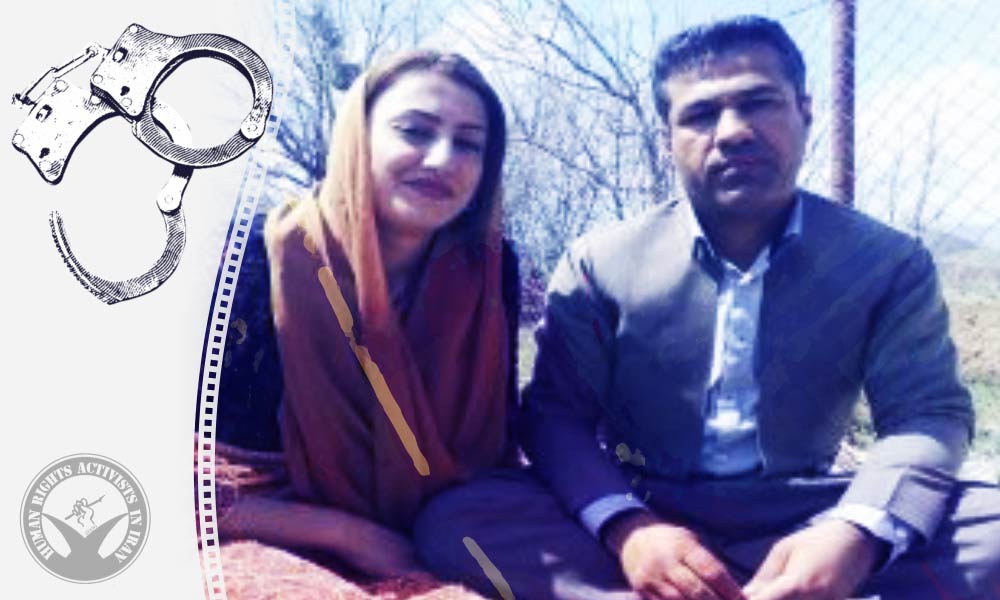
Christian Convert Sekineh Behjati was summoned to appear at Branch 1 of the Public and Revolutionary Court in Tehran within 30 days to serve her two year sentence. She was convicted in August of 2020.

According to HRANA, the news agency of Human Rights Activists, security forces raided and interrogated Behjati in August of 2020 at her house, accusing her of “propaganda against the regime and assembly and collusion against national security.” They also searched the house and confiscated some of her personal belongings. She was told that she will be indicted soon.

In May of 2020, she was arrested after being summoned by Branch 10 of the Revolutionary Court of Rasht City. On May 14, 2020, she was sent to Lakan Prison after failing to provide a bail of 500 million tomans. Finally, she was released six days later after reducing the bail to 200 million tomans.

Despite the fact that Christians are recognized as a religious minority under Iranian law, security forces nevertheless harass and prosecute Muslims who convert to Christianity.
The prosecution of Christian converts stands in blatant violation of Article 18 of the Universal Declaration of Human Rights and Article 18 of the International Covenant on Civil and Political Rights, which state that every individual has the right to freedom of religion and belief and freedom to express it openly or secretly.

Inmate Executed in Aligudarz Prison

On February 8, an inmate previously convicted for murder was executed in Aligudarz Prison.

According to HRANA, the news agency of Human Rights Activists, quoting the Iran Human Rights Organization, on Monday, February 8, 2022, the inmate was identified as Mirza Roohifar, age 37.

“Before his arrest, Mirza Roohifar was a car tire seller. Four years ago, he was accused of killing his neighbor in a quarrel about financial issues and thereafter [was] sentenced to death,” an informed source stated in the report.

The execution has not been announced by judicial authorities or reported by media inside Iran.

The most recent report from the Statistics and Publication Center of the Human Rights Activists in Iran (HRA) states that between January 1 of 2021 and December 20 of 2021, at least 299 citizens, including four juvenile offenders, were executed. In addition, 85 citizens were sentenced to death in this period.

As the report points out, Iran’s judicial authorities do not publicly announce over 88% of executions. These unreported executions are known as “secret executions” by human rights organizations.

Asal Mohammadi Sentenced to One Year and Eight Months Imprisonment

Branch 26 of the Revolutionary Court of Tehran sentenced workers’ rights activist Asal Mohammadi to one year and eight months in prison and a two years prohibition on membership in any political or civil group.

According to HRANA, the news agency of Human Rights Activists, Mohammadi was charged with “propaganda against the regime” and “assembly and collusion against national security.” If confirmed on appeal, the one-year sentence on one count will be enforceable.

Her lawyer, Iman Soleymani, told HRANA that “During the detention, she had no access to a lawyer. During the trial process, I undertook her case but they did not allow me to study the case documents or attend the court, which is in violation of Article 48 of the Criminal Procedure Code. She was in poor mental condition. Contrary to what the law explicitly states, she had been interrogated without accompaniment of a lawyer during the interrogation”

On January 24, 2022, the trial was held and during the trial, participation in online campaigns such as “white torture” or membership in Marxist groups was evoked as the piece of evidence for the charges.

On November 6, 2021, she was arrested violently along with Hirad Pirbodaghi by security forces. Their house were searched.

Five days later, on November 11, she was transferred to Public Ward No. 209 of Evin Prison and was released on bond on November 22, 2021.

Hashem Amini Sentenced to 13 Years In Prison

Branch 1 of the Revolutionary Court of Torbat Heydariyeh sentenced Hashem Amini to 13 years in prison. Grounded on Article 134 of the Islamic Penal Code, if confirmed on appeal, the severest punishment of 5 years will be enforceable.

According to HRANA, the news agency of Human Rights Activists, Amini, a resident of Bajestan was charged with “membership in anti-regime groups, offensive statements against the Supreme Leader of Iran and participation in an illegal assembly”. The verdict was issued by Branch 1 of the Revolutionary Court of Torbat Heydariyeh.

Amini has to face other charges in a separate legal case. On June 17, 2021,  security forces arrested him at his home in Bajestan City and transferred him to a detention centre at the disposal of the Ministry of Intelligence in Mashhad City. On July 8, 2021, he was released on bail. For this case, his trial will be held at Branch 2 of the Criminal Court on February 27, 2022.

Transgender Citizen Dies By Suicide After Disallowance of Gender Affirming Surgery

On February 7, a transgender citizen and resident of Mariwan City died by suicide after taking pills. Reportedly, they committed suicide after a Sunni cleric disallowed their family to perform gender affirming surgery.

According to HRANA, the news agency of Human Rights Activists, 20 year old Ribwar Ebrahimi committed suicide and lost their life.

“His family asked a Sunni cleric about the religious authorization of a Sex Reassignment Surgery. Confronted with this disallowance, Ribwar got upset. He/she was also under pressure not to disclose his/her identity, which all led to committing suicide by pill,” told an informed source to HRANA.

Gender affirmation surgery has not been designated as legal or illegal under Iranian civil law. In 2013, however, Family Protection Bill set out some rules about the sex change process. In 1982, in a Fatwa, Ruhollah Khomeini, authorized religiously the sex-change surgery. Nonetheless, uncertainties in the law regarding this process and official acceptance of new identity have confused many transgender citizens who are afraid of being deprived of their rights by the erratic attitude of legal authorities.

Subscribe to Our Newsletter

Now is definitely not the time to stop reading!

Two Inmates Executed in Ardabil Prison

Two inmates convicted for murder were executed in Ardabil Prison on February 7.

According to HRANA, the news agency of Human Rights Activists, the inmates were identified as Yusef and Behzad Tahamtan, were arrested in Ardabil prison.

These executions have not been announced by judicial authorities or reported by media inside Iran.

The most recent report from the Statistics and Publication Center of the Human Rights Activists in Iran (HRA) states that between January 1 of 2021 and December 20 of 2021, at least 299 citizens, including four juvenile offenders, were executed. In addition, 85 citizens were sentenced to death in this period.

As the report points out, Iran’s judicial authorities do not publicly announce over 88% of executions. These unreported executions are known as “secret executions” by human rights organizations.

Four Baha’i Citizens Still in Detention and Awaiting Legal Process

Four Baha’i citizens, Natoli Derakhshan, Saba Sefidi, Pari Kargarian Marvasti and Daniel Bani-Nejad, are still in detention and awaiting further legal proceedings. On January 11, Derakhshan and Sefidi were arrested in Sari and Tehran cities, respectively. Marvasti and Bani-Nejad were also arrested last week in Marlik District, located in Tehran Province.

According to HRANA, the news agency of Human Rights Activists, Sefidi, a resident of Tehran, was arrested after an appearance at Branch 2 of Evin Courthouse. Yesterday, she was allowed to make a phone call to her family. Despite her family’s inquiry, the reason for her arrest and the charges against her are still unknown.

On the same day, Derkhshan, a poet and Baha’i citizen, was arrested by intelligence agents at his home in Sari City.

Last week, security forces arrested Marvasti and Bani-Nejad along with another non-Baha’i citizen at Marvasti’s house. They searched her house and confiscated some of her belonging,  including electronic devices, books and other writings related to the Baha’i faith.

According to unofficial sources, it is estimated that more than 300,000 Baha’is live in Iran, but the Iranian constitution recognizes only Islam, Christianity, Judaism, and Zoroastrianism. Because their faith is not considered legitimate by authorities, the rights of Baha’is in Iran have been systematically violated for years.

The deprivation of the freedom to practice religion is a breach of Article 18 of the Universal Declaration of Human Rights and Article 18 of the International Covenant on Civil and Political Rights. The United Nations covenant holds that every person has the right to freedom of religion, freedom of converting religion, as well as freedom of expression, individually or collectively; openly or secretly.

Workers’ Rights Activist Alieh Eghdam Doost Arrested in Fuman City

On February 7, security forces arrested workers’ rights activist Alieh Eghdam Doost in Fuman City and transferred her to an unidentified location.

According to HRANA, the news agency of Human Rights Activists, quoting the Independent Iranian Workers Union, Doost was arrested at her home at 9 AM. The Branch 2 of Fuman Courthouse, on behalf of Evin Moghaddas Courthouse, issued the arrest warrant. Reportedly, she has been accused of “propaganda against the regime”.

Doost, 69 years old, is a workers’ rights activist and has faced other arrested and convictions.

17 Year Old Woman Beheaded by Her Husband

On February 5, 17 year old Mona Heydari was killed and beheaded by her husband in Ahvaz City. A video circulated on social media shows the man walking around the street with his wife’s head in his hand. Reportedly, the murderer saw it as an honor killing. These horrific pictures brought about a wave of criticism on social media regarding the regime and the Islamic Penal Code, arguing they encourage honor killings by exempting the murderer from severe punishment.

According to HRANA, the news agency of Human Rights Activists, quoting ROKNA, around 3 PM in Kasai Square, Ahvaz City, the murderer showed up with his wife’s head in his hand for a minute and then left. When the incident was reported, police, along with homicide detectives, went to the spot and began the investigation.

Further investigation showed that after running away to Turkey, Heydari had been recently brought back by her husband to Iran, where she was then killed by her husband and brother-in-law. Reportedly, both men have been arrested by police.

On Sunday, one day after reporting this news, ROKNA news agency was closed down by authorities, apparently due to the report.

Honor killing or “shame killing” is the murder of an individual, mostly girls and women, by her family members or relatives for an act— such as adultery, divorce, avoiding forced marriage— that religiously or traditionally is deemed dishonorable or shameful. The Islamic Penal Code of Iran exempts the perpetrator from severe punishment.

HRANA Recap: This Week’s Protests in Iran

According to HRANA, the news agency of Human Rights Activists, a number of protests took place this week in Iran, many of which were continuations of ongoing movements.  Read our recap below for details, photos, and videos from the demonstrations.

Friday, January 28

Several citizens from the northern part of Sistan and Baluchestan Province assembled in the cross-border terminal, Milak, to protest against a failure to receive their water allotment from the Helmand (Hirmand in Farsi) River. On the same day, other citizens assembled before Afghanistan’s Consulate in Hirmand County. They asked the government to negotiate with Afghanistan’s government to receive this water allotment from the Helmand River. The construction of Kamal-khan Dam on the river in Afghanistan has hindered Iranian farmers from receiving their irrigation water portion.

Saturday, January 29

Teachers and educators from dozens of cities went on a national strike. They asked for the implementation of the “Job Ranking Plan” as passed in Parliament, the implementation of Article 64 of Civil Service Management Law and other demands.

https://www.hra-news.org/wp-content/uploads/2022/01/BAZNESHASTE_HEMAYAT300x300.jpg

A group of nurses in Kohgiluyeh and Boyer-Ahmad Province held protests in front of Shahid Rajaei Clinic in Yasuj City. They protested against 90 day temporary contracts and poor job conditions.

A number of workers in Zone 6 of the municipality of Ahvaz went on strike and assembled for the fifth consecutive day. They asked for the implementation of the “Jobs Classification Plan”, and for the municipality to pay employees’ insurance contributions, among other demands.

About 200 workers working in Salon 1 of the Industrial Molds Company SAIPA went on strike in protest against a delay in wages, low wages and discrimination in recruitment and promotions. Reportedly, management has recruited about 100 people from their relatives and friends while many experienced workers are still working with temporary contracts with contractor companies.

Sunday, January 30

Continuing recent nationwide protests, teachers from numerous cities across the country went on strike. These protestors held placards asking to free the jailed teachers.

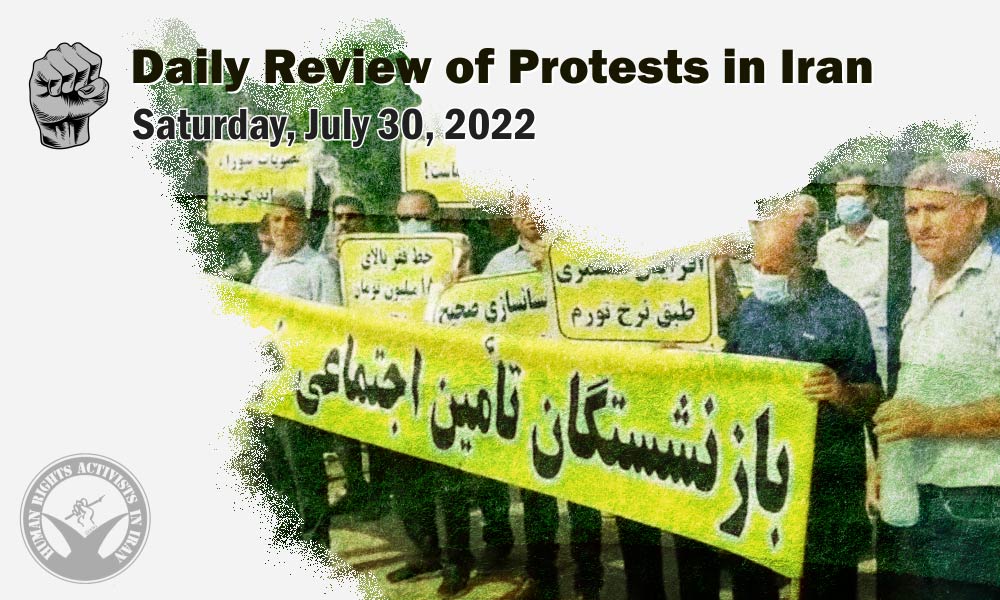
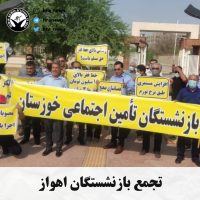
A number of retirees of the Social Security Organization in Qazvin, Kermanshah, Mashhad, Khorramabad, Ahvaz, Rasht and Tabriz cities held protests before the organization’s offices in each city. They demanded that pensions are raised above the poverty line, and that the organization implement a plan to close wage gaps and disparities, address issues regarding supplementary insurance, end-of-year bonuses and bring records of working in hazardous jobs into the calculation of benefits and pension.

A group of pensioners of Fulad Company’s pension fund assembled before the office of the fund in Isfahan. As they announced, pensioners will protest each Sunday until their demands are addressed.

About 50 people who pre-purchased a vehicle from the Shahr-Khodro company and their representative, Rigan Khodro, assembled before the building of Ministry of Industry, Mine and Trade in protest against not receiving their car after three years.

A group of job seekers in Khorramshahr City held protests before the Grand Mosque of the city. They asked for more recruitment from native labour forces in the Oil, Gas and Petrochemical project Arvandan. They said that despite having one of the largest oil fields in this region, 70 per cent of youth are unemployed.

In Urmia and Kermanshah cities, bus drivers went on hunger strike. About 300 bus drivers who are contracted by private sectors are on strike due the municipality’s failure to extend their contracts.

For the fourth consecutive day, the workers of Tehran-Jonoob Company (Khalije Fars Holding) went on strike in protest against a four-month delay in payments.

Monday, January 31

In response to a call by the Coordination Council of Iranian Teachers’ Trade Associations, once again, the retired and working teachers and educators held protests in dozens of cities. One of their demands is the implementation of a plan whereby teachers’ income, depending on a ranking, will be raised to up to 80% of faculty members’ salaries.

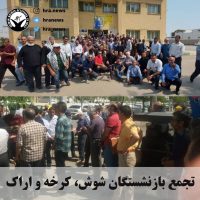
A number of municipality workers in Shush City assembled before the municipality as well as governorate building to ask for wage demands and payout from a four month delay in payment.

In Kerman City, workers of Butia Iranian Steel Company (BISCO) went on strike and assembled at their workplace to protest against low wages. Despite promises, the company refuses to raise their wages.

The workers of the Iran Tractor Manufacturing Company continued their strike in protest against low wages. They have been on strike since last Saturday.

Tuesday, February 1

A number of medical students in residency from the Zanjan University of Medical Sciences assembled at the campus to ask for their wages. According to the Secretary of the Assistant Trade Union Council, Samira Jalali-Nejad, some single and married media students in residency have not received their incomes, which are respectively six and eight million tomans. Moreover, they have not raised the wages by 20 percent despite promises to do so.

The workers of the Iran Tractor Manufacturing Company continued their strike. They have been on strike since last Saturday. One of the workers stated: “during the last protests in November of last year, the employer promised to raise wages and to meet other demands. Until now, however, most of these promises have not been fulfilled. So, we had to go on strike again.”

Wednesday, February 2

A group of athletes assembled before the Isfahan Sports and Youth Office to protest against shortcomings and failure to address their issues. They held an empty coffin on their shoulders as a symbol of “dead sport” in this province. They asked for the discharge of the Director of the Sports and Youth department.

In Tehran and Mashhad cities, citizens who lost their money in the cryptocurrency network “King Money” due to fraudulent financial acts, protested before the building of the Ministry of Industry, Mine and Trade. They asked for law enforcement against the frauds.

A group of the workers in the urban rail transit system of Ahvaz City protested for wage demands. One of the workers said that “113 workers who are in charge of guarding trains have not received 15 months of payments from the contractor company Kayson.”

A group of workers working in Majidiey Port in Mahshahr City protested at their workplace against delayed payments and lack of job security. According to these workers, the contractor refuses to pay wages and has not given them any job contract.

A number of workers of the Sugarcane Agro-Industry Company Haft-Tappeh assembled at their company premises to ask for their wage demands.

A group of the personnel of Mehrgan Hospital in Mashhad City assembled before the hospital entrance to protest against the suspension of work.

Thursday, February 3

A group of workers of the Edible oil factory FRICO assembled before the governorate building in Sirjan City. After a few months of factory shut down, workers have not yet received their delayed payments. The factory, which employs about 300 workers, has been shut down due to issues regarding the supply and storage of raw materials.

A number of stock market shareholders who lost their investments due to fraudulent activities in Iran’s stock market held protests before the Planning and Budget Organization.

A number of physicians working in deprived areas as part of their conscription went on a strike to protest low wages. They began their protests a few months ago and some of them have been on strike and refusing non-urgent patients.