Azerbaijani Turk Activist Mohammad Aini Still in Incommunicado Detention

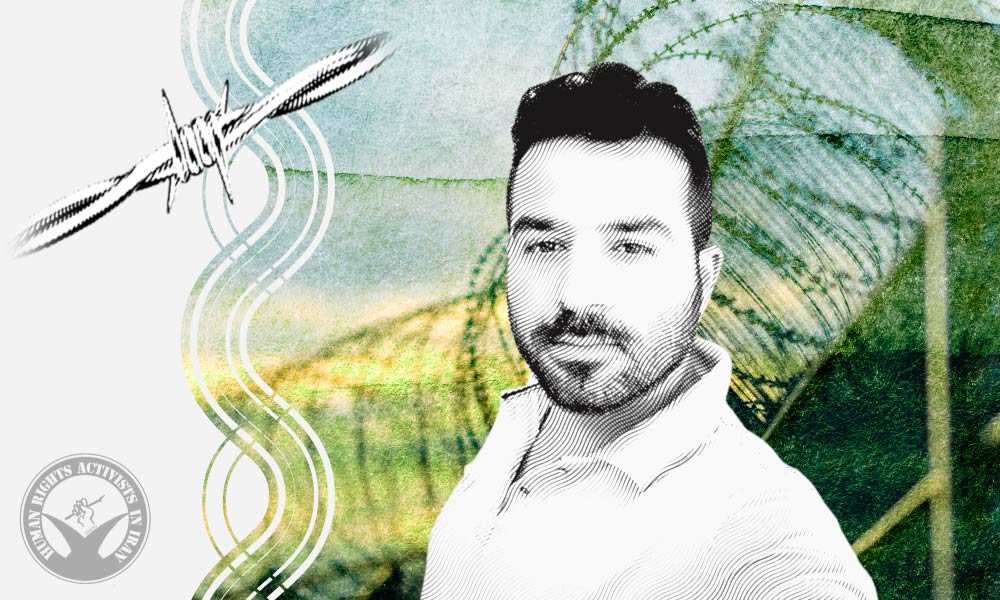
Azerbaijani Turk activist Mohammad Aini is still in incommunicado detention after 12 days. His whereabouts and the reason for his arrest are still unknown despite family inquiry.

According to HRANA, the news agency of Human Rights Activists, Aini, a resident of Rasht, was arrested on January 23 after an appearance at the Ministry of Intelligence Office in Rasht City. After, he was transferred to an unidentified location. He was summoned by the Ministry of Intelligence the day before the arrest.

Since the arrest, he has not called his family and security and judicial authorities have not provided any info to his family about the reason for this arrest and his whereabouts.

Aini has faced other arrests. In October of 2020, amid the widespread protests in the Azerbaijani regions in the Western part of the country, he was arrested in Rasht City. After some time, he was released from jail on bail. In February of 2021, he was tried by Branch 12 of the Revolutionary Court of Rasht on the charge of “acting against national security” and was finally acquitted.

Inmates of Maragheh Prison Held in Poor Conditions

The inmates of Maragheh Prison are held in very poor conditions. Some of their problems include poor heating on cold days, co-housing political prisoners with prisoners of violent crimes and a shortage of sanitary services and beds. Moreover, the head of the prison has been ordered to deny adequate medical treatment to an inmate with a methadone addiction.

According to HRANA, the news agency of Human Rights Activists, prisoners in Maragheh Prison are held in poor, ill-equipped conditions and suffer from various problems.

Currently, about 1200 inmates are held in Maragheh Prison. This prison consists of four wards for men and one for women. Ward No. 1 houses inmates on death row and Ward No. 2 houses prisoners who are still in due process and awaiting their verdict.

An informed source explained the condition of Ward No. 4 to HRANA:

“140 inmates are held in this ward, while it has only 104 beds. Hence, some of the inmates have to sleep on the cold floor. Other wards have the same problem, which in cold days makes things harder for those [who] sleep on the floor.”

This ward has only three sanitary services for 140 inmates. The informed source also stated that the heating system can hardly warm the rooms and that inmates have to sleep with three blankets in order to keep themselves warm.

“Akbari, the head of the prison, has been ordered to refuse to accept any request, such as for furlough from the inmates with methadone addiction, until they [stop addiction]. Nonetheless, they do not provide these inmates with any adequate addiction treatment” the source added.

Our sources told a story of an inmate who used 20cc of methadone per day. They were forced to quit and consequently contracted a severe mental disorder. They have been hospitalized for two months.

The other problem is that political prisoners and prisoners of violent crimes are held in the same ward, which is in violation of prison rules.

Two Inmates Executed for Drug-related Crimes in Mashhad and Zahedan Prisons

On February 3, two inmates convicted for drug-related crimes were executed in Mashhad and Zahedan prisons.

According to HRANA, the news agency of Human Rights Activists, quoting Rasank News Outlet, an inmate identified as Najibullah (Mohammad-Reza) Gorgij, a resident of Zahedan, was executed in Mashhad Prison. He had been accused of drug-related crimes and been in jail for two years.

Reportedly, the execution was carried out without informing his family and without a last visitation.

Rasank News also reported that on Thursday, Hafizaullah Barahooye, a resident of Zahedan, was executed in Zahedan Prison. He had been convicted for drug-related crimes.

The most recent report from the Statistics and Publication Center of the Human Rights Activists in Iran (HRA) states that between January 1 of 2020 and December 20 of 2021, at least 299 citizens, including four juvenile offenders, were executed. In addition, 85 citizens were sentenced to death in this period.

Neither of these executions have been announced by judicial authorities or reported by media inside Iran.

As the report points out, Iran’s judicial authorities do not publicly announce over 88% of executions. These unreported executions are known as “secret executions” by human rights organizations.

Press Release Regarding Human Rights Violator Morteza Talaei’s Travel to Canada

HRA, along with seven other human rights organizations, published an open letter to the Canadian government regarding the travel of former IRGC commander and human rights violator, Morteza Talaie, to Canada.

Open Letter: Canada must not be a safe haven for former IRGC commanders

We, the undersigned human rights organizations, share serious concerns regarding known rights violator Morteza Talaei’s recent travel to Canada. We urge the Canadian government to take immediate action to uphold its stated commitment to human rights and ensure that impunity at home, does not mean impunity abroad. Allowing Morteza Talaei to freely enter Canada sends a dangerous message; a message that is an affront to Iranians who have themselves sought refuge in Canada. 

Since cutting diplomatic ties with Iran in 2013,  many Iranians continue to face challenges in obtaining visas to Canada, which is seemingly not the case for the former IRGC commander. When asked how Talaei’s presence in Canada made them feel, one Iranian said, “I feel betrayed by the Canadian government for allowing those that suppressed us in Iran to easily enter the country I now call home.” 

In 2017, Canada passed the Justice for Victims of Corrupt Foreign Officials Act, (Global Magnitsky legislation) designed to designate foreign officials complicit in, among other things, gross violations of human rights. The act is in place, in part, to protect refugees from foreign nationals deemed to be a threat to safety and security. We call on the Canadian government to investigate Morteza Talaei, in particular for, “gross violations of internationally-recognized human rights against individuals in any foreign state who seek to obtain, exercise, defend or promote internationally-recognized human rights and freedoms…” 

Human rights organizations have documented seemingly endless violations stemming from Talaei’s relentless intolerance and brutality. As a former Tehran police chief, Talaei commanded a force notorious for mass arrests, beatings, and torture. Talaei himself is known to have orchestrated widespread suppression of peaceful protesters including student protesters. He was police chief at the time, Iranian Canadian citizen, Zahra Kazemi, was tortured, ultimately culminating in her death. The investigation of her death was said to be handled by Tehran’s police. Talaei is also the founder of what some call Tehran’s “hijab police,” a force committed to combating what he called ‘manifestations of indecency’ referring to women he deemed indecently covered. In addition, as a former Islamic Revolutionary Guard Corps (IRGC) commander, an entity widely sanctioned for serious human rights abuses, his brutality runs deep. 

The Prime Minister has declared Canada to be a safe haven to “those fleeing persecution, terror, and war” a place where “all are welcome.” A safe haven for those persecuted must not allow individuals like Morteza Talaei to enter freely. Human rights violators must not be included in the Prime Minister’s “everyone is welcome” campaign. 


SIGNATURES

The Abdorrahman Boroumand Center for Human Rights in Iran 

Association for The Human Rights of The Azerbaijani People In Iran (AHRAZ)

Human Rights Activists in Iran (HRA)

Impact Iran

Iran Human Rights

Kurdistan Human Rights Association-Geneva (KMMK-G)

Siamak Pourzand Foundation (SPF)

Together Against the Death Penalty (ECPM)

Download Open Letter Here

Soheila Hejab Beaten and Threatened Following Protest Against Poor Quality Prison Food

Since January 31, inmates of the women’s ward in the Correctional Center of Kermanshah have refused to get their meals in protest against the poor quality of the prison food. During the protest, the head of the prison guards beat political prisoner Soheila Hejab and threatened to open a new legal case against her and send her to an exile prison. Other protesting prisoners have been threatened with denial of visits and phone calls.

According to HRANA, the news agency of Human Rights Activists, an informed source stated that “on the first day, Soheila Hejab brought a piece of burned food to the head of the prison and asked her if he [could] eat it. He responded that they are running low on budget and therefore the food is what it is. When Soheila Hejab was returning to her ward, she saw the decorations for celebrating Fajr decade (an annual ten-day celebration for the triumph of the 1979 revolution). She protested why they do not use the costs of this celebration for improving food quality. Following a verbal quarrel, in response, the Head of Prison Guards Leila Hosseini-Nia beat her hard in the chest and hit her with a mirror.”

According to this source, prison officials have tried to accuse her of provoking a riot in prison. They have threatened to deny other prisoners visitations and phone calls unless they corroborated this and signed reports as witnesses.

Once before, in October 2021, Hejab was beaten in Qarchak Prison while on hunger strike.

Hejab was arrested by security forces on June 1, 2019, and then released from Evin Prison in Tehran on a bail of 3 billion tomans on March 14, 2020.

Branch 28 of the Revolutionary Court sentenced her to 18 years in prison on charges of “propaganda against the regime”, “illegal assembly”, “incitement of public opinions to riot” and “organizing unlawful political groups”.

On May 23, 2020, the intelligence unit of the Revolutionary Guards arrested and transferred her to Gharchak Prison in Varamin City to serve her sentence. She was then transferred to Sanandaj Prison and then, on January 7, to the Correctional Center of Kermanshah City.

Subscribe to Our Newsletter

Now is definitely not the time to stop reading!

Two Inmates Executed in Maragheh Central Prison

On the morning of January 30, two inmates accused of and convicted for “forced sodomy” were executed in Maragheh Central Prison.

According to HRANA, the news agency of Human Rights Activists, the executed inmates were Mehrdad (Akbar) Karimpour, age 32, and Farid Mohammadi.

Six years ago, they were arrested, accused of forcible sodomy, and subsequently sentenced to death. They have since been imprisoned.

In Iran’s law, forcible sodomy is ascribed to homosexual rape and/or non-consensual same-sex intercourse.

These executions have not yet been announced by judicial officials or reported by media inside Iran.

The most recent report from the Statistics and Publication Center of the Human Rights Activists in Iran (HRA) states that between January 1 of 2021 and December 20 of 2021, at least 299 citizens, including four juvenile offenders, were executed. In addition, 85 citizens were sentenced to death in this period.

 One Inmate Executed in Adel-Abad Prison

On February 2nd, an inmate convicted for murder was executed in Adel-Abad Prison in Shiraz City.

According to HRANA, the news agency of Human Rights Activists, on Wednesday morning, an inmate currently unidentified was executed. He was sentenced to death five years ago for committing murder and had been in jail since then.

According to an informed source, the inmate could not afford to pay “blood money” to the victim’s family in order to exact satisfaction. Because of this, he was ultimately executed.

The most recent report from the Statistics and Publication Center of the Human Rights Activists in Iran (HRA) states that between January 1 of 2021 and December 20 of 2021, at least 299 citizens, including four juvenile offenders, were executed. In addition, 85 citizens were sentenced to death in this period.

Azerbaijani Turk Activist Abbas Nikravan Sentenced to 91 Days In Prison

Abbas Nikravan, an Azerbaijani Turk Activist and resident of Salmas City, was sentenced to 91 days in prison by the Criminal Court of Salmas.

According to HRANA, the news agency of Human Rights Activists, Branch 102 of Salmas’s Criminal Court sentenced Nikravan on the charge of “propaganda against the regime on the Internet”. The sentence is grounded in Article 500 of the Islamic Penal Code.

On September 5, 2021, security forces arrested and transferred him to the Ministry of Intelligence Office in Urmia City. On September 21 of last year, he was released on bail from Urmia Prison.

Nikravan has another arrest on his rap sheet. On July 5, 2018, he was arrested during an annual gathering in Babak Castle and released on bail six days later.

Keyvan Samimi Released From Jail

On February 1,  Keyvan Samimi was released from jail by a stay of execution order. According to his lawyer, Mostafa Nili, this release is temporary and issued considering forensic medicine’s report on Samimi’s health.

According to HRANA, the news agency of Human Rights Activists, Samimi, the imprisoned editor of Iran Farda Magazine and a member of the Iranian Writers’ Association, was released from jail by order of the prosecutor.

According to Nili, the order to suspend his incarceration has been issued considering Samimi’s health and is grounded on Article 533 of the Criminal Procedure code.

Samimi was sent into exile in Semnan Prison after several relocations.

He has been serving his two year sentence since December 7, 2020.

On May 1, 2019, he attended the workers’ protests on the anniversary of Labour Day before Parliament. The protest turned violent due to the interference of security forces, leading to his arrest along with dozens of other protestors. On May 12, 2019, security forces raided and searched the Iran Farda magazine office and confiscated many documents, including his computer. On June 17, 2019, he finally was released on bail until the end of legal proceedings.

On April 20, 2020, in a trial in absentia, Branch 26 of the Revolutionary Court of Tehran sentenced him to three years imprisonment on the charge of “assembly and collusion to act against national security”. The verdict was upheld on appeal but was reduced to two years in the retrial.

Samimi has previously served six years in prison in 2009 for questioning the 2009 Presidential Election, participating in protests, and writing articles critical of the Islamic Regime. His two political activist brothers were executed, one by this regime and the other by the former regime.

Minor Sukhtbar in Hirman County Killed by Direct Shooting of Border Police

On January 31, a ten year old boy who worked as a cross-border fuel carrier (sukhtbar) was killed from a shot in the head fired by military forces in a border area in Hirmand County.

According to HRANA, the news agency of Human Rights Activists, border forces killed the child without warning by a direct and unruly shooting.

The identity of this child is still unknown at the time of writing.

According to HRANA’s annual report, in 2021, 242 citizens were targeted by unruly shootings by regime military forces, of which 94 were killed. This includes 23 kolbars (cross border carriers) and 31 sukhtbars (cross-border fuel porters). 148 people have been injured, including 81 kolbars and 51 sukhtbars.