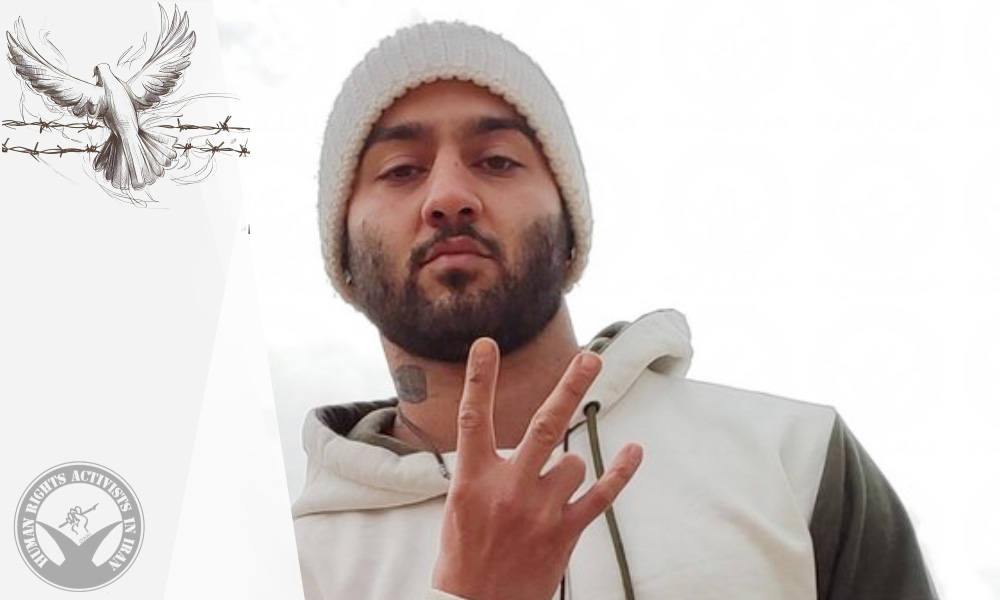
January Protests: Benjamin Naghdi Sentenced to Death

HRANA – Benjamin Naghdi, arrested during the nationwide protests of 2026, has been sentenced to death by the Revolutionary Court of Shiraz on the charge of “spreading corruption on earth” (efsad-e fel-arz). His attorney, Mostafa Nili, has announced that he will appeal the verdict before the Supreme Court.

According to HRANA, citing Emtedad, Benjamin Naghdi, who was arrested during the nationwide protests in January 2026, has been sentenced to death.

According to Mr. Naghdi’s lawyer, Mostafa Nili, he was initially charged with “attempted murder,” but the charge was later changed to “enmity against God” (moharebeh). Following the completion of the preliminary investigation, an indictment was issued against him on charges including “enmity against God,” “membership in groups disrupting national security,” “assembly and collusion against national security,” and “propaganda against the regime.” At the same time, the charges of “causing bodily harm to law enforcement officers” and “carrying a cold weapon” were dismissed, and no prosecution was pursued on those counts.

Mr. Nili further stated that the court judges determined that all of the alleged offenses constituted “spreading corruption on earth” and, on that basis, issued a death sentence for his client.

The attorney also said that he and his colleagues will file an appeal within the legal deadline. He expressed hope that, given that no individuals were injured during the incident, the Supreme Court would overturn the sentence.

According to the defense lawyer, Mr. Naghdi was arrested in Shiraz on January 3, 2026, for “igniting a fire extinguisher and directing it toward law enforcement officers.”

Before his arrest, Benjamin Naghdi was active in kickboxing and Muay Thai and had won championship titles in competitions in those disciplines.

It should be noted that protests and strikes by shopkeepers and bazaar merchants began in Tehran on Sunday, December 28, 2025, and within two days spread beyond markets and commercial centers. With the participation of students, citizens, and various social groups, these protests became one of the largest protest movements of recent years. Following the crackdown by security and law enforcement forces, thousands were killed or injured, and tens of thousands were arrested or summoned by security agencies. For more information, readers may refer to HRANA’s comprehensive report titled “Crimson Winter,” documenting the first fifty days following the outbreak of Iran’s nationwide protests.
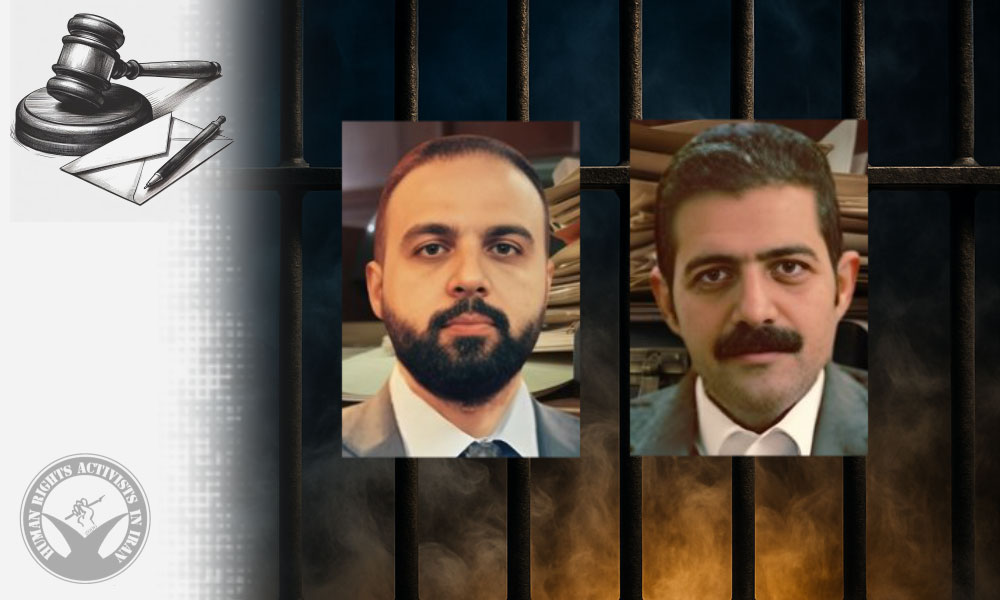
Legal Case Filed Against Lawyers Amir Raisian and Milad Panahipour Following Case Disclosure

HRANA – Following the disclosure of information about the case of Ehsan Hosseinipour, a detainee from the January 2026 protests who has been sentenced to death, a judicial case has been opened against Amir Raisian and Milad Panahipour, both attorneys, in Branch 3 of the Tehran Security Prosecutor’s Office.

According to Etemad, a judicial case has been filed against the two lawyers. Based on the report, this action came after the two attorneys posted on their Instagram pages in February of 2026, stating that “Branch 26 of the Revolutionary Court had prevented the chosen lawyer from accessing the case of Ehsan Hosseinipour.”

Mahmoud Behzadi-Rad, Amir Raisian’s lawyer, announced: “In Branch 3 of the Security Prosecutor’s Office, Mr. Raisian has been charged with spreading falsehoods for informing the public about Ehsan Hosseinipour’s case, and with propaganda against the regime for signing a protest statement by 49 attorneys in February.” He added that the public disclosure was intended to prevent the violation of the rights of a defendant facing the death penalty, and that signing the statement was within professional duties and in defense of the right to a fair trial for detainees.

Mostafa Nili, the lawyer for Milad Panahipour, also stated that his client faces similar charges, including spreading falsehoods and propaganda against the state.

According to the report, Messrs. Raisian and Panahipour were released on bail after appearing at Branch 3 of the Security Prosecutor’s Office and being formally charged, pending further proceedings. Despite the case being opened, they have still been denied access to their client’s case file.

It is worth noting that some time ago, Ehsan Hosseinipour Hesarloo, along with several other citizens, including Matin Mohammadi, Erfan Amiri, and Maryam Hodavand, was sentenced to death by Iman Afshari, judge of Branch 26 of the Tehran Revolutionary Court. These sentences were issued on charges including “participation in the killing of two Basij members,” “intentional arson of a religious site,” “destruction of public property,” and “assembly and collusion against national security.”

Narges Mohammadi Sentenced to Prison and Additional Punishments

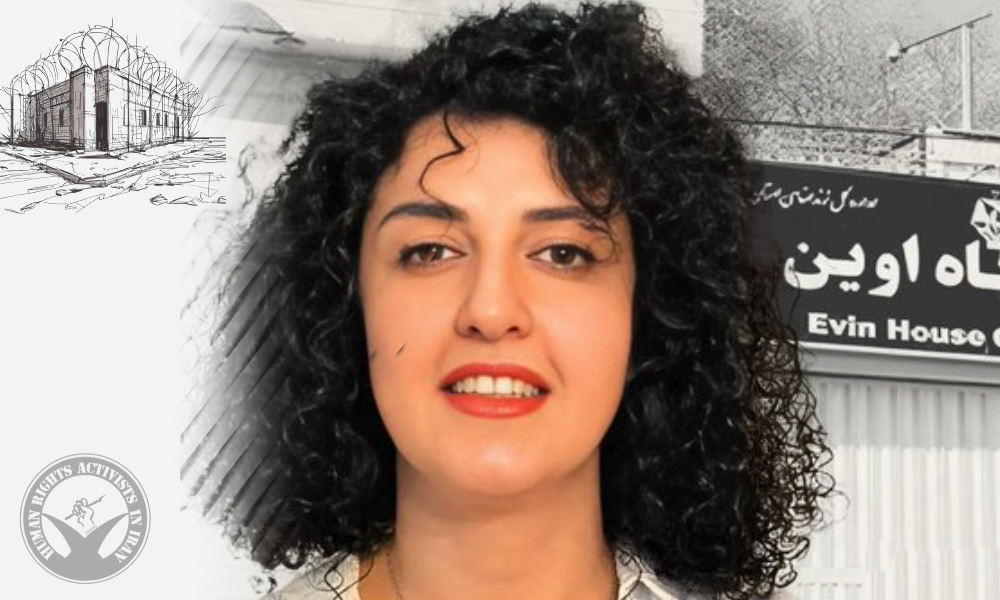
HRANA – Narges Mohammadi, Nobel Peace Prize laureate and human rights activist, has been sentenced by the Mashhad Revolutionary Court to seven years and six months in prison, two years of internal exile to Khaf County, and a two-year travel ban.

Her lawyer, Mostafa Nili, announced in a public statement that Branch One of the Mashhad Revolutionary Court sentenced his client to six years in prison on the charge of assembly and collusion, one and a half years in prison for propaganda activities, and, as supplementary punishment, two years of travel ban and two years of exile to Khaf County.
Mr. Nili added that the court session was held on Saturday and that the verdict was issued and formally communicated to him afterward. According to him, following the issuance of the ruling, Ms. Mohammadi’s continued detention in a security detention facility is unlawful, and she should be transferred to prison. Given her medical conditions, it is expected that she be temporarily released on bail to allow access to medical treatment.

Ms. Mohammadi was arrested on December 12 of this year during a memorial ceremony marking the seventh day after the death of Khosrow Alikordi at Ghadir Mosque in Mashhad, along with several other activists and citizens.

She was previously released from Evin Prison in late last year in connection with an earlier conviction.

In June 2021, after being released from Zanjan Prison under the law reducing prison sentences, Ms. Mohammadi was sentenced in a case opened against her during that period by Branch 1177 of Criminal Court II at the Qods Judicial Complex in Tehran to 30 months of discretionary imprisonment, 80 lashes, and the payment of two fines.

In November 2021, she was arrested by security forces in Karaj during a memorial ceremony marking the second anniversary of the death of Ebrahim Ketabdar, one of those killed during the November 2019 protests. She was later sentenced by Branch 26 of the Tehran Revolutionary Court to eight years of discretionary imprisonment, 74 lashes, two years of exile, and additional social deprivations.

In October 2022, in another case opened against her during imprisonment, Branch 26 of the Tehran Revolutionary Court sentenced her to one year and three months of discretionary imprisonment, along with other supplementary punishments. In August 2023, she was again sentenced by the Tehran Revolutionary Court to one year of discretionary imprisonment.

In January 2024, in another part of her case, Branch 26 of the Tehran Revolutionary Court, presided over by Judge Iman Afshari, sentenced her on the charge of propaganda against the state to 15 months in prison, two years of exile outside Tehran and neighboring provinces, a two-year travel ban, two years’ prohibition from membership in social and political groups, and a two-year ban on the use of smartphones.

In late June 2024, in yet another case formed while she was in prison, Branch 29 of the Tehran Revolutionary Court sentenced her to one year in prison on the charge of propaganda against the state.

In late October 2024, following protests by women prisoners in Evin Prison after learning of the execution of Reza Rasaei and clashes with prison guards, a new case was opened against Ms. Mohammadi and several other inmates. She was sentenced by Criminal Court II of the Qods Judicial Complex in Tehran, presided over by Judge Abolfazl Ameri Shahrabi, to six months in prison on charges of assaulting an officer and disobedience.

Narges Mohammadi, a Nobel Peace Prize laureate facing multiple convictions, has so far been sentenced to a total of 15 years and six months of discretionary imprisonment. These sentences include 30 months in June 2021, eight years in November 2021, one year and three months in October 2022, one year in August 2023, 15 months in January 2024, one year in June 2024, and six months in October 2024.
In addition to prison terms, she has been sentenced to 154 lashes, two years of exile, a two-year travel ban, and multiple forms of social deprivation.

In 2023, the Nobel Peace Prize was awarded to Narges Mohammadi by the Norwegian Nobel Committee “for her courageous fight for freedom and human rights over three decades.”

Death Sentence of Varisheh Moradi Overturned

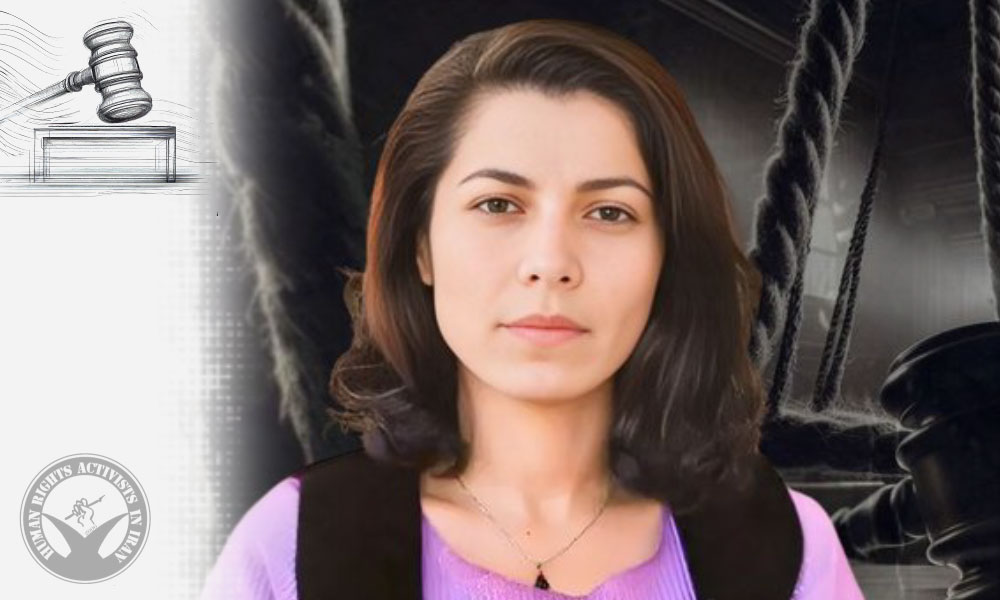
HRANA – The death sentence of Varisheh (Verisheh) Moradi, a political prisoner held in Evin Prison, has been overturned by the Supreme Court, and her case has been sent to an equivalent branch for retrial.

Her lawyer, Mostafa Nili, announced moments ago that the Supreme Court has nullified his client’s death sentence after reviewing her appeal. According to him, the ruling was overturned due to procedural violations and the failure to properly inform the defendant of the charges used as the basis for issuing the death sentence during proceedings in Branch 15 of the Tehran Revolutionary Court.

In November 2024, Ms. Moradi had been sentenced to death on the charge of baghi (armed rebellion) by Branch 15 of the Tehran Revolutionary Court, presided over by Judge Abolghasem Salavati.

In October 2024, in a separate joint case opened against her and four other prisoners inside the prison, Ms. Moradi was sentenced by Branch Two of the Qods Judicial Complex in Tehran to six months’ discretionary imprisonment. In that case, she faced charges of assaulting an officer and disobedience. The case stemmed from an incident on August 6, when Evin women’s ward prisoners protested after learning of the execution of Reza Rasaei, leading to confrontations with prison guards.

Varisheh Moradi was arrested in August 2023 by security forces in the outskirts of Sanandaj. She was eventually transferred on December 26 of that year from The Ministry of Intelligence’s detention facility, known as Ward 209 of Evin Prison, after the completion of interrogation, to the women’s ward of the same prison.

Jafar Panahi Sentenced to Imprisonment and Other Penalties

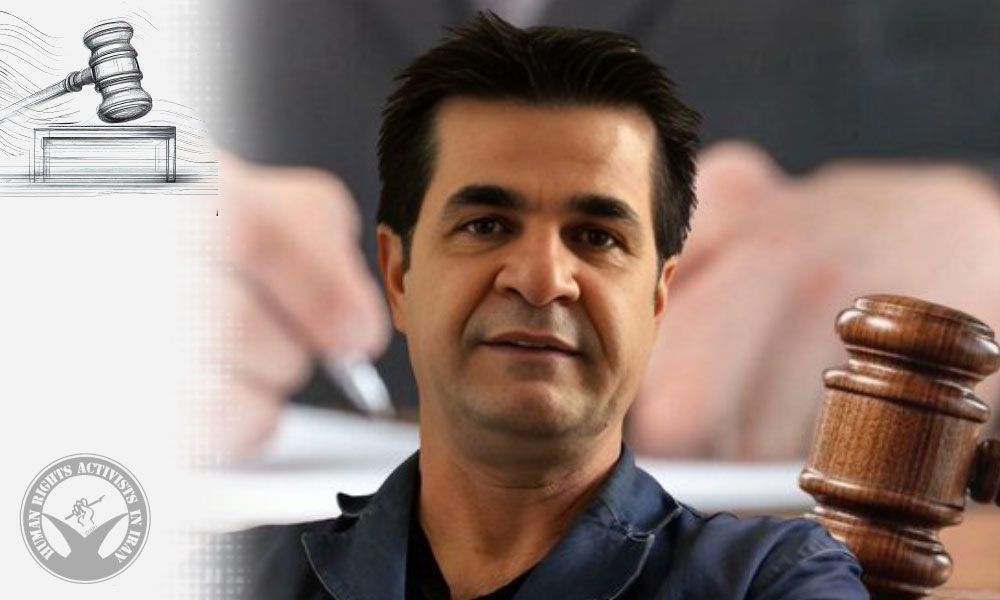
HRANA – Jafar Panahi, film director and screenwriter, has been sentenced by Branch 26 of the Tehran Revolutionary Court to one year in prison, two years of a travel ban, and additional penalties.

Mostafa Nili, Mr. Panahi’s defense attorney, wrote in a post on this matter: “Branch 26 of the Tehran Revolutionary Court has, in absentia, sentenced Mr. Panahi to one year in prison, two years of a travel ban, and a ban on membership in political and social groups, on the charge of propaganda against the regime.”
According to the attorney, “We will take the necessary steps to appeal this ruling within the legal deadline.”

Jafar Panahi has previously faced arrest and judicial actions due to his activities.

Jafar Panahi, aged 65, is an Iranian film director and screenwriter.

Subscribe to Our Newsletter

Now is definitely not the time to stop reading!

Ali Younesi and Amirhossein Moradi Sentenced to Over 7 Years in Prison

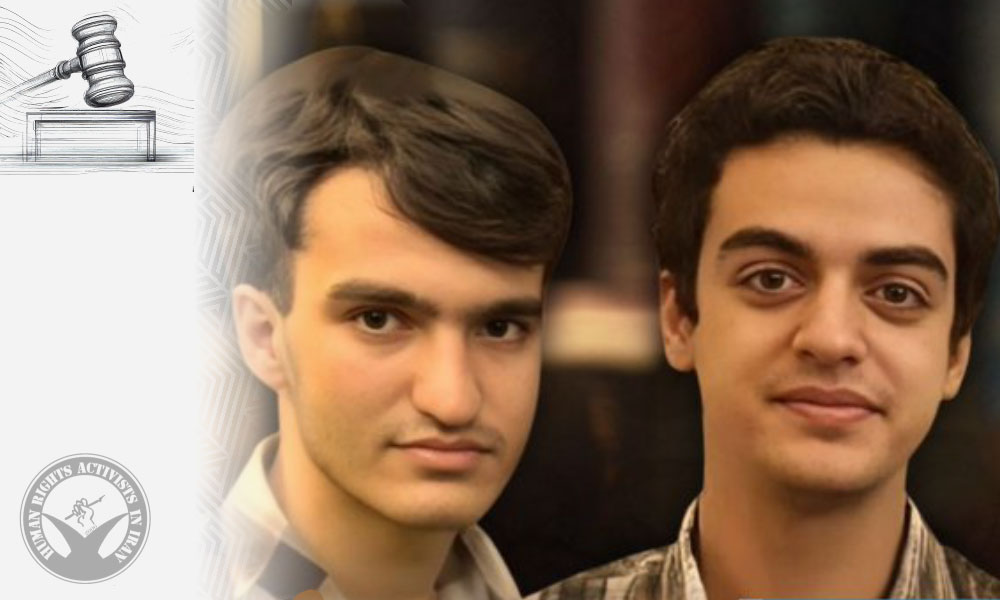
HRANA– Branch 29 of the Tehran Revolutionary Court sentenced Ali Younesi to a total of six years and three months in prison, along with social deprivations and exile. Amirhossein Moradi was also sentenced by the same branch to 15 months in prison.

Their lawyer, Mostafa Nili, announced that these award-winning Sharif University students were sentenced by Branch 29 to 15 months in prison each for “propaganda against the regime.” Younesi was additionally sentenced to five years in Kerman Prison on the charge of “endorsing and supporting the Zionist regime.”

According to Nili, as a complementary punishment, during his imprisonment, Younesi will be banned from access to the Internet and from making phone calls to outside the prison, except in necessary cases and under the supervision of the prison director.

The trial session for Younesi was held on July 28, and for Moradi on July 20, 2025.

Ali Younesi, a computer engineering student, and Amirhossein Moradi, a physics student at Sharif University of Technology, were arrested on April 10, 2020, by Ministry of Intelligence agents and transferred to the Ministry’s detention facility known as Ward 209 of Evin Prison. Their arrest was carried out by plainclothes agents without a judicial warrant and accompanied by beatings.

On May 5, 2020, Judiciary spokesperson Gholamhossein Esmaili accused the students of cooperating with an opposition group (the People’s Mojahedin Organization of Iran). Shortly afterward, Aida Younesi, Ali’s sister, released a video denying the accusations and stating that they were based on their parents’ history of imprisonment in the 1980s.

On June 25, 2022, more than two years after their arrest, Moradi and Younesi were transferred from the Ministry of Intelligence’s detention facility (Ward 209 of Evin Prison) to the prison’s public ward.

In their initial trial, the two award-winning Sharif University students were sentenced to 10 years in prison for “destruction and arson of public property” as the most severe charge, five years for “assembly and collusion against national security,” and one year for “propaganda against the regime.” On June 2022, Branch 36 of the Tehran Court of Appeals upheld the lower court’s verdict in full.

In March 2024, their lawyer announced that after the Supreme Court accepted their request for retrial, a parallel branch reduced Younesi’s maximum prison sentence from 10 years to six years and eight months. Nili added that the same process had previously been applied to Moradi, reducing his enforceable sentence to six years and eight months as well.

Amirhossein Moradi won the silver medal in Iran’s 2017 National Astronomy Olympiad, while Ali Younesi won the silver medal in 2016 and the gold medal in 2017. Younesi also won gold in the 12th International Olympiad on Astronomy and Astrophysics, held in China, securing first place in the competition.

Saeed Madani sentenced to 4 years in prison

HRANA News Agency – The eight-year prison sentence of Saeed Madani, a writer and sociologist currently imprisoned in Damavand Prison, has been reduced to four years following the acceptance of his request for retrial and a new hearing in a parallel court branch.

Mostafa Nili, a defense attorney, wrote: “After the Supreme Court accepted the retrial request, the parallel branch reduced Mr. Saeed Madani’s sentence for the charge of forming a group from eight years to four years. He is currently serving his sentence in Damavand Prison, contrary to the law.”

On April 2, 2024, this writer and sociologist was transferred from Evin Prison to Damavand Prison. His lawyer called the transfer “in violation of prison regulations.” The news outlet Etemad also reported that the move was carried out under “pressure from security agencies and by order of the Prosecutor General.”

In November 2022, Saeed Madani was sentenced by Branch 29 of the Tehran Revolutionary Court, presided over by Judge Ali Mazloum, to eight years in prison for “forming and running anti-government groups,” and to one year for “propaganda against the regime.” The verdict was fully upheld by Branch 36 of the Tehran Court of Appeals.

Madani was arrested in May 2022. Mehr News Agency, affiliated with the Islamic Propaganda Organization, cited “suspicious foreign ties and anti-security activities” as reasons for his arrest. After two months in Ward 209 of Evin Prison, he was transferred to Ward 4 of the same facility.

In June 2023, he was also formally charged in another case opened against him.

It is worth noting that Saeed Madani has published research on social issues in Iran, including poverty and inequality, addiction, child abuse, violence against women, sex work, social welfare, and similar topics. He has prior arrest and conviction records from 1994, 2000, 2001, and 2011.

In January 2022, his passport was confiscated at the airport and he was prevented from leaving the country.

Iran Reduces Prison Sentences for Political Prisoners Ali Younesi and Amirhossein Moradi

HRANA News Agency – Attorney Mostafa Nili has announced a reduction in the prison sentences of Ali Younesi and Amirhossein Moradi, two political prisoners. Following the Supreme Court’s approval of their retrial, a parallel judicial branch lowered their maximum sentences from 10 years to 6 years and 8 months. Previously, they had been sentenced to a combined total of 32 years in prison.

According to Nili, this reduction was first applied to Amirhossein Moradi and has now been extended to Ali Younesi as well.

On June 25, 2022, more than two years after their arrest, Younesi and Moradi were transferred from The Ministry of Intelligence’s detention facility (Ward 209 of Evin Prison) to the prison’s general ward.

In May 2022, Branch 36 of the Tehran Court of Appeals upheld their original convictions. The two Sharif University of Technology students had been sentenced to 10 years in prison for destruction and arson of public property as their most serious charge. They also received 5 years for conspiracy against national security and 1 year for propaganda against the regime.

Arrest and Allegations

Ali Younesi, a computer engineering student, and Amirhossein Moradi, a physics student, were arrested on April 10, 2020, by Ministry of Intelligence agents. The arrest, conducted by plainclothes officers without a judicial warrant and involving physical violence, sparked widespread condemnation.

On May 5, 2020, Gholamhossein Esmaeili, spokesperson for Iran’s Judiciary, accused them of collaborating with an opposition group (MEK). Shortly after, Aida Younesi, Ali Younesi’s sister, publicly rejected these allegations, attributing them to their parents’ history as former political prisoners in the 1980s.

Academic Achievements

Amirhossein Moradi won the silver medal in Iran’s 2017 National Astronomy Olympiad, while Ali Younesi won the silver medal in 2016 and the gold medal in 2017. Younesi also won gold in the 12th International Olympiad on Astronomy and Astrophysics, held in China, securing first place in the competition.

Their arrests and heavy sentences have drawn international criticism, with human rights organizations calling for their immediate release.

Narges Mohammadi Released on Medical Leave Following Suspension of Sentence

Today, December 4, Narges Mohammadi, Nobel Peace Prize laureate and human rights activist, was granted a 21-day medical leave after her prison sentence was temporarily suspended.

Her lawyer, Mostafa Nili, explained, “Based on a forensic report, the Tehran prosecutor suspended her sentence for three weeks due to her medical condition following surgery to remove a tumor and a bone graft performed 21 days ago. Fortunately, the tumor was benign, but she requires check-ups every three months.”

Mohammadi has long suffered from heart conditions, breast masses, and chronic back pain. Despite needing urgent medical care, including angiography, she often faced denial of access to treatment. On October 27, she was hospitalized for surgery and  returned to prison on November 16.

Narges Mohammadi has faced numerous convictions, totaling 15 years and 6 months of prison sentences, as well as 154 lashes, exile, and restrictions on travel and social activities.

In 2023, the Nobel Peace Prize was awarded to Narges Mohammadi for her “for her fight against the oppression of women in Iran and her fight to promote human rights and freedom for all.”

Toomaj Salehi Released from Prison After Serving Sentence

The public relations office of Isfahan’s Judiciary has announced that Toomaj Salehi, a protest rapper, was released from prison on Sunday, December 1, 2024, after completing a one-year sentence for “propaganda against the regime.”

The Judiciary’s media center, citing the Isfahan Judiciary’s public relations office, confirmed that Mr. Salehi’s release marked the end of his imprisonment on these charges.

Recently, Mostafa Nili, one of Salehi’s lawyers, revealed that Branch 5 of the Revolutionary Court of Isfahan had closed his 2022 case, issuing a decision to discontinue prosecution.

Earlier, another of Salehi’s lawyers, Amir Raisian, had disclosed that the same court had dismissed the charge of “spreading corruption on earth” (efsad-e-fel-arz), which had initially resulted in a death sentence, and instead acquitted him of that charge.

In April of this year, Salehi was sentenced to death by Branch 1 of the Revolutionary Court of Isfahan on the charge of “corruption on earth.” However, following an appeal, Branch 39 of the Supreme Court overturned the death sentence in early July and referred the case to Branch 5 of the Revolutionary Court for further review.

Salehi’s release concludes a complex legal ordeal that included facing and ultimately overcoming charges that carried the death penalty.

Salehi was arrested in late October 2022 in connection with the nationwide protests by security forces. Official news agencies claimed that he was attempting to illegally leave the country through the western borders, a claim denied by his associates. In July last year, he was sentenced by Branch 1 of the Revolutionary Court in Isfahan to six years and three months in prison, a travel ban, a ban on producing music and singing, and two years of mandatory behavior management and skills training. After this sentence was overturned by Branch 39 of the Supreme Court, he was released on bail on November 18, 2023.

Nevertheless, Salehi’s freedom was short-lived as he was re-arrested in Babol on November 30, just twelve days after being bailed out from Dastgerd Prison in Isfahan. The Judiciary spokesperson cited Salehi’s post-release statement as grounds for this subsequent arrest.

In January of 2024, in another part of his case, the Revolutionary Court of Isfahan sentenced him to one year in prison, two years of passport invalidation, and participation in behavior management courses on the charge of ‘propaganda against the regime.’ This sentence was upheld by the Isfahan Provincial Court of Appeals in late February. Late last year, Branch 117 of Criminal Court 2 in Isfahan acquitted him of the charges of ‘spreading falsehoods’ and ‘inciting violence.’

Toomaj Salehi, a protest rapper from Shahin Shahr, Isfahan, had previously been sentenced to six months in prison and a fine in 2021 for ‘insulting the Supreme Leader’ and ‘propaganda against the regime.’