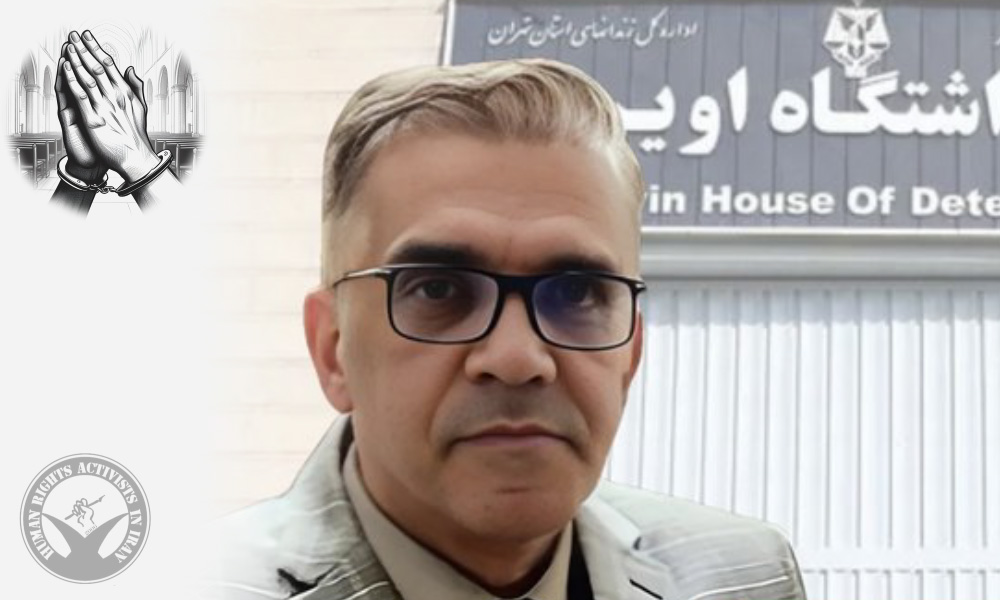
Mazaher Heydari Continues Hunger Strike in Shahr-e Kord Prison

Mazaher Heydari, a Gonabadi Dervish currently imprisoned in Shahr-e Kord, has been on a hunger strike for over 12 days and has been denied the right to make phone calls to his family.

A source close to Heydari’s family confirmed to HRANA, “Mr. Heydari began his hunger strike on Saturday, August 10, in protest against the 40-month prison sentence issued against him. Since then, the authorities have deprived him of phone calls to his family, and in protest, he has sewn his lips shut.”

In June of this year, Heydari was arrested by security forces in Shahr-e Kord and later transferred to the city’s prison. That same month, he was sentenced in absentia by Branch 1 of the Revolutionary Court of Shahr-e Kord, presided over by Judge Balanian, to a total of 40 months in prison on charges of “disturbing public opinion,” “propaganda against the regime,” and “assembly and collusion against national security.” Under Article 134 of the Islamic Penal Code, the most severe sentence, 32 months in prison, will be enforced.

Mazaher Heydari has previously faced legal actions due to his activities.

The Gonabadi Dervishes (Darvishes) are members of a Sufi Muslim community in Iran, known for their spiritual practices and emphasis on mysticism. Despite their peaceful beliefs, the Gonabadi Dervishes have faced increasing persecution by the Iranian regime, which views their independence and religious practices as a threat to the state’s control over religious expression. Over the years, many members of this community have been subjected to arrests, imprisonment, and harassment, with their leaders often targeted by the authorities.

Three Baha’i Citizens Sentenced to Prison and Other Penalties on Appeal

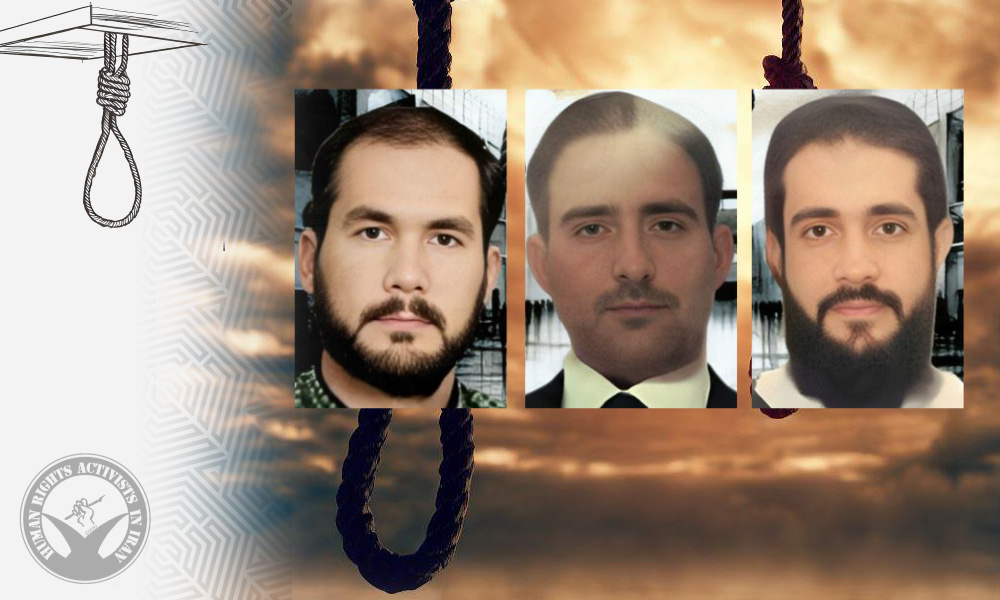
Arshia Rouhani, Hamid Monzavi, and Arash Nabavi, Baha’i citizens residing in Isfahan, have been sentenced by the province’s Appeals Court to two years in prison each, along with fines and additional penalties.

The ruling, issued by Branch 37 of the Isfahan Appeals Court under the presidency of Ahmad Ganjali Darani, sentences each of these Baha’i citizens to two years in prison, a fine of 24 million tomans, and a two-year ban on leaving the country and engaging in online activities. A source close to the family of one of these Baha’i citizens confirmed the news to HRANA, stating that the appeal hearing took place earlier this month in the mentioned branch.

Previously, Arshia Rouhani and Hamid Monzavi Joshaghani had been sentenced by Branch 1 of the Isfahan Revolutionary Court to five years in prison each, a fine of 50 million tomans, a two-year ban on online activities and leaving the country, and the confiscation of their assets. Mr. Nabavi had also been sentenced by the same branch to ten years in prison, a fine, confiscation of assets, and other additional penalties.

Arash Nabavi, approximately 38 years old, was arrested in August of last year and released after two months on bail.

In September of last year, two businesses owned by Rouhani and Monzavi in Isfahan were sealed by the Ministry of Intelligence but were reopened after a month. On October 30, 2023, Rouhani and Monzavi were summoned and arrested by Branch 13 of the Isfahan Public Prosecutor’s Office. They were released the next day on 300 million toman bail. Rouhani had previously faced legal action due to his religious beliefs.

Baha’is are subjected to violations of their religious rights, comprising 82% of reports on infringements against religious minorities, according to HRA’s 2023 annual report.

The Baha’i faith is not recognized as a legitimate religion by Iranian authorities, leading to systematic and longstanding violations of the rights of Baha’is in the country. This includes the denial of their fundamental right to practice their religion, which constitutes a clear breach of both Article 18 of the Universal Declaration of Human Rights and Article 18 of the International Covenant on Civil and Political Rights. The United Nations covenant holds that every person has the right to freedom of religion, freedom of converting religion, as well as freedom of expression, individually or collectively; openly or secretly.

Isfahan: Indictment Issued for Ten Baha’i Women

The indictment for ten Baha’i women residing in Isfahan, including Neda Badakhsh, Arezoo Sobhanian, Yeganeh Roohbakhsh, Mojgan Shahrezaie, Parastoo Hakim, Yeganeh Agahi, Bahareh Lotfi, Shana Shoughifar, Negin Khademi, and Neda Emadi, has been issued by the city’s Prosecutor’s Office.

The charges against Neda Badakhsh, 60, Arezou Sobhaniyan, 48, Yeganeh Roohbakhsh, 20, Mojgan Shahrezaei, 32, Parastoo Hakim, 47, Yeganeh Agahi, 31, Bahareh Lotfi, 27, Shana Shoughifar, 27, Negin Khademi, 34, and Neda (Shahla) Emadi, 42, include “propaganda against the regime” and “engaging in propaganda/educational activities against Sharia of Islam.”

These ten Baha’i women were arrested by security forces on October 23, 2023, and released on bail from Dolatabad Prison in Isfahan at different times over two months. Among there people, Yeganeh Agahi has a previous record of arrest.

Baha’is are subjected to violations of their religious rights, comprising 82% of reports on infringements against religious minorities, according to HRA’s 2023 annual report.

The Baha’i faith is not recognized as a legitimate religion by Iranian authorities, leading to systematic and longstanding violations of the rights of Baha’is in the country. This includes the denial of their fundamental right to practice their religion, which constitutes a clear breach of both Article 18 of the Universal Declaration of Human Rights and Article 18 of the International Covenant on Civil and Political Rights. The United Nations covenant holds that every person has the right to freedom of religion, freedom of converting religion, as well as freedom of expression, individually or collectively; openly or secretly.

Baha’i Citizen Matin Fahandej Saadi Arrested by Security Forces

On August 5, 34 years old Matin Fahandej Saadi, a Baha’i citizen residing in Kerman, was arrested by IRGC intelligence of the city and transferred to an unknown location.

A source close to the family confirmed this news to HRANA and said: “Matin Fahandej Saadi was arrested at his father’s workplace by the IRGC intelligence forces of Kerman. The security forces then went to his business, a pet boarding house, searched the place, and confiscated some personal belongings and CCTV cameras.”

The source added: “Despite the family’s efforts to follow up on Matin’s status at the local police station, Kerman’s Judicial Branch No. 5, and the IRGC intelligence office in Kerman, they have not received any information regarding the reasons for his arrest or his whereabouts. Judge Hadi Khalooie is in charge of this Baha’i citizen’s case and has issued a 48-hour detention order. The Kerman prosecutor’s office informed the family that they need to wait until August 10 for the case to be registered and then follow up on Matin Fahandej Saadi’s status. Matin has only had one brief phone call with his family since his arrest.”

Baha’is are subjected to violations of their religious rights, comprising 82% of reports on infringements against religious minorities, according to HRA’s 2023 annual report.

The Baha’i faith is not recognized as a legitimate religion by Iranian authorities, leading to systematic and longstanding violations of the rights of Baha’is in the country. This includes the denial of their fundamental right to practice their religion, which constitutes a clear breach of both Article 18 of the Universal Declaration of Human Rights and Article 18 of the International Covenant on Civil and Political Rights. The United Nations covenant holds that every person has the right to freedom of religion, freedom of converting religion, as well as freedom of expression, individually or collectively; openly or secretly.

Baha’i Citizen Nahid Behroozi Arrested

On July 29, the Ministry of Intelligence arrested Nahid Behroozi (Forouhari), a Baha’i citizen residing in Fardis County, Alborz Province. They also searched her residence and confiscated several of her personal belongings.

A source close to this citizen’s family confirmed the news to HRANA, saying: “Ms. Behroozi was arrested today, Monday, July 29, 2024, by Ministry of Intelligence agents at her home. The agents also searched her home and confiscated several items, including her mobile phone, laptop, and computer.”

So far, the reasons for her arrest and the charges against Ms. Behroozi have not been disclosed.

Baha’is are subjected to violations of their religious rights, comprising 82% of reports on infringements against religious minorities, according to HRA’s 2023 annual report.

The Baha’i faith is not recognized as a legitimate religion by Iranian authorities, leading to systematic and longstanding violations of the rights of Baha’is in the country. This includes the denial of their fundamental right to practice their religion, which constitutes a clear breach of both Article 18 of the Universal Declaration of Human Rights and Article 18 of the International Covenant on Civil and Political Rights. The United Nations covenant holds that every person has the right to freedom of religion, freedom of converting religion, as well as freedom of expression, individually or collectively; openly or secretly.

Subscribe to Our Newsletter

Now is definitely not the time to stop reading!

Baha’i Citizen Mojgan Salmanzadeh Detained in Urmia Prison

Mojgan Salmanzadeh, a Baha’i citizen, remains in a state of uncertainty in Urmia Prison for over twelve days.

A source close to the family confirmed this news to HRANA, stating: “Ms. Salmanzadeh was arrested by security forces on July 4th in the city of Maku and recently informed her family in a phone call that she has been transferred to the public ward of Urmia Prison. Also, temporary release has not yet been possible for this Baha’i citizen.”

As of the time of this report, no information has been obtained about the reasons for her arrest and the charges against her.

Mojgan Salmanzadeh is a Baha’i citizen and a researcher in the field of physiological psychology.

Baha’is are subjected to violations of their religious rights, comprising 82% of reports on infringements against religious minorities, according to HRA’s 2023 annual report.

The Baha’i faith is not recognized as a legitimate religion by Iranian authorities, leading to systematic and longstanding violations of the rights of Baha’is in the country. This includes the denial of their fundamental right to practice their religion, which constitutes a clear breach of both Article 18 of the Universal Declaration of Human Rights and Article 18 of the International Covenant on Civil and Political Rights. The United Nations covenant holds that every person has the right to freedom of religion, freedom of converting religion, as well as freedom of expression, individually or collectively; openly or secretly.


Fars Province Appeals Court Upholds Sentences Against Three Baha’i Citizens

The Fars Province Appeals Court has upheld the sentences against Hassan Salehi, Vahid Dana, and Saeed Abedi, Baha’i citizens. These individuals were each sentenced in the initial court to six years, one month, and seventeen days in prison, fines, and social deprivations.

According to these sentences, which were confirmed by Branch 37 of the Fars Province Appeals Court, each individual is sentenced to six years, one month, and seventeen days in prison, a fine, and deprivation of certain social rights for fifteen years.

On October 16, they were each sentenced by Branch 1 of the Shiraz Revolutionary Court in the initial trial to two years, seven months, and sixteen days in prison for “membership in an illegal and anti-regime sect with the intent to disrupt national security” and three years, six months, and one day in prison for “sectarian propaganda against the Islamic Sharia law,” serving under home arrest with electronic monitoring within a 1,000-meter radius of their residence. Additionally, they were each fined 37,100,000 Tomans and deprived of certain social rights for fifteen years.

Dana and Abedi were arrested by Ministry of Intelligence agents on April 28, 2021, at their homes and were finally released on bail from Adelabad Prison in Shiraz on June 1 of the same year.

Baha’is are subjected to violations of their religious rights, comprising 82% of reports on infringements against religious minorities, according to HRA’s 2023 annual report.

The Baha’i faith is not recognized as a legitimate religion by Iranian authorities, leading to systematic and longstanding violations of the rights of Baha’is in the country. This includes the denial of their fundamental right to practice their religion, which constitutes a clear breach of both Article 18 of the Universal Declaration of Human Rights and Article 18 of the International Covenant on Civil and Political Rights. The United Nations covenant holds that every person has the right to freedom of religion, freedom of converting religion, as well as freedom of expression, individually or collectively; openly or secretly.

Baha’i Citizen Payam Vali Receives One Year in Prison and Other Punishments

Payam Vali, a Baha’i citizen, has been sentenced by the Karaj Revolutionary Court to one year in prison, a two-year travel ban, and a ban on social media use in relation to a case opened against him during his imprisonment. He is currently serving a previous sentence in Ghezel Hesar Prison in Karaj.

Based on a verdict issued on Saturday, June 29, 2024, by Branch 3 of the Karaj Revolutionary Court, presided over by Judge Narimani, Vali was sentenced to one year in prison, a two-year travel ban, and a ban on social media use for the charge of “propaganda against the regime.”

The hearing for Vali’s charges was held on June 8 this year in the aforementioned branch.

A close associate of Vali told HRANA, “Publishing an open letter from prison was cited as evidence for the charges against him.” In this letter, Vali protested his illegal detention and the charges against him, and copies were sent to several political and judicial leaders of the Islamic Republic.

Vali’s arrest took place on September 24, 2022, when security forces apprehended him at his residence in Karaj and conducted a search of his house. Subsequently, he was detained in Rajai Shahr Prison before being relocated to Ghezel Hesar Prison.

In early February of the same year, Vali was sentenced by Branch 1 of the Alborz Revolutionary Court, presided over by Judge Seyed Mousa Asef Hosseini, to ten years in prison for “collaborating with hostile governments,” five years for “inciting people to war and killing each other,” one year for “propaganda against the regime,” with credit for time served, and additional punishments including a two-year travel ban post-imprisonment and two years of compulsory residence in Yasuj with weekly reporting to the Revolutionary Court.

Finally, on May 10, 2023, his sentence was reduced by the Alborz Court of Appeals to nine years and nine months in prison. Under Article 134 of the Islamic Penal Code, the most severe punishment, six years in prison, will be enforced. Vali’s request for a retrial was denied by the Supreme Court in early January 2024.

The Baha’i faith is not recognized as a legitimate religion by Iranian authorities, leading to systematic and longstanding violations of the rights of Baha’is in the country. This includes the denial of their fundamental right to practice their religion, which constitutes a clear breach of both Article 18 of the Universal Declaration of Human Rights and Article 18 of the International Covenant on Civil and Political Rights. The United Nations covenant holds that every person has the right to freedom of religion, freedom of converting religion, as well as freedom of expression, individually or collectively; openly or secretly.

Baha’i Arash Nabavi Sentenced to Imprisonment and Additional Punishments

Arash Nabavi, a Baha’i citizen residing in Isfahan, has been sentenced by the Revolutionary Court of this city to ten years of imprisonment, a fine, confiscation of property, and other penalties.

Based on a verdict issued by Branch 1 of the Revolutionary Court of Isfahan, presided over by Mohammadreza Tavakoli, and communicated to Mr. Nabavi, he has been sentenced to five years of imprisonment and a fine for the charge of “membership in groups to disrupt national security.” Additionally, for the charge of “propaganda activities against Islamic law”, he has been sentenced to another five years of imprisonment. As supplementary punishment, he has also been sentenced to a two-year ban on online acitvities, prohibition from leaving the country, and confiscation of property.
Three mobile phones, three flash drives, two tablets, three SIM cards, and several books and materials related to the Baha’i Faith are among the items ordered to be confiscated in the verdict.

This Baha’i citizen was arrested on August 14, 2023, and released after two months on bail. During the arrest, the officers searched his house and seized some of Mr. Nabavi’s personal belongings.

Arash Nabavi, single and approximately thirty-eight years old, lives the “Imam Neighborhood” in Isfahan.

Baha’is are subjected to violations of their religious rights, comprising 82% of reports on infringements against religious minorities, according to HRA’s 2023 annual report.

The Baha’i faith is not recognized as a legitimate religion by Iranian authorities, leading to systematic and longstanding violations of the rights of Baha’is in the country. This includes the denial of their fundamental right to practice their religion, which constitutes a clear breach of both Article 18 of the Universal Declaration of Human Rights and Article 18 of the International Covenant on Civil and Political Rights. The United Nations covenant holds that every person has the right to freedom of religion, freedom of converting religion, as well as freedom of expression, individually or collectively; openly or secretly.

Isfahan: Sentencing of Two Bahai Citizens from Imprisonment to Confiscation of Property

Arshia Rouhani and Hamid Monzavi Joshaghani, Bahai citizens residing in Isfahan, were sentenced by the Revolutionary Court of this city to five years in prison each, fines, confiscation of property, and additional punishments.

Based on the verdict issued by Branch 1 of the Isfahan Revolutionary Court, presided over by Mohammadreza Tavakoli, each of these Bahá’í citizens was sentenced to five years of imprisonment, a fifty million toman fine, and a two-year ban on social media activity and leaving the country. Additionally, several copy machines, laptops, mobile phones, external storage devices, and scanners previously seized from these citizens’ places of business were confiscated.

The charges against these citizens were “propaganda against the regime” and “membership in groups or associations formed within the country to undermine national security.”

In September of 2023, two business units belonging to these Bahá’í citizens in Isfahan were sealed by the Intelligence Ministry officers for one month. Simultaneously with the sealing of their business premises, several personal and work items of these citizens were seized by security forces. They were subsequently summoned and arrested on October 30, 2023, to the Isfahan Prosecutor’s Office and released after one day on a bail of three hundred million tomans (approximately 6,000 dollars).

Arshia Rouhani has previously faced judicial action due to his beliefs.

Baha’is are subjected to violations of their religious rights, comprising 82% of reports on infringements against religious minorities, according to HRA’s 2023 annual report.

The Baha’i faith is not recognized as a legitimate religion by Iranian authorities, leading to systematic and longstanding violations of the rights of Baha’is in the country. This includes the denial of their fundamental right to practice their religion, which constitutes a clear breach of both Article 18 of the Universal Declaration of Human Rights and Article 18 of the International Covenant on Civil and Political Rights. The United Nations covenant holds that every person has the right to freedom of religion, freedom of converting religion, as well as freedom of expression, individually or collectively; openly or secretly.