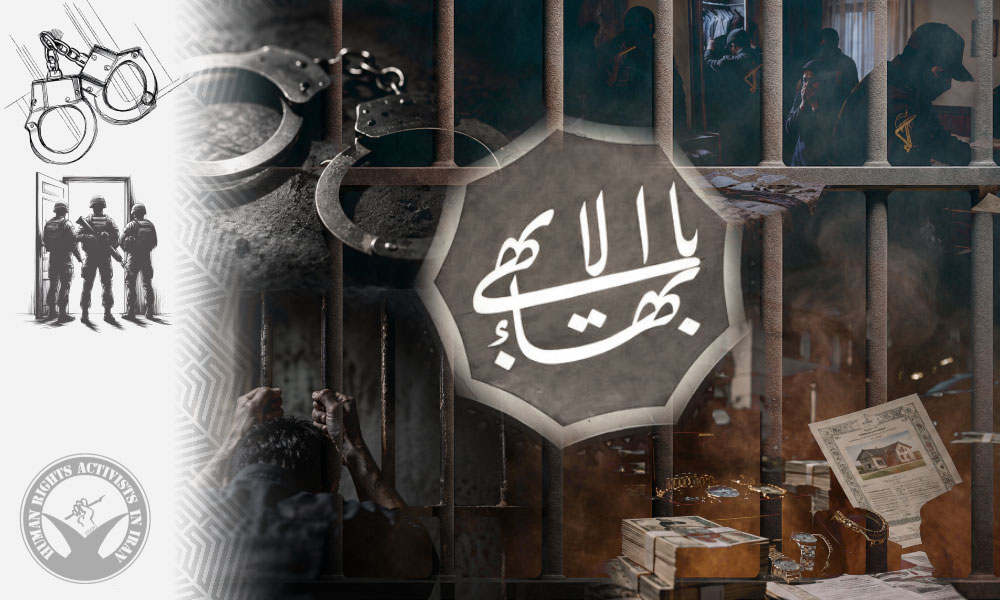
Arrests of Baha’i Citizens and Seizure of Their Property in Seven Provinces

HRANA – Between August 22 and August 25, 2026, security forces searched a number of homes and businesses belonging to Baha’i citizens across seven provinces in Iran. During these operations, at least 11 citizens were arrested or sent to prison to serve previously imposed sentences, and significant amounts of their personal property, electronic devices, and work equipment were seized.

According to HRANA, a wave of arrests, searches of homes and businesses, and seizures of property belonging to Baha’i citizens has taken place in various parts of the country in recent days.

In this regard, on Thursday, August 27, the Baha’i International Community issued a statement announcing that these actions had taken place across seven provinces between August 22 and August 25, and that a total of 11 citizens had been arrested or sent to prison to serve previously imposed sentences. The organization also expressed concern over the extensive seizure of personal property and equipment used by these citizens to earn a living.

Simin Fahandej, the Baha’i International Community’s representative to the United Nations in Geneva, described the seizure of Baha’i citizens’ property in the report as “state theft in daylight” stating that government agents entering homes and confiscating jewelry, wedding rings, vehicles, and other personal belongings does not in itself make such actions lawful. She also pointed to the seizure of family savings, professional equipment, musical instruments, and even children’s toys, saying these actions have intensified economic pressure on Baha’i families.

Fahandej further called on Iranian authorities to end the practice of seizing property, assets, and equipment used by Baha’i citizens to support themselves, and to provide a means for confiscated property to be returned and for affected families to pursue effective legal remedies.

HRANA independently reported a number of these cases during the period in question.

On Saturday, August 22, Soraya Manouchehrzadeh, a Baha’i citizen residing in Sari, was arrested by Ministry of Intelligence agents. The agents climbed over the wall of her family home and entered without presenting a judicial warrant. They searched the residence and seized a number of books and electronic devices belonging to her and members of her family.

On the same day, four other Baha’i citizens, Maral Roshani, Negar Badiei, Shima Sanaei, and Fakhereh Zahedi, were arrested in Sari. Including Soraya Manouchehrzadeh, the number of Baha’i citizens arrested in the city at that time reached five. They were transferred to the Ministry of Intelligence’s detention facility in Sari, known as the “Keshouei” detention facility. A source close to the family of one of these citizens previously told HRANA that the warrants presented by the agents authorized only searches and did not include arrest orders. The Baha’i International Community also stated that approximately 14 agents, five vehicles, and a representative of the prosecutor’s office were involved in the arrests of Shima Sanaei and Fakhereh Zahedi.

Also on August 22, Arsalan Yazdani, a Baha’i citizen, was arrested by security forces in Tehran. At the time of his arrest, his mobile phone, laptop, and several personal belongings were also seized. The Baha’i International Community added in its report that he was arrested in the presence of his two children to begin serving his prison sentence.

On Sunday, August 23, Iman Rashidi, a Baha’i citizen residing in Yazd, was arrested after appearing at Branch 1 of the Enforcement of Judgments Office of the city’s Revolutionary Court and was sent to prison to serve his sentence. He had previously been sentenced to three years, six months, and one day of imprisonment, 15 years of deprivation of social rights, and a fine of 371 million rials.

On Monday, August 24, security agents searched the homes of Amin Tabianifard, Bahariyeh Askarinasab, and Nima Tabianifard, Baha’i citizens residing in Isfahan. At the same time, their family business was sealed, and a musical instrument-making workshop belonging to the family was completely emptied. Agents also seized several mobile phones, laptops, cash, foreign currency, a camera, musical equipment, gold, and jewelry. In additional details about the incident, the Baha’i International Community stated that more than 20 agents participated in the searches and that Nima Tabianifard’s two-year-old child was present during the search. The organization also reported the seizure of several handmade musical instruments and workshop machinery.

On the same date, the home of Keyhan Atefi and Fereshteh Atefi, a Baha’i couple in Isfahan, was also searched by Ministry of Intelligence agents. During the search, agents also seized a number of the couple’s personal belongings, their vehicle, and other property.

On Tuesday, August 25, Sarir Mowghen, a Baha’i citizen residing in Isfahan, was arrested by Ministry of Intelligence agents and transferred to Dowlatabad Prison in the city. At the same time, agents searched her family home and seized a number of personal and electronic items, cash, gold, and a piano. The Baha’i International Community added in its report that Mowghan had recently returned to Iran from abroad and that no explanation has yet been provided for the reason for her arrest.

Over the past decade, Iran’s Baha’i community has been subjected to security and judicial actions more frequently than any other religious minority in the country. A review of HRA’s annual report reveals that over the past year an average of 62.41% of reports concerning religious minorities involved violations of the civil rights of Baha’is.
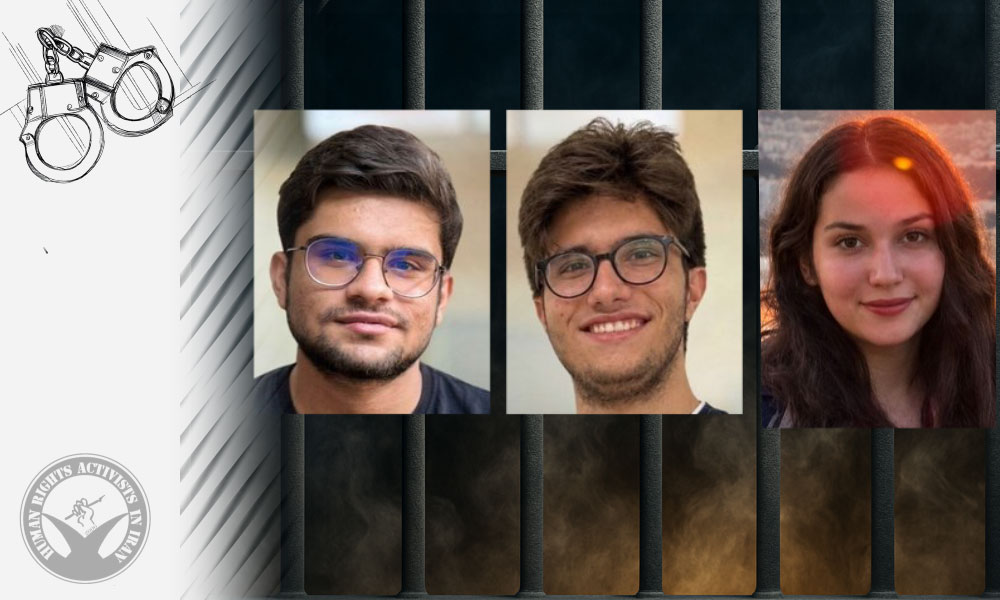
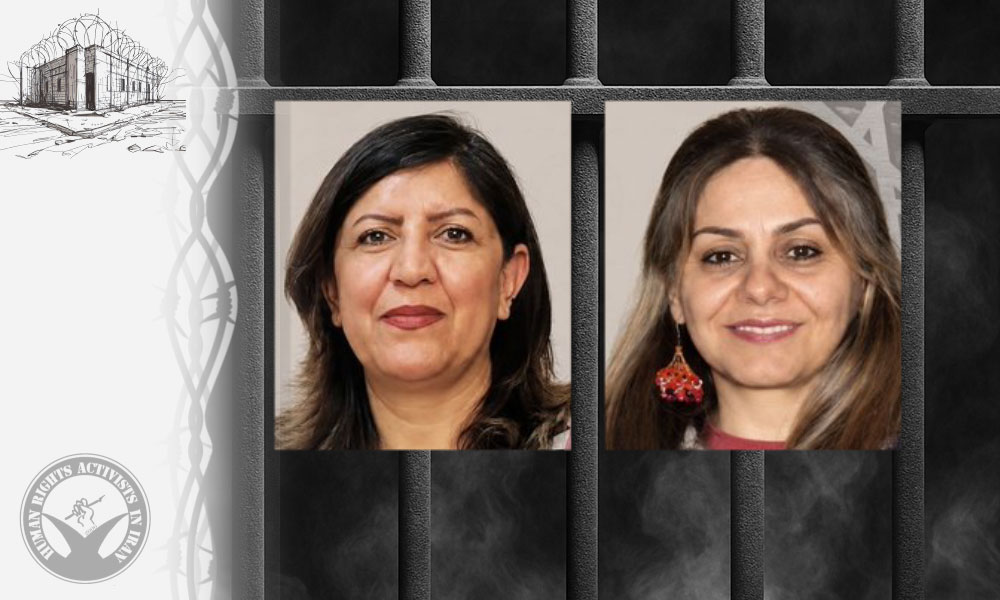
12 Baha’i Citizens Sentenced in Sari

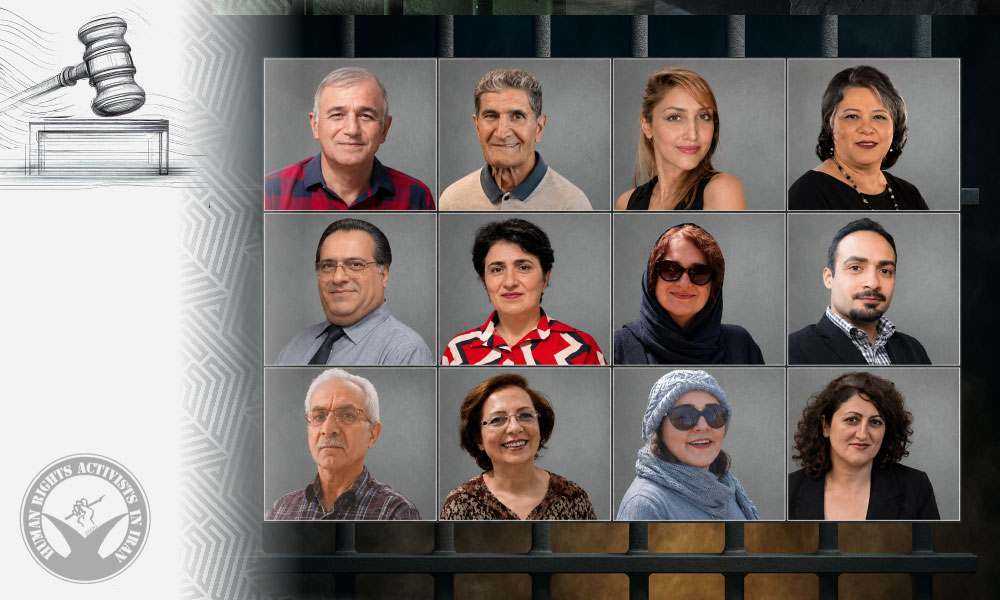
HRANA – Twelve Baha’i citizens have been sentenced by the Sari Revolutionary Court to a combined 26 years and 165 days in prison and 76 years of deprivation of social rights.

According to HRANA, 12 Baha’i citizens in Sari have been sentenced to prison.

According to a verdict issued on August 20, 2026, Baha’i citizens Raquel Ataian, Keyumars Akbari, Sohrab Leghaei, Zahra Golabian, Banafsheh Asadian Arabi, Fouad Leghaei, Anahita Koushakbaghi, Nasim Samimi, Hossein Fanaian, Emilia Fanaian, Melody Samimi, and Soheil Haghdoost were convicted by Branch 1 of the Sari Revolutionary Court, presided over by Judge Ammar Ramezani. Under the ruling, Ataian was sentenced to four years in prison and 10 years of deprivation of social rights. Each of the other defendants was sentenced to two years and 15 days in prison and six years of deprivation of social rights.

The verdict states that the charge against these citizens was “engaging in educational and promotional activities contrary and detrimental to the sacred Islamic Sharia, with the aim of promoting and encouraging the Baha’i sect.” Court hearings on the charges against these citizens were held on August 1, 2, and 3, 2026, before the same branch.

A source close to one of the Baha’i citizens confirmed the news to HRANA and, describing the proceedings in the case, said: “The first hearing on the charges against these citizens was held in May 2024 before Branch 1 of the Sari Revolutionary Court, presided over by Judge Shoja Zoghi. Due to deficiencies in the investigation, the court returned the case to the investigative branch three times. However, because the deficiencies were not addressed, the case was removed from the branch’s docket. It was subsequently referred to Branch 104 of the Qaem Shahr Criminal Court, presided over by Judge Reza Majazi, where hearings were held on July 12 and 13, 2025.”

The source added: “During these proceedings, Soheil Haghdoost and his wife, Raquel Ataian, were arrested and were unable to attend the hearings. Following their temporary release, the two were tried separately from the other defendants. The Criminal Court subsequently issued a ruling declaring that it lacked jurisdiction and referred the case back to Branch 1 of the Sari Revolutionary Court. After holding three hearings, the branch ultimately issued its verdict.”

The source further stated: “During her detention last year, Raquel Ataian faced a new judicial case. By decision of Branch 104 of the Qaem Shahr Criminal Court, the proceedings in that case were consolidated with this case. Ultimately, both cases resulted in a verdict issued by Branch 1 of the Sari Revolutionary Court.”

Previously, final defense sessions for these 12 Baha’i citizens were held separately in March 2024 before Branch 6 of the Investigative Office of the Qaem Shahr Prosecutor’s Office, presided over by Reza Majazi. Prior to that, security forces had searched their homes, and each of them had received a separate text message informing them that a judicial case had been opened against them at the Qaem Shahr Prosecutor’s Office.

Five Baha’i Citizens Arrested in Sari

HRANA – On Saturday, August 22, four Baha’i citizens, identified as Maral Roshani, Negar Badiei, Shima Sanaei, and Fakhereh Zahedi, were arrested in Sari. Yesterday, HRANA reported the arrest of Soraya Manouchehrzadeh, another Baha’i citizen residing in the city. Including her, the number of Baha’i citizens arrested in Sari has reached five.

According to HRANA, on Saturday, August 22, 2026, four additional Baha’i citizens were arrested in Sari.

HRANA has verified the identities of these citizens as Maral Roshani, Negar Badiei, Shima Sanaei, and Fakhereh Zahedi. According to information received by HRANA, Maral Roshani and Negar Badiei were arrested by Security Police officers and, after several hours of interrogation, were released at approximately 7:00 p.m. the same day. The two women were instructed to report to the relevant authorities next Saturday for further questioning.

Shima Sanaei and Fakhereh Zahedi were also arrested by Ministry of Intelligence agents. In a phone call with their families, they stated that they are being held at the Ministry of Intelligence’s detention facility in Sari, known as the “Keshouei” detention facility.

Yesterday, HRANA reported the arrest of Soraya Manouchehrzadeh, a Baha’i citizen residing in Sari. Ms. Manouchehrzadeh was also arrested by Ministry of Intelligence agents and transferred to the Sari detention facility.

A source close to the family of one of these citizens confirmed the news to HRANA and said: “The judicial orders presented by the agents when they arrived were solely search warrants and did not include orders for the arrest of these citizens. Nevertheless, the agents proceeded to arrest them. During the interrogations of Maral Roshani and Negar Badiei, most of the questions focused on their professional activities and allegations that they had used their occupations to ‘promote the Baha’i faith.’ When agents went to the homes of these two citizens, four officers were present, including one female officer.”

The source further added: “The arrests of Soraya Manouchehrzadeh, Shima Sanaei, and Fakhereh Zahedi involved a larger number of security personnel. Approximately 14 agents, five private vehicles, and a representative of the prosecutor’s office were present during these arrests.”

Maral Roshani is a health and personal care products retailer; Negar Badiei is an English-language instructor; Soraya Manouchehrzadeh is a Montessori instructor; Shima Sanaei is a health and personal care products retailer; and Fakhereh Zahedi is a homemaker.

Baha’i Citizens Sima Septo and Nahid Falahati Arrested

HRANA – Sima Septo and Nahid Falahati, Baha’i residents of Shiraz, were arrested at their homes by security forces on Tuesday, June 23, 2026, and taken to an undisclosed location.

According to HRANA, Sima Septo and Nahid Falahati have been arrested. According to information received by HRANA, on Tuesday, June 23, security forces raided the homes of these two Baha’i citizens and arrested them. However, the agency responsible for their arrests has not yet been identified.

No information has so far been obtained regarding the reasons for their arrests or their place of detention.

Over the past decade, the Baha’i community in Iran has been subjected to more security and judicial persecution than any other religious minority. A review of HRA’s annual reports shows that, over the past three years, an average of 72 percent of reports concerning religious minorities have been related to violations of the rights of Baha’i citizens.

Rouya Ostovar Sentenced to 6 Years in Prison and Additional Punishments

HRANA – The conviction of Rouya Ostovar, a Baha’i citizen from Isfahan, has been fully upheld by Branch 47 of the Isfahan Province Court of Appeals. She had previously been sentenced to six years in prison along with additional penalties.

According to HRANA, on Tuesday, May 19, the sentence issued against Rouya Ostovar was upheld in its entirety by Branch 47 of the Isfahan Province Court of Appeals.

According to the court ruling, Ms. Ostovar was sentenced to five years in prison, a monetary fine, and deprivation of social rights for 15 years on charges of “conducting educational and promotional activities deemed contrary to Islamic law through the creation and administration of a WhatsApp group related to the Baha’i faith.” She was also sentenced to one year in prison on charges of “propaganda against the regime through publishing content online.”

The international Baha’i community has issued a statement expressing concern regarding the sentence imposed on this Baha’i citizen.

In response to the ruling, Ms. Ostovar stated that the WhatsApp group in question had only nine members, three of whom were Baha’is. According to her, the evidence presented against her mainly consisted of congratulatory messages for various occasions and an image in which a symbol of the Baha’i faith appeared in part of the picture.

The lower court’s verdict was formally communicated to her in April of this year.

Over the past decade, the Baha’i community in Iran has been subjected to more security and judicial pressure than any other religious minority in the country. HRA’s annual reports indicate that in 2025, an average of 62.41% of all reports concerning religious minorities involved violations of the rights of Baha’i citizens.

Subscribe to Our Newsletter

Now is definitely not the time to stop reading!

Arrest of Two Bahá’í citizens by Security Forces in Mashhad

HRANA- Sepehr Koushkbagi and Payam Faridian, both Bahá’í citizens, have been arrested by security forces in Mashhad.

According to information received by HRANA, Koushkbagi was arrested on January 11, 2026, at the home of one of his friends by agents of the Mashhad Intelligence Department. He was later transferred to Vakilabad Prison in Mashhad following interrogation. Mr. Faridian was also arrested on January 22, 2026, at his pottery workshop in Mashhad by security forces. Five days after his arrest, no information has been obtained regarding his place of detention.

As of the time of this report, no information is available regarding the charges brought against these Bahá’í citizens.

Sepehr Koushkbagi is a 31-year-old Bahá’í citizen residing in Mashhad. Payam Faridian is a photographer and potter living in Mashhad.

Shahram Fallah, Baha’i Citizen, Arrested in Kerman

HRANA – On the evening of Monday, August 18, 2025, Shahram Fallah, a 64-year-old Baha’i citizen of Kerman, was arrested at his home by agents of the Ministry of Intelligence and transferred to that agency’s detention facility.

A source close to the family told HRANA: “Intelligence agents in Kerman came to Mr. Fallah’s home that evening and arrested him while several guests were present. They confiscated the mobile phones of family members and guests, along with a number of Mr. Fallah’s religious books and images. Since his arrest, he has not contacted his family.”

The reasons for his arrest and the charges against him remain unknown.

Mr. Fallah has previously faced judicial harassment, arrest, and imprisonment.

Recently, HRANA published a statistical report on the widespread human rights violations against Baha’i citizens in Iran over the past five years.

Retrial of 15 Baha’i Women in Isfahan Revolutionary Court on Charges of Educational and Promotional Activities Against Islamic Law

Fifteen Baha’i citizens from Baharestan, Isfahan, have once again been tried in the First Branch of the Revolutionary Court of Isfahan. Previously, this case had been returned from the Isfahan Court of Appeals to the Revolutionary Court for correction of deficiencies.

The retrial session took place today, Wednesday, September 25, 2024, in the First Branch of the Isfahan Revolutionary Court. Those on trial include Mojgan Pourshafe Ardestani, Nasrin Khademi Qahfarrokh, Azita Rezvani-Khah, Sholeh Ashouri, Mojdeh Bahamin, Bashra Motahar, Sara Shakib, Samira Shakib, Roya Azad Khosh, Nooshin Hemmat, Shurangiz Bahamin, Sanaz Rasteh, Maryam Khorsandi, Farkhandeh Rezvan Pay, and Firoozeh Rastinejad, all of whom are Baha’i citizens residing in Isfahan. They are facing charges of “educational/promotional activities against Islamic law.”

This case was initially sent to the Court of Appeals after a verdict was issued in the First Branch of the Revolutionary Court a few weeks ago. However, the Court of Appeals identified flaws and returned the case to the Revolutionary Court for corrections.

In late May 2024, these fifteen Baha’i women were sentenced by the same branch to five years of imprisonment, paying a fine, five years of deprivation from social services, and a two-year travel ban, all for the same charges of “educational/promotional activities against Islamic law.”

Among these individuals, Roya Azad Khosh, Azita Rezvani-Khah, Sara Shakib, Sanaz Rasteh, Sholeh Ashouri, Shurangiz Bahamin, Firoozeh Rastinejad, Maryam Khorsandi, Mojgan Pourshafe, Nasrin Khademi, and Nooshin Hemmat were arrested in 2021 and later released on bail.

Additionally, the homes of Bahamin, Rezvan Pay, Motahhar, and Samira Shakib had previously been searched by security forces.

Baha’is are subjected to violations of their religious rights, comprising 82% of reports on infringements against religious minorities, according to HRA’s 2023 annual report.

The Baha’i faith is not recognized as a legitimate religion by Iranian authorities, leading to systematic and longstanding violations of the rights of Baha’is in the country. This includes the denial of their fundamental right to practice their religion, which constitutes a clear breach of both Article 18 of the Universal Declaration of Human Rights and Article 18 of the International Covenant on Civil and Political Rights. The United Nations covenant holds that every person has the right to freedom of religion, freedom of converting religion, as well as freedom of expression, individually or collectively; openly or secretly.


Three Baha’i Citizens Sentenced to Prison and Other Penalties on Appeal

Arshia Rouhani, Hamid Monzavi, and Arash Nabavi, Baha’i citizens residing in Isfahan, have been sentenced by the province’s Appeals Court to two years in prison each, along with fines and additional penalties.

The ruling, issued by Branch 37 of the Isfahan Appeals Court under the presidency of Ahmad Ganjali Darani, sentences each of these Baha’i citizens to two years in prison, a fine of 24 million tomans, and a two-year ban on leaving the country and engaging in online activities. A source close to the family of one of these Baha’i citizens confirmed the news to HRANA, stating that the appeal hearing took place earlier this month in the mentioned branch.

Previously, Arshia Rouhani and Hamid Monzavi Joshaghani had been sentenced by Branch 1 of the Isfahan Revolutionary Court to five years in prison each, a fine of 50 million tomans, a two-year ban on online activities and leaving the country, and the confiscation of their assets. Mr. Nabavi had also been sentenced by the same branch to ten years in prison, a fine, confiscation of assets, and other additional penalties.

Arash Nabavi, approximately 38 years old, was arrested in August of last year and released after two months on bail.

In September of last year, two businesses owned by Rouhani and Monzavi in Isfahan were sealed by the Ministry of Intelligence but were reopened after a month. On October 30, 2023, Rouhani and Monzavi were summoned and arrested by Branch 13 of the Isfahan Public Prosecutor’s Office. They were released the next day on 300 million toman bail. Rouhani had previously faced legal action due to his religious beliefs.

Baha’is are subjected to violations of their religious rights, comprising 82% of reports on infringements against religious minorities, according to HRA’s 2023 annual report.

The Baha’i faith is not recognized as a legitimate religion by Iranian authorities, leading to systematic and longstanding violations of the rights of Baha’is in the country. This includes the denial of their fundamental right to practice their religion, which constitutes a clear breach of both Article 18 of the Universal Declaration of Human Rights and Article 18 of the International Covenant on Civil and Political Rights. The United Nations covenant holds that every person has the right to freedom of religion, freedom of converting religion, as well as freedom of expression, individually or collectively; openly or secretly.

Baha’i Family Receives Prison Sentences in Bojnurd

The Revolutionary Court of Bojnurd handed down prison sentences to Sholeh Shahidi and her two sons, Faran and Shayan Senaei, on January 9, 2024.

As per the recent ruling, Shayan Senaei has been sentenced to two years and two months, coupled with a fine, while Faran Senaei has received a two-year and six-month prison term, and Sholeh Shahidi is required to pay a fine.

In addition to imprisonment, the court imposed ten years of deprivation from certain social public services and the confiscation of some of their assets.

The charges leading to their conviction include “engaging in educational activities and propaganda against Islamic Sharia.” The court cited activities such as publishing posts on social media as examples of this charge.

Security forces arrested these Baha’i citizens at their Bojnurd residence on July 13, 2022. They were released on bail on August 4, 2022.

Notably, Sholeh Shahidi has previously faced legal challenges.

Baha’is are subjected to violations of their religious rights, comprising 82% of reports on infringements against religious minorities, according to HRA’s 2023 annual report.

The Baha’i faith is not recognized as a legitimate religion by Iranian authorities, leading to systematic and longstanding violations of the rights of Baha’is in the country. This includes the denial of their fundamental right to practice their religion, which constitutes a clear breach of both Article 18 of the Universal Declaration of Human Rights and Article 18 of the International Covenant on Civil and Political Rights. The United Nations covenant holds that every person has the right to freedom of religion, freedom of converting religion, as well as freedom of expression, individually or collectively; openly or secretly.