Nine Christian Converts Acquitted on Appeal

Branch 34 of the Tehran Province Court of Appeals acquitted nine Christian converts, Abdolreza Ali HaghNejad, Behnam Akhlaghi, Shahrooz Eslam-Doost, Mehdi Khatibi, Babak Hosseinzadeh, Khalil Dehghanpour, Hossein Kadivar, Kamal Namanian and Mohammad-Reza Vafadar. Each of them had been sentenced to five years in prison by Branch 28 of the Revolutionary Court of Tehran.

According to HRANA, the news agency of Human Rights Activists, following the Supreme Court of Iran’s agreement to hold a retrial, the case was sent to Branch 34 of the Tehran Province Court of Appeals. The citizens were charged with “acting against national security through holding underground church services and promoting Evangelical Christianity and Zionism.”

Their lawyers have argued that “as believers, [their] clients follow Christian faith and practices and have not done anything whatsoever against national security in preaching and explaining their faith, just as the Bible asked believers to be subject to governing authorities.”

These citizens had been sentenced to five years in prison. Branch 36 of the Tehran Province Court of Appeal upheld these verdicts in June of 2020. In November of last year, Branch 28 of the Supreme Court of Iran announced that promoting Christianity and forming a home church is neither a crime nor an act against national security. Consequently, their appeal was accepted and they were acquitted by Branch 34 of the Tehran Province Court of Appeals.

The prosecution of Christian converts stands in blatant violation of Article 18 of the Universal Declaration of Human Rights and Article 18 of the International Covenant on Civil and Political Rights, which state that every individual has the right to freedom of religion and belief and freedom to express it openly or secretly.

Baha’i Citizen Saba Sefidi Released from Evin Prison

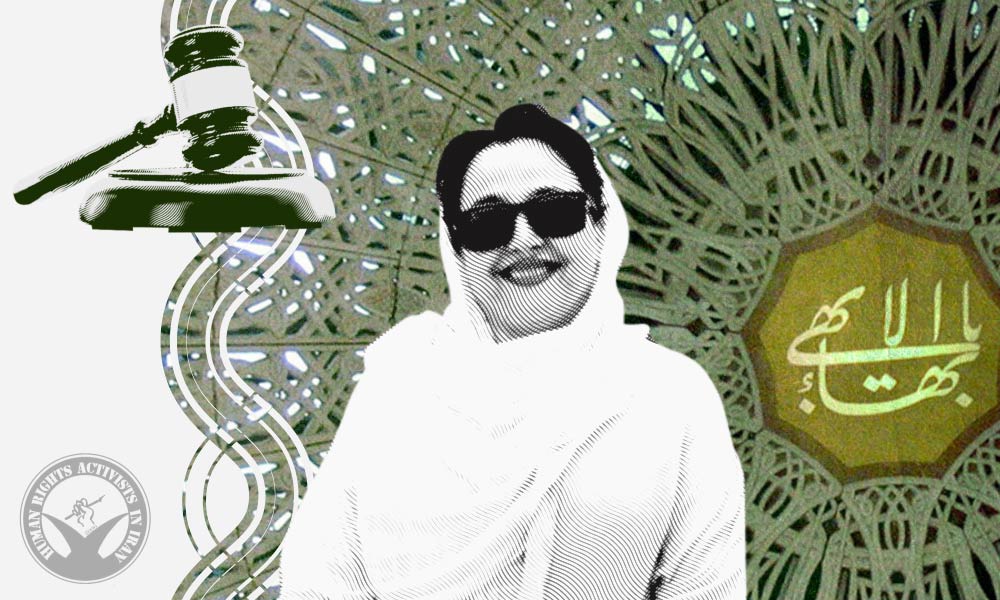
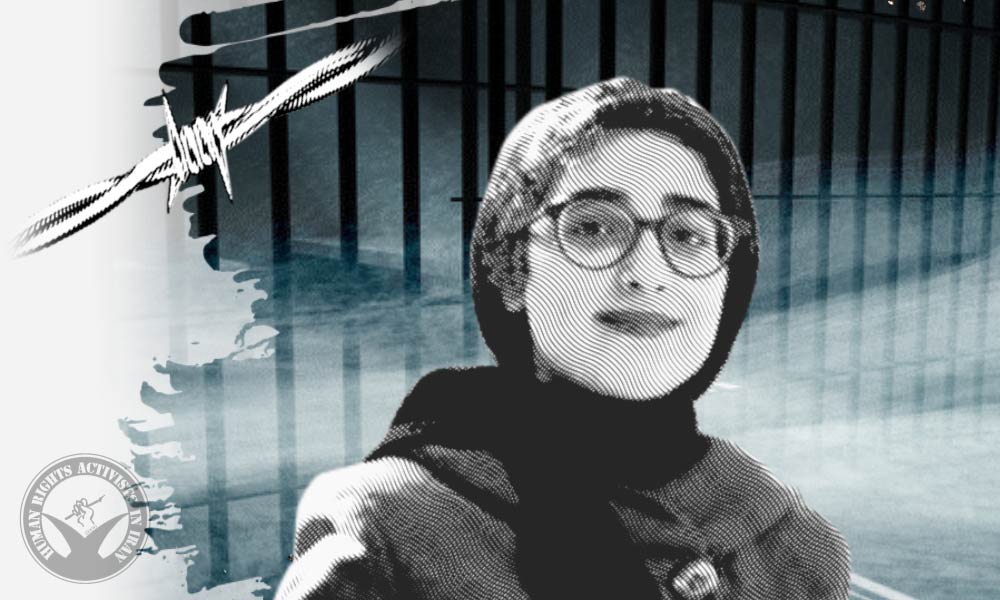
On February 23, Baha’i citizen Saba Sefidi, a resident of Tehran, was released on temporary bail pending legal proceedings.

According to HRANA, the news agency of Human Rights Activists, Sefidi was released on a bail of 1.5 billion tomans.

On January 11, she was arrested after an appearance at Branch 2 of Evin Courthouse in Tehran City. The reason for her arrest and the charges against her are still unknown.

Regarding the prosecution and the harassment of Baha’i people by Iran’s regime, HRA Senior Advocacy Coordinator Skylar Thompson stated that HRA strongly condemned these discriminatory acts against religious minorities in Iran. She asked that the regime take action to ensure Iranian people, and particularly Baha’i citizens, are entitled to the freedom of religion and can perform religious acts freely.

According to unofficial sources, it is estimated that more than 300,000 Baha’is live in Iran, but the Iranian constitution recognizes only Islam, Christianity, Judaism, and Zoroastrianism. Because their faith is not considered legitimate by authorities, the rights of Baha’is in Iran have been systematically violated for years.

The deprivation of the freedom to practice their religion is a breach of Article 18 of the Universal Declaration of Human Rights and Article 18 of the International Covenant on Civil and Political Rights. The United Nations covenant holds that every person has the right to freedom of religion, freedom of converting religion, as well as freedom of expression, individually or collectively; openly or secretly.

One Year Imprisonment Against Baha’i Citizen Shiva Khalili Upheld on Appeal

Recently, the Court of Appeal of Mazandaran Province upheld the initial verdict of one year in prison against Baha’i citizen Shiva Khalili. Moreover, in this verdict, her cell phone, which they ruled has been used as a “crime tool”, will be confiscated.

According to HRANA, the news agency of Human Rights Activists, November 16, 2021, she was arrested after being summoned and appearing at Branch 1 of the Public and Revolutionary Court of Babol. The day after, she was released on bail.

The Revolutionary Court of Babol City sentenced her to one year imprisonment and confiscation of her cell phone on the charge of “propaganda against the regime.”

According to unofficial sources, it is estimated that more than 300,000 Baha’i live in Iran, but the Iranian constitution recognizes only Islam, Christianity, Judaism, and Zoroastrianism. Because their faith is not considered legitimate by authorities, the rights of Baha’is in Iran have been systematically violated for years.

This deprivation of the freedom to practice their religion is a breach of Article 18 of the Universal Declaration of Human Rights and Article 18 of the International Covenant on Civil and Political Rights. The United Nations covenant holds that every person has the right to freedom of religion, freedom of converting religion, as well as freedom of expression, individually or collectively; openly or secretly.

Request for a Retrial of Two Christian Converts Rejected By the Supreme Court

Branch 9 of the Supreme Court rejected a request by two Christian converts, Hadi Rahimi and Sekineh Behjati, for a retrial. Rahimi has been recently jailed to serve his four years sentence and Behjati has been summoned to endure her two years imprisonment.

According to HRANA, the news agency of Human Rights Activists, according to their lawyer, “their request for a retrial is justified on the Article 474 of the Criminal Procedure Code and based on the verdict issued by Branch 28 of the Supreme Court whereby running a home church is not considered as an act against the national security. Moreover, whereas the prosecution has been quashed by the Dezful Courthouse, there are similarities between the verdict against my clients and the above-mentioned verdict, Christian faith is not a crime and is supported by the freedom of expression, the inquisition is prohibited, and finally, every punishment should be predicted in law, the arguments lean towards defendant’s favor rather than the verdict. Nonetheless, regardless of these arguments, the request for a retrial was dismissed.”

In February of 2020, security forces raided their house, confiscated some of their personal belongings and interrogated them about the charges of “propaganda against the regime and assembly and collusion against national security.”

In August of 2020, Branch 26 of Tehran’s Revolutionary Court sentenced Rahimi and Behjati to four and two years imprisonment respectively on the charges of “membership in political groups to disturb national security”. In October of that year, their verdict was upheld on appeal.

On January 9, Rahimi was jailed in Evin Prison to endure his sentence.


Baha’i Citizen Saba Sefidi Still in Detention After More Than a Month

After 33 days, Baha’i citizen Saba Sefidi, a resident of Tehran, is still in detention pending legal process. On January 11, she was arrested after an appearance at Branch 2 of Evin Courthouse.

According to HRANA, the news agency of Human Rights Activists, despite family frequent inquiry, judicial officials at Evin Courthouse have not yet provided any clear information about the reason for the arrest or her whereabouts, which is raising concern about her condition.

Since her arrest, she has been only allowed to make a few short calls to her family.

Regarding the prosecution and harassment of Baha’i people by Iran’s regime, HRA Senior Advocacy Coordinator Skylar Thompson stated that HRA strongly condemned these discriminatory acts against religious minorities in Iran. She asked that the regime take action to ensure Iranian people, and particularly Baha’i citizens, are entitled to the freedom of religion and can perform religious acts freely.

According to unofficial sources, it is estimated that more than 300,000 Baha’is live in Iran, but the Iranian constitution recognizes only Islam, Christianity, Judaism, and Zoroastrianism. Because their faith is not considered legitimate by authorities, the rights of Baha’is in Iran have been systematically violated for years.

The deprivation of the freedom to practice their religion is a breach of Article 18 of the Universal Declaration of Human Rights and Article 18 of the International Covenant on Civil and Political Rights. The United Nations covenant holds that every person has the right to freedom of religion, freedom of converting religion, as well as freedom of expression, individually or collectively; openly or secretly.

Subscribe to Our Newsletter

Now is definitely not the time to stop reading!

Two Christian Converts, Behnam Akhlaghi and Babak Hosseinzadeh, Summoned to Court for a New Legal Case

On Wednesday, February 9, 2022, two Christian converts, Behnam Akhlaghi and Babak Hosseinzadeh, were summoned by Branch 3 of Evin Prosecutor’s Office in regards to a new legal case opened against them.

According to HRANA, the news agency of Human Rights Activists,  Akhlaghi and Hosseinzadeh were asked to appear at the court within 5 days.

On February 23, 2019, they were arrested during a home church gathering in Rasht City. Security forces searched Akhlaghi’s house and confiscated some of his personal belongings. According to an informed source, during the search, the agents broke and damaged objects associated with the Christian faith.

After 12 days of interrogation in a security detention centre in Rasht City, they were transferred to Rasht Prison. On March 18, 2019,  they were released on bail of 150 million tomans until the end of legal proceedings.

On July 24, 2019, the first trial was held by Branch 28 of the Revolutionary Court of Tehran. During the court session, the judge increased the bail up to 1.5 billion tomans. Since they could not afford to provide the increased bail, they were detained and sent to Ward No 4 of Evin Prison.

Ultimately, they each were sentenced to five years imprisonment on the charge of “acting against national security and promotion of evangelical Christianity and Zionism”. This verdict was upheld by Branch 36 of the Court of Appeal of Tehran.

Subsequently, their request for a retrial was accepted in Branch 28 of the Supreme Court based on the argument that preaching Christianity and promoting Zionism at home cannot be related to the charge of assembly and collusion in purpose to disturb national security. Therefore, the Supreme Court delivered the case to Branch 34 of the Revolutionary Court which will be held on February 22 of this year.

However, recently a new legal case has been opened against them for which they have been summoned by Evin Prosecutor’s Office.

Despite the fact that Christians are recognized as a religious minority under Iranian law, security forces nevertheless harass and prosecute Muslims who convert to Christianity.

The prosecution of Christian converts stands in blatant violation of Article 18 of the Universal Declaration of Human Rights and Article 18 of the International Covenant on Civil and Political Rights, which state that every individual has the right to freedom of religion and belief and freedom to express it openly or secretly.

Two Christian Converts Summoned to Serve Their Sentence

Two Christian converts, Ramin Hassan-Pour and Saeedeh Sajjad-Pour, were summoned by Branch 1 of the Executive Unit of Evin Criminal Courthouse to serve their sentences. In August of 2020, they were sentenced to 5 and 2 years imprisonment respectively.

According to HRANA, the news agency of Human Rights Activists, quoting Article 18 Organization, two Christian converts Ramin Hassan-Pour and Saeedeh Sajjad-Pour were summoned to appear at the Executive Unit of Evin Criminal courthouse within 20 days to endure their sentence.

In February of 2020, along with two other Christian converts, Catherine Sajjad-Pour and Hadi Rahimi, the two citizens were interrogated at their home by security forces. They searched the house and confiscated some of their personal belongings. Thereafter, they were told that they would be indicted soon.

In May of 2020, Branch 10 of the Revolutionary Court of Rasht City summoned and notified them about the charges and thereafter set bail of 500 million for each. On May 14, 2020, all four were transferred to Lakan Prison in Rasht City following the failure to provide bail. In the following days, they were released from detention after reducing the bail to 200 million tomans.

In August of 2020, Hassan-Pour was sentenced to five years and Sajjad-Pour to two years in prison.

Despite the fact that Christians are recognized as a religious minority under Iranian law, security forces nevertheless harass and prosecute Muslims who convert to Christianity.

The prosecution of Christian converts stands in blatant violation of Article 18 of the Universal Declaration of Human Rights and Article 18 of the International Covenant on Civil and Political Rights, which state that every individual has the right to freedom of religion and belief and freedom to express it openly or secretly.

Christian Convert Sekineh Behjati Summoned to Serve Her Two Year Sentence

Christian Convert Sekineh Behjati was summoned to appear at Branch 1 of the Public and Revolutionary Court in Tehran within 30 days to serve her two year sentence. She was convicted in August of 2020.

According to HRANA, the news agency of Human Rights Activists, security forces raided and interrogated Behjati in August of 2020 at her house, accusing her of “propaganda against the regime and assembly and collusion against national security.” They also searched the house and confiscated some of her personal belongings. She was told that she will be indicted soon.

In May of 2020, she was arrested after being summoned by Branch 10 of the Revolutionary Court of Rasht City. On May 14, 2020, she was sent to Lakan Prison after failing to provide a bail of 500 million tomans. Finally, she was released six days later after reducing the bail to 200 million tomans.

Despite the fact that Christians are recognized as a religious minority under Iranian law, security forces nevertheless harass and prosecute Muslims who convert to Christianity.
The prosecution of Christian converts stands in blatant violation of Article 18 of the Universal Declaration of Human Rights and Article 18 of the International Covenant on Civil and Political Rights, which state that every individual has the right to freedom of religion and belief and freedom to express it openly or secretly.

Four Baha’i Citizens Still in Detention and Awaiting Legal Process

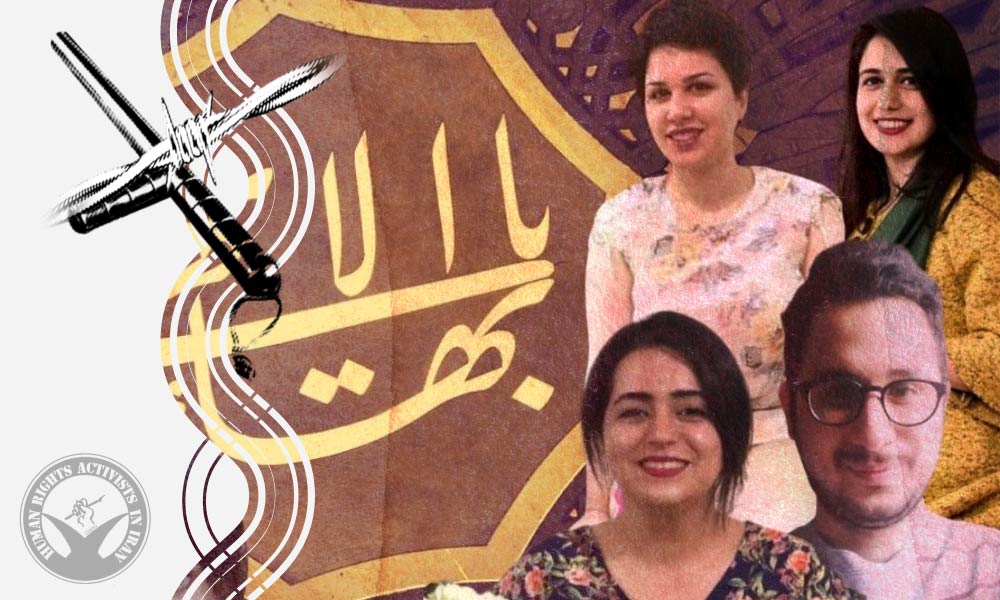
Four Baha’i citizens, Natoli Derakhshan, Saba Sefidi, Pari Kargarian Marvasti and Daniel Bani-Nejad, are still in detention and awaiting further legal proceedings. On January 11, Derakhshan and Sefidi were arrested in Sari and Tehran cities, respectively. Marvasti and Bani-Nejad were also arrested last week in Marlik District, located in Tehran Province.

According to HRANA, the news agency of Human Rights Activists, Sefidi, a resident of Tehran, was arrested after an appearance at Branch 2 of Evin Courthouse. Yesterday, she was allowed to make a phone call to her family. Despite her family’s inquiry, the reason for her arrest and the charges against her are still unknown.

On the same day, Derkhshan, a poet and Baha’i citizen, was arrested by intelligence agents at his home in Sari City.

Last week, security forces arrested Marvasti and Bani-Nejad along with another non-Baha’i citizen at Marvasti’s house. They searched her house and confiscated some of her belonging,  including electronic devices, books and other writings related to the Baha’i faith.

According to unofficial sources, it is estimated that more than 300,000 Baha’is live in Iran, but the Iranian constitution recognizes only Islam, Christianity, Judaism, and Zoroastrianism. Because their faith is not considered legitimate by authorities, the rights of Baha’is in Iran have been systematically violated for years.

The deprivation of the freedom to practice religion is a breach of Article 18 of the Universal Declaration of Human Rights and Article 18 of the International Covenant on Civil and Political Rights. The United Nations covenant holds that every person has the right to freedom of religion, freedom of converting religion, as well as freedom of expression, individually or collectively; openly or secretly.

Two Baha’i Citizens Sent to Adel-Abad Prison to Serve Their Sentence

On January 23, two Baha’i citizens, Farham Sabet and Farzan Masoomi, both residents of Shiraz City, were sent to Adel-Abad Prison to serve their sentence. Earlier, the Revolutionary Court of Shiraz sentenced each to six years in prison. On appeal, this verdict was reduced to two years for each.

According to HRANA, the news agency of Human Rights Activists, two Baha’i citizens Farham Sabet and Farzan Masoomi were jailed in Adel-Abad Prison in Shiraz City.

They were arrested by security forces in Shiraz in 2016 and after a while, they were released on bail until the end of legal proceedings.

In May of 2020, the Revolutionary Court of Shiraz, headed by Judge Mahmood Sadati, sentenced each to 6 years on the charges of “propaganda against the regime and membership in one of the anti-regime groups”. This verdict was reduced for each to two years on appeal.

According to unofficial sources, it is estimated that more than 300,000 Baha’is live in Iran, but the Iranian constitution recognizes only Islam, Christianity, Judaism, and Zoroastrianism. Because their faith is not considered legitimate by authorities, the rights of Baha’is in Iran have been systematically violated for years.

This deprivation of the freedom to practice their religion is a breach of Article 18 of the Universal Declaration of Human Rights and Article 18 of the International Covenant on Civil and Political Rights. The United Nations covenant holds that every person has the right to freedom of religion, freedom of converting religion, as well as freedom of expression, individually or collectively; openly or secretly.