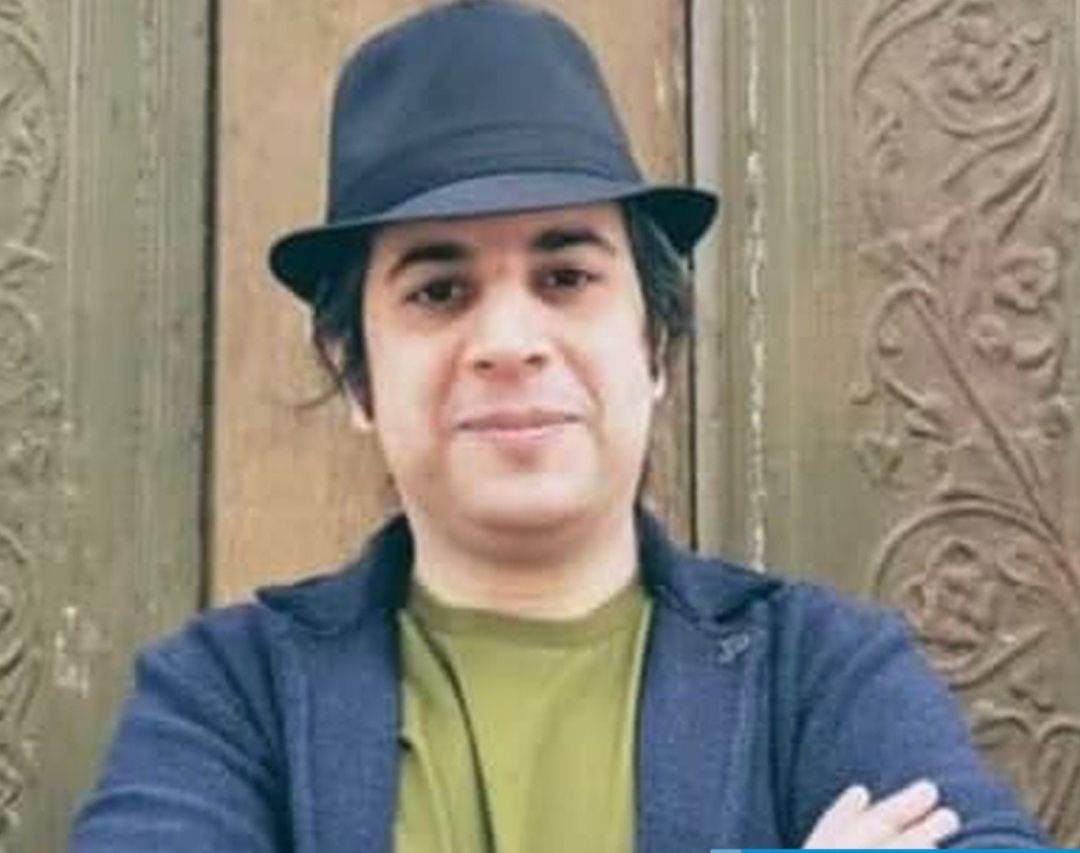
Arrests of Baha’i Citizens and Seizure of Their Property in Seven Provinces

HRANA – Between August 22 and August 25, 2026, security forces searched a number of homes and businesses belonging to Baha’i citizens across seven provinces in Iran. During these operations, at least 11 citizens were arrested or sent to prison to serve previously imposed sentences, and significant amounts of their personal property, electronic devices, and work equipment were seized.

According to HRANA, a wave of arrests, searches of homes and businesses, and seizures of property belonging to Baha’i citizens has taken place in various parts of the country in recent days.

In this regard, on Thursday, August 27, the Baha’i International Community issued a statement announcing that these actions had taken place across seven provinces between August 22 and August 25, and that a total of 11 citizens had been arrested or sent to prison to serve previously imposed sentences. The organization also expressed concern over the extensive seizure of personal property and equipment used by these citizens to earn a living.

Simin Fahandej, the Baha’i International Community’s representative to the United Nations in Geneva, described the seizure of Baha’i citizens’ property in the report as “state theft in daylight” stating that government agents entering homes and confiscating jewelry, wedding rings, vehicles, and other personal belongings does not in itself make such actions lawful. She also pointed to the seizure of family savings, professional equipment, musical instruments, and even children’s toys, saying these actions have intensified economic pressure on Baha’i families.

Fahandej further called on Iranian authorities to end the practice of seizing property, assets, and equipment used by Baha’i citizens to support themselves, and to provide a means for confiscated property to be returned and for affected families to pursue effective legal remedies.

HRANA independently reported a number of these cases during the period in question.

On Saturday, August 22, Soraya Manouchehrzadeh, a Baha’i citizen residing in Sari, was arrested by Ministry of Intelligence agents. The agents climbed over the wall of her family home and entered without presenting a judicial warrant. They searched the residence and seized a number of books and electronic devices belonging to her and members of her family.

On the same day, four other Baha’i citizens, Maral Roshani, Negar Badiei, Shima Sanaei, and Fakhereh Zahedi, were arrested in Sari. Including Soraya Manouchehrzadeh, the number of Baha’i citizens arrested in the city at that time reached five. They were transferred to the Ministry of Intelligence’s detention facility in Sari, known as the “Keshouei” detention facility. A source close to the family of one of these citizens previously told HRANA that the warrants presented by the agents authorized only searches and did not include arrest orders. The Baha’i International Community also stated that approximately 14 agents, five vehicles, and a representative of the prosecutor’s office were involved in the arrests of Shima Sanaei and Fakhereh Zahedi.

Also on August 22, Arsalan Yazdani, a Baha’i citizen, was arrested by security forces in Tehran. At the time of his arrest, his mobile phone, laptop, and several personal belongings were also seized. The Baha’i International Community added in its report that he was arrested in the presence of his two children to begin serving his prison sentence.

On Sunday, August 23, Iman Rashidi, a Baha’i citizen residing in Yazd, was arrested after appearing at Branch 1 of the Enforcement of Judgments Office of the city’s Revolutionary Court and was sent to prison to serve his sentence. He had previously been sentenced to three years, six months, and one day of imprisonment, 15 years of deprivation of social rights, and a fine of 371 million rials.

On Monday, August 24, security agents searched the homes of Amin Tabianifard, Bahariyeh Askarinasab, and Nima Tabianifard, Baha’i citizens residing in Isfahan. At the same time, their family business was sealed, and a musical instrument-making workshop belonging to the family was completely emptied. Agents also seized several mobile phones, laptops, cash, foreign currency, a camera, musical equipment, gold, and jewelry. In additional details about the incident, the Baha’i International Community stated that more than 20 agents participated in the searches and that Nima Tabianifard’s two-year-old child was present during the search. The organization also reported the seizure of several handmade musical instruments and workshop machinery.

On the same date, the home of Keyhan Atefi and Fereshteh Atefi, a Baha’i couple in Isfahan, was also searched by Ministry of Intelligence agents. During the search, agents also seized a number of the couple’s personal belongings, their vehicle, and other property.

On Tuesday, August 25, Sarir Mowghen, a Baha’i citizen residing in Isfahan, was arrested by Ministry of Intelligence agents and transferred to Dowlatabad Prison in the city. At the same time, agents searched her family home and seized a number of personal and electronic items, cash, gold, and a piano. The Baha’i International Community added in its report that Mowghan had recently returned to Iran from abroad and that no explanation has yet been provided for the reason for her arrest.

Over the past decade, Iran’s Baha’i community has been subjected to security and judicial actions more frequently than any other religious minority in the country. A review of HRA’s annual report reveals that over the past year an average of 62.41% of reports concerning religious minorities involved violations of the civil rights of Baha’is.
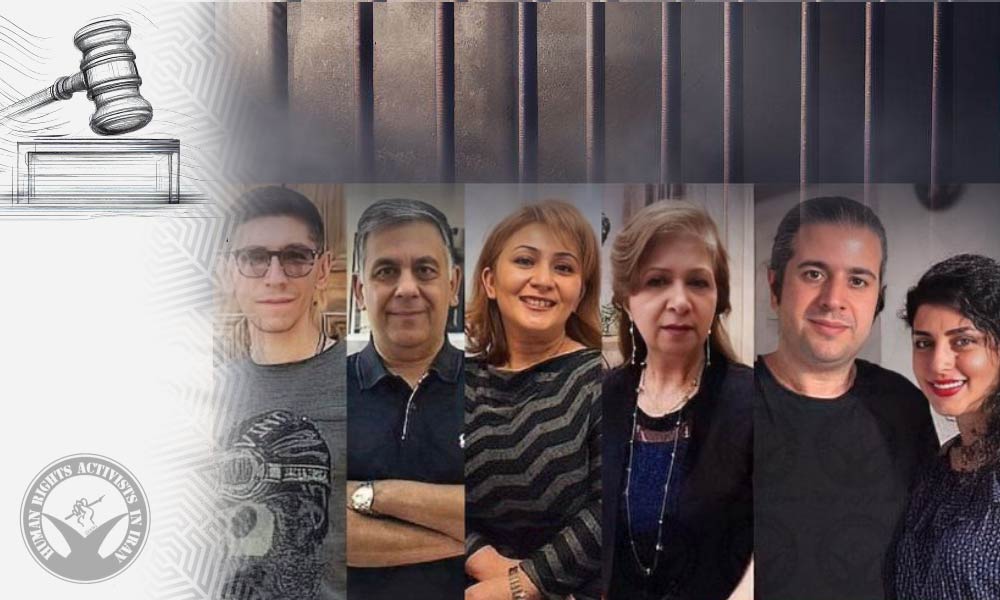
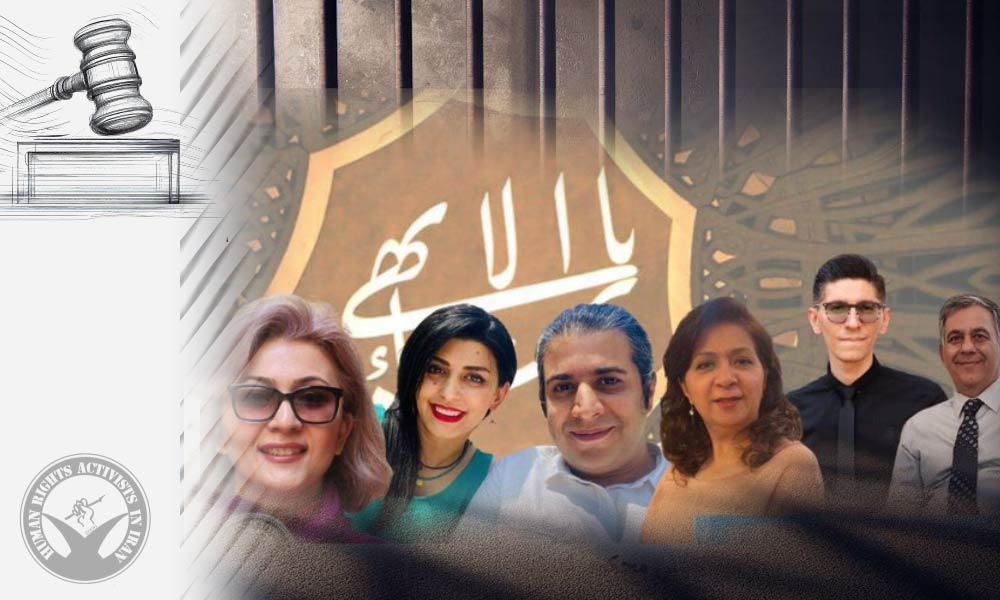
Six Baha’i Citizens’ Sentences Reduced to 29 Years and 10 Months on Appeal

The Tehran Court of Appeals has revised the sentences of six Baha’i citizens, resulting in a combined prison term of 29 years and 10 months. The affected individuals are Saeedeh Khozuei, Saba Sefidi, Iraj Shakoor, Samira Ebrahimi, Pedram Abhar, and Arsalan Yazdani.

Presiding over Branch 36 of the Tehran Court of Appeals, Judge Abasasli issued the following breakdown for the revised sentences: Khozuei and Yazdani will serve six years each, Shakoor and Abhar five years each, Ebrahimi four years and five months, and Sefidi three years and five months.

A source close to the families, speaking to HRANA, revealed that “the government will confiscate the properties seized from these citizens during their arrest.”

The charges against each individual are as follows:

  • Saeedeh Khozuei: Five years for “membership in anti-regime groups” and one year for “propaganda against the regime.”
  • Arsalan Yazdani: Five years for “membership in anti-regime groups” and one year for “propaganda against the regime.”
  • Iraj Shakoor: Five years for “membership in anti-regime groups.”
  • Pedram Abhar: Five years for “membership in anti-regime groups.”
  • Samira Ebrahimi: Three years and five months for “membership in anti-regime groups” and one year for “propaganda against the regime.”
  • Saba Sefidi: Three years and five months for “membership in anti-regime groups.”

Initially, the Tehran Revolutionary Court had sentenced them to a combined 32 years and 10 months.

HRANA’s annual report has highlighted a concerning trend where, in 2022, 64.63% of reported human rights violations against religious minorities are directed toward the Baha’i community.

The Baha’i faith is not recognized as a legitimate religion by Iranian authorities, leading to systematic and longstanding violations of the rights of Baha’is in the country. This includes the denial of their fundamental right to practice their religion, which constitutes a clear breach of both Article 18 of the Universal Declaration of Human Rights and Article 18 of the International Covenant on Civil and Political Rights. The United Nations covenant holds that every person has the right to freedom of religion, freedom of converting religion, as well as freedom of expression, individually or collectively; openly or secretly.

Six Baha’i Citizens Receive Lengthy Prison Sentences

In a recent development, the Tehran Revolutionary Court has handed down substantial prison sentences to six Baha’i citizens, namely Samira Ebrahimi, Arsalan Yazdani, Pedram Abhar, Saba Sefidi, Saeedeh Khozuei, and Iraj Shakoor, totaling 32 years and 10 months behind bars.

Presiding over Branch 29 of the Tehran Revolutionary Court, Judge Ali Mazloum has pronounced six-year sentences for Yazdani, Abhar, Khozuei, and Shakoor, while Ebrahimi and Sefidi have been each sentenced to four years and five months.

The charges against these individuals are as follows:

  • Samira Ebrahimi: Membership in anti-regime groups, propaganda against the regime, and engaging in educational activities against Sharia law.
  • Arsalan Yazdani: Membership in anti-regime groups, propaganda against the regime, and engaging in educational activities against Sharia law.
  • Pedram Abhar: Membership in anti-regime groups and propaganda against the regime.
  • Saba Sefidi: Membership in anti-regime groups and propaganda against the regime.
  • Saeedeh Khozuei: Membership in anti-regime groups.
  • Iraj Shakoor: Propaganda against the regime, assembly, and collusion against the regime.

Should these verdicts withstand the appeals process, Article 134 of the Islamic Penal Code will mandate the enforcement of a five-year prison term for Yazdani, Khozuei, Shakoor, and Abhar. Ebrahimi and Sefidi, on the other hand, would serve three years and five months in prison.

HRANA’s annual report has highlighted a concerning trend where, in 2022, 64.63% of reported human rights violations against religious minorities are directed toward the Baha’i community.

The Baha’i faith is not recognized as a legitimate religion by Iranian authorities, leading to systematic and longstanding violations of the rights of Baha’is in the country. This includes the denial of their fundamental right to practice their religion, which constitutes a clear breach of both Article 18 of the Universal Declaration of Human Rights and Article 18 of the International Covenant on Civil and Political Rights. The United Nations covenant holds that every person has the right to freedom of religion, freedom of converting religion, as well as freedom of expression, individually or collectively; openly or secretly.

Baha’i Citizen Saeedeh Khozuei Arrested in Tehran

Baha’i citizen Saeedeh Khozuei, a resident of Tehran, was arrested after an appearance at Branch 2 of Evin Courthouse.

According to HRANA, the news agency of Human Rights Activists, on Monday, April 11, 2022, Bahai’ citizen Saeedeh Khozuei was arrested following the appearance at Evin Courthouse.

It was the second time in recent days that this individual had been summoned by Evin Courthouse.

Saeedeh Khozuei is the mother of Araslan Yadani who was arrested by security forces in Tehran on September 1, 2021, and transferred to a detention center in Evin Prison. On September 30, 2021, security forces searched their house and confiscated some of Mr. Yazdani’s belongings including his laptop, other electronic devices and documents. Subsequently, Arsalan Yazdani was released on bail on October 17, 2021.

Such restrictions on the freedom to practice religion are a breach of Article 18 of the Universal Declaration of Human Rights and Article 18 of the International Covenant on Civil and Political Rights. The United Nations covenant holds that every person has the right to freedom of religion, freedom of converting religion, as well as freedom of expression, individually or collectively; openly or secretly.

Baha’i Citizen Arsalan Yazdani Still Detained in Evin Prison

Baha’i citizen Arsalan Yazdani is still being held in one of Evin Prison’s security detention centers 20 days after his arrest.

According to the HRANA, the news agency of Human Rights Activists, Mr. Yazdani has said in a phone call with his family that he will probably remain in custody for another two to three weeks.

“Mr. Yazdani was not given the permission to speak to his young children until Saturday the 18th,” a source close to Yazdani’s family told HRANA. “In his previous contacts, he did not even know where he was being held.”

Yazdani was arrested by security forces in Tehran on September 1 and transferred to an unknown location.

According to unofficial sources, more than 300,000 Baha’is live in Iran, but the Iranian constitution recognizes only Islam, Christianity, Judaism, and Zoroastrianism. Because their faith is not considered legitimate by authorities, the rights of Baha’is in Iran have beeen systematically violated for years.

This deprivation of the freedom to practice their religion is a violation of Article 18 of the Universal Declaration of Human Rights, and Article 18 of the International Covenant on Civil and Political Rights. The United Nations covenant holds that every person has the right to freedom of religion, freedom of converting religion, as well as freedom of expression, individually or collectively; openly or secretly.

Subscribe to Our Newsletter

Now is definitely not the time to stop reading!

Baha’i Citizen Arsalan Yazdani Arrested in Tehran

On Wednesday, September 1, Bah’ai citizen Arsalan Yazdani was arrested and transferred to an unknown location by security forces in Tehran.

According to HRANA, the news agency of Human Rights Activists, security forces searched Mr. Yazdani’s home and confiscated some of his personal belongings at the time of the arrest.

According to unofficial sources, more than 300,000 Baha’is live in Iran, but the Iranian constitution recognizes only Islam, Christianity, Judaism, and Zoroastrianism. Because their faith is not considered legitimate by authorities, the rights of Baha’is in Iran have beeen systematically violated for years.

This deprivation of the freedom to practice their religion is a violation of Article 18 of the Universal Declaration of Human Rights, and Article 18 of the International Covenant on Civil and Political Rights. The United Nations covenant holds that every person has the right to freedom of religion, freedom of converting religion, as well as freedom of expression, individually or collectively; openly or secretly.

No information is available on the detainee or his whereabouts as of this writing.