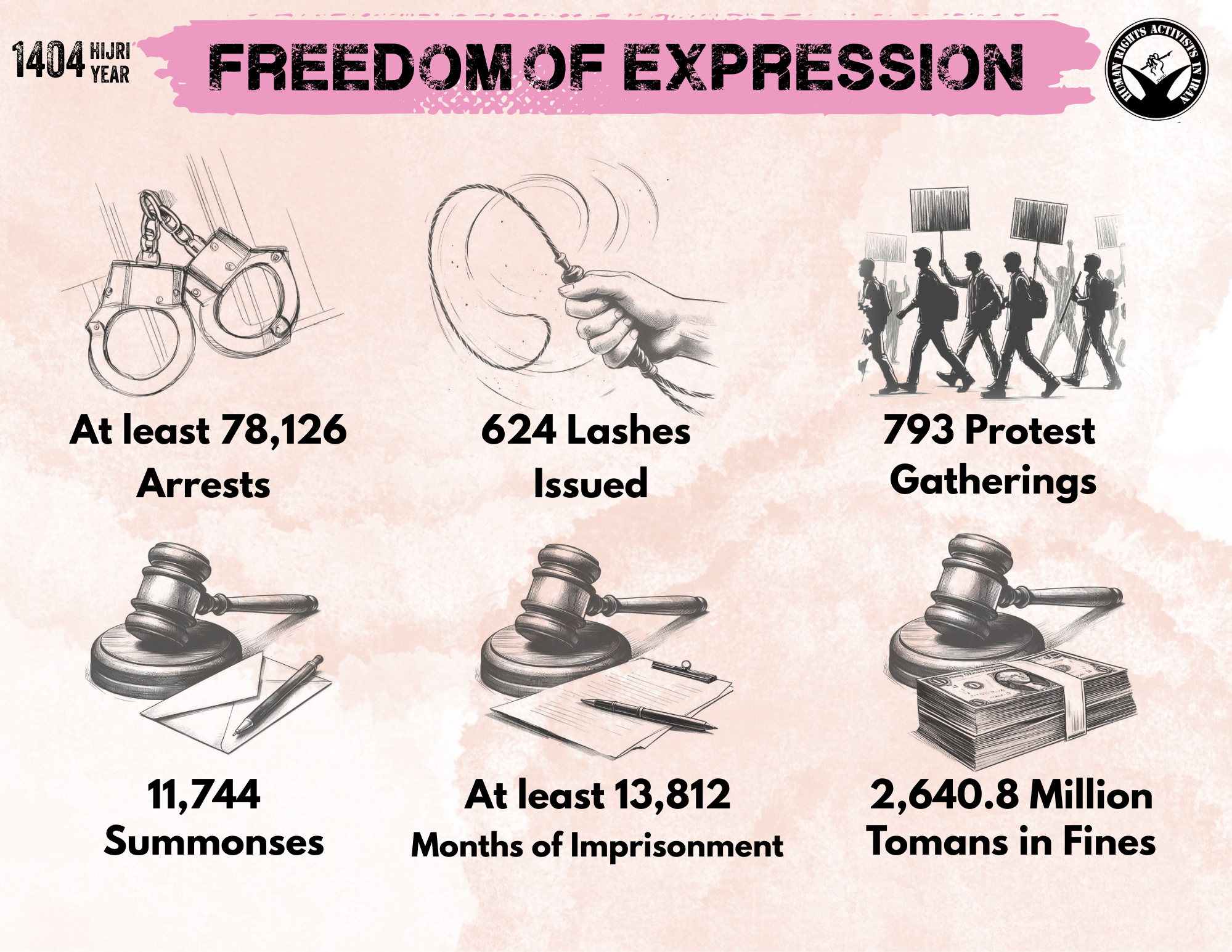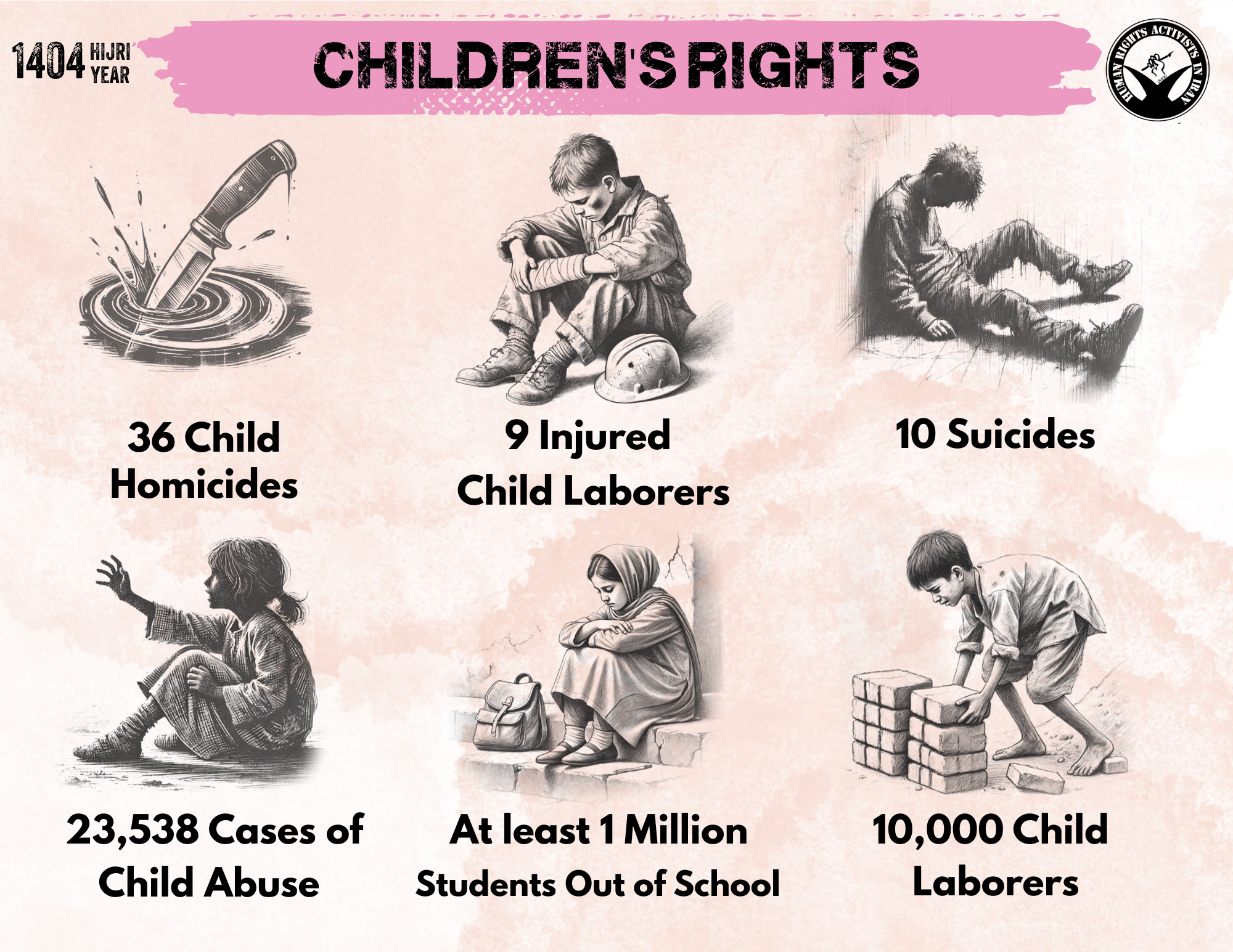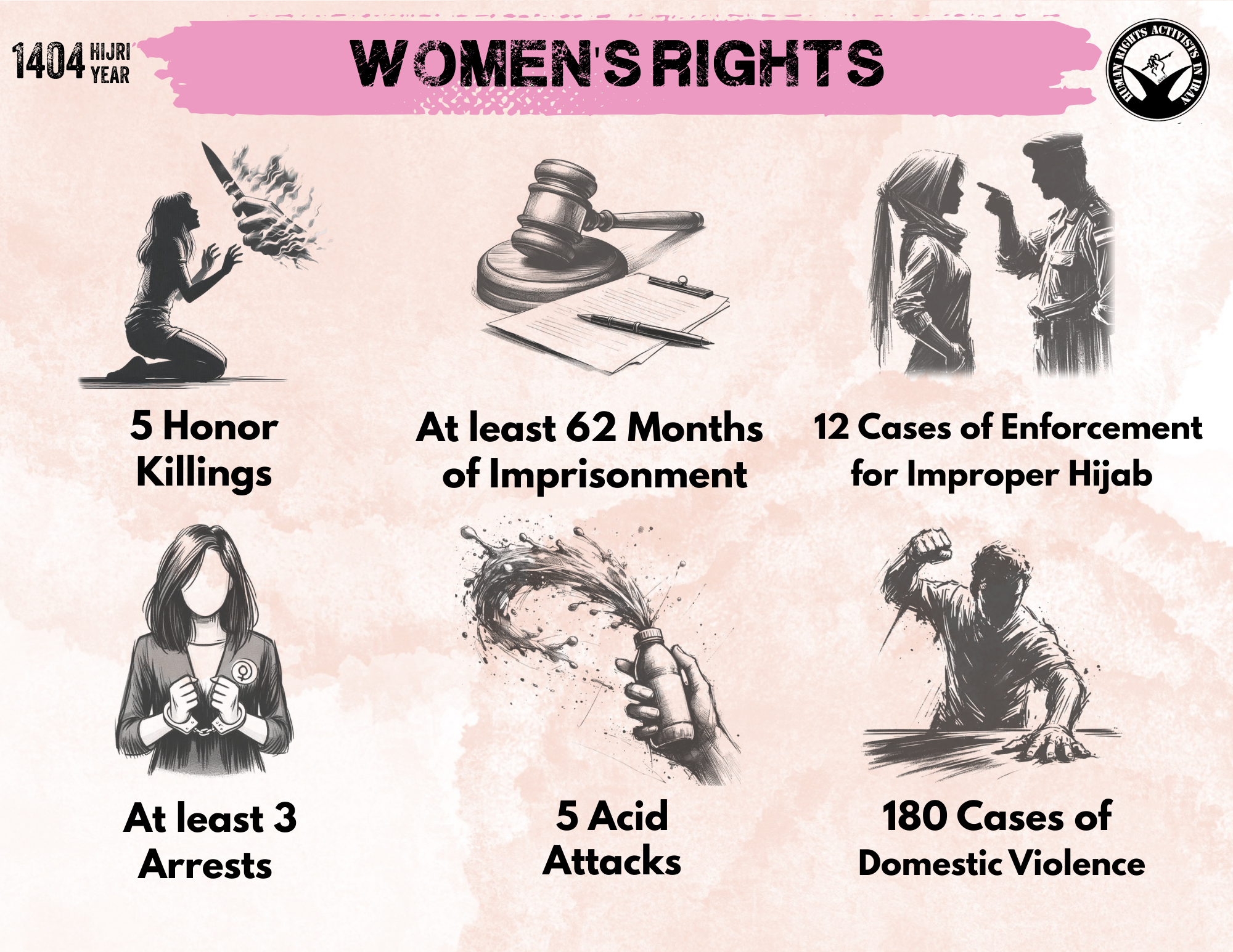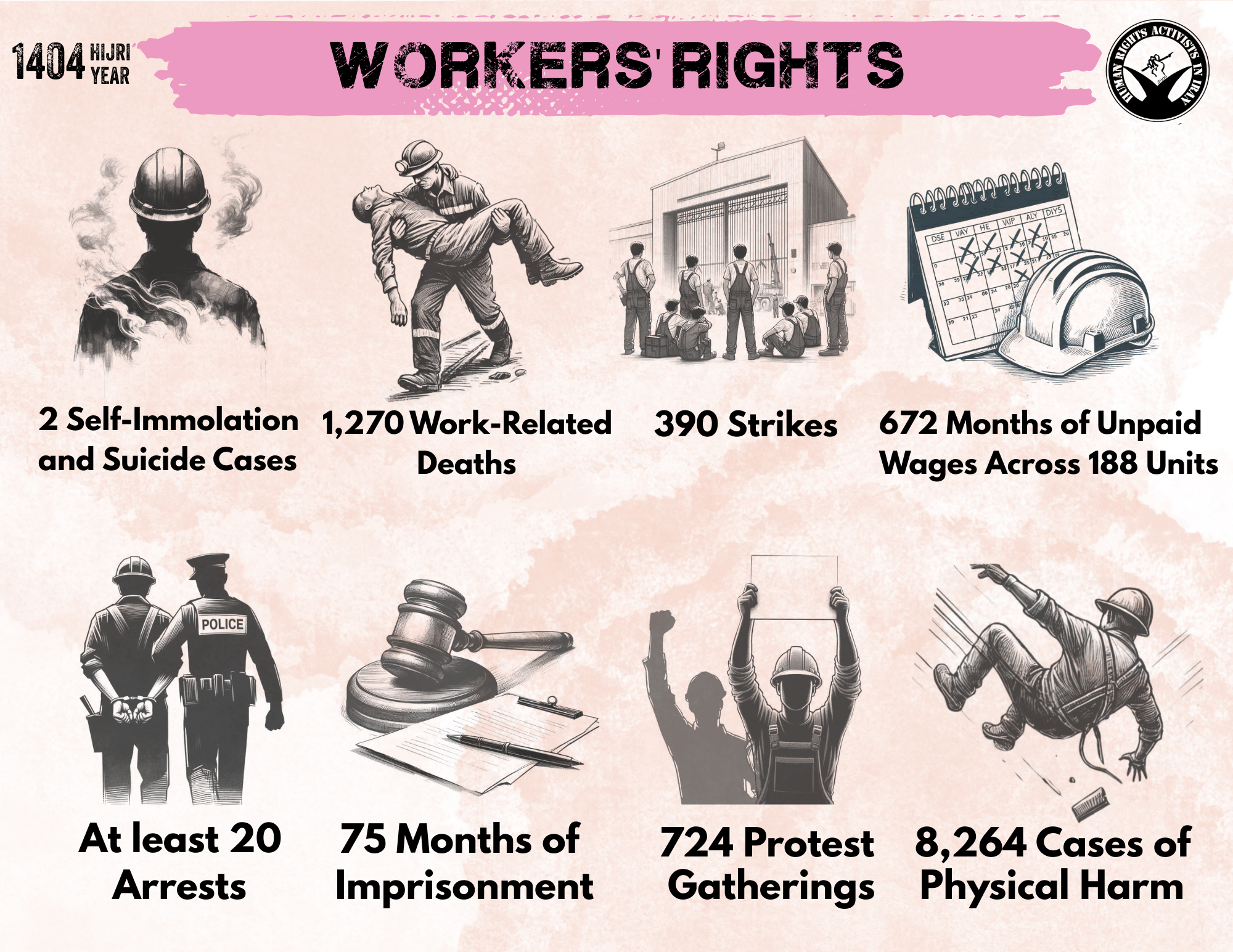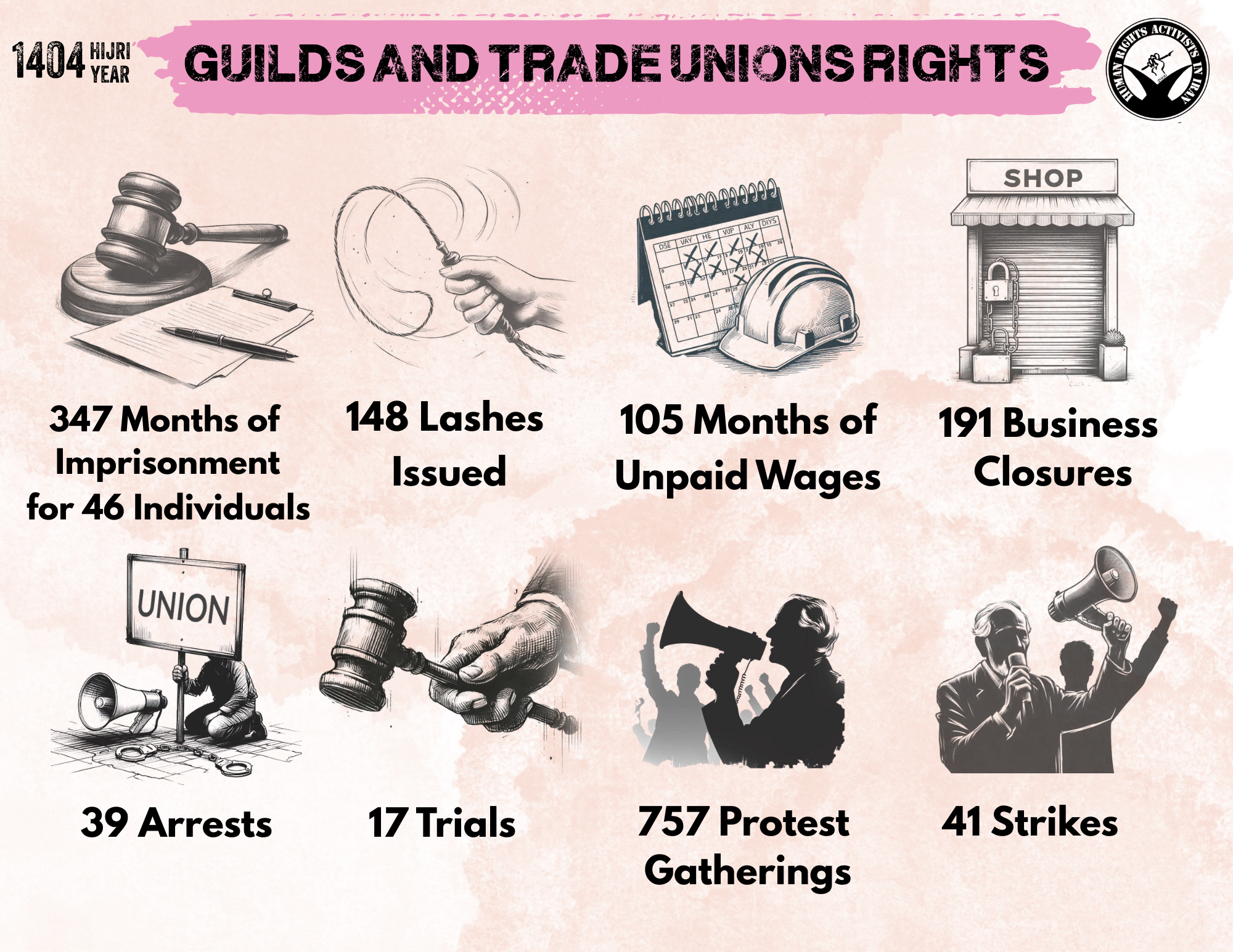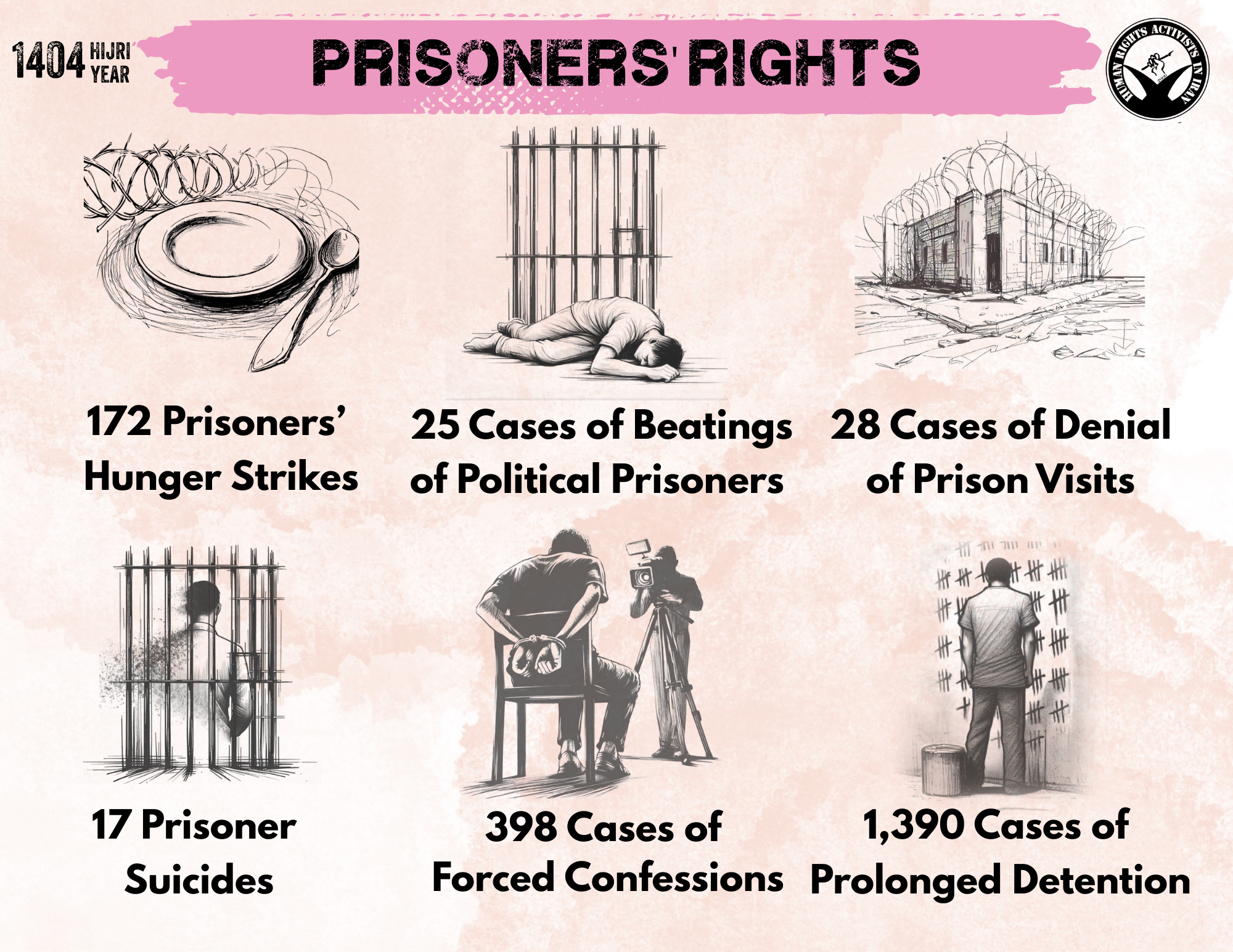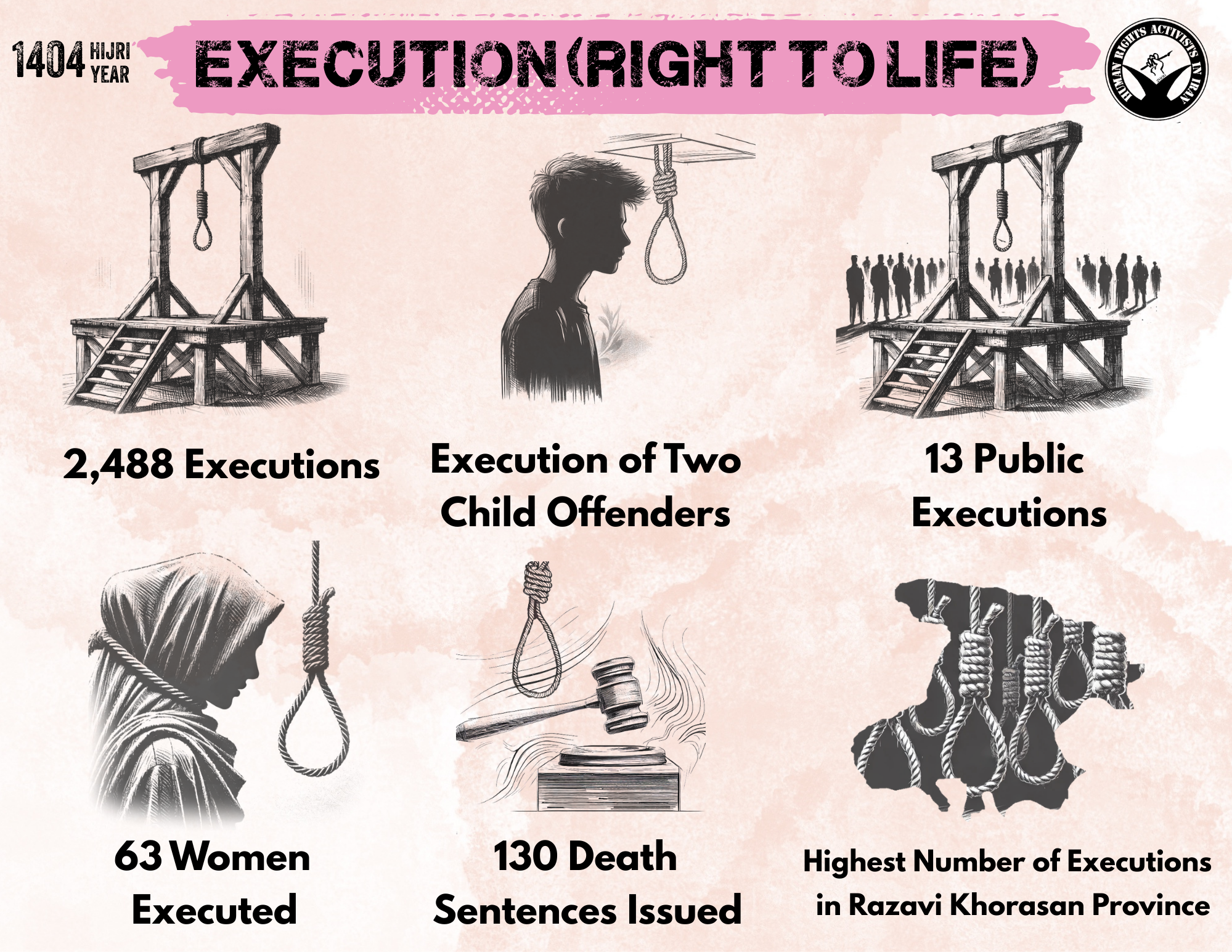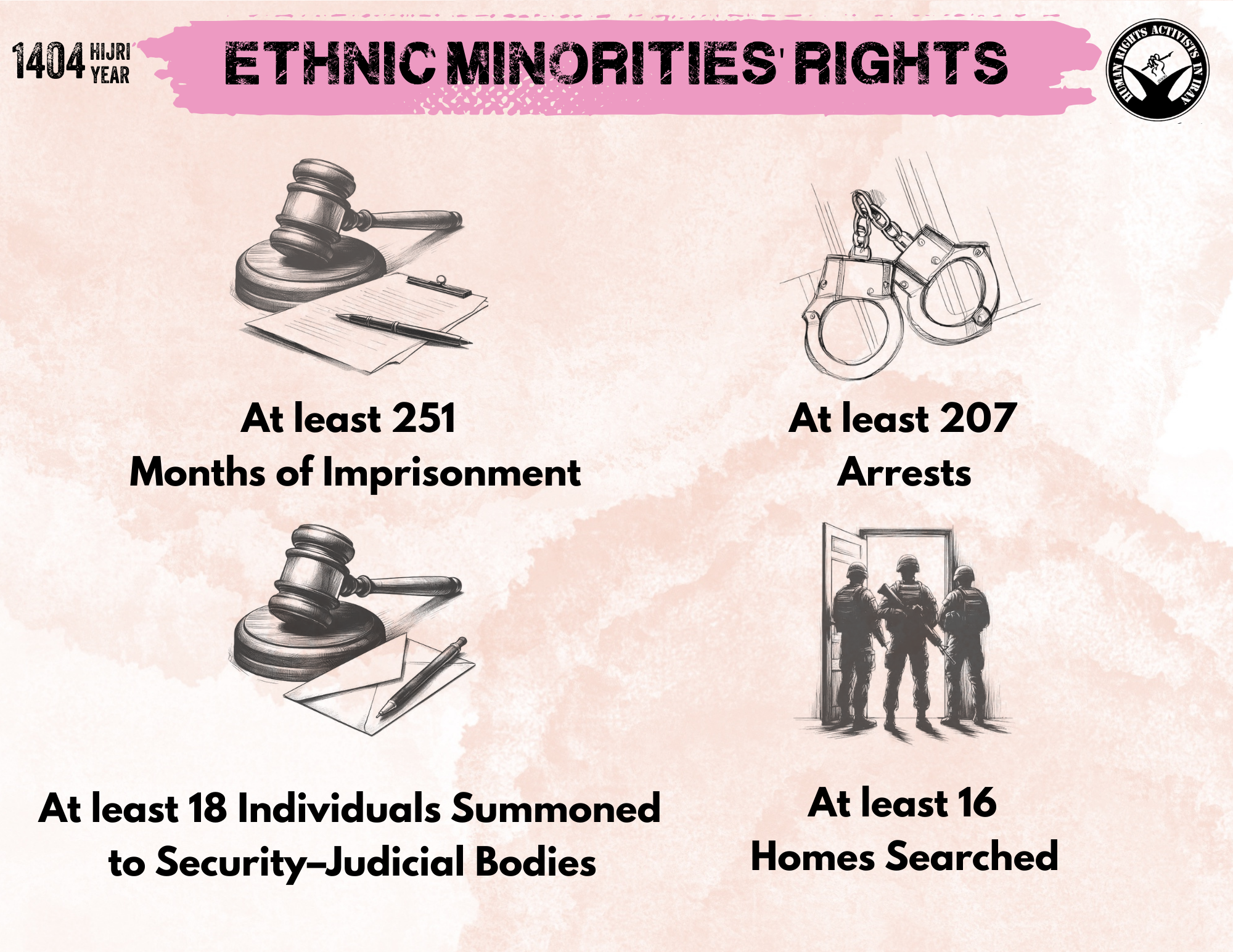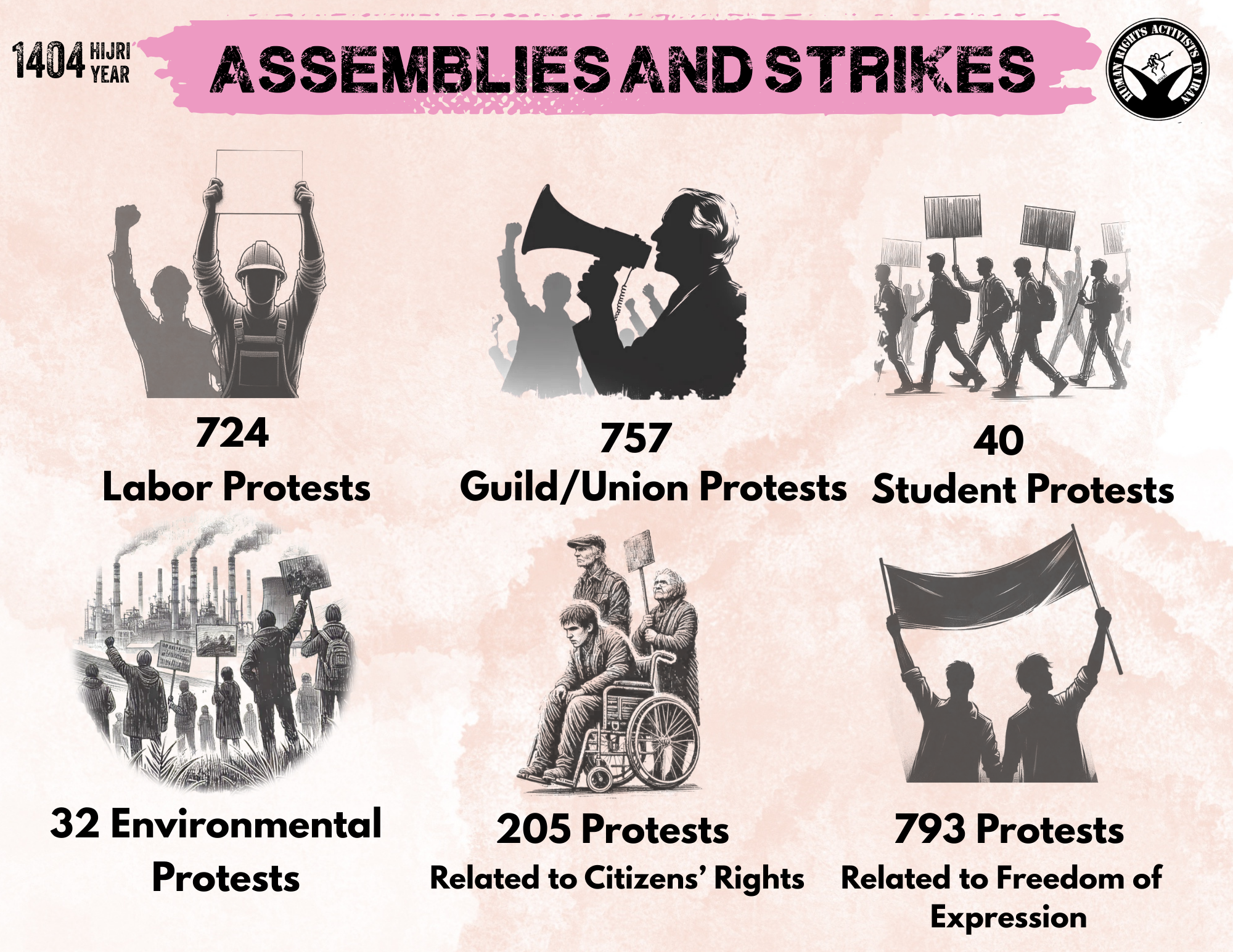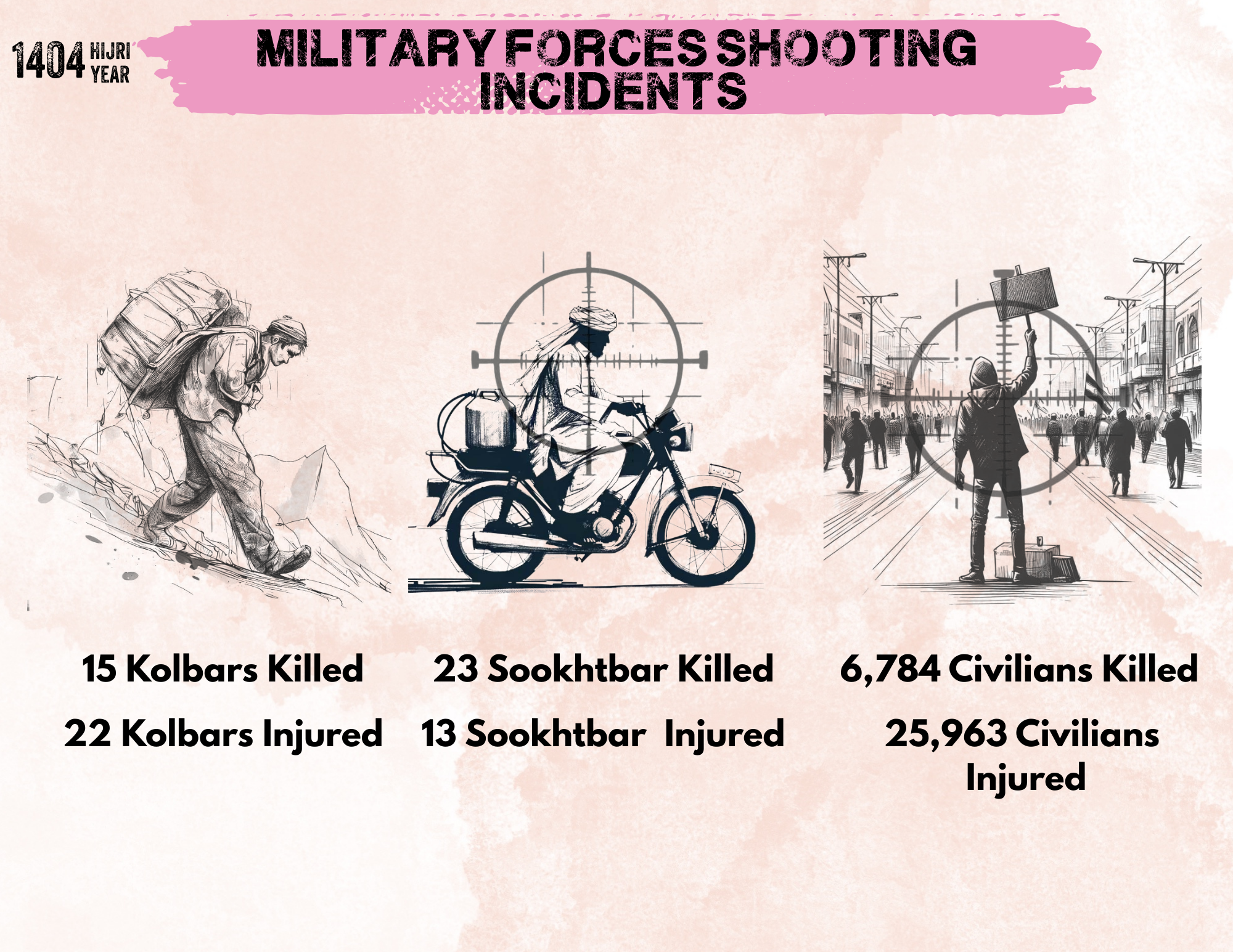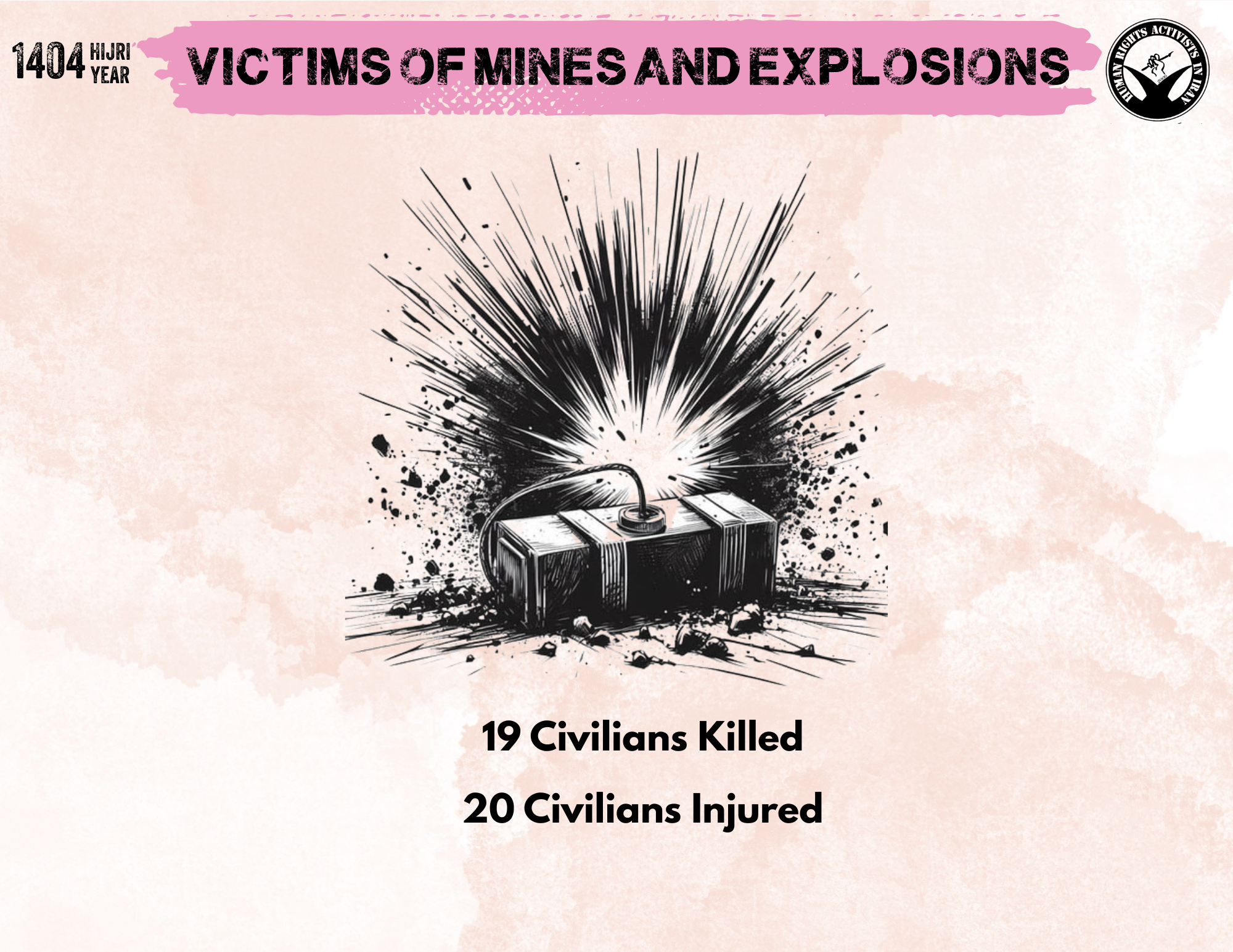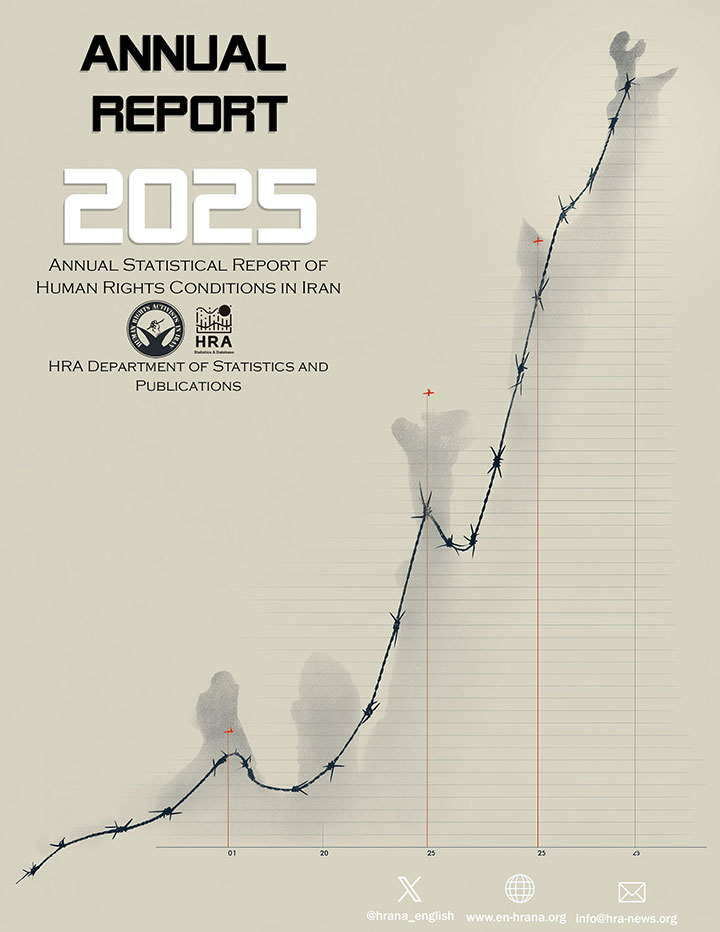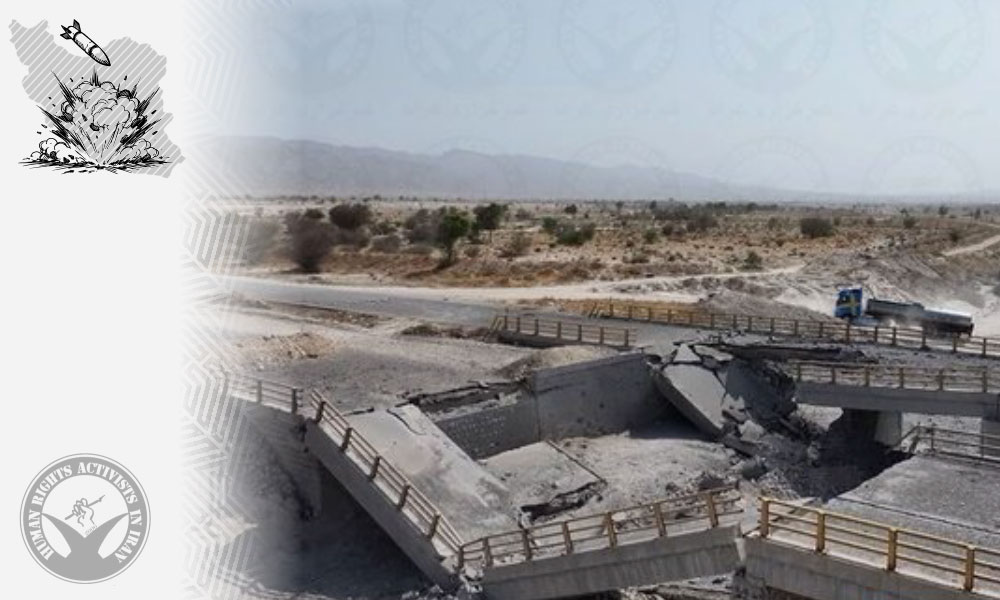
HRANA– On the eve of the Orange Week campaign, new one-year data shows that violence against women in Iran is not only a domestic problem but part of a broader, systemic machinery. From murder and sexual assault to judicial rulings and security-agency intervention, patterns of violence appear across the entire country. Women’s bodies, clothing, relationships, and public activism remain central targets of state control. This report summarizes documented cases recorded between November 24, 2024, and November 20, 2025.
Direct and Deadly Violence
Over the past year, more than 110 women and girls were killed in the context of domestic or family-related violence. The victims included adult women as well as young girls aged 5, 9, 13, 18, and 23.
The main drivers of these killings were family disputes and long-standing tensions. Reported motives included so-called “honor” justifications, retaliation for refusing forced or child marriage, reactions to requests for divorce or separation, as well as suspicion, coercive control, and other forms of domination.
Methods of killing included stabbing, firearms, strangulation, severe beating, and burning. In dozens of cases, the perpetrator attempted suicide after the murder.
At least 20 multi-victim family murders were recorded, including cases where women were killed alongside their young children or relatives in Golestan, Amol, Borujerd, Mahidasht (Kermanshah), Urmia, Maku, Khorramabad, Mahabad, Lahijan, and Tehran.
At least 25 honor killings were also reported. Victims included girls aged 17–18 and young women; in several cases, the perpetrator was a teenage boy within the family.
During this period, nine acid attacks against women were documented, from Tehran and Karaj to Khomam, Sanandaj, and Golestan. Some victims lost sight in both eyes.
Additionally, at least six women were killed by their husbands or relatives through intentional burning in Sanandaj, Rezvanshahr, Bandar Abbas, Tehran, Mahabad, and Saqqez.
Sexual Violence and Assault
The documented cases include unprecedented and disturbing incidents, for example, rape inside an ambulance (in one case, the victim died), and the sexual harassment of 12 women seeking jobs in Tehran.
A gang rape in Yasuj led to the victim’s suicide. Serial cases of street harassment in Sanandaj, as well as staged sexual assaults by individuals posing as “employers,” “landlords,” or “ride-share drivers,” also appeared in the reporting.
One of the most shocking cases involved a woman and her young daughter who were imprisoned in a birdcage and assaulted over a period of six years.
Suicide and Self-Immolation Linked to Abuse
At least two women died by suicide following severe domestic violence or relationship breakdowns. One young woman in Mahabad died after self-immolation.
Structural and State-Driven Violence
Violence against women in public spheres also takes the form of security surveillance, judicial pressure, and cultural restrictions.
Arrests, Summonses, and Interrogations
During this period, at least 45 women were arrested, and more than 30 women were summoned to security agencies. Targets included women’s rights activists, artists, female singers, content creators, women appearing in dance videos, protest participants, and women present in public without the mandatory hijab.
Closure of Businesses and Venues
At least 12 businesses, including cafés, galleries, clinics, and cultural centers, were sealed for alleged violations of “hijab” or “public decency.” One case involved a gynecology clinic in Yazd.
Cultural and Artistic Restrictions
Concerts were canceled due to the presence of female musicians or singers. Women participating in events faced fabricated legal charges, and seven female singers in Behbahan were summoned by authorities.
Security Crackdown on Clothing
Women were arrested over their clothing or for “dancing,” cases were opened against organizers of cultural events, and some women were barred from attending interrogation sessions due to their clothing—highlighting how intensely dress codes have been policed.
Judicial Penalties and Sentences
Over the past year, women collectively received more than 200 months of discretionary imprisonment, 74 to 178 lashes, bans on activity and travel, electronic ankle bracelets, and forced residence orders.
Examples include:
• Hamideh Zeraei sentenced to 18 months in prison and 178 lashes • Hasti Amiri sentenced to 3 years in prison with supplementary penalties • Maryam Karimi given prison with an electronic monitoring bracelet • Nina Golestani and Rozita Rajai each sentenced to one year in prison • Fariba Hosseini and Elham Salehi receiving combined prison terms and activity bans
These rulings show that protesting women and civil activists face structured judicial violence.
Geography of Violence
Violence against women was recorded in most provinces, with the highest-risk areas including Tehran, Khorasan Razavi, Alborz, Kurdistan, Fars, West Azerbaijan, Ilam, and Kermanshah. In these provinces, reports included a combination of family murders, acid attacks, sexual violence, and security-driven crackdowns.
Trends Over the Year
Analysis of the past year’s data shows distinct periods of intensified violence:
• Winter and spring saw peaks in domestic and honor killings. • May was the deadliest month with 19 murders. • Summer brought increased security crackdowns, summonses, and business closures. • In the days leading up to March 8 (International Women’s Day), a wave of arrests and summonses targeted women’s rights activists. • Multi-victim family murders, killing a wife along with children or relatives, rose sharply in the final months of the year. • Sexual assaults using deceptive methods, job offers, rental arrangements, or promises of housing, also increased, alongside incidents in formal settings like emergency rooms and ambulances.
Meanwhile, state power structures continued to fuel violence through closures of venues, legal cases, arrests of women artists, and harsh sentences over dress or online content.
Violence as a Crime Against Humanity
The violence documented in this report cannot be understood without acknowledging the broader context of gender-based persecution as a crime against humanity. In 2023, after nine months of investigation, Human Rights Activists in Iran concluded that women and girls in Iran are deliberately and severely denied their fundamental rights because of their gender. These findings were later used as supporting evidence in UN determinations that gender-based persecution is occurring in Iran.
The cases presented here, from murder and sexual violence to punitive court rulings and systematic harassment, reflect patterns that are neither isolated nor accidental. They are part of a wider policy that, both in law and in practice, treats women and girls as lesser.
Recognizing this reality is essential, because the scale and persistence of these violations demand a response grounded in international law, justice, and accountability.
HRANA- On the World Day against the Death Penalty, the Center of Statistics of Human Rights Activists in Iran (HRA) has published its annual report in an effort to inform the public about situation of the death penalty in Iran, particularly thousands of individuals facing the death penalty and awaiting looming executions.
HRA’s Statistics Center relies on the work of HRANA reporters, as well as a network of independent and verifiable sources. It also incorporates the judicial authorities’ announcements or confirmations of prisoner executions on media, and as such, is exposed to a margin of error representing efforts by the Iranian authorities to omit, conceal, or restrict the collection of such data.
Between October 10, 2024, and October 8, 2025, at least 1537 individuals were executed by hanging in Iran, rising to 86.07% compared to the same period last year. Of these executions, 8 were carried out in public. The defendants were deprived of the right to a fair trial.
HRANA obtained 1314 reports regarding executions and death penalty in Iran during this period. The identified executed individuals, include 49 women and 3 juvenile offenders under the age of 18 at the time of alleged crime. Compared to the last period, the execution of female offenders has increased 113%.
According to the reports obtained by HRANA, over this period, Iranian authorities sentenced at least 191 defendants to death penalty, including at least 14 women, and 4 individuals to public execution. Death sentences issued increased by 2.6% compared to the last year. In the reporting period, the Supreme Court additionally upheld 54 previously imposed death sentences.
As illustrated in the chart below, based on the number of individuals executed, the highest number of reports were published in September 2025, while the most significant drop in the number of reports occurred in October 2025. since only one-third of the month has passed, these statistics may change by the end of the current month.
As illustrated in the chart below, based on the number of collected reports, the highest number of reports on violations in this area were published in September 2025, while the most significant drop in the number of reports was observed in October 2025. since only one-third of the month has passed, these statistics may change by the end of the current month.
Based on the collected information, 48.34% of the executed individuals were sentenced on drug-related charges, and 43.46% on murder charges in Iran. Additionally, 2.15% were executed on charges of rape, 1.89% on unknown charges, 1.69% on Moharebeh or Baghi (political-security related) charges, 0.85% on non-political Moharebeh charges, 0.85% on security-related charges (espionage, terrorism, or bombing), 0.52% on corruption on earth, 0.2% on armed robbery, and 0.07% on ideological, political, or religious charges.
The pie chart below displays execution numbers by the province in which they took place. According to this chart, the Alborz (where three overcrowded prisons are located) had the highest number of executions at 14.57%. Isfahan and Fars Provinces come second and third, with 8.39% and 7.87%, respectively.
The table below shows the execution rate per 100,000 people in the provinces of Iran, based on the number of executions and the population of each province. This table provides a comparison of the implementation of death sentences across different provinces and identifies those with the highest execution rates relative to their population, which can serve as an indicator of the intensity of judicial enforcement in various regions of the country.
Execution Rate per Capita in Iran’s Provinces Based on the Number of Executions and Population
The chart below depicts the distribution of executions’ information sources. The chart indicates that 94.14% of HRANA-confirmed executions were not announced by the official Iranian sources. Undisclosed executions are referred to as “secret” executions.
The chart down shows the execution numbers by gender.
The chart below displays execution numbers by the prison where the executions were carried out. The Qezel Hesar Prison of Karaj And Dastgerd Prison of Esfahan officials have carried out the highest number.
The chart below displays percentage of executions carried out in public vs the number of executions that were carried out in prison. According to statistics, 0.52% of the executions in Iran were carried out in public.
Ten-Year Trend of Executions in Iran (2014–2025)
Although there have been periods of relative decline in the number of executions within the reporting period, the overall trend indicates a continuous increase and a return to high levels of capital punishment enforcement.
According to data from the Statistics Department of Human Rights Activists (HRA), after a noticeable decline between 2015 and 2019, the number of executions began to rise again starting in 2021. This increase peaked in the period of 2024–2025, with at least 1,537 executions recorded, the highest number documented in the past decade.
Compared to the previous year (823 cases), the number of executions has increased by more than 86%, also showing a significant rise compared to the ten-year annual average. These figures have been recorded despite the continued lack of access to official and transparent information in this field, and a substantial portion of executions have been carried out secretly or without public disclosure.
According to data from the Statistics Department of Human Rights Activists in Iran (HRA), over the past ten-year period, drug-related charges and intentional murder have accounted for the highest share of executions carried out in the country. This is despite the fact that, based on the 2017 amendment to the Anti-Narcotics Law, projections had anticipated a decrease in executions in this category.
During this period, a significant portion of executions were related to drug offenses, followed by intentional murder as the second most common charge. Other charges, including rape, armed robbery, moharebeh, corruption on earth, security and political offenses, as well as crimes related to sexual conduct or alcohol—have comprised a smaller share of the total executions.
Download the annual report in PDF format.
On the occasion of the World Day Against the Death Penalty, Human Rights Activists in Iran issued a statement calling for urgent and coordinated action by the international community to halt the ten-year wave of executions, reform domestic laws, hold perpetrators of extrajudicial executions accountable, and take unified international measures to confront the growing wave of executions in Iran. Click here to read the full text of the statement.
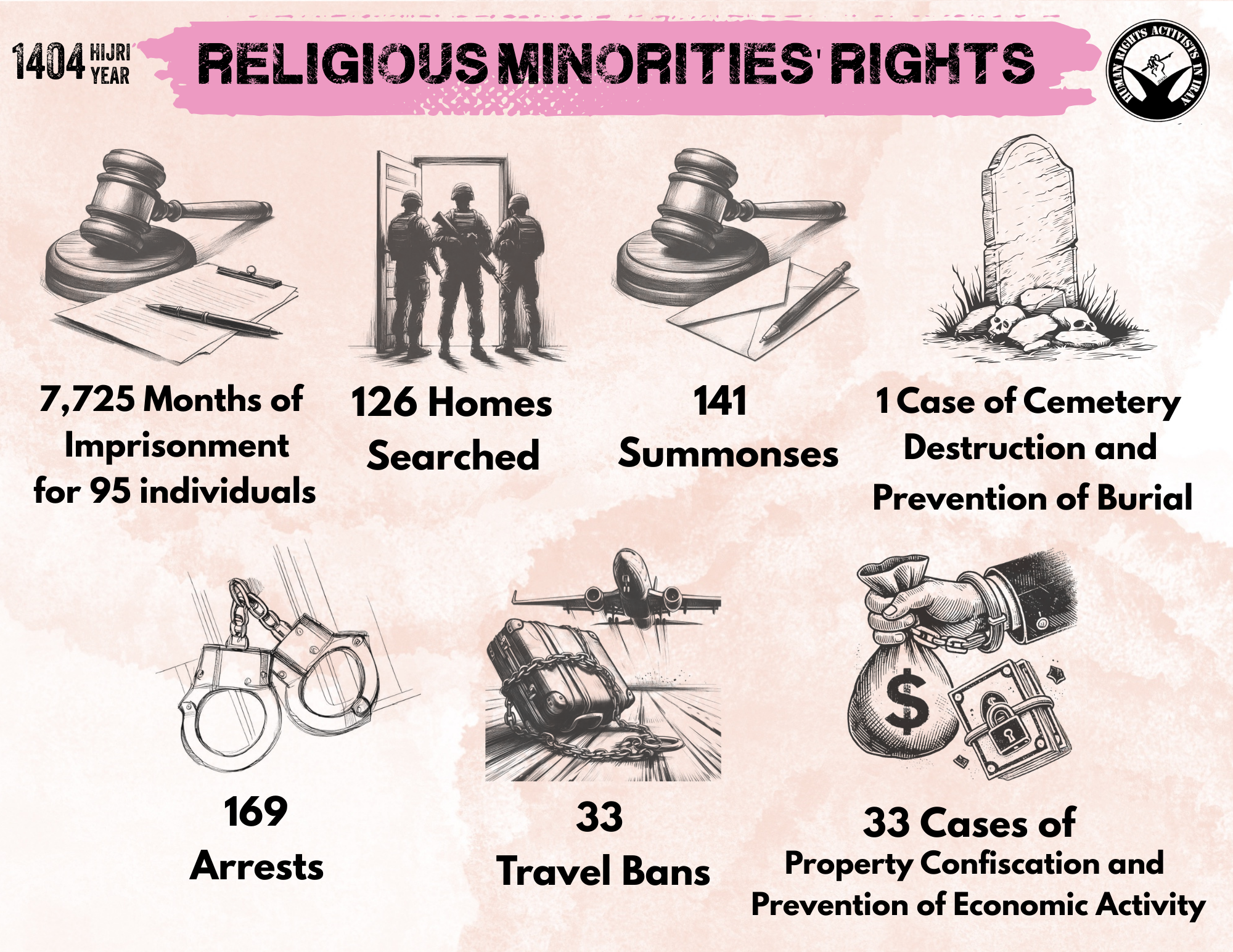
HRANA– This report presents a statistical and analytical review of actions taken by security and judicial authorities against the Baha’i community in Iran. It is based on the collection, analysis, and documentation of 636 reports published by HRANA over the past five years (August 2020 to August 2025) regarding violations of the rights of Baha’i citizens.
Over this five-year period, HRANA’s Statistics Department has documented at least 284 arrests of Baha’i citizens, along with 270 summonses to security and judicial bodies. There have also been 419 home searches, 57 incidents of preventing economic activity, 3 cases of cemetery destruction, 27 confiscations of homes and properties, 1 case of refusal to hand over a body, 4 cases of preventing burials, 108 instances of prison sentence enforcement, 127 travel bans, 9 physical assaults, 106 denials of access to education, 147 trials, and 19 interrogations in security or judicial institutions.
In total, 388 Baha’i citizens were sentenced to 17,948 months of imprisonment (equivalent to 1,495 years and 8 months). This includes 17,324 months of enforceable (ta’zir) prison terms and 624 months of suspended sentences. Of this total, appellate courts issued 6,012 months of prison terms. Additionally, 91 individuals were fined a combined 503,510 million tomans, and 103 were sentenced to deprivation of social rights. Twenty-five people were also sentenced to a combined 600 months of exile.
The data show that the third year of this period saw the highest number of reports (162), while the fourth year recorded the most arrests (76) and the longest cumulative prison sentences (5,220 months). These figures point to a continuation—and in some cases, intensification—of judicial actions against Baha’i citizens in the later years of the reporting period.
The table below illustrates changes in the number of reports, arrests, and total prison sentences issued between August 2020 and August 2025.
Annual Statistics of Reports, Arrests, and Prison Sentences of Baha’is (2020–2025)
Reporting Year
Number of Reports
Arrests
Total Prison Terms (months)
First Year (Aug 2020 – Aug 2021)
90
28
3361
Second Year (Aug 2021 – Aug 2022)
104
46
1588
Third Year (Aug 2022 – Aug 2023)
162
74
3687
Fourth Year (Aug 2023 – Aug 2024)
161
76
5220
Fifth Year (Aug 2024 – Aug 2025)
119
60
4092
Annual Number of Recorded Reports (Aug 2020 – Aug 2025)
Annual Number of Arrests of Baha’i Citizens (2020–2025)
Analysis of the five-year data shows that violations of Baha’i citizens’ rights have been recorded across a wide geographic range in Iran. Tehran Province tops the list with 117 reports, followed by Fars (78), Mazandaran (70), Isfahan (63), and Alborz (56).
Khorasan Razavi, Kerman, Yazd, and Gilan provinces also rank high, reflecting a notable concentration of security and judicial actions against the Baha’i community in these regions. At the same time, documented violations extend to provinces with smaller populations or limited media coverage—such as Kohgiluyeh and Boyer-Ahmad, Ardabil, Qom, and Chaharmahal and Bakhtiari—underscoring the nationwide scope of the repression.
Volume of Reported Violations of Baha’i Rights by Province
Some of the human rights violations described in this report are of a nature specifically tied to the Baha’i community in Iran. These include deprivation of economic and educational opportunities, obstruction in burial and funeral arrangements, destruction of cemeteries, confiscation of property, and structural discrimination based on religious belief. Such cases are specific to Baha’is and rarely appear in broader, general reports, underscoring the need for dedicated and specialized reporting on violations targeting this community.
Among Baha’i citizens who have faced judicial verdicts during the five-year period, some have been sentenced to heavy and long-term prison terms, in some cases exceeding 10 years. These verdicts have often been issued without observing fair trial standards and on charges such as “propaganda against the regime” or “forming illegal groups.” Such heavy sentences reflect the severity of judicial measures against the peaceful religious activities of Baha’i citizens and the continuation of a systematic policy of repression targeting this community.
Notable individuals facing heavy prison sentences include:
● Ne’matollah Shadpour, Nima Shadpour, and Shafigh Eslami, collectively sentenced to 51 years in prison;
● Shahdokht Khanjani, a Baha’i citizen from Semnan, sentenced to 16 years in prison;
● Sanaz Tafazoli, sentenced to 10 years and 9 months in prison
● Enayatollah Naeimi, sentenced to a total of 15 years in prison, and
● Vesal Momtazi and Anisa Samieian, a Baha’i couple, collectively sentenced to 9 years and 6 months in prison.
Judicial Officials with the Highest Number of Verdicts Against Baha’is in the Past Five Years
HRANA – At least 56 individuals facing political or security-related charges have been sentenced to death and are currently held in various prisons across Iran. HRANA’s investigations show that the death sentences of at least 22 of these individuals have been issued by judicial authorities in Tehran, accounting for a significant share of the total. This report provides a detailed list and the latest updates on their cases.
According to HRANA, the news agency of Human Rights Activists in Iran, many of these prisoners have been denied fair trial rights. These include limited or no access to legal counsel and a lack of transparency in judicial proceedings. Some were denied the right to legal counsel of one’s choosing, while others were prevented from meeting with their chosen legal representatives despite having them. A significant number of these individuals, while rejecting the charges against them, have been arbitrarily sentenced to death through opaque and unfair processes. Reports also indicate that some of these prisoners are currently being held in solitary confinement awaiting execution.
HRANA’s findings reveal that courts in Tehran have issued the highest number of death sentences in political and security-related cases. Among them, Branch 15 of the Tehran Revolutionary Court, presided over by Judge Abolghasem Salavati; Branch 26, led by Judge Iman Afshari; and Branch 28, headed by Judge Mohammadreza Amouzad, have played especially prominent roles. In northwestern Iran, the Revolutionary Court of Urmia has handed down the highest number of death sentences for political offenses. Additionally, courts in Ahvaz, Rasht, Mashhad, Mahshahr, and Zahedan have each sentenced multiple individuals mentioned in this report to death. The primary charges brought against these defendants include baghi (armed rebellion) and moharebeh (enmity against God).
In several instances, death sentences initially overturned by the Supreme Court were reinstated by parallel judicial branches. For example, Hatam Ozdemir, Mohammad-Javad Vafa’i Sani, Isa Eidmohammadi, Saman Mohammadi Kheyareh, and Sharifeh Mohammadi were all resentenced to death after the Supreme Court had annulled their original verdicts. Notably, Mohammad-Javad Vafa’i Sani was sentenced to death for a third time during retrial proceedings.
Defense attorneys have consistently raised concerns over the lack of fairness and due process in these cases. In one example, following the Supreme Court’s rejection of Mehdi Hasani’s fourth request for retrial, his lawyer revealed that the court had dismissed the petition without retrieving the original case file from the trial court—likely without even reviewing the submitted legal arguments.
In the cases of Pakhshan Azizi, Verisheh Moradi, and Sharifeh Mohammadi, more than 200 attorneys issued a public statement addressed to Iran’s Chief Justice, condemning the death sentences issued against the three women and calling for their immediate revocation. The statement described the verdicts as “a blatant violation of human rights” and pointed to “serious ambiguities and deficiencies in legal proceedings, access to legal counsel, evaluation of evidence, and judicial impartiality.”
This report, with a focus on the human cost, outlines the names and current legal statuses of 56 individuals sentenced to death on political and security-related charges.
1. Varisheh Moradi
Prison: Qarchak Prison, Varamin
Main Charge: Baghi (armed rebellion)
Court: Branch 15, Tehran Revolutionary Court
Case Status: Initial death sentence issued
Varisheh Moradi was arrested by security forces in the suburbs of Sanandaj on August 1, 2023. She was transferred to the women’s ward of Evin Prison on December 26. In November 2024, she was sentenced to death by Branch 15 of the Tehran Revolutionary Court, presided over by Judge Abolghasem Salavati, on charges including membership in an opposition group and Baghi (armed rebellion).
2. Pakhshan Azizi
Prison: Qarchak Prison, Varamin
Main Charge: Baghi
Court: Branch 26, Tehran Revolutionary Court
Case Status: Death sentence issued and upheld by the Supreme Court
Pakhshan Azizi, a resident of Mahabad, was arrested in Tehran on August 4, 2023, and transferred to Ward 209 of Evin Prison. After four months of interrogation, she was moved to the women’s ward. On July 24, 2023, Branch 26 of the Tehran Revolutionary Court, presided over by Judge Iman Afshari, sentenced her to death and four years of imprisonment on charges of Baghi through membership in opposition groups. The Supreme Court has recently upheld her case.
3. Akbar Daneshvar-Kar
Prison: Great Tehran Penitentiary
Main Charge: Baghi (armed rebellion)
Court: Branch 26, Tehran Revolutionary Court
Case Status: Initial death sentence issued
4. Seyed Mohammad Taghavi Sangdehi
Prison: Great Tehran Penitentiary
Main Charge: Baghi
Court: Branch 26, Tehran Revolutionary Court
Case Status: Initial death sentence issued
5. Babak Alipour
Prison: Great Tehran Penitentiary
Main Charge: Baghi
Court: Branch 26, Tehran Revolutionary Court
Case Status: Initial death sentence issued
6. Pouya Ghobadi Bistoni
Prison: Great Tehran Penitentiary
Main Charge: Baghi
Court: Branch 26, Tehran Revolutionary Court
Case Status: Initial death sentence issued
7. Vahid Bani-Amerian
Prison: Great Tehran Penitentiary
Main Charge: Baghi
Court: Branch 26, Tehran Revolutionary Court
Case Status: Initial death sentence issued
8. Seyed Abolhasan Montazer
Prison: Great Tehran Penitentiary
Main Charge: Baghi
Court: Branch 26, Tehran Revolutionary Court
Case Status: Initial death sentence issued
Vahid Bani-Amerian and Seyed Abolhasan Montazer were arrested in December 2022, and Babak Alipour was detained in autumn 2023 in Tehran. Pouya Ghobadi and Seyed Mohammad Taghavi were arrested in Chaldoran, and Akbar Daneshvar-Kar was detained on February 23, 2024, by security forces and transferred to Evin Prison.
In December 2024, Branch 26 of the Tehran Revolutionary Court, presided over by Judge Iman Afshari, sentenced these six political prisoners to death on charges including Baghi (armed rebellion) through membership in opposition groups, assembly and collusion to disrupt national security, formation of illegal groups, destruction of public property, and illegal border crossing.
Additionally, they received supplementary sentences:
Akbar Daneshvarkar and Seyed Mohammad Taghavi Sangdehi: 15 years imprisonment each.
Babak Alipour: 5 years imprisonment and 20 years exile in Khash.
Pouya Ghobadi Bistoni: 1 year imprisonment.
Vahid Bani-Amerian: 5 years imprisonment.
Seyed Abolhasan Montazer: 5 years imprisonment.
9. Eido Shah-Bakhsh
Prison: Ghezel Hesar Prison, Karaj
Main Charge: Baghi (armed rebellion)
Court: Branch 28, Tehran Revolutionary Court
Case Status: Sentence upheld by the Supreme Court; referred to the execution branch
10. Abdolghani Shah-Bakhsh
Prison: Ghezel Hesar Prison, Karaj
Main Charge: Baghi
Court: Branch 28, Tehran Revolutionary Court
Case Status: Sentence upheld by the Supreme Court; referred to the execution branch
12. Soleiman Shah-Bakhsh
Prison: Ghezel Hesar Prison, Karaj
Main Charge: Baghi
Court: Branch 28, Tehran Revolutionary Court
Case Status: Sentence upheld by the Supreme Court; referred to the execution branch
These individuals were arrested in 2012. Many of their court sessions were irregular, and some defendants, such as Eido Shah-Bakhsh and Abdolghani Shah-Bakhsh, were acquitted by Branch 1 of the Zahedan Revolutionary Court but were rearrested in 2016 following objections from security agencies. On February 4, 2024, Branch 28 of the Tehran Revolutionary Court, presided over by Judge Mohammad Reza Amouzad Khalili, sentenced them to death for Baghi through membership in opposition groups and armed rebellion against the regime. The Supreme Court’s Branch 32 upheld their death sentences, and the cases were referred to the first branch of the Tehran Security Prosecutor’s Execution Office.
13. Milad Armoun
Prison: Ghezel Hesar Prison, Karaj
Main Charge: Participation in murder and intentional assault (in a case known as Ekbatan Town case)
Court: Branch 13, Tehran Criminal Court One
Case Status: Initial death sentence issued
14. Alireza Kafaei
Prison: Ghezel Hesar Prison, Karaj
Main Charge: Participation in murder and intentional assault
(in a case known as Ekbatan Town case)
Court: Branch 13, Tehran Criminal Court One
Case Status: Initial death sentence issued
15. Amir Mohammad Khosh-Eghbal
Prison: Ghezel Hesar Prison, Karaj
Main Charge: Participation in murder and intentional assault
(in a case known as Ekbatan Town case)
Court: Branch 13, Tehran Criminal Court One
Case Status: Initial death sentence issued
16. Navid Najaran
Prison: Ghezel Hesar Prison, Karaj
Main Charge: Participation in murder and intentional assault
(in a case known as Ekbatan Town case)
Court: Branch 13, Tehran Criminal Court One
Case Status: Initial death sentence issued
17. Hossein Nemati
Prison: Ghezel Hesar Prison, Karaj
Main Charge: Participation in murder and intentional assault
(in a case known as Ekbatan Town case)
Court: Branch 13, Tehran Criminal Court One
Case Status: Initial death sentence issued
18. Alireza Barmarz Pournak
Prison: Ghezel Hesar Prison, Karaj
Main Charge: Participation in murder and intentional assault
(in a case known as Ekbatan Town case)
Court: Branch 13, Tehran Criminal Court One
Case Status: Initial death sentence issued
These individuals are defendants in the so-called “Ekbatan Town” case. They were arrested in 2022 during nationwide protests after the killing of a Basij militia member named Arman Ali Vardi in Ekbatan Town. In November 2024, Branch 13 of Tehran Criminal Court One sentenced each of them to death for “participation in murder and intentional assault.”
19. Behrooz Ehsani
Prison: Ghezel Hesar Prison, Karaj
Main Charge: Baghi (armed rebellion)
Court: Branch 26, Tehran Revolutionary Court
Case Status: death sentence upheld by the Supreme Court
20. Mehdi Hasani
Prison: Ghezel Hesar Prison, Karaj
Main Charge: Baghi
Court: Branch 26, Tehran Revolutionary Court
Case Status: death sentence upheld by the Supreme Court
Behrooz Ehsani was arrested on November 28, 2022, at his home in Tehran and transferred to Ward 209 of Evin Prison. Mehdi Hasani was arrested on September 9, 2022, while attempting to leave the country in Zanjan and later transferred to Evin Prison. In September 2024, Branch 26 of the Tehran Revolutionary Court, presided over by Judge Iman Afshari, sentenced them to death. The charges included “Baghi, Moharebeh (enmity against God), spreading corruption on earth, membership in opposition groups, gathering classified information, and collusion against national security.” In mid-July 2025, Mehdi Hasani’s request for retrial was rejected by the Supreme Court for the fourth time.
21. Hatem Özdemir
Prison: Urmia Prison
Main Charge: Moharebeh (enmity against God)
Court: Branch 3, Urmia Revolutionary Court
Case Status: Death sentence upheld by the Supreme Court
Hatem Özdemir was arrested in Maku in early summer 2019 by security forces and transferred to the political ward of Urmia Prison after two months. Initially sentenced to death for Baghi by the Khoy Revolutionary Court in late winter 2021, his sentence was overturned by the Supreme Court and sent for retrial. In May 2024, he was resentenced to death for Moharebeh by Branch 3 of the Urmia Revolutionary Court, presided over by Judge Najafzadeh. The sentence was upheld by the Supreme Court in September 2023. In May of this year, Özdemir’s request for retrial was also rejected for the second time.
22. Mehrab (Mehran) Abdollahzadeh
Prison: Urmia Prison
Main Charge: Baghi
Court: Urmia Revolutionary Court
Case Status: Initial death sentence issued
Mehrab (Mehran) Abdollahzadeh was arrested during the nationwide protests of 2022 and transferred to Urmia Prison. He was later sentenced to death by the Urmia Revolutionary Court, accused of killing a Basij militia member, leading to charges of Baghi and his death sentence.
23. Farshid Hassan Zahi
Prison: Ward 9, Zahedan Prison
Main Charge: Moharebeh (enmity against God)
Court: Branch 1, Zahedan Criminal Court
Case Status: Death sentence issued, referred to Branch 32 of the Supreme Court
Farshid Hassan Zahi, was arrested on November 24, 2022, in the village of Cheshmeh Ziarat, Zahedan, by security forces. He was accused of “shooting at a police vehicle in Cheshmeh Ziarat, killing soldier Behzad Brahooie, and injuring lieutenant Mehdi Hashem Zahi.” He is currently held in Ward 9 of Zahedan Prison. The court session that led to his death sentence was conducted online, without the presence of his defense attorney.
24. Mohammad Zeyneddini
Prison: Ward 9, Zahedan Prison
Main Charge: Moharebeh (enmity against God)
Court: Branch 1, Zahedan Criminal Court
Case Status: Death sentence upheld by the Supreme Court
25. Adham Naroui
Prison: Ward 9, Zahedan Prison
Main Charge: Moharebeh
Court: Branch 1, Zahedan Criminal Court
Case Status: Death sentence upheld by the Supreme Court
Mohammad Zeyneddini was arrested in October 2020, and Adham Naroui was detained on May 25, 2021, in Lashar, Espakeh County, Sistan and Baluchestan province, by security forces. Their cases, initially investigated by Branch 6 of the Zahedan Prosecutor’s Office, were later referred to Branch 1 of Zahedan Criminal Court for the killing of three security forces. In early 2023, both were sentenced to death by the court for “Moharebeh through armed action.” Their sentences were upheld by the Supreme Court on November 20, 2023.
26. Mohammad Javad Vafaei Thani
Prison: Vakilabad Prison, Mashhad
Main Charge: Corruption on Earth through arson and deliberate destruction of specific sites
Court: Branch 2, Mashhad Revolutionary Court
Case Status: Initial death sentence issued following a retrial
Mohammad Javad Vafaei Sani, a 28-year-old boxing coach, was arrested in March 2020 in Mashhad by security forces and transferred to Vakilabad Prison. In January 2022, he was sentenced to death by Branch 4 of Mashhad Revolutionary Court for “corruption on earth through arson and deliberate destruction of specific sites, including a government building.” The sentence was overturned by the Supreme Court, and the case was sent for retrial. In August 2023, Branch 2 of Mashhad Revolutionary Court reissued the death sentence. The case was once again overturned by the Supreme Court, but in September 2023, Branch 3 of Mashhad Revolutionary Court sentenced him to death for a third time. His lawyer, Babak Paknia, criticized the decision, stating the court ignored the Supreme Court’s reasoning. This verdict is subject to appeal.
27. Abbas Deris
Prison: Mahshahr Prison
Main Charge: Moharebeh (enmity against God)
Court: Branch 1, Mahshahr Revolutionary Court
Case Status: Death sentence upheld by the Supreme Court
Abbas Deris was arrested on December 8, 2019, alongside his brother Mohsen by intelligence agents. In October 2022, he was sentenced to death for Moharebeh by Branch 1 of Mahshahr Revolutionary Court. The sentence was upheld by the Supreme Court in July 2023. After a retrial request in July 2023, the Supreme Court temporarily suspended the sentence but ultimately rejected the request in February 2024. His lawyer has filed for judicial review under Article 477. In another case, he was sentenced to 14 years for murder and weapons possession.
28. Ahmadreza Jalali (Djalali)
Prison: Unknown
Main Charge: Espionage
Court: Not specified
Case Status: Death sentence upheld by the Supreme Court
Ahmadreza Jalali, a dual-national academic, was arrested in April 2016 during a visit to Iran upon the invitation of Tehran University. He was later sentenced to death for espionage. The Supreme Court upheld his sentence in December 2017. The judiciary spokesperson, Zabihollah Khodaian, confirmed on May 10, 2023, that the sentence is final and enforceable.
29. Yousef Ahmadi
Prison: Sanandaj Prison
Main Charge: Baghi (armed rebellion)
Court: Branch 1, Sanandaj Revolutionary Court
Case Status: Death sentence upheld by the Supreme Court
Yousef Ahmadi, along with three co-defendants in a joint case, was arrested in April 2020 on suspicion of “collaborating with a Kurdish opposition party.” In September 2023, Branch 1 of the Sanandaj Revolutionary Court, presided over by Judge Saeedi, sentenced Ahmadi to death for Baghi and sentenced the other three co-defendants to long prison terms for complicity. The Supreme Court upheld Ahmadi’s death sentence in January 2024.
30. Mohammad Mehdi Soleimani
Prison: Ward 1, Vakilabad Prison, Mashhad
Main Charge: Killing a Basij member
Court: Branch 5, Khorasan Razavi Criminal Court One
Case Status: Initial death sentence issued
State media reported that an individual identified as “Mohammad Mehdi-S” was sentenced to death by Branch 5 of the Khorasan Razavi Criminal Court for the killing of Basij member Rasoul Doost Mohammadi during the 2022 nationwide protests. He was also sentenced to flogging (74 lashes) and imprisonment for possession of explosives and incendiary materials. HRANA confirmed his identity as Mohammad Mehdi Soleimani, currently held in Ward 1 of Vakilabad Prison.
31. Ali Mojaddam
Prison: Sepidar Prison, Ahvaz
Main Charge: Leadership and membership in a rebellious group
Court: Ahvaz Revolutionary Court
Case Status: Initial death sentence issued
32. Mohammadreza Moghaddam
Prison: Sepidar Prison, Ahvaz
Main Charge: Leadership and membership in a rebellious group
Court: Ahvaz Revolutionary Court
Case Status: Initial death sentence issued
33. Moein Khanfari
Prison: Sepidar Prison, Ahvaz
Main Charge: Membership in a rebellious group
Court: Ahvaz Revolutionary Court
Case Status: Initial death sentence issued
34. Adnan Ghobeishavi
Prison: Sepidar Prison, Ahvaz
Main Charge: Membership in a rebellious group
Court: Ahvaz Revolutionary Court
Case Status: Initial death sentence issued
35. Salem Mousavi
Prison: Sheiban Prison, Ahvaz
Main Charge: Membership in a rebellious group
Court: Ahvaz Revolutionary Court
Case Status: Initial death sentence issued
36. Habib Deris
Prison: Sheiban Prison, Ahvaz
Main Charge: Membership in a rebellious group
Court: Ahvaz Revolutionary Court
Case Status: Initial death sentence issued
They were arrested in February 2019 by security forces in Khuzestan. In March 2023, Mojaddam and Moghadam were sentenced to death for leadership and membership in the “armed branch of Harakat al-Nazal al-Arabi,” accused of armed opposition to the Islamic Republic. The others were sentenced to death for membership in the same group. Their cases are currently under review by the Supreme Court. In late October 2024, Mojdam, Moghadam, Khanfari, and Ghobeishavi were transferred from Sheiban Prison to Sepidar Prison in Ahvaz.
Meanwhile, Ali Mojadam, Moein Khonafari, and Mohammadreza Moghadam were transferred to solitary confinement in this prison on June 26, 2025.
37. Isa Eidmohammadi
Prison: Vakilabad Prison, Mashhad
Main Charge: Baghi through membership in a Salafi group
Court: Branch 4, Mashhad Revolutionary Court
Case Status: Death sentence upheld by the Supreme Court
In 2015, Isa Eidmohammadi and eleven others were arrested in a joint case by agents of the Ministry of Intelligence and were transferred a year later to Vakilabad Prison in Mashhad. Ultimately, in 2019, Branch 1 of the Mashhad Revolutionary Court, presided over by Judge Mahmoud Davoudabadi, sentenced Isa Eidmohammadi, Hamid Rast Bala, Farhad Shakeri, Kabir Sa’adat Jahani, Mohammad-Ali Arayesh, Hakim Azim Gorgij, Abdolrahman Gorgij, Taj Mohammad Khormali, and Malek Ali Fadaei Nasab to death on charges of baghi (armed rebellion) through membership in the Salafi group “Hizb al-Furqan” and membership in the “National Solidarity Front of Iranian Sunnis.” Mohammadreza Sheikh Ahmadi, Abdolbaset Oorsan, and Morteza Fakouri were each sentenced to 15 years in prison on charges of baghi through membership in the Takfiri-Salafi group ISIS.
Among them, the death sentences of Hamid Rast Bala, Kabir Sa’adat Jahani, and Mohammad-Ali Arayesh were carried out on December 31, 2020, in Vakilabad Prison, Mashhad. The death sentences of the other six prisoners were later overturned by Branch 41 of the Supreme Court, presided over by Judge Ali Razini, and the case was referred to a parallel branch for retrial.
In July 2023, Branch 4 of the Mashhad Revolutionary Court, presided over by Judge Ahmadian Salami, sentenced the six prisoners to death again following a retrial. In August 2023, their death sentences were upheld by Branch 39 of the Supreme Court. On April 7, 2025, Farhad Shakeri, Abdolhakim Azim Gorgij, Abdolrahman Gorgij, Taj Mohammad Khormali, and Malek Ali Fadaei Nasab were executed in Vakilabad Prison, Mashhad.
38. Malek Davarshenas (Seyed Malek Mousavi)
Prison: Sheiban Prison, Ahvaz
Main Charge: Baghi through setting fire to a Basij base
Court: Branch 2, Dezful Revolutionary Court
Case Status: Initial death sentence issued
Malek Davarshenas (Seyed Malek Mousavi) was arrested in May 2021 along with another individual by security forces. Following interrogations, Branch 2 of Dezful Revolutionary Court sentenced Davarshenas to death for “Baghi,” while the co-defendant was sentenced to 10 years in prison for “participation in disrupting order.” The charges against Davarshenas include “attacking and setting fire to the Shavoor Basij Resistance Base.”
39 Ali Obeidavi
Prison: Mahshahr Prison
Main Charge: Attack on a Basij base
Court: Mahshahr Revolutionary Court
Case Status: Initial death sentence issued
Ali Obeidavi was arrested in 2019 along with his brother, Hossein Obeidavi, on charges of “attacking a Basij base.” After four years, the Mahshahr Revolutionary Court sentenced Ali to death and his brother to 13 years in prison.
40. Saman Mohammadi Kheyareh
Prison: Ghezel Hesar Prison, Karaj
Main Charge: Moharebeh (enmity against God)
Court: Branch 15, Tehran Revolutionary Court
Case Status: Initial death sentence issued
Saman Mohammadi Kheyareh, a 34-year-old from Sanandaj, was arrested in February 2010 on charges of Moharebeh. A few months later, he was sentenced to death by Branch 15 of the Tehran Revolutionary Court, presided over by Judge Abolghasem Salavati. Due to insufficient evidence, the Supreme Court overturned the sentence, and the case was referred for retrial, resulting in a 15-year prison sentence for membership in opposition groups. However, under pressure from security agencies, the previous ruling was annulled, and he was again sentenced to death on the same charges.
41. Amir Rahimpour
Prison: Unknown
Main Charge: Collaboration with a hostile government (the United States)
Court: Unknown
Case Status: Death sentence upheld by the Supreme Court
On February 4, 2020, Gholamhossein Esmaeili, former spokesperson for the judiciary, announced that the Supreme Court had upheld the death sentence of Amir Rahimpour, who holds a master’s degree in power engineering, on charges of “collaboration with the hostile government of the United States.” Esmaeili claimed that the defendant had “established ties with an intelligence agency, received large payments as compensation, and attempted to pass part of the Islamic Republic of Iran’s nuclear information to the U.S. intelligence service.”
42. Amir Hossein Maghsoudloo (Tataloo)
Prison: Greater Tehran Penitentiary
Main Charge: Sab al-Nabi (insulting the Prophet of Islam)
Court: Branch 6 of the Tehran Criminal Court
Case Status: Initial verdict issued
In December 2023, Amirhossein Maghsoudlou, known as “Tataloo,” was transferred to Iran at his request by Turkish police and was arrested in coordination with Iranian judicial authorities.
In April 2025, the spokesperson for the judiciary announced that Branch 6 of Tehran Province Criminal Court had issued a death sentence for Maghsoudlou on the charge of Sab al-Nabi (insulting the Prophet of Islam).
Tataloo was also sentenced to 10 years in prison in a separate case on charges of “encouraging immorality and immodesty.” That verdict was upheld by the court of appeals, and the case was forwarded to the sentence enforcement branch.
In May 2025, his defense attorney announced that “a request under Article 477 was submitted, challenging the religious legality of the ruling, and the Chief Justice issued an order for the case to be reviewed.” The lawyer did not specify which of Mr. Maghsoudlou’s cases the request pertained to.
43. Rezgar Beigzadeh Babamiri
Prison: Urmia Prison
Main Charge: Moharebeh (enmity against God)
Court: Branch 1 of the Urmia Revolutionary Court
Case Status: Initial death sentence issued
44. Pezhman Soltani
Prison: Urmia Prison
Main Charge: Moharebeh (enmity against God)
Court: Branch 1 of the Urmia Revolutionary Court
Case Status: Initial death sentence issued
45. Ali (Soran) Ghasemi
Prison: Urmia Prison
Main Charge: Moharebeh (enmity against God)
Court: Branch 1 of the Urmia Revolutionary Court
Case Status: Initial death sentence issued
46. Kaveh Salehi
Prison: Urmia Prison
Main Charge: Moharebeh (enmity against God)
Court: Branch 1 of the Urmia Revolutionary Court
Case Status: Initial death sentence issued
47. Teyfour Salimi Babamiri
Prison: Urmia Prison
Main Charge: Moharebeh (enmity against God)
Court: Branch 1 of the Urmia Revolutionary Court
Case Status: Initial death sentence issued
In July 2025, these political prisoners were sentenced to death and imprisonment by Branch 1 of the Urmia Revolutionary Court. Ali (Soran) Ghasemi, Pezhman Soltani, and Kaveh Salehi were each sentenced to death three times on charges of baghi (armed rebellion), moharebeh (enmity against God), and leading and forming an armed rebellious group.
Rezgar Bigzadeh Babamiri was sentenced to death twice on charges of baghi and leading and forming an armed rebellious group. Teyfour Salimi Babamiri was also sentenced to death on the charge of leading and forming an armed rebellious group.
48. Manouchehr Fallah
Prison: Lakan Prison, Rasht
Main Charge: Moharebeh (enmity against God)
Court: Branch 2 of the Rasht Revolutionary Court
Case Status: Initial death sentence issued
In June 2023, Fallah was arrested by security forces at Rasht Airport and transferred to Lakan Prison in the city. In February 2025, he was sentencedto death by Branch 2 of the Rasht Revolutionary Court on the charge of moharebeh. The court session reviewing his charges was held via video conference on December 11, 2024.
49. Peyman (Amin) Farah-Avar
Prison: Lakan Prison, Rasht
Main Charge: Baghi (armed rebellion) and Moharebeh (enmity against God)
Court: Branch 1 of the Rasht Revolutionary Court
Case Status: Initial death sentence issued
In September 2024, Farah-Avar was arrested by security forces and transferred to The Ministry of Intelligence’s detention facility. After completing the interrogation process, he was moved to Lakan Prison in Rasht. In May 2025, Branch 1 of the Rasht Revolutionary Court sentenced him to death on charges of Baghi and Moharebeh.
50. Sharifeh Mohammadi
Prison: Lakan Prison, Rasht
Main Charge: Baghi (armed rebellion) and Moharebeh (enmity against God)
Court: Branch 1 of the Rasht Revolutionary Court
Case Status: Death sentence issued following a retrial
On December 5, 2023, Sharifeh Mohammadi was arrested at her home by agents of the Ministry of Intelligence. In July 2023, she was initially sentenced to death by Branch 2 of the Rasht Revolutionary Court on the charge of baghi. That sentence was later overturned by Branch 39 of the Supreme Court.
In February 2025, she was retried and once again sentenced to death by Branch 2 of the Rasht Revolutionary Court on the same charge of baghi.
51. Roozbeh Vadi
Prison: Unknown
Main Charge: Collaboration or contact with Israel
Court: Unknown
Case Status: Initial death sentence issued
52. Shahin Basami
Prison: Unknown
Main Charge: Collaboration or contact with Israel
Court: Unknown
Case Status: Initial death sentence issued
53. Afshin Ghorbani Mishaie
Prison: Unknown
Main Charge: Collaboration or contact with Israel
Court: Unknown
Case Status: Death sentence upheld by the Supreme Court
Amnesty International recently announced that three prisoners are on the verge of execution. While the organization did not provide details about the charges or judicial proceedings, it confirmed that the death sentence of Afshin Ghorbani Mishaei’i has been upheld by the Supreme Court.
HRANA has not independently verified the status of this case following Amnesty reports.
54. Masoud Jamei
Prison: Sheiban Prison, Ahvaz
Main Charge: Efsad fel-Arz (corruption on earth), membership in armed rebellious groups
Court: Branch 1 of the Ahvaz Revolutionary Court
Case Status: Initial death sentence issued
55. Alireza Merdasi
Prison: Sheiban Prison, Ahvaz
Main Charge: Efsad fel-Arz (corruption on earth), membership in armed rebellious groups
Court: Branch 1 of the Ahvaz Revolutionary Court
Case Status: Initial death sentence issued
56. Farshad Etemadifar
Prison: Sheiban Prison, Ahvaz
Main Charge: Efsad fel-Arz (corruption on earth), membership in armed rebellious groups
Court: Branch 1 of the Ahvaz Revolutionary Court
Case Status: Initial death sentence issued
Farshad Etemadi-Far was arrested by security forces on June 16, 2023, while Masoud Jamei and Alireza Mardasi were detained on August 1, 2023.
Recently, Branch 1 of the Ahvaz Revolutionary Court sentenced all three political prisoners—Etemadi-Far, Mardasi, and Jamei—to two death sentences and one year in prison each on charges of efsad fel-arz (corruption on earth), membership in armed rebellious groups, and propaganda against the regime.
They are currently held in Sheiban Prison in Ahvaz.
This report offers a stark picture of the widespread human rights violations and systemic injustice in Iran. It documents the cases of individuals sentenced to death on political and security-related charges, including baghi (armed rebellion) and moharebeh (enmity against God)—charges often brought against people who were involved in non-violent activities or were arrested solely for their political beliefs or ideological affiliations. In many cases, defendants have been denied basic fair trial rights, such as access to independent legal counsel and a transparent judicial process leading to urgent dangers of arbitrary executions.
Human Rights Activists in Iran calls for a moratorium on the use of the death penalty in all circumstances. These patterns raise serious concerns about the use of the death penalty as a tool for silencing political and ideological dissent.
It is critical to recognize that the crisis of executions in Iran extends well beyond the political prisoner population. According to the annual report of the Statistics and Publications Center of Human Rights Activists in Iran, at least 930 individuals were executed in Iranian prisons between January 1 and December 31, 2024—including five juvenile offenders. This figure represents a 24.6% increase compared to the same period the year before. Of those executed, four were hanged in public, while another 214 people were newly sentenced to death. During the same period, the Supreme Court upheld the initial death sentences of 54 more individuals.
The international community, human rights organizations, and concerned members of the public must act with urgency—by closely monitoring these cases and applying pressure on the Iranian authorities to prevent the continuation of unjust and politically motivated executions.
HRANA News Agency-The large-scale Israeli airstrikes on Iranian soil, which began on June 13 and lasted for twelve days, resulted in at least 5,665 casualties, including 1,190 killed and 4,475 injured, both military and civilian[1]. The attacks, which affected 28 provinces across the country, caused severe damage to critical military, civilian, medical, and emergency infrastructure, and posed a serious threat to the safety of citizens nationwide. During this period, 1,596 individuals were also arrested by the Iranian regime’s security forces.
Prelude
Download the PDF version of the report here
From June 13 to June 24, 2025, Iran witnessed one of the most intense military confrontations in recent decades. The successive waves of Israeli air and missile strikes not only targeted military and strategic infrastructure but also disrupted the daily lives of millions of civilians—ranging from prolonged internet outages by regime and disrupted banking services to partial suspension of public transportation and reduced capacity of medical centers. These concentrated attacks—which even targeted prominent scientific figures—have raised serious questions regarding adherence to humanitarian principles and triggered unprecedented security concerns.
Relying on nearly two decades of experience documenting crises, the Human Rights Activists News Agency (HRANA) began tracking casualties and damages from the earliest hours of the conflict, updating its data continuously. The comprehensive report at hand is the result of collecting and verifying thousands of data points over these twelve days, offering a documented view of the war’s human, economic, and infrastructural dimensions—a picture that underscores the depth of the crisis and the urgent need for global attention to support civilians and rebuild damaged infrastructure.
Geographic Scope and Chronology of Events
Around dawn on June 13, the first wave of Israeli missiles and drones awakened the capital and northern regions of Iran. That same day, air defense systems were activated in multiple locations as the attacks penetrated deep into Iranian territory.
The following day, the scope of the attacks expanded, prompting the Red Crescent’s emergency forces across the country to go on high alert.
On June 15, critical energy sector targets in the capital were set ablaze, and parts of military infrastructure also caught fire. Simultaneously, numerous reports emerged of strikes hitting residential areas in the capital.
A day later, smoke rose from the glass headquarters of the Islamic Republic of Iran Broadcasting (IRIB) and from a hospital in western Iran. The strike on an emergency vehicle highlighted the growing risks to emergency services.
On the fifth day (June 17), several new areas were added to the list of strike zones. Around the same time, a Red Crescent spokesperson stated—without providing specifics—that “since the start of the attacks, 21 provinces have been affected.”
On June 18, the capital was once again hit by a heavy wave of attacks, and the strikes spread to parts of central and northern provinces.
The end of the first week (June 19) brought a blow to the country’s central infrastructure; the seven-day campaign had engulfed nearly all of Iran’s main regions.
On June 20, missiles struck northern and coastal provinces. The Israeli military announced it had carried out 720 airstrikes since the beginning of the operation—a figure that revealed the intensity of the conflict.
On the ninth day (June 21), mountainous areas in central Iran also came under fire. Unofficial reports indicated the attacks had expanded to more than two-thirds of the country’s provinces.
On the tenth day of the war (June 22), the capital once again trembled; simultaneously, three nuclear facilities in central Iran were bombed. The capital’s governor stated that “over 200 locations” in the province had been targeted over the past ten days.
On June 23, the attacks continued and several additional provinces were added to the list of affected areas; the capital’s air defense remained active throughout the night.
In the early hours of June 24—just before the ceasefire was officially declared—several sites in the capital and neighboring provinces came under fire. The picture that emerged from twelve days of conflict: widespread destruction of both military and civilian infrastructure and a persistent threat to citizens nationwide.
Although the ceasefire brought an end to the airstrikes, residents of the affected neighborhoods know that this does not mean the end of their worries. In the days ahead, fundamental questions about reconstruction capacity, the protection of critical infrastructure, and the fate of the damaged cities will remain at the forefront of the news.
In total, the provinces that were either attacked or had their air defense systems activated include:
Tehran, Isfahan, East Azerbaijan, Kermanshah, Alborz, Khuzestan, Fars, West Azerbaijan, Hamedan, Qom, Gilan, Lorestan, Razavi Khorasan, Zanjan, Bushehr, Markazi (Central), Kurdistan, Ilam, Qazvin, Hormozgan, Mazandaran, Yazd, Golestan, Semnan, Chaharmahal and Bakhtiari, Kerman, Ardabil, and Sistan and Baluchestan.
The main cities that were either targeted or had their air defense systems activated include:
During the twelve days of conflict, the Israeli military announced that in just the first three days, it had carried out over 720 airstrikes, targeting more than 60 locations in total. On the fifth day, Israel claimed that three new waves of attacks struck at least 40 additional targets.
In investigations by human rights groups, the principle of proportionality in the laws of war holds particular significance, especially concerning the balance between the nature of targets and the weapons used. Based on data compiled from reliable sources, in addition to precision-guided bombs, suicide drones, and long-range rockets fired from within Iran, the Israeli military deployed the following weaponry:
1 • Harop – Suicide Drone: Produced by Israel Aerospace Industries (IAI), this loitering munition remains airborne for extended periods and crashes into targets like radars or air defense systems. Used to blind Iranian radar systems. 2 • Harpy – Anti-Radar Drone: An older type of anti-radiation drone that autonomously seeks out radar signals and strikes once detected. Used to destroy radars in Iran’s missile systems. 3 • F-35I Adir – Stealth Multirole Fighter: Israel’s customized version of the U.S. F-35, equipped with domestic electronic systems. Led the initial strike waves due to its stealth, targeting command centers, air defenses, and nuclear sites. 4 • F-15I Ra’am – Long-Range Strike Fighter: A twin-engine aircraft capable of carrying heavy payloads, primarily used to deliver bunker-buster bombs like the GBU-28. Played a key role in strikes on underground facilities, including Natanz. 5 • F-16I Sufa – Multirole Fighter: An upgraded F-16D with long-range capability and multiple precision weapons. Deployed to hit military bases, missile platforms, and communication infrastructure using SPICE and JDAM bombs. 6 • Delilah – Air-Launched Cruise Missile: A long-range missile that can loiter near a target area, effective against mobile or hidden systems like radars or command vehicles. 7 •Rampage – Supersonic Air-to-Surface Missile: A fast, precision missile developed by Elbit Systems, used to strike strategic infrastructure such as shelters, missile factories, and munitions depots. Its speed complicates interception. 8 • Blue Sparrow – Air-Launched Ballistic Missile: Originally a test missile for simulating threats, but field evidence suggests operational use against strategic infrastructure. 9 • LORA – Short-Range Ballistic Missile: A ground-launched missile with a 400 km range, capable of striking fixed targets with less than 10-meter accuracy. Used early in the campaign to destroy key infrastructure in western Iran. 10 • SPICE-1000/2000 – Glide-Guided Bombs: Smart kits that turn unguided bombs into precision weapons by locking onto target images. Widely used against sensitive Iranian facilities. 11 • JDAM – GPS-Guided Bombs: U.S.-made kits that enable ordinary bombs to be guided via GPS. Various types were used to strike fixed targets. 12 • GBU-39 SDB – Small Diameter Bomb: Lightweight, high-precision bombs that allow multiple munitions to be carried simultaneously on a single fighter. Suitable for strikes with high risk of collateral damage. 13 • GBU-28 – Bunker Buster Bomb: A 5,000-pound bomb capable of penetrating reinforced concrete and earth. Used against underground sites like Natanz. 14 • Spike ATGM – Guided Anti-Tank Missile: An advanced Israeli missile by Rafael with fire-and-forget capability, using visual and thermal targeting to destroy armored vehicles and light fortifications. Long-range variants were used to hit vehicles and buildings. 15 • B-2 Spirit – Strategic Stealth Bomber: A U.S. intercontinental bomber by Northrop Grumman, capable of carrying about 23 tons of guided munitions. Its low radar cross-section allowed it to penetrate Iranian airspace stealthily and drop bunker-busters. In a joint U.S.-Israeli mission, the B-2 targeted the Fordow, Natanz, and Arak nuclear facilities, deploying GBU-57 bombs from high altitude. 16 • GBU-57A/B MOP – Super-Heavy Bunker Buster: A 30,000-pound bomb capable of penetrating over 60 meters of earth and reinforced concrete. Guided via inertial/GPS systems, it is exclusively deployed by B-2 bombers and was used in the initial strikes to disable sensitive underground sections of Iran’s nuclear infrastructure.
Widespread Disruption of Civilian Life
Over the twelve days of war, HRANA received numerous reports and testimonies that together paint a vivid picture of civilian life under bombardment.
Collapse of Financial Chains and Access to Funds
Banks were among the first casualties of cyberattacks and widespread internet outages. At one point, the cash withdrawal limit in some branches was reduced to one million tomans, and ATMs—especially in migrant-heavy northern cities—were either empty or inoperative. A simultaneous hack of Sepah Bank, Pasargad, and several private banks on the sixth day disrupted card payments for hours. Small online businesses—which became a lifeline for thousands of families post-COVID—faced sudden shutdowns due to inoperable banking gateways and delivery platforms. In Tehran’s Shush and Nasser Khosrow bazaars, many shopkeepers kept their shutters down to avoid facing crowds with no purchasing power.
Paralyzed Transport, Rush Migration, and Route Profiteering
In Tehran, intercity taxi fares reportedly surged to 80 million rials (approx. $160) for the Tehran–Gilan route. In the south, drivers only accepted prepayment in U.S. dollars for routes like Bandar Abbas–Tehran. After a drone strike on Qom station, Iran’s railway suspended four national lines, leaving hundreds stranded in unlit terminals. On western exits of the capital, cars queued for kilometers in 40°C heat, forced to shut off air conditioners due to fuel shortages. Accounts converged on a scene of overcrowding, heat exhaustion, and dwindling gas.
Rationing, Queues, and Soaring Prices for Essentials
With major supply routes blocked, bakeries in northern and northwestern Iran saw lines of over 200 people. In a village in Qazvin, flatbread reached more than four times its pre-war price. Oil, infant formula, and sanitary pads were rationed in Tehran and Rasht. Central produce vendors reported a 50% drop in customers, while small grocers on Police Street had to discard most of their daily greens. Conversely, residents in southern Tehran created solidarity by distributing drinks among neighbors.
Vulnerable Groups Under Extra Pressure
– Elderly and chronically ill: A civil observatory recorded at least 22 deaths due to dialysis delays or power cuts to home oxygen devices.
– Disabled persons and female-headed households: The local welfare network in Kermanshah reported that its stockpile of wheelchairs and aids near Khosravi airport was destroyed in a fire, and resupply halted due to fuel shortages.
– Afghan migrants: Dozens of reports indicated that they were denied access to public shelters in two districts of Tehran—Tehran-No and Lavizan. In another account, three Afghan families had to spent the night in their car near Fashafouyeh.
– Pets and stray animals: The closure of veterinary clinics and rising pet food prices triggered a wave of pet abandonment. Volunteers in Sa’adat Abad (Tehran) created a makeshift shelter in Parvaz Park for 30 dogs.
Forced Labor Under Airstrike
Industrial workers in zones 18 and 20 of Tehran continued 24-hour shifts despite evacuation warnings, under threat of dismissal for “war-time absenteeism.” Some workers at a foundry in Ghal’eh Morghi took cover under deactivated machinery for eight hours after shrapnel struck the roof, waiting for fire risk to subside. A confidential directive from the government’s administrative body mandated that public employees return to offices by day three. Internal videos showed staff in the Ministry of Agriculture corridors wearing helmets.
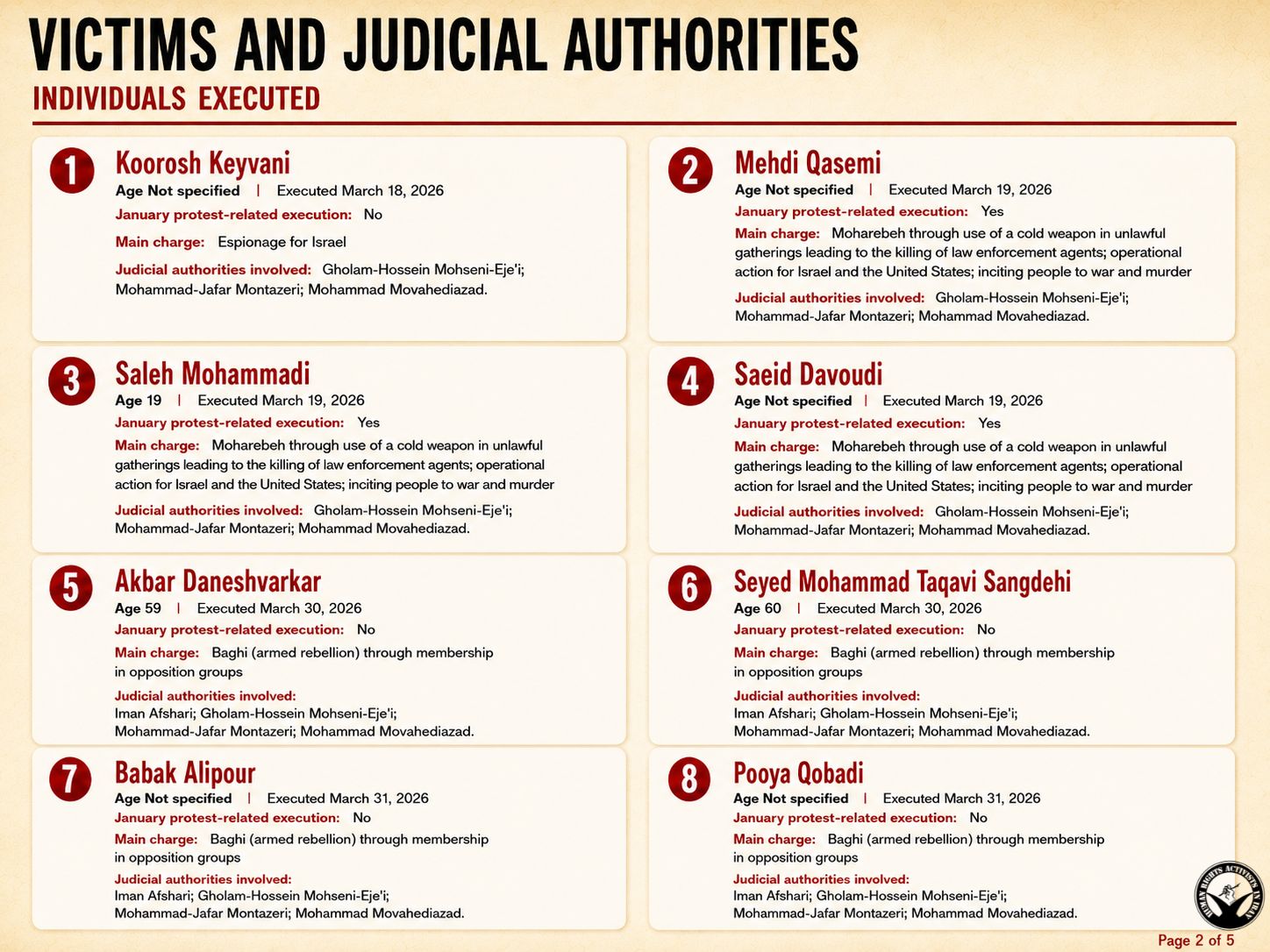
Strike on Evin Prison and Breakdown of Inmate Services
Industrial workers in Tehran’s districts 18 and 20 were compelled to continue 24-hour shifts despite evacuation warnings, facing threats of dismissal for “wartime absenteeism.” In one example, at a foundry in Ghal’eh Morghi, some workers sheltered for eight hours beneath inactive machinery after shrapnel hit the roof, waiting for fire hazards to pass. A confidential directive from the Administrative and Recruitment Affairs Organization ordered public employees to return to work by the third day of the war. Internal footage showed Ministry of Agriculture staff wearing helmets in office corridors.
Communication Blackouts and Mental Strain
Three waves of internet shutdowns peaked on June 18. Families of diaspora Iranians faced total communication blackouts. Field psychologists reported that calls related to panic attacks and sleep disorders tripled compared to pre-war averages. Students at dorms in Amirkabir and Tehran Markazi Universities said they slept fully dressed and shoed, ready to evacuate at any moment.
Information Vacuum and Explosive Rumors
State media mostly repeated military briefings, offering no updates on sheltering or food safety. In this void, social media spread unverified claims of “radiological contamination in eastern Tehran” and “Israeli use of chemical warheads,” sparking an emergency exodus to the north. Media analysts noted a direct correlation between conspiracy theory circulation and a spike in “anonymous link views.”
Social Resilience and Grassroots Solidarity Networks
Amid the destruction, some remaining residents in Tehran used the hashtag #IAmTehran as a symbolic show of presence. Café owners in Iranshahr kept their lights on—serving only apple pie—so “the city wouldn’t feel deserted.” In the south Tehran, youths at Khorasan Square handed out drinks. Handwritten signs in Jordan Street read, “When you return, watch out for the glass,” in an effort to protect the property of displaced neighbors. These modest, spontaneous acts played a vital role in easing fear and replacing a narrative of “flight” with one of “staying and rebuilding.”
Human Casualties from the Iran-Israel War
Twelve consecutive days of bombardment resulted in at least 5,665 casualties, including 1,190 killed and 4,475 injured, according to field data collected by HRANA and its network of medical and local volunteers. These figures were recorded across 28 provinces. In contrast, the Iranian Ministry of Health announced a slightly lower total of 5,356 casualties as of midday on June 24, reporting 610 deaths and 4,746 injuries.
Rising Toll: A Day-by-Day Breakdown
▪️ Day 1 (June 13): Simultaneous strikes on Tehran, Tabriz, and Kermanshah left at least 770 casualties, including 35 women and children among the dead.
▪️ Day 2: With missiles hitting Khorramabad and Asadabad, the total rose to 983. The first report of an ambulance strike was recorded.
▪️ Day 3: A series of explosions in Tehran’s Narmak and Sabunchi neighborhoods pushed the total number of casualties past 1,000.
▪️ Days 4–6: Concentrated bombings on IRGC bases in Qom, Borujerd, and the police headquarters in Tehran triggered a new wave of military casualties, bringing the total to 1,968 by June 18.
▪️ End of Week 1 (June 19): HRANA published a seven-day tally of 2,694. The Health Ministry stated it had received 2,500 injured but did not report a death toll.
▪️ Days 8–9: Continued attacks on energy facilities and hospitals brought the total to 4,261. For the first time, the government acknowledged that “54 women and children” had died.
▪️ Day 10 (June 22): As Israeli air raids continued across several provinces, U.S. air forces bombed Natanz, Isfahan, and Fordow. Total casualties rose to 4,400; the Red Crescent confirmed the deaths of three aid workers.
▪️ Day 11: Continued Israeli strikes raised the number to 4,432. Notable events included the bombing of Evin Prison, the targeting of an ambulance in Najafabad, and the death of a five-year-old child in Asadabad.
▪️ Day 12 and Ceasefire (June 24): The final wave of Israeli drones struck eastern Tehran, Ahvaz, and Astaneh-ye Ashrafiyeh. HRANA data placed the total number of dead and injured at 5,665, while the government’s official figure was 5,356.
•Women and children: At least 65 children and 49 women—including two pregnant women—were killed; 270 women and children were injured. •Medical and emergency workers: Five doctors and four aid workers were killed; at least 49 were injured. Nine ambulances and seven hospitals were directly hit or damaged by shrapnel. Six ambulances and one Red Crescent helicopter were also impacted. •Civilian infrastructure: Six emergency medical bases and two maternal-child health centers were destroyed or severely damaged.
The following table lists the confirmed identities of several children who were injured or killed in recent attacks. HRANA is currently reviewing additional identity data for other affected children.
Province
City
Date
Killed
Injured
Age
Identity
Location
1
Tehran
Tehran
Friday, June 13
1
–
12 yrs
Amirali Amini
Mahallati Street
2
Tehran
Tehran
Friday, June 13
1
–
16 yrs
Parham Abbasi
Sattarkhan neighborhood
3
Unknown
Unknown
Unknown (June 13–14 window)
–
3
2 yrs
–
–
4
Tehran
Tehran
Friday, June 13
1
–
10 yrs
Mahya (Mahia) Nikzad
–
5
Tehran
Tehran
Unknown (June 13–14 window)
1
–
–
Heida Zeinali
–
6
Tehran
Tehran
Unknown (June 13–14 window)
1
–
–
Ayda Zeinali
–
7
Tehran
Tehran
Friday, June 13
1
–
9 yrs
Baran Eshraghi
–
8
Tehran
Tehran
Friday, June 13
1
–
5 yrs
Fatemeh Zakerian
–
9
Tehran
Tehran
Friday, June 13
1
–
7 mos
Zahra Zakerian
–
10
Tehran
Tehran
Unknown (June 13–14 window)
1
–
11 yrs
Soheil Katooli
–
11
Tehran
Tehran
Saturday, June 14
1
–
17 yrs
Seyed Hamidreza Sedighi Saber
Sattarkhan neighborhood
12
Tehran
Tehran
Unknown (June 13–16 window)
1
–
3 yrs
–
–
13
Tehran
Tehran
Unknown (June 13–16 window)
1
–
8 yrs
Tara Haji Miri
Patrice Lumumba Street
14
Isfahan
Najafabad
Tuesday, June 17
1
–
13 yrs
Fatemeh Sharifi
–
15
Isfahan
Najafabad
Tuesday, June 17
1
–
10 yrs
Mojtaba Sharifi
–
16
Tehran
Tehran
Friday, June 13
1
–
11 yrs
Motahareh Niyazmand
Chamran Residential Complex
17
Tehran
Tehran
Friday, June 13
1
–
13 yrs
Mohaddeseh Aghdasi
Chamran Residential Complex
18
Tehran
Tehran
Friday, June 13
1
–
10 yrs
Mohammadreza Aghdasi
Chamran Residential Complex
19
Tehran
Tehran
Friday, June 13
1
–
13 yrs
Mersana Bahrami
Chamran Residential Complex
20
Unknown
Unknown
Friday, June 13
1
–
8 yrs
Mohammad Hossein Khaki
Chamran Residential Complex
21
Tehran
Tehran
Friday, June 13
1
–
10 yrs
Fatemeh Niazmand
Chamran Residential Complex
22
Tehran
Tehran
Friday, June 13
1
–
12 yrs
Alireza Niazmand
Chamran Residential Complex
23
Tehran
Tehran
Friday, June 13
1
–
9 yrs
Zahra Bahman Abadi
Chamran Residential Complex
24
Tehran
Tehran
Friday, June 13
1
–
5 yrs
Hanieh Bahman Abadi
Chamran Residential Complex
25
Tehran
Tehran
Friday, June 13
1
–
2 yrs
Mohammadali Bahman Abadi
Chamran Residential Complex
26
Tehran
Tehran
Friday, June 13
1
–
16 yrs
Matin Safaeyan
Tajrish
27
Tehran
Tehran
Unknown (June 13–16 window)
1
–
Unknown
–
Tehranpars
28
Tehran
Tehran
Unknown (June 13–16 window)
1
–
2 months
Yaran Ghasemian
–
29
Tehran
Unknown
Unknown (June 13–17 window)
1
–
–
–
–
30
Qom
Qom
Saturday, June 21
1
–
16 yrs
Ehsan Ghasemi
–
31
Unknown
Unknown
Unknown (June 13–20 window)
1
–
10 yrs
Fatemeh Sadat Sadati
–
32
Khuzestan
Andimeshk
Unknown (June 19–20 window)
1
–
7 yrs
Seyed Armin Mousavi
Dokoheh Military Zone
33
Lorestan
Unknown
Unknown (June 13–20 window)
1
–
Unknown
Helena Gholami
–
34
Kermanshah
Eslamabad-e Gharb
Saturday, June 21
1
–
6 yrs
Yasin Molaei
–
35
Kermanshah
Eslamabad-e Gharb
Saturday, June 21
–
1
3 yrs
Unknown (Yasin Molaei’s brother)
–
36
Kermanshah
Hamil
Saturday, June 21
1
1
6 yrs killed, 1 yr injured
–
–
37
East Azerbaijan
Tabriz
Saturday, June 21
1
–
7 yrs
Alisan Jabari
Azerbaijan Square
38
East Azerbaijan
Tabriz
Saturday, June 21
1
–
7 yrs
Taha Behroozi
Azerbaijan Square
39
Tehran
Tehran
Injured June 13–16, died June 23
1
–
5 yrs
Kian Ghasemian
–
Contrasting Official and Independent Figures
1 • Scope of Sources
HRANA gathers data from three layers: volunteers embedded in medical centers, a network of hundreds of verified local channels, and official statements used for cross-verification. In contrast, the government relies almost exclusively on reports from public hospitals and state medical facilities. 2 •Recording and Updating Methods
HRANA updates its casualty figures daily and in real time, with each number confirmed by at least one independent source before being finalized. Government figures are released periodically and often feature sudden, unexplained jumps. 3 •Inclusion of Victims
HRANA’s estimates include military personnel, outpatient injuries, and unidentified victims. Official tallies often exclude military casualties (or report them with delay) and typically omit outpatient injuries. 4 •Political Pressure and Motivations
During the conflict, the government revised casualty figures significantly on at least three occasions (e.g., an increase from 2,500 to 4,500 injured on Day 8), suggesting that numbers are filtered through political considerations before release. HRANA, by contrast, reports gradual and documented increases. 5 •The 309-Person Discrepancy
While the final 309-person gap between HRANA’s and the government’s tallies may seem minor, it highlights which groups are omitted or downplayed in the official narrative—and underscores why independent access to raw data is vital for human rights organizations and international observers.
Nuclear Scientists
During the wave of Israeli, at least eleven of the country’s leading nuclear scientists were killed in Tehran and several other cities. These attacks not only claimed the lives of prominent scientific figures but also killed family members and neighbors, bringing the documented death toll to over 60.
According to field sources and medical data, Fereydoon Abbasi-Davani—former head of the Atomic Energy Organization of Iran and a professor of nuclear physics—was killed along with his 24-year-old daughter in the “Sarv Professors Complex” in Sa’adat Abad, Tehran. In the same complex, Mohammad Mehdi Tehranchi, a board member of Islamic Azad University, died from a direct explosive hit; witnesses say only scattered remains of his body were found.
Hours later, in Tehran’s Shahrara neighborhood, Abdolhamid Minoochehr—a professor of nuclear engineering and editor of the journal Nuclear Technology and Energy—was killed at 3:30 a.m. in his five-story apartment building, along with a domestic worker. In the Shahid Daghaghi residential area of Lavizan, Ahmadreza Zolfaghari Daryani, former dean of the Nuclear Sciences Faculty at Shahid Beheshti University, was killed when a guided missile struck his home.
Another victim, Seyed Amirhossein Faghihi—former deputy head of the Atomic Energy Organization and faculty member at Shahid Beheshti University—was killed in Tehran’s Marzdaran neighborhood. That same night, Nader (Akbar) Matlabi-Zadeh, a nuclear physicist from Isfahan affiliated with Islamic Azad University, was targeted and killed in Yazd as he exited his home.
The attacks on residential homes caused severe family casualties:
• On Pasdaran Street in Tehran, Ali Bakaei Karimi was killed along with his wife and two young children. • Near Heravi Square Tehran, Mansour Asgari, a researcher on research reactors, died with his wife and four-year-old child. • Local sources reported the death of Saeed Borji, a research assistant at the Khondab facility, in eastern Tehran; further details are pending. • The deadliest event occurred on the morning of June 24: a strike on a residential block in southern Tehran killed Mohammadreza Sedighi Saber, a specialist in advanced centrifuges. The explosion caused the building to collapse entirely. According to witnesses, 43 others—including his 17-year-old son—also died or were trapped under the rubble. • Hours later, news emerged of the assassination of Issar Tabatabaei Qomsheh, a nuclear engineering professor at Sharif University of Technology, at his home in Shahr-e Rey. He and his wife, Mansoureh Haji Salem, were both killed.
Although officials have yet to comment on the specific types of weapons used, forensic evidence and the extent of destruction suggest a combination of precision-guided bombs, suicide drones, and long-range rockets. Most strikes occurred late at night—a tactic that experts say is designed to maximize psychological impact and hinder immediate rescue efforts.
Forensic authorities and hospitals in the capital have confirmed the identities of several victims, while search operations under the rubble continue in multiple locations. Medical sources report that over 70 people were injured in these incidents, some in critical condition due to severe burns or amputations.
Israeli Strikes on Iran’s Civilian Infrastructure
As the twelve-day conflict between Israel and Iran came to an end, HRANA’s updated assessment reveals that a significant portion of Iran’s civilian infrastructure and assets remained under fire. Verified data from June 13 to 24 records at least 109 strikes or explosions at industrial, energy, administrative, and commercial sites—a number that poses a serious challenge to the country’s economic outlook. Nearly two-thirds of these incidents (73 cases) occurred in Tehran Province, followed by Alborz, Lorestan, Fars, and Kermanshah as the hardest-hit provinces. The peak occurred on June 15 with 53 reported incidents, coinciding with the first nationwide internet blackout and a several-hour disruption to energy production and distribution.
Methodological Note: The classification of targeted locations in this report as “military” or “civilian” is based on publicly available information, visible indicators, and testimonies from local residents. A definitive determination of the nature of these sites requires further verification through official documents, satellite imagery, and comprehensive analysis, which are currently not accessible. Therefore, this categorization is provisional and intended to provide an initial overview rather than a conclusive judgment about the nature of the targets.
Strikes on Energy Infrastructure
The most extensive energy-related damage was observed in the southern provinces and Tehran. In Bushehr, the Fajr Jam refinery and Phase 14 of the South Pars gas field were hit twice in succession on June 14, causing a 30% drop in gas pressure. In the capital, the oil depots in Shahran and South Tehran, as well as the Shahr-e Rey refinery, suffered three consecutive explosions on June 15, igniting three ten-million-liter storage tanks and shutting down the distillation unit for 12 hours. Fires in the hydrocracking unit of Kermanshah Oil Refinery on June 16 and disruption of backup power at Yazd’s combined cycle power plant the next day caused a 7% drop in refining capacity during the review period, leading to multi-kilometer fuel lines on roads west and south of Tehran.
Manufacturing and Industrial Plants
In Lorestan, strikes on the car manufacturing company, Zagros and the Oshtorinan Machine-Building Complex destroyed pressing and painting halls, halting assembly lines. An explosion near Shiraz Electronics Industries ignited a telecommunications board warehouse and disabled SMT lines. Power outages and roof collapses at industrial parks in Alborz (Qazvin) and Marand, as well as damage to five textile and food factories in Zanjan and Hamedan, forced at least 3,000 workers into forced leave or unemployment.
Administrative and Transport Infrastructure
Mehrabad and Tabriz airports were each temporarily shut down twice due to security alerts—Mehrabad in particular suffered a cruise missile hit on June 16 that burned out the fueling system for its western runway. An explosion at an annex of the Ministry of Foreign Affairs near the Garden Museum, and shattered windows at Shahid Beheshti University’s Central Library (June 23), disrupted thousands of employees and students. Evin Prison was struck on June 19, with a missile hitting the entry gate; damage to the infirmary and cut phone lines led to widespread human rights protests. In total, 16 administrative and transport targets—from passenger terminals to telecom towers—sustained direct damage.
Commercial Property and Market Losses
Broken windows at the massive Iran Mall complex in western Tehran, fires in warehouse clusters near the Karaj highway, and a localized explosion at the Grand Bazaar of Isfahan were among the most notable commercial incidents. Twelve identified commercial centers suffered structural damage or temporary closure. Field reports also indicate a significant drop in access to essential goods in western Tehran.
Targeting Patterns and Human Impact
Although the Israeli military stated that its strikes focused on missile-related infrastructure, the spread of attacks and the lack of nearby air defenses at civilian sites—such as Shahran Oil Depot or Shiraz Electronics—raise serious concerns about adherence to the principle of distinction between military and civilian targets. So far, the deaths of four refinery workers, two fuel truck drivers, and three factory guards have been confirmed, along with dozens of injuries—a figure likely to rise as provincial data collection continues.
Attacks on Tehran Neighborhoods
HRANA’s compilation of twelve days of conflict data reveals that the geography of strikes in the capital was more concentrated around the city’s outer ring than previously estimated—zones where strategic infrastructure and dense residential areas are often adjacent. A total of 300 strike or explosion events were recorded within Tehran’s urban area, a number that is expected to significantly alter the capital’s security landscape for years to come. Of these, 95 events were precisely mapped at the neighborhood level: 45 incidents (47%) occurred in the east and northeast corridor, 27 (28%) in the west, 16 (17%) in the north and northwest, and 7 (7%) in the south and southwest.
East and Northeast: The Most Frequent Target Zone
The Tehranpars, Hakimiyeh, and Lavizan corridor, extending along Babayi Expressway, remained the most heavily targeted axis. Forty-five strike or explosion incidents were recorded in this narrow industrial-residential corridor, including three direct hits on Lavizan fuel depots and two secondary explosions felt as far as the Babayi Expressway interchange. Nobonyad, Majidieh, and Narmak neighborhoods repeatedly came under blast waves. Air defense batteries stationed on the Lashgark heights fired seven interceptor missiles and launched several artillery bursts over five consecutive nights, lighting up the eastern sky.
North and Northwest: The Administrative Buffer Zone
Sixteen incidents were recorded in the Tajrish–Vanak–Jordan axis, including three in a 48-hour span that shattered windows in Seoul Street office towers twice and paralyzed the Sadr Expressway for hours. Shrapnel bursts over Niavaran, Valiasr Street, and near Saei Park disrupted radio communications and caused localized power outages. On the sixth night of the conflict, two surface-to-air interceptors were confirmed to have launched from the Lavizan–Niavaran defense site.
Western Axis: Between Industrial and Residential Arteries
Twenty-seven incidents were reported in the Shahran, Chitgar, and Bidganeh corridor—home to the Shahran oil depot and the Bidganeh missile base. On June 15, smoke from a massive explosion at the oil depot was visible from the city center. For three consecutive nights, air defense systems on Chitgar’s hills and near Azadi Square fired three interceptor missiles along with multiple artillery rounds. Tourist activity at Chitgar Lake’s parks was suspended for several days, and residents of Ekbatan and Iran Mall spent at least two nights in emergency shelters.
South and Southwest: Fewer Strikes, Heavier Damages
Seven incidents occurred in the southern zone, from Eslamshahr to Khaniabad-e No and along the Persian Gulf Expressway. Though fewer in number, the strikes caused disproportionately heavy damage to logistics depots and aging residential areas. An explosion near the Khalij-e Fars Complex destroyed two fuel storage tanks and three warehouse hangars, displacing at least 100 families until the ceasefire. On the ninth night, two short-range interceptors were launched from a defense site in southern Tehran.
Overall Pattern and Impacts
Nearly half of the strikes with known coordinates occurred in the eastern–northeastern corridor—an area whose mix of fuel facilities and dense housing raised the highest civilian casualty concerns. The western sector, dense with energy and logistics infrastructure, was the second major target zone. Among the 300 recorded incidents, at least three major fuel tanks, two strategic logistics depots, and hundreds of residential or commercial units were damaged. Verified reports confirm the deaths of four fuel depot workers, two tanker drivers, and three factory guards, along with dozens more injured. Given the geographical spread and ongoing debris clearance operations, the casualty figures may still rise. Experts believe this focused targeting of peripheral belts will lead to a substantial reassessment of the capital’s security posture in the coming years.
Israeli Strikes on Iranian Military Sites
Over the twelve days of war, at least 154 heavy strike waves were recorded against military bases and installations across the country. These attacks occurred in 28 provinces, averaging more than 12 military targets per day. According to data collected by HRANA:
Key Metric
Figure
Description
Total Recorded Attacks
154
Includes only strictly military targets; dual-use infrastructure not counted.
Provinces Affected
28 out of 31
Tehran, Isfahan, and Kermanshah were hit the most.
Most Frequent Day
June 18 (31 attacks)
Unprecedented wave of missile and drone strikes in various parts of Tehran, Alborz, and Rey.
Most Strikes in a Province
Tehran (42 attacks)
Concentrated especially around Parchin, Shahr-e Rey, and Lavizan.
Timeline of Major Attacks
Date
Notable Targets
Key Highlight
June 13
Mehrabad Airport, Kermanshah Missile Base, 8th Tactical Air Base (Isfahan)
Official start of conflict; three hits in the first few hours.
Khondab Heavy Water Complex (Arak), Natanz nuclear site, multiple locations in Tehran
First major engagement with strategic nuclear targets on military list.
June 20
Bushehr Air Base, IRGC garrison near Chaharshir (Ahvaz)
Attacks expand to the south and Persian Gulf coast.
June 21
Defense Industries Complex, the Third Naval Base, Cyber Police (FATA), the Fourth Tactical Air Base, and the Army’s 71st Mechanized Infantry Brigade in the Sumar region were among the sites targeted.
The Cyber Police Center of the Law Enforcement Command (FATA) was attacked.
June 22
Three nuclear facilities (Natanz, Fordow, Isfahan) — joint U.S. operation
Peak of strategic strikes; 22 military targets hit in one day.
June 23
Shahid Madani logistics center (Tabriz), Parchin missile complex, IRGC Seyed-al-Shohada unit (Shahr-e Rey)
Focus on IRGC supply lines and missile industries.
During the twelve-day war, Iran’s top military command structure sustained unprecedented losses, beginning with the confirmed deaths of at least twelve prominent figures from the Islamic Revolutionary Guard Corps (IRGC) and the Armed Forces General Staff, and extending to mid-level intelligence officers.
In the early hours of June 13, the deaths of several top-ranking military officials were announced, including Amir-Ali Hajizadeh, commander of the IRGC Aerospace Force; Mohammad Bagheri, Chief of Staff of the Armed Forces; and Hossein Salami, Commander-in-Chief of the IRGC. Also confirmed dead that night were Gholam Ali Rashid, commander of the Khatam al-Anbia Central Headquarters; Mehdi Rabani, deputy chief of army operations; and Davoud Sheikhian, a senior officer in planning and operations.
These simultaneous losses across three tiers of strategic command created what many described as a “command chain vacuum” in the war’s critical opening hours.
Two days later, on June 14, Israeli strikes shifted focus to intelligence command centers. Gholamreza Mehrabi, deputy head of intelligence for the Armed Forces General Staff, and Brigadier General Khosrow Hassani, deputy for IRGC Aerospace Intelligence, were killed in Tehran. According to internal security analysts, this event caused a temporary suspension of drone interception operations.
The most devastating blow to IRGC intelligence occurred on June 15, when an official statement confirmed the deaths of Mohammad Kazemi, the newly appointed head of the IRGC Intelligence Organization; his deputy, Hassan Mohaqeq; and Mohsen Bagheri, a senior commander for IRGC foreign operations. Sources indicate that the deaths occurred in a building hosting the “Joint Electronic Warfare Command” in western Tehran, which exploded—an event that coincided with a blackout and military radio disruption.
Thus, within just three days, the decision-making chain—from strategic command to intelligence operations—lost six top commanders and five senior intelligence officials. Although military spokespeople claimed “rapid replacement of command,” inconsistencies in official statements and delays in reporting casualties suggest that the new hierarchy has yet to stabilize.
At least three sources close to the IRGC confirmed that in the wake of these losses, control of the “Joint Air Defense Command” was transferred to the Army General Staff, and several cruise missile interception systems in northern Tehran were reassigned to army units. Normally, such changes would require approval from the Supreme National Security Council, but in this case, the order was issued directly by the Deputy for Army Operations. These sources also reported that from the evening of June 16 onward, encrypted messages—normally exchanged every twelve hours between regional commands—began arriving with multi-hour delays, indicating continued disruption to the command system.
Beyond these confirmed names, a long list of mid-ranking fatalities—including missile brigade commanders in Zanjan and Aran va Bidgol, and signals intelligence officials in southern Kerman—has yet to be officially acknowledged. Due to widespread internet shutdowns and media restrictions, public verification of these accounts remains difficult.
Official reports so far indicate the deaths of 35 senior IRGC and Army commanders, at least 11 nuclear scientists, and 32 national-level athletes. HRANA has verified the identities of 19 athletes and 38 scientific and military figures, and continues to investigate claims regarding the deaths of other “high-ranking officials.”
Arrests and Repression of Citizens
HRANA’s final assessment of citizen arrests during the twelve-day conflict between Israel and Iran shows that at least 301 individuals were detained nationwide for sharing content, expressing opinions, or participating on social media. The number rose at an alarming rate from the early hours of the war until the ceasefire and spanned a wide range of provinces.
Initial Surge: June 13–15
The first wave of arrests began in the initial hours of the conflict. On June 13 alone, security forces conducted simultaneous raids in at least six provinces, arresting 58 individuals: 5 in Yazd, 14 in Hormozgan, 16 in Isfahan, 21 in Semnan, and one each in Rumeshkan (Lorestan province) and Tehran. The arrest of Motahareh Gounei (Goonehi), a student activist at the University of Tehran, was the most notable case. Although no new arrests were officially reported the following day, a wave of prosecutorial threats spread across social media. On June 15, a second wave brought 42 new arrests, raising the three-day total to 100—a clear sign of a policy shift toward “deterrence through fear.”
Pattern Stabilization and Wider Spread: June 16–18
On June 16, at least 15 more people were arrested, mostly in Kerman, Ardabil, Khorramabad, and North Khorasan, pushing the total past 115. Judicial authorities, threatening “immediate wartime trials,” declared that any “content supporting the enemy” could warrant the harshest penalties. The next day saw a surge in charges such as “spreading public anxiety” and “collaborating with Mossad”: at least 21 citizens were detained in Lorestan, Bafgh, Bukan, and Tehran. By June 17, the total reached 139. On June 18, state media reported 21 more arrests, raising the cumulative figure to 160—an average of over 26 arrests per day in the first week.
Peak of Repression: June 19–21
The most intense spike occurred on June 19, with at least 30 people arrested in Lorestan, Yazd, Kerman, Mahabad, and Aliabad-e Katul, pushing the total to 206. Lorestan led with 16 confirmed arrests. The next day (June 20), another 30 arrests were reported—in Bushehr, Masjed Soleyman, Urmia, Izeh, Rasht, and Parsabad-Moghan—raising the total to 236. Local sources said many of these arrests were based solely on “resharing attack footage” or “expressing hope for an end to the conflict.” June 21 repeated the 30-arrest figure, confirming the trend. In provinces like Hamedan and Bukan, police claimed those arrested were “demoralizing the public.”
Gradual Attrition and Targeted Detentions: June 22–24
A full international internet shutdown on June 18 slowed information exchange, but arrests continued. On June 22, four people were arrested in Dehdasht and eleven in Ramshir; Bukan’s commander confirmed five more arrests, and Kerman recorded its 14th. By then, the ten-day total had reached 277. The following day saw only four new arrests—likely a result of communication blackouts and fear of reporting. However, on June 24, five additional arrests were confirmed (in Baharestan, Qaemshahr, Bushehr, and Qazvin), bringing the total to 286.
Geographic Breakdown and Detainee Profiles
Lorestan province topped the list with 42 confirmed arrests, followed by Khuzestan (29), Kerman (25), Golestan (24), and Yazd (22). Arrests were reported in at least 24 provinces. While charges remain unclear in many cases, available data indicates around 5% were accused of “supporting Israel” via content sharing, and roughly 3% faced charges of “disturbing public opinion.”
Legal and Social Implications
Beyond the volume of arrests, the speed of issuing temporary rulings and the public threats by judicial officials have raised serious concerns about due process and fair trial rights. Many families report that detainees are being held in undisclosed locations without legal counsel. Prolonged internet outages have further restricted access for lawyers and journalists, hindering documentation of potential violations.
Security Arrests
HRANA’s final review of security-related arrests during the twelve-day conflict indicates that Iranian intelligence and security forces detained at least 1,295 individuals on charges including “espionage for Israel,” “operating drones,” “weapons smuggling,” and “undermining national security.” These arrests escalated from isolated early incidents to broad search-and-seizure operations nationwide, culminating in three executions during the war period. Just hours after the ceasefire was announced, Iran’s judiciary executed three additional individuals—Edris Ali, Azad Shojaei, and Rasoul Ahmad Rasoul—in Urmia prison on charges of espionage and collaboration with Israel. All six executed individuals had been arrested and sentenced prior to the outbreak of war.
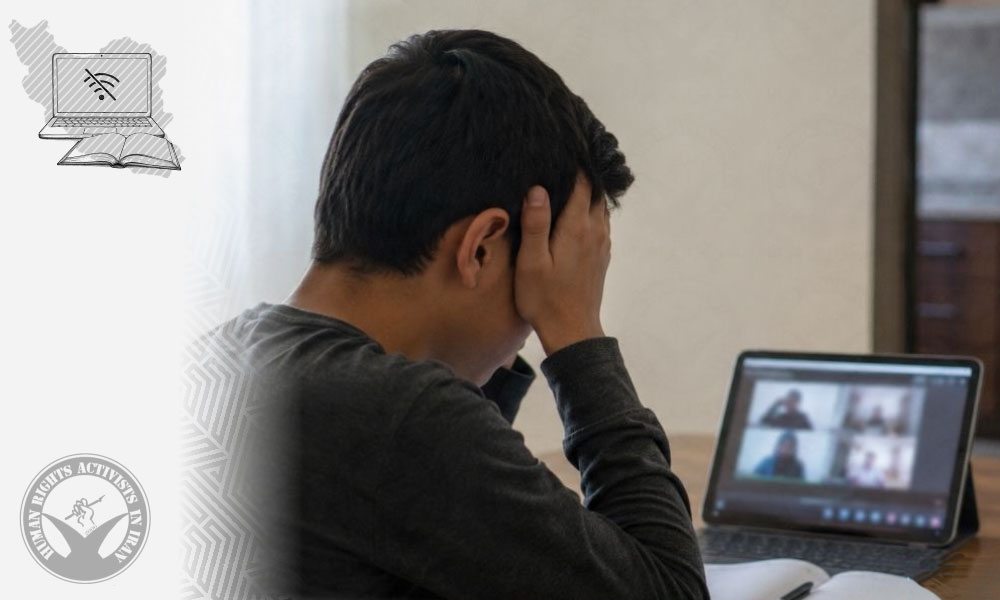
June 13–15 | Initial Arrests and Public Threats
The first hours of the conflict were accompanied by warnings from the head of the judiciary, promising rapid trials for “Israeli collaborators.” That same day, state television reported the dismantling of an “organized network” in Yasuj, while police in western Tehran arrested a pickup driver transporting dozens of drones. In Ashkhaneh, a local photographer was detained for filming “sensitive” locations. On June 15, two foreign nationals were arrested in Tehran for allegedly relaying the locations of IRIB headquarters and an official’s residence to a contact in Germany.
June 16–19 | Provincial Operations and First Execution
As internet access was restricted and the security atmosphere intensified, coordinated operations were launched across several provinces. IRGC intelligence in Chaharmahal and Bakhtiari reported dismantling a drone team; the Ministry of Intelligence announced the seizure of a weapons shipment in Kurdistan and the arrest of one individual. By the end of Day 10, security-related arrests had reached 363, and state media reported the execution of Majid Mosayebi for espionage on behalf of Israel.
June 20–21 | Major Crackdowns in Khuzestan and Qazvin
Footage from a “Basij checkpoint operation” in Qazvin showed 80 foreign nationals arrested for illegal entry and possession of knives and ammunition, marking the largest mass arrest of the conflict. The Khuzestan prosecutor reported 41 arrests on suspicion of intelligence cooperation with Israel. Around the same time, a video surfaced showing the alleged confessions of “six Mossad agents” in Tehran—its authenticity remains unverified.
June 22–24 | Second Wave of Executions and Scattered Raids
In the final days of the conflict, reports emerged from Pakdasht to Astara of small armed groups being arrested. These included three Afghan nationals with military equipment, a foreign woman in Chalous, and two espionage suspects in Astara. Meanwhile, police officials announced the arrest of members of a “drone network” in the northwestern mountains of Tehran. Executions of Mohammadamin Mahdavi and Esmaeil Fekri, both accused of espionage, were carried out. The number of security arrests climbed to 537.
Geographic Distribution and Charge Patterns
Tehran leads with over 120 confirmed arrests, followed by Qazvin (80), Khuzestan (41), Gilan (36), Lorestan (10), and multiple large cases in Kurdistan and Chaharmahal and Bakhtiari. At least 98 foreign nationals were arrested—ranging from European to Afghan citizens—accused of illegal entry or membership in intelligence networks. More than half of the cases involve “control or construction of drones” and “filming sensitive sites,” about a third relate to weapons or explosives smuggling, and the rest involve “cyber espionage” or “propaganda for a hostile state.”
Legal Implications
Beyond the six confirmed executions, many unnamed detainees are reportedly being held in undisclosed locations. In parallel, Iranian lawmakers introduced an emergency bill to “increase penalties for espionage,” with officials insisting that the harshest punishments will apply to these groups. Due to internet blackouts and the secrecy of the files, independent lawyers have effectively lost access to their clients, raising further concerns about violations of due process and fair trial rights.
Internet Disruption and Cyber Attacks
HRANA’s comprehensive analysis shows that during the war, the virtual domain became a separate frontline, struck by a combination of government-imposed restrictions and cross-border cyberattacks. Three successive waves of throttling and access limitations were imposed, culminating in a nationwide shutdown on the early morning of June 18—an event comparable only to the November 2019 blackout. This systemic disruption coincided with unprecedented intrusions into government websites, financial systems, academic platforms, and even health infrastructure, revealing a blurred line between “defensive countermeasures” and punitive operations.
Timeline of Disruptions and Cyberattacks
June 13 | Network Shaking Begins
In the opening hours of the bombardment, international bandwidth slowed noticeably, government websites went offline, and the emergency SMS system failed. Initial alerts also indicated potential breaches of e-government portals.
June 14 | Public Service Systems Targeted
Health insurance registration, fuel card services, and judicial systems became inaccessible. The National Cyberspace Center issued public warnings about “information infiltration.”
June 15 | Mobile Operator Disruption
Users reported dropped voice calls nationwide, widespread failures in online shopping, and attempted breaches of the national ID registry and border control databases—suggesting attacks on identity and border-data systems.
June 16 | City-Level Infrastructure Hit
Severe slowdowns in messaging apps coincided with hacking of traffic cameras in Tabriz and Hamedan. Late at night, the Communications Minister confirmed “defensive actions are underway,” without specifying details.
June 17 | Hybrid Attacks on Energy Infrastructure
The national fuel distribution website was taken down for hours. The Oil Minister acknowledged “cyber and physical attacks are intertwined,” prompting emergency fuel reserves to be activated at refineries.
June 18 | Nationwide Outage and Live Broadcast Hack
By around 2 a.m., global internet connectivity dropped to near zero. That night, a live broadcast of Islamic Republic of Iran News Network was briefly hacked to play an unidentified military march. The government framed this as a “defensive measure against Israeli attacks,” while independent observers called it a “preventive shutdown aiming to control the domestic narrative.”
June 19 | Energy Ministry Breach and Financial Disruption
The group “Predatory Sparrow” claimed responsibility for hacking the Energy Ministry and crippling the backup power grid. Simultaneously, private bank systems experienced transaction delays, and internal transfer limits surfaced.
June 20 | Attack on Crypto Market
Iran’s largest cryptocurrency exchange suffered a server attack, halting deposits and withdrawals for hours and sparking rumors of asset theft. Insurance portals and university portals also encountered login failures.
June 21 | Health Infrastructure Exploited
Backup power systems failed at hospitals in Kerman, Golestan, and Markazi provinces, and large-scale phishing SMS campaigns spread malware. The Health Ministry reported an unprecedented volume of DDoS attacks on emergency services.
June 22 | DDoS Waves at Health Services
The 115 emergency number in Tehran and Isfahan experienced repeated outages, forcing manual reporting of casualty data. Provincial crisis teams reverted to legacy radio networks.
June 23 | Data Leak at State Bank
Bank Melli announced a “limited customer data leak,” with cybersecurity experts warning that this could be the first sign of eroding public trust due to unclear breach scope.
June 24 | Partial Restoration
Following the ceasefire, nationwide internet restrictions were gradually lifted. However, by the end of the day, connectivity in parts of Sistan‑and‑Baluchestan, Kohgiluyeh‑and‑Boyer-Ahmad, and around Kermanshah provinces remained below 30% of pre-war levels.
Multi-Layered Consequences
• Economic impact: Financial systems were paralyzed, delaying salaries and subsidies, and many small online businesses faced sudden collapse. • Emergency response disruption: Loss of location-based services hampered relief efforts during ongoing physical attacks. • Legal concerns: There was no transparent judicial process for restricting access or arresting more than 30 online activists, creating another loophole in the right to information. • Digital crisis framework: The three waves of throttling, the full outage on June 18, and over ten critical cyberattacks against energy, health, and banking sectors painted a picture of fragile digital infrastructure overwhelmed by security-first crisis management. • Path to recovery: Sustainable restoration—especially in underserved areas—depends on government transparency about responses, compensation for affected businesses, and a halt to punitive cyber policies; without these, Iran’s cyberspace will remain a battlefield of censorship, cyberattacks, and distrust.
Political and Diplomatic Reactions
HRANA’s review of international responses to the twelve-day war between Iran and Israel reveals an unprecedented consensus from the very outset. While the tone and intensity varied, nearly all statements converged on three shared imperatives: restraint, an immediate return to diplomacy, and the protection of civilians. Governments, regional blocs, and global institutions issued statements condemning or expressing grave concern over the conflict, warning that further escalation could destabilize the Middle East and jeopardize international security.
Early Days: Condemnation and Calls for Restraint
As the first wave of attacks unfolded, countries including the UK, Germany, Japan, Australia, Russia, Saudi Arabia, Oman, Iraq, Jordan, and China—alongside the UN Secretary-General and the International Atomic Energy Agency—voiced explicit or implicit alarm over rising tensions. Despite political differences, all actors emphasized a shared goal: preventing regional spillover and civilian harm.
Ongoing Strikes: Broader Criticism and Civilian Protection Focus
By midweek, a second wave of diplomatic responses emerged. The Qatari Foreign Ministry, the Economic Cooperation Organization (ECO), and 21 Arab and Islamic nations—from Algeria to Sudan—issued coordinated statements. These not only condemned or expressed concern over the attacks but also called for unhindered humanitarian access and full respect for civilian protections—signaling potential breaches of international humanitarian law.
Regional Powers Step into Mediation
As casualties and infrastructure damage mounted, Moscow and Ankara began proposing diplomatic initiatives. The Kremlin spokesperson stated that Russia remains in contact with both parties and that an earlier mediation offer stood. President Erdoğan of Turkey also phoned Iran’s president to express readiness to facilitate nuclear negotiations and de-escalation—reflecting regional actors’ efforts to fill a void left by multilateral diplomacy.
UN and Human Rights Bodies Take the Stage
In the latter half of the conflict, rhetoric intensified. Twenty leading international human rights organizations jointly labeled Israel’s airstrikes a grave breach of humanitarian law and potentially war crimes, urging an immediate ceasefire and independent investigation. Concurrently, the UN’s fact-finding mission highlighted attacks on a Tehran residential complex and Evin Prison as violations of the principle of distinction between military and civilian targets. The UN Human Rights Office explicitly condemned the Evin strike as a serious breach of international law.
Conclusion: Fragile but Widespread Consensus
While the language ranged from direct condemnation to “deep concern,” the overall diplomatic alignment—against escalation and for civilian protection—was clear. This alignment extended to legal accountability, with UN experts and human rights bodies pushing for formal inquiries. On Day 11, the UN High Commissioner for Human Rights and the International Committee of the Red Cross demanded immediate access to Evin Prison.
Finally, on the twelfth day, a ceasefire was brokered by the U.S. President, Qatar, and the UN Secretary-General, and took effect at 12:30 a.m.
Following the armed conflict between Iran and Israel, documentation gathered by HRA suggests that the pattern of Israeli air and missile strikes often failed to comply with the requirements of international obligations. In addition, the repeated strikes on civilian-populated areas in Tehran, Tabriz, and Kermanshah; the bombing of Evin Prison; and the impact on at least nine health facilities and six EMS bases indicate a failure to uphold essential principles enshrined in International Humanitarian Law.
1 • Distinguish between military objectives and civilian populations or objects, 2 • Avoid indiscriminate or disproportionate attacks, and 3 •Take all feasible precautions to minimize civilian harm
However, repeated strikes on civilian-populated areas in Tehran, Tabriz, and Kermanshah; the bombing of Evin Prison; and the impact on at least nine health facilities and six EMS bases indicate a systematic failure to uphold these essential principles.
According to HRANA’s field data, during this period there were 5,665 casualties, military and civilian, (1,190 killed and 4,475 wounded) across 28 provinces. Among them, at least 431 civilians, including 65 children and 49 women, were killed, and over 2,000 civilians were injured.
The combined killing of at least eight aid workers or medical personnel and the destruction or damage to ambulances and medical infrastructure, calls for prompt investigations into potential violations of IHL are paramount.
Furthermore, analysis of the recorded targets reveals the following breakdown:
• 62% of targeted locations were dual-use or of uncertain (remain under investigation), • 16% were explicitly •22% were clearly military.
This alarming distribution increases the likelihood of violations of the principles of distinction and proportionality.
The June 23 strike on Evin Prison, which killed a physician, destroyed the prison clinic, disrupted communications, and resulted in the deaths of two civilians unaffiliated with the prison. constitutes not only a violation of the principle of distinction.
Human rights organizations have called for neutral investigations, guaranteed humanitarian access, and criminal accountability for perpetrators. CSOs have emphasized that persistent disregard for the fundamental principles of international humanitarian law, particularly indiscriminate and disproportionate attacks, could rise to the level of war crimes.
Reaffirming Humanitarian Obligations
With the cessation of hostilities and the implementation of a ceasefire, critical humanitarian priorities remain:
• Protection of civilians and critical infrastructure – The extensive destruction of refineries, power networks, and healthcare facilities, alongside internal displacement and shortages of essential goods, requires urgent rebuilding efforts and reparations.
• Ensuring safe and effective humanitarian access –Repeated internet shutdowns, damaged transportation infrastructure, and fuel shortages have critically impeded the ability of CSOs to assess needs, communicate with affected populations, and deliver aid in a timely and safe manner.
• Respect for detainees’ rights and freedom of expression –The wave of security-related arrests and communication restrictions has heightened the risk of violations of fair trial standards. The immediate release of detainees imprisoned solely for expressing opinions or reporting on events is essential.
• Independent investigations and accountability –The high number of victims, attacks on medical centers and Evin Prison, and the use of high-powered weaponry in densely populated areas necessitate the need for immediate and impartial investigations into potential violations.
Human Rights Activists in Iran reiterates its commitment to ongoing documentation and analysis, emphasizing that the end of hostilities does not mark the end of legal responsibility. Reconstruction, reparations, and guarantees of non-repetition must remain central to the international community’s focus and to all involved actors.
[1] The figures presented here include both military and civilian casualties. For a detailed breakdown of civilian losses, see the “Human Casualties from the Iran-Israel War” section of this report.
HRANA News Agency – On the occasion of the World Day for Safety and Health at Work, Human Rights Activists in Iran (HRA) has published a report examining workplace accidents linked to unsafe environments and hazardous working conditions in Iran between May 2, 2024, and April 27, 2025.
According to data compiled by HRA’s Department of Statistics and Publications, during this period at least 2,079 workers lost their lives and at least 16,273 others were injured due to workplace accidents resulting from inadequate safety measures.
The World Day for Safety and Health at Work, established by the International Labour Organization (ILO) in 2003, aims to raise global awareness of workplace safety and health, promoting accident and disease prevention in occupational settings. Since 1996, labor unions worldwide have also observed April 28 as International Workers’ Memorial Day, honoring workers who have lost their lives on the job.
HRA’s report highlights that the reported deaths and injuries were collected from media outlets and organizations monitoring labor rights across Iran. Among the most devastating incidents was the explosion at Shahid Rajaee Port in Bandar Abbas, where 46 workers, including three women, had been killed as of the time of this writing. Official reports recorded over 1,242 injuries, although it remains unclear how many of those injured were workers. According to the head of the Bandar Abbas Workers’ Retirees Association, the majority of the victims were indeed laborers.
This tragedy, occurring just before the World Day for Safety and Health at Work, underscores the importance of stricter implementation of laws and continuous monitoring of compliance with safety principles in work environments.
The report also provides a breakdown of the causes of workplace accidents:
Falls from heights accounted for 22.63% of incidents,
Traffic accidents 14.23%,
Fires 10.57%,
Being struck by hard objects 10.37%,
Poisoning 8.85%,
Mining accidents 7.62%,
Gas suffocation 6.42%,
Factory incidents 6.39%,
Electrocution 6.19%,
Construction accidents 2.46%,
Well-related accidents 2.30%,
Explosions 0.81%,
Petrochemical and refinery incidents 0.49%,
Unspecified causes 0.23%,
Smoke inhalation 0.19%,
Agricultural accidents 0.13%,
Drownings 0.13%.
Iran ranks 102nd in the world regarding the observance of workplace safety standards, which is considered a very low ranking. HRA’s findings reflect the urgent need for improved occupational safety standards and continuous oversight to protect workers’ lives across Iran.
Each year, Human Rights Activists in Iran (HRA) publishes a comprehensive statistical analysis of human rights violations in Iran. The 2024 Annual Report presents data drawn from 9,487 reports collected from 116 NGOs and news sources, offering an in-depth overview of key areas such as women’s rights, workers’ rights, children’s rights, and prisoners’ rights over the past year.
In addition to this 86-page report, HRA has compiled key statistics into a visual infographic booklet, which you can download here:
The pages of this booklet are also available for separate download:
HRANA News Agency –Recent investigations by HRANA reveal that at least 54 prisoners across Iran have been sentenced to death on political or security-related charges. The findings show that some of these sentences have been upheld by the Supreme Court and forwarded to execution branches. Of these, at least 24 were sentenced to death by Tehran’s Revolutionary and Criminal Courts, while the remaining 30 are concentrated in provinces such as Khuzestan, Razavi Khorasan, West Azerbaijan, Sistan and Baluchestan, and Kurdistan.
HRANA’s research highlights serious due process violations in many of these cases. Prisoners were frequently denied fair trials, including restricted or outright denial of access to legal representation and a lack of transparency in judicial proceedings. Some were denied access to their chosen attorneys, while in other instances, judicial authorities blocked meetings between prisoners and their lawyers. A significant number of these individuals, who denied the charges against them, were sentenced to death following opaque and unjust trials. Reports further indicate that some of these prisoners are currently held in solitary confinement, awaiting execution.
Investigations show that judges in Tehran courts have issued the majority of death sentences for these prisoners. The main charge against them is cited as “Baghi” (armed rebellion or uprising against the government). Branch 15 of the Tehran Revolutionary Court, presided over by Judge Abolghasem Salavati, and Branch 26, led by Judge Iman Afshari, have played significant roles in issuing these sentences. In Urmia, sentences against prisoners, including porters accused of espionage for Israel, have been issued by Branch 3 of the Urmia Revolutionary Court.
Some death sentences were reissued in equivalent-level courts after being overturned by the Supreme Court. For example, Hatem Özdemir and Abbas (Mojahid) Korkor (Korkori) were resentenced to death in equivalent courts following the annulment of their initial sentences. Similarly, Mohammad Javad Vafaei Sani was sentenced to death for the third time during judicial proceedings.
While certain individuals have been accused of espionage, the Iranian government’s track record of leveraging such charges as a political tool against dissidents raises serious doubts about these allegations. The use of the death penalty in cases shrouded in secrecy and lacking transparency only exacerbates concerns.
Lawyers for some of these prisoners have repeatedly asserted that their clients were sentenced to death in unfair judicial processes that failed to meet fair trial standards. For instance, in the case of Pakhshan Azizi, her lawyers stated that the evidence presented to the Supreme Court demonstrated that she had no involvement in military activities and was solely engaged in humanitarian efforts in refugee camps for those displaced by ISIS. They expressed concern over the potential rushed handling of the case and called for a thorough and fair review of the evidence.
This report focuses on the human consequences of these cases, identifying the names and examining the latest legal statuses of 54 prisoners sentenced to death on political and security-related charges.
1. Varisheh Moradi
Prison: Evin Prison
Main Charge: Baghi (armed rebellion)
Court: Branch 15, Tehran Revolutionary Court
Case Status: Initial death sentence issued
Varisheh Moradi was arrested by security forces in the suburbs of Sanandaj on August 1, 2023. She was transferred to the women’s ward of Evin Prison on December 26. In November, 2024, she was sentenced to death by Branch 15 of the Tehran Revolutionary Court, presided over by Judge Abolghasem Salavati, on charges including membership in an opposition group and Baghi.
2. Pakhshan Azizi
Prison: Evin Prison
Main Charge: Baghi
Court: Branch 26, Tehran Revolutionary Court
Case Status: Death sentence issued and upheld by the Supreme Court
Pakhshan Azizi, a resident of Mahabad, was arrested in Tehran on August 4, 2023, and transferred to Ward 209 of Evin Prison. After four months of interrogation, she was moved to the women’s ward. On July 24, 2023, Branch 26 of the Tehran Revolutionary Court, presided over by Judge Iman Afshari, sentenced her to death and four years of imprisonment on charges of Baghi through membership in opposition groups. Her case has been recently upheld by the Supreme Court.
3. Akbar Daneshvar-Kar
Prison: Evin Prison
Main Charge: Baghi
Court: Branch 26, Tehran Revolutionary Court
Case Status: Initial death sentence issued
4. Seyed Mohammad Taghavi Sangdehi
Prison: Evin Prison
Main Charge: Baghi
Court: Branch 26, Tehran Revolutionary Court
Case Status: Initial death sentence issued
5. Babak Alipour
Prison: Evin Prison
Main Charge: Baghi
Court: Branch 26, Tehran Revolutionary Court
Case Status: Initial death sentence issued
6. Pouya Ghobadi Bistoni
Prison: Evin Prison
Main Charge: Baghi
Court: Branch 26, Tehran Revolutionary Court
Case Status: Initial death sentence issued
7. Vahid Bani-Amerian
Prison: Evin Prison
Main Charge: Baghi
Court: Branch 26, Tehran Revolutionary Court
Case Status: Initial death sentence issued
8. Seyed Abolhasan Montazer
Prison: Evin Prison
Main Charge: Baghi
Court: Branch 26, Tehran Revolutionary Court
Case Status: Initial death sentence issued
Vahid Bani-Amerian and Seyed Abolhasan Montazer were arrested in December 2022, and Babak Alipour was detained in autumn 2023 in Tehran. Pouya Ghobadi and Seyed Mohammad Taghavi were arrested in Chaldoran, and Akbar Daneshvar-Kar was detained on February 23, 2024, by security forces and transferred to Evin Prison.
In December 2024, Branch 26 of the Tehran Revolutionary Court, presided over by Judge Iman Afshari, sentenced these six political prisoners to death on charges including Baghi (armed rebellion) through membership in opposition groups, conspiracy to disrupt national security, formation of illegal groups, destruction of public property, and illegal border crossing.
Additionally, they received supplementary sentences:
Akbar Daneshvarkar and Seyed Mohammad Taghavi Sangdehi: 15 years imprisonment each.
Babak Alipour: 5 years imprisonment and 20 years exile in Khash.
Pouya Ghobadi Bistoni: 1 year imprisonment.
Vahid Bani-Amerian: 5 years imprisonment.
Seyed Abolhasan Montazer: 5 years imprisonment.
9. Eido Shah-Bakhsh
Prison: Ghezel Hesar Prison, Karaj
Main Charge: Baghi (armed rebellion)
Court: Branch 28, Tehran Revolutionary Court
Case Status: Sentence upheld by the Supreme Court; referred to the execution branch
10. Abdolghani Shah-Bakhsh
Prison: Ghezel Hesar Prison, Karaj
Main Charge: Baghi
Court: Branch 28, Tehran Revolutionary Court
Case Status: Sentence upheld by the Supreme Court; referred to the execution branch
12. Soleiman Shah-Bakhsh
Prison: Ghezel Hesar Prison, Karaj
Main Charge: Baghi
Court: Branch 28, Tehran Revolutionary Court
Case Status: Sentence upheld by the Supreme Court; referred to the execution branch
These individuals were arrested in 2012. Many of their court sessions were irregular, and some defendants, such as Eido Shah-Bakhsh and Abdolghani Shah-Bakhsh, were acquitted by Branch 1 of the Zahedan Revolutionary Court but were rearrested in 2016 following objections from security agencies. On February 4, 2024, Branch 28 of the Tehran Revolutionary Court, presided over by Judge Mohammad Reza Amozad Khalili, sentenced them to death for Baghi through membership in opposition groups and armed rebellion against the regime. The Supreme Court’s Branch 32 upheld their death sentences, and the cases were referred to the first branch of the Tehran Security Prosecutor’s Execution Office.
13. Milad Armoun
Prison: Ghezel Hesar Prison, Karaj
Main Charge: Participation in murder and intentional assault
Court: Branch 13, Tehran Criminal Court One
Case Status: Initial death sentence issued
14. Alireza Kafaei
Prison: Ghezel Hesar Prison, Karaj
Main Charge: Participation in murder and intentional assault
Court: Branch 13, Tehran Criminal Court One
Case Status: Initial death sentence issued
15. Amir Mohammad Khosh-Eghbal
Prison: Ghezel Hesar Prison, Karaj
Main Charge: Participation in murder and intentional assault
Court: Branch 13, Tehran Criminal Court One
Case Status: Initial death sentence issued
16. Navid Najaran
Prison: Ghezel Hesar Prison, Karaj
Main Charge: Participation in murder and intentional assault
Court: Branch 13, Tehran Criminal Court One
Case Status: Initial death sentence issued
17. Hossein Nemati
Prison: Ghezel Hesar Prison, Karaj
Main Charge: Participation in murder and intentional assault
Court: Branch 13, Tehran Criminal Court One
Case Status: Initial death sentence issued
18. Alireza Barmarz Pournak
Prison: Ghezel Hesar Prison, Karaj
Main Charge: Participation in murder and intentional assault
Court: Branch 13, Tehran Criminal Court One
Case Status: Initial death sentence issued
Milad Armoun, Alireza Kafaei, Amir Mohammad Khosh-Eghbal, Navid Najaran, Hossein Nemati, and Alireza Barmerz Pournak are defendants in the so-called “Ekbatan Complex” case. They were arrested in 2022 during nationwide protests after the killing of a Basij militia member named Arman Ali Vardi in Ekbatan Complex. In November 2024, Branch 13 of Tehran Criminal Court One sentenced each of them to death for “participation in murder and intentional assault.”
19. Edris Ali
Prison: Urmia Prison
Main Charge: Espionage
Court: Branch 3, Urmia Revolutionary Court
Case Status: Initial death sentence issued
20. Azad Shojaei
Prison: Urmia Prison
Main Charge: Espionage
Court: Branch 3, Urmia Revolutionary Court
Case Status: Initial death sentence issued
21. Rasoul Ahmad Mohammad
Prison: Urmia Prison
Main Charge: Espionage
Court: Branch 3, Urmia Revolutionary Court
Case Status: Initial death sentence issued
Edris (Idris) Ali, Azad Shojaei, and Rasoul Ahmad Mohammad were arrested earlier this year and transferred to Urmia Prison. In November, 2024, the judiciary spokesperson announced their death sentences, claiming they were involved in espionage and, under the guise of alcohol smuggling, transported “assassination equipment” intended for a senior official of Iran’s nuclear program. The sentences were issued by Branch 3 of the Urmia Revolutionary Court.
22. Behrooz Ehsani
Prison: Evin Prison
Main Charge: Baghi (armed rebellion)
Court: Branch 26, Tehran Revolutionary Court
Case Status: death sentence upheld by the Supreme Court
23. Mehdi Hassani
Prison: Evin Prison
Main Charge: Baghi
Court: Branch 26, Tehran Revolutionary Court
Case Status: death sentence upheld by the Supreme Court
Behrooz Ehsani was arrested on November 28, 2022, at his home in Tehran and transferred to Ward 209 of Evin Prison. Mehdi Hassani was arrested on September 9, 2022, while attempting to leave the country in Zanjan and later transferred to Evin Prison. In September 2024, Branch 26 of the Tehran Revolutionary Court, presided over by Judge Iman Afshari, sentenced them to death. The charges included “Baghi, Moharebeh (enmity against God), spreading corruption on earth, membership in opposition groups, gathering classified information, and collusion against national security.” On January 8, 2025, the Supreme Court upheld their death sentences.
24. Hamid Hossein-Nezhad Heidaranlou
Prison: Urmia Prison
Main Charge: Baghi
Court: Branch 1, Urmia Revolutionary Court
Case Status: Death sentence issued, referred to the Supreme Court
Hamid Hossein-Nezhad Heidaranlou was arrested in April 2023 at the Chaldoran border by border guards. He was reportedly subjected to physical and psychological torture in the detention center of the Urmia Intelligence Office to extract a forced confession regarding participation in armed clashes between opposition parties and border forces. He was later transferred to Urmia Prison. In July 2024, Branch 1 of the Urmia Revolutionary Court, presided over by Judge Najafzadeh, sentenced him to death for Baghi through membership in opposition parties. His case has been referred to the Supreme Court.
25. Hatem Özdemir
Prison: Urmia Prison
Main Charge: Moharebeh (waging war against God)
Court: Branch 3, Urmia Revolutionary Court
Case Status: Death sentence upheld by the Supreme Court
Hatem Özdemir was arrested in Maku in early summer 2019 by security forces and transferred to the political ward of Urmia Prison after two months. Initially sentenced to death for Baghi by the Khoy Revolutionary Court in late winter 2021, his sentence was overturned by the Supreme Court and sent for retrial. In May 2024, he was resentenced to death for Moharebeh by Branch 3 of the Urmia Revolutionary Court, presided over by Judge Najafzadeh. The sentence was upheld by the Supreme Court in September 2023.
26. Mehrab (Mehran) Abdollahzadeh
Prison: Urmia Prison
Main Charge: Baghi
Court: Urmia Revolutionary Court
Case Status: Initial death sentence issued
Mehrab (Mehran) Abdollahzadeh was arrested during the nationwide protests of 2022 and transferred to Urmia Prison. He was later sentenced to death by the Urmia Revolutionary Court, accused of killing a Basij militia member, leading to charges of Baghi and his death sentence.
27. Naser Bekrzadeh
Prison: Urmia Prison
Main Charge: Espionage
Court: Branch 3, Urmia Revolutionary Court
Case Status: Initial death sentence issued
Naser Bekrzadeh, 25, a resident of Urmia, was arrested in January 2024 by security forces and transferred to the city’s prison. In mid-November 2024, Branch 3 of the Urmia Revolutionary Court sentenced him to death. The judiciary media center claimed he was charged with “espionage for Israel and collaboration with Mossad.”
28. Shahin Vasaf
Prison: Urmia Prison
Main Charge: Espionage
Court: Branch 3, Urmia Revolutionary Court
Case Status: Initial death sentence issued
Shahin Vasaf, 28, a resident of Salmas and Urmia, was arrested in September 2022 by security forces. After completing his interrogation at the Urmia Intelligence Office, he was transferred to Urmia Prison. In October 2023, he was sentenced to death by Branch 3 of the Urmia Revolutionary Court for “espionage for Israel.”
29. Shahriar Bayat
Prison: Evin Prison
Main Charge: Sab-al-Nabi (blasphemy against the Prophet)
Court: Branch 13, Tehran Criminal Court One
Case Status: Initial death sentence issued
Shahriar Bayat, 64, was arrested at his home in Shahriar on September 25, 2022, during nationwide protests. Initially transferred to Greater Tehran Prison and later to Evin Prison, he faced multiple charges in two cases. On March 1, 2023, Branch 1 of the Shahriar Revolutionary Court sentenced him to a total of 18 years imprisonment for charges including “propaganda against the regime,” “insulting the founder of the Islamic Republic,” “collusion against national security,” and “forming and managing illegal groups.” On March, 2024, Branch 13 of Tehran Criminal Court One sentenced him to death for “insulting the prophet of Islam and Islamic sanctities” through online posts and content.
30. Farshid Hassan Zahi
Prison: Ward 9, Zahedan Prison
Main Charge: Moharebeh (waging war against God)
Court: Branch 1, Zahedan Criminal Court
Case Status: Death sentence issued, referred to Branch 32 of the Supreme Court
Farshid Hassan Zahi, son of Hanif, was arrested on November 24, 2022, in the village of Cheshmeh Ziarat, Zahedan, by security forces. He was accused of “shooting at a police vehicle in Cheshmeh Ziarat, killing soldier Behzad Barahouyi, and injuring lieutenant Mehdi Hashem Zehi.” He is currently held in Ward 9 of Zahedan Prison. The court session that led to his death sentence was conducted online, without the presence of his defense attorney.
31. Mohammad Zeyneddini
Prison: Ward 9, Zahedan Prison
Main Charge: Moharebeh
Court: Branch 1, Zahedan Criminal Court
Case Status: Death sentence upheld by the Supreme Court
32. Adham Naroui
Prison: Ward 9, Zahedan Prison
Main Charge: Moharebeh
Court: Branch 1, Zahedan Criminal Court
Case Status: Death sentence upheld by the Supreme Court
Mohammad Zeyneddini was arrested in October 2020, and Adham Naroui was detained on May 25, 2021, in Lashar, Espakeh County, by security forces. Their cases, initially investigated by Branch 6 of the Zahedan Prosecutor’s Office, were later referred to Branch 1 of Zahedan Criminal Court for the killing of three security forces. In early 2023, both were sentenced to death by the court for “Moharebeh through armed action.” Their sentences were upheld by the Supreme Court on November 19, 2023.
33. Mohammad Javad Vafaei Thani
Prison: Vakilabad Prison, Mashhad
Main Charge: Corruption on Earth through arson and deliberate destruction of specific sites
Court: Branch 2, Mashhad Revolutionary Court
Case Status: Initial death sentence issued
Mohammad Javad Vafaei Sani, a 28-year-old boxing coach, was arrested in March 2020 in Mashhad by security forces and transferred to Vakilabad Prison. In January 2022, he was sentenced to death by Branch 4 of Mashhad Revolutionary Court for “corruption on earth through arson and deliberate destruction of specific sites, including a government building.” The sentence was overturned by the Supreme Court, and the case was sent for retrial. In August 2023, Branch 2 of Mashhad Revolutionary Court reissued the death sentence. This was again overturned by the Supreme Court, but in September 2023, Branch 3 of Mashhad Revolutionary Court sentenced him to death for a third time. His lawyer, Babak Paknia, criticized the decision, stating the court ignored the Supreme Court’s reasoning.
34. Abbas Deris
Prison: Mahshahr Prison
Main Charge: Moharebeh
Court: Branch 1, Mahshahr Revolutionary Court
Case Status: Death sentence upheld by the Supreme Court; retrial request denied
Abbas Deris was arrested on December 8, 2019, alongside his brother Mohsen by intelligence agents. In October 2022, he was sentenced to death for Moharebeh by Branch 1 of Mahshahr Revolutionary Court. This was upheld by the Supreme Court in July 2023. After a retrial request in July 2023, the Supreme Court temporarily suspended the sentence but ultimately rejected the request in February 2024. His lawyer has filed for judicial review under Article 477. In another case, he was sentenced to 14 years for murder and weapons possession. Abbas Deris, a father of three, has denied involvement in arson and road blockades during protests in November 2019.
35. Ahmadreza Jalali (Djalali)
Prison: Evin Prison
Main Charge: Espionage
Court: Not specified
Case Status: Death sentence upheld by the Supreme Court
Ahmadreza Jalali, a dual-national academic, was arrested in April 2016 during a visit to Iran upon the invitation of Tehran University. He was later sentenced to death for espionage. The Supreme Court upheld his sentence in December 2017. The judiciary spokesperson, Zabihollah Khodaian, confirmed in May 10, 2023, that the sentence is final and enforceable.
36. Yousef Ahmadi
Prison: Sanandaj Prison
Main Charge: Baghi (armed rebellion)
Court: Branch 1, Sanandaj Revolutionary Court
Case Status: Death sentence upheld by the Supreme Court
Yousef Ahmadi, along with three co-defendants in a joint case, was arrested in April 2020 on suspicion of “collaborating with a Kurdish opposition party.” In September 2023, Branch 1 of the Sanandaj Revolutionary Court, presided over by Judge Saeedi, sentenced Ahmadi to death for Baghi and sentenced the other three co-defendants to long prison terms for complicity. The Supreme Court upheld Ahmadi’s death sentence in February 2024.
37. Mohammad Mehdi Soleimani
Prison: Ward 1, Vakilabad Prison, Mashhad
Main Charge: Killing a Basij member
Court: Branch 5, Khorasan Razavi Criminal Court One
Case Status: Initial death sentence issued
State media reported that an individual identified as “Mohammad Mehdi-S” was sentenced to death by Branch 5 of the Khorasan Razavi Criminal Court for the killing of Basij member Rasoul Doost Mohammadi during the 2022 nationwide protests. He was also sentenced to flogging (74 lashes) and imprisonment for possession of explosives and incendiary materials. HRANA confirmed his identity as Mohammad Mehdi Soleimani, currently held in Ward 1 of Vakilabad Prison.
38. Ali Mojdam
Prison: Sepidar Prison, Ahvaz
Main Charge: Leadership and membership in a Baghi group
Court: Ahvaz Revolutionary Court
Case Status: Death sentence under review by the Supreme Court
39. Mohammadreza Moghadam
Prison: Sepidar Prison, Ahvaz
Main Charge: Leadership and membership in a Baghi group
Court: Ahvaz Revolutionary Court
Case Status: Death sentence under review by the Supreme Court
40. Moein Khanfari
Prison: Sepidar Prison, Ahvaz
Main Charge: Membership in a Baghi group
Court: Ahvaz Revolutionary Court
Case Status: Death sentence under review by the Supreme Court
41. Adnan Ghobeishavi
Prison: Sepidar Prison, Ahvaz
Main Charge: Membership in a Baghi group
Court: Ahvaz Revolutionary Court
Case Status: Death sentence under review by the Supreme Court
42. Salem Mousavi
Prison: Sheiban Prison, Ahvaz
Main Charge: Membership in a Baghi group
Court: Ahvaz Revolutionary Court
Case Status: Death sentence under review by the Supreme Court
43. Habib Deris
Prison: Sheiban Prison, Ahvaz
Main Charge: Membership in a Baghi group
Court: Ahvaz Revolutionary Court
Case Status: Death sentence under review by the Supreme Court
Ali Mojdam, Mohammadreza Moghadam, Moein Khanfari, Habib Deris, Adnan Ghobeishavi, and Salem Mousavi were arrested in February 2019 by security forces in Khuzestan. In March 2023, Mojdam and Moghadam were sentenced to death for leadership and membership in the “armed branch of Harakat al-Nazal al-Arabi,” accused of armed opposition to the Islamic Republic. The others were sentenced to death for membership in the same group. Their cases are currently under review by the Supreme Court. In late October 2024, Mojdam, Moghadam, Khanfari, and Ghobeishavi were transferred from Sheiban Prison to Sepidar Prison in Ahvaz.
44. Farhad Shakeri
Prison: Vakilabad Prison, Mashhad
Main Charge: Baghi (armed rebellion) through membership in a Salafi group
Court: Branch 4, Mashhad Revolutionary Court
Case Status: Death sentence upheld by the Supreme Court
45. Isa Eidmohammadi
Prison: Vakilabad Prison, Mashhad
Main Charge: Baghi through membership in a Salafi group
Court: Branch 4, Mashhad Revolutionary Court
Case Status: Death sentence upheld by the Supreme Court
46. Abdolrahman Gorgij
Prison: Vakilabad Prison, Mashhad
Main Charge: Baghi through membership in a Salafi group
Court: Branch 4, Mashhad Revolutionary Court
Case Status: Death sentence upheld by the Supreme Court
47. Abdolhakim Azim Gorgij
Prison: Vakilabad Prison, Mashhad
Main Charge: Baghi through membership in a Salafi group
Court: Branch 4, Mashhad Revolutionary Court
Case Status: Death sentence upheld by the Supreme Court
48. Taj Mohammad Khormali
Prison: Vakilabad Prison, Mashhad
Main Charge: Baghi through membership in a Salafi group
Court: Branch 4, Mashhad Revolutionary Court
Case Status: Death sentence upheld by the Supreme Court
49. Malek Ali Fadaei Nasab
Prison: Vakilabad Prison, Mashhad
Main Charge: Baghi through membership in a Salafi group
Court: Branch 4, Mashhad Revolutionary Court
Case Status: Death sentence upheld by the Supreme Court
Malek Ali Fadaei Nasab (a Shia Muslim), Isa Eidmohammadi, Farhad Shakeri, Abdolhakim Azim Gorgij, Abdolrahman Gorgij, Taj Mohammad Khormal (Sunni Muslims), and others were arrested in 2015 by the Intelligence Ministry. They were transferred to Vakilabad Prison in Mashhad a year later. In 2019, Branch 1 of the Mashhad Revolutionary Court, presided over by Judge Mahmoud Davoodabadi, sentenced several of them to death for “Baghi through membership in the Salafi group Al-Furqan and the National Solidarity Front of Sunni Muslims in Iran.”
In December 31, 2020, the death sentences for Hamid Rast Bala, Kabir Saadat Jahani, and Mohammad Ali Arayesh were carried out. The Supreme Court later overturned the sentences of six others and referred the cases for retrial. In August 2023, Branch 4 of the Mashhad Revolutionary Court, presided over by Judge Ahmadian Salami, resentenced them to death. The Supreme Court upheld the death sentences in August 2024.
50. Malek Davarshenas (Seyed Malek Mousavi)
Prison: Sheiban Prison, Ahvaz
Main Charge: Baghi through setting fire to a Basij base
Court: Branch 2, Dezful Revolutionary Court
Case Status: Initial death sentence issued
Malek Davarshenas (Seyed Malek Mousavi) was arrested in May 2021 along with another individual by security forces. Following interrogations, Branch 2 of Dezful Revolutionary Court sentenced Davarshenas to death for “Baghi,” while the co-defendant was sentenced to 10 years in prison for “participation in disrupting order.” The charges against Davarshenas include “attacking and setting fire to the Shavoor Basij Resistance Base.”
51. Ali Obeidavi
Prison: Mahshahr Prison
Main Charge: Attack on a Basij base
Court: Mahshahr Revolutionary Court
Case Status: Initial death sentence issued
Ali Obeidavi was arrested in 2019 along with his brother, Hossein Obeidavi, on charges of “attacking a Basij base.” After four years, the Mahshahr Revolutionary Court sentenced Ali to death and his brother to 13 years in prison.
52. Saman Mohammadi Kheyareh
Prison: Ghezel Hesar Prison, Karaj
Main Charge: Moharebeh (waging war against God)
Court: Branch 15, Tehran Revolutionary Court
Case Status: Initial death sentence issued
Saman Mohammadi Kheyareh, a 34-year-old from Sanandaj, was arrested in February 2010 on charges of Moharebeh. A few months later, he was sentenced to death by Branch 15 of the Tehran Revolutionary Court, presided over by Judge Abolghasem Salavati. Due to insufficient evidence, the Supreme Court overturned the sentence, and the case was referred for retrial, resulting in a 15-year prison sentence for membership in opposition groups. However, under pressure from security agencies, the previous ruling was annulled, and he was again sentenced to death on the same charges.
53. Mohammad Amin Mahdavi Shayesteh
Prison: Ghezel Hesar Prison, Karaj
Main Charge: Collaboration with a hostile government
Court: Branch 15, Tehran Revolutionary Court
Case Status: Initial death sentence issued
Mohammad Amin Mahdavi Shayesteh, 26, was arrested in the fall of the previous year and sentenced to death by Branch 15 of the Tehran Revolutionary Court, presided over by Judge Abolghasem Salavati, for alleged collaboration with Israel. His appeal is currently pending in the Supreme Court
54. Abbas (Mojahed) Korkor (Korkouri)
Prison: Sheiban Prison, Ahvaz
Main Charge: Moharebeh
Court: Ahvaz Revolutionary Court
Case Status: Initial death sentence issued
Mojahed Korkouri was sentenced to death in April 2023 for “Moharebeh through armed action, corruption on earth by shooting with a military weapon, causing the death of seven people, and forming a Baghi group.” The Supreme Court overturned this ruling in the fall of the same year, and the case was sent for retrial. After the retrial in the Ahvaz Revolutionary Court, he was once again sentenced to death.
This report highlights the widespread violations of human rights and justice in Iran. Many of the individuals sentenced to death are accused of political offenses such as “Baghi” and “Moharebeh,” while some were engaged in non-violent activities or were arrested solely for political or ideological reasons. Many have been denied fair trials, including access to independent legal representation and transparent judicial processes.
The death penalty, as a form of punishment, stands in complete contradiction to the fundamental right to life and universal principles of human rights. Its use, particularly against political prisoners, is often accompanied by blatant violations of defendants’ rights, including forced confessions obtained under torture, denial of fair trials, and its application as a tool to suppress dissenting views and activities. Such actions not only violate human dignity but also lack any moral or legal justification under human rights principles and must be halted immediately.
It is worth noting that the crisis of executions extends beyond political and security prisoners. According to the annual statistics of the Human Rights Activists News Agency, at least 930 prisoners, including 5 juvenile offenders, were executed in Iran between January 1, 2024, and December 31, 2024. This represents an increase of approximately 24.6% compared to the same period in the previous year. Among these, 4 executions were carried out publicly, 214 individuals were sentenced to death, and the Supreme Court upheld 54 other initial death sentences during the same period.
This report reveals that many individuals are sentenced to death not for committing violent crimes but for engaging in civic, political, or ideological activities. This raises serious concerns about the use of the death penalty as a tool to suppress political and ideological dissent.
The international community, human rights organizations, and the public must actively monitor these cases and apply pressure on the Iranian government to prevent the unjust execution of these sentences.
HRANA – The following report is the result of collecting, analyzing, and documenting 9,487 reports on the state of human rights published by news sources over the past calendar year (January 1, 2024, to December 31, 2024). The initial version of this report was released on December 20, 2024. In this updated report, which is being published in two versions —concise and comprehensive (accompanied by charts and graphs)—provides analyses, including the issuance of more than 33,574 months of prison sentences for critics and the sentencing of citizens to 9957 lashes, despite the inhumane nature of this punishment. Additionally, at least 883 citizens have been executed. This report, reflecting a summary of published information on the state of human rights in Iran, along with its extensive statistical data, can be read in full below.
Human Rights Activists in Iran (HRA), through the dedicated efforts of its Department of Statistics and Publications, publishes its annual Gregorian calendar-based analytical and statistical report on the human rights situation in Iran for the one-year period (January 1, 2024, to January 1, 2025). This report is the culmination of the organization’s daily endeavors in recent years, forming part of a daily statistical project that began in 2009. It provides an analytical-statistical overview of human rights in Iran.
This annual report on human rights violations in Iran represents a synthesis of 9,487 human rights reports, gathered from 116 NGOs and news sources within the past calendar year. HRANA (Human Rights Activists News Agency) contributed 38.91% of the reports utilized in this publication, with 26.63% originating from official or government-affiliated Iranian sources, and the remaining 34.47% from other news or human rights sources.
In this 86-page report, various aspects such as women’s rights, workers’ rights, children’s rights, prisoners’ rights, etc., are briefly examined and statistically analyzed, accompanied by relevant charts for enhanced reader comprehension. According to this report, the focus of human rights monitoring in Iran, in comparison between the capital and other areas, remains unequal. This long-standing inequality shows that in the last year, reporting from non-central areas has decreased by 8.8% compared to the capital. This situation continues to indicate the lack of adequate monitoring of other areas of the country relative to the center by civil society.
Although this report predominantly reflects the extensive efforts of courageous human rights defenders in Iran, who bear significant costs in pursuit of their humanitarian ideals, it inevitably has limitations. These include restrictions on the activities of human rights organizations by the Iranian government and governmental impediments to the free flow of information. Consequently, while this report strives for accuracy, it cannot be considered entirely error-free or a complete reflection of the human rights situation in Iran. Nevertheless, it stands as one of the most precise, comprehensive, and well-documented reports on human rights violations in Iran, offering valuable insights for organizations and defenders of human rights to better understand the human rights situation in Iran, its challenges, and potential opportunities.
Click on the image to download the full version of the report.
To observe the extent of reporting by human rights organizations and media from different provinces of the country, which directly correlates with the capabilities of civil society, refer to the map below.
The highest number of reports were published in January, while the lowest number of reports published occurred in December.
38.91% of reports analyzed came from sources gathered and reported by Human Rights Activists News Agency (HRANA), while 26.63% came from official Iranian government sources or sources close to the government. 34.47% of reports came from other human rights news agencies.
In 2024, there were at least 2,298 instances of protest gatherings organized by citizen groups across all 31 provinces due to unmet demands and claims. Of these, 1,260 were union gatherings, 725 were workers’ rallies, 145 times involved citizens primarily known as market or stock market losers, 94 were related to the realm of thought and expression, 36 were student union gatherings, 1 was in the cultural field, 1 were religious minority gatherings, and 36 were environmental gatherings. In addition to these gatherings, there were also 1378 labor strikes, and 62 union strikes. It is worth noting that in 23 cases, gatherings have been prevented.
As indicated in the distribution map, there exists a major discrepancy between the capital Tehran, and other parts of the country in terms of the number of published reports. This is while the census of 2023 reported a population of 14,425,000 in Tehran, compared to a population of 69,075,000 in the rest of the country.
Statistics indicate that the focus or ability to report of the human rights reporters has been 19.2% in Tehran and 81.8% in the other parts of the country.
Categories of human rights violations based on the number of reports in 2024
To study categories of human rights violations in Iran, it is important to initially compare the categories based on the number of reports made in each category in the past year.
ETHNIC RIGHTS
In the category of ethnic and national rights in 2024, a total of 255 reports were recorded by the Department of Statistics and Publications of the Human Rights Activists in Iran (HRA). According to these reports, 262 citizens were documented as being arrested, with 109 of these arrests occurring without a judicial warrant. Although the charges against 208 of the arrested individuals remain unclear, signs and past actions of the security institutions in the referred areas suggest that these arrests fall under the classification of ethnic rights violations. Furthermore, 20 individuals were sentenced to a total of 471 months of imprisonment, comprising 465 months of actual imprisonment and 6 months of suspended imprisonment. Additionally, 5 individuals were fined Seven hundred and fifty-six million Iranian Rials. Also, 32 people were summoned to security-judicial institutions.
Apart from these, there were 22 court trials and 13 interrogations in security-judicial institutions, 43 cases of assault, 28 house searches, 5 instances of civil registry offices opposing the naming and identity registration of children, and 4 instances of imprisonment sentences being carried out.
In the area of national minorities, the arrest of citizens decreased by 19.1%, sentences of imprisonment based on the number of people tried by the judiciary increased by 5.2%, and the issuance of prison sentences compared to 2023 decreased by 53%.
The monthly comparison of violations of ethnic-national rights shows that the highest number of violations reports in this category were published in January, with the most significant decline in the number of reports observed in December.
TOLERANCE AND RELIGIOUS RIGHTS
In this category, in the past year, 162 reports were registered by the Department of Statistics of the Human Rights Activists in Iran (HRA). According to these reports, 91 citizens were arrested, of which 16 arrests were made without a judicial warrant. Additionally, there were 66 summonses to security and judicial institutions. Also, there were 36 instances of house raids, 10 cases of economic activity obstruction, 2 cases of destruction of cemeteries, 1 case of house and property confiscation, 1 case of withholding a body. 2 instances of prevention of body burial, 8 cases of imprisonment execution, 41 travel bans, 3 instances of assault, 1 gathering, 84 trials, and 23 interrogations in security-judicial institutions recorded.
Notably, 82 individuals from religious minorities were sentenced by judicial institutions to a total of 4,786 months of imprisonment. This includes 4,270 months of actual imprisonment and 516 months of suspended imprisonment, with 1,061 months of these sentences being issued by appellate courts. Furthermore, 52 individuals were fined Twenty-six billion, seven hundred six million and sixty thousand Iranian Rials, and 54 individuals were deprived of social rights. In addition, 1 person was sentenced to 60 months of exile.
In the realm of religious minorities, the arrest of citizens decreased by 35.9%, the issuance of prison sentences by the judiciary dropped by 29.5%, and there was an overall 6.6% decrease in prison sentences compared to the previous year.
FREEDOM OF THOUGHT AND EXPRESSION
In the category of freedom of thought and expression in 2024, a total of 1,505 reports were registered by the Department of Statistics. Based on the analysis of these reports, 1,591 individuals were arrested, with at least 143 of these arrests made without a judicial warrant. There were 646 summonses to judiciary and security authorities, 1 instance of publication bans, and 30 publications being declared criminal. Additionally, reports of trials of a total of 316 individuals in judicial institutions were published. Also, there were 42 instances of interrogations in security institutions, 58 travel bans, 181 imprisonment sentence executions, 39 house searches, 1 instance of communication disruption, 2 cases of social media filtering, 56 citizen beatings, 1 case of forced retirements, 9 dismissals and layoffs, 4 sealings of organizations and offices, 6 instances of speech or event disruptions, 94 gatherings, and 5 instances of gathering prevention in the area of thought and expression.
In 2024, for this domain, at least 26,769 months of prison sentences were issued for 610 individuals by judicial bodies. This includes 24,833 months of actual imprisonment and 1,936 months of suspended imprisonment. It is noteworthy that 5,215 months of these sentences were issued by appellate courts and 444 months by the Supreme Court. Moreover, 94 individuals were fined Sixty-five billion two hundred forty million seven hundred thirty thousand Iranian Rials, 63 individuals received 6,901 lashes, 32 individuals were sentenced to 1,728 months of exile, and 104 individuals were deprived of social rights.
In the realm of thought and expression, reports of citizen arrests decreased by 41.9%, while the issuance of prison sentences by the judiciary increased by 6.5%, and the number of people tried rose by 9.7% compared to the previous year.
TRADE UNIONS AND ASSOCIATIONS
In 2024, a total of 1,523 reports were registered by the Department of Statistics and Publications concerning the rights of trade unions and associations. From these reports, 23 trade union activists were arrested. Additionally, there were 124 summonses to judiciary-security institutions, 639 cases of closures of facilities, 5 cases of assault,1 instance of Sealing of business premises, 1 revocation of business licenses, 27 trials in judicial institutions, 19 interrogations in security-judicial institutions, 15 dismissals and layoffs, 3 forced retirements, at least 362 months of deferred wages for 3,309 people, 16 suicide, 2 house searches, and 5 instances of imprisonment.
Furthermore, 75 individuals were sentenced to 890 months of imprisonment, including 780 months of actual imprisonment and 110 months of suspended imprisonment., 267 months of these sentences were issued by appellate courts. Additionally, two individuals were sentenced to 48 months of exile, one person to 29 lashes, and 27 individuals to a total fine of Three billion fifty-four million Iranian Rials.
In 2024, there were at least 1,260 trade union protests, 8 instances of protest suppression, and 62 union strikes. These protests are primarily related to wage demands, poor economic conditions, and ineffective management of government institutions. Reports in this domain showed an 25.08% decrease in arrests and a 47.05% increase in sentences issued by the judiciary compared to the previous year, with a 60% decrease in prison sentences.
The accompanying graph illustrates that the highest number of rights violations in this area occurred in January, while the lowest was in December.
ACADEMIA/ RIGHT TO EDUCATION
In 2024, the Department of Statistics and Publications of Human Rights Activists in Iran registered 108 reports related to academic rights violations. This total includes 3 instances of prevention of higher education. Additionally, at least 31 individuals were sentenced to 54 terms of suspension from studies. There were 3 cases of expulsion from universities, 1 summons to university disciplinary committees, 2 cases of gender discrimination in universities, 110 cases of food poisoning, 1 student exiles and 36 student gatherings.
Regarding student rights, there were 10 cases of physical punishment and over 80 cases of poisoning. Last year, at least 2,000,000 students were unable to continue their education. It should be noted that the three provinces of Sistan and Baluchistan, Golestan and Khorasan Razavi have the highest dropout rates in the country.
Specifically, in the province of Sistan and Baluchistan, 47.6% of students do not receive a certificate of completion of secondary education.
The monthly comparison of violations of basic rights in academic environments, as shown in the graph below, indicates that the highest number of rights violations in this area occurred in October, while the lowest number of reports was observed in June.
RIGHT TO LIFE (DEATH PENALTY)
In 2024, the Department of Statistics and Publication of Human Rights Activists in Iran registered 812 reports concerning the right to life. This encompassed the sentencing of 214 individuals to death, and the execution of 930 individuals. Out of these, 4 were carried out in public. Among the executed individuals whose genders were identified, 818 were male and 27 were female. Additionally, 5 juvenile offenders, defined as individuals under the age of 18 at the time of their alleged crimes, were also executed. Additionally, the verdicts of 54 individuals who had previously been sentenced to the death penalty were confirmed by the Supreme Court.
According to these reports, 52.69% of the executions were related to drug-related charges. Furthermore, 40% of the executions were for murder charges, 2.37% for sexual crimes, and 1.72% were executed with unknown charges. Additionally, 0.75% were executed on charges of Moharebeh (non-political), another 0.75% for Corruption on Earth,0.65% on charges of armed robbery, 0.54% for security-related offenses (espionage, terrorism, bombing) and another 0.54% were executed on charges of Moharebeh-Baghi (political-security).
The execution of death sentences across Iran’s provinces in 2024, Alborz province with 20.54% of all the cases that is due to its two populated and important prisons., followed by Fars ranking with 10.22% of all the death sentences issued,
Of those executed in 2024, 3% were female, and 88% were male, while the gender of the other 9% is unknown.
The following diagram is directly related to the secret executions of prisoners. These executions are reported by independent sources and human rights associations, indicating that 94% of executions are carried out in secret or without any public notice.
Executions carried out in 2024 compared to 2023 increased by 24.06%. The number of death sentences issued increased by 38%.
CULTURAL RIGHTS
In 2024, the Department of Statistics and Publication of Human Rights Activists in Iran recorded 12 reports related to violations of cultural rights. These reports included the arrest of 2 individuals. Additionally, there were 2 instances of preventing the execution of a program or speech, 2 travel ban, 1 case of house and property confiscation, 1 summon to judicial institutions, 1 gathering and 2 cases of judicial sentences being carried out. Moreover, 5 individuals were sentenced to 192 months of suspended imprisonment, with 144 months of these sentences issued by appellate courts.
In the realm of cultural rights, there was an 86.06% decrease in citizen arrests compared to the previous year.
The monthly comparison of cultural rights violations, as illustrated in the graph below, shows that the highest number of violations reports in this category occurred in January, September and November. The lowest number of reports was observed in June, July and December.
WORKERS’ RIGHTS
In 2024, a total of 1,650 reports were collected in the field of workers’ rights, according to statistical analyses by the Department of Statistics of Human Rights Activists in Iran. Based on these reports, a total of 11 individuals were arrested. Additionally, 9 labor activists or defenders of workers’ rights were sentenced to 301 months of actual imprisonment, with 8 months of these sentences being issued by appellate courts. Moreover, 1 person has been deprived of social rights and one person was also sentenced to 24 months of exile.
Furthermore, there were 28 summonses to judicial and security authorities, along with 10 court trials and 10 interrogations in security-judicial institutions, 8 worker suicides and 4 cases of self-immolation by workers have been recorded. There was also 1 case of confiscation of property and homes, 1 travel ban, 2 house searches and 5 imprisonment executions.
In the fiscal year 2024, reports of delayed or unpaid wages to workers amounted to at least 263 months for 33619 person, 4,562 layoffs or dismissals, 605 instances of unemployment, 399 months of lack of work-related insurance for 600027 workers, 11 factory closures, and 1,720 workers left in limbo regarding their employment status. Additionally, at least 721 individuals were killed in work-related accidents, and 4,830 cases of physical injuries to workers on the job were reported. Iran ranks 102nd globally in terms of workplace safety standards, which is considered a very low ranking.
The monthly comparison of violations of workers’ rights, as observed in the forthcoming chart, shows that the highest number of rights violations reports in this domain were published in October, with the most significant decrease in reports occurring in December.
According to the reports gathered by the Department of Statistics of Human Rights Activists in Iran, in 2024, 15.42% of work-related accidents were due to traffic accidents, 15.36% were fire incidents, 14.99% were poisonings, 14.25% occurred in factories, 10.37% were falls from heights, 8.56% happened in mines, 4.57% were construction accidents, 4.47% were gas poisonings, 3.88% were caused by hard object impacts, 2.76% were drilling (well) accidents, 2.39% were due to electrocution, 1.38% occurred in petrochemical and refinery industries, 0.53% were explosions, 0.37% were drownings, 0.32% were agricultural accidents, 0.21% were beating and 0.16% were heat strokes.
In 2024, there were at least 725 worker protests, 3 instances of suppression of assembly, and 1378 worker strikes. Most of these protests were related to wage demands. The reports indicate 82.08% decrease in the arrest of workers and a 68.09% decrease in the issuance of judicial sentences based on the number of people tried, compared to the previous year. Additionally, the issuance of prison sentences decreased by 53.09% compared to the previous year.
CHILDREN’S RIGHTS
In 2024, the Department of Statistics gathered 482 reports related to children’s rights violations. Due to the silence of families and governmental institutions, accurate statistics on child abuse cases are not available. However, at least 5 cases of rape and sexual abuse of children, 39 child murders, 2 cases of honor killings, 1 cases of child self-immolation, 63 child suicides, at least 577 cases of child abuse, 4 cases of abandoned infants, 11 cases of death, and 18 cases of injuries to child laborers, 10 cases of death, and 135 cases of injuries due to negligence by officials, as well as over 70,000 instances of economic activity were
In 2024, the Department of Statistics gathered 490 reports related to children’s rights violations. Due to the silence of families and governmental institutions, accurate statistics on child abuse cases are not available. However, at least 5 cases of rape and sexual abuse of children, 40 child murders, 2 cases of honor killings, 1 cases of child self-immolation, 64 child suicides, at least 577 cases of child abuse, 4 cases of abandoned infants, 11 cases of death, and 18 cases of injuries to child laborers, 10 cases of death, and 135 cases of injuries due to negligence by officials, as well as over 70,000 instances of economic activity were reported.
Additionally, 4 individuals under the age of 18 have been sentenced to a total of 96 months of imprisonment. Of this, 48 months were issued by the Appellate Courts. Furthermore, 2 cases of summons to security agencies, 1 case of house search, and 2 imprisonment executions were recorded.
In recent years, the publication of statistics and reports on the rise of child marriage in Iran has raised significant concerns about this issue and its harmful consequences. According to official statistics from the Iranian Statistical Center in 2019, about 16.8% of girls aged 15 to 19 in Iran were married. Among the limited government data available on this matter, a report from the Iranian Statistical Center indicated that from the winter of 2021 to the end of the fall of 2022, at least 27,448 girls under the age of 15 were married in Iran.
Despite the downward trend in the marriage of girls under 15 observed from 2017, the numbers returned to previous levels in 2019 and began to rise again. Reports indicate that in 2020 and 2021, respectively, 31,646 and 32,655 girls under 15 were married in Iran. The number of marriages involving girls under 15 increased by 933 cases in the fall of 2022 compared to the summer of the same year.
Additionally, in the fall of 2022, more than 5,500 girls aged 15 to 19 were married compared to the previous season (summer 2022). According to the report, most child brides become mothers at a young age. For example, based on data from the Civil Registry Organization in May 2022, at least 69,103 babies were born in 2021 to mothers aged 10 to 19, and 1,474 babies were born to mothers aged 10 to 14.
In September 2024, the Etemad newspaper reported on the cessation of publishing statistics and information regarding child marriage and the number of children born to underage mothers in Iran. According to the newspaper, an official from the Civil Registry Organization stated that “an order has been issued” prohibiting the release of these statistics.
More than two million children were documented as being deprived of education during this year, according to collected reports. It is noteworthy that the provinces of Sistan and Baluchestan, Golestan, and Razavi Khorasan have the highest dropout rates in the country. Specifically, in Sistan and Baluchestan, 47.6% of students do not receive a high school diploma. Many students in the country are deprived of their right to education due to a lack of access to virtual learning resources, early marriages, poverty, cultural issues, population dispersion, and other factors.
Last year, contrary to Iran’s international commitments under the Convention on the Rights of the Child, specifically the section prohibiting the use of children in military activities, at least 115,859 individuals under the age of 18 were sent to camps known as “Rahian-e Noor” in the country’s operational zones. The provinces of Kermanshah, Razavi Khorasan, Bushehr, Alborz, and Khuzestan recorded the highest number of participants in these camps.
Additionally, at least 20,500 individuals under the age of 18 were sent to shooting ranges for firearms training and weapons use instruction.
It’s noteworthy that this year, the Welfare Organization or relevant statistical authorities have not published data on child abuse. As mentioned in the execution section of this report, at least 5 juvenile offenderswere executed in Iran last year. Precise statistics on the arrest of children are not available, but according to accessible reports, at least 34 individuals under 18 years old were detained by security institutions.
The monthly comparison of violations of children’s rights shows the highest number of violations reports in November and the lowest in June.
WOMEN’S RIGHTS
In 2024, a total of 238 reports were collected in the category of women’s rights, as per the Department of Statistics of Human Rights Activists in Iran. These reports included at least 26 cases of rape and sexual assault, 114 instances of women’s murders, 37 cases of honor killings including 23 men, 1 case of self-immolation, 3 suicides, at least 16,264 cases of domestic violence, 10 cases of assault, 4 acid attacks, 14 summonses to judicial and security institutions, 30,629 instances of improper hijab, 3 travel bans, 2 court trials and 5 instances of discrimination in social settings. It is worth mentioning that at least 365 business units were sealed by the Public Places Supervision Office due to non-compliance with the mandatory hijab.
According to the report, 644 women were arrested for improper veiling. Of these, 618 cases were related to the so-called “Noor” operation, which was started in the spring of 2024 by the Iranian police. Additionally, at least 10 activists were sentenced to a total of 57 months of imprisonment and fined One hundred and forty million Iranian Rials. This includes 43 months of actual imprisonment and 14 months of suspended imprisonment, with 7 months of these sentences issued by appellate courts. Furthermore, 2 individuals were sentenced to 148 lashes.
The monthly comparison of violations of women’s rights shows that the highest number of rights violations reports in this domain were published in January and April, with the most significant decrease in reports observed in December.
PRISONERS’ RIGHTS
In 2024, a total of 1,290 reports of violations of prisoners’ rights were registered. These included 15 cases of physical assault on prisoners, 412 instances of denial or neglect of medical care, 284 illegal transfers to solitary confinement, 66 attempted hunger strikes, 31 cases of forced transfer or exile of prisoners, 435 instances of threats and pressure on prisoners, 141 cases of denying prisoner visitation rights, 18 cases of psychological and physical torture, 4 deaths due to illness, 21 suicides, 2 case of self-immolation, 7 murders of prisoners, 155 instances of lack of access to legal counsel, 777 reports of prisoners being kept in unsuitable conditions, 28 cases of forced confession, 8 instances of denial of outdoor time, 3 cases of deprivation of access to media and books, 79 instances of non-segregation of crimes, 3 cases of ailure to segregate pre-trial detainees from convicted prisoners, 4 instances of using handcuffs or shackles on prisoners, 129 denials of medical leave, and 124 denials of the right to contact.
Additionally, in the realm of detainee rights, 81 cases of failure to process the lawsuit, 309 cases of uncertainty and 938 cases of indefinite detention were reported. Furthermore, a sentence of 26 lashes was executed on 2 individuals in prison.
The monthly comparison of violations of prisoners’ rights, as shown in the graph below, indicates that the highest number of reports occurred in February, while the lowest number of reports was observed in December.
SECURITY FORCES’ VIOLENCE AND CITIZENS’ SAFETY
Death of civilians
In 2024, there were a total of 484 incidents involving civilians being shot by military forces. Out of these incidents, 163 civilians lost their lives, including 40 Kolbars (border carriers), 43 fuel carriers, and 80 other civilians. Additionally, 321 people were injured due to indiscriminate military fire, which comprised 222 Kolbars, 50 ordinary civilians, and 49 fuel carriers.
Furthermore, 30 Kolbars were affected by environmental factors such as extreme cold and falls from heights, resulting in 21 injuries and 9 deaths. Also, 20 fuel carriers were involved in accidents following pursuits by military forces, leading to 7 deaths and 13 injuries.
Furthermore, in the past year, two deadly explosions occurred during the fourth anniversary ceremony of Qassem Soleimani in Kerman, resulting in 103 deaths and 211 injuries.
Victims of landmines and explosions
The landmines left from the war threaten the lives of civilians living in border cities each year. The Iranian government continues to manufacture and plant anti-personnel mines against international agreements, arguing that the use of these type of landmines is the only effective way to keep its vast borders safe.
Based on reports, at least 14 civilians in the past year have lost their lives to landmines in border areas, while 33 other civilians have been injured
Floggings
The International Covenant on Civil and Political Rights (ICCPR) strictly prohibits inhuman or degrading punishments, such as flogging and amputation. However, in 2024, flogging sentences were executed for at least 3 accused, amounting to a total of 106 lashes. Additionally, at least 131 individuals were sentenced to a total of 9,957 lashes by the Iranian judiciary. Moreover, the hand amputation sentences of 4 defendants were executed, and 4 more individuals were sentenced to amputation.
Intervention in personal affairs of civilians
In 2024, at least 114 citizens in Semnan and Qazvin provinces were arrested on the night of the traditional national celebration “Chaharshanbeh Souri” under the title of “norm breaker”.
Financial Loser Protests
In 2024, groups of citizens organized protests on at least 144 occasions. These individuals, primarily victims of financial and investment frauds, held protests in 31 provinces due to unmet demands and claims. The provinces of Tehran, Qazvin, and Chaharmahal and Bakhtiari saw the highest number of these protests.
The monthly comparison of reports related to violence from security forces and citizens’ safety, as depicted in the graph below, indicates that the highest number of reports occurred in March, while the lowest number was in December.
JUDICIAL SENTENCES IN VARIOUS CATEGORIES
In the past year, the Iranian judiciary, encompassing both primary and appellate courts, issued a total of 33,574 months of imprisonment. The breakdown of these sentences across various categories is as follows: 471 months for ethnic minorities, 4786 months for religious minorities, 26,769 months for freedom of expression, 890 months for trade unions, 301 months for workers, 57 months for women’s rights, 96 months for children’s rights, 12 months for environmental rights and 192 months for cultural rights. (It is important to note that these statistics only include sentences where specific details or information about the verdicts were made public.)
Additionally, these citizens were collectively fined Ninety-five billion eight hundred ninety-six million seven hundred ninety thousand Iranian Rials and sentenced to a total of 9,957 lashes.
The monthly comparison of these convictions, as shown in the graph above, indicates that the highest number of reports was published in June, while the lowest number was observed in December.
In 2024, the number of convictions of citizens and activists increase by 0.7%. Accordingly, there was a 6.6% decrease in the religious minority category, 52.6% decrease in the ethnic minority, 6.5% increase in thought and expression, 27.6% decrease in of trade unions and associations, a 53.6% decrease in the labor, 300% increase in the children’s category, 700% increase in the cultural and a 68.6% decrease in the women’s category.
ARRESTS
In the past year, security forces in Iran arrested 2,783 citizens due to their engagement in civil, ideological, or political activities. The breakdown of these arrests across various categories is as follows: 23 arrests in trade unions, 262 in ethnic minorities, 91 in religious minorities, 1,591 in freedom of expression, 34 in children’s rights, 11 in environmental rights, 2 in cultural rights, and 11 in labor rights.
Additionally, 644 women were subjected to legal prosecution due to their activities and the promotion of their lifestyle choices. Furthermore, 114 citizens were arrested for organizing or participating in private gatherings.
The monthly comparison of these arrests, as depicted in the graph below, indicates that the highest number of reports occurred in May, while the lowest number was in December.
In 2024, there was an overall decrease of 38.5% in the number of arrests related to civil activities compared to the previous year. However, the pattern varied significantly across different categories:
▫️Ethnic Minorities: Arrests decreased by 19.1%
▫️Cultural Sector: Arrests decreased by 25.9%
▫️Religious Minorities: Arrests decreased by 35.9%
▫️Trade Unions: Arrests decreased by 25.8%.
▫️Women’s RightsArrests: A significant increase of 1363.6%
▫️Lifestyle-related: Arrests decreased by 74.1%
▫️Environmental Rights: Arrests decreased by 67.6%
▫️Children’s Rights: Arrests decreased by 73.8%
▫️Workers’ Rights: Arrests decreased by 82.8%
▫️Freedom of Expression: Arrests decreased by 41.9%.
.
ENVIRONMENTAL RIGHTS
In 2024, 765 reports were gathered related to environmental rights, leading to the arrest of 11 activists in this field. Additionally, there was 3 summonses to security institutions, 1 house search, 1 court trial, 95 instances of failure to protect natural resources, at least 551 reports of various types of environmental pollution including air, surface water, and groundwater pollution, 10 cases of improper exploitation of natural resources, 411 instances of animal abuse, 36 protests and 3 instances of Preventing protest gatherings recorded.
In addition, two activists in this field have been sentenced to a total of 12 months of actual imprisonment
It is also noteworthy that in the past year, 563 officers from the Natural Resources Protection Unit were involved in accidents.
This includes 151 death and 408 injuries of park rangers, as well as injuries to 1 forest warden and 3 forest rangers.
In the environmental sector, there was a 67.6% decrease in the arrest of citizens compared to the previous year.
Based on the number of reports per month, the highest number of reports in the environmental sector occurred in November, and the lowest in March.
SEXUAL AND GENDER MINORITIES
Prior to 2021, reports concerning the rights of sexual and gender minorities in Iran were processed under other categories in the annual reports of Human Rights Activists in Iran. The primary reason for this was the limited number of reports available in this area, which did not facilitate detailed analysis.
Creating an independent category, despite the small number of reports, signifies an effort to enhance the monitoring of the status of these community members. The rights of sexual and gender minorities in the country are systematically violated in various ways.
Criminalization of same-sex relationships and non-recognition of transgender individuals’ gender identity prior to gender reassignment surgery are two examples. These violations occur irrespective of the blatant spreading of hatred against members of this community.
Cultural taboos, legal barriers, and the weakness of civil institutions in monitoring and reporting violations against them have become serious problems. The government’s policy towards sexual minorities in Iran has blurred the line between being a sexual minority and moral corruption, exacerbating the vulnerability and oppressive atmosphere for these individuals.
In some instances, security and law enforcement agencies themselves admit to detaining and harassing members of this community. For example, in March this year (March 2024), a transgender citizen in Gonbad-e Kavus was arrested by the city’s police commander, who described the reason as “promoting immorality and indecency.” Additionally, a 17-year-old transgender teenager in Tabriz was murdered by their father. Upon arrest, the accused stated that his son’s same-sex relationships were among the reasons for the killing.
Contrary to popular belief, transgender citizens face legal issues in addition to cultural ones when changing their identification documents or obtaining exemption from mandatory military service. This situation arises from the pathologization of transgender identity in the laws of the National Conscription Organization, at a time when the World Health Organization, in its latest 2019 guidelines (ICD-11), classified transgender status under sexual health conditions, moving away from its previous classification as a disorder.
HUMAN RIGHTS VIOLATORS
In a detailed and alarming report prepared by the Spreading Justice and the Human Rights Activists Statistics Center in Iran, a widespread pattern of human rights violations in Iran has been documented over a one-year period (from January 1, 2024, to January 1, 2025). The data, carefully categorized, emphasize the severity and extent of these violations across various sectors of the government.
From the perspective of their position in the power structure and the direct chain of command, the reports are divided among three main actors based on the available information: the Judiciary, the Executive, and the Leadership Authority.
Out of a total of 1,885 reported cases gathered, there were identifiable officials or entities involved in the human rights violations related to the report. Among these reports, the Judiciary leads with 1,318 cases, followed by the Executive with 441 cases, and the Leadership with 126 cases.
For a better understanding, refer to the adjacent pie chart, which represents the distribution of human rights violations based on the number of reports in the last year
HUMAN RIGHTS VIOLATING ENTITIES
In the collected reports that contained information about human rights violators, 498 legal entities (institutions) from various branches of the government were identified. The following list names the top ten institutions with the most human rights violation reports in the past year:
9- Branch 15 of the Karaj Revolutionary Court: 15 cases
10- Branch 11 of the Criminal Court 1 of Tehran: 15 cases
INDIVIDUAL HUMAN RIGHTS VIOLATORS
Furthermore, 108 individuals have demonstrated behavior considered as direct human rights violations.
The top ten individuals, all affiliated with the Judiciary, had the most human rights violation cases based on individual performance. 9 judges and a prosecutor are main individuals responsible for human rights violations, as detailed below:
1
Iman Afshari– Position: Judge -Institution: Branch 26 of the Revolutionary Court – Affiliation: Judiciary – Place of Activity: Tehran – Number of Reported Cases: 81 cases
2
Abolghasem Salavati– Position: Judge -Institution: Branch 15 of the Revolutionary Court – Affiliation: Judiciary – Place of Activity: Tehran – Number of Reported Cases: 55 cases
3
Abbasali Houzan – Position: Judge -Institution: Branch 36 of the Court of Appeals – Affiliation: Judiciary – Place of Activity: Tehran – Number of Reported Cases: 22 cases
4
Seyed Musa Asef-Alhosseini – Position: Judge -Institution: Branch 1 of the Revolutionary Court – Affiliation: Judiciary – Place of Activity: Karaj – Number of Reported Cases: 15 cases
5
Mehdi Rasekhi – Position: Judge -Institution: Branch 3 of the Revolutionary Court – Affiliation: Judiciary – Place of Activity: Rasht – Number of Reported Cases: 15 cases
6
Mohammad-Reza Tavakoli – Position: Judge -Institution: Branch 1 of the Revolutionary Court – Affiliation: Judiciary – Place of Activity: Isfahan – Number of Reported Cases: 14 cases
7
Ali Salehi – Position: Prosecutor -Institution: Prosecutor’s Office – Affiliation: Judiciary – Place of Activity: Tehran – Number of Reported Cases: 14 cases
8
Mehdi Rasekhi – Position: Judge -Institution: Branch 1 of the Revolutionary Court – Affiliation: Judiciary – Place of Activity: Sanandaj – Number of Reported Cases: 13 cases
9
Mohammadreza Amouzad– Position: Judge -Institution: Branch 28 of the Revolutionary Court – Affiliation: Judiciary – Place of Activity: Tehran – Number of Reported Cases: 11 cases
10
Seyed Ali Mozloom– Position: Judge -Institution: Branch 29 of the Revolutionary Court – Affiliation: Judiciary – Place of Activity: Tehran – Number of Reported Cases: 43 cases
The legal and human rights implications of the documented cases indicate a systematic pattern of human rights violations at different levels of the Iranian government. The high number of cases attributed to judicial authorities, especially in revolutionary courts, raises serious concerns about justice and impartiality in the judicial process. Extensive intervention by intelligence and security organizations, including the Ministry of Intelligence and IRGC Intelligence Organization, reflects a coordinated approach to suppress opposition and control the population.
Prison management, especially in prominent centers like Evin and Rajai Shahr, shows disregard for the rights and welfare of prisoners. Individual accountability of high-ranking judicial officials like Iman Afshari questions the role of specific actors in perpetuating these violations.
For a better understanding of the published reports on human rights violations, refer to the following chart which categorizes them according to their affiliation in the division of powers.
Reflection on the year
As evidenced by the alarming statistics outlined in this report, the year 2024 underscored the gravity of Iran’s escalating human rights crisis. The country witnessed its highest number of executions in a decade, with over 883 cases reported—amounting to a staggering 75% of all executions globally.
In the face of these challenges, HRA has remained unwavering in its commitment to exposing injustices, documenting abuses, preserving critical evidence, and advocating for meaningful change. Through direct engagement with policymakers and ongoing support to victims and their families, we continue to shine a light on these pressing issues. Below is a concise overview of our key efforts over the past year.
United Nations Advocacy
In December 2023, HRA, alongside UpRights, submitted evidence and legal analysis on the crimes against humanity of gender and political persecution to the Independent International Fact-Finding Mission on the Islamic Republic of Iran (FFMI), urging the mission to recognize such crimes. HRA documented violations, including extrajudicial killings, torture, rape, enforced disappearances, and gender-based persecution, underscoring the urgent need for accountability and justice for victims and survivors. In March 2024, HRA welcomed the FFMI’s findings, which recognized the crime against humanity of gender persecution in their final report. This comprehensive report emphasized the need for immediate action to address the systemic impunity enjoyed by perpetrators of human rights violations and crimes under international law. HRA continues to encourage member States to act on these findings and investigate perpetrators directly involved.
This year, HRA also participated in the 55th session of the United Nations Human Rights Council. HRA was proud to stand in solidarity with Iranians and amplify their voices on the international stage. During this session, Dr. Javaid Rehman, former United Nations Special Rapporteur on the situation of human rights in the Islamic Republic of Iran, presented his final report as mandate holder. HRA welcomed his analysis, particularly his focus on the alarming prevalence of death penalty charges, including those for drug-related offenses and juvenile offenders. His report also highlighted the mistreatment of women and girls, human rights defenders, lawyers, and minorities, detailing instances of forced confessions, unfair trials, and discriminatory practices. These are themes HRA has diligently documented and shared with the mandate throughout the reporting period. HRA continues to share valuable information with the United Nations on human rights violations in Iran, particularly on the number of executions taking place.
Additionally, On 16 July 2024, HRA submitted a comprehensive report to the Universal Public Review on the Islamic Republic of Iran. The information contained within the report covers five key thematic areas. The submission contains information drawn from investigations, interviews, and reports published by HRA.
The Two-Year Anniversary of the Death of Mahsa Zhina Amini and the Outbreak of the “Woman, Life, Freedom” Protests
On September 16, 2022, Mahsa Zhina Amini died in detention following her encounter with the morality police over alleged hijab non-compliance. Her death triggered nationwide protests that lasted 82 consecutive days in many areas. This year marked the second anniversary of her death and the subsequent outbreak of the “Woman, Life, Freedom” protests. HRA examined the surge in women’s activism in Iran and the government’s increasingly repressive responses. Despite efforts to suppress their voices, women in Iran remain resilient. This resilience has led to severe repercussions, including death sentences, harsh prison terms, and violent arrests for non-compliance with hijab laws.
Through conversations with women in Iran, including those imprisoned, HRA gained valuable insights into their conditions. One prisoner recounted, “They tried to break us with isolation and deprivation, but our resolve only grew stronger.” In facilities like Evin Prison, women are subjected to solitary confinement, cut off from the outside world, denied basic rights such as medical care, and prevented from contacting their families.
Additionally, this year, HRA published a report on sexual and reproductive rights. Women in Iran face severe restrictions on their reproductive autonomy, largely influenced by Supreme Leader Ayatollah Khamenei’s push for population growth. Measures such as the 2015 Bill 446 and the 2021 Population Rejuvenation and Family Support Act have limited access to contraception and abortion while reinforcing traditional gender roles. Recent legislation, like the 2023-2024 Population Youth Bill, has further criminalized abortion, imposed discriminatory workplace practices, and restricted prenatal screenings, disproportionately affecting rural and marginalized women. These systemic violations endanger women’s health, autonomy, and human rights, prompting calls for international intervention to address Iran’s deepening gender inequality.
In collaboration with 15 other human rights organizations, HRA released a joint statement urging the international community and human rights activists to condemn Iran’s restrictive policies on sexual and reproductive rights. The statement called for diplomatic efforts to demand the abolition of discriminatory laws and the reinstatement of comprehensive family planning programs, including access to contraception and abortion.
Member States and Targeted Human Rights Sanctions
HRA continued its advocacy for targeted human rights sanctions, emphasizing the effectiveness of Magnitsky-style sanctions as a tool for addressing human rights violations. These sanctions publicly identify perpetrators of abuses in Iran, acknowledging victims and raising global awareness of such actions. They also impose tangible consequences, such as freezing assets and enforcing travel bans.
This year HRA cross-referenced around 400 names across five jurisdictions—the USA, EU, Canada, Australia, and the UK over the past 5 years. This allowed HRA to effectively recommend individuals who should be sanctioned and to continue to encourage coordinated efforts between states.
In August, HRA submitted recommendations to the Dutch Government regarding its new sanctions legislation. The submission emphasized the strategic implementation of human rights sanctions through collaboration with NGOs and coordinated efforts with international allies. It highlighted discrepancies in sanctions across jurisdictions and advocated for targeting “Low-Level High-Impact Individuals” (LLHI) who play critical roles in human rights abuses. HRA underscored the importance of coordination among EU member states and allies like the USA, UK, and Canada, as well as the inclusion of NGOs in consultation processes to enhance the effectiveness of sanctions.
In November, HRA’s Deputy Director traveled to London for discussions with key members of parliament, including Sir William Browder, a leading figure behind the Global Magnitsky Justice Campaign. These discussions centered on the continued application of targeted human rights sanctions. The Deputy Director also engaged with members of the UK Foreign Affairs Select Committee, emphasizing the importance of prioritizing accountability for human rights violations and breaches of international law in Iran. Furthermore, in collaboration with REDRESS, HRA briefed the All-Party Parliamentary Group (APPG) on Magnitsky Sanctions and Reparations, chaired by Rt Hon Sir Iain Duncan Smith. This briefing explored strategic and coordinated approaches for implementing Magnitsky-style sanctions to address human rights violations in Iran.
HRA’s Spreading Justice continues to extensively review human rights violations. In September, HRA welcomed the coordinated actions taken by the United States and its allies to impose targeted sanctions on Iranian officials implicated in human rights violations. These sanctions also specifically target officials in Iranian prison systems who are responsible for human right abuses in prison, including the use of torture and sexual assaults against prisoners, the denial of medical care to political prisoners, the violent suppression of protesters protesting their conditions, and the kidnapping of regime critics abroad.
International Advocacy
This year HRA joined two new coalitions. The Coalition for the International Criminal Court (CICC), a global civil society network focused on the fight for global justice through the framework of the Rome Statute and the ICC. HRA also joined CIVICUS, a global alliance of civil society organisations and activists working to strengthen citizen action and civil society throughout the world.
23rd Assembly of States Parties (ASP23)
Together with the CICC, HRA participated in the ASP23 of the International Criminal Court (ICC) in The Hague. HRA observed the general debate among state parties, civil society organizations (CSOs), and other stakeholders on the future of the Court. While Iran is not a state party to the Rome Statute, attending such events also allows for discussions and potential avenues for other international legal mechanisms that can hold perpetrators accountable, such as pursuing cases through national courts or states invoking universal jurisdiction.
Throughout the week, HRA observed several side events, including:
1- Gender Persecution: Co-hosted by the United Kingdom and the Office of the Prosecutor, this event explored the principles of gender persecution, strategies to enhance prevention, and the importance of ensuring the protection and participation of survivors.
2- Universal Jurisdiction and Complementarity at the ICC: Collaborating to End Impunity: Hosted by the Clooney Foundation for Justice and Legal Action Worldwide (LAW) and sponsored by the Kingdom of the Netherlands, this session highlighted the role of domestic investigations in complementing international criminal investigations to achieve accountability for atrocities
3- Financial Accountability of the Court: Organized by Redress and the International Bar Association’s Human Rights Institute (IBAHRI), this event examined the ICC’s powers to seize perpetrators’ assets and deliver reparations for survivors.
These discussions underscored the importance of collective efforts in advancing justice and accountability on a global scale.
Additionally, in December, HRA went to Berlin to discuss the human rights situation in Iran with Parliamentarians and EU member states. During this session, HRA advocated for a renewed commitment to targeted human rights sanctions and continued involvement with CSO’s on their Iran human rights policy to ensure Do No Harm principles are applied.
The Pasdaran Documentation Project (PDP)
This year, HRA launched its PDP database—an unparalleled resource aimed at bringing transparency to the IRGC’s activities. This project marks the culmination of extensive work involving thousands of documents and the identification of key IRGC units and personnel alongside a legal analysis of incidents attributed to them. The project’s core objective is to identify the IRGC’s personnel, units, and key players as a step toward dismantling the regime’s power structure. By exposing the individuals and entities involved in abuses across decades, the project helps create a roadmap for judicial and quasi-judicial accountability, including international targeted sanctions and state-led prosecution under international law.
One of the incidents explored in the PDP Database is Bloody Friday, on Friday, 30 September 2022, Zahedan, a city in Sistan and Baluchistan province, witnessed the deadliest incident of the Woman, Life, Freedom protests, which came to be known as “Bloody Friday.” The database has identified several violations, including some of which could trigger individual criminal accountability.
This is the brief version and the full report is available for download in PDF format.
Human Rights Activists News Agency (HRANA)– Ahead of the World Day against the Death Penalty, theCenter of Statistics of Human Rights Activists in Iran (HRA) has published its annual report in an effort to inform the public about situation of the death penalty in Iran, particularly thousands of individuals facing the death penalty and awaiting looming executions.
HRA’s Statistics Center relies on the work of HRANA reporters, as well as a network of independent and verifiable sources. It also incorporates the judicial authorities’ announcements or confirmations of prisoner executions on media, and as such, is exposed to a margin of error representing efforts by the Iranian authorities to omit, conceal, or restrict the collection of such data.
Between October 10, 2023, and October 8, 2024, at least 811 individuals were executed by hanging in Iran, rising to 23.06% compared to the same period last year. Of these executions, four were carried out in public. Many of the defendants were denied a fair trial.
HRANA obtained 721 reports regarding executions and death penalty in Iran during this period. The identified executed individuals, include 23 women and 4 juvenile offenders under the age of 18 at the time of alleged crime. Compared to the last period, the execution of female offenders has increased 35.29%.
According to the reports obtained by HRANA, over this period, Iranian authorities sentenced at least 186 defendants to death penalty, including at least 12 women, and 3 individuals to public execution. Death sentences issued increased by 13.41% compared to the last year. In the reporting period, the Supreme Court additionally upheld 59 previously imposed death sentences.
The chart below shows a breakdown of executions by capital offense: 55.49% were charged with drug trafficking, 35.51% with murder, 2.34% with rape, 2.34% with unknown offenses, 1.23% with spying, terror, and bombing, 1.11% with Corruption on Earth (Non-political), 0.86% with Political or Security-related offenses, 0.62% with armed robbery and 0.49% with Corruption on Earth.
The pie chart below displays execution numbers by the province in which they took place. According to this chart, the Alborz (where three overcrowded prisons are located) had the highest number of executions at 21.70%. Fars and Isfahan Provinces come second and third, with 9.86% and 6.78%, respectively.
The chart below depicts the distribution of executions’ information sources. The chart indicates that 71.64% of HRANA-confirmed executions were not announced by the official Iranian sources. Undisclosed executions are referred to as “secret” executions.
The chart down shows the execution numbers by gender.
The chart below displays execution numbers by the prison where the executions were carried out. The Qezel Hesar Prison of Karaj And Adel Abad of Shiraz officials have carried out the highest number.
The chart below displays percentage of executions carried out in public vs the number of executions that were carried out in prison. According to statistics, 0.49% of the executions in Iran were carried out in public.
For further inquiries please contact Skylar Thompson, Deputy Director Human Rights Activists in Iran (HRA) at [email protected]