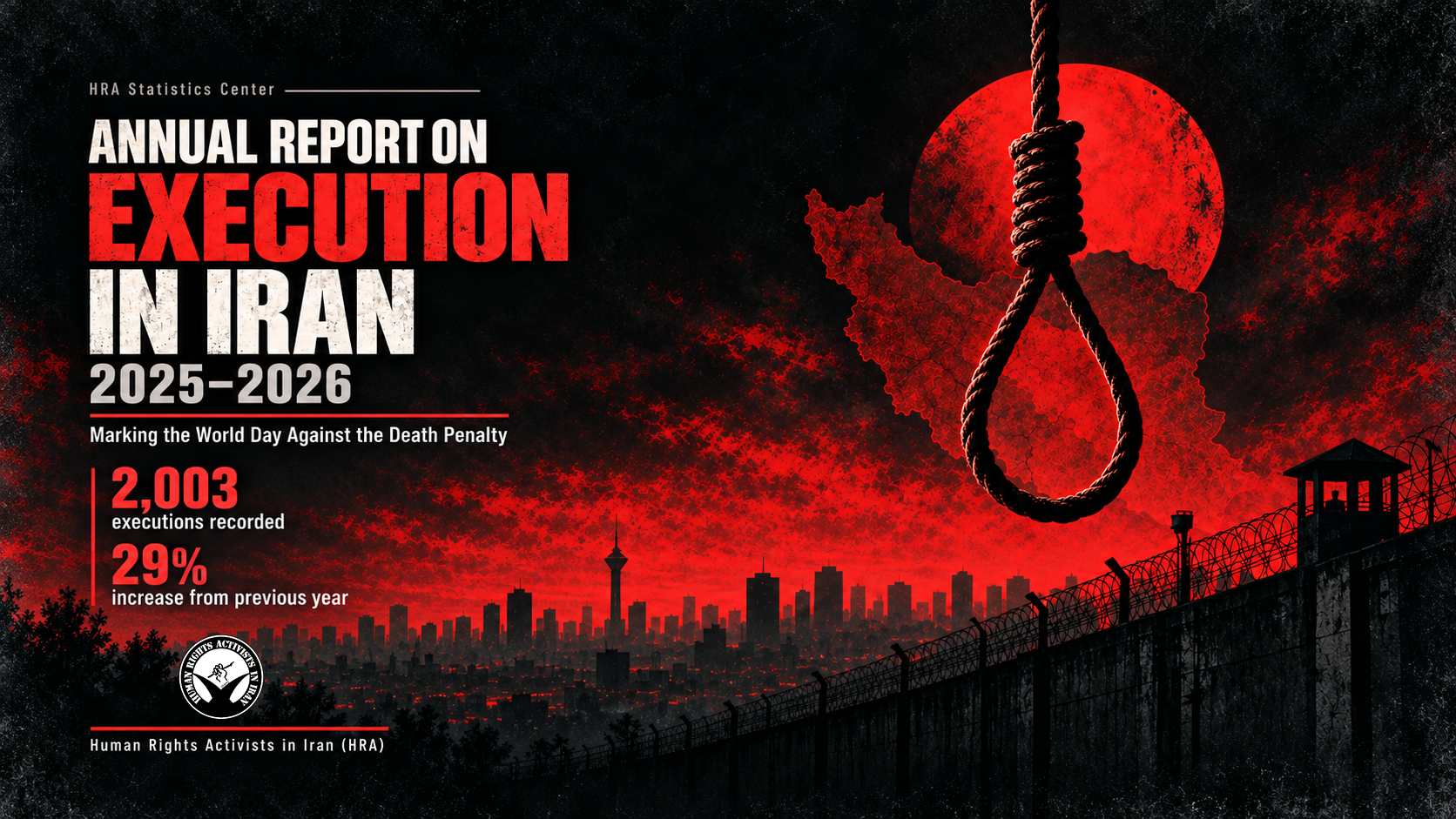
HRANA – Marking the World Day Against the Death Penalty, the Statistics Center of Human Rights Activists in Iran (HRA) has released its annual report on the use of capital punishment in Iran. The findings point to a sharp intensification in executions, continued secrecy surrounding implementation of death sentences, and an increase in political and security-related executions.
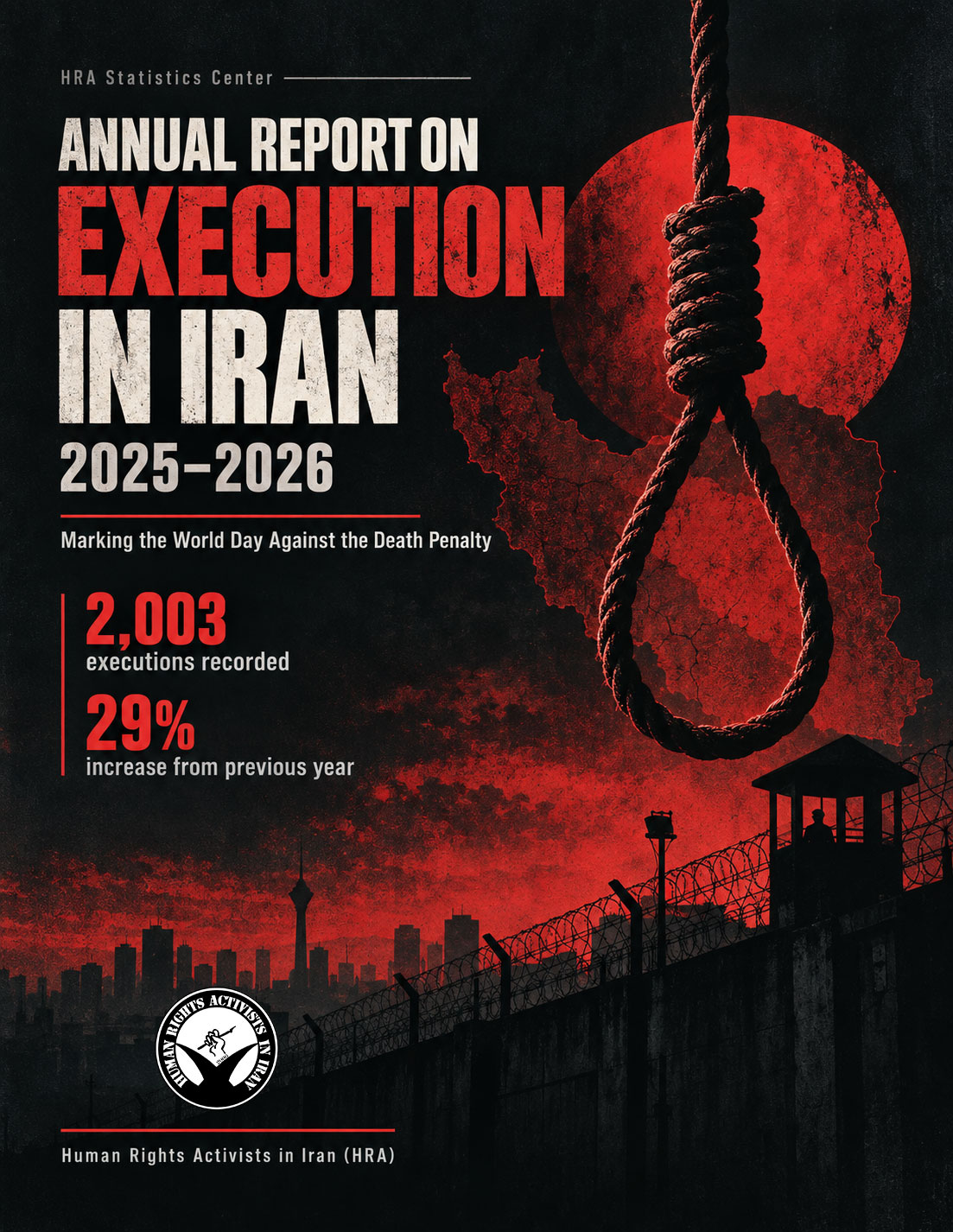
Between October 10, 2025 and October 8, 2026, HRANA documented at least 2,003 executions across Iran on the basis of 1,857 reports, an increase of approximately 29% compared with the previous reporting period. During the same period, 230 people were documented as having been sentenced to death. The full report also includes detailed statistical analysis, profiles of political and security-related executions, and documentation concerning judicial officials involved in issuing or upholding death sentences.
Executions in Iran: Key Figures
Indicator
Data
Total executions documented
2,003
Change from previous period
Approximately 29% increase
Average frequency of execution
Approximately one person every 4.35 hours
Death sentences issued
230
Women executed
47
Juvenile offenders executed
4
Public executions
9
Political and security-related executions
69
Executions unannounced by official sources
Approximately 95%
Rising Executions and the Monthly Pattern
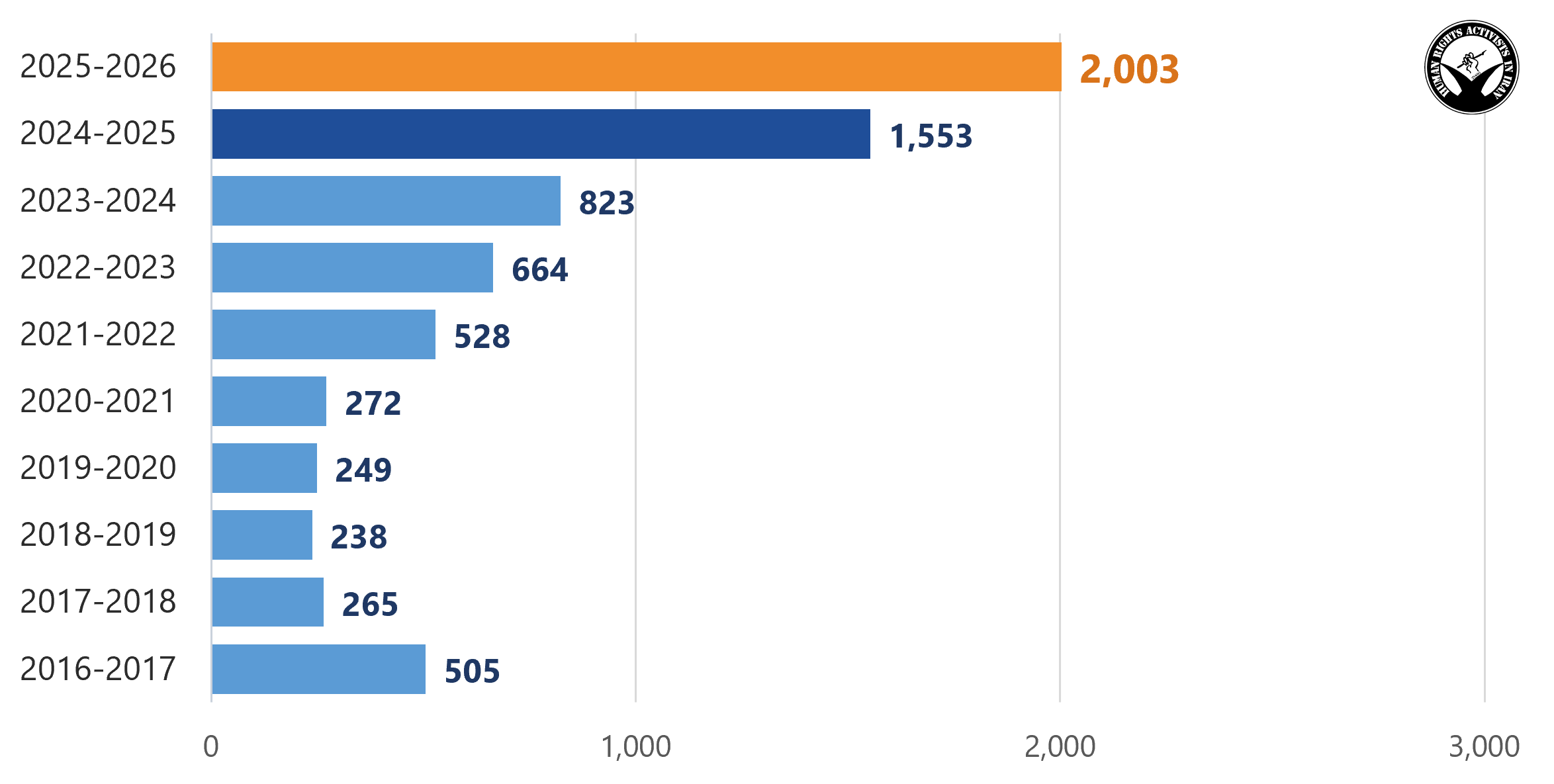
The 2,003 executions documented during the current reporting period represent the highest total recorded across the ten reporting periods examined in the report. Compared with 1,553 executions in 2024–2025, the total increased by approximately 29%. The current figure is also more than 182% above the ten-period average of 710 executions.
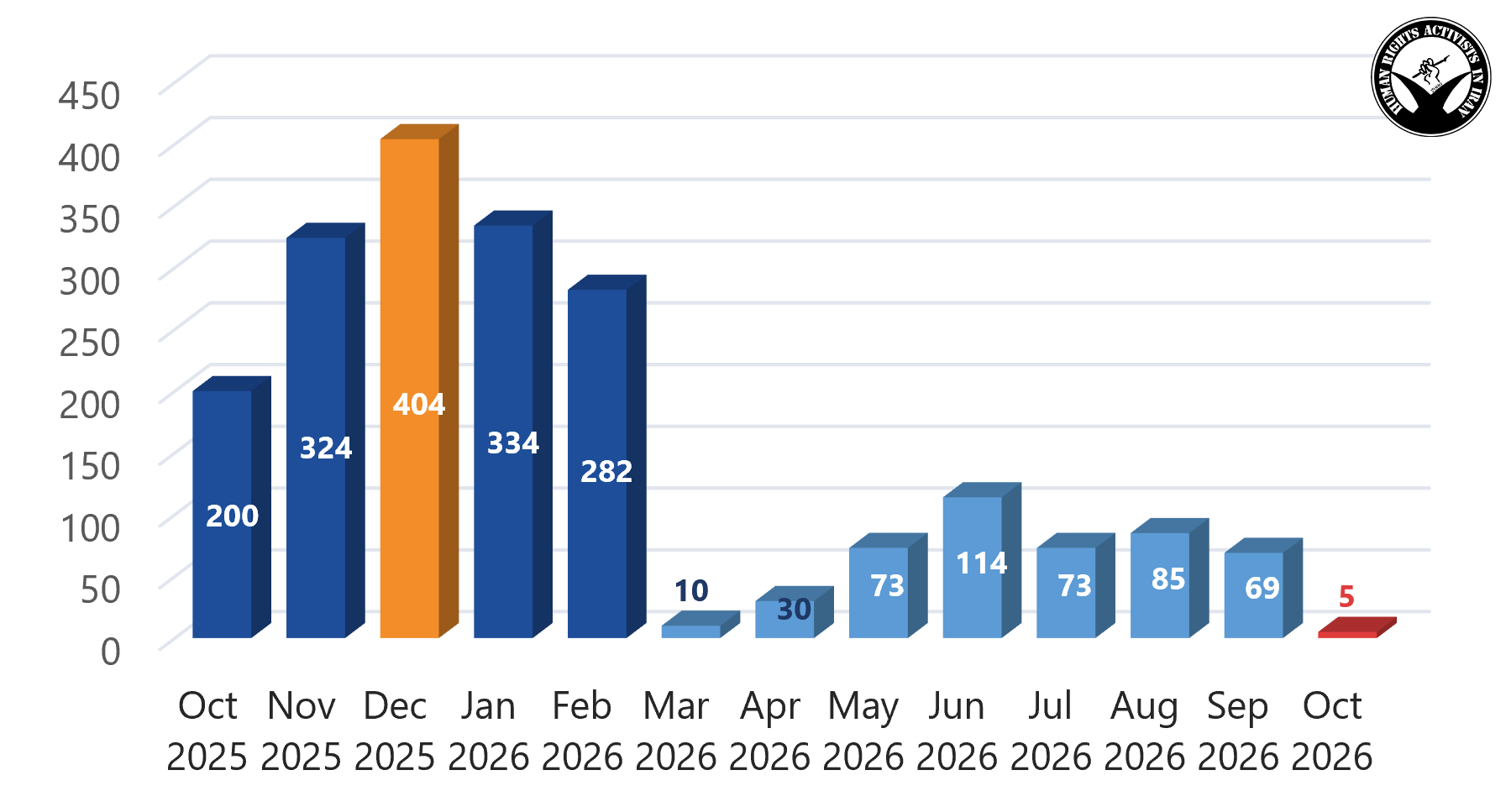
Monthly data show that executions peaked in December 2025. By contrast, March 2026 recorded the lowest total among complete months. The October 2026 figure covers only the first seven days of the month and therefore should not be compared directly with full-month totals.
CHART 1 — Monthly Executions
Charges: Murder and Drug Offenses Dominate
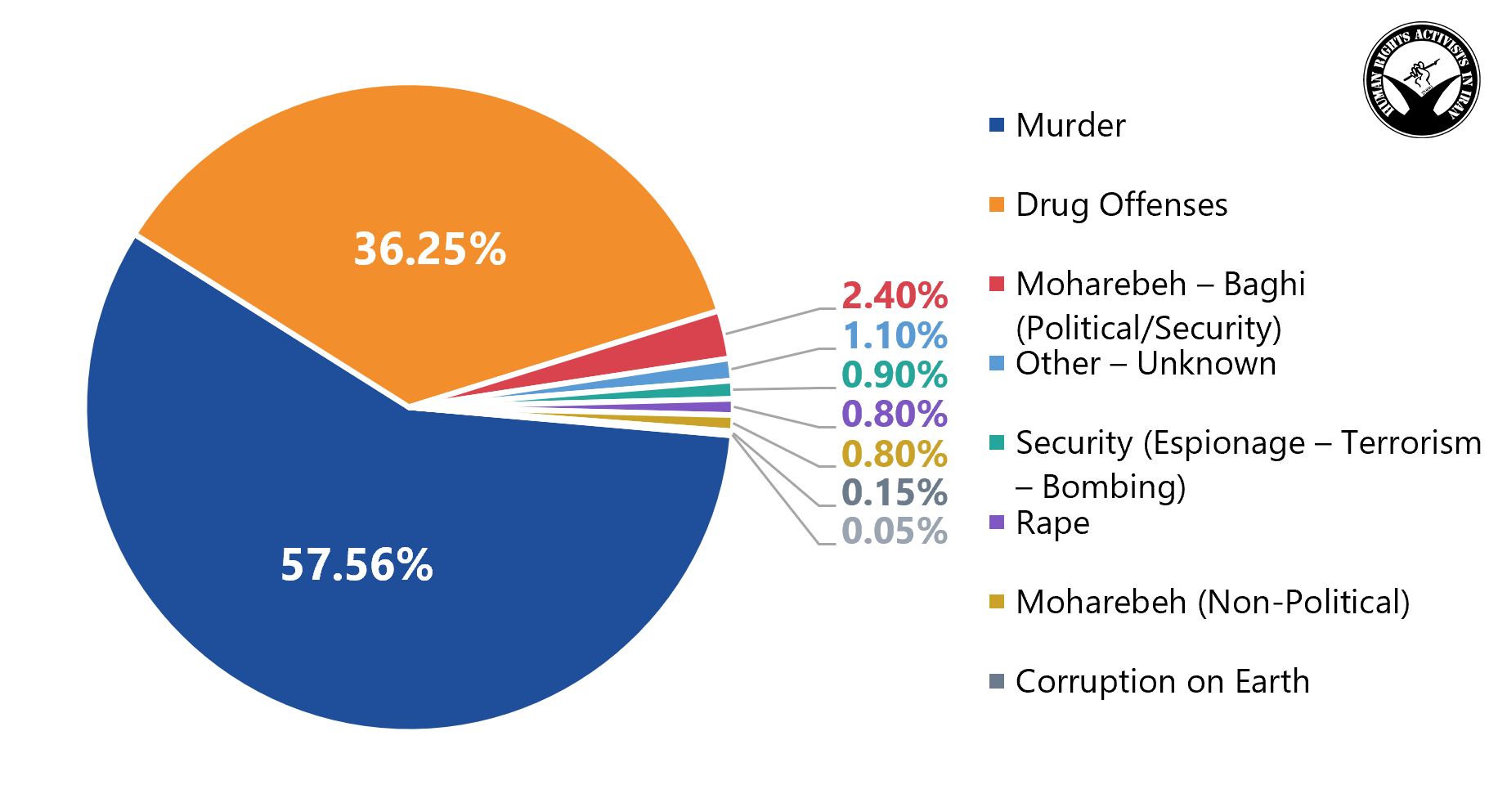
The distribution of charges resulting in execution shows a notable shift from the previous period. According to HRANA documentation, 57.56% of those executed were convicted of murder and 36.25% of drug-related offenses. Political and security-related moharebeh or baghi charges accounted for 2.40%; other or unknown charges for 1.10%; security charges including espionage, assassination or bombing for 0.90%; rape for 0.80%; non-political moharebeh for 0.80%; efsad-e fel-arz (corruption on earth) for 0.15%; and economic crimes for 0.05%.
Taken together, murder and drug-related offenses account for more than 93% of all documented executions. At the same time, the increase in political and security-related executions, and the connection of a significant number of those cases to protests, stands out as a defining feature of the current reporting period.
CHART 2 — Executions by Charge
Geography of Executions: Concentration in Several Provinces and Prisons
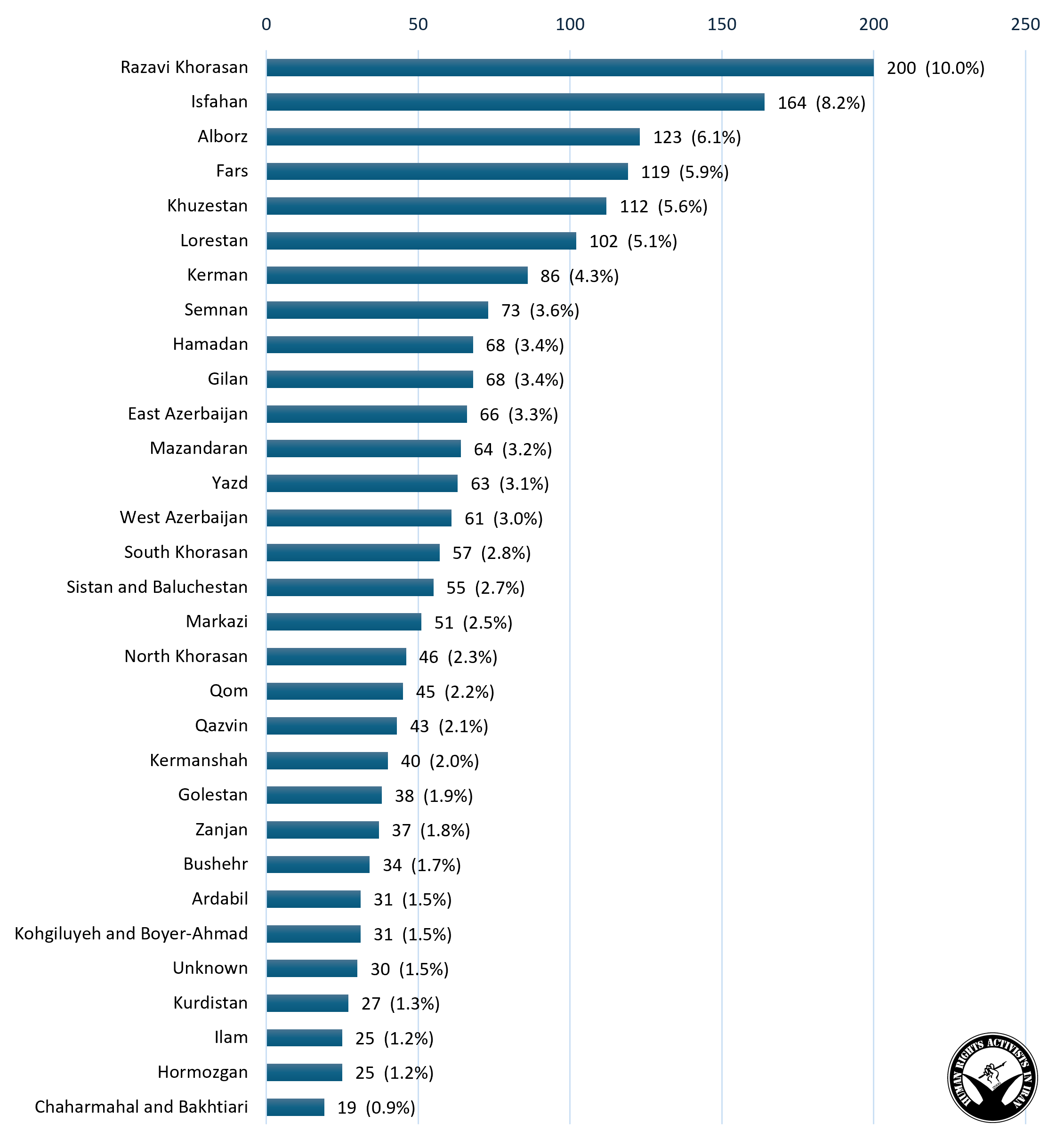
By location of execution, Razavi Khorasan recorded the highest number with 200 executions, followed by Isfahan with 164 and Alborz with 123. Fars recorded 119, Khuzestan 112 and Lorestan 102. These figures are calculated on the basis of prison location and do not necessarily reflect the place of residence or alleged offense of the person executed.
Per-capita figures provide a different picture, particularly in smaller provinces. The report cautions that prisoner transfers and executions carried out outside a prisoner’s province of origin can inflate provincial rates. Tehran is not included in the per-capita table because no executions were recorded there, and 30 executions with an unknown province were excluded from that calculation.
At the prison level, Dastgerd Prison in Isfahan and Adelabad Prison in Shiraz recorded the highest numbers of executions. The spread of executions across dozens of prisons, alongside clear concentration in several facilities, illustrates both the nationwide scope and localized intensity of the death penalty.
CHART 3 — Executions by Province
Secrecy, Public Executions and Gender
One of the report’s most significant findings is the continued lack of official transparency. Approximately 95% of documented executions were carried out secretly or without announcement in official or domestic media, while only about 5% were reported through official or domestic sources. This pattern sharply limits public oversight and independent assessment of execution practices.
Of the 2,003 executions documented, 9 were carried out in public, representing about 0.4% of the total. Forty-seven women were executed during the reporting period. Four people whose identities and case histories were verified were under the age of 18 at the time of the alleged offense. Overall, 2.3% of those executed were women, 88.8% were men, and the gender of 8.9% remained unknown in the available data.
In relation to sentencing, HRA documented 230 people sentenced to death. At least 16 of those sentenced were women, 6 were sentenced to public execution, and 74 death sentences were upheld by the Supreme Court.
Ten-Year Trend: The Highest Recorded Level
A review of ten reporting periods shows that, after executions declined from 505 in 2016–2017 to 238 in 2018–2019, the trend turned upward from 2019–2020 onward. The totals then rose through 249, 272, 528, 664, 823 and 1,553 before reaching 2,003 in 2025–2026.
This trajectory places the current one-year increase within a longer pattern of escalation. Continued restrictions on access to official information, together with the very high share of unannounced executions, mean that the documented figures should be understood as the minimum that could be independently verified rather than necessarily the complete number of executions carried out.
CHART 4 — Ten-Year Execution Trend
69 Political and Security-Related Executions
During the reporting period, HRANA documented 69 people executed on political and security-related charges. Of these, 35 people — approximately 51% — were executed in connection with the January 2026 (Dey 1404) protests. Twenty-nine people were executed in April and May 2026 alone, with 14 in April and 15 in May, marking the peak of executions in this category.
Among these 69 cases, 29 people were executed on charges of moharebeh, either alone or alongside other charges. Where the province was known, Alborz accounted for the largest share with 19 cases, followed by Isfahan with 10. The province was unknown in 20 cases.
The full report provides an individual case card for each of the 69 people, setting out the charge, date of execution, case background, province or city, and prison where available. This case-level documentation allows the aggregate figures to be examined in greater detail and shows the diversity of charges and case backgrounds included within the political and security-related category.
Judicial Actors Involved in Issuing or Upholding Death Sentences
For the first time in this format of the annual report, a dedicated section documents judges and courts identified in death-penalty cases. This research covers October 10, 2025 through September 26, 2026, meaning that its documentation window ends twelve days before the October 8, 2026 cutoff used for the report’s main statistical sections.
HRA’s review found that several judges identified during the current period had also appeared in earlier political, security-related or protest cases involving death sentences. Among the examples examined are Abolghasem Salavati of Branch 15 of the Tehran Revolutionary Court, Iman Afshari of Branch 26 of the Tehran Revolutionary Court, Vahid Hemmatnejad of Branch 5 of the Isfahan Revolutionary Court, Ahmad Darvish-Goftar of Branch 1 of the Rasht Revolutionary Court, Reza Najafzadeh of Branch 3 of the Urmia Revolutionary Court, and Seyed Mahmoud Sadati of Branch 1 of the Shiraz Revolutionary Court.
The report emphasizes that this list is not exhaustive. Iranian authorities routinely withhold information about capital proceedings, and public reporting often fails to identify the presiding judge or even the relevant branch. Accordingly, the absence of a judge’s name from the report should not be read as evidence that the judge was not involved; rather, it reflects the limits of independently verifiable information.
A separate section also addresses Supreme Court review and distinguishes between issuing a death sentence at trial and later upholding or reviewing that sentence. The available documentation identifies judges from Branches 9, 20, 39 and 41 of the Supreme Court in connection with specific death-penalty cases.
Methodology and Data Limitations
HRA’s Statistics Center relies on HRANA reporting, a nationwide volunteer network, verified open-source material, and official judicial announcements. Because independent human rights groups cannot operate freely in Iran, access to prisons and courts is restricted, and many executions are deliberately concealed, a margin of error is unavoidable.
The figures in this report therefore reflect the capacity of civil society to document and independently verify executions rather than a claim to a flawless count of every execution carried out. The fact that approximately 95% of executions were not announced by official sources underscores the importance of independent monitoring and verification in assessing the true scale of capital punishment in Iran.
Access the Full Report
The full report contains detailed statistical tables, charts, provincial and prison-level data, profiles of all 69 people executed on political and security-related charges, and the section documenting judicial officials. For case details, sources and supporting data, download and read the complete report.
HRANA – The year 1404 (Hijri calendar) paints a stark picture of ongoing human rights violations in Iran. The ongoing threat to freedom of thought and expression, bloody crackdown on peaceful protesters, increasing pressure on ethnic groups and religious minorities, the prosecution and harassment of human rights activists, the execution of juveniles, the issue of child labor, violations of women’s rights, and the poor conditions of detention centers and prisons are only some examples of the daily violations of human rights in Iran.
The comprehensive report by HRA’s Statistics and Documentation Center, presented below, outlines a deeply concerning human rights situation in Iran over the past year.
During this period (March 21, 2025 to March 20, 2026), a total of 78,907 citizens were arrested in Iran on ideological or political grounds, or in clear violation of fundamental human rights principles. Notably, 78,126 of these arrests were linked to cases involving freedom of thought and expression.
During the same period, the nationwide protests between December 2025 and February 2026 can be regarded as one of the most complex and multi-layered waves of unrest in the past two decades. These demonstrations differed markedly from previous protests in their geographical reach, the extent of repression, and the nature of the government’s response.
Taken together, these developments point to one of the most significant periods of repression in recent years, particularly in terms of the scale of arrests. However, due to internet shutdowns during the protests and subsequent restrictions, the actual number of arrests is likely higher than recorded, with some cases remaining outside statistical coverage due to limited access to information. For more details, refer to HRANA’s comprehensive report titled “Crimson Winter,” which documents the first fifty days after the start of Iran’s nationwide protests.
Freedom of Thought and Expression
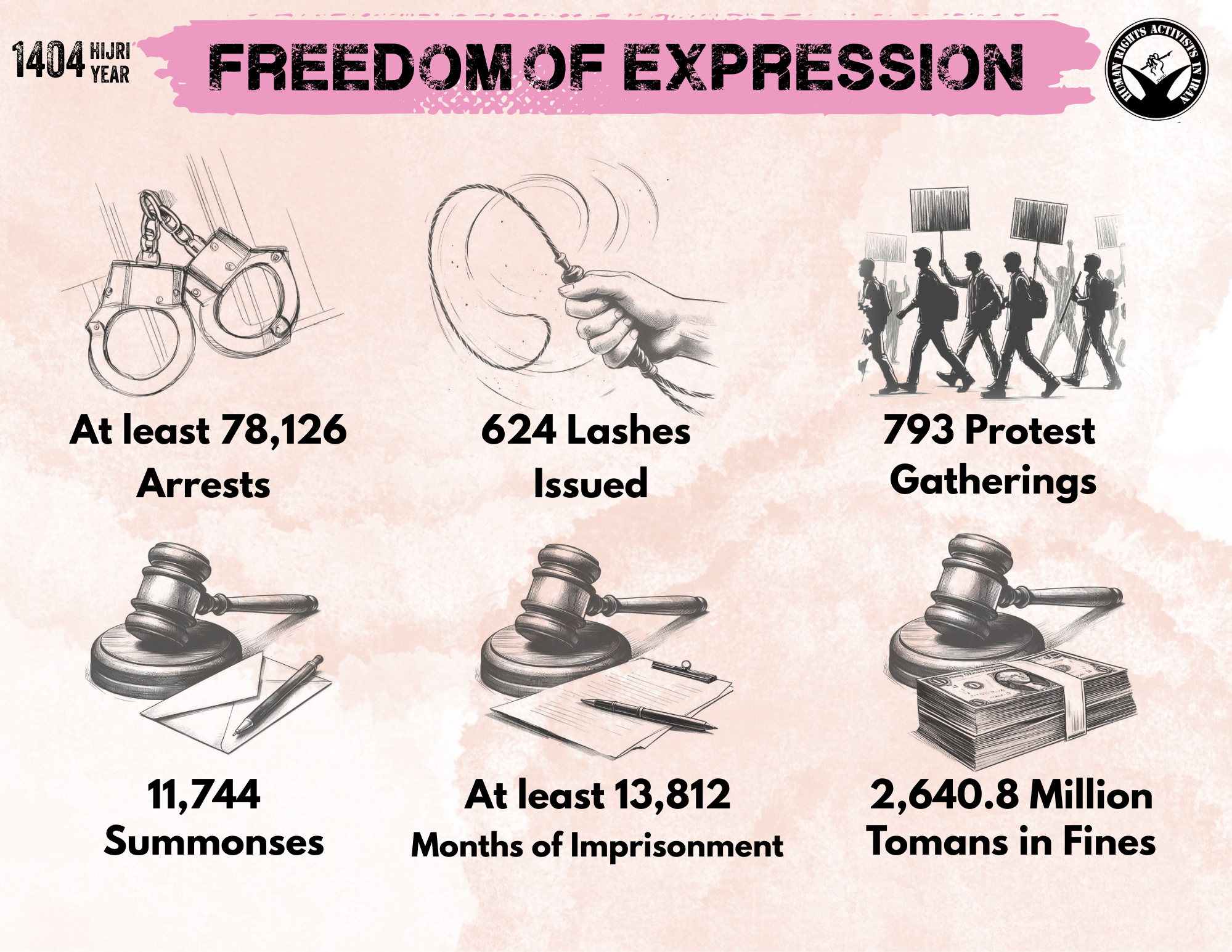
In 1404, at least 78,126 individuals were arrested for expressing their thoughts and opinions, of whom at least 228 were detained without a judicial warrant. Additionally, there were 250 cases of physical assault, 126 trials, 75 home searches, 15 instances of publications being declared criminal, 26 cases of internet filtering, 1 case of confiscation of a home and property, 793 protest gatherings, 11,744 summonses to security and judicial bodies, and 74 cases of prison sentences being carried out.
Over the past year, in violation of citizens’ right to freedom of expression, Iran’s judiciary issued a total of at least 13,812 months of imprisonment for 332 individuals. Of this amount, 13,173 months were discretionary prison sentences, and 639 months were suspended sentences. Notably, 1,693 months of these sentences were issued by appellate courts and 816 months by the Supreme Court.
In addition, 64 individuals were fined a total of 2,640.8 million tomans, 13 individuals were sentenced to 624 lashes, 13 individuals were sentenced to 492 months of exile, and 46 individuals were sentenced to deprivation of social rights.
Over the past year, Iran witnessed nationwide protests between December 2025 and February 2026, widely known as the January protests, which are considered one of the most widespread, complex, and multi-layered waves of unrest in the past two decades. These protests differed significantly from previous movements not only in terms of their geographical scope, intensity of violence, and scale of repression, but also in their underlying dynamics, the composition of participants, and the nature of the government’s response.
According to aggregated data from HRANA, during these protests, the number of confirmed fatalities reached 6,724 protesters, including 236 children. In addition to these confirmed figures, 11,744 cases remain under review, with the verification process still ongoing. Furthermore, at least 25,877 individuals sustained severe injuries, and the total number of arrests has been reported at 53,777.
Overall, 203 cities across all 31 provinces of the country witnessed protests on 682 occasions. In some cases, due to the heavy presence and strict control of security and military forces, protesters were unable to take to the streets, and demonstrations took other forms. Based on the 2016 census, the population of these 203 cities is estimated at 44,866,746—accounting for more than half of the country’s total population.
In addition to 627 instances of widespread street protests, 36 universities also became sites of student demonstrations, with 55 protest gatherings recorded across academic settings.
Annual Statistical Comparison of Arrests in the Past Five Years (Freedom of Thought and Expression)
Year
Number of Arrests
Arrests per
Million People
Percentage Change
Compared to Previous Year
1400
1,419
16
+ %5,405
1401
28,647
32
+ %172,7
1402
2,496
38.6
+ %3,030
1403
1,300
14.2
+ %5,909
1404
78,126
845,4
–
Judicial Authorities Issuing the Most Sentences in the Freedom of Thought and Expression Category
Judge Name
Court Branch
Number
of Cases
Prison Sentences
(Months)
Fine
(Million
Toman)
Iman Afshari
Branch 26 of Revolutionary Court, Tehran
17
705
313.3
Ali Ansari
Branch 101 of Criminal Court No. 2, Oshnavieh
15
326
–
Ehsan Adibi Mehr
Branch 1 of Revolutionary Court, Ahvaz
11
720
–
Yaser Guzali
Branch 1 of Revolutionary Court, Mahabad
9
268
–
Velaei
Branch 101 of Criminal Court No. 2, Miandoab
9
27
–
Ahad Siami
Branch 2 of Revolutionary Court, Mahabad
6
720
–
Abolghasem Salavati
Branch 15 of Revolutionary Court, Tehran
6
636
–
Abbasali Houzan
Branch 36 of the Court of Appeals, Tehran Province
5
225
60
Gorban Shahini
Branch 2 of Revolutionary Court, Urmia
4
156
–
Muhammad Makhmalzadeh
Branch 2 of Revolutionary Court, Dezful
4
54
–
Children’s Rights
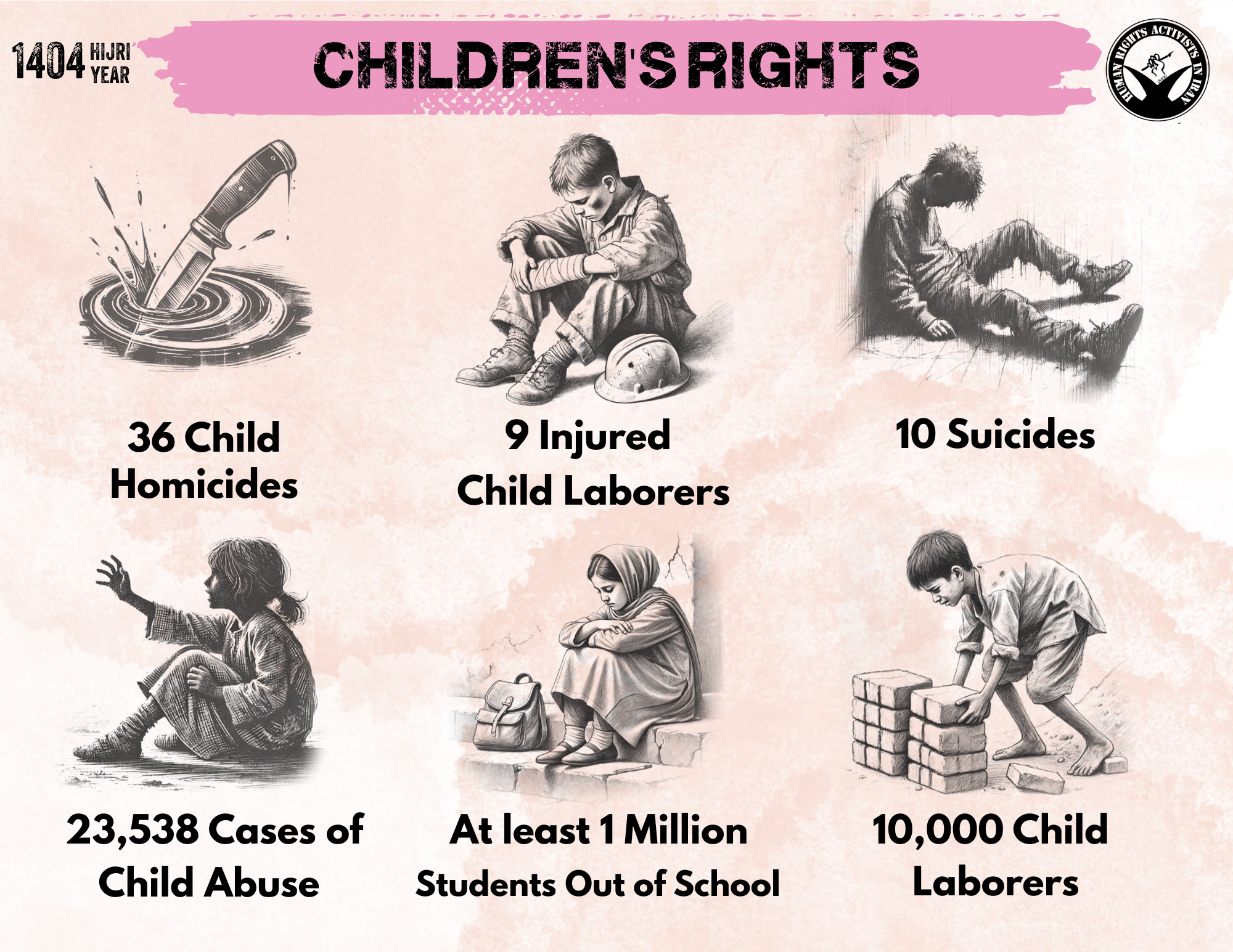
In 1404, a total of 570 reports related to children’s rights were recorded. During this period, there were at least 20 cases of child rape and sexual abuse, 36 cases of child homicide, 2 so-called honor killings, and 5 cases of abandoned infants.
Additionally, there were 5 deaths and 9 injuries among child laborers, 15 deaths and 262 injuries of children due to negligence by authorities, 10 cases of suicide, at least 23,538 cases of child abuse, the arrest of 343 individuals under the age of 18, more than one million students deprived of education, and at least 10,000 documented child laborers.
It should be noted that, as mentioned in the execution section of this report, at least 2 juvenile offenders were executed in Iran over the past year.
According to official data from the Statistical Center of Iran, in 1398 (March 21, 2019 – March 19, 2020), approximately 16.8% of girls aged 15 to 19 in Iran were married. Among the limited official statistics available on this issue, the same institution reported that from winter 1400 (2021–2022) to the end of autumn 1401 (2022–2023), at least 27,448 girls under the age of 15 were married in Iran.
Although the rate of marriages involving girls under 15 had been declining since 1396 (2017–2018), it returned to previous levels starting in 1398 (2019–2020) and has since followed an upward trend. According to reports, 31,646 and 32,655 girls under the age of 15 were married in 1399 (2020–2021) and 1400 (2021–2022), respectively.
The number of marriages involving girls under 15 increased by 933 cases in autumn 1401 (2022–2023) compared to the summer of the same year. Additionally, in autumn 1401, more than 5,500 additional girls aged 15 to 19 were married compared to the preceding season, summer 1401.
According to the report, many child brides become mothers at an early age. Data from Iran’s Civil Registration Organization, published in May 2022, indicates that in 1400 (2021–2022), at least 69,103 babies were born to mothers aged 10 to 19, including 1,474 births to mothers aged 10 to 14.
In September 2024, the newspaper Etemad reported that the publication of statistics and information on child marriage and the number of children born to underage mothers in Iran had been halted. According to the report, an official from the Civil Registration Organization stated that “orders have been given” to stop publishing these statistics.
Women’s Rights
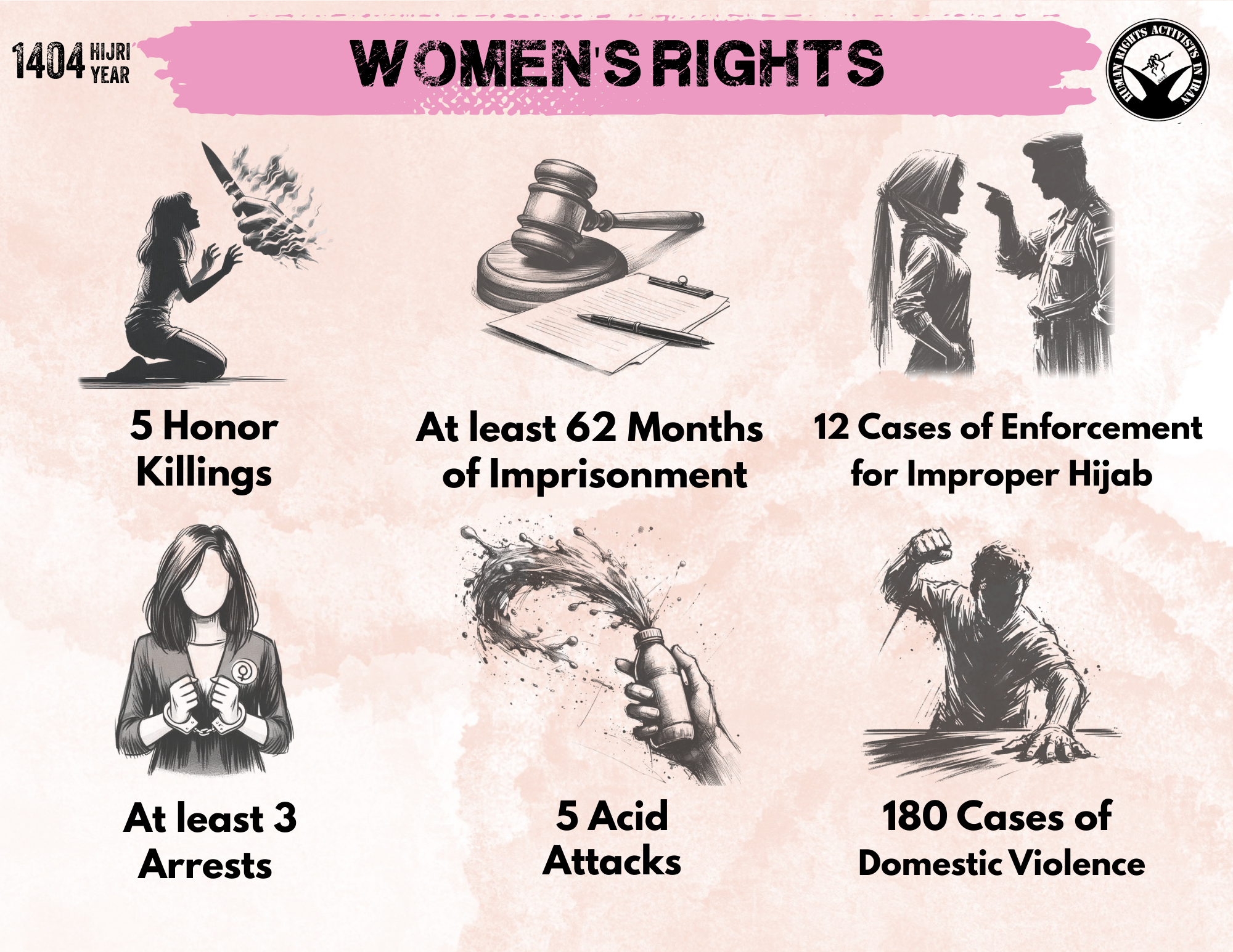
In 1404, a total of 138 reports related to women’s rights were recorded. These included 105 cases of murder of women, 7 so-called honor killings (including the murder of 2 men), 68 cases of rape and sexual abuse, 180 cases of domestic violence, 5 acid attacks, 12 cases involving enforcement actions over improper hijab, 8 summonses to security and judicial authorities, and a total of 62 months of imprisonment.
During the past year, at least 3 arrests were recorded for non-compliance with compulsory hijab and for singing in public spaces.
Workers’ Rights
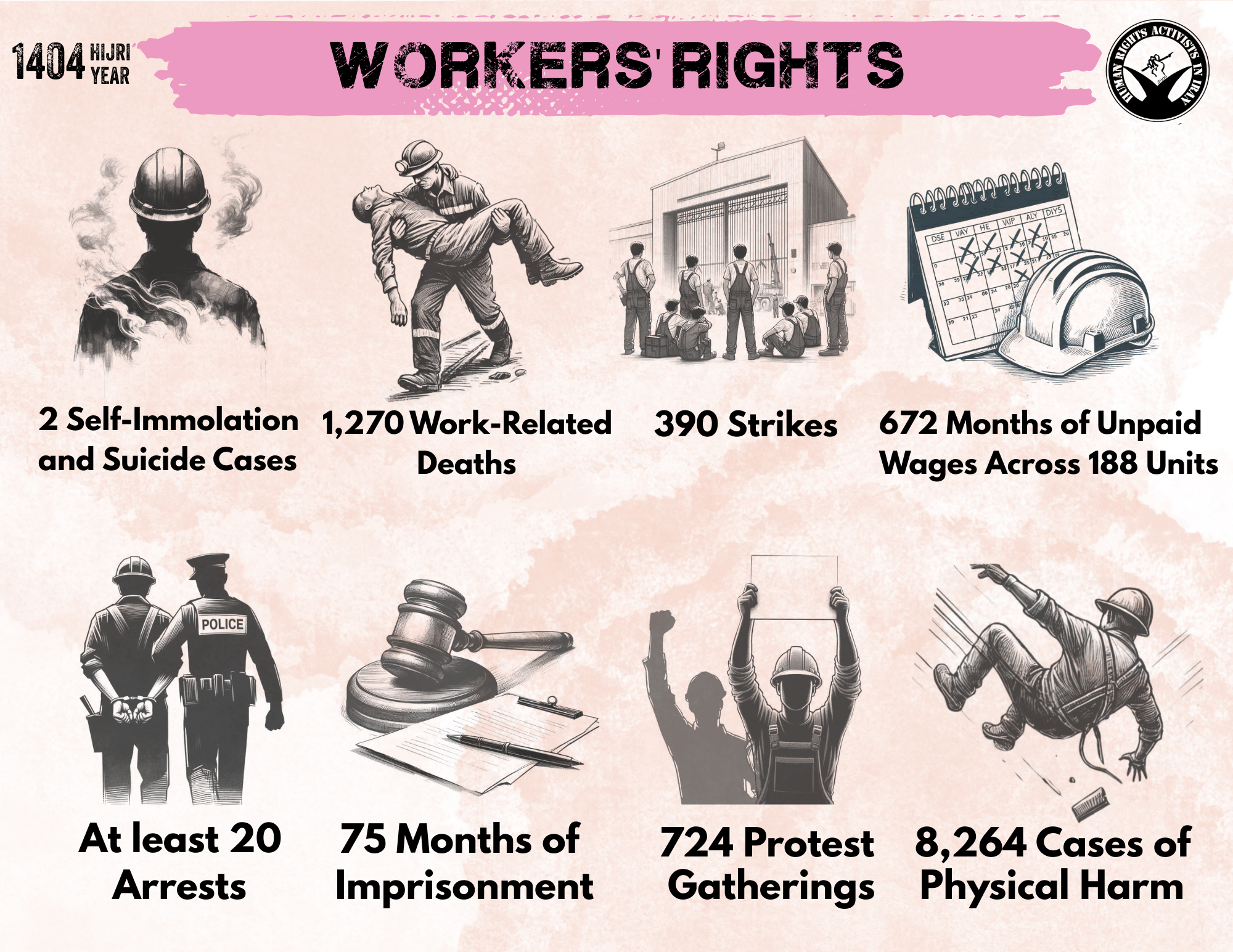
Over the past year, a total of 1,709 reports were recorded related to labor rights, based on which 20 individuals were arrested. Additionally, 2 workers or labor activists were sentenced to a combined 75 months of discretionary imprisonment and fines totaling 30 million tomans. It is also noteworthy that 9 summonses to security and judicial authorities, 5 interrogations, 2 trials, 2 cases of self-immolation, 724 protests, and 390 strikes were recorded.
In 1404, reports of delayed or unpaid wages amounted to at least 672 months across 188 industrial and service units. Additionally, there were 2,457 dismissals or layoffs, 658 cases of unemployment, 560 months without work insurance coverage, 9 factory closures, and 2,259 workers left in uncertain conditions.
Trade and Labor Unions
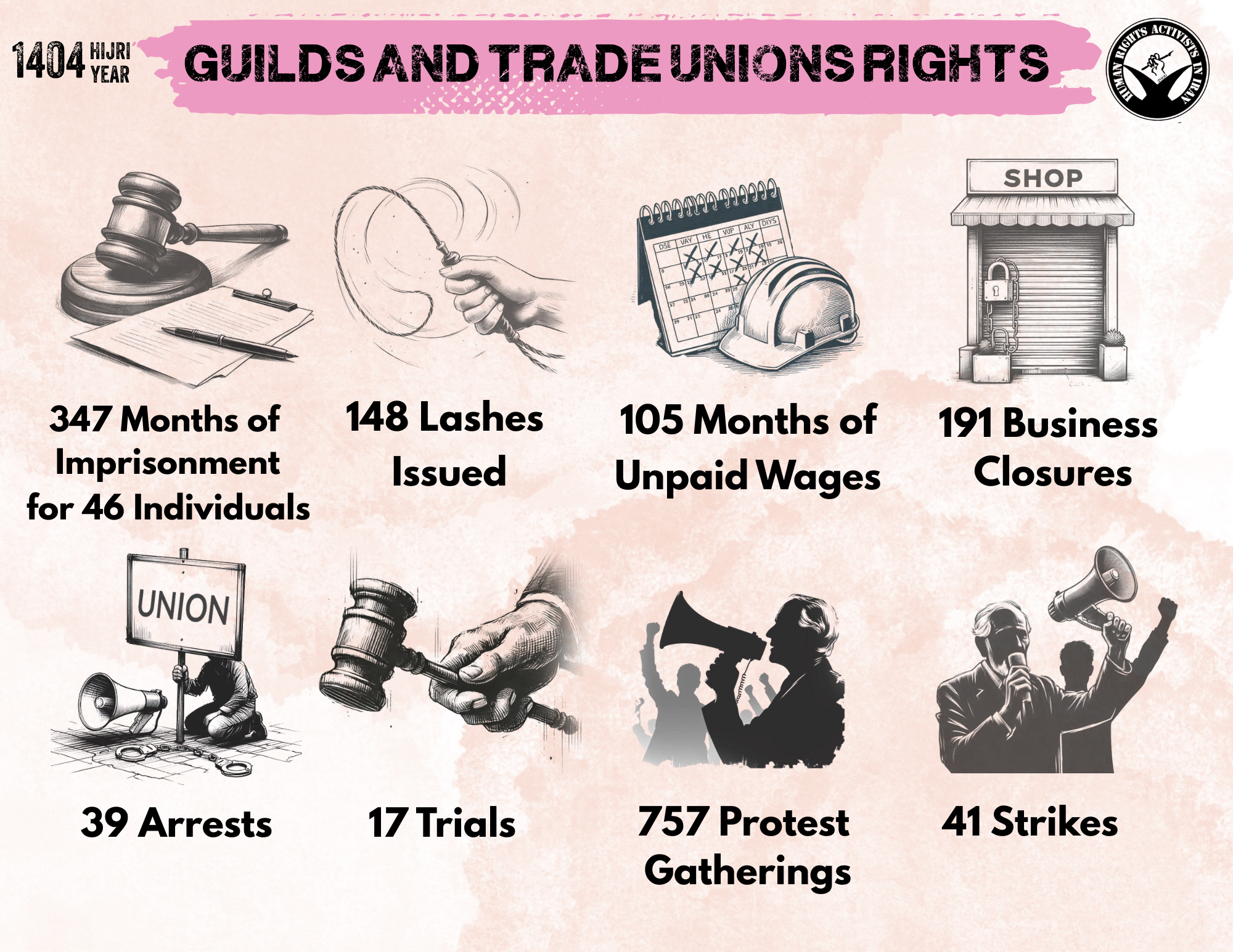
In 1404, a total of 914 reports related to trade and unions groups were recorded by HRA’s Statistics and Documentation Center. According to these reports, a total of 39 union activists were arrested. Additionally, there were 44 summonses to judicial and security authorities, 191 cases of business closures (sealed premises), 2 instances of physical assault, 1 license revocation, 17 trials in judicial bodies, 4 interrogations by security institutions, 18 dismissals or layoffs, 407 cases of forced retirement, 757 protests, at least 41 strikes, at least 105 months of delayed wages, 4 home searches, and 4 cases of prison sentences being carried out.
Furthermore, 46 individuals were sentenced to a total of 347 months of imprisonment, including 344 months of discretionary sentences and 3 months of suspended sentences. Of this total, 89 months were issued by appellate courts. In addition, 2 individuals were sentenced to 120 months of exile, 2 individuals to 148 lashes, and 27 individuals were fined a total of 359.1 million tomans.
Prisoners’ Rights
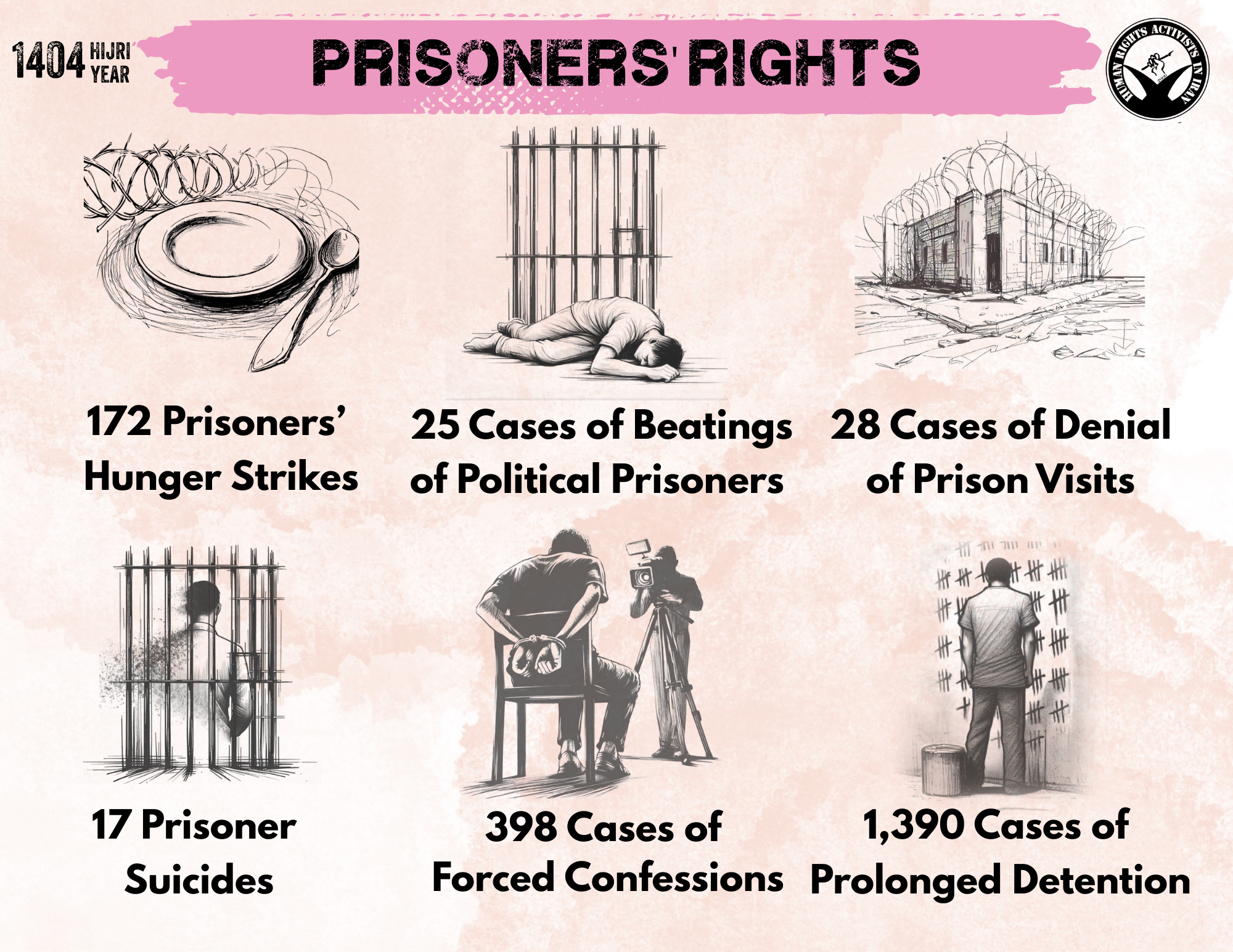
Regarding prisoners’ rights in 1404, documented violations included 25 cases of physical assault against prisoners, 182 instances of denial or lack of access to medical care for prisoners and detainees, 307 transfers to solitary confinement, and 172 hunger strikes by prisoners and detainees.
Additionally, there were 38 cases of forced transfers, 187 instances of threats and pressure against political and ideological prisoners, 28 cases of denial of visitation, 14 deaths due to illness, 17 suicides, and 4 cases of murder of prisoners.
Further violations included 108 cases of denial of access to legal counsel, 256 instances of deprivation of the right to phone contact, 14 cases of failure to separate prisoners based on charges, 2,520 cases of detention in inappropriate conditions, 398 instances of forced confessions, and 11 cases of denial of medical leave.
Moreover, 716 cases of enforced disappearance (lack of information on detainees’ whereabouts) and 1,390 cases of detainees being kept in uncertain or unresolved legal status were documented.
Executions
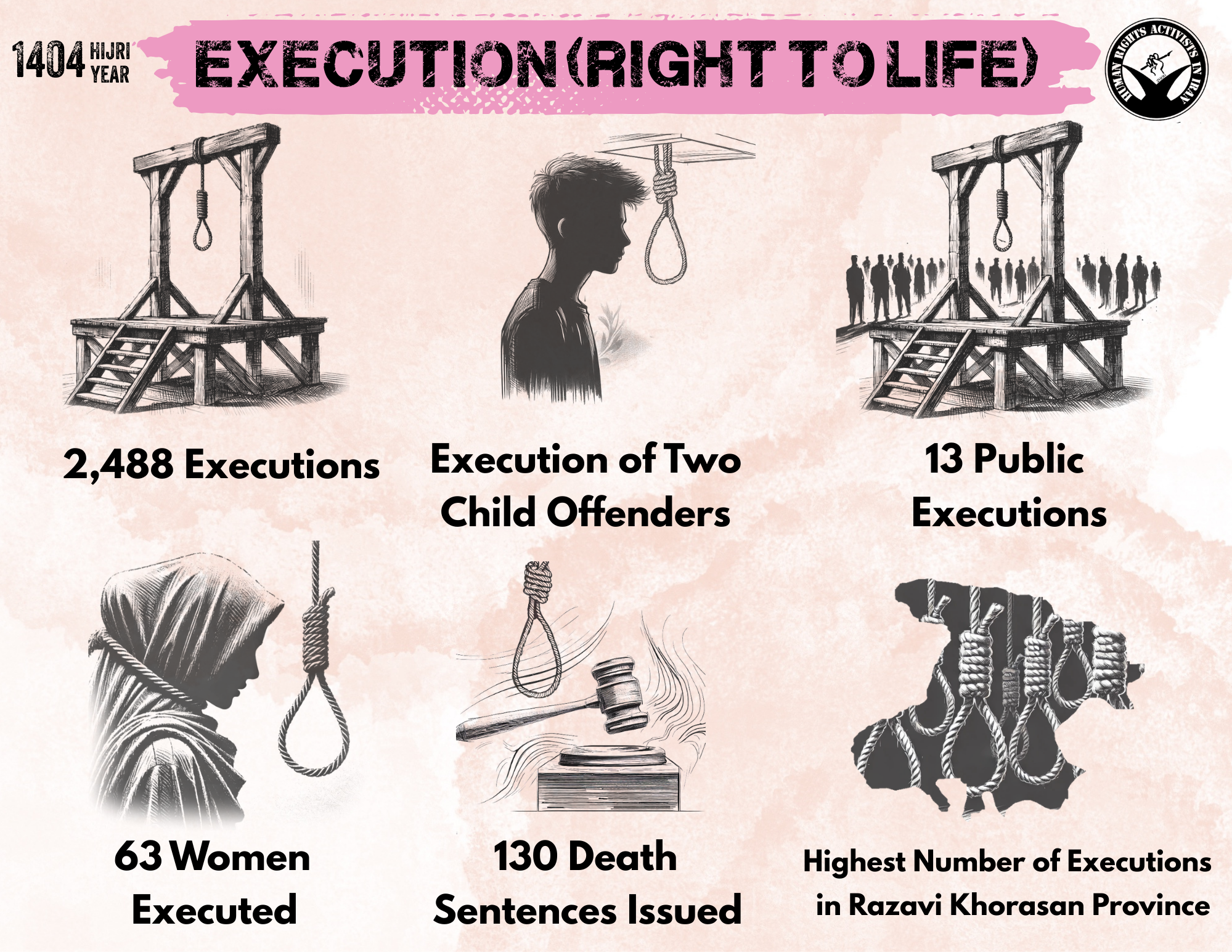
As in previous decades following the 1979 revolution, executions remain one of the most prominent manifestations of human rights violations in Iran. In 1404, at least 2,488 individuals were executed, including 63 women and 2 juvenile offenders. Of these, 13 executions were carried out in public.
During the same period, 130 individuals, including 10 women and 1 juvenile offender, were sentenced to death, of whom 4 were sentenced to public execution. It should also be noted that, within this timeframe, the initial death sentences of an additional 45 individuals were upheld by the Supreme Court.
Annual Statistical Comparison of Executions in the Past Five Years
Year
Number of
Executions
Executions
per Million People
Percentage Change
Compared to Previous Year
1400
351
4.0
+ %608.8
1401
620
6.9
+ %301.2
1402
771
8.5
+ %222.6
1403
1069
12.0
+ %132.7
1404
2488
26.94
–
Execution Rate by Province (Executions Per 100,000 People)
Province
Population
Number of
Executions
Execution
Rate
Razavi Khorasan
7,109,000
235
3.31
Alborz
3,028,000
200
6.61
Isfahan
5,429,000
178
3.28
Fars
5,136,000
149
2.9
Lorestan
1,792,000
130
7.26
Khuzestan
5,115,000
129
2.52
Kerman
3,413,000
101
2.96
Hamedan
1,769,000
98
5.54
East Azerbaijan
4,092,000
84
2.05
South Khorasan
845,000
79
9.35
Markazi
1,472,000
79
5.37
Qom
1,454,000
79
5.43
Sistan and
Baluchestan
3,280,000
76
2.32
Yazd
1,314,000
75
5.71
Gilan
2,569,000
74
2.88
Semnan
787,000
72
9.15
Mazandaran
3,415,000
68
1.99
West Azerbaijan
3,529,000
65
1.84
Kermanshah
1,999,000
62
3.1
Qazvin
1,346,000
58
4.31
Zanjan
1,119,000
53
4.74
Golestan
2,016,000
51
2.53
North Khorasan
875,000
43
4.91
Kohgiluyeh and
Boyer-Ahmad
759,000
43
5.67
Bushehr
1,277,000
41
3.21
Hormozgan
2,018,000
39
1.93
Ilam
597,000
29
4.86
Kurdistan
1,689,000
28
1.66
Ardabil
1,299,000
22
1.69
Chaharmahal and
Bakhtiari
997,000
19
1.91
Ethnic Minorities’ Rights
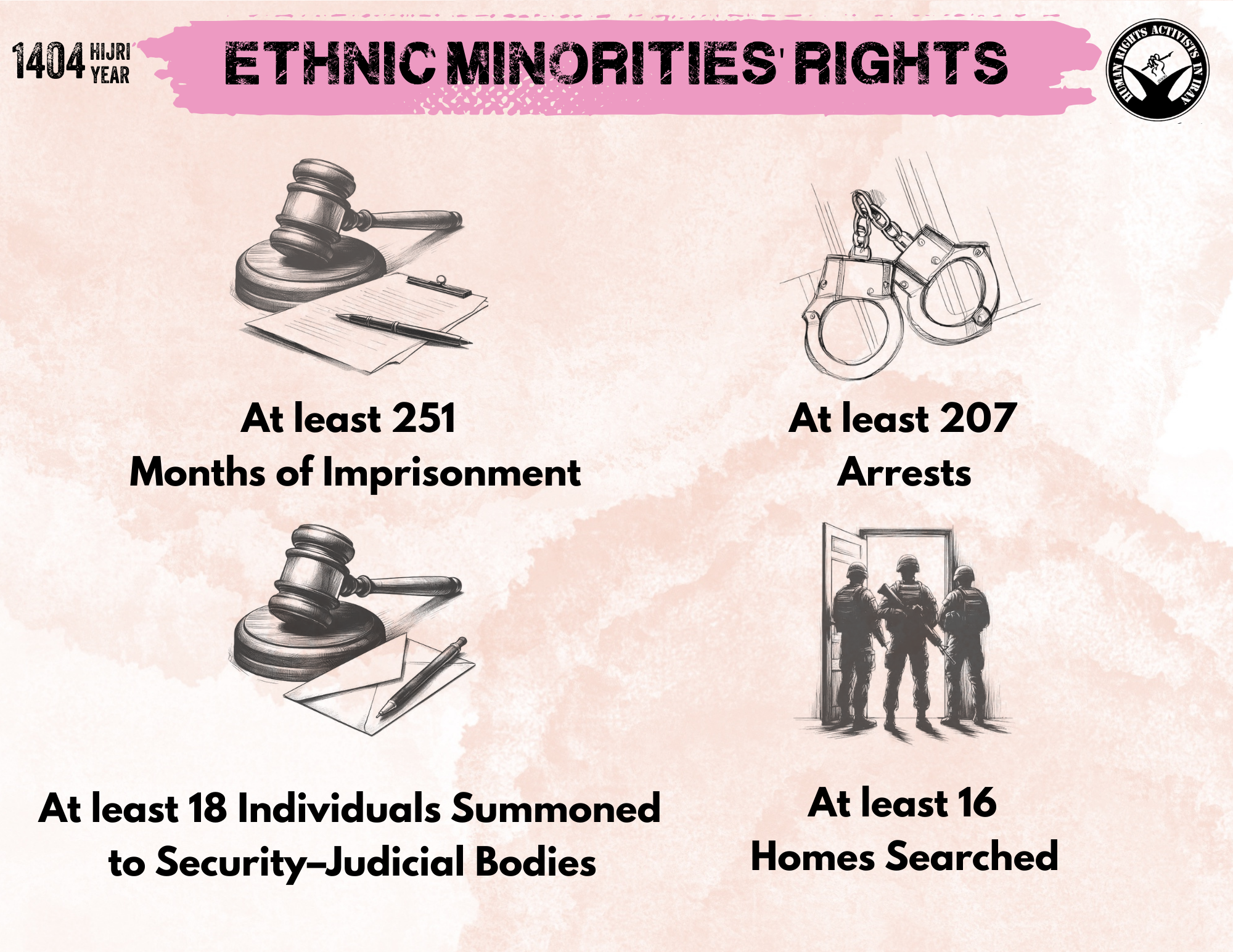
In 1404, a total of 171 reports related to ethnic minority rights were recorded. According to these reports, 207 citizens were arrested, including 136 cases carried out without a judicial warrant. Although the charges against 192 of those detained remain unclear, these arrests have been classified as violations of ethnic minority rights based on available indicators and the documented pattern of conduct by security institutions.
Additionally, a total of 251 months of imprisonment was issued for 6 individuals, including 153 months by lower courts, 74 months by appellate courts, and 24 months by the Supreme Court.
Furthermore, 18 individuals were summoned to security and judicial authorities, while 16 home searches, 7 trials, and 2 interrogations were also recorded.
Annual Statistical Comparison of Arrests in the Past Five Years (Ethnic Minorities’ Rights)
Year
Number of Arrests
Arrests per
Million People
Percentage Change
Compared to Previous Year
1400
358
4.05
– %42.1
1401
242
4.73
– %14.4
1402
371
4.09
– %44.2
1403
332
3.63
– %37.6
1404
207
2.24
–
Religious Minority Rights
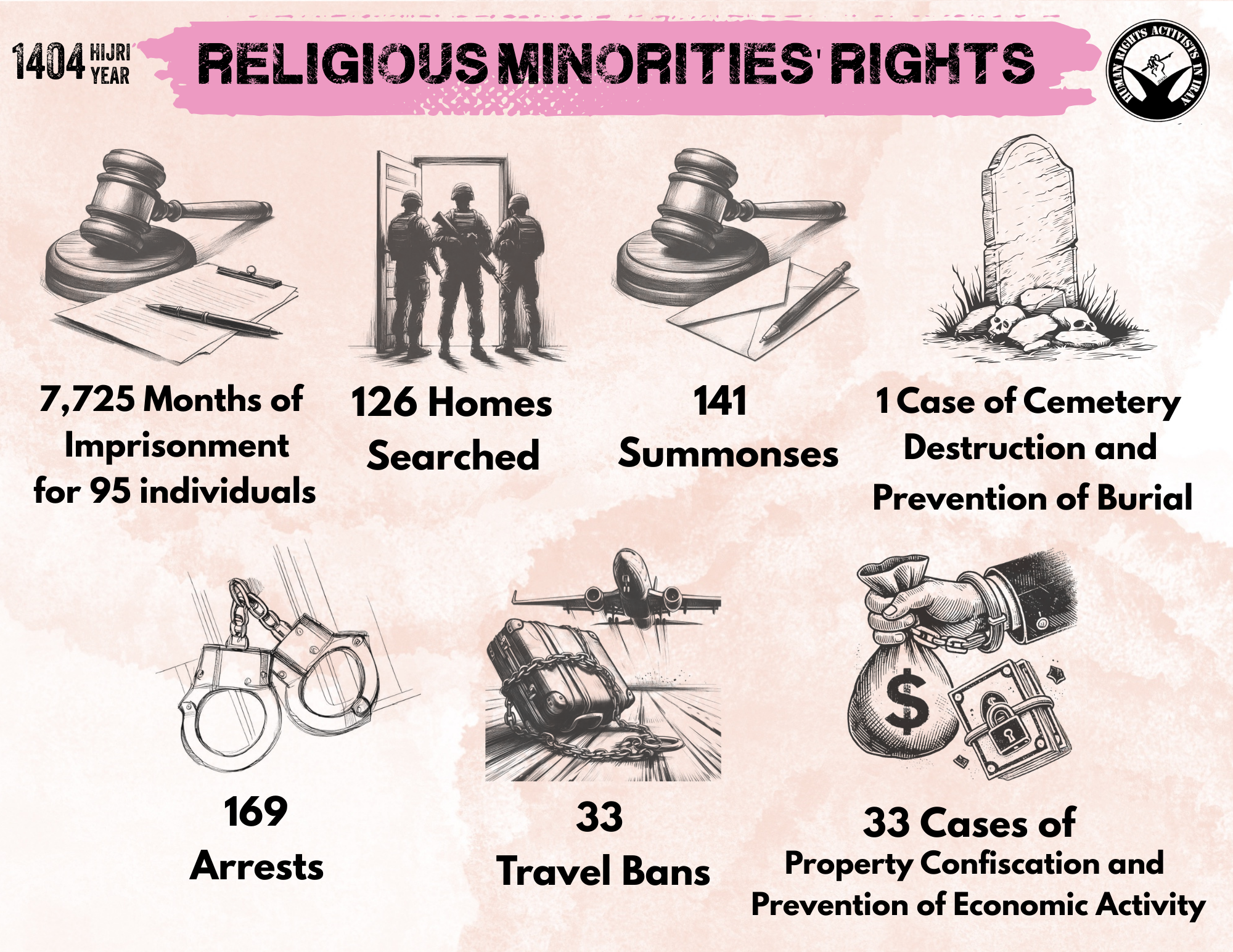
In 1404, a total of 190 reports on violations of religious minority rights in Iran were recorded, according to which 169 citizens were arrested. Additionally, a total of 6,927 months of discretionary imprisonment and 798 months of suspended sentences were issued for 95 individuals. Of this total, 3,837 months were handed down by lower courts and 3,888 months by appellate courts.
Furthermore, 26 individuals were fined a total of 4,739 million tomans, and 9 individuals were sentenced to 288 months of exile.
In addition, 141 summonses to judicial and security authorities, 37 trials, 51 interrogations, 1 case of cemetery destruction, 126 home searches, 33 travel bans, 40 cases of prison sentences being carried out, 33 cases of confiscation of homes and property, and 10 cases of prevention of economic activity were reported.
Annual Statistical Comparison of Arrests in the Past Five Years (Religious Minorities’ Rights)
Year
Number of Arrests
Arrests per
Million People
Percentage Change
Compared to Previous Year
1400
67
0.76
+ %152.2
1401
175
1.95
– %3.4
1402
148
1.63
+ %14.1
1403
124
1.35
+ %36.2
1404
169
1.83
–
Judicial Authorities Issuing the Most Sentences in Religious Minorities’ Rights
Judge Name
Court Branch
Number
of Cases
Prison Sentences
(Months)
Fine
(Million
Toman)
Sabzevari
Branch 2 of Revolutionary Court, Karaj
8
80
–
Abbasali Houzan
Branch 36 of the Court of Appeals, Tehran Province
8
1002
910
Ashkan Ramesh
Branch 1 of Revolutionary Court, Varamin
5
495
–
Abolghasem Salavati
Branch 15 of Revolutionary Court, Tehran
5
660
–
Hassan Fathnejad
Branch 3 of Revolutionary Court, Tabriz
2
288
2000
Protests and Strikes
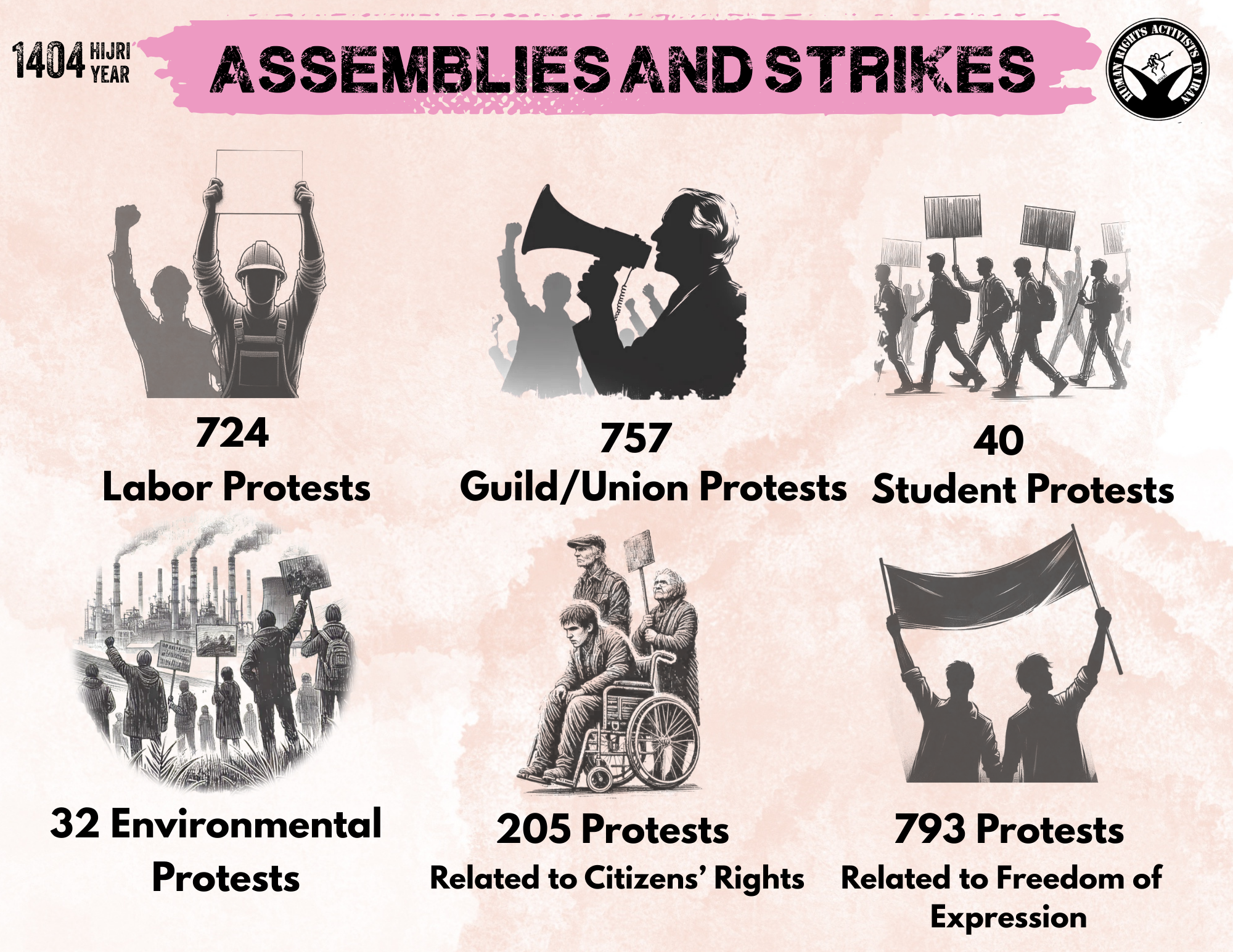
At least 2,551 protest gatherings took place across Iran. These included 724 labor protests, 757 guild and trade union gatherings, 793 protests related to freedom of thought and expression, 40 demonstrations concerning the right to education, and 32 related to environmental issues.
Additionally, 205 protest gatherings were held across all 31 provinces by citizens—many of them defrauded investors or individuals whose civil rights had been violated. Alongside these demonstrations, at least 41 union strikes and 390 labor strikes were also recorded.
Killing of Citizens
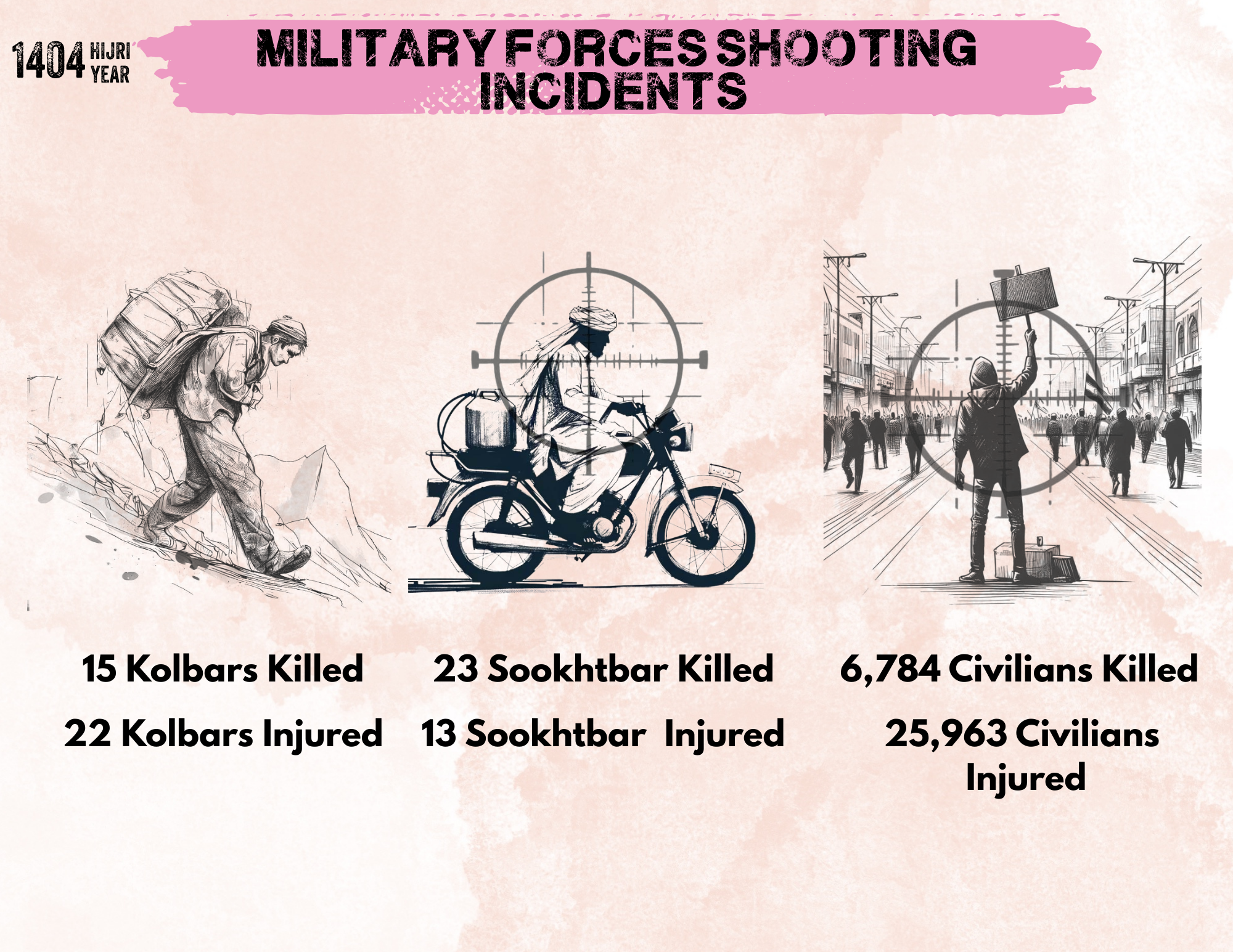
Throughout 1404, a total of 32,820 citizens were targeted by gunfire from military forces. Of these, 6,822 lost their lives, including 15 Kolbars (border porters), 23 Sookhtbars (fuel carriers), and 6,784 other citizens.
Additionally, 25,998 citizens were injured as a result of indiscriminate shootings by military personnel, including 22 Kolbars, 25,963 ordinary citizens, and 13 Sookhtbars.
It should also be noted that 8 other Kolbars were affected by environmental and geographical conditions, such as hypothermia, pursuit by military forces, and falls from height, resulting in 4 being injured and 4 losing their lives. Moreover, 84 Sookhtbars were involved in incidents during pursuits by military forces, of whom 76 were killed and 8 injured.
Furthermore, during the war involving the United States and Israel against Iran, which began on February 28, 2026 (9 Esfand 1404), an attack on the “Shajareh Tayyebeh” girls’ school in Minab resulted in the deaths of a number of students. According to reported figures, at least 168 people were killed and 95 others injured in this attack.
Since the onset of these hostilities, the number of civilian casualties has reached 1,369, including at least 207 children. Additionally, the status of 627 other individuals remains unclear, as it has not been determined whether they were civilians or military personnel.
Landmine and Explosion Victims
Landmines left over from past conflicts continue to threaten the lives of residents in border regions each year. The Iranian government also continues to produce and deploy anti-personnel mines and, contrary to international conventions, maintains that their use is the only effective way to secure the country’s long borders.
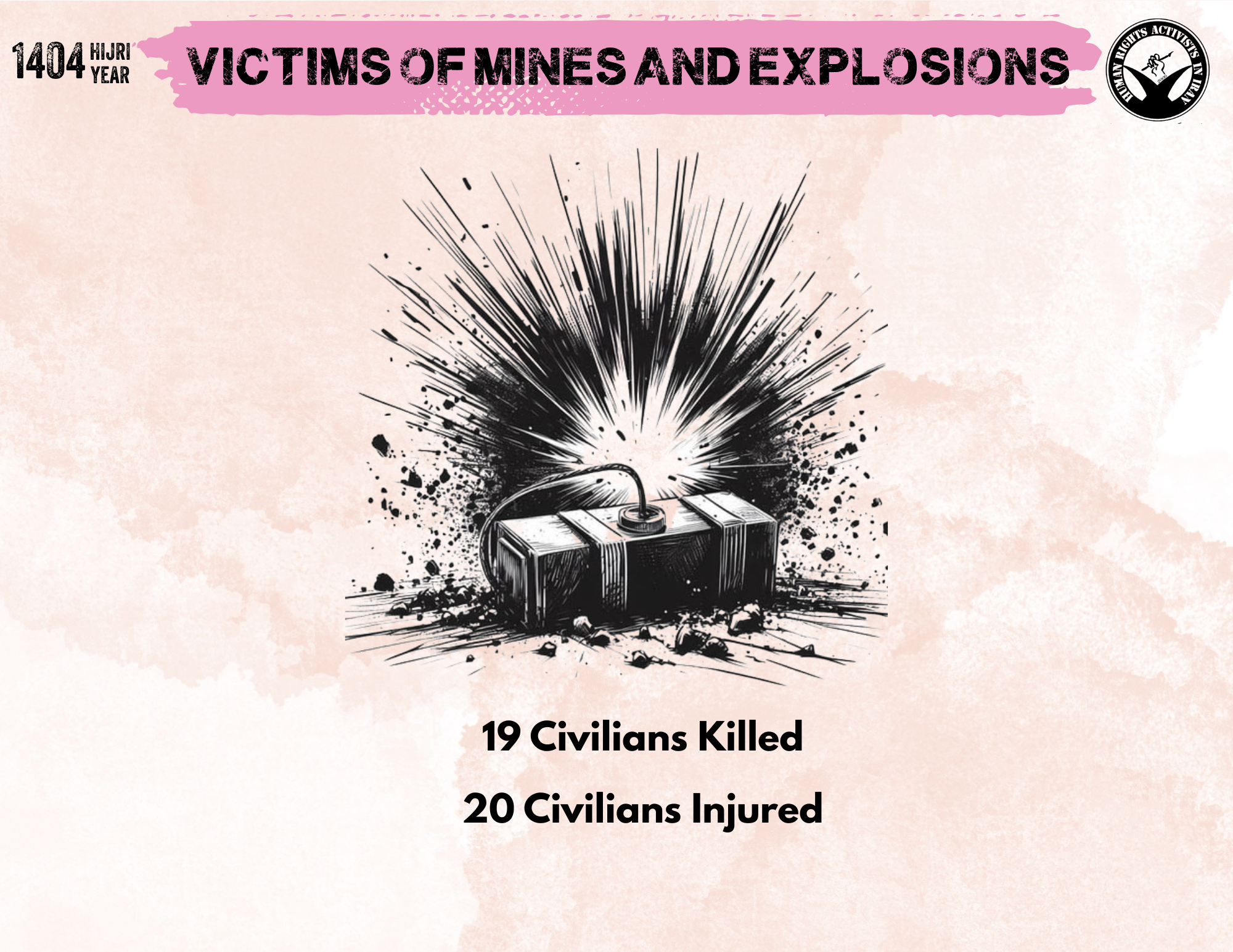
According to data from the past year, at least 19 citizens lost their lives due to landmine explosions in border areas, while 20 others were injured.
Flogging and Amputation Sentences
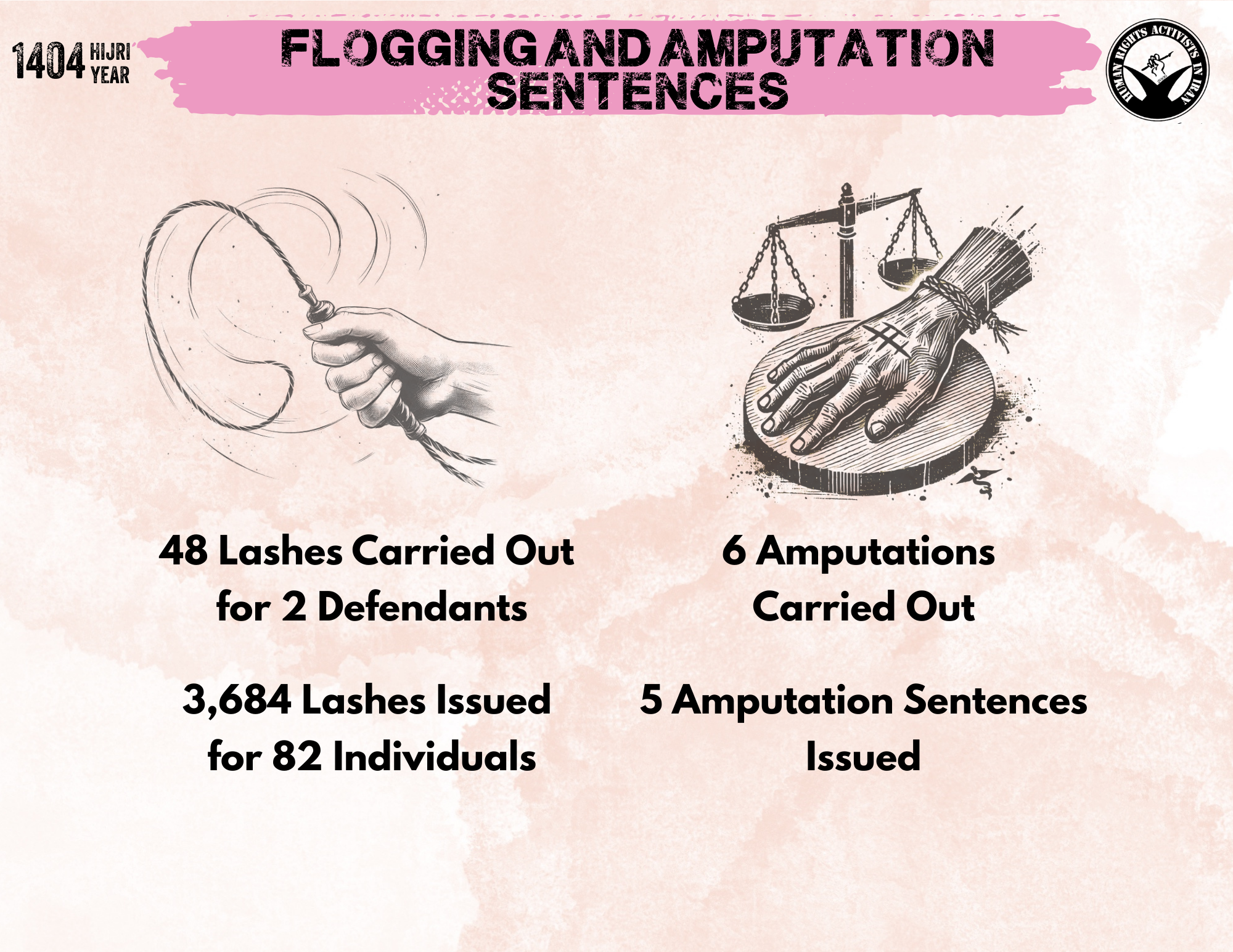
The International Covenant on Civil and Political Rights explicitly prohibits the use of degrading punishments that violate human dignity, such as flogging and amputation. Nevertheless, according to data collected in 1404, sentences of flogging were carried out for at least 2 defendants, who had been collectively sentenced by Iranian judicial authorities to 48 lashes.
In addition, the judiciary issued sentences totaling 3,684 lashes for at least 82 individuals. Furthermore, amputation sentences were carried out for 6 defendants who had been convicted by Iranian courts, while 5 others were also sentenced to amputation.
Arrests
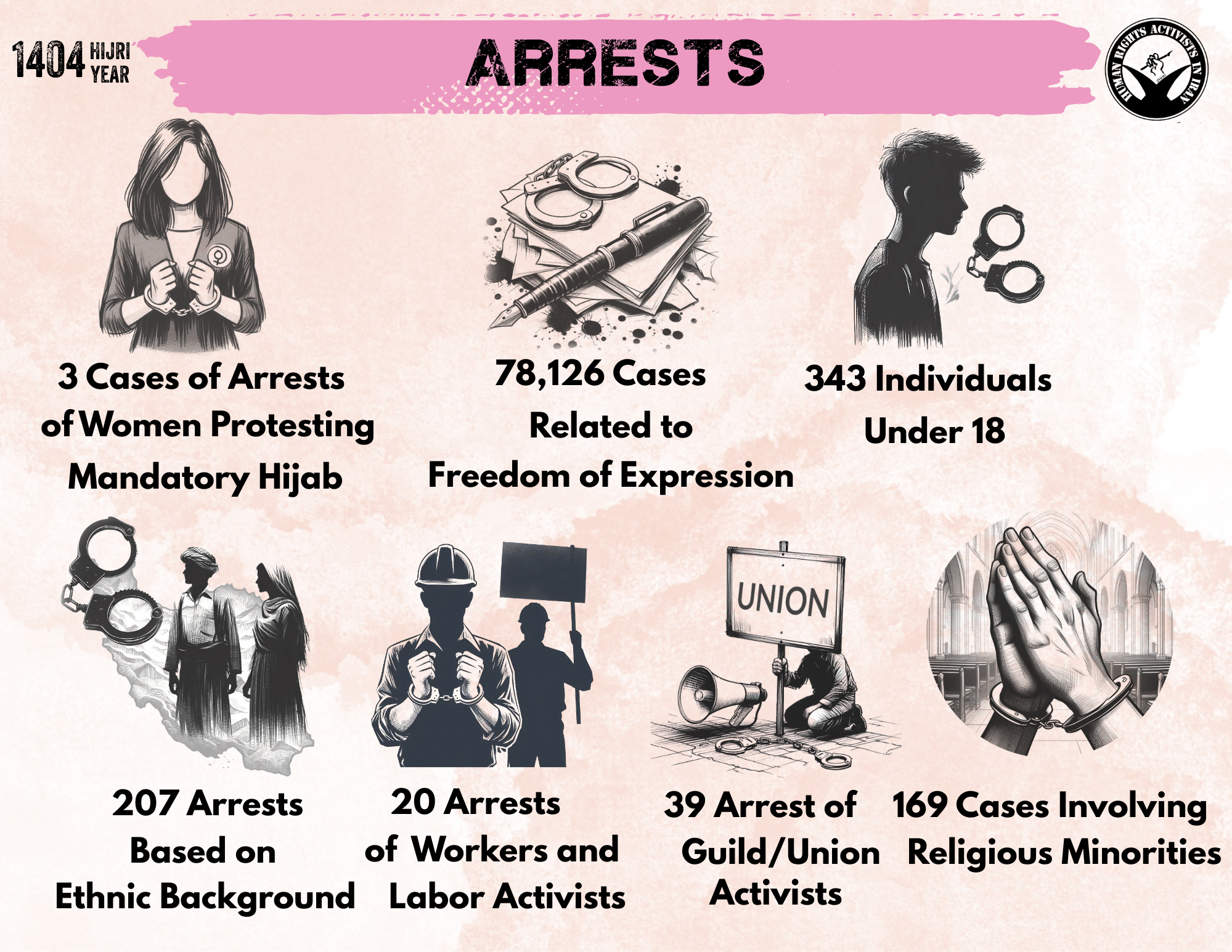
Over the past year, the arrest of 78,907 citizens in Iran represents a clear violation of the rights to freedom of expression, political freedom, and other fundamental human rights. Among these, 78,126 cases were directly related to the exercise of freedom of thought and expression.
Other notable cases include the arrest of 20 workers and labor activists, 343 individuals under the age of 18, 39 union activists, 169 members of religious minorities, and 207 individuals from ethnic minority backgrounds.
Regarding the latter group, although the charges against 234 individuals remain unclear, these arrests have been classified as violations of ethnic and national minority rights based on available indicators and the documented pattern of conduct by security institutions.
Additionally, at least 3 arrests were recorded for non-compliance with compulsory hijab and for women singing in public spaces.
Statistical Comparison of Arrests over the Past Five Years
Year
Number of Arrests
Arrests per
Million People
Percentage Change
Compared to Previous Year
1400
1884
21.3
+ %4,088
1401
29,950
33.4
+ %163.4
1402
3,864
42.7
+ %1,942
1403
2,491
27.2
+ %3,067
1404
78,907
847.5
–
Convictions
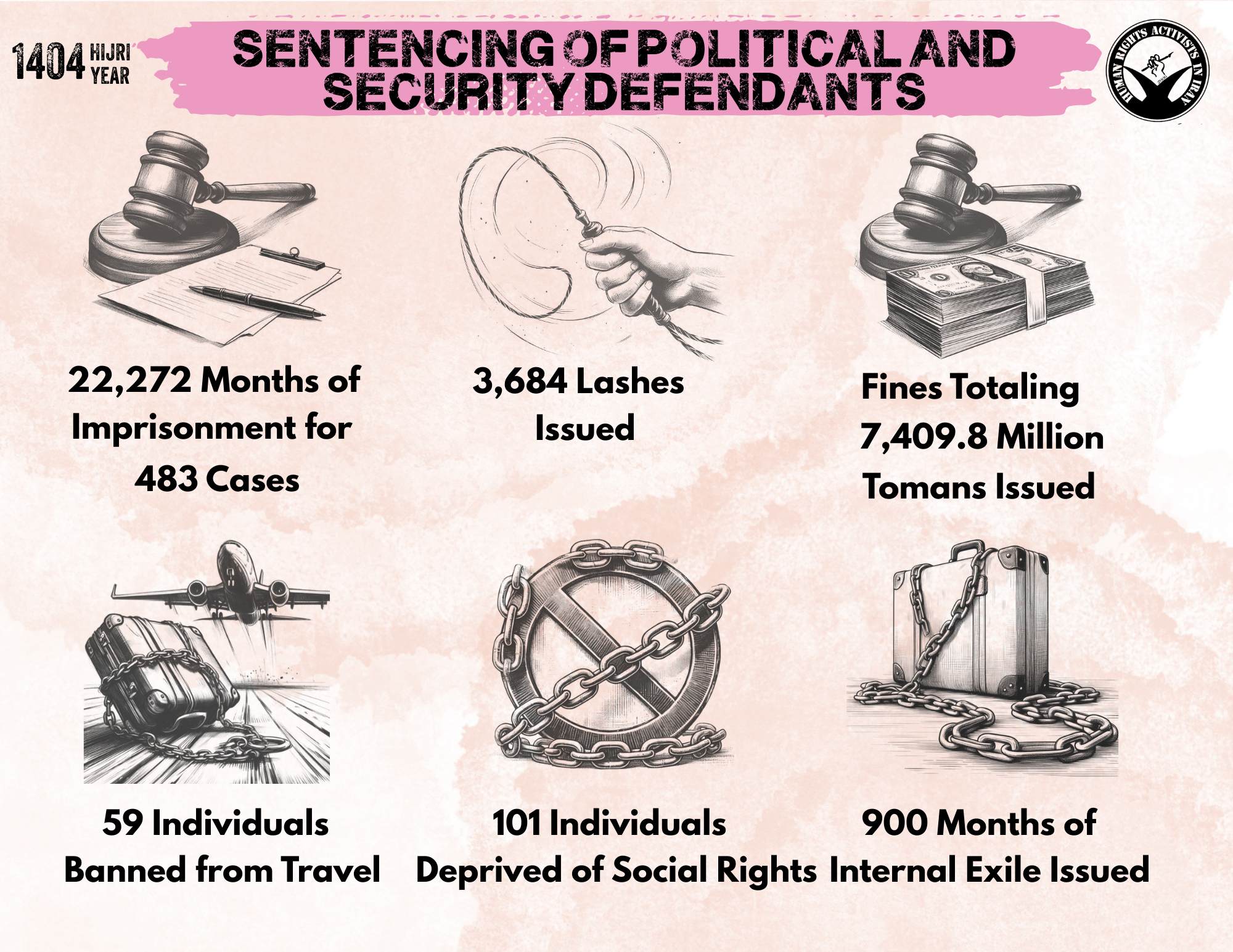
In 1404, judicial authorities across the country issued rulings in 483 cases, sentencing defendants in political or security-related cases to a total of 20,832 months of discretionary imprisonment and 1,440 months of suspended sentences. Of this total, 15,585 months were issued by lower courts, 5,847 months by appellate courts, and 840 months by the Supreme Court.
In addition, the judiciary imposed fines totaling 7,409.8 million tomans, as well as 3,684 lashes, 59 travel bans, 101 cases of deprivation of social rights, and 900 months of internal exile.
Five-year comparison of convictions based on the number of individuals
Year
Number of individuals
Convicted
Percentage Change
Compared to Previous Year
1400
310
+ %55.8
1401
1,075
– %55
1402
843
– %42.7
1403
744
– %35
1404
483
–
Five-Year Comparison of Convictions Based on the Total Months of Imprisonment Issued
Year
Number of months of
imprisonment
Percentage Change
Compared to Previous Year
1400
13,316
+ %67.2
1401
33,671
– %33.8
1402
33,790
– %34
1403
27,857
– %20
1404
22,272
–
Judicial officials with the highest number of sentences issued over the past year
Picture
Judge Name
Court Branch
Number
of Cases
Prison Sentences
(Months)
Fine
(Million
Toman)
Iman Afshari
Branch 36 of Revolutionary Court, Tehran
17
705
313.3
Ali Ansari
Branch 101 of Criminal Court No. 2, Oshnavieh
15
326
–
Abbasali Houzan
Branch 36 of the Court of Appeals, Tehran Province
13
1371
1110
Ehsan Adibi Mehr
Branch 1 of Revolutionary Court, Ahvaz
11
720
–
Sabzevari
Branch 2 of Revolutionary Court, Karaj
11
172
–
Abolghasem Salavati
Branch 15 of Revolutionary Court, Tehran
11
1296
–
Yaser Guzali
Branch 1 of Revolutionary Court, Mahabad
9
268
–
Velaei
Branch 101 of Criminal Court No. 2, Miandoab
9
27
–
Ahad Siami
Branch 2 of Revolutionary Court, Mahabad
6
720
–
Ashkan Ramesh
Branch 1 of Revolutionary Court, Varamin
5
495
–
In conclusion, it should be noted that the statistics presented in this report cannot be considered a complete reflection of the human rights situation in Iran. This is due to the fact that the Iranian government does not allow independent human rights organizations to operate freely or access necessary sources.
Therefore, these findings should be regarded as a minimum estimate of the human rights situation in Iran, based solely on data reported by civil institutions, including HRANA, and compiled and documented by the organization’s Statistics Center.
For further information, readers are encouraged to consult the organization’s 2025 annual report, which has been recently published.
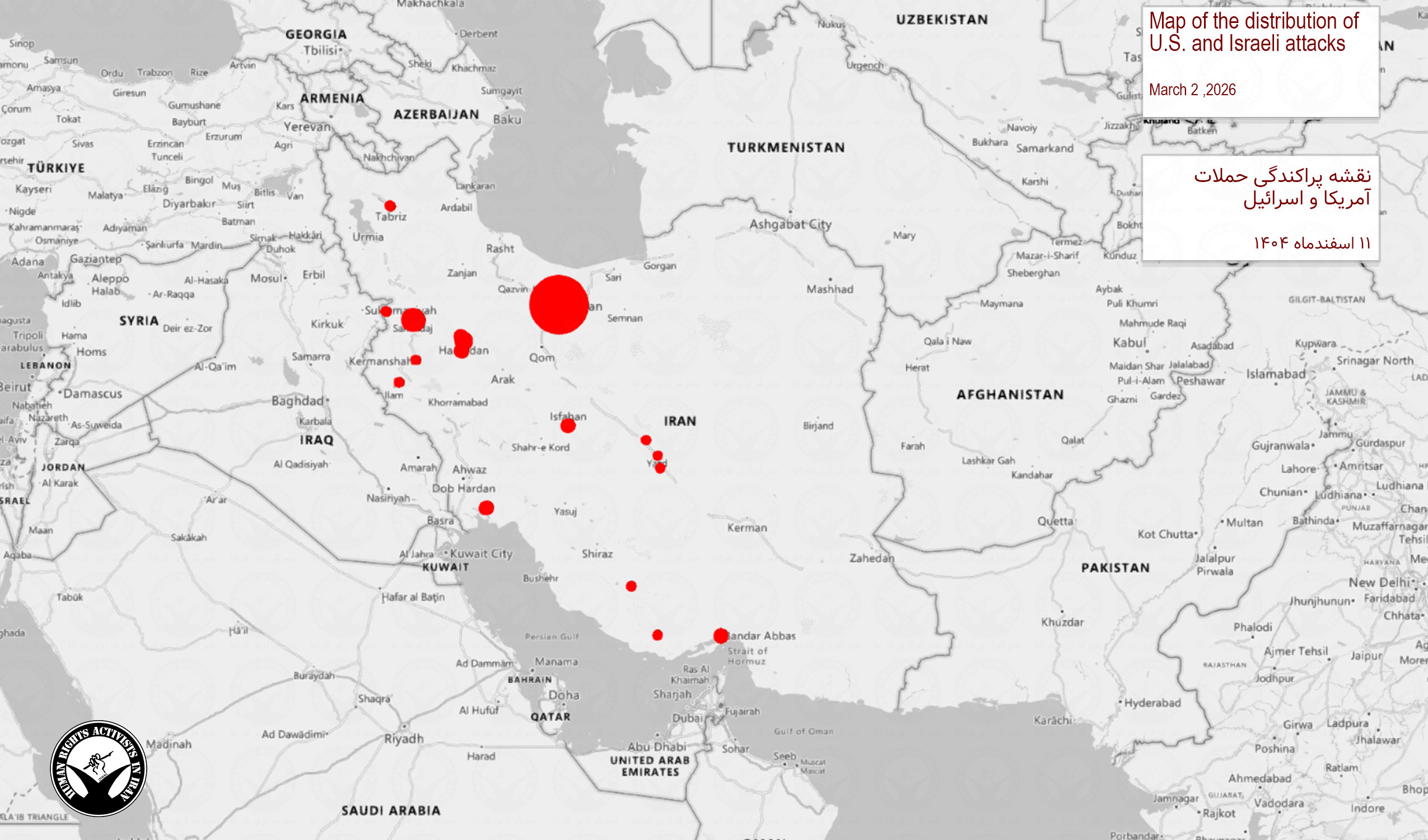
HRANA – In the last 24 hours, and as of March 2, 2026, at 17:00 ET, HRANA recorded at least 56 incidents across 13 provinces, resulting in 101 total casualties (killed and injured, civilian and military). All figures and classifications in this report are preliminary and may be updated as additional information becomes available and verification efforts continue.
Based on information verified today, HRANA has recorded 85 civilians killed and 5 total civilians injured, as well as 11 military personnel killed. During the last 24-hour period, 579 cases (deaths and injuries) remain under review for verification and classification, including assessment of whether individuals were civilians or military personnel.
In addition, in the last 24 hours, 28 objects were reported as hit. These include a range of locations and infrastructure, such as several military bases, two residential areas, and Shahid Bahonar Pier in Bandar Abbas. The nature of these objects, whether under special protected status, civilian, military, or dual use, remains under review, and classifications may be revised as further information becomes available. The list of 28 recorded targets are included in this report and reflect both objects reportedly directly targeted and those documented as damaged due to nearby strikes or collateral effects.
Aggregated data since the beginning of the conflict on 28 February 2026: The total number of reported civilian deaths stands at 742, including 176 children under 18, with 624 reported deaths currently and under review pending verification and classification. Reported civilian injuries since 28 February 2026 stand at 971, including 115 children.
This report provides a preliminary analysis of incidents documented within the last 24 hours. All figures and classifications contained herein are based on information available at the time of publication. As verification efforts continue and additional information becomes available, casualty figures, classifications of individuals as civilian or military, and the categorization of damaged objects may be updated.
HRANA applies a verification methodology that relies on cross-checking field reports, local sources, medical and emergency contacts, and available open source material. In cases where information cannot yet be conclusively verified, incidents or casualties are classified as undetermined and remain under active review. The dynamic nature of the situation, access constraints, and communication disruptions may affect the completeness of current data.
1. Overview of Incidents in the Last 24 Hours
In the last 24 hours, incidents were reported across multiple provinces, reflecting a geographically dispersed pattern of hostilities. Documented incidents include airstrikes and missile attacks.
Preliminary analysis indicates that Tehran Province, accounting for 56% of the attacks, continues to be targeted more than any other part of the country. Unlike previous days, when West Azerbaijan and East Azerbaijan provinces ranked second and third in terms of the number of attacks, today Kurdistan and Hormozgan provinces hold those positions, with shares of 8% and 7%, respectively.
2 List of Objects Reported Hit
In the last 24 hours, the following objects were reported as hit. Please note that this list includes not only objects reportedly directly targeted, but also those documented as damaged as a result of nearby strikes or blast effects. This list is not exhaustive; the items listed are illustrative.
• The Law Enforcement Command Headquarters of Kurdistan, located in Sanandaj
• The Kurdistan Border Guard Command Center, located in Sanandaj
• The 8th Tactical Air Base (Islamic Republic of Iran Air Force) in Isfahan was targeted
• The Army’s Self-Sufficiency Jihad Base in Tehran was targeted
For a number of the above-listed objects, the precise nature of the target, whether civilian, military, or dual use, remains under review. Verification efforts are ongoing to determine the status and function of each object at the time of the reported strike. As further information becomes available, classifications may be revised in subsequent updates.
Facilities Protected Under International Humanitarian Law:
Under international humanitarian law, medical facilities, educational institutions, humanitarian facilities, religious sites, and emergency service centers are among the many objects that maintain special protected status and are afforded special protection.
As of the past 24 hours, HRANA documents reported damage to the following facilities protected by IHL. The information below reflects preliminary findings and remains subject to verification. This list is not exhaustive; those listed are illustrative.
• A mosque in Mehrshahr, Karaj, was targeted
• A residential building on Shariati Street in Tehran was targeted
• The governor’s office in Rey was targeted
• Shahid Bahonar Pier in Bandar Abbas was targeted
• A residential complex on Sepahbod Qarani Street in Tehran was targeted
3. Civilian Casualties
All casualty figures presented below are based on information available at the time of publication. The classification of individuals as civilian, military, or undetermined is preliminary and subject to change as further verification is conducted. Where sufficient corroboration is not yet available, cases remain under review and may be reclassified in subsequent updates.
In the last 24 hours, 85 civilians were reported killed, and 5 civilians were reported injured across 13 provinces. Among them, 1 children were killed.
The highest number of civilian casualties was documented in the city of Ilam, Ilam Province, followed by Kurdistan Province.
In Tehran, a particularly severe incident occurred when an airstrike damaged the Iranshahr Street Emergency building and several adjacent buildings. These incidents continue to be reviewed as additional documentation becomes available.
4. Military Casualties
During the same reporting period, 11 military personnel were reported killed. This figure for military casualties is limited exclusively to those reported in connection with attacks on military or paramilitary bases. Where possible, organizational affiliation and operational context are being assessed; however, not all details have been independently verified.
In certain incidents, individuals were killed in proximity to military objectives, but their formal status has not yet been conclusively established. These cases remain under review, and classification may be revised if credible information indicates a different status.
5. Unverified Casualties
As of publication, 52 casualties remain under active review and are currently classified as undetermined.
Classification may remain pending due to:
• Lack of identifying documentation
• Conflicting reports from sources
• Insufficient information regarding affiliation or role at the time of death or injury
• Ongoing efforts to verify open-source reports through the HRANA network
Several incidents and casualties documented in this reporting period remain under review due to incomplete or conflicting information. These cases are recorded but are not yet fully verified or cannot yet be reliably classified, and may be updated as additional corroboration becomes available.
6. Undetermined Casualties
As of the time of publication, 579 casualties (deaths and injuries) remain classified as undetermined. This includes cases where HRANA has not yet been able to confirm whether the individual was a civilian or military personnel, or where age status (including potential child casualties) has not been conclusively verified.
A Note on HRANA Methodology
The information contained in this report is compiled through HRANA’s established documentation network. Data is collected from a combination of field reports, local contacts, medical and emergency sources, civil society networks, and open source materials, including publicly available images, videos, and official statements where relevant. Each reported incident is logged and assessed through an internal review process before publication.
Given the evolving nature of hostilities, information is gathered on a rolling basis and reflects the status of documentation at the time of publication.
The figures presented in this report may not reflect the full scope of harm. Ongoing hostilities, damage to infrastructure, communication disruptions, restricted access to affected areas, and security risks for sources may limit the ability to document incidents comprehensively.
Delays in medical reporting, difficulties in confirming identities, and restricted access to certain provinces may result in temporary undercounting. As access improves or additional evidence emerges, casualty figures and incident classifications may be revised accordingly.
HRANA remains committed to transparency, methodological rigor, and the continual updating of its findings as new verified information becomes available.
Humanitarian Obligations
HRA reiterates that all parties to the conflict are bound by international humanitarian law and must at all times distinguish between civilians and combatants, and between civilian objects and military objectives. Attacks directed against civilians or civilian objects, as well as indiscriminate attacks, are prohibited. All parties are required to take all feasible precautions to minimize civilian harm and to protect facilities afforded special protection, including medical units, schools, humanitarian facilities, religious sites, and objects indispensable to the survival of the civilian population.
HRA further underscores the obligation under human rights law of the Islamic Republic of Iran to ensure access to information. Authorities must refrain from imposing internet shutdowns, communication disruptions, or other restrictions that impede the flow of information, obstruct documentation efforts, or prevent families from obtaining information about the fate and whereabouts of their relatives. Transparency and access to information are essential for civilian protection and the effective delivery of humanitarian assistance.
As seen in the documentation in this report, armed conflict brings profound destruction and suffering to civilians and deepens humanitarian crises. HRA calls for an immediate cessation of hostilities and a renewed commitment to a peaceful resolution grounded in international law. The continued loss of civilian life, including that of children, underscores the urgent need to prioritize the protection of human life above all else.
The protection of civilians and the safeguarding of fundamental rights, including access to information, are binding legal obligations. The pursuit of peace remains essential to preventing further harm.
HRANA – On the twenty-sixth day of nationwide protests, according to aggregated data compiled by HRANA, the number of confirmed fatalities has reached 5,002, while the number of deaths still under investigation has risen to 9,787. In addition, at least 7,391 people have suffered serious injuries during the protests, and the total number of arrests has increased to 26,852. These figures were recorded under circumstances in which, just one day earlier, official authorities, by citing significantly lower numbers reportedly issued by the Legal Medicine Organization, attempted to solidify the government’s official narrative regarding the killings. At the same time, the internet shutdown in Iran, now approaching its third week, has continued unabated.
Developments on the twenty-sixth day of nationwide protests in Iran were shaped less by new events on the ground and more by efforts to entrench the government’s official narrative of the killings, the continued internet blackout with no clear timeline, and the escalation of international reactions and pressure. At the same time, a wider discrepancy emerged between the figures announced by the government and the data reported by independent human rights organizations.
Disruption of Communications on the Twenty-Sixth Day of the Protests
On the twenty-sixth day of nationwide protests, Iran’s communications situation remained in a critical and unprecedented state. The shutdown or severe disruption of internet access and digital communications, one of the central tools of control and repression, continued. According to data and reports published on this day, the internet blackout, which began on the evening of January 8, entered its third consecutive week. This situation has effectively reduced Iran’s connection to the global internet to the bare minimum, keeping the country in a state of “digital darkness.”
International internet monitoring organizations, including NetBlocks, released updated graphs showing that internet connectivity in Iran remains at its lowest level, with only very limited and tightly controlled connections available on certain domestic networks or in specific locations. These organizations emphasized that the disruption of digital communications in Iran is not a technical failure, but rather a deliberate and centralized decision by the authorities aimed at controlling the flow of information and preventing the dissemination of news about the suppression of protesters.
On the same day, uncertainty regarding when and how internet access might be restored also persisted. Official authorities, including the Secretary of the Supreme National Security Council, stated that there is no specific timeline for the full removal of restrictions and that any restoration of access would occur in a “gradual, localized, and issue-based” manner. These statements were widely interpreted as signaling the continuation of controlled communications policies and the ongoing filtering and blocking of foreign platforms, even if limited internet access were to resume. At the same time, reports indicated that even in cases of temporary connectivity, access to many global communication platforms and social media networks remained blocked or highly unstable.
The consequences of this situation became increasingly evident on the twenty-sixth day. The communications shutdown has severely disrupted independent documentation of events, the transfer of images and videos related to the protests and repression, and even basic communication among families. Field reports indicate that many images depicting widespread violence during the peak days of the protests have leaked out of the country only after long delays, without the ability to accurately determine the time and location of the incidents. This has not only made the work of media outlets and human rights organizations more difficult, but has also greatly reduced the possibility of independently verifying official narratives.
Domestically, the internet shutdown has also brought about extensive economic and social consequences. Businesses, especially online businesses, and internet-based services have been effectively paralyzed, and many citizens have reported being unable to carry out daily tasks or access online banking, educational, and healthcare services. Some economic and social figures warned of its long-term repercussions for the economy, public mental well-being, and public trust.
In the media sphere, the continued disruption of communications has led citizens to increasingly turn to alternative news sources, including shortwave and medium-wave radio broadcasts, a phenomenon that itself reflects a serious regression in the country’s communications infrastructure.
Overall, the twenty-sixth day of the protests passed with communications disruption continuing not merely as a temporary measure, but as a structural component of the authorities’ security strategy for managing the crisis, a strategy whose consequences include an intensification of the information vacuum, the spread of rumors, and a deepening divide between the official narrative and the lived experiences of citizens.
The Security Atmosphere Prevailing in Cities
On the twenty-sixth day of nationwide protests, the security atmosphere across various cities in Iran was reported to remain heavy, pervasive, and deterrent. This environment relied less on overt clashes and more on preemptive control, displays of force, and the instilling of fear among the public. Field reports indicate that the visible presence of security forces, law enforcement units, and plainclothes agents in city centers, main squares, busy routes, and around sensitive sites continued noticeably, and in some areas intensified through mobile checkpoints and motorcycle patrols.
In many cities, these heightened security measures increased particularly during the late afternoon and nighttime hours, when security forces stationed themselves in streets and neighborhoods, effectively reducing the possibility of gatherings or collective movement to a minimum. Citizens have reported widespread checks, temporary vehicle stops, mobile phone inspections, and sporadic arrests, measures that, according to eyewitnesses, were less a response to specific assemblies and more preventive and intimidating in nature.
At the same time, reports emerged of increased pressure on the families of those killed and detained. In some cities, security forces reportedly visited homes or made phone calls warning families against holding memorial ceremonies, gathering, or speaking to the media. This approach is assessed as part of broader efforts to prevent the formation of new focal points of protest and to contain the social and symbolic dimensions of mourning.
The prevailing security environment has had a direct impact on citizens’ daily lives. A noticeable decline in nighttime movement, the early closure of some businesses, and widespread caution in public interactions were among the consequences highlighted in field reports.
Letter from the Human Rights Activists Addressed to the Human Rights Council on the Twenty-Sixth Day of the Protests
On the twenty-sixth day of nationwide protests, the Human Rights Activists in Iran (HRA) published a letter addressed to the United Nations Human Rights Council, seeking to draw the attention of member states to what it described as “documented and alarming patterns of repression” in Iran. The letter was released on the eve of a special session of the Human Rights Council on Iran and was intended to provide concise, documented, and up-to-date information to assist council members in their decision-making.
In the letter, HRA emphasized that the findings presented were based on verified HRANA reports and individual case documentation, and that the figures cited represent absolute minimums. The organization warned that due to the ongoing internet shutdown and severe restrictions on the free flow of information, the true scale of repression and the number of victims could exceed the available data.
The central focus of the letter was the pattern of widespread use of lethal force against unarmed protesters. The organization referred to direct gunfire at demonstrators, the deaths of citizens in the streets, and the transfer of large numbers of injured individuals to medical facilities, describing this trend as indicative of serious and systematic violations of the right to life. At the same time, the letter pointed to mass arrests during and after the protests and warned about the unknown status of thousands of detainees, as well as restrictions on their access to lawyers and family members.
Another section of the letter addressed the issue of forced confessions, describing their broadcast on state media as a violation of the principles of fair trial and human dignity. In this context, the organization stressed that such actions not only impose additional psychological pressure on detainees, but are also used as a tool to legitimize repression.
The letter also emphasized the necessity of continued independent investigations and international accountability. HRA called on member states of the Human Rights Council to respond effectively to the human rights situation in Iran based on the available documentation and to prevent impunity for those responsible for widespread human rights violations. Overall, the letter seeks to provide decision-makers at the Human Rights Council with a clear picture of what has occurred during the protests, without delving into political analysis.
Updated Statistics (Cumulative)
Based on aggregated data recorded up to the end of the twenty-sixth day of the protests:
• Number of recorded gatherings/protests: 633 cases
• Number of cities involved (no duplicates): 192 cities
• Number of provinces involved (no duplicates): 31 provinces
• Confirmed fatalities: 5,002 individuals
Protesters: 4,714 Children (under 18 years old): 42 Government-affiliated forces (military and civilian): 207 Non-protesters/civilians: 39
• Fatalities under investigation: 9,787 individuals
• Seriously injured: 7,391 individuals
• Total arrests: 26,852 individuals
• Broadcasts of forced confessions: 192 cases
International Reactions on the Twenty-Sixth Day of the Protests
On the twenty-sixth day of Iran’s nationwide protests, international reactions continued less in the form of new immediate actions and more through intensified political stances, statements by foreign officials, and the growing linkage between Iran’s internal situation and regional security developments. A review of coverage in international media shows that Iran was simultaneously addressed on human rights, diplomatic, and security levels on this day.
The most significant international development was a clear stance taken by the European Parliament against the Islamic Revolutionary Guard Corps (IRGC). According to published reports, members of the European Parliament condemned the widespread repression of protesters and the nationwide internet shutdown in Iran, reiterating their position that the Islamic Revolutionary Guard Corps should be designated as a terrorist organization. This position was expressed within official parliamentary sessions and statements, explicitly highlighting the IRGC’s role in suppressing protests, killing demonstrators, and committing widespread human rights violations.
Members of the European Parliament described the internet shutdown as part of the machinery of repression and concealment of violence, emphasizing that communications blackouts have severely limited independent documentation and accountability for those responsible for the crackdown. Some representatives called on the European Union to move beyond political statements and respond with concrete and binding measures, including targeted sanctions and legal action, in reaction to the IRGC’s role in repressing the protests.
Alongside these international meetings, statements by political leaders regarding Iran also drew attention. Volodymyr Zelenskyy, President of Ukraine, stated unequivocally that if the Islamic Republic is able to remain in power through the killing of its own citizens, it would signal the failure of the international community to effectively support the people of Iran. These remarks, which were widely circulated in public and media spaces, reflect a growing level of concern and frankness in the discourse of some political leaders regarding the repression of protests in Iran.
Overall, international reactions on the twenty-sixth day of the protests reflected not so much the adoption of immediate executive decisions, but rather the increasing political and security weight of the Iran dossier in global discourse. Clear statements by foreign leaders, the linking of Iran’s internal developments to regional security calculations, and sustained extensive media coverage indicate that the suppression of protests in Iran continues to be treated internationally as an issue that goes beyond a purely domestic crisis.
Government Responses on the Twenty-Sixth Day of the Protests
On the twenty-sixth day of nationwide protests, the Iranian government’s responses focused primarily on consolidating the official narrative of events, defending the performance of security and judicial institutions, and countering independent and international accounts. The collection of statements issued by officials on this day indicates that the authorities sought to present a unified portrayal of developments through the release of statistics, technical explanations, and security-based frameworks, while distancing themselves from responsibility for the killings and violence.
The most significant governmental stance on this day was the release and amplification of remarks by the head of the Legal Medicine Organization. Announcing what was described as a “final report,” he stated that 3,117 deaths had been recorded in the “recent incidents,” emphasizing that this figure was the result of “scientific and specialized” examinations of bodies. While he noted that women, children, the elderly, and passersby were among the victims, he simultaneously attributed the primary source of violence to what he called “terrorist elements.” The head of the organization claimed that victims had been killed using a wide range of weapons, including live ammunition, hunting rifles, pellet guns, and even bladed weapons, presenting this as evidence of the “criminal nature” of protesters and those involved in the unrest.
Continuing this narrative, government officials explicitly rejected higher figures published by media outlets and human rights organizations. Both the Legal Medicine Organization and the Secretary of the Supreme National Security Council dismissed reports claiming 12,000 to 20,000 deaths as “rumors” and “media distortions.” They argued that these figures stemmed from a misunderstanding of the forensic case-numbering system, which includes all unnatural deaths recorded over the course of a year and should not be attributed to the recent protests. Within this framework, officials also stated that delays in releasing official statistics were due to the need to carefully distinguish between ordinary civilians, government forces, and what they described as “armed elements.”
At the same time, the Secretary of the Supreme National Security Council and other security officials sought to shift public attention from human casualties to the alleged “destructive and violent dimensions” of the protests by presenting lists of claimed damages. These statements referred to the damage or destruction of hundreds of ambulances, banks, fuel stations, government buildings, and police vehicles, and even included allegations of damage to educational, religious, and cultural centers. This narrative portrayed the protests not as a social movement of dissent, but as an “organized and destructive action against national security.”
Another aspect of the government’s response addressed the issue of handing over bodies and interactions with the families of those killed. The Secretary of the Supreme National Security Council categorically denied that any money had been demanded from families in exchange for the return of victims’ bodies, claiming that in the few cases where burial-related fees at religious sites had been charged, orders had been issued to halt the practice and refund the amounts. These remarks were made in response to reports and testimonies alleging pressure on families and the extraction of payments for the release of bodies.
Alongside these points, the government’s security narrative on the twenty-sixth day intensified with new claims. Officials asserted that the recent protests were directed from outside the country and that “key elements” had organized and trained protesters through online platforms. It was also claimed that a significant portion of detainees had been under the influence of hallucinogenic substances or alcohol at the time of the violence, and promises were made to release “new confessions” related to these allegations. These statements reinforced a framework that denies social grievances as the root of the protests, instead presenting them as the product of “foreign conspiracy and organized unrest.”
Summary
The twenty-sixth day of nationwide protests passed with the consolidation of the government’s official narrative regarding casualty figures, the continuation of the internet shutdown with no clear horizon, and mounting international reactions and pressure. At the same time, the gap between official government statistics and independent human rights data persisted, remaining unresolved amid severe restrictions on access to information.
HRANA News Agency – On the occasion of the World Day for Safety and Health at Work, Human Rights Activists in Iran (HRA) has published a report examining workplace accidents linked to unsafe environments and hazardous working conditions in Iran between May 2, 2024, and April 27, 2025.
According to data compiled by HRA’s Department of Statistics and Publications, during this period at least 2,079 workers lost their lives and at least 16,273 others were injured due to workplace accidents resulting from inadequate safety measures.
The World Day for Safety and Health at Work, established by the International Labour Organization (ILO) in 2003, aims to raise global awareness of workplace safety and health, promoting accident and disease prevention in occupational settings. Since 1996, labor unions worldwide have also observed April 28 as International Workers’ Memorial Day, honoring workers who have lost their lives on the job.
HRA’s report highlights that the reported deaths and injuries were collected from media outlets and organizations monitoring labor rights across Iran. Among the most devastating incidents was the explosion at Shahid Rajaee Port in Bandar Abbas, where 46 workers, including three women, had been killed as of the time of this writing. Official reports recorded over 1,242 injuries, although it remains unclear how many of those injured were workers. According to the head of the Bandar Abbas Workers’ Retirees Association, the majority of the victims were indeed laborers.
This tragedy, occurring just before the World Day for Safety and Health at Work, underscores the importance of stricter implementation of laws and continuous monitoring of compliance with safety principles in work environments.
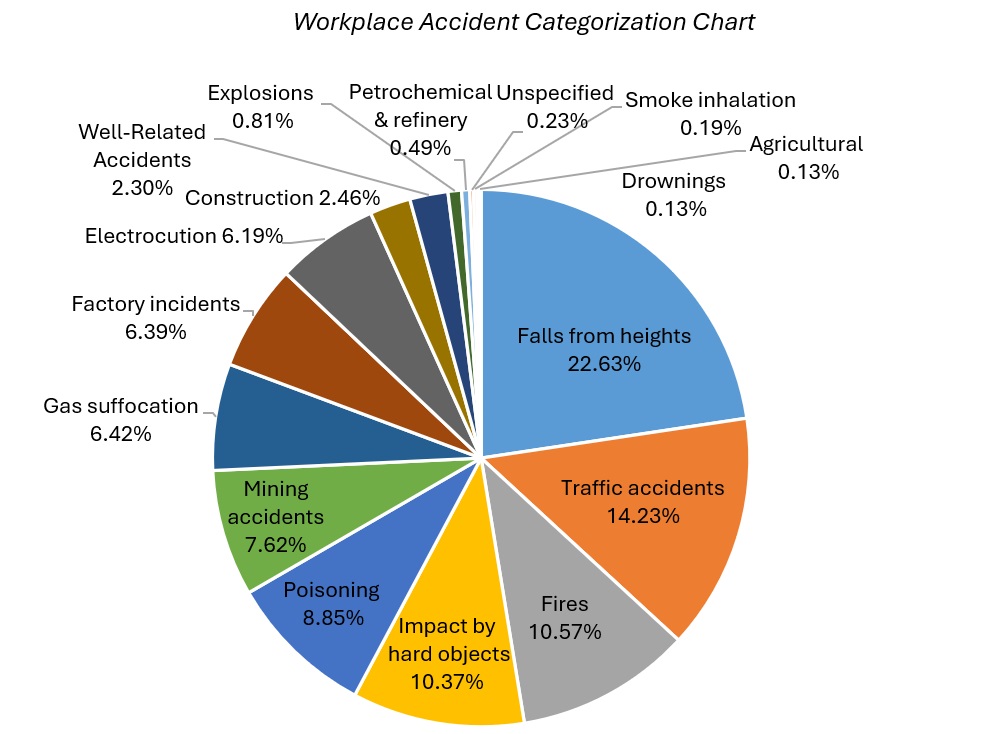
The report also provides a breakdown of the causes of workplace accidents:
Falls from heights accounted for 22.63% of incidents,
Traffic accidents 14.23%,
Fires 10.57%,
Being struck by hard objects 10.37%,
Poisoning 8.85%,
Mining accidents 7.62%,
Gas suffocation 6.42%,
Factory incidents 6.39%,
Electrocution 6.19%,
Construction accidents 2.46%,
Well-related accidents 2.30%,
Explosions 0.81%,
Petrochemical and refinery incidents 0.49%,
Unspecified causes 0.23%,
Smoke inhalation 0.19%,
Agricultural accidents 0.13%,
Drownings 0.13%.
Iran ranks 102nd in the world regarding the observance of workplace safety standards, which is considered a very low ranking. HRA’s findings reflect the urgent need for improved occupational safety standards and continuous oversight to protect workers’ lives across Iran.
Each year, Human Rights Activists in Iran (HRA) publishes a comprehensive statistical analysis of human rights violations in Iran. The 2024 Annual Report presents data drawn from 9,487 reports collected from 116 NGOs and news sources, offering an in-depth overview of key areas such as women’s rights, workers’ rights, children’s rights, and prisoners’ rights over the past year.
In addition to this 86-page report, HRA has compiled key statistics into a visual infographic booklet, which you can download here:
The pages of this booklet are also available for separate download:
As the two-year anniversary of Mahsa Zhina Amini’s death in detention approaches, HRA explores a surge in women’s activism in Iran and the worsening repression by the government in response. Despite the passage of time, accountability for the violence remains largely absent, and the situation continues to deteriorate.
This report features personal accounts from female prisoners and women who have had interactions with various hijab monitoring bodies. The report delves into a brief historical evolution of protests for women’s rights, and the growing solidarity among women activists over the past 44 years. Further, it examines the government’s view of these movements as threats, leading to an increase in punitive actions such as arrests, violence, and severe legal consequences.
Through this analysis, HRA aims to highlight the resilience of Iranian women in the face of extreme repression and the broader implications of their struggle for freedom and equality.
The Backdrop Women’s Activism in Iran
1. Historical Background
In the 44 years since the Islamic Revolution, women’s rights in Iran have been significantly curtailed. The repression and violence against women have not only manifested in physical harm but have also been deeply embedded in political and legislative reforms. Key changes included granting men the exclusive right to seek divorce, implementing mandatory hijab rules, and lowering the legal marriage age for girls from 18 to 9. Women also could not leave the country without the permission of their husbands significantly impacting their right to freedom of movement. Additionally, The Family Protection Courts were initially abolished and replaced by regular courts, later succeeded by family courts presided over by clerics. These cleric-led courts routinely favored husbands in family disputes, further entrenching gender inequality.
Over the past 44 years, these restrictions have fueled a significant increase in women’s activism in Iran, leading to a decades-long struggle. One of the first major protests occurred on March 6, 1979, after Khomeini announced that women would be required to wear veils when entering government property or working in government ministries. This sparked a six-day protest, led by women, opposing the mandatory hijab ruling and advocating for equal rights. In response, pro-Khomeini Islamist forces met the protests with extreme violence and intimidation, including the chant: “Either hijab or a smack in the head!” Despite this, many women refused to be silenced, continuing to form women’s associations and gather, particularly in universities. By 1983, the government had passed laws punishing women who refused to comply with mandatory veiling. These laws led to severe harassment, assaults on women’s activists, and their eventual arbitrary arrests.1
2. Previous Protests
After the 1979 protest, numerous protests and significant moments of women-led activism have continued. On 12 June 2006, the One Million Signatures Campaign began after a gathering in Tehran’s Haft-Tir Square to mark Iranian Women’s Unity Day. Various groups came together to demand reform of discriminatory laws against women, especially focusing on family laws. Iranian women had been advocating for change for decades, but this campaign represented the most comprehensive and dynamic effort seen thus far. After months of preparation, the campaign produced three key documents: (1) A petition calling for legal changes, which was meant to collect one million signatures. (2) A campaign plan that outlined the goals, methods, and structure of the movement. (3) A pamphlet titled The Effect of Laws on Women’s Lives, distributed by activists to raise awareness and gather support. The campaign, known for its grassroots approach, united women from diverse backgrounds and built a strong foundation for a long history of advocating for women’s rights in Iran. Despite facing government repression and the arrest of activists, it became a significant milestone in the fight for gender equality. The One Million Signatures Campaign continues to symbolize the ongoing struggle for legal reforms and gender justice in Iran.2
Launched in May 2017, The White Wednesday movement encouraged women to wear white head scarves or other white clothing on Wednesdays as a peaceful yet bold act of resistance. By choosing white—a symbol of peace—the movement underscores the desire for freedom and autonomy in the face of state-enforced dress codes. Through the present day, women bravely share videos and photos of themselves, sometimes removing their hijabs in public, on social media platforms, despite knowing the severe consequences they could face from the government–they are the faces of the collective bravery of Iranian women. This movement has not only mobilized women but has also garnered support from men and others who stand in solidarity against the regime’s oppressive laws. The Iranian government has responded with harsh repression, arresting and imprisoning those who participate.
3. 2022 Protests “Woman, Life, Freedom”
The 2022 protests represented a culmination of years of frustration, inequality, and repression. After the death in detention of Masha Zhina Amini following her encounter with the morality police for alleged hijab compliance, the country erupted in nationwide protests for 82 consecutive days–and more in some areas. Protestors came out onto the street with the slogan ‘Woman, Life, Freedom’, these protests were centralized around women’s rights but also the repressive laws, and the regime itself. These protests were violently quashed by the anti-riot police and Iran’s militia force (Basij). Teargas, pellets, and live ammunition were used in the repression of protests. One HRA investigation even uncovered the use of paintball guns. The protests took place in 31 provinces, 160 cities, and 143 major universities. Tragically, these protests also led to the death of at least 530 individuals,3 including 68 children and teenagers. It’s also estimated that 18,242 protesters were arrested, HRA confirmed the identity of 3,670 arrested citizens, 605 students and 61 journalists or activists.
The 2022 nationwide protests were unlike any other protests the country had seen before. Unlike recent protests, which were largely driven by economic or environmental concerns, these demonstrations were centered on political and human rights demands. Because the protests were sparked by the death of a young Kurdish and Sunni woman, her identity highlighted the intersection of gender, ethnic, and religious discrimination.
Iranian youth, with an average age of 15 according to law enforcement officials, played a pivotal role in these protests. An unprecedented solidarity emerged between Iranians within the country and those in the diaspora, uniting almost all classes of society, including the urban middle class, lower and upper classes, different ethnic and religious groups, sexual minorities, and various trade groups such as teachers, workers, students, professors, artists, and athletes. Businesses also demonstrated their support by participating in strikes. In terms of duration, these protests are among the longest continuous protests since the inception of the Islamic Republic.
The international community, particularly celebrities in arts, culture, and politics, has shown unprecedented support for the protesters, amplifying their demands and drawing global attention to the situation in Iran. The protests’ focus on women’s rights has revealed the progressive and assertive nature of Iranian society. The protests were often women led and demonstrated significant female leadership and participation and supported by men. One distinguishing feature of these protests is the unarmed demonstrators who frequently confronted security forces, often standing together to prevent arrests and resisting the Moral Security Police, whose decades-long interference in women’s personal lives fueled public anger.
In addition to the street protests, cyber warfare emerged between opponents and supporters of the regime, with numerous government sites being hacked. The hashtag #MahsaAmini became the first in Twitter’s history to surpass 284 million tweets, reflecting the global solidarity with the protesters. The Iranian government, this time, allowed FARAJA, the main law enforcement agency, greater latitude in repressing the protests, and employed alternative methods for controlling communication, such as reducing internet speed rather than cutting it off entirely, and filtering certain sites. Media outlets close to Iran’s security apparatus attempted to cover the protests in a way that favored the government, often underreporting the number of deaths during the protests.
These protests, despite lacking centralized leadership, have demonstrated the determination of Iranian society, particularly its younger generation, to secure their basic human rights. Iran’s ethnic groups, especially Kurdish and Baloch citizens, who are predominantly Sunni Muslims, have played a significant role in these protests and have also faced some of the most brutal crackdowns.4
Government’s Perception and Response
1. Threat Perception
The increased activism around women’s rights, especially regarding the compulsory hijab has made women a target of the government. Since the 16 of September 2022 up until the 18th of August 2024, 682 women have been detained for hijab-related reasons. During the same time period, 18 women’s rights activists have been arrested. Notable arrests include Narges Mohammadi, Zhina Modarresi Gorji and Zeinab Khenyab.
Following the recent protests, several political leaders and officials in Iran have made statements regarding the mandatory hijab and women’s activism. On April 3, 2024, Ali Khamenei, the Supreme Leader of Iran, declared that compulsory veiling is a “religiously mandated decree and obligatory for women.” He attributed non-compliance to “foreign interference” and emphasized the need to address this issue.5
Subsequently, on April 13, 2024, Abbas Ali Mohammadian, the Commander of Tehran’s police force, announced that the police in Tehran and other provinces would begin confronting individuals who promote “social abnormalities,” such as appearing without a headscarf. He specifically mentioned that those who ignored previous police warnings would receive a final warning, with legal action to follow.6
On April 21, 2024, Hassan Hassanzadeh, the Commander of the Revolutionary Guards in Tehran, introduced the formation of trained groups (the so-called “Ambassadors of Kindness”) to enforce compulsory veiling in public spaces, though he did not specify their exact composition or institutional affiliation.7
Finally, on April 23, 2024, Ahmadreza Radan, the Commander-in-Chief of Iran’s police force (FARAJA), announced the implementation of the “irreversible Noor Plan,” which has received approval from the parliament, judiciary, and government. On the same day, FARAJA issued a statement equating defiance of compulsory veiling with activities of “organized criminal gangs…involved in corruption, prostitution, and pornography.” Additionally, a “Bill to Support the Culture of Chastity and Hijab” is nearing adoption in Iran’s parliament. If passed, this law will formalize the government’s crackdown on women and girls defying the compulsory veiling mandate and will severely deepen the gender divide.8
The Iranian government perceives women’s activism, particularly in opposition to compulsory hijab, as a significant threat to its ideological and social control. Statements from key political and military leaders relieve a narrative that frames defiance of mandatory veiling not merely as a social or religious issue but as a challenge to state authority, ‘influenced by foreign interference.’ These statements also highlight the premeditated intent of the regime to suppress dissent. The rhetoric used by figures such as Ali Khamenei and Ahmadreza Radan equates women’s activism with organized crime and societal corruption, showcasing a deep-seated fear of the potential for these movements to destabilize the regime’s traditionalist foundations. The implementation of measures like the “irreversible Noor Plan” and the formation of enforcement groups like the “Ambassadors of Kindness” further underscores the government’s commitment to quelling these movements through legal, political, and physical means, viewing the activism as a direct assault on the state’s moral and cultural codes. This reaction highlights the regime’s view of women’s activism not just as a demand for rights but as a broader existential threat to the state’s ideological hegemony.
2. Current hijab monitoring bodies
The hijab monitoring bodies often enforce violent methods to force women to comply with the mandatory hijab rules. So far in 2024, around 620 women have been arrested under Operation Noor. On June 21, on a street in Tehran, two teenage girls were violently assaulted and arrested by agents.9 These girls were then transferred to the Morality Police in a white van. According to the mother of one of the girls, when she visited the Morality Police, she saw her daughter with a bruised face, swollen lips, a bruised neck, and torn clothes. Additionally, they were threatened not to file complaints against the officers.
This incident resulted in injuries to at least one of the girls, Nafas Haji-Sharif, 14 years old. Maryam Abbasi, Nafas Haji-Sharif’s mother, disclosed that on July 1, her daughter was beaten by agents. She provided documents, including a video of the confrontation recorded by CCTV cameras, to Ensaf News. The video released from the time of the girls’ arrest shows that the girls were trying to hide on another street but were attacked by the agents. In the video, one of the girls is seen being severely beaten by the officers. As she resisted arrest, the officers grabbed her hair, dragged her violently on the ground, and forced her into a white van.
Maryam Abbasi said, “The hijab enforcers violently forced my daughter and her friend into the van, and her head was slammed into an electric post. Inside the van, they put their foot on my daughter’s neck and pulled her hair.” She also provided pictures of the injuries on her daughter’s body.
Abbasi mentioned that when she went to the Morality Police, she found her daughter with a bruised face, swollen lips, and a bruised neck. She also claimed that the officers involved in the incident treated her dismissively and ignored her complaint. She stated that the on-duty judge allowed her access to the CCTV footage, but subsequent follow-ups have been unsuccessful. She continues to call on various police and judicial authorities to investigate and address her complaint.
Meanwhile, the Morality Police claim that a female officer’s fingers were broken in the altercation and that the case’s judge threatened them not to file a complaint against the officers. Abbasi said, “In the presence of a lawyer, they told me not to complain against the officers; otherwise, the Intelligence and Security forces would get involved, making it costly for you and out of our control.”
In a similar act of violence against women, on July 22, Arezou Badri was heading home from work with her sister Sara while their car was flagged by the Law Enforcement Forces (LEF) for improper hijab. Instead of de-escalating the situation, a First Sergeant in the LEF opened fire on the car as Sara attempted to drive away. One of the bullets struck Arezou in the spine. She was rushed to the hospital for emergency surgery. Arezou will likely never walk again.
In a conversation with HRA, several women told their stories of what it was like to be confronted and arrested by Operation Noor officers. One women stated “With the resumption of the Noor Plan this year (April 13, 2024), at 6 PM in Enghelab Square, I was attacked by plainclothes officers and baton-wielding hijab enforcers, both male and female, in Tehran’s Enghelab Square. The arrested women present on that day were taken away in ambulances, motorcycles, and white Peugeot cars. After a two-hour chase through the alleys of Enghelab to the route home, I was hit by tear gas and attacked by four plainclothes motorcyclists armed with batons and wooden sticks. I dragged myself to the next alley and street”.
Iranian women paint a harrowing picture of the oppressive and violent treatment they endure at the hands of their government. They recount experiences of being brutally targeted for the slightest deviation from the state-imposed dress code, such as improper hijab. Women are not only subjected to arbitrary arrests and physical assaults but also face severe, life-altering consequences for resisting these draconian measures. The government’s response to any form of dissent is often swift and ruthless, with agents employing excessive force, including beatings, shootings, and threats, to enforce compliance.
One woman’s testimony encapsulates the pervasive fear and helplessness felt by many:
Government’s Hostility and Vengeance
The rise in activism in Iran has made these very women significant force, leading the government to see them as a threat at both social and structural levels. Women’s issues, such as the compulsory hijab, are increasingly difficult for the Islamic Republic to justify internationally, adding pressure on the regime.
The hijab is central to the Islamic Republic’s identity, especially after the 1979 revolution when its enforcement impacted women’s workforce participation. Any concession on the hijab is viewed as a step towards secularism, which the regime perceives as an existential threat. Therefore, women’s demands for freedom and equality are seen as a fundamental challenge to the regime’s ideological foundation.
These factors have fueled the government’s hostility towards women. Traditional societal norms in Iran complicate the government’s ability to label women protesters as terrorists or vandals, giving women more freedom to radicalize their protests. The government’s use of extreme and illegal measures, such as sexual violence against female detainees, strict new laws, and brute force, highlights its desperation to maintain control.
Following the 2022 protest, the ‘Hijab and Chastity bill’ was introduced, eventually expanding from 15 to 70 articles to enforce stricter regulations on mandatory hijab and gender segregation in public spaces. The bill imposes severe penalties, including fines and corporal punishments, and utilizes technology like AI for enforcement. It empowers the Basij group, intensifying societal control. Despite concerns about privacy and freedom, the bill has been pushed forward, with recent amendments requiring police to obtain legal authorization before intervening in certain cases.10 11
The Hijab and Chastity Bill violates several key international human rights standards, especially under the International Covenant on Civil and Political Rights (ICCPR) to which Iran is a signatory. Firstly, the bill violats the Right to Freedom of Expression ( Art, 19 ICCPR); compulsory dress interferes with the freedom of expression and Right to Freedom of Thought, Conscience, and Religion ( Article 18, ICCPR) International law upholds an individual’s right to wear religious attire is voluntary, therefore forcing women to adhere to religious dress code contravenes this right.
Additionally, the Bill also violates the right to Gender Equality and Non-Discrimination (Article 3, ICCPR). The law disproportionately targets women and enforces gender-based discrimination. By mandating specific dress codes for women only, the bill discriminates on the basis of gender, violating the principle of equality before the law. Gender-based discrimination is explicitly prohibited under international human rights law.
Lastly, The bill violates article 17, ICCPR, by enforcing strict dress codes through surveillance and state monitoring (including street enforcers and the potential for penalties based on social media activity), the law infringes on the individual’s right to privacy. Intruding into personal dress choices and punishing non-compliance directly violates the principle that individuals should be free from unwarranted interference in their personal life
Amir-Hossein Bankipour Fard, a member of the Islamic Consultative Assembly, stated on May 12,2024 that under the Hijab and Chasity bill citizens could be arrested for four reasons. (1) Individuals who are considered to be semi-naked, (2) those who are ‘connected’ to anti-regime or foreign groups, (3) Individuals who resists after being warned, (4) foreigners who do not have acceptable documentation with them. These measures, like many, are vague in nature leaving far too much discretion in the hands of authority. This subsequently led to the deportation of Kobra Gholami in August 2024. She is an Afghan citizen and researcher at Al-Zahra University, who was deported to Afghanistan after she “received a warning about her hijab”, Bankipour has also stated that the nƒahmew bill will include camera surveillance.
Unprecedented Repression Signals a Growing Threat
Despite the government’s efforts, women’s activism continues, signaling its failure to fully suppress their movement. This situation has led to unprecedented repressive measures, including the potential issuance of death sentences to women activists, as a drastic and symbolic attempt to reassert control.
Among the harsh measures taken against women is the imprisonment of eleven prominent female activists in Gilan province. This crackdown on dissent extends to the imposition of death sentences as a form of retaliation. For example, Sharifeh Mohammadi, a labor activist, has been sentenced to death on charges of ‘Baghi’ (armed rebellion). Similarly, Pakhshan Azizi, a political prisoner, also received the death penalty on charges related to her alleged membership in anti-regime groups. Arrested on August 4th, 2023, in Tehran, Azizi was denied access to a private lawyer and was unable to see her family. After enduring four months of intense interrogation, she was transferred to the women’s ward of Evin Prison, where she remains detained.
The Iranian government’s relentless crackdown on women’s activism reveals its profound fear of losing control over a society that is increasingly demanding basic human rights and freedoms. Despite decades of repression, women in Iran continue to challenge the regime’s authoritarian grip, especially around the issues of compulsory hijab and broader gender discrimination. The state’s response—marked by escalating violence, arbitrary arrests, and draconian legislation—reflects its desperation to maintain an ideological stronghold that is becoming ever more tenuous. However, the resilience of Iranian women, who persist in their fight despite the ever-present threat of severe punishment, underscores a growing crisis for the regime. The harsh measures, including imprisonment and even death sentences, may silence some voices temporarily, but they also ignite a deeper resolve among others, ensuring that the struggle for freedom and equality in Iran is far from over. As one activist poignantly stated, “Hope lies in the continuous efforts of ordinary people to live, to expand life; hope lies in the progressive slogans of the masses despite the absence of progressive mass organizations and the presence of reactionary opposition media; hope lies in women not backing down from the street battles for their minimal freedoms despite the severe consequences. If there is any hope for me, it is certainly in the streets of Iran and among the people who have repeatedly risked their lives over the years and have attacked the Iranian regime.’
In a conversation with HRA a woman shares her experiences being arrested and interrogated by Ministry of Intelligence forces:
Insights from Iranian Women
The conditions faced by women in Iranian prisons are a stark testament to the regime’s efforts to suppress dissent and break the spirit of those who challenge its authority. Women imprisoned for their activism, resistance to the mandatory hijab, or other acts of defiance endure extreme hardships that are both physical and psychological in nature.
Testimonies from women detainees reveal a disturbing pattern of abuse. One prisoner recounts, “They tried to break us with isolation and deprivation, but our resolve only grew stronger.” In facilities like Evin prison, women are subjected to solitary confinement, where they are cut off from the outside world, denied basic rights such as medical care, and prevented from contacting their families.12 The unsanitary conditions, overcrowding, and lack of proper nutrition exacerbate their suffering, turning their imprisonment into a daily battle for survival.
High-security wards like Ward 209 in Evin Prison, controlled by the Ministry of Intelligence, are notorious for their harsh conditions. Women held here, often those seen as particularly threatening to the regime, are isolated even further. “They moved me to Ward 209 to silence me, but even in the darkness of solitary confinement, I knew I had to keep fighting,” said one woman who experienced this brutal treatment.
Hunger strikes have emerged as a desperate form of protest for these women, who use their bodies as the only means left to demand justice. The Iranian authorities respond to these protests with predictable cruelty. Rather than addressing the grievances of the prisoners, they intensify the repression. One prisoner stated, “When they saw we wouldn’t break, they only made it worse—more isolation, more threats.” In some cases, prisoners who refuse to wear the chador during court appearances or police check-ins face additional punishment, such as relocation to even harsher wards or further restrictions on their already limited freedoms.
Despite the brutal conditions, the spirit of resistance among these women remains unbroken. Their courage and resilience not only highlight the severe abuses they face but also serve as a beacon of hope and defiance against a regime determined to silence them. As one woman powerfully expressed, “They can imprison our bodies, but they will never imprison our fight for justice.”
A testament to unwavering commitment
Since the tragic and unlawful death of Mahsa Zhina Amini while in state custody, Iranian women have continued to demonstrate unparalleled courage and resilience in defiance of a systematic campaign of gender-based oppression orchestrated by the Iranian government. The international community must recognize and support this movement–and not only at times when it makes the headlines.
Despite decades of structural repression, Iranian women remain at the forefront of a growing movement for equality, fundamental rights, and personal autonomy, persistently challenging the discriminatory policies and practices of the regime. The Iranian government’s brutal attempts to suppress these voices – through widespread and systematic use of violence, arbitrary detention, and gender-based discriminatory laws – clearly amount to a sustained attack on the fundamental human rights of women.
As HRA’s investigation into the crime against humanity of gender and political persecution demonstrates, the ongoing state-sanctioned violence against women and girls in Iran fits squarely within the legal parameters of such crimes under international law. Under Article 7(1)(h) of the Rome Statute of the International Criminal Court (ICC), gender persecution is recognized as a crime against humanity when it involves “the intentional and severe deprivation of fundamental rights contrary to international law by reason of the identity of the group or collectivity.” The Iranian regime’s pervasive gender-based discrimination, coupled with its violent enforcement of discriminatory laws, constitutes such a deprivation of rights, including the rights to life, liberty, and security of person, freedom of expression, and freedom from torture and other cruel, inhuman, or degrading treatment.
Although Iran is not a party to the Rome Statute, which specifically enumerates gender persecution as a crime against humanity, customary international law imposes binding obligations on all states, including Iran, to prevent and punish acts of persecution on the basis of gender.
Customary international law, derived from consistent state practice, holds that persecution—whether on political, racial, religious, or gender-based grounds—violates fundamental human rights.
This oppression is not an isolated incident but part of a broader state policy aimed at the systemic subjugation of women. HRA’s investigation highlights the widespread and systematic nature of this persecution, a defining characteristic of crimes against humanity under international law. The regime’s crackdown on women’s rights activists and political prisoners is designed to stifle dissent and maintain a patriarchal structure that is incompatible with the basic principles of gender equality enshrined in international human rights instruments.
Testimonies collected by HRA from activists and political prisoners further reinforce the conclusion that the regime’s repressive tactics, while temporarily silencing some, cannot extinguish the movement for gender equality and human dignity.
As one woman interviewed by HRA expressed: “I hope that women will be recognized as half of the country’s human population and that conditions will change in a way that respects their rights and human dignity, and we will see them enjoying basic freedoms such as social freedoms.”
Such sentiments are a testament to the resilience and determination of Iranian women and symbolize the hope for a future where gender equality is realized, and repression is met with accountability.
It is essential for the international community to stand in solidarity with Iranian women, whose activism challenges not only gender inequality but also a deeply entrenched system of oppression that violates the very essence of universal human rights. There is both a legal and moral obligation to respond. The fight for women’s rights in Iran is not only a struggle for gender equality; it is a critical component of the global fight for justice, human dignity, and the rule of law and silence is complicity.
3. HRA’s reporting includes both civilians and security forces, though the vast majority of those killed were civilian protesters.
4. See HRA and parter UpRights inivestigation into the crime of humanity of gender and political persecution in the context of the 2022 protests, https://www.hra-iran.org/hra-with-legal-support-of-uprights-gender-political-persecution-in-iran-since-at-least-sept-2022-2/
Journalist Salahuddin Khalaj Asadi has been sentenced to forty lashes by the Appeals Court of Markazi Province.
This journalist reported that the case was filed following a complaint by Masoud Pirayesh, Director General of the Sports and Youth Department of Markazi Province. Mr. Khalaj Asadi was sentenced to forty lashes on the charge of insulting a government official.
Khalaj Asadi also announced that he was acquitted of the charges of “personal insult, defamation, and spreading falsehoods.”
It is crucial to note that the International Covenant on Civil and Political Rights prohibits flogging as a form of cruel and inhumane punishment.
In 2023, the Department of Statistics and Publications of the Human Rights Activists in Iran (HRA) documented 2,380 cases in which citizens, including journalists and civil rights activists, faced legal and security consequences for exercising their freedom of expression and thought. These incidents resulted in the arrest of 3,130 individuals.
HRANA News Agency –In the past decade, Iran has ramped up stringent policies aimed at restricting women’s rights, particularly their reproductive autonomy, under the guise of bolstering national security and economic growth. Spearheaded by Supreme Leader Ayatollah Khamenei’s advocacy for population growth, Iran introduced measures like the 2015 Bill 446 and 2021 Population Rejuvenation and Family Support Act, which limit access to contraception and abortion while reinforcing traditional gender roles. Recent legislation like the 2023-2024 Population Youth Bill further criminalizes abortion, imposes discriminatory workplace practices, and restricts prenatal screenings, disproportionately affecting rural and marginalized women. These systemic violations jeopardize women’s health, autonomy, and human rights, prompting calls for international intervention to address Iran’s deepening gender inequality.
The detailed report below addresses the latest developments in this area in Iran.
“When I realized I couldn’t meet the stringent requirements for a legal abortion, I felt desperate and trapped. This led me to seek an illegal abortion. The entire experience was cloaked in secrecy and fear. I was scared for my health and well-being, knowing the risks involved with unregulated procedures. The fear of legal repercussions loomed large, adding to the stress of the situation.”
Introduction
Over the past decade, Iran has implemented increasingly stringent policies aimed at curtailing women’s fundamental rights. These measures, partly driven by concerns over declining population growth, have been repeatedly purported by Supreme Leader Ayatollah Khamenei since 2012 to mitigate the challenges of an aging populace. In 2012, Khamenei denounced the existing policies as an imitation of western policies. He wanted an increase from Iran’s population from 78 million to around 200 million. He advocated for an end to contraceptive methods and Family and Population planning programs. Iranian leadership argues that a higher population would drive economic growth and national security, drawing on a traditionalist view of family and gender roles.
Unfortunately, lawmakers have chosen to address this demographic issue by imposing restrictions on women’s reproductive autonomy. This includes denying access to essential reproductive healthcare and information, as well as enforcing discriminatory policies that reinforce traditional gender roles, compelling women into the primary caregiving role. The following analysis provides a comprehensive examination of the decade-long population growth laws, shedding light on the systemic violations of international women’s rights alongside insights from women who have endured the direct consequence of the implementations.
In Iran, religious ideology plays a significant role in shaping discussions on reproductive rights. Particularly unique to the country is the emphasis on increasing the Shia population, driven by concerns about preserving cultural and religious dominance. Religious authorities assert that boosting fertility rates among Shia adherents is not only a religious duty but also essential to offsetting perceived threats from the Sunni population and Afghan immigrants. To inspire compliance with these objectives, religious figures such as Lady Fatima, revered for her divine femininity in Islam, are invoked. This serves to instill women with a sense of religious obligation and merit, aligning personal choices with state and religious imperatives.
2015: The Bill to Increase Fertility Rates and Prevent Population Decline (Bill 446) & The Comprehensive Population and Exaltation of Family Bill (Bill 315)
The legislative proposals under scrutiny, namely Bill 446, known as the Bill to Increase Fertility Rates and Prevent Population Decline, and Bill 315, referred to as the Comprehensive Population and Exaltation of Family Bill of 2015, represent significant policy shifts aimed at altering Iran’s approach to family planning.
Bill 446 seeks to restrict access to modern contraceptives and outlaw voluntary sterilization, marking a departure from previous policies that supported family planning measures. Additionally, the bill aims to limit the dissemination of information regarding contraception, including initiatives by the Ministry of Health and Medical Education to promote family planning programs.
Meanwhile, Bill 315 introduces discriminatory measures targeting women in the workplace. Under Article 9, it mandates preferential treatment for men with children, married men without children, and women with children during the hiring process in both public and private sectors. This effectively sidelines childless women from employment opportunities. Furthermore, the bill incentivizes employers in private sectors to prioritize hiring women with children through receiving a 6% reduction in insurance contributions to employees salaries for 5 years.
The legislation also extends its discriminatory reach into the education sector, where schools are encouraged to favor married applicants over single individuals for teaching positions. Moreover, Article 16 imposes marriage as a prerequisite for obtaining licensure to practice family law, further entrenching gender-based barriers within the legal profession. These provisions collectively reinforce societal norms that prioritize marriage and childbearing for women while restricting their access to the workforce.
Furthermore, under article 10 in public and private schools, teachers and other educational roles should not employ single individuals, unless no married applicants are available. Article 16 makes marriage a precondition for obtaining a license from the Iranian Bar Association to practice family law.
2021: Population Rejuvenation and Family Support Act
On November 1, 2021, Iran’s Guardian Council greenlit the “Population Rejuvenation and Family Support Act.” Despite its title, this legislation imposes stringent limitations on women’s reproductive rights, including access to birth control and sterilization, a ban on abortion, and perpetuates systemic discrimination against them.
Prior to this law, an abortion could be performed during the first four months of the pregnancy, however this would require the approval of three different doctors who would need to agree that the pregnancy is either a threat to a woman’s life or that the child would have several physical or mental disabilities that would impair the life of the mother. .
Several articles further limit already restricted access to safe abortion. Article 56 mandates the Health Ministry to establish a committee that includes doctors, Islamic jurists, and representatives of the judiciary and the parliamentary health committee to draft new regulations for abortion that could lead to further restrictions
Article 52 of the law specifically outlaws voluntary sterilization, a permanent contraceptive method relied upon by both men and women. Additionally, Article 51 prohibits the free distribution of contraceptives within the public healthcare system. Moreover, the legislation mandates the collection and sharing of patients’ fertility, pregnancy, and abortion histories across all Iranian medical institutions, flagrantly violating patients’ privacy rights.
While the bill ostensibly offers benefits to pregnant women and protects them from discriminatory practices, it fails to address pervasive workplace discrimination against women. Despite guaranteeing nine months of fully paid maternity leave under Article 17, Iran lacks legal safeguards against discriminatory hiring practices, effectively sidelining women from the workforce.
Moreover, each new bill in Iran mandates additional requirements for various ministries. For instance, the Ministry of Education and Science must develop educational materials, yet these materials are biased, promoting increased childbirth while downplaying the benefits of contraception and abortion. Furthermore, the Ministry of Intelligence is tasked with cracking down on illegal abortion drugs and advocacy, further limiting women’s reproductive choices.
In essence, while presented as supportive of families, the “Population Rejuvenation and Family Support Act” in reality reinforces gender inequality and curtails women’s autonomy over their bodies and futures.
2023-2024 Population Youth Bill
Recent legislation in Iran proposes harsher penalties for abortion, ostensibly to boost the country’s population. This draft revision of the Penal Code not only criminalizes abortion in broader circumstances but also extends punitive measures to individuals providing abortion services and sharing related information. Such measures threaten women’s autonomy and health, potentially leading to unsafe practices and reinforcing traditional gender roles.
The Ministry of Health’s decision to remove prenatal screening, aiming to boost population growth, has sparked controversy and concern. Previously, screening for chromosomal abnormalities was optional and conducted during pregnancy at level 1 healthcare centers. However, the new law prohibits healthcare providers from suggesting or offering these screenings, shifting responsibility to specialist doctors at level 2 care. This change disproportionately affects those with limited resources, particularly in rural and underserved areas where access to specialist care is limited. The removal of prenatal screening from level 1 care continues to show the deep-rooted need to control women’s autonomy. It is a procedure. that prioritizes the health of the baby and also of the mother, and removing it can lead to serious, but also preventable, health complications for the baby and the mother. The move raises questions about the government’s commitment to balancing population growth with ensuring healthy births, as it may inadvertently lead to a rise in disabilities without effectively addressing the root causes of population decline.
This legislative push reflects a broader attempt to control women’s roles within society, disregarding their diverse circumstances and right to make reproductive choices. It implicates multiple governmental bodies, from lawmakers drafting repressive laws to law enforcement agencies implementing them. This comprehensive network of control not only limits women’s autonomy but also jeopardizes their well-being, highlighting a systemic violation of human rights within Iranian governance.
In a conversation with HRA, one woman stated that This law makes me feel suffocated, like I’m being boxed into a role that society has chosen for me. The focus isn’t on our well-being or choice but on fulfilling a role as child-bearers. This isn’t just about reproductive health; it’s about controlling women’s bodies and, by extension, their lives.”
This new law has also raised concerns amongst medical professionals. Concerns about women’s health and the treatment available to women. One doctor disclosed the following to HRA; “The closure of specialized clinics has been disastrous for women’s health. We are seeing an increase in medical complications because women delay seeking help due to reduced access. This hesitancy often results in more severe health issues by the time they reach us, complicating treatment and endangering lives.”
Consequences
In recent years, the intersection of reproductive rights and healthcare has become increasingly vital for women’s access to comprehensive healthcare. As some nations progress in legalizing abortion and affirming it as both a personal choice and a legal entitlement, significant milestones are achieved. Notably, on March 4, 2024, France fortified this commitment by enshrining abortion as a constitutional right, thereby cementing it as a fundamental freedom guaranteed to all.
However, June 2022 marked a significant turning point when the United States Supreme Court overturned the historic precedent set by Roe v. Wade in 1973, which affirmed a general constitutional protection for the right to abortion. This decision has triggered a profound regression in reproductive rights across the United States. Presently, abortion is prohibited in 14 states, resulting in harrowing scenarios where women are compelled to carry stillborn fetuses and are denied essential medical assistance. Furthermore, some states have enacted punitive measures, including criminal and civil penalties, exacerbating the situation.
Iranian women are not isolated in their struggle to attain access to reproductive healthcare. Nevertheless, the systemic discrimination, infringements upon the right to health, and the extensive legislative measures employed to subdue Iranian women, perpetuating their subordinate status in society, inherently contravene their right to health and their inherent rights as women, consequently jeopardizing their lives. One woman, in a conversation with HRA stated the following after receiving an illegal abortion: “When I realized I couldn’t meet the stringent requirements for a legal abortion, I felt desperate and trapped. This led me to seek an illegal abortion. The entire experience was cloaked in secrecy and fear. I was scared for my health and well-being, knowing the risks involved with unregulated procedures. The fear of legal repercussions loomed large, adding to the stress of the situation.”
Right to Health
Iran has committed to upholding the International Covenant on Economic, Social and Cultural Rights, which encompasses the right to health, particularly articulated in Article 12(a). This provision emphasizes the imperative to reduce stillbirth rates and infant mortality while promoting the healthy development of children. The Committee on Economic, Social and Cultural Rights has issued various general comments, notably in 2000 through General Comment 14, elucidating the scope of reproductive rights. According to this comment, Article 12(a) encompasses access to essential services such as family planning, prenatal and postnatal care, emergency obstetric services, and comprehensive information. Furthermore, it underscores the necessity for states to ensure unhindered access to contraceptives and other resources vital for sexual and reproductive health. States are also urged to refrain from censoring, withholding, or distorting health-related information, including sexual education, and from impeding individuals’ participation in health-related decision-making processes.
The international human rights system does not outwardly support the right to abortion in all cases, they have advocated for the need to decriminalize it and that denying access to abortion can amount to a violation to the right to health and at times even considered to be cruel, inhumane and degrading treatment. The Special Rapporteur on torture and other forms of cruel, inhuman and degrading treatment or punishment has especially highlighted that “the denial of safe abortions and subjecting women and girls to humiliating and judgmental attitudes in such contexts of extreme vulnerability and where timely health care is essential amount to torture or ill treatment.
Iran has clearly been violating the right to health, the current bill seeks to criminalize abortion and to advocate for women to have more children, regardless of their health and informing women of potential risks. The Iranian government has gone on a very public campaign to manipulate women into having more children. This includes a public billboard starting “Enjoy a better life through the birth of more children”. Additionally, there have been multiple billboard depicting a better life with more children.
A sample of government propaganda for having more children/ social media
A sample of government propaganda for having more children/ social media
Furthermore, it’s noteworthy that Iran has implemented comprehensive bans on reproductive education and family planning services. Such restrictions not only hinder access to vital information but also deprive women of their right to make informed decisions about their reproductive health. Despite these setbacks in Iran’s approach to reproductive rights, it has been a recipient of support and funding from the United Nations Population Fund (UNFPA) since the 1970s. This longstanding support underscores the commitment to advancing sexual and reproductive rights for women and young people. However, it’s crucial to acknowledge that challenges persist. The UNFPA recognizes the alarming rise in gender-based violence and harmful practices, as well as the persistent high rates of preventable maternal deaths. Despite considerable financial investments, there remains a pressing need for sustained efforts to address these issues effectively. Within the framework of UNFPA’s 2023-2024 Country Programme and the 2024-2025 collaborative agendas with Iran, it is imperative for UNFPA to advocate for the revision of existing laws that unjustly criminalize abortion and enforce severe penalties on both seekers and providers of abortion services, including healthcare practitioners.
Family planning had been essential to decreasing unsafe abortion in Iran, however the trends over the years have shown a significant shift in safety. One doctor, in a conversation with HRA stated that: “Initially, we observed a decrease in abortion rates, thanks to effective family planning and education. However, the new restrictive laws have reversed that trend. Now, more women are seeking abortions under riskier circumstances, often without adequate medical oversight.”. Additionally, these new laws have also significantly hampered the relations between medical professionals and patients, a relationship that should be void of any political or religious pressures. Women are feeling more anxious and discussing something as personal as contraception or abortion feels risky and like it could possibly lead to legal consequences.
Conclusion
The examination of reproductive rights infringements in Iran reveals a troubling reality where women’s autonomy over their bodies and reproductive health is systematically undermined by restrictive legislation and discriminatory practices. From the implementation of laws criminalizing abortion to the imposition of preferential treatment for men in the workplace, Iranian women face significant barriers in accessing essential reproductive healthcare and exercising their fundamental rights.
Moreover, the recent trend of legislative measures aimed at increasing population growth has further eroded women’s autonomy, perpetuating traditional gender roles and reinforcing societal norms that prioritize childbearing over women’s well-being and individual agency. The consequences of these policies are dire, leading to increased risks of unsafe abortion practices, exacerbated health complications, and heightened gender inequality in various spheres of life.
In response to these challenges, it is imperative for the Iranian government to take immediate action to repeal restrictive legislation, promote comprehensive family planning programs, and eradicate discrimination against women in all aspects of society. Collaboration with international organizations can provide valuable expertise and resources in advancing reproductive rights and improving women’s health outcomes.
Furthermore, public awareness campaigns and educational initiatives are essential in challenging societal attitudes and norms that perpetuate gender inequality and discrimination. By upholding international standards of health and human rights, Iran can demonstrate its commitment to advancing gender equality, empowering women, and ensuring the full realization of reproductive rights for all its citizens.
In conclusion, the protection of reproductive rights is not only a matter of individual autonomy but also a fundamental aspect of human rights and dignity. It is incumbent upon the Iranian government to prioritize the health and well-being of its population by enacting policies that respect and uphold women’s reproductive rights, thus fostering a more equitable and inclusive society for all.
In observance of International Workers’ Day, this report by Human Rights Activists in Iran (HRA) provides statistics on the condition of Iranian workers over the past year, highlighting their ongoing struggle with violations of labor rights and unionization, low wages, wage arrears, and workplace safety concerns.
Workplace Accidents
According to the Statistics and Publication Center of HRA, in the past twelve months (from May 1, 2023, to April 27, 2024), at least 9,879 workers have been killed or injured in workplace accidents based on reports made by either state media or workers’ rights organizations.
According to HRA’s Statistics and Publication Center, over the past twelve months (from May 1, 2023, to April 27, 2024), at least 9,879 workers have been killed or injured in workplace accidents as reported by either state media or workers’ rights organizations.
During this period, at least 1,680 workers died in work-related accidents, with 1,514 deaths reported by ten official sources and the remaining 166 deaths reported by independent organizations. These statistics are likely underestimations due to the lack of transparency from relevant institutions and their failure to release information to the public.
Additionally, 3,066 workers were injured at work, with 2,333 cases mentioned in six official reports or statements made by officials at the national or provincial level. Civil and labor rights associations reported the remaining 733 cases.
Here is a breakdown of the types of accidents:
. 23.87% were due to falls from height . 19.71% were caused by fires . 9.58% were related to construction accidents . 7.59% involved impacts from hard objects . 7.59% occurred in factories . 6.69% were linked to well accidents . 6.51% involved electrocutions . 4.70% were related to vehicle accidents . 4.16% occurred in mines . 3.80% were due to gas poisoning . 2.53% happened in petrochemical plants and refineries . 1.08% were due to drownings . 0.90% were related to agricultural accidents . 0.90% were caused by poisonings . 0.18% were due to heat strokes . 0.18% were caused by frostbites
Wage Arrears (Withheld wages)
According to statistics from HRA’s Statistics and Publication Center, at least 84,226 workers are owed wage arrears totaling more than 1,052 combined monthly payments.
As Figure below indicates, public sector companies and organizations account for 54% of these wage arrears. The private sector is responsible for 31%, while the energy sector accounts for 4%. The type of organizations responsible for the remaining 11% of wage arrears is unknown.
Unfortunately, many official reports do not specify the number of workers waiting for wage arrears, making it difficult to provide an accurate figure.
Peaceful Assembly and Association
During the reporting period, media and civil society organizations have documented 428 workers’ protests and 1,448 trade union protests, marking increases of 100.5% and 90% respectively compared to the previous year. A significant portion of labor protests likely goes unreported.
Major labor events in the country over the past year include the workers’ protests of Haft Tappeh Sugarcane Company and Railway Services & Technical Construction Engineering, Iran National Steel Industrial Group, Aghajari Oil and Gas Exploitation Company, teachers and educators, civil servant pensioners and the pensioners from the Social Security Organization, national telecommunication company.
Over the past 12 months, numerous cities across the country witnessed a variety of labor protests with demands ranging from addressing insurance issues to resolving wage arrears, which sometimes accumulate up to 30 months. A total of 97 labor strikes and 37 union strikes were reported, representing a decrease of 14% and 90.6% respectively.
Iranian workers’ efforts to organize and persist in their demands have been remarkable. However, the suppression of unionization attempts, the arrest and imprisonment of labor activists, and the denial of workers’ rights to protest have led to some labor protests being sporadic and disorganized.
In Iran, traditional labor unions do not exist. Workers’ efforts to form independent unions are suppressed through security crackdowns and politically motivated allegations against workers’ rights activists, as seen in the cases of the Syndicate of Workers of Tehran and Suburbs Bus Company, Haft Tappeh Sugarcane Syndicate, the Coordination Council of Iranian Teachers’ Trade Associations, and the Independent Iranian Workers Union (IIWU).
Many workers have been summoned, arrested, or convicted for peaceful activities such as protesting low wages. In the past 12 months, at least 51 workers and workers’ rights activists have been arrested. The most notable cases include the arrest of 32 protesting workers in two mines at the Aq-Darreh gold mines and several contractors working at the South Pars/North Dome gas-condensate field located in Bushehr.
Currently imprisoned workers’ rights activists include Reza Shahabi, Hassan Saeedi, Nahid Khodajoo, Othman Esmaeili, Anisha Asadollahi, Keyvan Mohtadi, Nasrin Javadi, Yadi Bahari, Mehran Raoof, and union activists Rasoul Bodaghi, Mohammad Sadeghi, and Asghar Amirzadegan.
Additionally, 26 workers and workers’ rights activists have been sentenced to a total of 460 months in prison, 86 months of suspended sentences, 1,258 lashes, and fines totaling 42.5 million tomans.
In the reporting period, 10 workers committed suicide, including one self-immolation. Additionally, 48 workers faced arraignment, 5 verdicts were enforced, and 2 activists’ residences were searched. Ten workers were summoned by security or judicial institutions. In the same period, 47 factories were closed, 2,514 workers were laid off, 3,188 workers lost their jobs involuntarily, and 2,272,461 workers lacked any labor insurance scheme. Furthermore, 3,996 workers were suspended from work due to factory closures or other reasons for which the employer was responsible.
Moreover, 26 trade union activists were arrested, and 66 were sentenced to a total of 1,495 months in prison, 18 months of suspended sentences, 72 lashes, 24 months of exile, and fines totaling 185,700 tomans. Additionally, 57 trade union activists were summoned by security or judicial authorities, 130 were laid off, and 13 were forced into retirement and 11 were banned from leaving the country. Wage arrears of 335 months affected 13,600 workers. Security forces searched two activists’ residences, 9 verdicts were enforced, and 14 suicides were reported. Public Security Police or other authorities closed 2,049 businesses.
Over the past 12 months, retired and working teachers and educators from dozens of cities across the country have continued their protests, strikes, and rallies. They have staged numerous actions to demand improvements to their working conditions. The report recorded 44 protest gatherings and 4 labor strikes by teachers. As a result of these protests, 21 people were arrested, 49 were summoned, and 36 were convicted. Additionally, 10,600 people faced at least 48 months of wage arrears. Sixty-one teachers were laid off or banned from teaching, and 9 were forced into early retirement. Furthermore, 64 teachers and teachers’ union activists were sentenced to a total of 1,495 months in prison, 18 months of suspended sentences, 24 cases of social deprivations, 72 lashes, and fines totaling 125.7 million tomans.
The Economic Situation
Referring to the disparity between workers’ wages and inflation, as well as the devaluation of the national currency, Saeed Mostafa-Neajd, Executive Secretary of Worker House (Khaneh Kargar) in East Azerbaijan Province, stated that “If workers’ wages are not reconsidered, they will turn to jobs like motorcycle delivery and garbage collecting instead of remaining in manufacturing jobs. Their concerns have shifted from housing and cars to basic sustenance, worrying about having enough to eat for tomorrow.
In response to the “10% reduction in workers’ salaries due to closing on Thursdays,” Mohammad Chakoshian, Deputy Minister of Cooperatives, Labour, and Social Welfare, stated, “This plan cannot be implemented as it goes against labor law to reduce wages. If such a violation occurs, it must be addressed and prevented.”
The ILNA news agency reported that, given the current economic situation in the country, workers earning just $3 per day cannot afford a simple meal. Despite a 35% increase in minimum wages, the purchasing power of workers’ households has been greatly diminished by high inflation and the devaluation of the currency. To buy a basic car like the Pride, a worker would need to save 19 months’ worth of wages without spending any money.
Davoud Mirzaie, Executive Secretary of Worker House (Khaneh Kargar) in Saveh blamed secret collusion between members of parliament and the government for the difficult living conditions faced by the workers and pensioners. He stated that instead of fulfilling their empty promises, they imposed different policies on the representatives of workers in the Supreme Labor Council.
“The government and its economic team, along with members of parliament, have made it more difficult to retire by raising the retirement age and extending the required work record for retirement. They have also effectively abolished the law regarding difficult and hazardous occupations. The Ministry of Cooperatives, Labour, and Social Welfare has made decisions worse than in previous years, suppressing labor rights once again, which will worsen the living conditions of millions of retired workers,” Mirzaie added.
Criticizing the reduction in real wages, a board member of Worker House in Qom Province stated that this decrease will further impoverish workers. The minimum wages were set without accounting for real inflation. “The worker’s representative was not treated fairly in Supreme Labor Council meetings, and the government unilaterally made decisions regarding the minimum wage. The worker community has been trapped in a dire situation due to the wrong and unwise decisions of some officials.”
According to Nader Moradi, a workers’ rights advocate, the monthly cost of living for a worker’s household is at least 30 million tomans. With their current wages, workers can barely survive, and their monthly income may only cover expenses for one week. Workers cannot afford the costs of adequate food, medical expenses, and education. In an interview with ILNA, Moradi warned about the Supreme Labor Council’s decision: “This level of disregard for the law is unprecedented. If wages this year do not keep pace with inflation, the subsistence crisis will worsen, leaving no way out.”
Referring to the challenging situation faced by female workers in Iran, Binazir Jalahi, a former official from the Ministry of Cooperatives, Labour, and Social Welfare, confirmed that labor laws for women are largely not enforced. She also highlighted gender wage discrimination, noting that women earn less than men for the same work and do not receive child and guardian allowances.
Regarding the cost of living, the latest report from the Statistical Center of Iran indicates that the average cost of housing in Tehran is 80 million tomans per square meter. This amount, as estimated by the Entekhab website, is equivalent to a full-time worker’s entire annual income.
Tasnim News Agency reported that a directive from the Ministry of Education, which prohibits teachers from retiring during the school year and has been affirmed by the court of Administrative Justice, faced objections from some teachers. In the teachers’ appeal, they argued that the directive infringes on their rights since the retirement dates of many teachers fall within the school year. Teachers have traditionally retired at any semester, and they further objected that the directive limiting retirement after the start of the school year violates the law and the ministry’s justifications of potential disruptions in students’ education stem from its own mismanagement.
Regarding this year’s minimum wages, an official from the Social Security Retired Center of Tehran stated, “Since the workers’ representatives did not sign the resolution and the minimum wage for this year was set against legal criteria and without workers’ agreement, workers have the right to file a complaint.” The official added, “A 22% increase in pensions is insufficient and will push many pensioners from the Social Security Organization into absolute poverty. Article 96 of the Social Security law clearly states that pensions should increase in line with the cost of living. Therefore, the Supreme Labor Council’s resolution should not be followed for increasing pensions.”
Prohibition of child labor and the provision of free education for children, the establishment of the highest level of safety standards in the workplace, and the elimination of discriminatory laws for women and migrant workers are other demands of the working community.
Despite being a part of the cheapest labor force in the country, women’s labor situation is worse than men, with fewer benefits, lower wages, and a lesser degree of legal protection. Even worse, women have less bargaining power in the workplace.
Employers in manufacturing industries are less willing to recruit married women, and in some cases, single women’s recruitment is conditioned on not getting married or pregnant. Female workers’ situation in small workshops is far worse. Women comprise half of the workers occupied at bricklaying, a laborious and onerous work.
The ongoing privatization of government-owned industrial sectors has further degraded work conditions, job security, and benefits, leading to an increase in workers’ protests and strikes.
As Iranian workers celebrate International Workers’ Day there is little prospect of improvement through domestic reform or remedy. Nonetheless, the State must uphold its international human rights obligations under both the ICCPR and the ICESCR, ensuring that workers and labor rights activists are free to peacefully assemble and associate without fear of reprisal.
For further inquiries please contact Skylar Thompson, Senior Advocacy Coordinator Human Rights Activists in Iran (HRA) at [email protected]