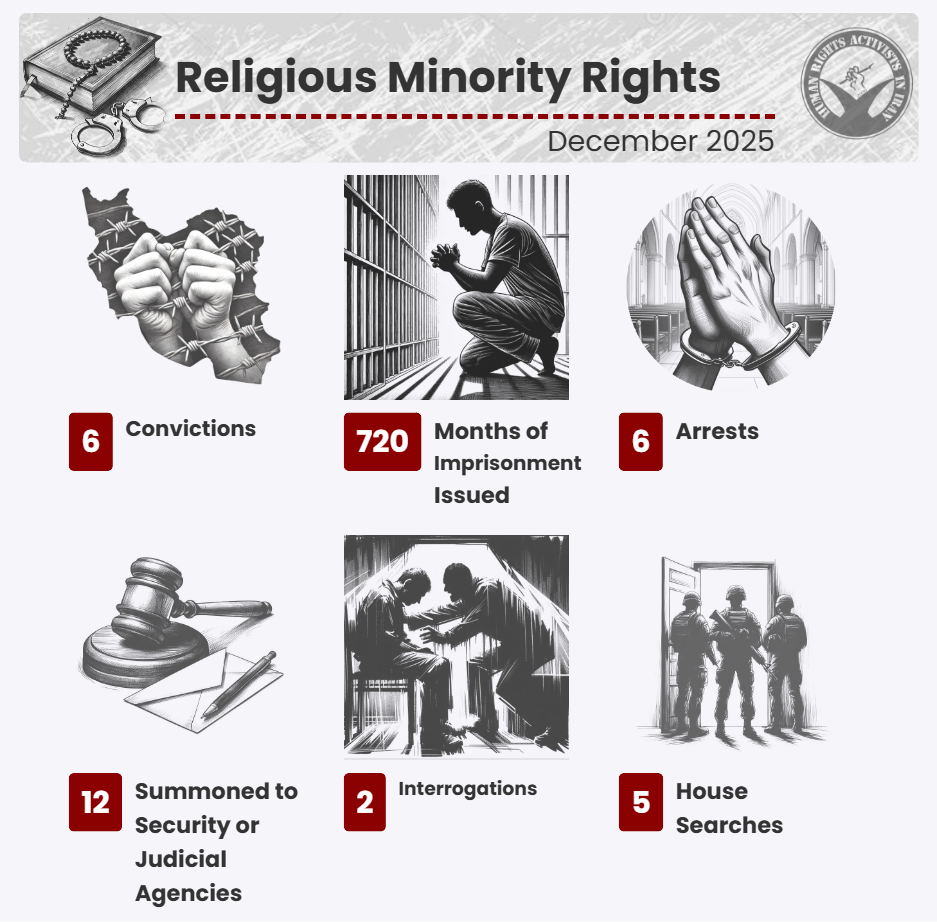
HRANA- This report provides a statistical summary of human rights violations in Iran. In December, Iran’s judiciary carried out 369 executions, breaking the execution record of recent years. The month also saw an increase in arrests related to the exercise of freedom of expression and belief, a rise in labor protests and strikes, and an increase in convictions against religious and ethnic minorities.
Executions
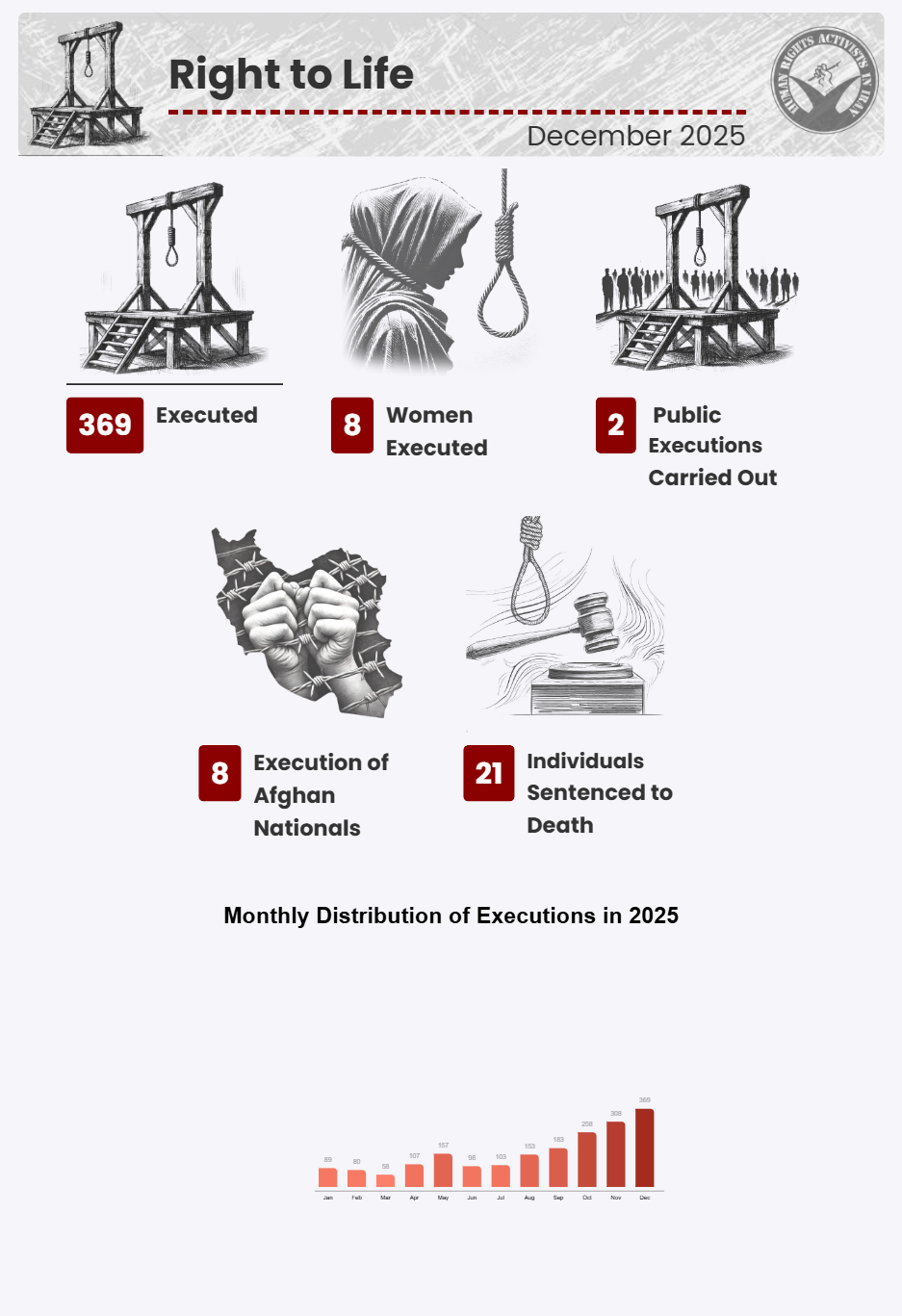
In December, Iran recorded the highest number of executions in 2025, with 369 people put to death. The number of executions began to rise steadily starting in July, reaching its peak in this month.
Among those executed, eight were women and eight were Afghan nationals. Many of these executions were never announced by prison authorities or reported by domestic media; as a result, the gender of 45 of those executed remains unknown. Two executions were carried out in public.
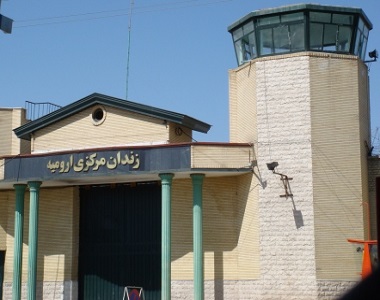
One of the most notable cases this month was the execution of Aghil Keshavarz, an architecture graduate, who was executed on espionage charges in Urmia Prison.
Of those executed, 229 individuals had been convicted of murder and 136 on charges related to drug offenses. Two people were executed on rape charges, one on espionage charges, and one for economic crimes.
During this month, courts issued 16 death sentences; among those sentenced, one was under the age of 18 and one was a woman. In addition, five death sentences were upheld by the Supreme Court. One of the most notable confirmations was the death sentence of Mehrab Abdollahzadeh, upheld by the Supreme Court. Abdollahzadeh had previously been tried by Branch Two of the Urmia Revolutionary Court on charges of “corruption on earth” through “complicity in the intentional killing” of a Basij member.
Freedom of Thought and Expression
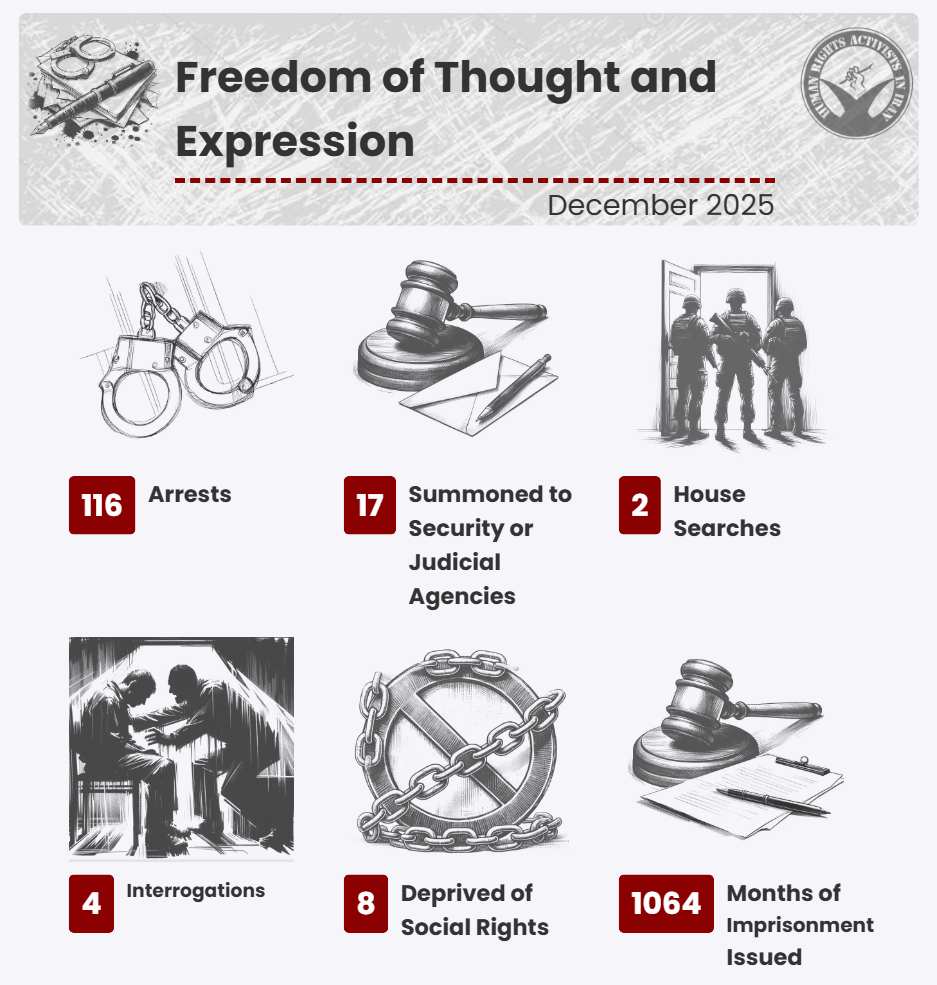
During this month, the regime’s security agencies arrested at least 116 individuals for expressing their views and opinions. According to reports, at least six of these arrests were carried out without arrest warrants. In the same context, nine individuals were summoned by security agencies, and eight others were summoned to court.
In addition, the homes of two individuals were searched, and 11 trials were held.
Iranian courts also sentenced 25 citizens this month, in a clear violation of freedom of expression, to a total of 1,064 months in prison. Alongside prison sentences, HRANA recorded 24 months of internal exile, four travel bans, eight cases of social deprivation, and fines totaling 333 million tomans.
Prisoners’ Rights
Regarding violations of prisoners’ rights, HRANA published 22 reports documenting the denial of adequate medical treatment, which resulted in the deaths of two prisoners. In one case, the lack of medical care for a prisoner convicted of non-political offenses in Mahabad Prison led to cardiac arrest and his death.
HRANA also reported 164 cases of legal limbo affecting detainees and prisoners, and 61 cases in which families of detainees were not informed of their situation. Additionally, 11 cases of transfer to solitary confinement, 18 cases of denial of access to legal counsel, 10 cases of prisoners being held in harsh conditions, and eight cases of denial of access to fresh air were recorded.
Furthermore, three cases of forced confessions and three cases of physical torture of prisoners were reported.
As a result of harsh prison conditions and violations of prisoners’ rights, HRANA reports indicate that five prisoners resorted to hunger strikes. One prisoner also died by suicide in Vakilabad Prison in Mashhad after consuming narcotics.
Kolbars and Fuel Carriers
Indiscriminate gunfire by military and law enforcement forces in December claimed the lives of seven civilians and left seven others injured. Among those killed were one kolbar and two fuel carriers. Additionally, two kolbars were wounded.
Kolbars are laborers who, particularly in Iran’s border regions, especially the west, carry goods on foot across the borders to earn a living. Fuel carriers, driven by poverty, transport limited amounts of fuel using personal vehicles for subsistence. Gunfire by military forces targeting kolbars or vehicles suspected of fuel smuggling, often without prior warning, kills or injures dozens of such individuals each year.
Workers’ Rights
In December, at least 97 labor protests and 33 labor strikes were recorded. During this month, five workers at the Middle East Sugar Factory in Shush were summoned and arrested by security agencies for participating in labor strikes and gatherings.
Workplace accidents during the month resulted in the deaths of 32 workers and injuries to 101 others.
HRANA’s reports for December also documented wage arrears affecting a total of 5,234 workers.
In addition, 115 guild/union gatherings and 14 strikes (prior to the outbreak of the nationwide bazaar strike) were held. HRANA also reported 25 cases of commercial premises being sealed. Two labor activists were arrested, five were summoned to court, and three were summoned by security agencies. Five labor activists were tried, and Mohammad Hassan Davoudi, a teachers’ union activist, was sentenced to 40 months in prison by the court of appeal on political charges. Courts also issued five rulings depriving individuals of social rights.
Women’s Rights
During this month, twelve women were killed, including one case reported by HRANA in which a woman was murdered by her son in Tehran for so-called “honor” reasons. Additionally, 36 cases of rape were reported.
HRANA also documented the sealing of 12 commercial establishments due to failure to comply with compulsory hijab regulations.
Children’s Rights
In December, HRANA recorded one case of child suicide and one case of sexual abuse. Two cases of violence and physical punishment against children were also documented, including the severe injury of a student as a result of punishment by a teacher in Baharestan County.
Additionally, one child death and 41 cases of child injury resulting from the negligence of responsible authorities were reported.
During this month, the death sentence of Dariush Atashafrouz, who had committed murder at the age of 17, was also upheld by the Supreme Court. The arrest of one minor was also reported.