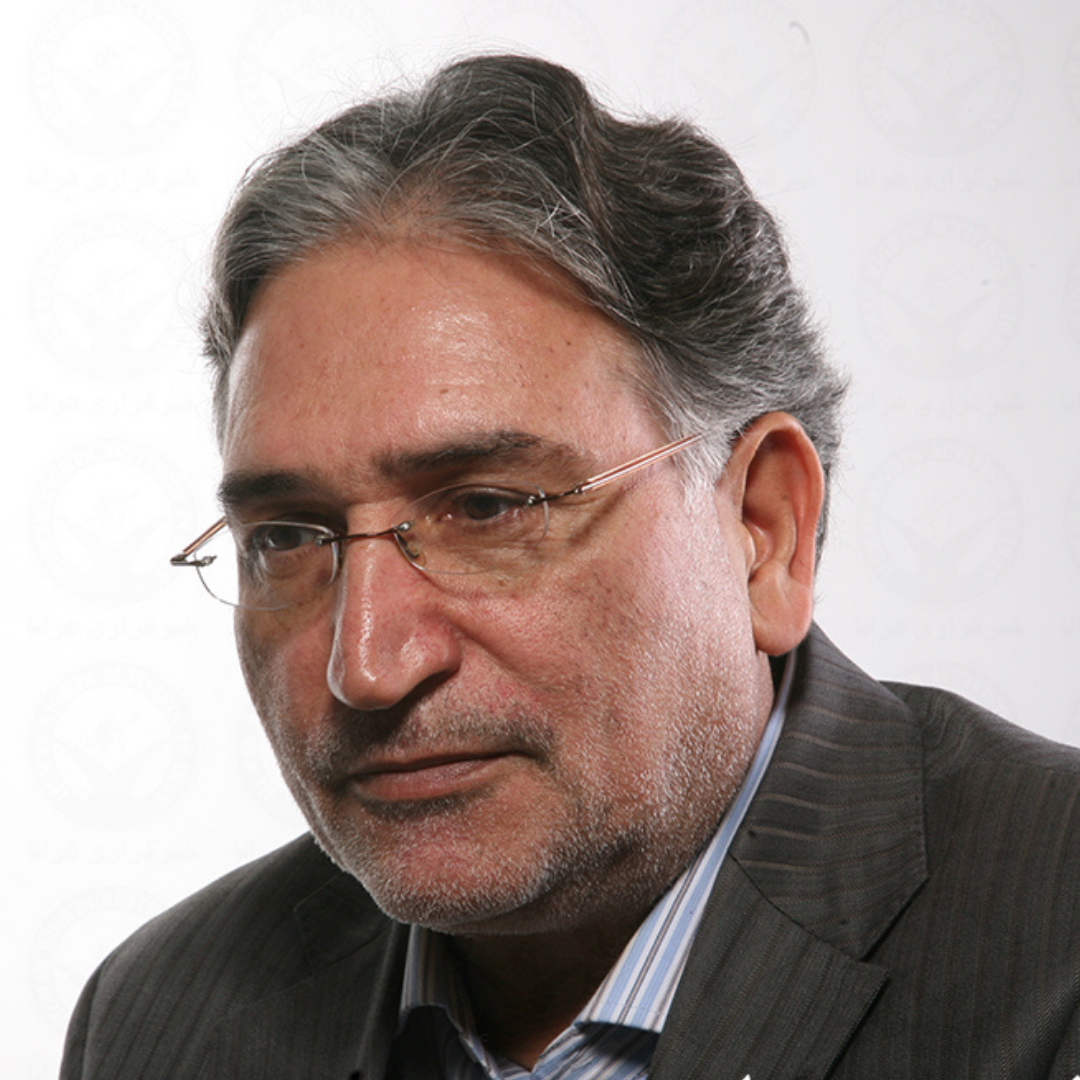
Seven prisoners are on hunger strikes in Urmia and Evin prisons

Evin Prison

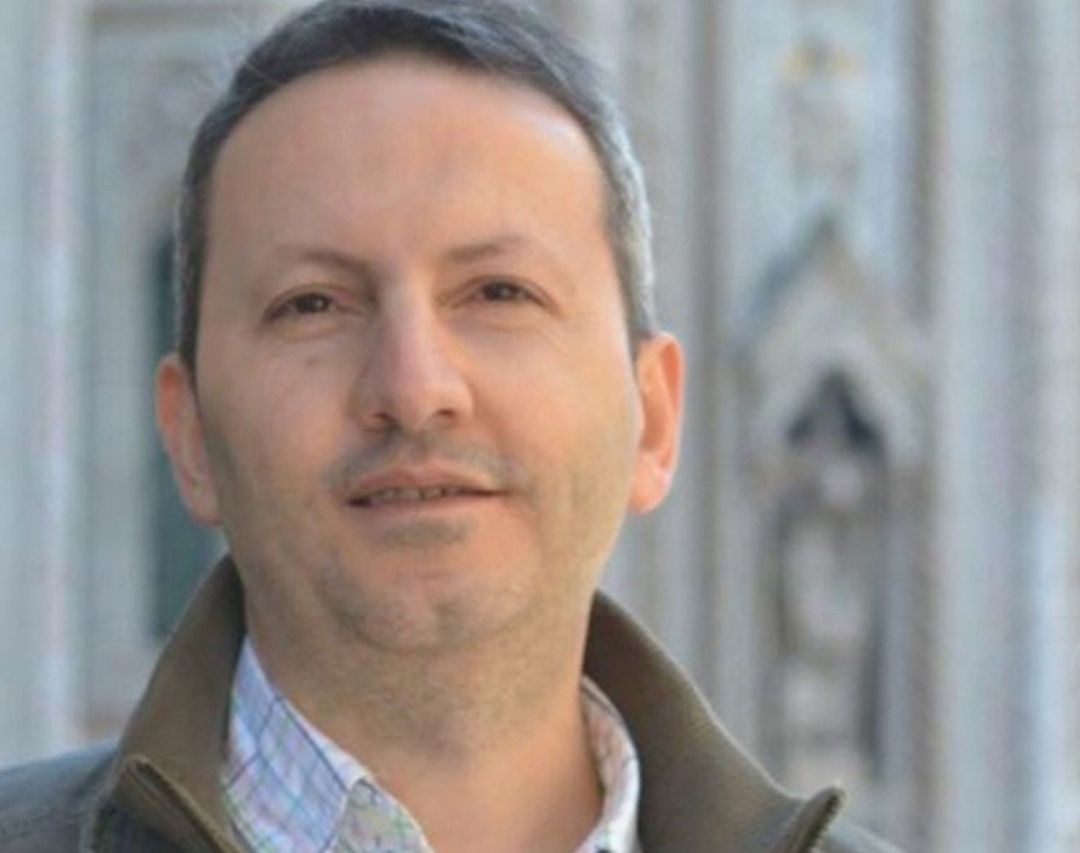
Amir Salar Davoudi, attorney detained in Evin Prison, has been on hunger strike from February 9, 2020, protesting not being granted a furlough. In a note published on February 12, 2020, Amir Salar Davoudi explained his motives to go on hunger strike protesting authorities who refused to grant him a furlough and added “I have been incarcerated for 15 months of which I spend 190 days in a solitary confinement cell but my request for a furlough has been denied. I am going on hunger strike to protest this decision. I hold the judicial authorities responsible.” He has been detained in Evin Prison since November 20, 2018. On June 1, 2018, he was sentenced by Branch 15 of the Revolutionary Court of Tehran to 30 years in prison of which the highest penalty is 15 years imprisonment for the charge of “establishing a channel in the Telegram app”. His other charges are “insulting officials”, “propaganda against the state”, “cooperating with enemy states through interviewing with Voice Of America (VOA) television channel”, and “forming a group to overthrow the state”.

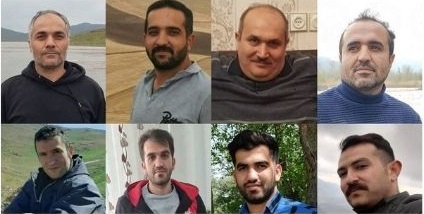
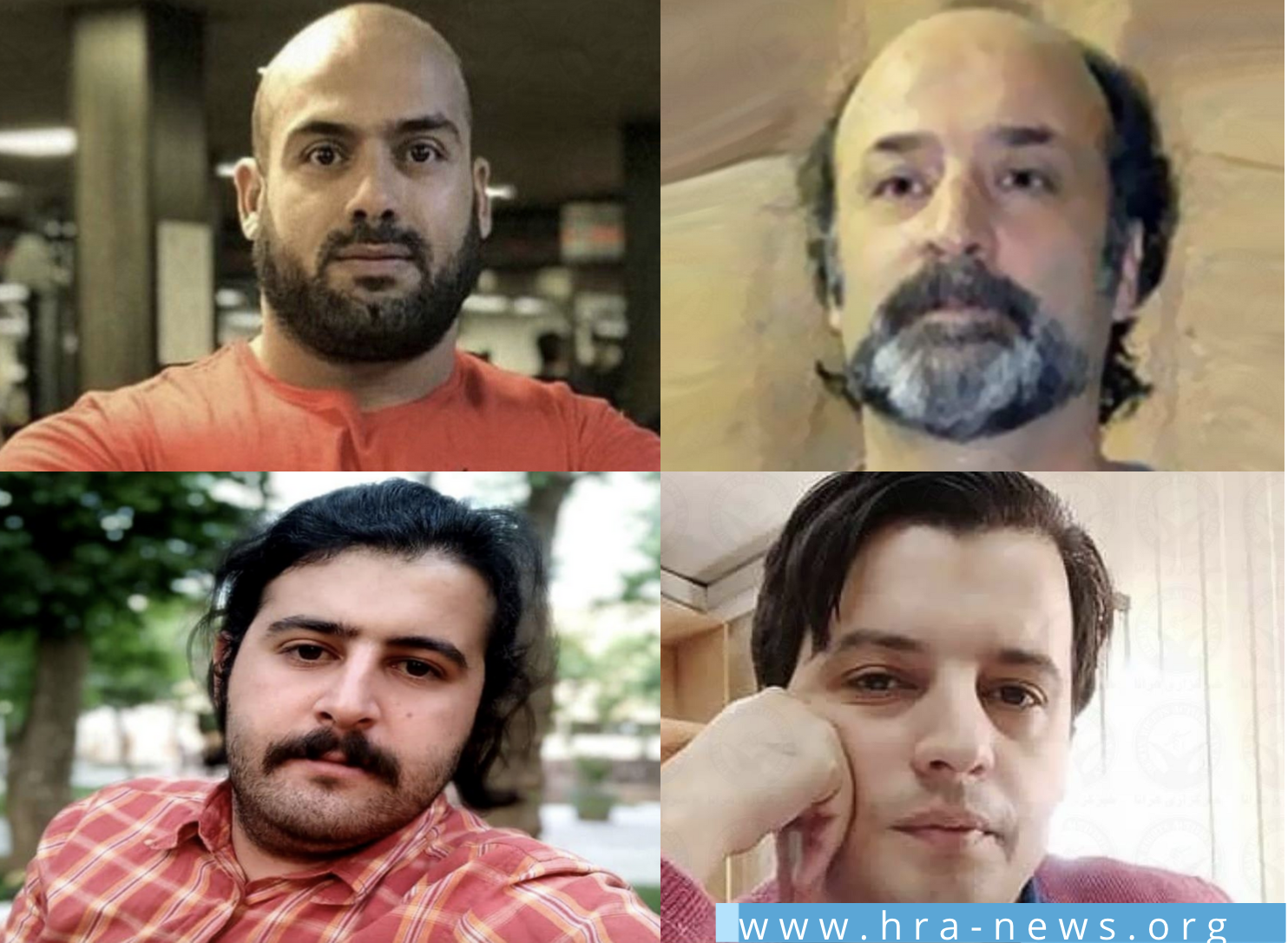
Four other political prisoners of Evin Prison, Barzan Mohammadi, Reza Mohammad Hosseini, Mehdi Meskinnavaz, and Khaled Pirzadeh have been on hunger strike from February 1, 2020, protesting denial of their request for parole, neglecting political prisoners requests, not conforming to the prison classification regulation, lengthy prosecutions, receiving unreasonable prison sentences, and finalizing the primary courts verdicts without an opportunity to appeal.

Barzan Mohammadi was arrested in August 2017 because of his activities on social media. He was sentenced to six years in prison for the charges of “assembly and collusion with an intention to disrupt the public order”, and “propaganda against the state” by the primary court. His appeal court was in session in March 2019 where his sentence was reduced to 3.5 years imprisonment

Reza Mohammad Hosseini’s was sentenced to 16.5 years imprisonment; he was sentenced to seven years imprisonment for the charge of “assembly and collusion”, three years imprisonment for the charge of “insulting the Supreme Leader”, three years imprisonment for the charge of “crossing the border unlawfully”, two years imprisonment for the charge of “unlawful entry to the country” and 1.5 years imprisonment for the charge of “disobeying the officers’ orders”. He was arrested in May 2019 by the IRGC intelligence officers and was taken to the IRGC’s detention center in Evin Prison. He was later transferred to the Ward 4 of Evin Prison. Reza Mohammad Hosseini was taken to the hospital on February 11, 2020, after experiencing asthenia. His situation is unknown after the transfer.

Khaled Pirzadeh was sentenced to five years imprisonment for the charge of “assembly and collusion”, and to two years imprisonment for the charge of “insulting the Supreme Leader”.

Mehdi Meskinnavaz tried at Branch 26 of the Revolutionary Court of Tehran in August 2019 and was sentenced to five years imprisonment for the charge of “assembly and collusion and propaganda against the state”. He was also exiled to Fahraj in Kerman Province and ban from membership in political parties and groups.


Urmia Prison

Siamak Ashrafi Ashgasou, a political prisoner of Urmia Prison, is on hunger strike from January 21, 2020, protesting the denial of his request to parole and his family being disrespectfully treated by the court employees. He was arrested in June 2016 by the security forces and was sentenced to five years imprisonment for the charge of “membership in an opposition group” and to eight months imprisonment for “draft evasion” by Branch 2 of the Revolutionary Court of Urmia. He requested parole after serving more than three years of his sentence.

Bashir Pirmawaneh has been on hunger strike from January 25, 2020, protesting his request for parole not being processed. He was arrested in March 2016 and was tried in April 2016 at Branch 2 of the Revolutionary Court of Urmia where he was sentenced to five years imprisonment for “membership in an opposition group”. The sentence was later reduced to four years. He has served more than a third of his sentence at the time of his request.

A Daily Overview of Human Rights Violations in Iran for January 31, 2019

The following is an overview of human rights violations in Iran on January 31st, 2019 based on the information compiled and verified by Human Rights Activists News Agency (HRANA).

(1) Arash Sadeghi, a detained civil rights activist, was deprived from medical care which health professionals have said he desperately requires. He is suffering from bone cancer and infection in a surgical wound on his arm. Also, he has an urgent need for chemotherapy.

(2) Of the one million phone calls the Emergency Social Services Hotline received last year, 21 thousand were regarding child abuse and domestic violence.

(3) Saba Kord-Afshar and Yasaman Aryani, political prisoners, wrote an open letter reacting to a newspaper article that described the political prisoners’ conditions ‘favorable’, giving an overview of the hardship they face in the Evin’s women’s ward.

(4) The director of the Department of Environment of Tabas announced that two poachers were arrested in Tabas city along with a carcass of a chinkara.

(5) Parvin Mohammadi, a labor activist and the vice-president of the Free Union of Workers in Iran, was transferred to the Kachoui prison in Karaj to serve her one-month detention. She was arrested on January 29.

(6) Mohammad Ali Zahmatkesh, a teacher’s rights activist in Shiraz, was sentenced to two years imprisonment and one year of exile. His accusations are  “propaganda against the state” and “insulting the Founder of the Islamic Republic”.

(7) Shahin Barzegar, an Azerbaijani Turkic minority rights activist, began his three-months imprisonment sentence in the Tabriz prison. His charge was attending the funeral ceremony of a former prisoner, Hasan Damirchi.

(8) Soroush Agahi, a Baha’i prisoner of the Evin prison, was released on bail. He and Neda Shabani, another Baha’i citizen, have been arrested in Karaj on November 28, 2018.

(9) Amnesty International requested the release of Iranian labor activists Esmail Bakhshi and Sepideh Gholian who spoke out about abuse and torture they suffered in detention. They have been rearrested and are at risk of severe torture.

(10) A prisoner was executed in Nowshahr and a 24-year old was sentenced to death in Birjand. A prisoner who was accused of murder, was spared from hanging on gallows by consent of next of kin in Karun after 12-year in prison.

(11) A member of Iranian Parliament representing Nishabur, Hajar Chenarani, confirmed that 200 workers of Khorasan Exhaust Manufacturing Company have been laid off.

(12) A 66-year old Christian converted, Esmail Maghrebi-Nejad, was arrested by security forces in Shiraz on January 15 and his whereabouts is still unknown. His home was raided, and his belongings confiscated.

(13) Saeed Sadeghifar ,an Azerbaijani Turkic minority rights activist, was released on bail. The security forces on Tuesday, arrested him in Ardabil. His court was on January 24, on the charge of “establishing illegal groups with the intention to disturbing national security”.

A Daily Overview of Human Rights Violations in Iran for January 23, 2019

The following is an overview of human rights violations in Iran on January 23rd, 2019 based on the information compiled and verified by Human Rights Activists News Agency (HRANA).

(1) At least six protests were organized across the country on January 23, 2019. The municipality workers in Marivan, Borujerd, and Shadegan, the retired employees in Tehran, costumers of Kerman Motors in Tehran, and the families of victims’ of Sanchi oil tanker collision have held separate protests to request their redemands.

(2) The authorities of Evin prison refused to transfer Narges Mohammadi and Nazanin Zaghari Ratcliffe to a hospital. Mohammadi is in urgent need of medical care such as anti-seizure drugs.

(3) Esmat Salahshour was sentenced to five years imprisonment in Urmia, on the charge of “cooperation with a Kurdish opposition group”. Mokhtar Zarei has been tried in absentia and was sentenced to three years in prison. He is accused of “insulting the Supreme Leader” and “propaganda against the state”.

(4) Yashar Soltani, director of Memari News website, was sentenced to five years in prison, and was banned for two years form traveling, membership in any social or political group, and internet activism. He was arrested in 2016 after he reported on alleged corruption in Tehran’s municipal government.

(5) Majid Hosseini was released on bail today. He was transferred from solitary confinement to the quarantine ward of Evin prison recently. Arsham rezaei who was arrested with him, is still in prison. He was arrested with Arsham Rezaei on the charges of “insulting the Supreme Leader” and “collusion against the state”.

(6) Iraj Mohammadi was released on bail after ten days, in Miandoab. He was accused of “propaganda against the state” because a former political prisoner transferred the amount of money into Mohammadi’s bank account.

(7) Leila Mir-Ghaffari was sentenced to paying fines for de-veiling. In October she was sentenced to two-year in prison for having pointed to a picture on the wall. Mir-Ghaffari was initially detained for supporting the “Girls of Enghelab Street.”

(8) Rahman Jasbi Zargani who was married and had two children, was executed in Sepidar prison in Ahvaz on the charge of murder. He was accused of murdering his cousin in a fight in 2009. In 2018, at least 236 people have been executed and 195 people have been sentenced to death in Iran.

(9) Sepideh Gholian was detained in the Intelligence Ministry’s detention center in Ahvaz but Esmail Bakhshi ‘s whereabouts is still unknown. They have been rearrested after the broadcast of their under-torture confessions on the national television. Their families have been under pressure from security forces not to discuss the matter publicly. Moreover, Amnesty International warns that they are at grave risk of further torture.

(10) Saeed Shirzad, a political prisoner in Rajaee Shahr prison in Karaj, has been refused urgent medical care despite doctors requested his transfer to hospital for his severe kidneys’ failure a month ago. While the prosecutor’s office has assured that he would receive treatment a month ago, prison authorities have prevented this transfer.

(11) Two workers died and one was injured in Charmshahr village in Tehran province because of negligence in the oversight of safety conditions in their workplace. Iran ranked 102 in the workplace safety among other countries.

(12) Four female prisoners including a juvenile offender, accused of murder were spared from hanging on gallows by consent of next of kin in Shahr-e Rey prison. In addition, Sohrab Nosrati was saved from execution in Rajaee shahr prison in Karaj.

(13) Two thousand workers of Abadan municipality have unpaid wages. The workers of Ghoflkar Company in Qazvin have held a protest to request their unpaid wages on Tuesday.

(14) Ahwazi Arab citizens, Hassan Alvani, Malek Abdollahi, and Gheis Chaian have been arrested by security forces in Ahvaz and Shush. Their whereabouts are still unknown.

(15) Tehran appeals court sentenced Christian converted ,Majid Reza Souzanchi Kashani, to two-year prison term. He was charged with “membership in evangelical groups” and “evangelical-related activities”.

(16) The arrest of 11 poachers in Sarab and 160 illegal tree removals in Bandar Abbas have been reported by the Department of Enviroment.

A Daily Overview of Human Rights Violations in Iran for January 11, 2019

The following is an overview of human rights violations in Iran on January 11th, 2019 based on the information compiled and verified by Human Rights Activists News Agency (HRANA).

(1) Tohid Ghoreishi was transferred to Evin prison after an attack to Sunni prisoners’ ward in Rajai-shahr prison by the Special Forces. He is facing new accusations while serving the last months of his seven years sentence.

(2) Esmail Bakhshi ‘s lawyer confirmed that none of the Iranian authorities have reached out to him regarding his complaint. He wrote a letter explaining his torture in prison and called on the Minister of Intelligence for a debate concerning torture and abuse in prisons.

(3) In a bus rollover in Assaluyeh on Thursday, 13 workers of Bushehr Petrochemical Company were injured.

(4) Nasrollah Lashani a political prisoner, ended his hunger strike. He was on hunger strike since January 7, 2019, protesting mistreatment by the prison officials and being banned from having visitors. Lashani is a Nationalist-Religious Activist who was accused of ‘propaganda against the state’ and was sentenced to six years in prison. He was beaten and insulted in front of his wife and his 8-years-old son during a family visit on December 26, 2018.

(5) Expulsion of Shayan Manavi, a Baha’i Civil Engineering student from Azad University of Qods due to his faith. Baha’i students in Iran routinely experience denial of entrance to university or expulsion during their studies.

(6) The parliament authorities have shown concern about Zahra Navidpour ‘s death. She accused a member of parliament for repeatedly raping her. She reported that there were several women who had been raped by Salman Khodadadi but did not file a complaint, fearing their lives.

(7) Mostafa Mostafavi, a Sunni prisoner, had been held for 27 days in a solitary confinement of the intelligence office before he was transferred to Urmia prison. He is accused of ‘cooperation with Kurdish opposition groups’.

(8) A prisoner who was sentenced to death on the charge of murder, was saved from the gallows by the intercession of Imam of Friday prayers and forgiveness of the next of kin in Andimeshk after six years.

(9) A manager of a clothing retailer was arrested and her business was closed down in Astaneh-ye Ashrafiyeh in Gilan province because of advertising in social media. In October, several photographers were arrested in Shiraz because of ‘inappropriate content’ in their Instagram account.

(10) Several customers of the Iranian automobile manufacturers in protest to the company’s false promises to deliver their purchased car and fulfilling their demands, have been protesting for three consecutive days in the international auto fair in Tehran.

(11) Nour Mohammad Shimvaari, a prisoner of Zahedan prison, was severely beaten and injured by prison wardens. His wrist was fractured, and he was denied medical care.

A Daily Overview of Human Rights Violations in Iran for January 4, 2019

The following is an overview of human rights violations in Iran on January 4th, 2019 based on the information compiled and verified by Human Rights Activists News Agency (HRANA).

(1) Golrokh Iraee, a civil rights activist and Evin prisoner of conscience, has written an open letter to protest human rights violations in Iran. According to Hrana, Golrokh Iraee was arrested along with her husband on September 6, 2014. She spent 20 days in a solitary confinement in Evin prison before being released on a bail of 800 million rials [approximately $19,000]. On October 24, 2016, she was arrested again without a warrant. She was sentenced to six years in prison for blasphemy and “gathering and collusion against the regime.” She was later granted amnesty per Article 134 of Islamic Penal Code, which reduced her prison term to 2.5 years. Iraee’s husband Arash Sadeghi is serving a 19-year sentence in Karaj’s Rajai Shahr Prison.

(2) Esmail Bakhshi, a detained trade unionist who has been released on bail, has written an open letter to protest physical and mental abuse, interrogation, and tortures in prison. He invited the minister of intelligence, Mahmoud Alavi, to a debate. He is a workers’ representative of Haft Tappeh Sugarcane Mill and has been released on bail on December 12. He was detained for 40 days in prison.

(3) A young Kurdish Kulbar (border courier), Yaghoub Kamyan Niksirat, was shot and killed by a border patrol agent shooting in Urmia.

(4) Mohammadreza Nematipour, a worker of Iran National Steel Industrial Group (INSIG) was arrested and transferred to Sheiban prison in Ahvaz on January 2nd. At least 8 workers of INSIG are still in prison.

(5) Two Arab citizens were arrested in Ahvaz on January 2nd. Khalil Khasarji and Hashem Afari’s whereabouts are still unknown.

(6) Two construction workers were killed and injured by avalanche at Shemshak-Dizin road because of negligence in the oversight of safety conditions.

(7) A member of parliament, Amir Khojasteh, announced that four people who were involved in a high-profile corruption case, were sentenced to death. He added that 31 people have been charged with bribery, fraud, and embezzlement in this case and he has been requested public execution in Tehran Azadi square for all of them.

(8) Farmers of Varzaneh in Isfahan province have protested for 13 consecutive days regarding their water right. Water scarcity is one of the greatest challenges in Iran.

Subscribe to Our Newsletter

Now is definitely not the time to stop reading!

A Daily Overview of Human Rights Violations in Iran for December 6, 2018

The following is an overview of human rights violations in Iran on December 6th, 2018 based on the information compiled and verified by Human Rights Activists News Agency (HRANA).

Continue reading “A Daily Overview of Human Rights Violations in Iran for December 6, 2018”

A Daily Overview of Human Rights Violations in Iran for December 5, 2018

The following is an overview of human rights violations in Iran on December 5th, 2018 based on the information compiled and verified by Human Rights Activists News Agency (HRANA). Continue reading “A Daily Overview of Human Rights Violations in Iran for December 5, 2018”

CCTSI Rallies Teachers into Second Round of Strikes

Human Rights Activists News Agency (HRANA)- The Coordinating Council of Teacher Syndicates in Iran (CCTSI) rallied educators across the country into a second round of general strikes November 13th, mobilizing in protest of the “Full-Time Teacher” bill, which continues to move forward despite significant pushback.

Strike activity was reported in several provinces, as teacher-activists and their allies staged sit-ins in the principal’s offices of their respective schools. “The goal of the sit-in,” a CCTSI statement read, “is to oblige our rulers to uphold the constitution by providing free, quality, and accessible education to students, and to stop their attack on the livelihood of teachers.”

CCTSI and their sympathizers voiced similar demands during a first round of strikes in October of this year.

Teachers made their demands known on handheld placards protesting low teacher salaries, environmental conditions unsuitable for learning, the Full-Time Teacher Bill, class discrimination in the education system, privatization, language discrimination, and the continued persecution of teacher-activists.

From Evin Prison, Vice President of the Centre for Human Rights Defenders Narges Mohammadi sent a message in support of the strikers:

“The children of this land learn “D E C E N C Y” from their teachers, and a teacher’s [decency] manifests in free expression and conscience.

The children of this land learn “P E A C E” and “F U L F I L L M E N T” from their teachers, and their teachers’ fulfillment lies in a humane, dignified life.

We support the teachers’ general strike of November 13 and 14, to free the fettered “T E A C H E R,” to elevate the teacher’s status, and preserve the right to peaceful protest.

Narges Mohammadi”

Open Letter: Golrokh Iraee Champions the Healthcare Rights of her Ailing Husband

Human Rights Activists News Agency (HRANA)- Civil rights activist and Evin prisoner of conscience Golrokh Ebrahimi Iraee has written an open letter to protest the IRGC’s continued medical blockade on her husband, Arash Sadeghi, who has been effectively deprived of chemotherapy since undergoing surgery for chondrosarcoma on September 12th.

The full text of Iraee’s letter, translated into English by HRANA, is below:

Authorities have offered no explanation for blocking visits and phone calls between me and my husband Arash Sadeghi. Since December 2017, the only contact we’ve had is a two-hour visit. And that was five months ago.

I have heard many reports that Arash is faltering in his battle with cancer. Only two days after undergoing surgery for his condition, he was harried out of the hospital against medical advice by the Sarallah IRGC [based in Tehran and responsible for securing the capital city]. Mal-equipped to counter the progression of Arash’s disease, the Rajai Shahr Prison clinic abdicated responsibility for his post-surgery care. Despite an infection to his surgery site, authorities have denied his request to be transferred to a hospital.

Specialists have stressed that the next stages of Arash’s treatment will require chemotherapy, and the state physicians in Gohardasht (Rajai Shahr) prison have asserted their inability to administer or monitor this treatment. No action has been taken to hospitalize him so that his chemo can begin.

Arash has been detained multiple times. He lost his mother to a raid by regime agents. He was denied the right to continue his studies and has been stripped of his civil rights. Finally, he was sentenced to 19 years in prison without any proof or evidence [of a crime]. Now he faces the rancor and spite of the Sarallah IRGC.

Arash is being denied medical care, one of the most basic rights promised to prisoners in the laws of the Islamic Republic.

Throughout our prison terms, we never asked to be spared their spite, but this time Arash’s life is at stake. My worst fear has come true, and we are well past the tipping point; I don’t know to what extent Arash’s health can be restored.

In the present circumstances, laws that profess to protect prisoners are unveiled as masks of humanity, a farce for the international stage. Despotism can no longer contain the true motive of these laws, which rulers make no effort whatsoever to enforce.

We cannot expect humanity from those who have already proven devoid of it. What matters is the fleeting sands of time, the dissipating moment, the joy that seems a more distant dream each day.

I am certain that with each display of callousness towards his health, Arash will be all the more emboldened. He will do as he has done with every other injustice, coercion, and anguish: he will overcome.

I thank every friend and organization standing shoulder to shoulder with us, and am grateful for the dear comrades who have stood by Arash in Gohardasht. May conscience break dawn on the dark night of ignorance.

Golrokh Iraee
Evin Prison
November 12, 2018

____________________________________________________________________________________

Golrokh Iraee was arrested along with her husband on September 6, 2014. First held at an IRGC safe house for two days, she then spent 20 days in the solitary cells of Evin’s Section 2A, under IRGC jurisdiction, before being released on a bail of 800 million rials [approximately $19,000 USD].

On October 24, 2016, the IRGC arrested Iraee again without a warrant. She was sentenced to six years in prison for blasphemy and “gathering and collusion against the regime.” She was later granted amnesty per Article 134 of Islamic Penal Code, which reduced her prison term to 2.5 years.

Iraee’s husband Arash Sadeghi is serving a 19-year sentence in Karaj’s Rajai Shahr Prison.

Impromptu Exile Transfer Prompts Abdolreza Ghanbari to Hunger Strike

Human Rights Activist News Agency (HRANA) – Teacher and political prisoner Abdolreza Ghanbari, who on October 13th of this year was taken to Evin Prison’s Ward 8 to serve the remainder of a once-dormant sentence, has reportedly declared hunger strike following his November 10th transfer to the Quarantine Ward of Rajai Shahr Prison.

Confirming news of Ghanbari’s current hunger strike to HRANA, a close source added that his most recent sentence made no mention of an exile order.

Ghanbari’s judicial ordeal has been rife with major upsets, as previously reported by HRANA. After being arrested at the school where he taught in 2009 for backing the “Ashura” protests tailing that year’s contentious presidential elections, he was interrogated for two months and found himself facing a death sentence: Judge Salavati of Revolutionary Court Branch 15, convicting Ghanbari of “Moharebeh” [enmity against God]” through alleged ties to the opposition group People’s Mujahedin of Iran (MEK), ruled to send him to the gallows.

Four suspenseful years later, the Supreme Court acquitted Ghanbari of the Moharebeh charge, effectively sparing his life. Branch 1 of Revolutionary Court settled his remaining charges with a 15-year prison sentence, which was later reduced to 10 years in appeals court.

After enduring more than 6 years of his 10-year prison term, he went free in the Spring of 2016 — only to be re-sentenced the following Fall to 15 years in prison, per reconsideration proceedings led by Judge Moghiseh in Branch 28 of Revolutionary Court.

Ghanbari is currently detained in Rajai Shahr.