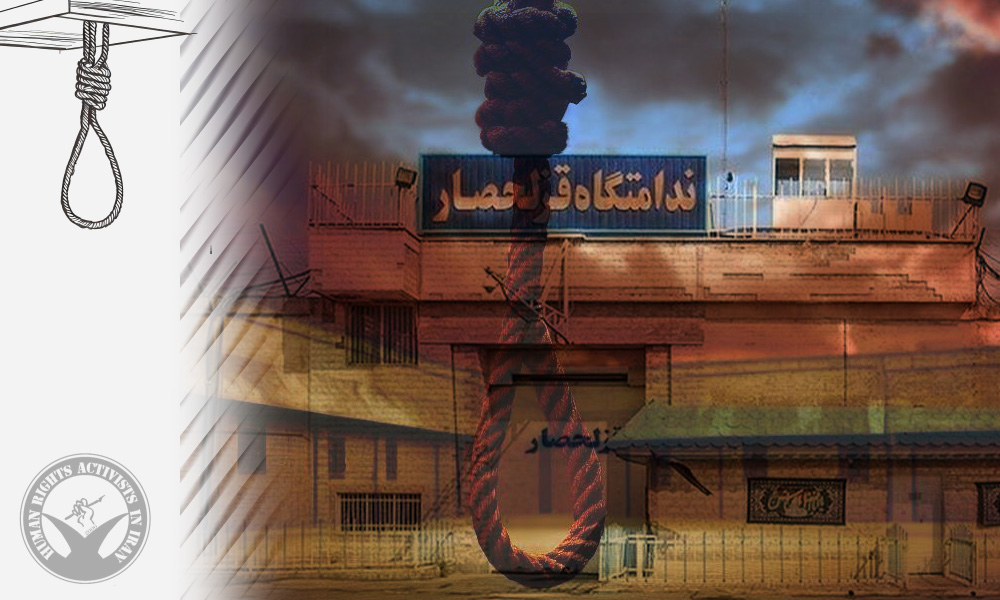
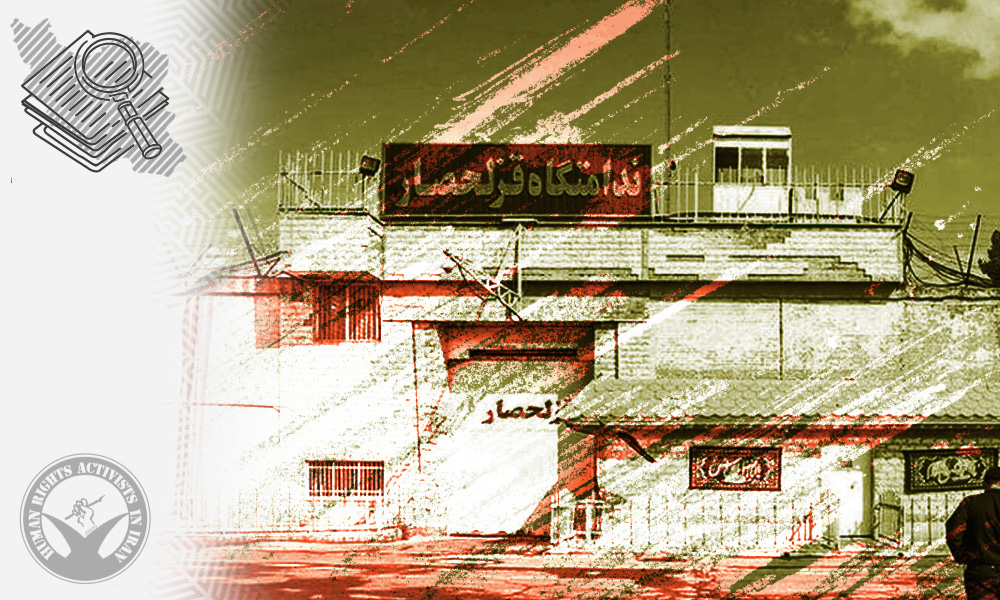
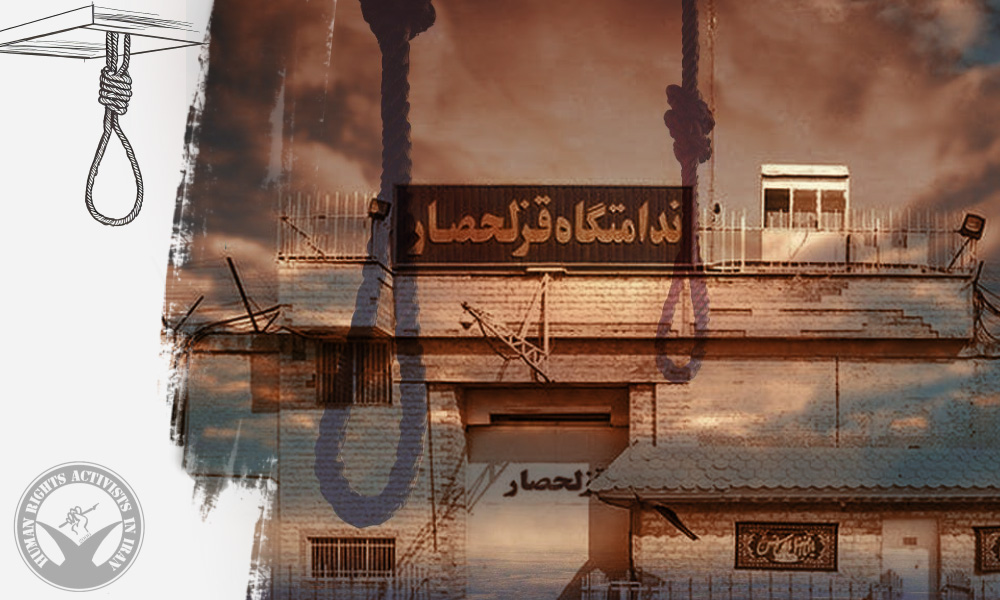
Political Prisoner Afshin Baymani Transferred from Ghezel Hesar Prison to Hospital

Afshin Baymani, a political prisoner held in Ghezel Hesar Prison in Karaj, was transferred to a hospital outside the prison yesterday, August 28, following a deterioration in his health and symptoms of a heart attack.

This political prisoner, serving a life sentence and suffering from coronary artery disease, has long been deprived of adequate medical services and access to specialized treatment centers due to obstruction by prison authorities. Ultimately, last evening, he was transferred to a hospital outside the prison after showing symptoms of a heart attack.

On July 28, 2024, Mr. Baymani fainted and fell in prison due to a severe drop in blood pressure. He suffered a head injury and bleeding after hitting a wall. After examining him, the prison nurse emphasized the necessity of transferring him to a hospital for an angiography procedure. Mr. Baymani requested medical leave to receive treatment under the care of his specialist doctor, but his request was denied by prison authorities as before.
Previously, on January 29, 2024, Baymani was transferred to Rajai Shahr Hospital in Karaj due to poor physical condition but was returned to prison the next day without receiving specialized medical care. At the hospital, only a few tests, including an echocardiogram and a stress test, were conducted, and heart and blood pressure medications were prescribed. He had previously been granted medical leave for open-heart surgery, but was arrested in Isfahan and returned to prison.

Also in November 2023, this political prisoner was granted medical leave from Ghezel Hesar Prison for treatment and medical care after posting bail. However, on December 21 of the same year, he was re-arrested for unknown reasons and transferred to Asadabad Prison in Isfahan. He was eventually transferred back to Ghezel Hesar Prison in January of 2024.

Baymani, father of two children, was arrested in September 2000 and was sentenced to death by the Tehran Revolutionary Court on charges of “enmity against God (moharebeh).” This sentence was later reduced to life imprisonment after six years. Since then, he has been serving his sentence in various prisons.

Afshin Baymani has been suffering from coronary artery disease since July 2017. In July 2021, he underwent heart angioplasty surgery at Amirabad Hospital in Tehran.

The denial of adequate medical treatment for political prisoners in Iran constitutes a form of torture and a grave violation of human rights. This systematic and deliberate deprivation is often employed as a tool for political repression, aiming to intimidate and silence dissent. In numerous instances, prison authorities not only withhold essential medical care but also obstruct the transfer of critically ill prisoners to specialized hospitals, further endangering their lives.

Attorney Mehdi Shakibafar Sent to Saveh Prison to Serve His Sentence

Today, August 26, 2024, Mehdi Shakibafar, an attorney, was sent to Saveh Prison to serve his sentence.

Shakibafar announced that he was leaving his mother’s home in Karaj on his birthday to report to the Enforcement of Judgments Office in Saveh to begin serving his prison term.

Previously, Shakibafar was sentenced by Branch 9 of the Court of Appeals in Markazi Province to 15 months and one day in prison for “insulting the Supreme Leader,” seven months and 16 days for “propaganda against the regime,” and one year for “spreading falsehoods,” 11 months of which was suspended for five years. Additionally, he was sentenced to 21 months of disqualification from practicing law as supplementary punishment.

Initially, Shakibafar was acquitted of the charges in the preliminary court. However, following an appeal by the prosecutor, who argued that “his acquittal would embolden him further,” the case was re-examined.

Singer Behrad Ali Kanari Sent to Prison to Serve His Sentence

Behrad Ali Kanari, arrested during the nationwide protests of 2022, has been jailed in Qom Prison.on Saturday, August 24, 2024, to start serving a six-month prison term.

In a video message, Mr. Ali Kanari announced that he was recently sentenced to six months in prison by the judiciary on charges of “propaganda against the regime through cooperation with anti-regime media.” On Saturday, August 24, 2024, he was sent to Qom Prison to serve his sentence.
Kanari was arrested by security forces on May 13 of this year and was released shortly afterward on bail.
Behrad Ali Kanari, a singer, was among those arrested during the 2022 nationwide protests in the case known as the “murder of Basij member Ruhollah Ajamian.” He was released from the Central Prison of Karaj in April of 2023, following the issuance of a “pardon” directive.

Criminal Court Sentences Mashallah Karami to Over 8 Years in Prison and Other Penalties

Mashallah Karami, the father of Mohammad Mehdi Karami, an executed protester, has been sentenced by the Criminal Court of Nazarabad County, Alborz province, to eight years and ten months in prison, a fine, and the confiscation of his assets.

According to the ruling recently issued by Branch 102 of the Criminal Court Branch 2 of Nazarabad County and conveyed to this citizen currently imprisoned in Karaj Central Prison, he was sentenced to eight years and ten months in prison, a fine of 1.9 billion tomans (approximately 28000 dollars), and the confiscation of his assets on charges of “money laundering and acquiring illicit property.”

Earlier, in another part of his case, Mr. Karami was sentenced by the Revolutionary Court to five years in prison on the charge of “assembly and collusion to commit a crime against national security” and one year in prison on the charge of “propaganda against the regime.”

Ali Sharifzadeh, Karami’s attorney, previously stated that the security charges brought against his client are inconsistent with his actions. He added, “Mr. Karami only distributed free food, the funds for which were provided through public donations. This information was presented to the court but was not properly considered. Additionally, my client’s assets have no connection to the security charges against Mr. Karami.”

In March of 2024, Sharifzadeh Ardakani, Mr. Karami’s lawyer, stated that his client’s indictment included four charges: under Article 500 (propaganda against the regime) and Article 610 (assembly and collusion to commit a crime against national security) in the Revolutionary Court of Karaj, as well as charges under Article 2 of the Aggravated Punishment Law (acquiring illicit property) and Article 9 of the Anti-Money Laundering Law in the Criminal Court Branch 2 of Nazarabad County.

Karami was arrested by security forces on August 22, 2023. At the time of his arrest, security forces confiscated all electronic devices and froze the family’s bank accounts.

On October 28th of 2023, Mr. Karami was transferred from The Ministry of Intelligence’s detention facility to the Central Prison of Karaj. After three months in solitary confinement, he was eventually moved to Ward 15 of this prison.

It should be noted that at dawn on Saturday, January 7, 2023, the death sentence of Mohammad Mehdi Karami, who had been arrested during the nationwide protests in the case known as the “killing of Basij member Rouhollah Ajamian,” was carried out.

Mojgan Kavousi Sentenced to One Year in Prison

Mojgan Kavousi, a former political prisoner, has been sentenced to one year in prison by Branch 2 of the Sari Revolutionary Court after her request for retrial was accepted by the Supreme Court.

According to HRANA, the news agency of the Human Rights Activists in Iran, Mojgan Kavousi has been sentenced to imprisonment.

Maziar Tataei, Ms. Kavousi’s defense attorney, announced on his personal page: “Following the acceptance of the retrial by Branch 39 of the Supreme Court, the sentence of my client, Ms. Mojgan Kavousi, which was originally 61 months, has been reduced to 12 months by Branch 2 of the Sari Revolutionary Court.”

On July 30, Kavousi’s request for retrial was accepted by the Supreme Court, and her case was referred to an equivalent branch for reconsideration.

In December 2022, Kavousi was sentenced by Branch 1 of the Sari Revolutionary Court to eight months in prison for “propaganda activities against the regime,” 18 months for “insulting the Supreme Leader,” and 39 months for “assembly and collusion against national security.”

In December 2023, she was sent to Tonekabon Prison to serve her sentence. In late June this year, her prison sentence was converted to a suspended sentence, and she was released from Tonekabon Prison.

Kavousi has previously been arrested and imprisoned for her activism. She was arrested during the November 2019 protests and was sentenced to imprisonment. She was eventually released from Kachooie Prison in Karaj in January 2022 after serving 20 months.

Subscribe to Our Newsletter

Now is definitely not the time to stop reading!

Two Prisoners Executed in Karaj and Gorgan

At dawn on Wednesday, August 14, the execution of two prisoners, previously sentenced to death on charges related to drug offenses and murder, was carried out in Gorgan Prison and the Central Prison of Karaj.

According to Iran Human Rights Organization, Elias Rezaie, approximately 40 years old was executed in Gorgan Prison. This prisoner had been previously arrested on drug-related charges and subsequently sentenced to death by the judiciary.

Additionally, on that day, the execution of another prisoner identified as Naser Shafiee, 37 years old, from Takab and residing in Tehran, was carried out in the Central Prison of Karaj. This prisoner had been arrested about four years ago on charges of murdering his wife and was subsequently sentenced to death.

As of the time of this report, the executions of these prisoners have not been officially announced by prison authorities or relevant institutions. In 2023, 66% of HRANA’s reports on executions lacked official announcements by judicial authorities and went unreported by media inside Iran, highlighting a troubling lack of transparency in due process.

According to the Department of Statistics and Publication of Human Rights Activists in Iran, in 2023, at least 767 citizens, including 21 women and 2 juvenile offenders, were executed. Of these, the executions of 7 individuals were carried out in public. Additionally, during this period, 172 others were sentenced to death, with 5 of them sentenced to public execution. It is worth noting that during the same period, the initial death sentences of 49 other individuals were also upheld by the Supreme Court.

Three Prisoners Executed in Ghezel Hesar Prison, Karaj

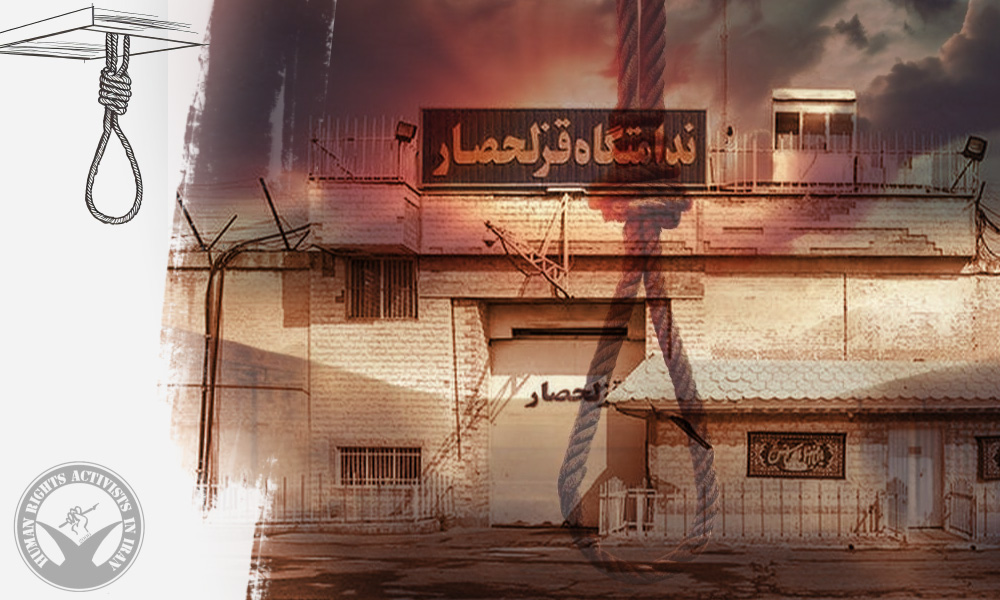
On August 14, 2024, the death sentences of three prisoners, convicted of drug-related charges, were carried out in Ghezel Hesar Prison, Karaj.

HRANA has identified two of the executed prisoners as Behrouz Vafaie and Ali Niazi. The third prisoner, whose identity has not yet been confirmed, was a Afghan national.

These prisoners had been arrested on drug-related charges and were later sentenced to death by the judiciary. They were transferred to solitary confinement on Monday in preparation for their executions.

As of the time this report was compiled, the executions have not been officially announced by prison authorities or relevant institutions.

According to data gathered by the Department of Statistics and Publication of Human Rights Activists, Ghezel Hesar Prison in Karaj witnessed the highest number of executions in 2023, with Zahedan Prison following closely behind. For a comprehensive examination of the details and statistics surrounding the executions in Iran, refer to HRANA’s report.

Three Prisoners Transferred to Solitary Confinement for Execution in Ghezel Hesar Prison, Karaj

On Monday, August 12, three prisoners in Ghezel Hesar Prison, Karaj, who had previously been sentenced to death on drug-related charges, were transferred to solitary confinement in preparation for their execution.

The transfer of these prisoners, who were sentenced to death on drug-related charges, was made in preparation for the execution of their sentences.

One of these prisoners is an Afghan national. HRANA is currently investigating further details, including the identities of these prisoners.

The reports from the Department of Statistics and Publication of Human Rights Activists for the year 2023 reveal a concerning prevalence of executions for drug offenses in Iran, constituting 56.4% of the total executions. For a comprehensive examination of the details and statistics surrounding the executions in Iran, refer to HRANA’s report.

Journalist Omid Faraghat Sentenced to Six Months in Prison

Branch 1 of the Karaj Revolutionary Court has sentenced journalist Omid Faraghat to six months in prison.

The ruling, issued by Judge Seyed Musa Asif Al-Hosseini of Branch 1 of the Karaj Revolutionary Court, was communicated to Mr. Faraghat on Saturday, August 10. He has been sentenced to six months of imprisonment on charges of “propaganda against the regime.”

According to information received by HRANA, the ruling was communicated by requiring the defendant to transcribe the verdict. Judicial authorities have not provided specific details of the charges against Mr. Faraghat and have not recorded the ruling in the relevant electronic system.

The hearings for Mr. Faraghat’s charges were held on two occasions, May 13 and August 6, 2024.

Omid Faraghat is a journalist and media activist focused on political issues. In April 2024, he was also sentenced by Branch 7 of the Karaj Public and Revolutionary Prosecutor’s Office to a two-year ban from online activities.

Twenty-Two Prisoners Executed in Ghezel Hesar Prison, Karaj

Today, August 7, 2024, the execution of twenty-two prisoners, previously sentenced to death for non-political crimes including murder, drug-related offenses, and rape, was carried out in Ghezel Hesar Prison, Karaj.

The identities of six of these prisoners, who were sentenced to death for drug-related offenses, have been confirmed by HRANA as Esmaiel Sharafi, Mohammad Gholami, Abdollah Shahnawazi, Shahab Maleki, Rasoul (last name unknown), and (first name unknown) Ghanbari.

Seven of these prisoners were previously sentenced to death for drug-related offenses, four prisoners for murder, three Afghan nationals for rape, seven Sunni prisoners and one other individual with unspecified charges.

In the past few days, these prisoners had been transferred to solitary confinement in Ghezel Hesar Prison in preparation for their execution. HRANA had reported the imminent danger of these 22 executions yesterday.

Further details on this matter are being investigated by HRANA.

As of the time of this report, the executions have not been officially announced by prison authorities or responsible organizations.
According to the Department of Statistics and Publication of Human Rights Activists in Iran, in 2023, at least 767 citizens, including 21 women and 2 juvenile offenders, were executed. Of these, the executions of 7 individuals were carried out in public. Additionally, during this period, 172 others were sentenced to death, with 5 of them sentenced to public execution. It is worth noting that during the same period, the initial death sentences of 49 other individuals were also upheld by the Supreme Court.