Widespread Protests Continue in Iran, Rallies Held in Tehran and Karaj

On Monday, July 26, citizens in Tehran and Karaj held protest rallies in which protesters chanted slogans against the current situation in the country. According to HRANA, the news agency of Human Rights Activists, today’s protests fall on the first day after a week-long holiday in Tehran,  Iran’s capital, and Alborz Province.

Hamidreza Goodarzi, the deputy security director of Tehran Province, said that the situation has returned to normal and attributed the protests only to the power outage in a cellphone market center in Tehran. Tehran Governor Anoushirvan Mohseni Band-Pey has threatened to identify the protests’ organizers.

During these rallies, protesters chanted slogans such as “From Karaj to Khuzestan, unity, unity”, “Death to the dictator”, “Shame on Khamenei, leave the power”, “Iranians will die but won’t accept humiliation”, “The mullah must go away”, “Do not be afraid, do not be afraid, we are all together,” “Zealous Iranians, support, support” and “Neither Gaza nor Lebanon, I give my life for Iran.”

The gathering of Tehran citizens faced a large presence of police forces and efforts to disperse the people.

A source familiar with the Tehran protest rally told HRANA, “First, a rally started in the streets in Tehran with anti-government slogans; then, shop holders in the cell phone market chanted against the government after the power outage.”

Despite the release of videos of marches and protests by hundreds of Tehranians, Fars News Agency, the media close to the IRGC, released a short video of these rallies and said the number of attendees is only about 50 shop holders and the reason for the protest is only the two hours power outage.

From the night of Thursday, July 15th, public rallies in protest of water shortage and mismanagement of officials began in Khuzestan province and spread to more than 30 cities. On Saturday, July 24, citizens of Tabriz showed their support for the protests in Khuzestan by holding street protests and marches. Many were arrested during the protests in Tabriz.

Two Prisoners Executed in Rajai Shahr Prison

At dawn on Wednesday, July 14, two prisoners were executed in Rajai Shahr Prison in Karaj.

According to HRANA, the news agency of Human Rights Activists, quoting Iran Human Rights (IHR), the prisoners have been identified as Afshin Gheydar and Mohammad Abdol Rahim.

Iran ranks first in the world in citizen executions per capita, according to international organizations. The Statistics and Publication Center of the Human Rights Activists in Iran (HRA) reported that between January 1 and December 20 of 2020, at least 236 citizens were executed.

One of these citizens was executed publicly, and two were juvenile offenders. An additional 95 citizens were sentenced to death.

According to the same report, more than 72% of executions in Iran are not reported by the government or the judiciary, which human rights organizations call “secret” executions.

Manouchehr Bakhtiari Sentenced to Imprisonment and Exile

Manouchehr Bakhtiari, the father of Pouya Bakhtiari, one of the victims of the November 2019 nationwide protests, was sentenced to imprisonment and exile.

According to HRANA, the news agency of Human Rights Activists, 77 days after his arrest, Bakhtiari called his family and announced that he had been sentenced to 3 years and 6 months in prison and 2 years and 6 months in exile.

He was transferred from the detention center of a security institution to the Central Penitentiary in Karaj after the sentence was issued.

Bakhtiari was detained by security forces on April 29, after being beaten at his home in Tehran. One week after the arrest, Gholam-Hossein Ismaili, a spokesman for the judiciary, called Bakhtiari and his family “counter-revolutionaries” and charged them with “acting against national security”.

Manouchehr Bakhtiari has been protesting the killing of his son by security forces in November 2019. Pouya Bakhtiari was born September 10, 1992, and was shot dead on November 16, 2019 in Phase 4 of Mehrshahr, Karaj.

According to his father, Pouya, along with his sister and mother, joined a protest march on the second day of the nationwide protest against the increase in gasoline prices. He was shot in the head, and he died before reaching the hospital.

As of this writing, the details of the verdict and the charges against Mr. Bakhtiari are not known.

Prisoner Executed in Rajai Shahr Prison in Karaj

In recent days, a man who had previously been sentenced to death for murder was executed in Rajai Shahr prison in Karaj.

According to HRANA, the news agency of Human Rights Activists, quoting the Hamshahri newspaper, the prisoner was sentenced to death by Branch 10 of the Criminal Court for a murder he committed in 2017. The sentence was upheld by Branch 39 of the Supreme Court.

Iran ranks first in the world in citizen executions per capita, according to international organizations. The Statistics and Publication Center of the Human Rights Activists in Iran (HRA) reported that between January 1 and December 20 of 2020, at least 236 citizens were executed.

One of these citizens was executed publicly, and two were juvenile offenders. An additional 95 citizens were sentenced to death.

Lawyer and Defendant Amirsalar Davoodi to Face Retrial on July 13

The retrial of lawyer Amirsalar Davoodi will be held on July 13 in Branch 28 of the Revolutionary Court of Tehran.

According to HRANA, the news agency of Human Rights Activists, Davoodi’s request for a retrial was accepted in June of this year. After awaiting a verdict for nearly three years, he was released from Rajai Shahr Prison in Karaj on a bail of 2 billion Tomans.

Amirsalar Davoodi was arrested by security forces in November 2018 and was transferred to Evin Prison after being charged.

In April 2019, Vahid Meshgani Farahani, Mr. Davoodi’s lawyer said 8 – 9 charges are filed against Mr. Davoodi, including forming a group to overthrow the regime, cooperating with hostile states, propaganda against the regime, spreading lies, insulting officials and the leadership, and several other charges, two of which have been referred to Branch 15 of the Islamic Revolutionary Tribunal.

In June 2019, on charges of conspiracy against national security, Branch 15 of the Revolutionary Court of Tehran sentenced Mr. Davoodi to 30 years in prison and 111 lashes. The sentence was confirmed by the court of appeals in August of that year.

Mr. Davoodi’s wife had previously stated that  15 out of 30 year prison sentence for Mr. Davoodi was for setting up a group on the social media application Telegram.

190 days after his arrest, Mr. Davoodi was transferred from the detention center of the Judiciary’s Intelligence Protection Organization to the General Ward of Evin Prison in June 2019.

Davoodi had defended many cases of prisoners and political defendants, including Soheil Arabi and Saeed Shirzad.

Subscribe to Our Newsletter

Now is definitely not the time to stop reading!

Three Christian Converts Sentenced to a Total of 15 Years in Prison and a Fine

Amin Khaki, Milad Goodarzi, and Alireza Nourmohammadi were sentenced by the Fourth Branch of the Revolutionary Court of Karaj to five years each in prison and a fine of 40 million tomans.

According to HRANA, the news agency of Human Rights Activists, quoting the website Article 18 , the three christian converts were sentenced for “Propaganda and educational activities contrary to the holy Sharia of Islam”.

The citizens had been released on bail of 250 million tomans each in November 2020 after being summoned to judicial authorities and filing a case.

Despite the fact that Christians are recognized as a religious minority under Iranian law, the security services nevertheless pursue the issue of Muslims converting to Christianity with particular sensitivity and deal harshly with activists in this field.

The Iranian regime targets Christian converts despite Article 18 of the Universal Declaration of Human Rights and Article 18 of the International Covenant on Civil and Political Rights, which state that every individual has the right to freedom of religion and belief and freedom to express it openly or secretly.

Civil Activist Saeed Eghbali’s Hearing Permanently Damaged Amid Ongoing Medical Negligence in Rajai Shahr Prison

On June 19, civil activist Saeed Eghbali was sent to visit a doctor in Amir Alam Hospital after months of deprivation of medical care in Rajai Shahr Prison.

According to HRANA, the news agency of Human Rights Activists, the specialist doctor stated that due to lack of timely medical attention and the severity of the infection, Eghbali will permanently lose 70% of his hearing. If the medication does not control the infection by next month, surgery will be needed to prevent it from spreading.

Mr. Eghbali was arrested at the beginning of a ten-day annual celebration for the Islamic Revolution’s Victory in 2018.

Eghbali has been enduring a 5-year sentence in prison since June 2020. Branch 28 of the Revolutionary Court of Tehran, presided by Judge Mohammad Moghiseh sentenced Mr. Eghbali to 5 years in prison on the charges of “conspiracy to act against the security of the country” and to 1 year in prison on a charge of “propaganda activities against the regime”.

This sentence was upheld by Branch 36 of the Tehran Court of Appeals. Using Article 134 of the Islamic Penal Code, 5 years imprisonment is enforceable to him on a charge of “Conspiracy to act against the security of the country”.

Saeed Eghbali wrote an open letter from Rajai Shahr prison in Karaj in May of this year. Below is an excerpt from the letter:

I was told,  “We arrested you on this date to let you know that you are too small to act against the regime”. All the harassment that the security system inflicted on me was because I had protested; I used my rights as a citizen to make changes to the condition of my country. When I realized what was going on, I decided to protest the system that knows no rights for its people. I was and am from a social class that has been oppressed and denied for decades.

Political Prisoner Abdul Rasoul Mortazavi Sentenced to 2 Additional Years

Political prisoner Abdul Rasoul Mortazavi was sentenced by Branch 26 of the Revolutionary Court of Tehran to two additional years in prison in a new case recently opened against him.

According to HRANA, the news agency of Human Rights Activists, the new charges against Mortazavi include “propaganda against the regime” and “disturbing public order”.

Mortazavi, who lost his leg during the Iraq-Iran war, was transferred from Evin Prison in Tehran to Rajai Shahr Prison in Karaj in early April. During the move, prison authorities took his prosthetic leg and did not return it.

Under the pretext of finally giving back his leg, officials then transferred Mortazavi to solitary confinement in Rajai Shahr on April 20th, where he is currently being held. He has been denied requests for sick leave and denied the right to make phone calls while in solitary confinement. His leg has still not been returned.

In mid-August 2019, Abdol Rasoul Mortazavi and 13 civil society activists published an open letter and requested the resignation of Ayatollah Khamenei. He was subsequently sentenced to 26 years in prison, from which 11 years are enforceable.

Mohammad Nourizad, Hashem Khastar, Mohammad Hossein Sepehri and several other signatories to the statement are also currently serving prison sentences.

Political Prisoner Motaleb Ahmadian Denied Medical Care in Rajai Shahr Prison in Karaj

Political prisoner Motaleb Ahmadian, who is currently in his 11th year of imprisonment in Rajai Shahr Prison in Karaj, has been denied medical care despite his serious physical and mental condition.

According to HRANA, the news agency of Human Rights Activists, Ahmadian has been suffering from orchitis during the past years and the infection has now been transmitted to his bladder.

According to a source close to the prisoner’s family, Ahmadian recently reported in a phone call that his physical and mental condition had deteriorated following a lack of medical attention. “Officials promised to take him to a hospital for treatment but as of yet they have not fulfilled their promise and the prisoner’s physical condition is getting worse by the day,” the source said.

Earlier, the infectious disease specialist and general practitioner doctor at Evin Prison Medical Center had repeatedly emphasized that Ahmadian must be visited by a surgeon and urologist and that chemotherapy, sonography, and related tests must be performed. The specialist further emphasized that Mr. Ahmadian needs an MRI every six months due to a spinal complication and should visit a neurologist to prevent the disease from progressing and treatment. This has not been achieved so far due to opposition from Amin Vaziri, the assistant prosecutor in charge of political prisoners.

37-year-old Motaleb Ahmadian was arrested in October 2010 and, after about 230 days in solitary confinement, he was sentenced to 30 years imprisonment in Minab Prison, far from his hometown of Baneh City in Kurdistan Province.

At his first lawsuit, Ahmadian was arrested on a charge of Moharebeh, a pillar of Sharia Law that is typically applied to those connected to acts of armed rebellion against the state. The term, which can be loosely translated as “waging war against God”, has been used to incriminate members of opposition groups that may have used violence to rebel against the Islamic Regime, even if they themselves have not been involved.

Three more cases were later opened against Ahmadian and he received more sentences, including fines and imprisonment.


 Political Prisoner Soheil Arabi Faced with New Charges

On May 31, Soheil Arabi, a prisoner of conscience in Rajai Shahr Prison in Karaj, was taken to a virtual arraignment hearing on new charges.

According to HRANA, the news agency of Human Rights Activists, Branch 3 of the Evin Prosecutor’s Office held the hearing and charged Arabi with “propaganda activities against the regime and disturbing the public opinion”.

Mr. Arabi was accused of creating reports on the poor condition of the Greater Tehran Penitentiary, criticizing the conduct of prison authorities, especially the prison’s assistant prosecutor, going on a hunger strike to support political prisoners deprived of  medical treatment, and writing statements in support of the nationwide protests of November 2019.
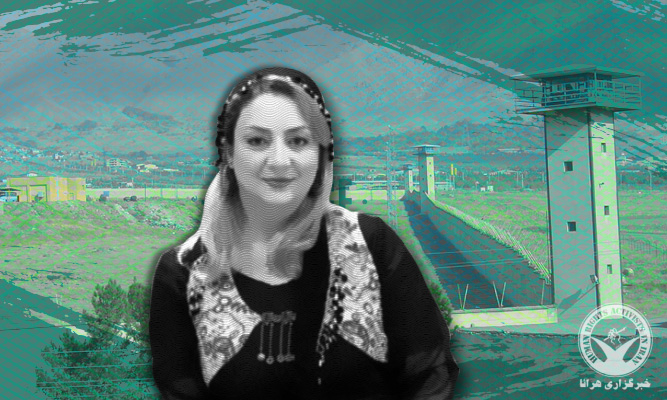
Arabi was punitively transferred from the Greater Tehran Prison to Rajai Shahr Prison in Karaj last September. He was then summoned and acquitted by Branch 8 of the Shahr-e-Shahri Prosecutor’s Office for another lawsuit in December.

Soheil Arabi has been imprisoned since November 2013 and has been deprived of leaves of absence throughout his entire imprisonment.